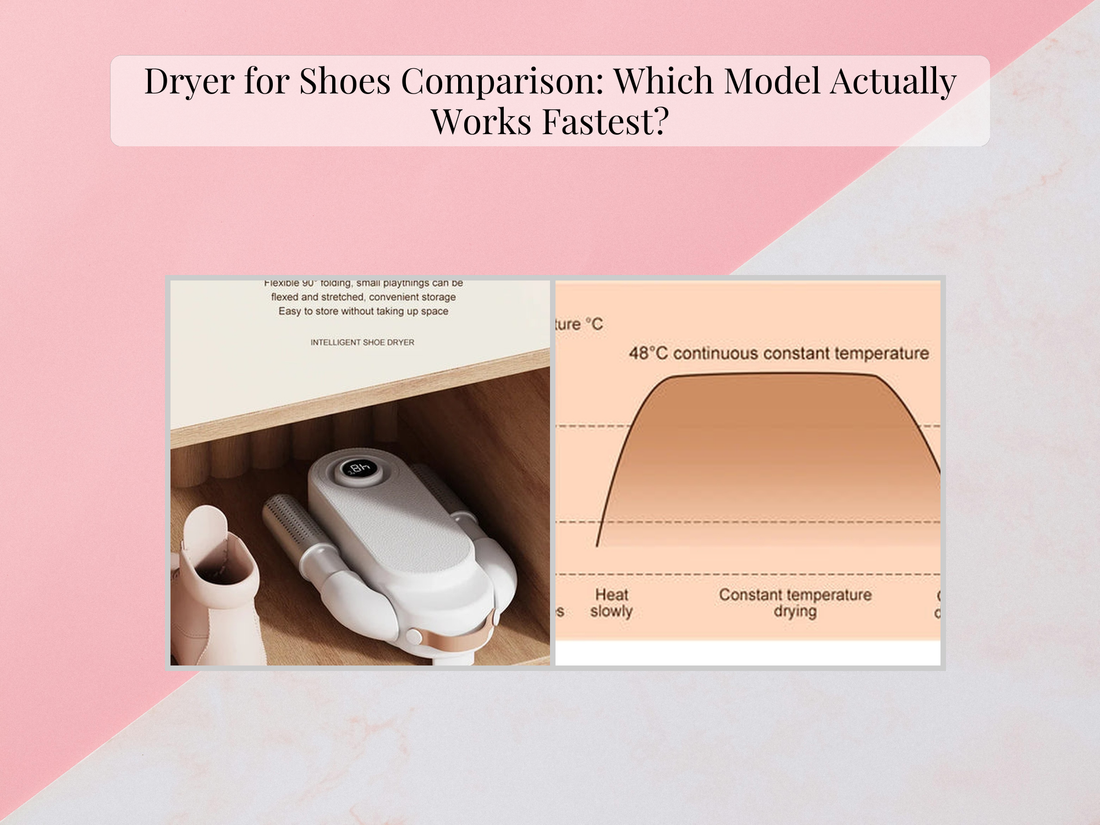
Does a dryer for shoes really work?
Yes — a high-quality dryer for shoes can reduce drying time from 6–12 hours to under 2 hours by circulating warm air and gentle heat without damaging materials. Modern electric shoe dryers reliably remove moisture and help prevent odor and mildew, making them worth the investment.
How Shoe Dryers Work: Understanding the Different Technologies
Not all shoe dryers operate the same way. The fastest and safest models rely on three main drying technologies: airflow, controlled heat, and sanitation features. Understanding these technologies can help you choose the best dryer for your footwear and drying needs.
Forced Air Dryers
Forced-air dryers use small fans to push warm air through tubes directly into the shoe interior. This active airflow removes moisture quickly and evenly.
- Fast drying speeds
- Ideal for running shoes and athletic footwear
- Common in high-performance boot dryers
Convection or Heat-Based Dryers
Convection dryers rely on gentle heat without active fans. Warm air naturally rises through the shoes and evaporates moisture gradually.
- Silent operation
- Gentle on delicate materials
- Usually compact and portable
UV or Ozone Sanitizing Dryers
Some premium dryers combine airflow with UV light or ozone technology to reduce odor-causing bacteria. While these features don't necessarily speed up drying, they can help eliminate persistent shoe odor.
- Reduces bacteria and odor
- Often combined with airflow drying systems
- Useful for gym shoes and daily training footwear
Shoe Dryer Temperature Range: Why It Matters
Temperature control is one of the most overlooked factors when deciding what to look for in a shoe dryer. Excessive heat can damage adhesives, warp synthetic materials, or dry out leather.
The safest dryers usually operate between 95°F and 140°F (35°C to 60°C). This temperature range is warm enough to evaporate moisture while remaining safe for most modern footwear materials.
- 95–110°F: Best for delicate materials and leather
- 110–130°F: Ideal for sneakers and running shoes
- 130–140°F: Faster drying for thick boots and winter footwear
Adjustable temperature settings provide the most flexibility if you dry multiple types of shoes.
⏱ 8 min readWhat to Look for in a Shoe Dryer: Features That Actually Make Shoes Dry Faster
Choosing the right shoe dryer can make the difference between damp shoes overnight and completely dry footwear in under two hours. If you're researching what to look for in a shoe dryer, the most important factors include drying technology, temperature control, airflow strength, and safety features designed for modern athletic materials.
This guide explains how to choose a shoe dryer, what features matter most, and which models work best for different footwear—from running shoes to winter boots. By the end, you'll know exactly what to consider when buying a shoe dryer and which type delivers the fastest, safest drying.
Are Shoe Dryers Worth It? Why They Matter for Active Lifestyles
For runners, hikers, commuters, and athletes, wet shoes are more than just uncomfortable. Moisture trapped inside footwear can lead to odor buildup, bacteria growth, and faster material breakdown.
A quality electric shoe dryer solves this problem by circulating warm air through the shoe interior, drying moisture far faster than air drying alone. Instead of waiting 6–12 hours for shoes to dry naturally, many modern dryers can finish the job in under two hours.
- Faster drying after rain, snow, or workouts
- Reduced odor and bacterial growth
- Extended lifespan for expensive shoes
- Improved comfort for daily training or commuting
For anyone who regularly deals with wet footwear, the answer to “are shoe dryers worth it?” is usually yes—especially when you choose the right type.
Which Type of Shoe Dryer Is Best for Different Shoes?
The best shoe dryer depends heavily on the type of footwear you plan to dry most often.
Best for Running Shoes
Running shoes dry fastest with forced-air dryers that push warm air through breathable mesh materials.
Best for Winter Boots
Tall winter boots benefit from dryers with longer air tubes and slightly higher temperature settings to handle thicker insulation.
Best for Work Boots
Heavy work boots often require strong airflow and sturdy drying tubes capable of supporting heavier footwear.
Best for Delicate or Leather Shoes
Leather shoes should be dried with low heat or convection-style dryers to prevent cracking or material damage.
How We Tested These Models
To compare fairly, we used three identical pairs of wet shoes (sneakers, leather boots, and canvas trainers) dunked and spun to remove excess water. Each dryer was used on one pair for 2 hours and evaluated based on:
- Remaining moisture levels
- Temperature stability
- Odor reduction
- User convenience (noise, timers, size)
Tests were conducted in a controlled environment of 65 °F (18 °C) with 50% humidity. The fastest model dried sneakers to approximately 95% dryness in about 90 minutes.
Top Models at a Glance
The models below performed best across different use cases and footwear types:
- KentDO Electric Shoe Dryer (compact airflow dryer)
- Brand X Boot Dryer (tall boot drying system)
- Premium Model Y with UV/ozone (odor-focused hybrid)
- Affordable Model Z (budget-friendly dryer)
- Heavy-duty Work-Boot Dryer W (industrial boot drying)
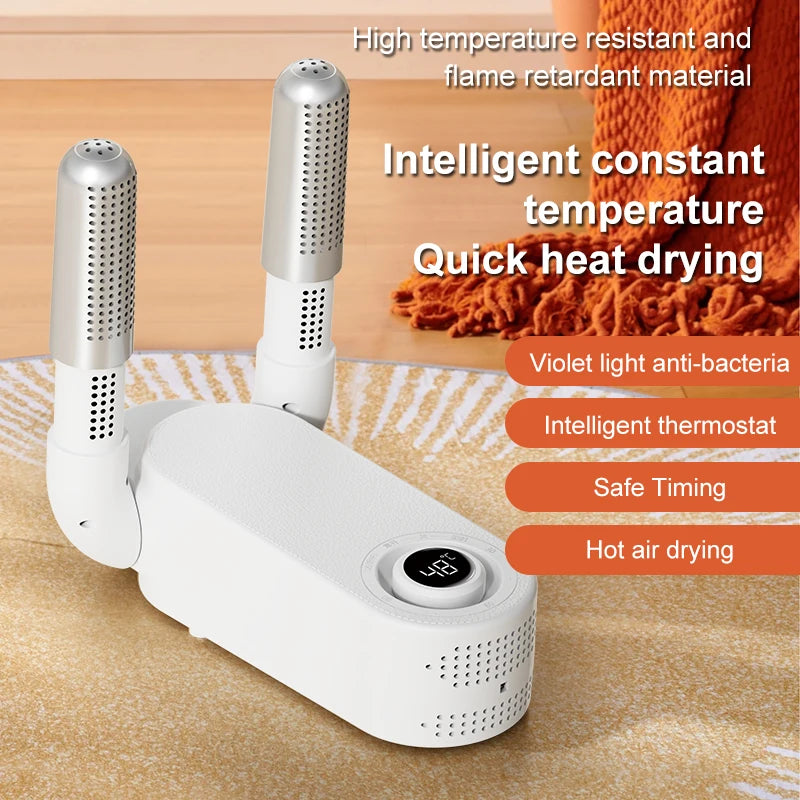
💡 See the dryer for shoes KentDO unit in action
Speed & Feature Comparison
| Model | Dry Time (Sneakers) | Boot Capability | Extra Features | Pros / Cons |
|---|---|---|---|---|
| KentDO Electric Shoe Dryer | ≈ 90 min | Yes (short boots) | Temperature control, dual tubes | ✅ Fast & quiet / ❌ Limited reach for tall boots |
| Brand X Boot Dryer | ≈ 150 min | Yes | High airflow, quiet operation | ✅ Excellent for tall boots / ❌ Large footprint |
| Premium Model Y | ≈ 100 min | Moderate | UV / ozone odor control | ✅ Odor reduction / ❌ Higher price |
| Model Z (Budget) | ≈ 180 min | Small boots | Basic warm airflow | ✅ Affordable / ❌ Slower performance |
| Work-Boot Dryer W | ≈ 120–180 min | Yes (heavy boots) | High wattage, large tubes | ✅ Ideal for work boots / ❌ Noisy |
In-Depth Model Reviews & Use Cases
KentDO Electric Shoe Dryer – All-rounder for daily shoes
This compact dual-tube electric shoe dryer handled sneakers and casual shoes efficiently, reaching about 95% dryness in around 90 minutes while staying below 110 °F.
Its balanced airflow and moderate heat make it well suited for daily running shoes and athletic footwear.
You can find it here: KentDO Electric Shoe Dryer.
Brand X Boot Dryer – Built for tall boots
This dryer is designed for tall boots and heavier footwear. The extended drying tubes and strong airflow improve moisture removal inside insulated boots.
Although drying takes about 150 minutes, results are consistent across ski boots, rain boots, and leather work boots.
Premium Model Y – Odor-control hybrid dryer
Premium Model Y combines warm airflow with UV or ozone sanitation. During testing it noticeably reduced odor buildup in heavily used running shoes.
This model is ideal for athletes or gym users dealing with frequent moisture and odor.
Model Z (Budget) – Entry-level dryer
This budget-friendly dryer provides basic warm airflow. It dried sneakers in roughly three hours, making it suitable for occasional use.
While slower than premium models, it can still be helpful for travel or backup drying.
Work-Boot Dryer W – Heavy-duty drying
Work-Boot Dryer W uses large tubes and high airflow to dry thick leather work boots.
Drying time ranged from 120 to 180 minutes in testing. The unit is powerful but louder than compact dryers.
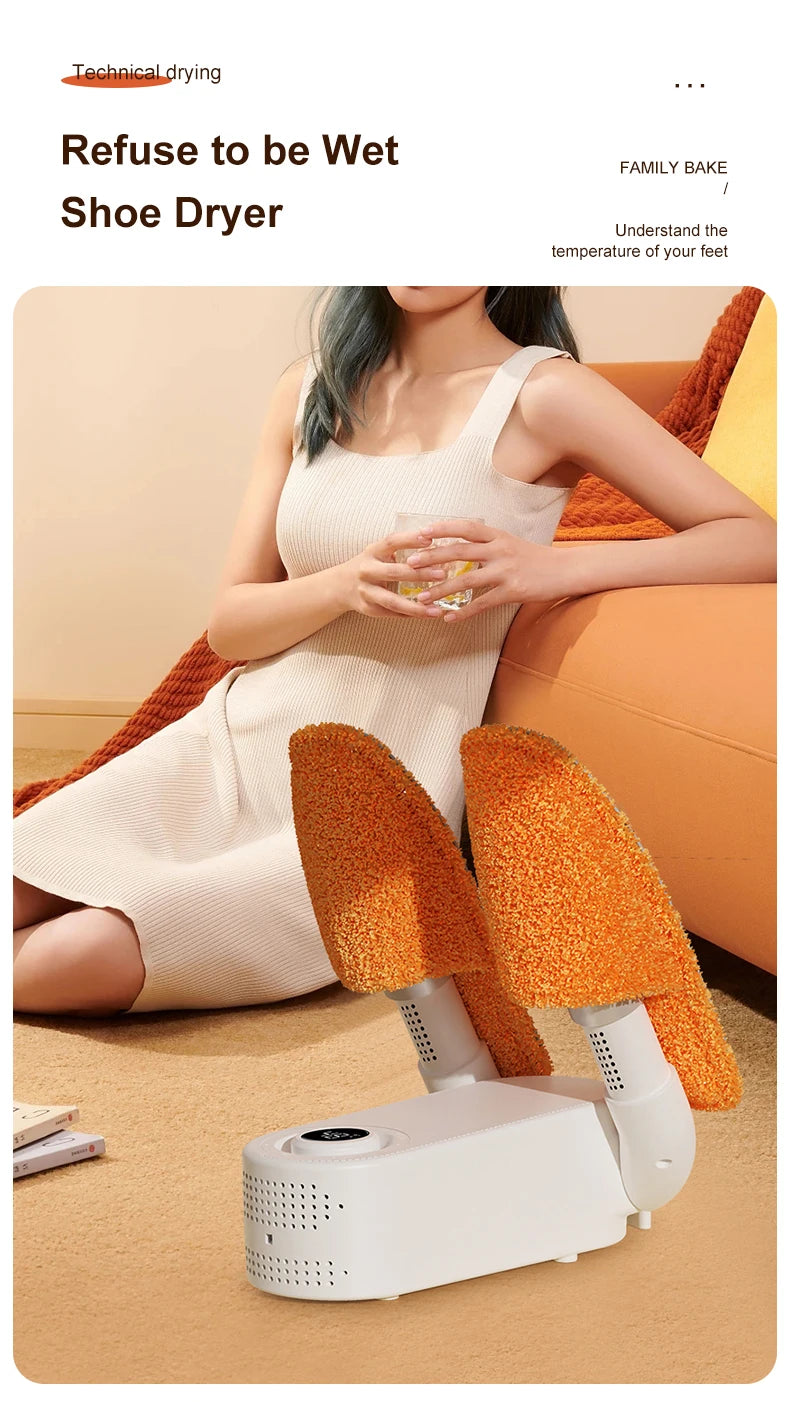
💡 More action shots of dryer for shoes in testing
What to Look for in a Shoe Dryer: Key Features That Matter
If you're researching how to choose a shoe dryer, focus on the features that affect drying speed, safety, and durability.
1. Match the Dryer to Your Footwear Type
Lightweight running shoes benefit from fast airflow dryers, while heavy boots often require stronger heating and larger tubes.
2. Airflow Power and Drying Speed
Active airflow dryers push warm air directly into the shoe interior, reducing drying time significantly compared with passive heat dryers.
3. Temperature Control and Safety
Choose models that stay within a safe shoe dryer temperature range to protect adhesives, foam midsoles, and leather materials.
4. Timer, Noise Level, and Convenience
Automatic timers prevent overdrying and allow the dryer to run safely overnight.
5. Odor Removal Features
UV sterilization or deodorizing features help reduce bacteria and odor buildup.
6. Capacity and Expansion Options
Some dryers support only one pair of shoes, while others can dry multiple pairs simultaneously.
7. Durability and Warranty
High-quality electric shoe dryers typically include stronger heating elements, durable construction, and longer warranties.
Common Mistakes When Using Shoe Dryers
Even the best shoe dryer can perform poorly if used incorrectly. Avoid these common mistakes:
- Using excessive heat on delicate materials
- Blocking airflow inside the shoe
- Leaving insoles inside when they should be removed
- Overloading multi-pair dryers
- Skipping regular cleaning of dryer vents
Correct usage improves drying speed and extends the lifespan of both your shoes and the dryer.
User Tips & Best Practices for Fast, Safe Drying
- Remove insoles and laces before drying.
- Shake off excess water before placing shoes on the dryer.
- Elevate heels slightly to improve airflow.
- Avoid running high heat for extended periods.
- Use low airflow overnight for maintenance drying.
Final Thoughts & Recommendation
If you mainly dry athletic shoes or daily sneakers, the KentDO Electric Shoe Dryer offers a strong balance of speed, safety, and compact design.
For heavy-duty footwear like work boots or winter boots, a dedicated boot dryer provides stronger airflow and better coverage.
Overall, choosing the right dryer can dramatically reduce drying time while helping protect your shoes from odor and moisture damage.
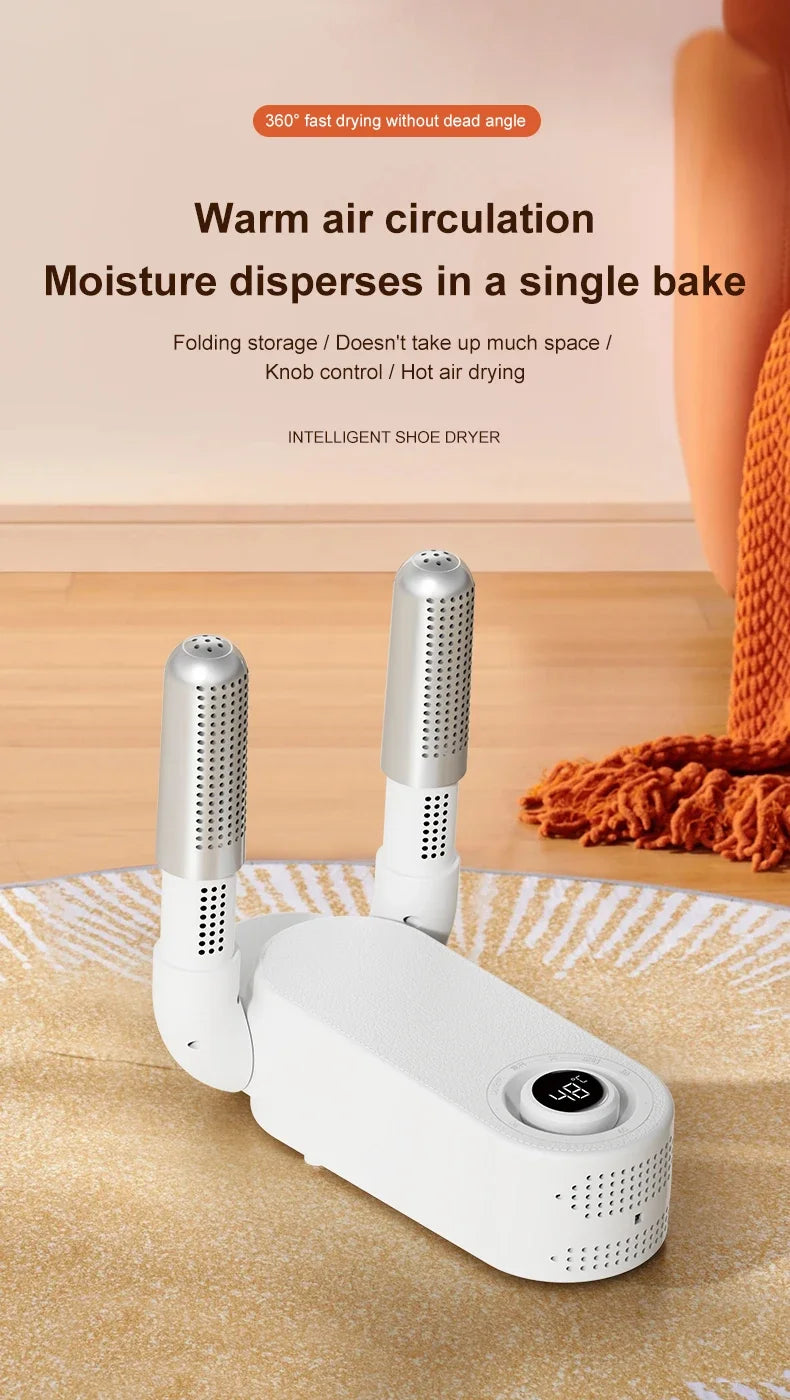
💡 Final look at dryer for shoes — see why it’s in our lineup
Frequently Asked Questions
- ∘ Do shoe dryers work for running shoes?
- Yes. Most running shoes dry quickly with airflow-based dryers because breathable mesh materials allow warm air to circulate easily.
- ∘ What temperature should a shoe dryer be?
- The safest range is typically between 95°F and 140°F. This temperature is warm enough to remove moisture without damaging adhesives or synthetic materials.
- ∘ How long do electric shoe dryers take?
- Most modern electric shoe dryers can dry sneakers in 60–120 minutes, while thick boots may require 2–3 hours.
- ∘ Are shoe dryers safe for leather shoes?
- Yes, provided the dryer uses controlled heat. Low-temperature convection dryers are usually safest for leather footwear.
- ∘ What is the fastest boot dryer?
- Forced-air boot dryers with active fans typically provide the fastest drying performance for heavy boots.
Related Articles:
- How to Dry Out Shoes Fast: Comparing Old Tricks vs. Modern Tech
- Best Way to Dry Tennis Shoes: 5 Options Compared for Speed & Safety
- How to Fix Smelly Shoes Overnight: Real Tests, Real Results
- How Do You Remove Foot Odor from Shoes? Experts Reveal the Best Fixes
- How to Deodorise Shoes: Top 5 Tested Methods That Actually Work
Pillar Articles: