
Share
Callus Remover for Diabetics: What’s Safe & What to Avoid (2026 Guide)
Q: Are electric callus removers safe for diabetics?
A: Yes, but with caution. People with diabetes should use electric callus removers on the lowest setting, apply gentle pressure, and inspect their feet before and after use. Choosing an adjustable device and consulting a doctor helps prevent injuries, infections, and ensures safer diabetic foot care.
Learn what’s safe, what to avoid, and how to properly care for diabetic feet using callus removal tools.
Quick Answer: Are Electric Callus Removers Safe for Diabetics?
Electric callus removers can be safe for diabetics—but only when used correctly and with the right type of device. Because diabetes can reduce sensation and slow healing, even minor skin damage can lead to serious complications.
When They Are Safe
- Devices with gentle rotation and low pressure
- Used on dry, intact skin only (no cracks or wounds)
- Limited to short sessions (2–3 minutes per area)
- Approved or recommended by a podiatrist
When They Are NOT Safe
- If you have neuropathy (reduced foot sensation)
- On cracked heels, ulcers, or infections
- Using high-speed or aggressive rollers
- Without proper hygiene or shared tools
Bottom line: Electric callus removers are not inherently dangerous, but improper use significantly increases risk for diabetic feet.
If you have diabetes, taking care of your feet is incredibly important. Diabetic foot care involves regular monitoring for cuts, blisters, and calluses, which can lead to complications if not treated properly.
What is an Electric Callus Remover?
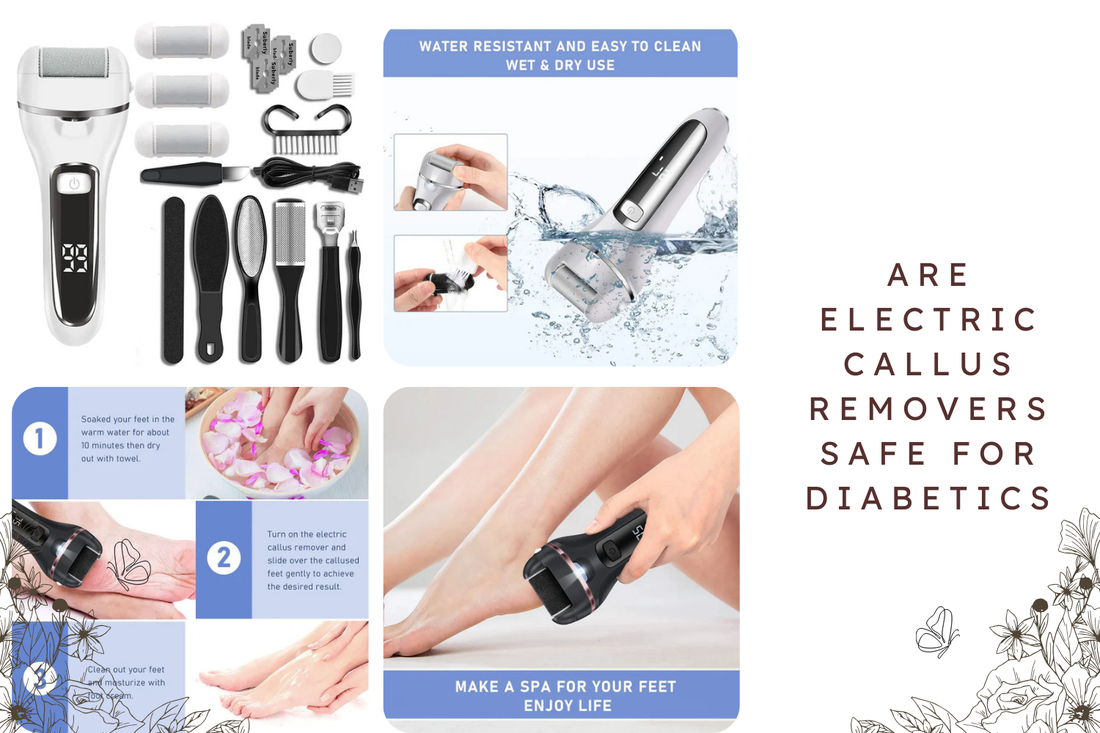
An electric callus remover is a handheld device with a rotating roller that buffs away thickened, dead skin on the feet. Compared to manual tools, it provides more consistent pressure and controlled exfoliation—but must be used cautiously for diabetic skin.
Why Foot Care is Critical for Diabetics
Diabetes can lead to nerve damage (neuropathy) and reduced blood circulation, especially in the feet. This means injuries may go unnoticed and take longer to heal. Even minor issues like calluses can develop into ulcers if neglected.
That’s why consistent foot care—including inspection, hydration, and careful callus management—is essential for preventing complications.
Safe vs Unsafe Callus Removal Methods for Diabetic Feet
Tools to Avoid (Blades, Razors, Acid Peels)
- Callus shavers or blades – High risk of cuts and infection
- Razor-based removers – Too aggressive for sensitive diabetic skin
- Strong chemical peels (acid treatments) – Can cause burns or delayed healing
These methods are commonly discouraged by podiatrists because even a small injury can escalate into a serious foot complication.
Safer Alternatives (Gentle Electric, Pumice, Urea Creams)
- Gentle electric callus removers – Controlled exfoliation with minimal pressure
- Pumice stones or foot files – Manual, low-risk smoothing
- Urea-based creams (10–25%) – Gradually soften thick skin
Safer methods focus on gradual removal rather than aggressive cutting, which is key for diabetic foot care. For more guidance, explore easy at-home foot care routines.
What to Look for in a Callus Remover for Diabetic Feet
Pressure Sensitivity & Speed Control
Choose devices with low-speed settings and gentle rollers. High-speed tools can remove too much skin too quickly, increasing injury risk.
Hygiene & Replaceable Heads
Look for models with washable or replaceable heads to reduce bacterial buildup and infection risk.
Dermatologist / Podiatrist-Friendly Design
The best callus remover for diabetics is designed for sensitive skin, often labeled as “gentle,” “precision,” or “safe for delicate feet.” Avoid overly abrasive surfaces.
Benefits of Using an Electric Callus Remover for Diabetics
- Controlled exfoliation – Reduces risk compared to manual cutting tools
- Even pressure distribution – Helps avoid accidental over-removal
- Convenience – Easier to maintain routine foot care at home
- Improved skin texture – Prevents buildup that can lead to cracking
However, benefits only apply when using gentle devices correctly. Overuse or improper technique can negate these advantages.
Best Callus Removers for Diabetics (Podiatrist-Safe Picks)
Comparison Table (Key Features & Safety Level)
- Gentle electric remover – Best for controlled exfoliation
- Manual pumice stone – Lowest risk option
- Urea cream (10–25%) – Best for gradual softening
Top Gentle Electric Options
Look for devices labeled low-speed, sensitive, or precision care. Avoid professional-grade or high-powered tools.
If you're looking for a reliable option, consider the KentDO™ Electric Foot Callus Remover. It offers adjustable speed settings and a gentle design suitable for cautious diabetic foot care routines.
Non-Electric Alternatives (Safer Picks)
For many diabetics, non-electric methods like pumice stones and medicated creams may be safer, especially if you have sensitive or fragile skin.
How to Safely Remove Calluses if You Have Diabetes
Step-by-Step Safe Routine
- Wash and dry your feet thoroughly
- Use a gentle callus remover for 2–3 minutes only
- Avoid applying pressure—let the tool do the work
- Rinse and apply a moisturizing cream (preferably urea-based)
- Inspect feet for any redness or damage
Warning Signs to Stop Immediately
- Pain or discomfort
- Redness or bleeding
- Skin cracking or unusual sensitivity
If you notice any of these symptoms, stop immediately and consult a healthcare professional. You can also learn more about safe callus removal techniques here.
FAQ: Callus Removal Safety for Diabetics
Are callus removers safe for diabetics?
Yes, but only gentle and non-invasive options are recommended. Avoid blades or aggressive tools.
Are electric callus removers safe for diabetics?
They can be safe if used carefully and on healthy skin, but not recommended for those with neuropathy or foot wounds.
What is the safest way to remove calluses for diabetics?
The safest method is gradual removal using pumice stones or urea-based creams, often combined with podiatrist guidance.
Can diabetics remove corns at home?
Home removal is risky. It’s safer to seek professional treatment for corns to avoid infection or injury.
Conclusion: Safe Foot Care with Electric Callus Removers
Electric callus removers can be a helpful tool for diabetics—but only when used with caution and proper technique. Focus on gentle exfoliation, avoid aggressive tools, and always prioritize foot safety.
For a safe and effective option, shop the KentDO™ Electric Foot Callus Remover and maintain your foot care routine with confidence.
Pillar Article: Electric Nail Clippers- Are They Worth It
Other Related Articles:













