

Best Cooling and Heating Tower Fans: Performance Tested
A cooling and heating tower fan can solve a common year-round comfort problem: one room feels stuffy in summer but chilly in winter. However, moving air is not the same as actually lowering room temperature, and a heating element that produces warmth is not automatically capable of heating a large or poorly insulated room. The best cooling and heating tower fan therefore depends on airflow, heating output, noise, oscillation, thermostat behavior, energy use, and room size—not simply the highest advertised wattage or fan speed.
This guide takes a performance-first approach to choosing a dual-function tower fan. It also explains where combo units work well, where they fall short, and when a dedicated fan, space heater, or air conditioner is the better choice.
Best Cooling and Heating Tower Fans at a Glance
For shoppers looking for one appliance that can provide airflow and seasonal warmth, a cooling and heating tower fan is most useful when convenience, space savings, and moderate room comfort are more important than replacing a full HVAC system.
- Best overall concept: A tower fan with both cool-air and warm-air modes, oscillation, adjustable speeds, timer controls, and temperature management.
- Best for small bedrooms: A quiet unit with controlled airflow, moderate heating capacity, oscillation, and a compact vertical footprint.
- Best for quiet sleep: A model with genuinely low fan noise at its lowest speed rather than relying only on a single advertised dB number.
- Best for drafty rooms: A heating-capable tower with useful heat distribution, oscillation, and automatic temperature control.
- Best for year-round convenience: A 2-in-1 or multifunction tower that can replace the need to store separate seasonal appliances.
Quick Comparison Matrix
- Cooling: Evaluate airflow, speed settings, oscillation, and how effectively the moving air reaches occupied areas.
- Heating: Check heating wattage, temperature settings, thermostat behavior, and the manufacturer's recommended room size.
- Noise: Look for mode-specific measurements. Fan mode and heating mode can produce different sound levels.
- Oscillation: Wide left-and-right movement can distribute airflow and warmth more evenly than a stationary outlet.
- Room size: Consider floor area together with ceiling height, insulation, drafts, windows, and room layout.
- Energy use: Heating mode generally consumes substantially more electricity than fan-only operation.
- Safety: For heating appliances, verify recognized electrical safety certification, automatic shutoff features, stable placement, and manufacturer instructions.
Quick Verdict: Which Type Should You Buy?
If you primarily need summer airflow and only occasional supplemental warmth, a combo tower fan can be a practical choice. If your primary goal is lowering the actual temperature of a hot room, an air conditioner is fundamentally different because it removes heat rather than simply moving air. Likewise, if you need to heat a large, cold, or poorly insulated space, a dedicated heating system may be more appropriate.
Who Should Not Buy a Cooling and Heating Tower Fan?
A combo tower fan is not the ideal solution for everyone. Consider a dedicated air conditioner if active room cooling is your priority. Consider a dedicated heating appliance or HVAC system if you need substantial heat for a large or poorly insulated space. A combo unit also may not make sense if you already have highly effective seasonal appliances and do not value saving floor or storage space.
What Is a Cooling and Heating Tower Fan?
A cooling and heating tower fan combines air circulation with a heating function in one vertical appliance. In cooling mode, the fan moves indoor air across the room, creating a cooling sensation through increased air movement. In heating mode, an integrated heating element warms air before it is distributed into the room.
The distinction matters because a tower fan does not provide refrigeration. Airflow can make your skin feel cooler without significantly changing the room's actual air temperature. Heating is different: the appliance adds heat to the air, but the resulting temperature increase depends on room size, insulation, drafts, ceiling height, and heat loss.
How We Evaluated Cooling and Heating Tower Fans
A meaningful comparison should separate manufacturer specifications from independently measured performance. The supplied product information for the featured KentDo model documents its design, operating modes, noise specification, power, controls, oscillation, timer, and stated room application. It does not provide independent laboratory measurements of CFM, temperature rise per minute, warm-up time, electricity cost, or thermostat accuracy, so those figures should not be presented as measured test results.
Airflow and CFM Testing
CFM, or cubic feet per minute, describes the volume of air a fan moves. It can help compare airflow capability, but CFM alone does not tell you how much cooler the room will become.
A useful evaluation should consider airflow at multiple speeds and distances. Air movement should also be assessed where people actually sit or sleep rather than only immediately in front of the outlet.
Heating Rise and Warm-Up Testing
Heating performance can be evaluated by recording room temperature before operation, measuring outlet temperature, and monitoring temperature change over time. Warm-up time is particularly useful because two appliances with similar electrical input can provide noticeably different comfort depending on heat distribution and room conditions.
No independent temperature-rise measurements are supplied for the featured product, so its documented heating capability should be treated as a functional specification rather than a verified room-temperature performance claim.
Noise Testing in Fan and Heat Modes
Noise should be evaluated at a consistent distance and under comparable conditions. The featured 42-inch bladeless tower fan is specified at 36–45 dB, but real-world sound can vary depending on speed, operating mode, room acoustics, and measurement conditions.
For bedrooms, low-speed noise and the character of the sound can matter as much as the headline number. A steady, unobtrusive airflow can be more comfortable for sleep than an appliance with abrupt changes in fan speed.
Energy and Runtime Testing
Energy use is primarily determined by electrical power and runtime. The supplied specifications list 40W for the featured tower fan, but they do not identify a separate heating-mode wattage. Therefore, the 40W figure should not be interpreted as the heating power.
Heating mode normally requires substantially more electrical input than fan-only circulation. A proper comparison should record wattage in each operating mode and multiply it by runtime and the user's electricity rate.
Measured vs. Claimed Specifications
- Documented size: 42 inches.
- Documented application: 15–25 m².
- Documented fan power: 40W.
- Documented noise specification: 36–45 dB.
- Documented controls: Remote control, adjustable speeds, and left-right oscillation.
- Documented timer: 2–8 hours.
- Independent CFM measurement: Not provided.
- Independent heating temperature-rise test: Not provided.
- Independent warm-up test: Not provided.
- Independent electricity-cost test: Not provided.
Heating vs Cooling Performance Matrix: What the Numbers Really Mean
Cooling: Airflow, CFM, and Perceived Temperature
Fan-based cooling works primarily by increasing air movement around your body. Moving air can accelerate evaporation from the skin and reduce the sensation of heat. This is why a fan can make a bedroom feel more comfortable even when the thermometer shows little change.
That is fundamentally different from air conditioning. An air conditioner removes heat from indoor air, while a fan primarily redistributes existing air. For this reason, a high-airflow tower fan should not be described as equivalent to an air conditioner.
Heating: Watts, BTU Equivalents, and Temperature Lift
Electrical heating converts electrical energy into heat. Wattage therefore provides useful information about electrical input, but it does not by itself predict how quickly an entire room will become comfortable.
Room heat loss matters. A drafty room with large windows may lose heat rapidly, while a smaller insulated bedroom can retain warmth more effectively. BTU comparisons can provide a useful framework, but they should not be used as a substitute for the manufacturer's actual heating specifications or the conditions of the room.
Warm-Up Time and Temperature Lift per Minute
Warm-up time depends on heating output, airflow, starting temperature, room volume, insulation, and heat loss. A compact tower can make the area near the outlet feel warmer quickly while taking considerably longer to change the temperature of the entire room.
Oscillation and Heat Distribution
Oscillation changes where heated or cooled air is delivered. Instead of concentrating airflow in one direction, left-and-right movement can spread it across a wider portion of the room. This can improve perceived comfort, although wider distribution may reduce the intensity of airflow or warmth at any single point.
Seasonal Use Scorecard: How Well Do Combo Tower Fans Work Year-Round?
Summer Cooling Performance
Combo tower fans are particularly useful when the main summer objective is better air circulation. Oscillation and adjustable speeds can help distribute airflow around a bedroom, office, or living space. Natural-wind modes can also vary airflow rather than maintaining one constant speed.
However, remember that airflow-based cooling is not active refrigeration. During extreme heat, a tower fan may improve personal comfort without reducing the underlying room temperature.
Fall and Spring Comfort
Shoulder seasons are often where a cooling and heating tower fan makes the most practical sense. Temperature can fluctuate significantly between morning, afternoon, and evening, making a single appliance capable of both airflow and warmth convenient.
Winter Heating Performance
A tower fan heater can provide supplemental warmth in an appropriately sized room, but room conditions remain critical. Larger rooms, high ceilings, poor insulation, open doors, and drafts increase the heating challenge.
For that reason, a manufacturer's stated room-size recommendation should be treated as a starting point rather than a guarantee of uniform winter heating.
When One Combo Unit Beats Two Separate Appliances
The main advantage of a combo tower is convenience. One vertical appliance can provide airflow during warm weather and supplemental heat during cooler periods. That can reduce storage requirements and floor clutter while avoiding the need to switch between separate appliances.
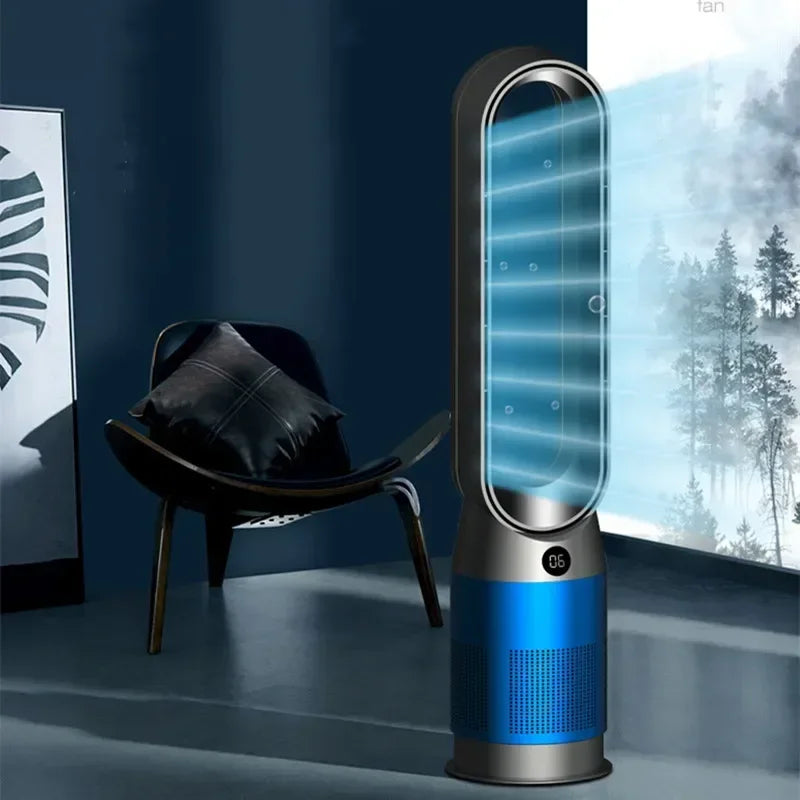
Room Size Calibration: How Large a Room Can a Cooling and Heating Tower Fan Handle?
Small Bedrooms and Home Offices
Small bedrooms and home offices are often a strong use case for tower fans because the appliance can circulate air through a compact area without occupying much floor space. Low noise, adjustable airflow, oscillation, and temperature control become especially important when the unit operates near a desk or bed.
Medium Bedrooms and Living Rooms
Medium rooms require more careful consideration. A tower fan may circulate air effectively throughout a room, but heating performance depends on how much heat the space loses. Open doors, high ceilings, exterior walls, and poor insulation can all reduce the perceived effectiveness of supplemental heating.
Large or Open-Plan Rooms
Large or open-plan rooms are where combo towers are most likely to reach their limitations. Airflow can travel farther than meaningful heating can, and a heater designed for a compact room may not maintain comfortable temperatures across a large open area.
Room-Size Calibration Checklist
- Measure the room's floor area.
- Consider ceiling height, not just floor area.
- Identify drafts around windows and doors.
- Consider whether doors remain open to adjacent rooms.
- Assess insulation and exterior-wall exposure.
- Decide whether you need personal comfort or whole-room temperature change.
- Compare the manufacturer's stated room application with your actual conditions.
PTC Ceramic Heating Explained: Why It Matters
What Is PTC Ceramic Heating?
PTC, or positive temperature coefficient, ceramic heating uses a material whose electrical resistance changes as its temperature rises. PTC heating is commonly associated with compact electric heating appliances because it can provide controlled heat from a relatively compact heating assembly.
However, the presence of PTC technology alone does not establish that one tower heater will outperform another. Heating capacity, controls, airflow, thermostat behavior, and room conditions still determine practical comfort.
PTC Heating vs Traditional Space Heaters
Both a PTC-equipped tower and a conventional electric space heater can provide supplemental electric heat. The meaningful differences often involve physical design, airflow distribution, controls, oscillation, footprint, and how the heat is delivered.
A tower format can be attractive when vertical space efficiency and broader airflow distribution are priorities. A dedicated space heater may be preferable when heating performance is the primary requirement.
Thermostat Accuracy and Temperature Control
A thermostat can matter more to day-to-day comfort than maximum heating power. Accurate temperature sensing can allow a heater to cycle rather than continuously operate at full output, potentially improving comfort and reducing unnecessary runtime.
Key Features That Actually Matter When Choosing a Tower Fan With Heating and Cooling
Airflow and CFM
Do not select a fan solely because it advertises a high airflow number. Consider airflow direction, oscillation, speed adjustment, room layout, and where the air reaches.
Heating Power and Temperature Settings
Look for clearly documented heating power and multiple temperature or heat settings. If a listing gives only general claims such as “powerful heating,” ask for the actual electrical heating specification before comparing models.
Oscillation
Oscillation is useful for both cooling and heating because it expands the area receiving airflow. A wide left-and-right sweep can be especially helpful when the unit is positioned in one corner of a bedroom or living space.
Noise in dB
Noise specifications are most useful when they identify the operating condition. A single dB figure without a speed or mode context can be difficult to interpret. For bedrooms, prioritize low-speed noise and consistent operation.
Thermostat and Automatic Temperature Control
Temperature control can help prevent excessive heating and maintain a more stable comfort level. If a product does not document thermostat behavior, avoid assuming that it provides precise room-temperature regulation.
ETL and UL Safety Certification
When purchasing an electric heating appliance, look for recognized electrical safety certification appropriate to the market where the appliance will be used. Certification should be verified from the product documentation rather than inferred from marketing language.
Timers, Remote Controls, and Smart Features
Timers and remote controls improve convenience but should not be confused with core performance features. A timer can be particularly useful when you want the appliance to operate for a defined period rather than continuously.
Misleading Specs Explained: What Tower Fan Marketing Doesn't Tell You
High CFM Does Not Mean Lower Room Temperature
High airflow can improve perceived cooling, but it does not mean the appliance is removing heat from the room. If your objective is actual temperature reduction, active air conditioning is a different category of technology.
High Wattage Does Not Mean Better Room Heating
Higher electrical input can indicate greater potential heating output, but room comfort also depends on heat distribution and heat loss. A powerful heater in a poorly insulated space may still struggle to maintain the desired temperature.
Advertised Room Size Can Be Optimistic
Square-footage or square-meter recommendations cannot fully account for insulation, ceiling height, windows, drafts, climate, and room layout. Treat the stated room application as guidance and calibrate it against your actual environment.
Quiet Mode Ratings Need Context
A dB rating is meaningful only when you know how and where it was measured. Distance, background noise, fan speed, heating operation, and room acoustics can all affect what you hear in practice.
Best Cooling and Heating Tower Fans by Use Case
Best for Small Bedrooms
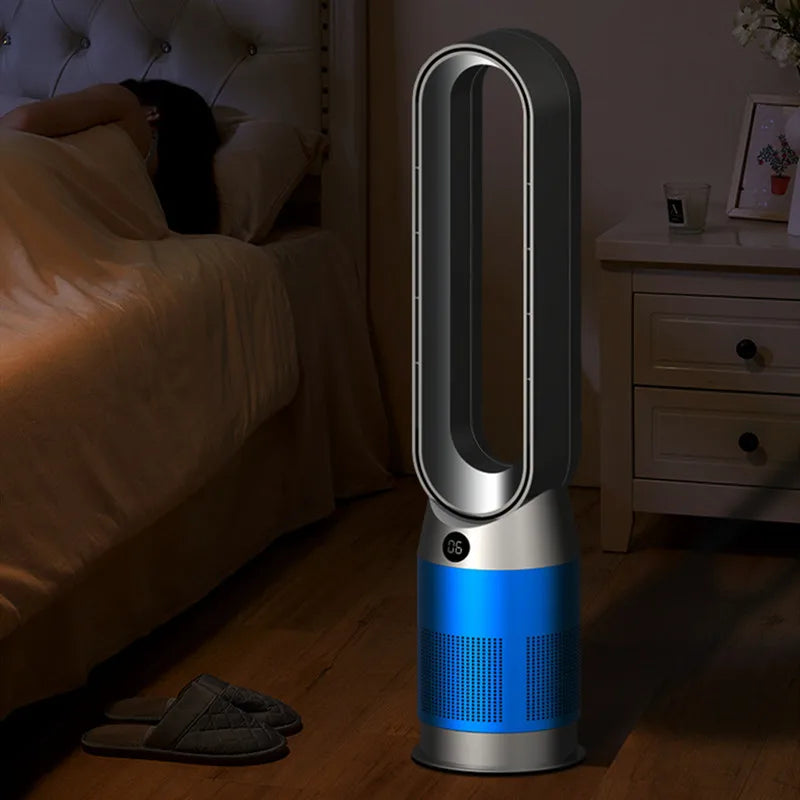
For a small bedroom, prioritize quiet operation, manageable airflow, oscillation, timer controls, and appropriate heating capacity. A tall tower design can also preserve floor space compared with wider appliances.
Best for Quiet Sleep
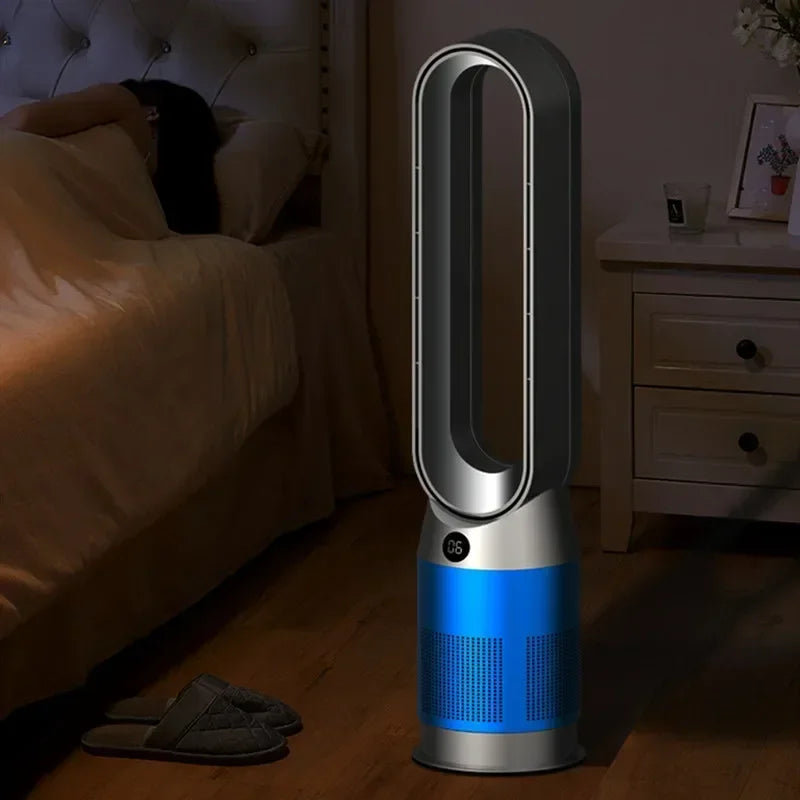
Look for a unit with a genuinely low fan setting and a stable airflow pattern. The featured KentDo 42-inch bladeless tower fan is specified at 36–45 dB and provides adjustable fan speeds, although independent sleep-environment measurements are not supplied.
Best for Drafty Rooms
Drafty rooms benefit from a heating appliance with appropriate output and effective distribution. Oscillation can help spread warmth, but it cannot compensate indefinitely for substantial heat loss through windows, doors, or poorly insulated walls.
Best for Energy-Conscious Users
Compare actual wattage, expected runtime, thermostat cycling, and the amount of heating you really need. Fan-only circulation is generally far less electricity-intensive than electric heating, so using the heating function only when necessary can make a meaningful difference to operating consumption.
Best for Year-Round Convenience
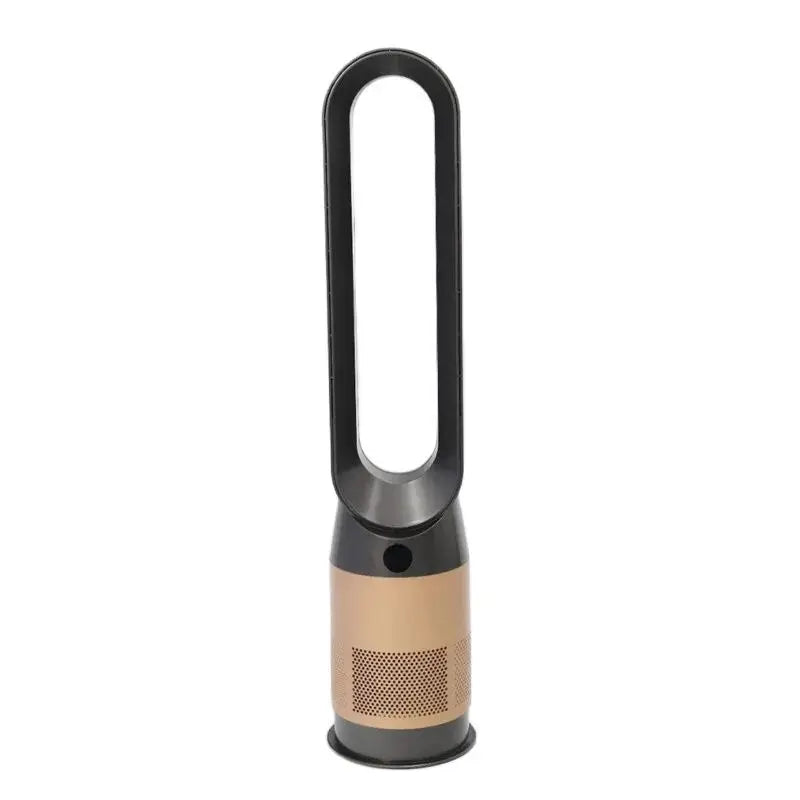
For users who dislike storing multiple seasonal appliances, a combo tower is compelling. The featured KentDo model combines cool-air and warm-air modes with natural wind, purification functionality, remote control, oscillation, and adjustable speeds.
Featured model: Bladeless Tower Fan 42-Inch | Quiet Cooling & Heat for Homes — https://kentdohealthybeauty.com/products/bladeless-tower-fan-42-inch
Cooling and Heating Tower Fan vs Separate Appliances
Combo Tower Fan vs Tower Fan + Space Heater
The combo approach wins on convenience, storage, and footprint. Two separate appliances may win when you want to optimize each function independently. A dedicated fan can be selected specifically for airflow, while a dedicated heater can be selected specifically for heating performance.
Combo Tower Fan vs Air Conditioner
These appliances should not be treated as interchangeable. A fan circulates air and can improve perceived cooling. An air conditioner actively transfers heat out of the room. If your room is extremely hot and you need actual temperature reduction, an air conditioner is the more appropriate technology.
Do You Actually Need a Combo Unit?
Use this simple decision process:
- If you mainly need air movement, prioritize a quality tower fan.
- If you need active temperature reduction, consider air conditioning.
- If you need supplemental warmth during cooler periods, a heating-capable tower may be useful.
- If you need substantial heating for a large or poorly insulated room, compare dedicated heating solutions.
- If storage space and convenience are major priorities, a combo unit becomes more attractive.
Energy Consumption: Combo Tower Fans vs Space Heaters and Fans
How Much Electricity Does the Heating Mode Use?
Electricity consumption depends on heating wattage and runtime. The basic relationship is straightforward: higher electrical power used for longer periods results in greater energy consumption. Thermostatic cycling can reduce runtime when the target temperature has been reached.
Fan Mode vs Heating Mode
Fan-only operation primarily powers the motor and controls, while heating requires electrical energy to generate heat. This is why heating mode generally consumes much more electricity than simple air circulation.
The featured model lists 40W power in its supplied specifications, but the source does not specify a separate heating-mode wattage. Do not use the 40W figure to estimate its heater electricity consumption.
When a Separate Appliance May Be More Efficient
A specialized appliance may be a better match when your needs are highly specific. If you only need summer airflow, buying and operating a heating-capable combo may provide features you rarely use. If heating is the dominant requirement, a dedicated heating solution may offer more suitable capacity and controls.
Safety, Overnight Use, and Placement
Are PTC Ceramic Heating Tower Fans Safe?
Electric heating appliances should be used according to the manufacturer's instructions and should include appropriate protective features for their intended application. Buyers should verify safety certification, overheat protection, automatic shutoff features, and electrical requirements before purchase.
Can You Use a Heating Tower Fan Overnight?
Do not assume that a heating tower fan is automatically suitable for unattended overnight operation. Follow the specific manufacturer's instructions regarding overnight use, timer operation, automatic shutoff, placement, and clearance. If the product documentation does not clearly permit the intended use, contact the manufacturer before relying on it overnight.
ETL and UL Certification: What to Check
Look for recognizable safety certification marks and verify that the certification applies to the actual product model. This is particularly important for heating appliances because they operate at higher electrical loads than ordinary fan-only devices.
Safe Placement and Clearance
- Place the appliance on a stable, level surface.
- Keep airflow outlets and intakes unobstructed.
- Keep the heater away from curtains, bedding, clothing, and other combustible materials.
- Do not cover the appliance while it is operating.
- Use the electrical connection specified by the manufacturer.
- Keep the appliance away from water unless it is specifically designed for that environment.
- Follow all clearance and operating instructions supplied with the product.
Buying Checklist: What to Look for Before You Buy
Performance Checklist
- Verify documented airflow or fan-speed specifications.
- Check heating power and available temperature settings.
- Look for oscillation if you need broader coverage.
- Check noise specifications by operating mode when available.
- Look for thermostat or automatic temperature control.
Room and Use-Case Checklist
- Measure your room before choosing a model.
- Consider insulation and drafts.
- Decide whether you need personal airflow or whole-room comfort.
- Determine whether heating or cooling is your primary need.
- Consider whether you will use the appliance mainly during summer, winter, or year-round.
Safety and Ownership Checklist
- Verify electrical safety certification where applicable.
- Check automatic shutoff and overheat protection information.
- Review the manufacturer's overnight-use guidance.
- Confirm voltage compatibility before ordering.
- Check warranty and customer support information.
- Follow the specified cleaning and maintenance requirements.
Frequently Asked Questions
Do cooling and heating tower fans actually work well for both heating and cooling?
They can provide useful year-round comfort when their capabilities match the room. Fan mode improves air circulation and perceived cooling, while heating mode adds warmth. Neither function should be expected to replace an appropriately sized HVAC system in demanding conditions.
Are tower fans with heating and cooling more energy efficient than separate appliances?
Not necessarily. The primary advantage is convenience and space savings. Actual energy consumption depends on the electrical power of each mode, runtime, thermostat cycling, and how much heating or cooling the room requires.
How large a room can a cooling and heating tower fan heat?
Room-size suitability depends on heating output, insulation, ceiling height, drafts, room layout, and desired temperature change. The featured KentDo model lists an application range of 15–25 m², but real-world heating performance will depend on room conditions.
Are PTC ceramic heating tower fans safe to use overnight?
Only use a heating tower overnight when the manufacturer's instructions specifically support the intended operation. Check for automatic shutoff, overheat protection, appropriate certification, timer functionality, and required clearance.
What should you look for in a tower fan with heating and cooling?
Focus on heating power, airflow, noise, oscillation, thermostat behavior, room-size suitability, energy consumption, safety features, controls, and warranty support. Avoid choosing solely on advertised CFM, wattage, or a generic room-size claim.
Final Verdict: Is a Cooling and Heating Tower Fan Worth It?
The best cooling and heating tower fan is not necessarily the model with the highest CFM or wattage. The better choice is the one whose airflow, heating capability, thermostat behavior, noise, oscillation, energy use, and safety features match your room and seasonal needs.
Combo towers make the most sense when you want one space-saving appliance for everyday air circulation plus supplemental heating during cooler periods. They are particularly attractive for bedrooms, offices, and moderate-size rooms where convenience matters. They are less suitable when you need true air conditioning or substantial whole-room heating in a large, drafty, or poorly insulated space.
For shoppers who value a vertical design and year-round functionality, the KentDo 42-inch bladeless tower fan provides documented cool-air and warm-air modes, 36–45 dB specified noise, left-and-right oscillation, remote control, adjustable speeds, a 2–8 hour timer, and a stated 15–25 m² application range.
Product: https://kentdohealthybeauty.com/products/bladeless-tower-fan-42-inch
Pillar Article: Best Bladeless Tower Fan Heaters of 2026: Tested & Compared













