

Best Electric Small Fans: Tested Picks for Travel, Desk & More
The best electric small fans are not always the smallest ones. Compact fans can differ substantially in airflow, battery runtime, noise, charging convenience, and portability. For shoppers comparing a small electric fan for travel, desk work, commuting, or outdoor heat, the right choice depends on how and where you plan to use it.
This guide focuses on the practical factors that matter most: personal airflow, battery convenience, portability, noise, charging, and everyday versatility. Because the supplied product information does not include independently measured CFM, runtime, or decibel results, those figures are not presented as verified test results. Instead, performance claims are separated from the manufacturer's stated specifications so you can make a more realistic buying decision.
Best Small Electric Fans at a Glance
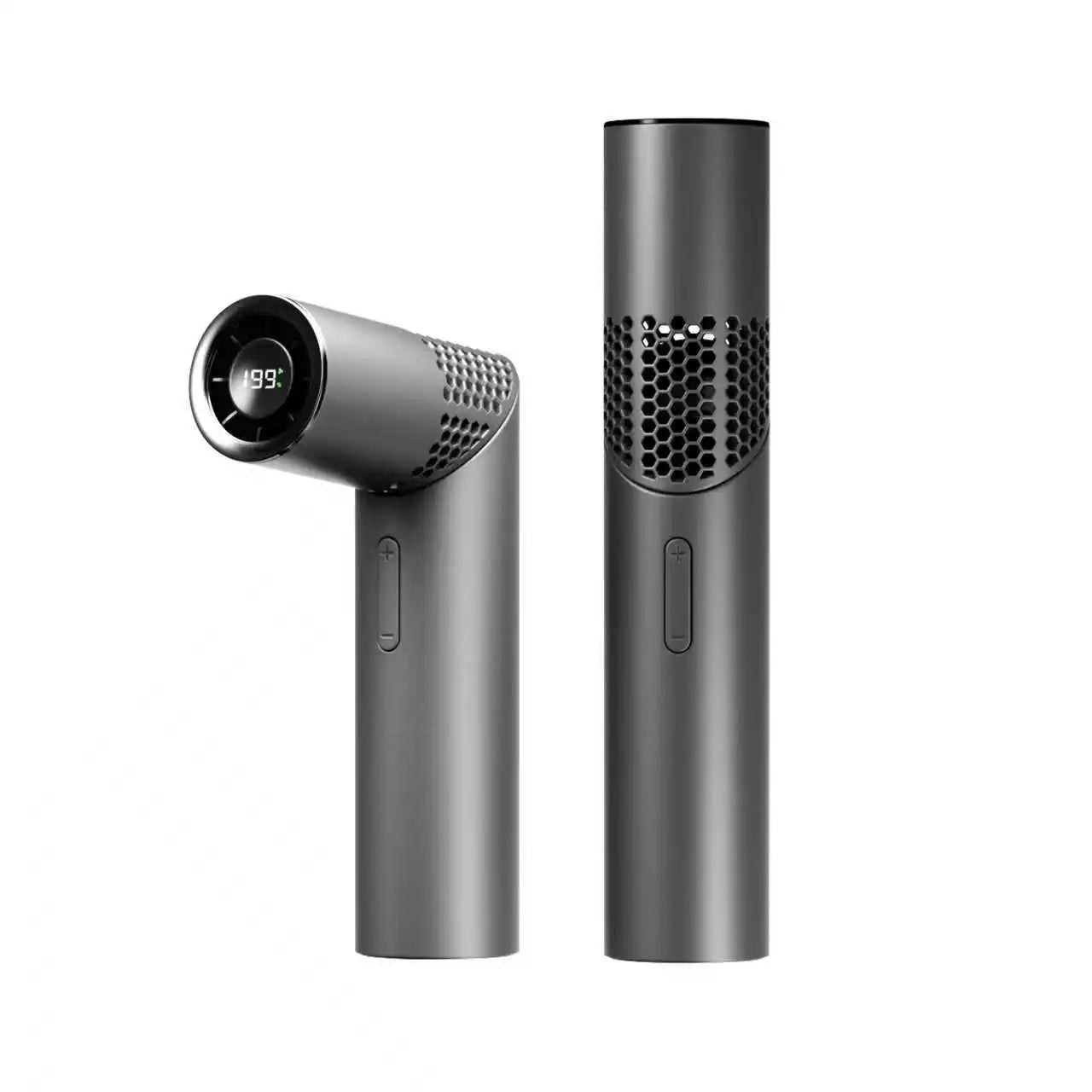
For a compact personal cooling option, a foldable handheld design is particularly useful when you need airflow without carrying a traditional desk fan. The Portable Handheld Fan | Foldable Cooling Comfort for Travel is designed for handheld, desktop, and neck-hanging use, with a compact ABS body and foldable construction.
Quick Picks by Use Case
- Travel: Look for a compact foldable fan that takes little bag space and can provide personal airflow when a full-size fan is impractical.
- Desk use: Prioritize stable positioning, convenient controls, manageable noise, and airflow directed toward your personal workspace.
- Handheld cooling: A lightweight body and comfortable grip matter because the fan may be held for extended periods.
- Commuting: Portability and easy storage become more important than room-wide airflow.
- Outdoor heat: Direct personal airflow can improve perceived comfort, but a small fan cannot lower the surrounding air temperature.
- Flexible everyday use: A foldable design that works by hand or on a desk offers more placement options than a single-purpose fan.
How We Ranked the Fans
The most useful comparison criteria for small electric fans are airflow, battery runtime, noise, portability, charging convenience, controls, construction, and overall value. Airflow determines how strongly you feel the moving air. Battery runtime determines how practical the fan is away from an outlet. Noise matters most in offices, study spaces, bedrooms, and other quiet environments. Portability becomes critical for commuting and travel.
- Airflow: Consider how effectively the fan directs air toward one person.
- Battery: Compare expected use time rather than relying only on maximum advertised runtime.
- Noise: Consider whether the fan will be used near calls, study, sleep, or conversation.
- Portability: Evaluate size, weight, foldability, and storage convenience.
- Charging: USB-based charging can be convenient when traveling or working away from home.
- Versatility: Handheld, desktop, and neck-hanging configurations can make one fan useful in several situations.
How We Tested Small Electric Fans
A trustworthy small electric fan comparison should distinguish independent testing from manufacturer specifications. Airflow can be measured or estimated using appropriate equipment, while battery runtime should be checked from a full charge across representative speed settings. Noise should be assessed at a consistent distance because perceived loudness changes with both speed and placement.
Airflow and CFM Testing
CFM, or cubic feet per minute, describes the volume of air a fan moves over time. It can be useful when comparing fans, but CFM alone does not determine how effective a small fan feels for personal cooling. A compact fan with focused airflow may feel useful directly in front of your face even when it moves less total air than a larger room fan.
For this product, the supplied specifications do not provide an independently measured CFM figure. Therefore, a specific airflow number should not be treated as a verified test result. The practical advantage that can be supported by the product description is focused personal airflow for work, travel, commuting, and relaxation.
Battery Runtime Testing
Battery performance should ideally be evaluated at low, medium, and high speeds because maximum-speed operation generally places greater demand on a battery. Advertised runtime can also differ from real-world runtime depending on speed, battery condition, charging behavior, and operating conditions.
The supplied product information identifies the fan as electric and rechargeable-friendly, but it does not provide a verified battery capacity or independently measured runtime. Buyers who require all-day operation should therefore confirm the manufacturer's current battery and charging specifications before purchase.
Noise and Decibel Testing
Small electric fans can be quiet enough for focused work at lower settings but become more noticeable as airflow increases. A meaningful noise comparison should use consistent measurement distance and fan speed. A fan intended for a commute or outdoor event can tolerate more audible motor noise than one intended for a bedroom or video call.
No independently measured decibel range is supplied for this fan, so a precise dB rating would be unsupported. Instead, choose based on the environment: lower-speed operation is generally preferable for quiet work, while outdoor use allows greater flexibility.
Portability and Charging
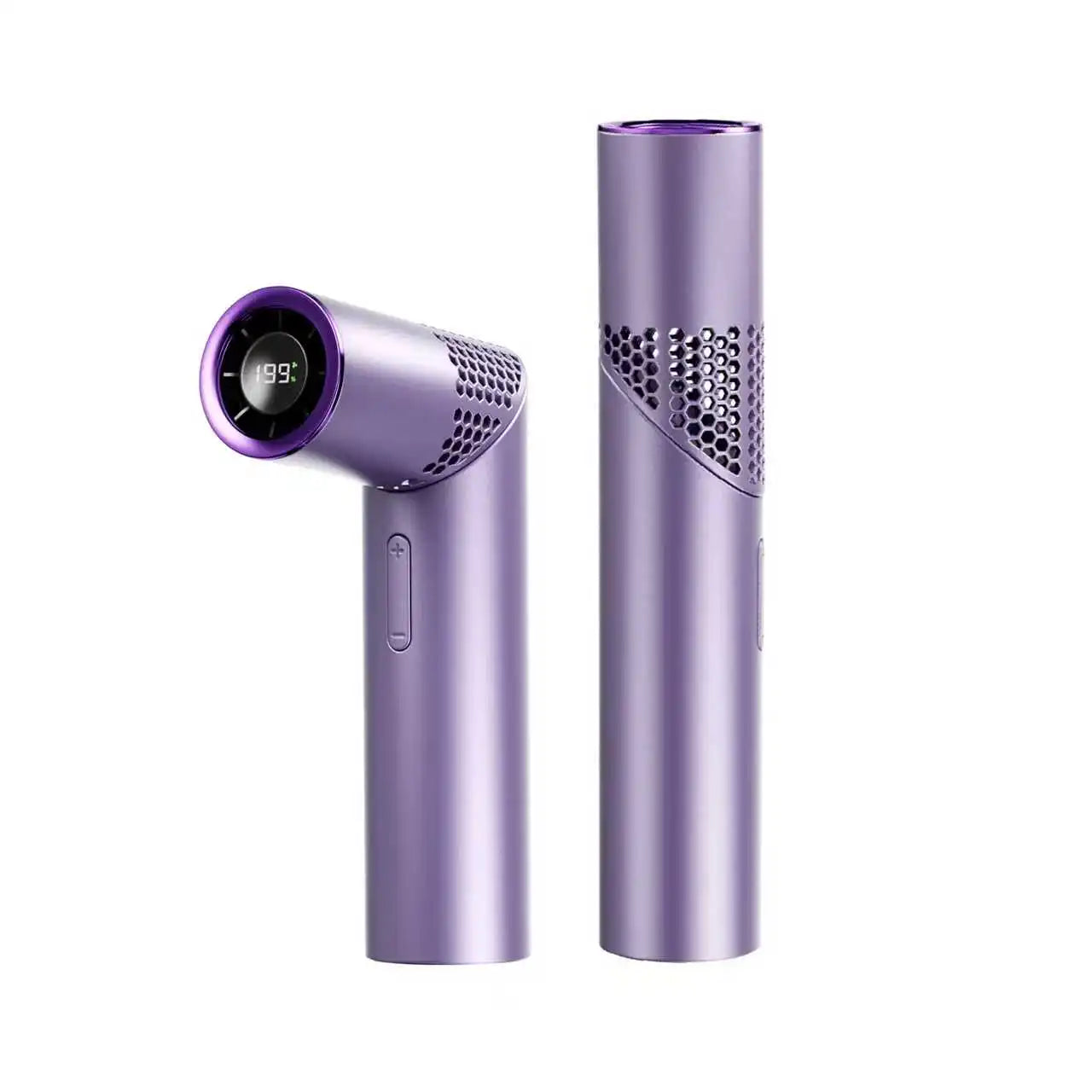
Portability is one of the strongest reasons to choose a small electric fan. The supplied model uses a compact ABS plastic body and a foldable design. It is described as suitable for bags, desks, and travel essentials, with handheld, desktop, and neck-hanging configurations.
Best Small Electric Fan for Travel
Travel changes the priorities for a cooling fan. A traditional fan can be effective but inconvenient to pack. A portable handheld fan makes more sense when you need personal airflow at an airport, hotel, during a road trip, while waiting outdoors, or during a commute.
What Makes a Travel Fan Good?
- Compact construction: The fan should occupy minimal bag space.
- Foldability: A foldable body can make storage easier between uses.
- Personal airflow: Focused airflow is more relevant than room-wide circulation when traveling.
- Lightweight materials: A portable fan should not become a burden in a daily bag.
- Charging convenience: Rechargeable-friendly operation can reduce dependence on disposable batteries or wall outlets.
Best for Carry-On and Commuting
A foldable handheld fan is especially practical when luggage space is limited. The supplied model is designed around compact portability and can be folded when not in use. Its stated uses include travel and commuting, making it a logical fit for shoppers who want a personal cooling device rather than a room fan.

For travelers comparing portable cooling options, the key question is not simply which fan is smallest. Consider whether you can comfortably carry it, position it when needed, and recharge it between uses.
Best Small Electric Fan for Desk and Office Use
A small fan can be an efficient personal cooling solution at a desk because you only need airflow around your immediate workspace. Unlike a large room fan, a compact model can be positioned close to the user and moved when the workspace changes.
Quietest Options for Work
Noise becomes more important during video calls, focused work, studying, or reading. If quiet operation is your priority, use the lowest speed that provides enough personal airflow and avoid assuming that the smallest motor will automatically be the quietest.
Because no verified decibel measurements are supplied for the featured fan, it should not be labeled the quietest small electric fan based on unsupported data. Instead, evaluate the fan's operating sound in the environment where you actually plan to use it.
Strongest Airflow in a Compact Body
Compact fans trade total airflow capacity for portability. A larger desk fan generally has more room for larger blades and sustained air movement, while a handheld model focuses on directing airflow toward a nearby person.
Best Handheld Fan for Commuting and Outdoor Heat
For walking, commuting, outdoor events, or waiting in hot conditions, direct airflow can make a small fan much more useful than its size suggests. The goal is personal comfort rather than cooling an entire outdoor area.
Are Handheld Fans Powerful Enough for Outdoor Heat?
They can provide useful personal airflow, but expectations matter. A handheld fan does not remove the heat from the surrounding environment. In high heat and humidity, airflow can improve perceived comfort, but it should be combined with shade, hydration, appropriate clothing, and breaks from extreme heat when necessary.
Battery Life vs Maximum Airflow
Higher fan speeds generally consume more electrical power, so shoppers should balance the airflow they actually need with the amount of time they expect to use the fan. For a short commute, maximum airflow may be useful. For extended travel, moderate airflow can be a more practical compromise.
Best Small Fan for Strollers and Personal Cooling
Small fans can be useful around personal spaces and stationary areas, but stroller use requires additional care. The supplied product information describes handheld, desktop, and neck-hanging use; it does not establish that the fan is specifically designed or certified as a stroller-mounted product.
Features That Matter for Stroller Use
- Secure positioning that prevents the fan from falling.
- Protected fan components and appropriate placement.
- Airflow that can be directed without creating an obstruction.
- Controls that are difficult for a child to activate accidentally.
- Adequate battery life for the intended outing.
Avoiding Overheating and Unsafe Placement
Never rely on a small fan as a substitute for shade, ventilation, hydration, or appropriate supervision in hot weather. Avoid placing a fan where it can interfere with movement, become loose, or create an entanglement or impact hazard. The supplied product description does not establish stroller-specific safety certification, so it should not be presented as a dedicated stroller fan without additional manufacturer documentation.
Small Electric Fan Performance Comparison: Airflow, Battery and Noise
The most useful comparison is a performance matrix that separates verified information from attributes that require independent testing or manufacturer confirmation.
- Airflow: Personal, focused airflow is a stated benefit of the featured portable handheld fan; no verified CFM measurement is supplied.
- Battery runtime: Rechargeable-friendly use is described, but no independently validated runtime is supplied.
- Noise: No verified dB range is supplied, so precise noise rankings should be avoided.
- Portability: Compact and foldable construction is explicitly stated.
- Charging: The product is described as rechargeable-friendly, but the supplied specifications do not identify a USB-C charging standard.
- Positioning: The design is described as suitable for handheld, desktop, and neck-hanging use.
Airflow and CFM: Which Fan Moves the Most Air?
CFM is useful for understanding total air movement, but personal cooling also depends on airflow direction, distance from the body, ambient temperature, humidity, and whether you are indoors or outdoors. A larger desk fan can move more air overall, while a compact handheld fan can deliver airflow directly where it is needed.
Battery Runtime: Which Fan Lasts Longest?
There is no reliable runtime winner without standardized testing. When comparing models, check battery capacity, speed settings, stated runtime, charging method, and whether the quoted runtime applies to the lowest speed. A fan used throughout a workday or travel day requires a different battery strategy than one used for short periods.
Noise Level: Which Fans Are Quietest?
Do not treat an unverified “quiet” label as a precise performance measurement. Look for consistent dB testing when available and consider the operating environment. Office and bedroom buyers should place greater weight on low-speed acoustics than shoppers using a fan outdoors.
USB-C Charging and Battery Convenience
USB-C can be convenient for travel because compatible charging equipment is increasingly common. However, the supplied specifications for the featured fan do not identify USB-C specifically. Confirm the current product listing for charging details before assuming USB-C compatibility.
Small Electric Fans for Humid Weather vs Dry Heat
Weather conditions affect how useful airflow feels. A fan does not cool the surrounding air like an air conditioner. Instead, it can improve perceived comfort by moving air across the body.
Best Fan Strategy for Humid Weather
In humid weather, strong direct airflow can help you feel more comfortable by increasing air movement across exposed skin. However, high humidity limits evaporative cooling because the surrounding air already contains substantial moisture. A fan therefore works best as one part of a broader heat-management strategy.
Best Fan Strategy for Dry Heat
Dry environments can allow more effective evaporation from the skin, particularly when airflow is combined with shade and appropriate hydration. A fan can complement these measures by increasing air movement around the body, but it should not be treated as a replacement for heat-safety practices.
How to Choose the Best Electric Small Fan
The best electric small fan depends on your primary use case. Instead of choosing solely by size or advertised maximum speed, work through the following criteria.
Choose by Airflow
Prioritize stronger airflow when you will use the fan outdoors, during hot commutes, or in warm rooms. For desk work or short personal cooling sessions, moderate focused airflow may be sufficient.
Choose by Battery Life
Match expected runtime to your routine. A short commute requires less battery capacity than a full day of travel. If you will be away from an outlet for long periods, verify the battery capacity and actual runtime at your preferred speed.
Choose by Noise Level
For offices, libraries, bedrooms, and calls, prioritize low operating noise. For outdoor use, airflow and portability may matter more than acoustic performance.
Choose by Size and Portability
The smallest fan is not automatically the best. A slightly larger compact model may provide better airflow, while a foldable model can offer a strong balance between portability and everyday flexibility.
Choose by Motor and Charging System
Motor type, battery design, charging method, and maintenance requirements can affect the ownership experience. Brushless DC motors are commonly associated with efficient fan designs, but motor type alone does not establish that a particular fan will deliver superior airflow or runtime.
Are Small Electric Fans Better Than Standard Desk Fans?
When a Compact Fan Wins
- When you need to carry the fan between locations.
- When personal airflow matters more than cooling an entire room.
- When battery-powered or rechargeable operation is useful.
- When desk space or luggage space is limited.
- When foldable storage provides a practical advantage.
When a Standard Desk Fan Wins
- When you need stronger sustained airflow across a larger area.
- When continuous wall-powered operation is preferred.
- When a larger blade system can provide more air circulation.
- When portability is not an important requirement.
Pros and Cons of Small Electric Fans
Advantages
- Compact and convenient for everyday carrying.
- Useful for focused personal airflow.
- Can work well for commuting and travel.
- Foldable designs are easier to store.
- Some models can function as handheld and desktop fans.
- Rechargeable-friendly designs can reduce dependence on wall outlets.
Limitations
- Small fans generally provide less total airflow than larger room or desk fans.
- Battery-powered models require charging.
- Coverage is primarily personal rather than room-wide.
- Higher speeds can increase operating noise and power consumption.
- Unverified CFM, runtime, and dB claims should not be treated as independently tested performance.
Bottom Line: Which Small Electric Fan Should You Choose?
The best electric small fan is the one that matches your actual cooling situation. Travelers and commuters should prioritize compactness, foldability, portability, and convenient personal airflow. Desk users should give more weight to stability, noise, and sustained comfort. Outdoor users should prioritize direct airflow while keeping realistic expectations about what a small fan can do in extreme heat.
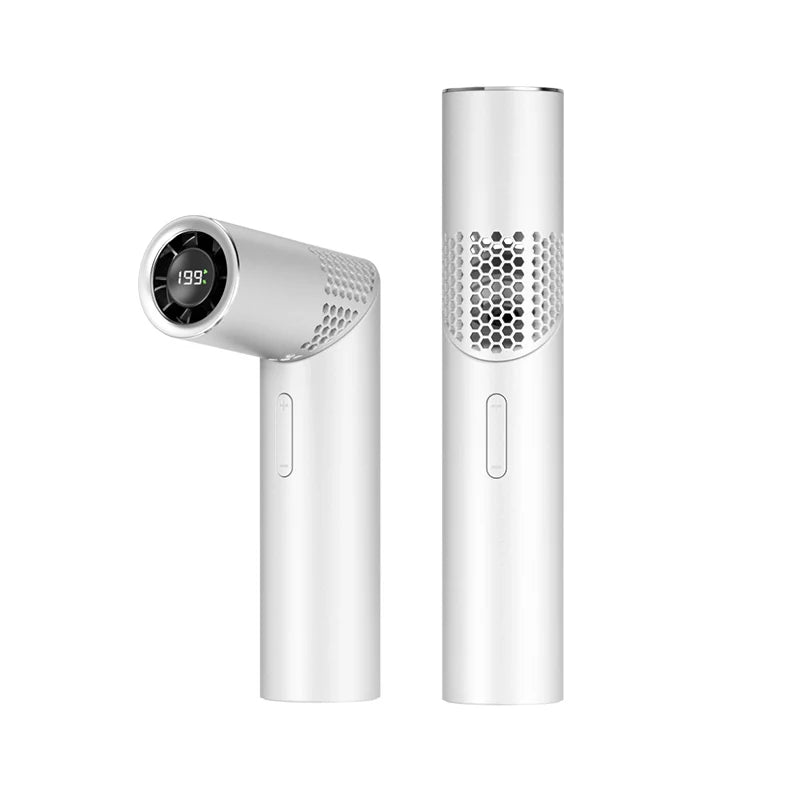
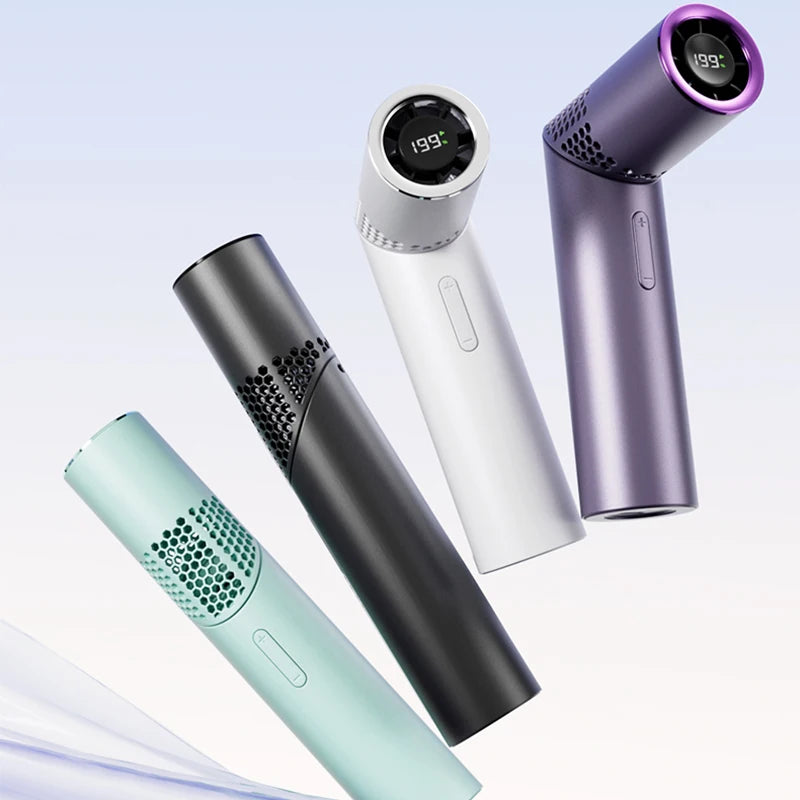
The featured Portable Handheld Fan | Foldable Cooling Comfort for Travel is designed around flexible personal cooling. Its stated strengths include a compact foldable ABS construction, focused airflow, and handheld, desktop, or neck-hanging use. It is available in white, grey, and purple, with electric operation and no remote control.

For shoppers who want a compact fan that can move between a bag, desk, commute, and outdoor setting, this type of foldable personal cooling design offers a practical alternative to a bulky traditional fan. Before purchasing, verify the latest product specifications for charging, battery performance, and any performance measurements that are important to your use case.
Product specifications: ABS plastic construction, plastic fan cover, compact foldable design, one plastic fan rib, white/grey/purple color options, electric power, no remote control, and versatile handheld, desktop, or neck-hanging positioning.
Pillar Article: Best Portable Handheld Fan for Travel: 2026 Tested Picks













