

Best Facial Tightening Devices of 2026: RF, Microcurrent & More
Choosing among facial tightening devices is less about finding the device with the longest feature list and more about matching the technology to your actual goal. Mild skin laxity, jawline definition, fine lines, puffiness, and overall firmness can respond to very different approaches. Radiofrequency (RF), microcurrent, EMS, LED, red light, ultrasound, and hybrid devices are not interchangeable, even when they are marketed under similar anti-aging language.
This guide takes a decision-first approach. Instead of treating every at-home beauty device as a “skin tightening” tool, we compare how each technology works, what it is realistically suited for, how often it may be used, what comfort and preparation are involved, and where its limitations begin. The goal is to help you choose a practical device for your routine without confusing temporary appearance-enhancing effects with permanent lifting.
Best Facial Tightening Devices at a Glance
For shoppers who want a quick answer, RF is generally the most directly aligned with firmness and collagen-support goals, while microcurrent and EMS are more closely associated with electrical stimulation and temporary contour-enhancing effects. LED and red light are better viewed as skin-quality technologies, and ultrasound varies substantially depending on the specific device and energy level.
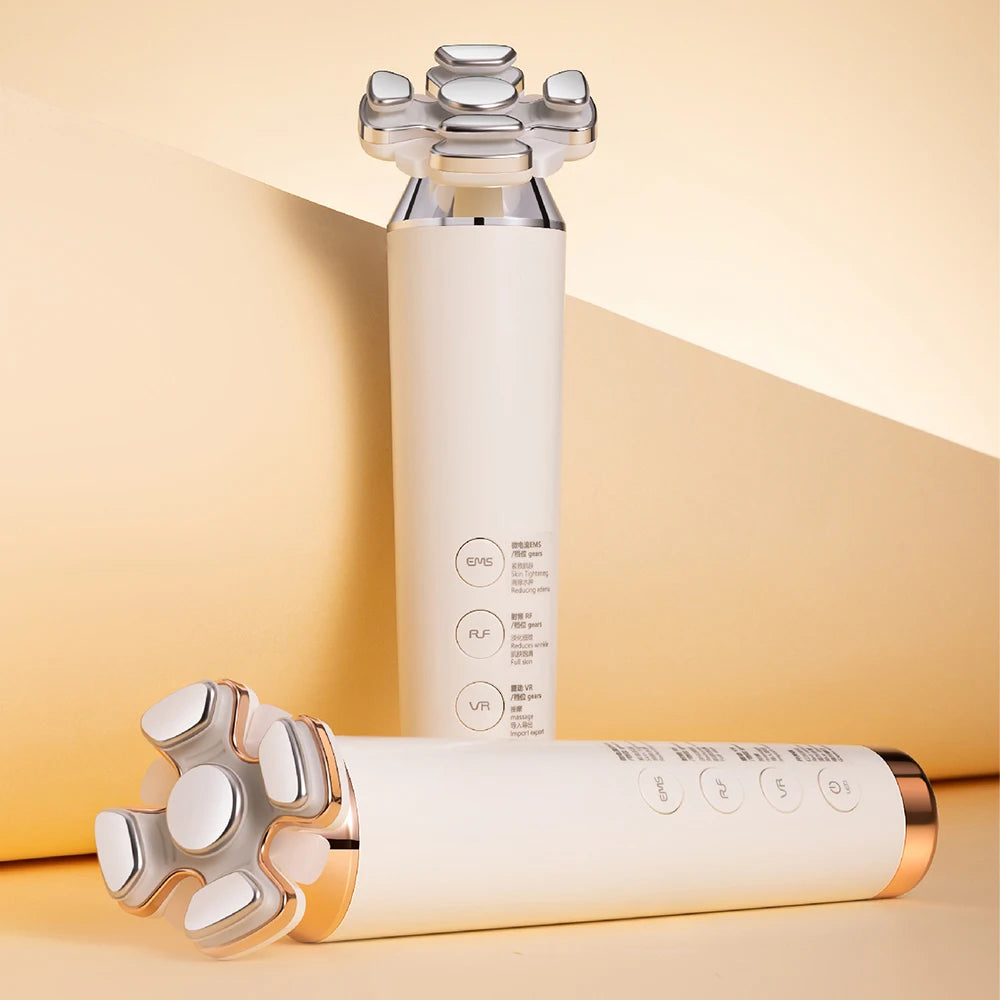
Quick-Pick Matrix: Best Technology by Skin Concern
- Mild skin laxity: RF is the most directly relevant technology to investigate when firmness is the primary concern.
- Jawline definition: Microcurrent or EMS may appeal to users seeking temporary facial contour enhancement, while RF may be preferable when the goal is broader firmness support.
- Fine lines and wrinkles: RF and LED/red light can be considered, although they work through different mechanisms and should not be expected to produce identical results.
- Puffiness: Vibration or massage-oriented devices may provide a temporarily refreshed appearance, but reducing visible puffiness is not the same as tightening lax skin.
- Overall firmness and skin appearance: A hybrid device can be practical for users who want multiple modalities in one routine, provided each technology has a clear purpose.
- Beginners: Look for adjustable settings, straightforward controls, manageable sessions, clear contraindications, and a routine you can realistically maintain.
What to Look for in a Facial Tightening Device
Start with the mechanism rather than the marketing name. A useful buying decision should consider the technology, treatment intensity, session duration, recommended frequency, comfort, skin-contact requirements, conductive gel requirements, charging method, safety instructions, and evidence behind the manufacturer's claims.
Also consider whether you will actually use the device consistently. A theoretically sophisticated device that takes too long to operate or feels uncomfortable may be less useful than a simpler device that fits naturally into your skincare routine.
For broader at-home beauty-device options, you can also explore the Skin and Beauty Care Devices collection before narrowing your choice.
How Facial Tightening Devices Work
At-home facial devices use different forms of energy or stimulation. Understanding the mechanism is important because the word “tightening” can describe several different visual outcomes, including temporarily improved contour, smoother-looking skin, reduced puffiness, or gradual changes in perceived firmness.
Radiofrequency (RF): Heat and Collagen Support
Radiofrequency devices deliver electromagnetic energy that produces controlled heating in tissue. In professional aesthetic medicine, RF is used for several applications involving tissue heating and remodeling. Consumer devices are generally designed to operate at lower energy levels than professional systems.
For an at-home user, the relevant question is not simply whether RF “tightens skin,” but what the particular device is designed and cleared or marketed to do, how much energy it delivers, and what evidence exists for that specific device. RF is attractive for users primarily concerned with mild laxity and firmness because controlled heating is associated with collagen-related mechanisms. However, at-home RF should not be presented as equivalent to a professional procedure or surgery.
Microcurrent: Low-Level Electrical Stimulation
Microcurrent devices use low-level electrical current applied through electrodes contacting the skin. They are commonly marketed for facial toning, contouring, and a temporarily lifted-looking appearance.
The key distinction is that microcurrent should not automatically be interpreted as physically shrinking or removing loose skin. A user may notice a more defined or refreshed appearance after treatment, but that visible change can be temporary. Consistency and realistic expectations are more important than assuming one session creates lasting structural lifting.
Electrical Muscle Stimulation (EMS): Stronger Muscle-Focused Stimulation
EMS also uses electrical stimulation, but the terminology generally refers to stimulation intended to activate muscles. Compared with low-level microcurrent products, EMS devices may produce a more noticeable sensation and may be designed around stronger muscle stimulation.
Because device specifications differ considerably, “EMS” should not be treated as a standardized indication for facial tightening. Check electrode placement, intensity controls, intended treatment areas, session length, and manufacturer warnings before use.
LED and Red Light Therapy: Skin Quality Rather Than Instant Tightening
LED and red light devices use specific wavelengths of light rather than electrical stimulation or tissue-heating RF energy. Red and near-infrared light are commonly discussed in the context of photobiomodulation and skin appearance.
For shoppers, the practical distinction is important: LED or red light is generally better framed as a skin-quality and appearance-support technology than as an instant mechanical tightening treatment. Depending on the device and wavelength, users may be interested in concerns such as overall skin appearance, redness, or fine lines rather than immediate lifting.
Ultrasound Therapy: Energy Delivered Through Sound Waves
Ultrasound uses high-frequency sound waves to deliver energy into tissue. Professional ultrasound-based aesthetic treatments can differ substantially from consumer devices in energy output, depth, treatment protocols, and clinical supervision.
Do not assume that an at-home ultrasound device produces the same tissue effect as a professional ultrasound treatment. When comparing products, verify the exact technology, intended use, operating instructions, and safety documentation rather than relying on the word “ultrasound” alone.
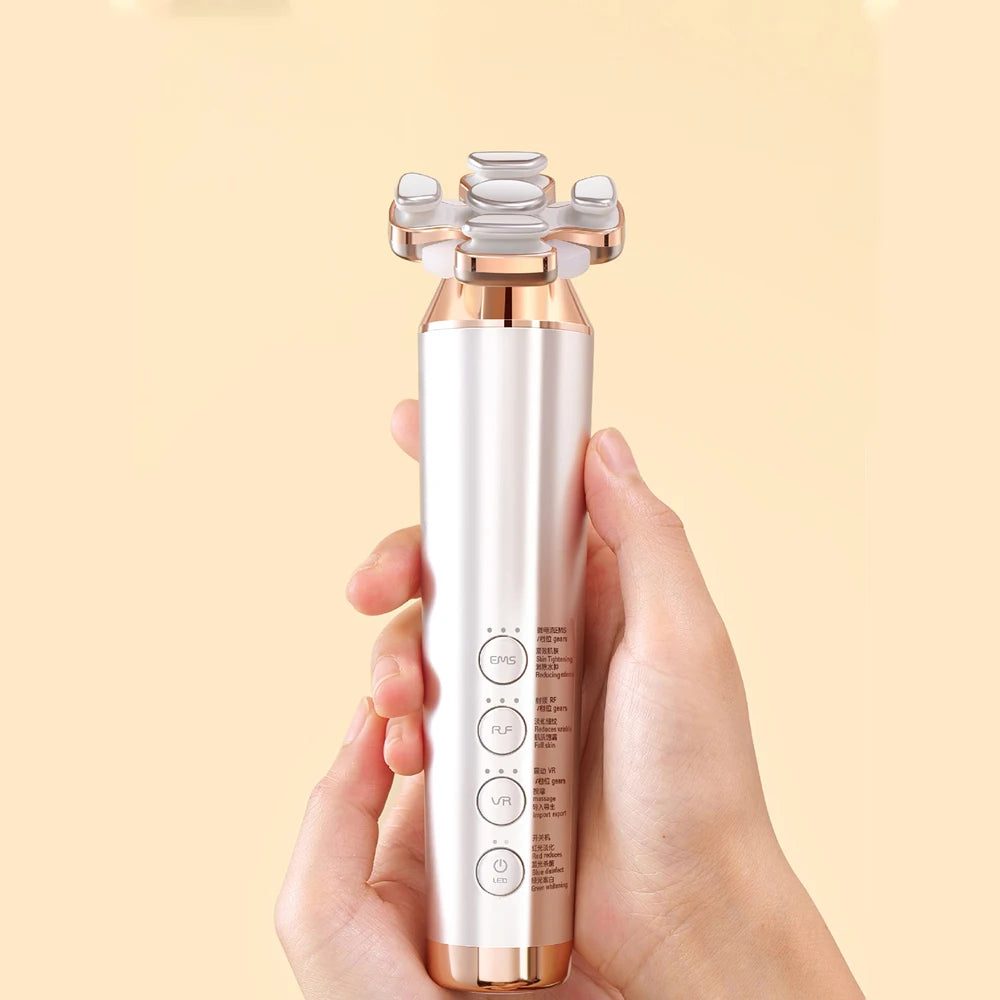
Hybrid Devices: Combining Multiple Modalities
Hybrid devices combine two or more technologies, such as RF, EMS, LED, and vibration. Their primary advantage is convenience: one handheld device can support several skincare objectives without requiring separate tools.
More technologies do not automatically mean better results. A hybrid device is most compelling when each included modality has a meaningful role in the user's routine and the controls allow appropriate use rather than simply adding features to the product description.
Best Facial Tightening Device by Skin Concern
Best for Mild Skin Laxity
If mild laxity is your primary concern, start by evaluating RF devices and their specifications. RF is the modality most directly associated with controlled tissue heating and collagen-support mechanisms among the common at-home technologies discussed here.
Look for clear instructions, appropriate temperature or intensity controls where applicable, automatic safety features, and a treatment schedule that does not encourage excessive use. A consumer RF device should be viewed as a gradual skincare tool rather than a substitute for a professional lifting procedure.
Best for Jawline Definition
Jawline concerns require careful interpretation because “definition” can mean several things. Someone experiencing temporary puffiness may see a more defined contour after massage or stimulation, while someone with genuine skin laxity is dealing with a different issue.
Microcurrent and EMS may appeal to users interested in temporary contour-enhancing or muscle-stimulation effects. RF may be more relevant when the broader goal is skin firmness. Neither should be described as permanently reshaping the jawline.
Best for Fine Lines and Wrinkles
RF and LED/red light are two technologies worth comparing when fine lines are a major concern. RF focuses on controlled heating and firmness-related mechanisms, while light-based devices focus on photobiomodulation and overall skin appearance.
Choose based on the concern you are actually trying to address. A device marketed as a “tightening” tool is not necessarily the best choice if your main concern is uneven tone, dullness, or surface texture.
Best for Puffiness and a More Refreshed Appearance
Puffiness should not be confused with skin laxity. A face can look less defined because of temporary fluid retention, fatigue, or other factors without having significant structural looseness.
Devices incorporating vibration or massage may be attractive for this use case because they can provide a soothing, refreshed-feeling routine. Any reduction in visible puffiness should be considered a temporary appearance benefit rather than evidence of permanent tightening.
Best for Overall Firmness and Skin Appearance
A hybrid device can make sense when your goals extend beyond one concern. For example, someone interested in firmness, facial stimulation, light-based skincare, and massage may prefer one multi-function tool over purchasing several separate devices.
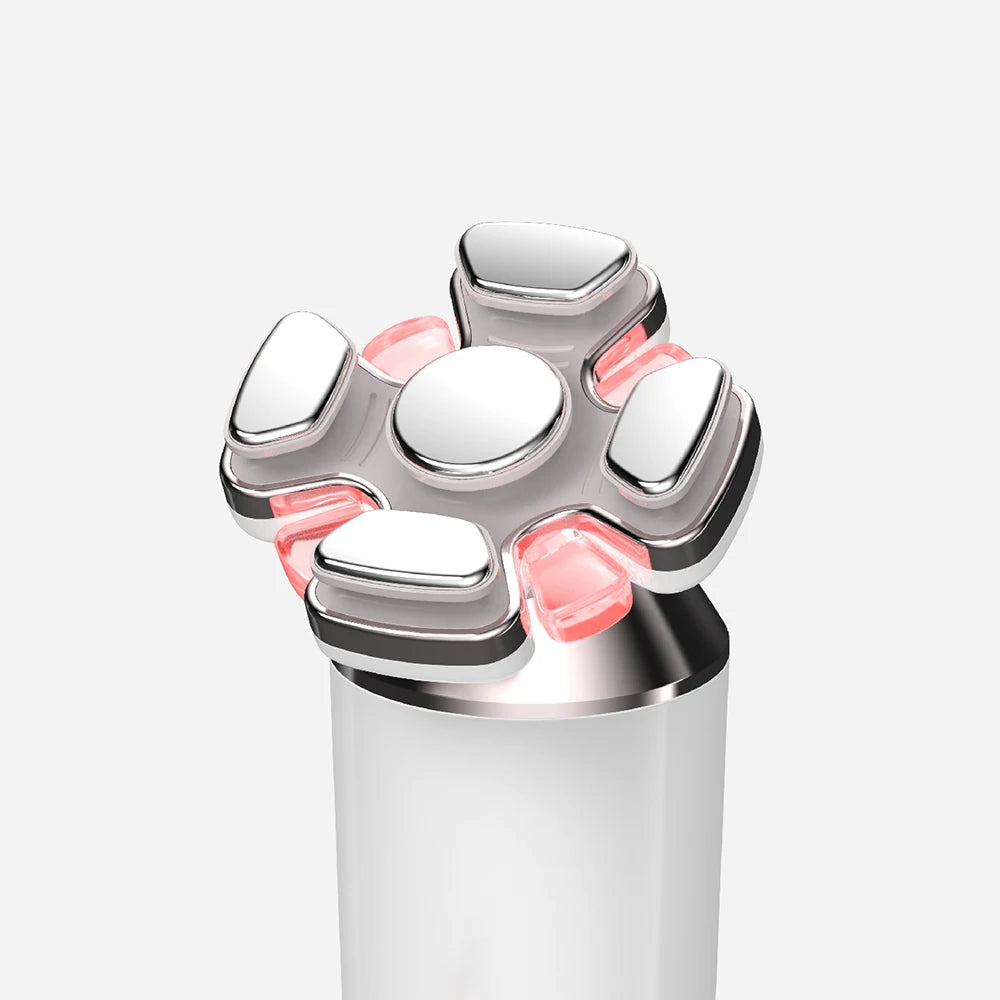
The RF EMS Facial Device is one example of this approach. Its manufacturer-provided specifications describe a combination of 1 MHz RF, EMS, LED, and vibration in a rechargeable handheld design. The device also includes three LED colors, a 2400mAh rechargeable battery, Type-C charging, and vibration advertised up to 8,000 rpm.
- Pros: Combines several modalities in one handheld device; rechargeable Type-C design; adjustable multi-technology skincare concept; useful for users who prefer a consolidated routine.
- Cons: Multiple technologies do not guarantee stronger tightening results; results depend on consistent use and individual response; users should follow the supplied safety and treatment instructions rather than increasing intensity or frequency independently.
Best for Beginners
Beginners should prioritize simplicity over maximum feature count. A good starting device should have understandable controls, clearly defined treatment areas, manageable session times, and manufacturer guidance that explains how to prepare the skin and operate the device.
Comfort also matters. If a device causes excessive heat, unpleasant electrical sensations, or requires an inconvenient routine, consistency may suffer. The best beginner device is ultimately one that matches the user's goals and can be used correctly.
RF vs. Microcurrent vs. EMS vs. LED vs. Ultrasound
The most important comparison is not which technology is universally “best,” but which mechanism most closely matches the intended outcome.
RF vs. Microcurrent for Facial Tightening
RF and microcurrent address facial appearance through fundamentally different mechanisms. RF uses electromagnetic energy to create controlled heating, while microcurrent uses low-level electrical stimulation.
If your priority is firmness and collagen-support mechanisms, RF is the more direct technology to investigate. If your priority is a temporarily lifted-looking or more defined appearance associated with facial stimulation, microcurrent may be more appealing. These are different outcomes, and one should not be substituted for the other simply because both products use the word “lifting.”
Microcurrent vs. EMS
Microcurrent is generally positioned around low-level facial electrical stimulation, whereas EMS is designed around muscle stimulation and can produce a more noticeable contraction or sensation depending on the device.
When comparing them, examine the current or intensity specifications, electrode design, intended facial areas, session duration, and contraindications. Do not assume that a stronger sensation means a better cosmetic result.
RF vs. LED
RF is primarily a heat-based energy modality, whereas LED uses light. RF is therefore the more obvious category to investigate for firmness-focused goals, while LED may be more appropriate when overall skin appearance and photobiomodulation are higher priorities.
A hybrid device can combine both, but the presence of LED does not make its RF function more effective, and the presence of RF does not automatically make its LED function more effective.
Ultrasound vs. RF
Both technologies can deliver energy into tissue, but they do so differently. RF relies on electromagnetic energy and controlled heating, while ultrasound relies on acoustic energy. Professional systems can operate at substantially different energy levels and depths from consumer products.
For an at-home purchase, the device-specific instructions and specifications matter more than choosing based on the technology name alone.
Which Technology Is Most Appropriate for Your Goal?
- Firmness or mild laxity: Investigate RF first.
- Temporary contour or stimulation: Consider microcurrent or EMS.
- Skin appearance and light-based care: Consider LED or red light.
- Massage and refreshed appearance: Consider vibration-enabled devices.
- Multiple skincare goals: Consider a hybrid device after verifying that each modality is appropriate for your routine.
How We Evaluate Facial Tightening Devices
A credible roundup should not rank devices solely by popularity, number of modes, or marketing language. We use six decision criteria to make comparisons more useful.
Technology and Intended Mechanism
The technology must logically correspond with the stated cosmetic objective. “Tightening,” “lifting,” “toning,” and “rejuvenation” are not interchangeable scientific terms, so product descriptions should be interpreted carefully.
Treatment Intensity and Controls
Adjustable intensity can make a device more practical for different users. Look for clearly defined modes, intensity levels, temperature controls where relevant, and safety mechanisms. More intensity is not automatically better.
Treatment Time and Recommended Frequency
A device should fit into a realistic routine. Compare the manufacturer's recommended session length and frequency before purchasing. A five-minute routine that you consistently follow can be more useful than an elaborate routine that you abandon.
Comfort and Ease of Use
Consider whether the device glides comfortably, whether it produces heat or electrical sensations, how easy it is to hold, and whether a conductive gel is required. These details directly affect adherence.
Safety and Manufacturer Guidance
Safety documentation should explain contraindications, appropriate treatment areas, intensity limits, cleaning, charging, and precautions around sensitive areas. A product with clear instructions deserves more confidence than one relying primarily on cosmetic promises.
Evidence and Claim Transparency
Evidence for a professional treatment should not automatically be presented as evidence that an at-home consumer device produces the same result. Device energy levels, treatment protocols, treatment frequency, and clinical supervision can differ significantly.
What Results Can You Realistically Expect?
After the First Few Uses
Early changes are more likely to involve how the skin looks or feels than dramatic structural tightening. Depending on the technology, users may perceive improved radiance, a refreshed appearance, temporary contour definition, or reduced-looking puffiness.
These immediate effects should not be interpreted as proof that collagen remodeling has already occurred.
After Several Weeks of Consistent Use
Longer-term evaluation should focus on gradual changes in perceived firmness, skin texture, and overall appearance. Results vary according to age, baseline skin condition, device technology, treatment routine, and individual response.
Take standardized photographs under similar lighting if you want a more objective way to assess subtle changes rather than relying entirely on day-to-day mirror impressions.
Longer-Term Maintenance
At-home beauty devices generally require ongoing maintenance rather than a single treatment followed by permanent results. Follow the device-specific schedule and avoid assuming that using it more frequently will accelerate results.
What At-Home Devices Cannot Promise
Consumer facial tightening devices should not be presented as capable of producing surgical-equivalent lifting, permanent elimination of sagging skin, or guaranteed dramatic facial reshaping. Significant skin laxity may require evaluation by a qualified healthcare or aesthetic professional to determine whether a professional treatment is more appropriate.
How Often Should You Use a Facial Tightening Device?
There is no single correct schedule for every facial tightening device. The appropriate frequency depends on the modality, energy level, device design, treatment area, and manufacturer's instructions.
RF Treatment Frequency
RF schedules vary among consumer devices. Follow the exact instructions supplied with the product, including any restrictions on consecutive treatments, treatment duration, and areas of use. Avoid creating a more aggressive schedule simply because a result appears gradual.
Microcurrent and EMS Frequency
Microcurrent and EMS routines also vary. Some products are intended for relatively frequent maintenance, while others specify different intervals. Use the manufacturer's recommended intensity and frequency rather than assuming that all electrical facial devices can be used on the same schedule.
LED and Red Light Frequency
Light-based devices depend on wavelength, irradiance, exposure time, and treatment design. Consistency is generally more important than arbitrarily extending sessions. Use the exposure schedule provided for the particular device.
Why More Is Not Always Better
Increasing treatment intensity or frequency beyond manufacturer guidance can increase the likelihood of irritation, discomfort, excessive heat exposure, or other unwanted effects without guaranteeing faster cosmetic improvement.
Are Facial Tightening Devices Safe to Use at Home?
Many consumer facial devices are designed for home use, but “for home use” does not mean appropriate for every person or every skin condition. Safe use depends on selecting an appropriate device, understanding its technology, following instructions, and respecting contraindications.
Common Safety Considerations
- Do not use energy-based devices over broken, irritated, or actively inflamed skin unless the manufacturer specifically indicates otherwise.
- Follow the manufacturer's instructions around the eyes and other sensitive areas.
- Stop if treatment causes significant pain, excessive heat, persistent redness, or another unexpected reaction.
- Use only compatible conductive products when the device requires electrical or RF contact medium.
- Do not exceed the recommended treatment intensity or duration.
- Keep rechargeable devices and charging components dry and follow the supplied charging instructions.
When to Avoid or Pause Treatment
Manufacturer contraindications should take priority. People with implanted electronic devices, certain medical conditions, active skin disorders, recent cosmetic procedures, or other relevant circumstances should review the product's warnings and seek appropriate professional guidance before using energy- or electrical-stimulation devices. Pregnancy-related use should also be addressed according to the manufacturer's specific safety guidance and, when appropriate, a healthcare professional.
Conductive Gel and Skin Preparation
Some RF and electrical-stimulation devices require a conductive gel or another compatible medium to maintain appropriate contact between the device and skin. Do not substitute random skincare products unless the manufacturer says they are compatible.
Preparation can affect comfort, device performance, and the treatment experience. Clean skin and the correct conductive medium may be particularly important for devices that depend on consistent electrical contact.
At-Home Devices vs. Professional Treatments
Professional aesthetic devices are typically operated under a different treatment protocol and may deliver substantially different energy levels from consumer products. Professional treatment also provides assessment and supervision that an at-home device cannot replicate.
That distinction matters when reading before-and-after photographs or clinical studies. Evidence for a professional RF or ultrasound procedure should not be presented as proof that every consumer device using the same technology produces equivalent results.
Facial Tightening Device Buying Checklist
Choose the Technology First
Identify your primary goal before comparing brands. If mild laxity is the priority, investigate RF. If temporary facial stimulation is the goal, compare microcurrent and EMS. If broader skin-quality care is more important, investigate LED or red light. For multiple objectives, evaluate a hybrid system.
Check Treatment Time and Frequency
Read the complete routine before purchasing. Determine how long a session takes, how many sessions are recommended, and whether the schedule is realistic for your lifestyle.
Check Intensity, Comfort, and Controls
Look for adjustable settings where appropriate. Beginners may benefit from lower-intensity options, while experienced users may prefer greater control. Comfort should remain a priority rather than treating the strongest sensation as a measure of effectiveness.
Verify Conductive Product Requirements
Check whether the device requires conductive gel or another medium. Include the recurring cost and availability of compatible products when calculating the real cost of ownership.
Review Safety Instructions and Contraindications
Do not make safety an afterthought. Read the contraindications before purchase, especially for RF, EMS, microcurrent, ultrasound, or combination devices.
Separate Useful Features From Marketing Claims
Prioritize measurable specifications such as technology, wavelength when relevant, RF frequency where disclosed, intensity levels, battery capacity, charging method, treatment time, and manufacturer instructions. Be cautious of unsupported promises involving permanent lifting, dramatic fat reduction, or surgical-like results.
For shoppers comparing other home-care technologies after making a facial-device decision, the broader Body Care and Health Devices collection can provide additional options.
For a more focused skincare-device category, the Skin and Beauty Care Devices collection is the most relevant place to continue browsing.
Frequently Asked Questions About Facial Tightening Devices
Do facial tightening devices really work?
Some facial tightening devices can produce noticeable cosmetic effects, but the type and durability of the result depend heavily on the technology. RF is associated with controlled heating and collagen-support mechanisms, while microcurrent and EMS focus on electrical stimulation. LED and red light are generally better viewed as skin-quality technologies. At-home devices should not be expected to produce guaranteed permanent or surgical-equivalent lifting.
What is the best facial tightening device for sagging skin?
There is no universally best device for every degree of sagging. For mild laxity, RF is one of the most relevant at-home technologies to investigate because of its heat-based approach. More pronounced sagging may not respond adequately to consumer devices, making professional assessment a more appropriate next step.
Is RF or microcurrent better for facial tightening?
It depends on what you mean by tightening. RF is more directly associated with controlled heating and collagen-support mechanisms, while microcurrent is focused on low-level electrical stimulation and may provide a temporarily lifted-looking or more defined appearance. They should be evaluated as different technologies rather than interchangeable versions of the same treatment.
How often should you use a facial tightening device?
Frequency varies by technology and product. Follow the manufacturer's instructions for session duration, intensity, and treatment intervals. Do not assume that using an RF, microcurrent, EMS, or LED device more often will produce faster results.
Are facial tightening devices safe to use at home?
Many are designed for home use when operated according to their instructions, but suitability varies by person and device. Review contraindications, avoid irritated or broken skin, use compatible conductive products when required, and seek professional guidance when medical conditions, implanted electronic devices, pregnancy, or recent procedures may affect suitability.
The Bottom Line: Which Facial Tightening Device Should You Choose?
The best facial tightening device is the one whose technology matches your primary concern and whose routine you can follow consistently. For mild laxity and firmness-focused goals, RF deserves close attention. For temporary contour and facial stimulation, microcurrent or EMS may be more relevant. LED and red light are better positioned around broader skin appearance, while vibration can complement a refreshed-looking routine.
Hybrid devices can be convenient when you want multiple technologies in one tool, but more features should never replace careful evaluation of the individual mechanisms, treatment schedule, comfort, safety instructions, and evidence.
If a multi-technology approach fits your goals, the RF EMS Facial Device combines RF, EMS, LED, and vibration in one rechargeable handheld design. It can be a practical option for shoppers who want to consolidate several at-home facial-care steps, provided they use it according to the manufacturer's directions and maintain realistic expectations.
Ultimately, choose the device based on technology first, goal second, routine third, and marketing claims last. That approach makes it easier to compare facial tightening devices on what actually matters: how they work, what they can realistically do, how safely they can be used, and whether you are likely to use them consistently.
Pillar Article: Best Facial EMS Devices: Evidence-Aware Buying Guide













