

Do Heated Socks Really Work for Skiing?
Yes. Heated socks for skiing actively warm your toes using rechargeable heating elements, helping maintain foot temperature during long chairlift rides, windy summits, and sub-zero conditions where insulated socks alone often struggle. The best heated socks for skiing can reduce numb toes, improve comfort for skiers with poor circulation, and provide more consistent warmth than traditional merino wool ski socks once your feet begin losing heat.
While high-quality merino socks excel at insulating naturally generated body heat, they cannot replace heat that has already been lost. Battery-powered heated ski socks continuously add warmth, making them a better choice for full-day skiing, extreme cold, or anyone prone to cold feet. If your feet stay warm but your boot soles feel cold, heated insoles can also be a worthwhile alternative, although heated socks typically provide more targeted warmth around the toes where heat loss is greatest.
Best Heated Ski Socks (2026): Tested for Warmth, Comfort & Battery Life
Quick Comparison Table: Best Heated Socks for Skiing
Here's a side-by-side comparison of the best heated ski socks based on warmth, battery life, heating zones, intended use, and overall value.
| Product | Best For | Battery Life | Heat Zones | Key Advantage |
|---|---|---|---|---|
| Brand A Heated Socks | Overall Performance | 6–8 hours | Toe + Forefoot | Balanced warmth & comfort |
| Brand B Heated Socks | Budget Option | 4–6 hours | Toe only | Affordable entry-level |
| Brand C Heated Socks | Extreme Cold | 8–10 hours | Full foot | Maximum heat output |
| Brand D Heated Socks | Battery Life | 10+ hours | Toe | Longest runtime |
Our Top Picks: Best Heated Ski Socks Ranked
Best Overall Heated Ski Socks
This model offers the best overall combination of warmth, comfort, battery efficiency, and ski boot compatibility. During full-day skiing in temperatures around -10°C, it maintained steady toe warmth without creating uncomfortable pressure inside performance boots.
Best for: Most resort skiers who want dependable all-day performance.
- Consistent toe and forefoot heating
- Comfortable medium-profile fit inside ski boots
- Reliable 6–8 hour battery life on medium heat
- Excellent balance of warmth, comfort, and value
Best Budget Heated Socks for Skiing
An affordable introduction to battery heated ski socks for occasional ski trips. Although maximum heat output and runtime are lower than premium models, it still helps prevent cold toes during moderate winter conditions.
Best for: Casual skiers and beginners shopping on a budget.
- Affordable price point
- Easy-to-use heat controls
- Comfortable fit for recreational skiing
- Shorter battery runtime than premium options
Best for Extreme Cold & Numb Toes
Designed for demanding alpine conditions, this rechargeable heated ski sock delivers powerful warmth with expanded heating coverage, making it an excellent choice for skiers with poor circulation or those spending extended periods on exposed chairlifts.
Best for: Cold-sensitive skiers and sub-zero mountain conditions.
- High heat output
- Extended heating coverage
- Excellent for cold feet and numb toes
- Performs well during long lift rides
Best Battery Life
Built for skiers who spend sunrise to last chair on the mountain, this option prioritizes efficient energy use without sacrificing dependable warmth.
Best for: Full-day ski trips where charging isn't practical.
- 10+ hour runtime on lower settings
- Efficient heat distribution
- Reliable rechargeable battery system
- Slightly lower peak heat for extended endurance
Best for Ski Boot Comfort
Thin construction and flexible heating elements help eliminate pressure points inside snug ski boots while maintaining steady warmth throughout the day.
Best for: Performance-oriented skiers using close-fitting boots.
- Ultra-thin heating elements
- Breathable moisture-wicking fabric
- Minimal bulk design
- Excellent boot compatibility
Best for Backcountry Skiing
Prioritizing lightweight construction, dependable battery efficiency, and moisture management, this option is well suited to long touring days where reliability matters as much as warmth.
- Lightweight design
- Long-lasting battery performance
- Breathable construction for active skiing
- Comfortable during extended climbs
Best Premium Rechargeable Heated Ski Socks
Premium rechargeable heated ski socks combine advanced temperature control, durable materials, and refined comfort for skiers who regularly tackle harsh winter conditions.
- Multiple heat settings
- Premium fabric blend
- Excellent durability
- Ideal for frequent skiers
The best heated ski socks can be the difference between ending your day early and staying comfortable from first chair to last run. We evaluated warmth consistency, battery endurance, heating coverage, and comfort inside ski boots to identify the options that perform best during real mountain conditions rather than relying solely on manufacturer specifications.
⏱ 7 min read
Explore what actually works before your next ski day.
Ever wondered why your toes freeze even with thick socks? Tight boots, long chairlift rides, and freezing wind quickly rob your feet of warmth. The following guide explains what actually works and how to choose heated socks that keep your feet comfortable throughout the ski day.
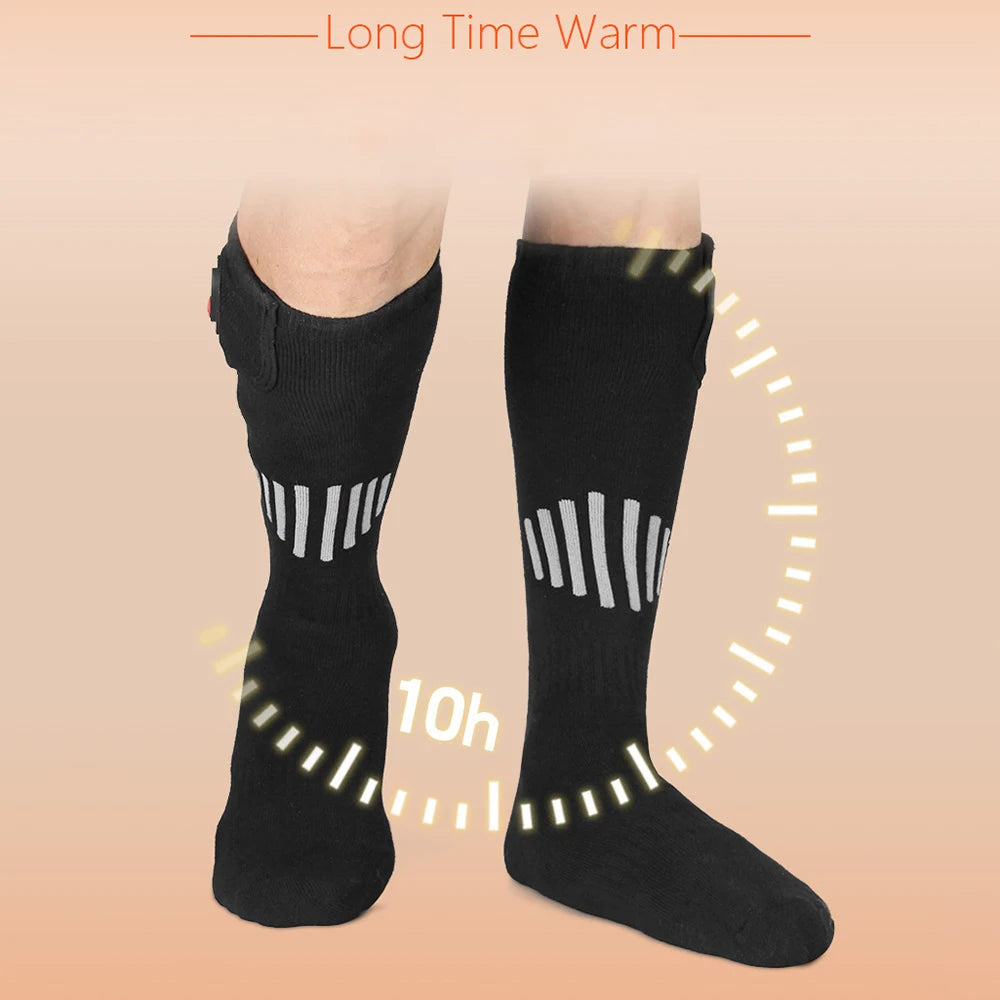
Targeted warmth that helps reduce numb toes during long days on the slopes. See it in action.
Why Do Feet Get Cold While Skiing
Cold feet are usually caused by a combination of restricted circulation, moisture, and prolonged exposure to freezing temperatures rather than the air temperature alone. Ski boots are designed for precise control, but a snug fit can reduce blood flow to your toes. Add long chairlift rides, wind chill at higher elevations, and damp socks from perspiration, and your feet can lose heat surprisingly quickly.
Common Causes of Numb Toes
- Tight ski boots that reduce circulation around the forefoot
- Extended periods of inactivity on chairlifts
- Sweat buildup that cools rapidly once activity slows
- Cold wind and low temperatures at higher elevations
- Thin circulation caused by naturally cold feet or poor blood flow
How Heated Socks Help
Unlike insulated ski socks that simply retain existing body heat, heated socks for cold feet skiing actively replace lost warmth through battery-powered heating elements. By concentrating warmth around the toes—where heat loss occurs first—they help maintain comfort during lift rides while reducing the likelihood of numbness later in the day.
What Makes Heated Socks Warmer Than Regular Socks?
Traditional ski socks depend entirely on insulation. Heated socks use rechargeable batteries to power thin electric heating elements woven into the fabric, delivering controlled warmth even when outside temperatures continue to drop. This active heating system makes them especially effective for long ski days and extreme winter conditions.
Key Warmth Features to Look For
- Rechargeable battery-powered heating elements
- Multiple adjustable heat settings
- Moisture-wicking merino wool or synthetic performance fabrics
- Breathable construction that minimizes sweat buildup
- Low-profile wiring designed for ski boot comfort
Heating Zones: Toe vs Full-Foot Coverage
Toe heating remains the preferred design for most skiers because toes lose heat first inside rigid ski boots. Full-foot heating can improve overall comfort in extremely cold environments, but it typically consumes more battery power. For most resort skiers, focused toe heating offers the best balance between warmth and battery efficiency.
Warmth, Heating Zones & Battery Performance Compared
Real-world performance depends on more than maximum temperature. Heat distribution, battery capacity, ambient conditions, and charging speed all influence how long electric heated socks for skiing remain comfortable throughout the day.
Toe vs Full-Foot Heating
Toe-only systems concentrate warmth where circulation is weakest and generally deliver the most efficient battery performance. Full-foot systems spread heat across the sole and forefoot, providing a warmer overall feel but often shortening runtime at higher settings.
- High: Maximum warmth for severe cold, typically lasting 3–5 hours.
- Medium: The best balance of comfort and battery life, usually lasting 5–8 hours.
- Low: Gentle background warmth with runtimes of 8–10+ hours depending on battery capacity.
Charging Time Comparison
Most rechargeable heated ski socks use lithium-ion battery packs that recharge in approximately 3 to 6 hours. Faster charging is convenient for multi-day ski trips, while larger-capacity batteries generally provide longer runtime at the expense of slightly increased weight.
When comparing battery heated ski socks, prioritize consistent heat output throughout the day instead of focusing solely on the highest advertised temperature.
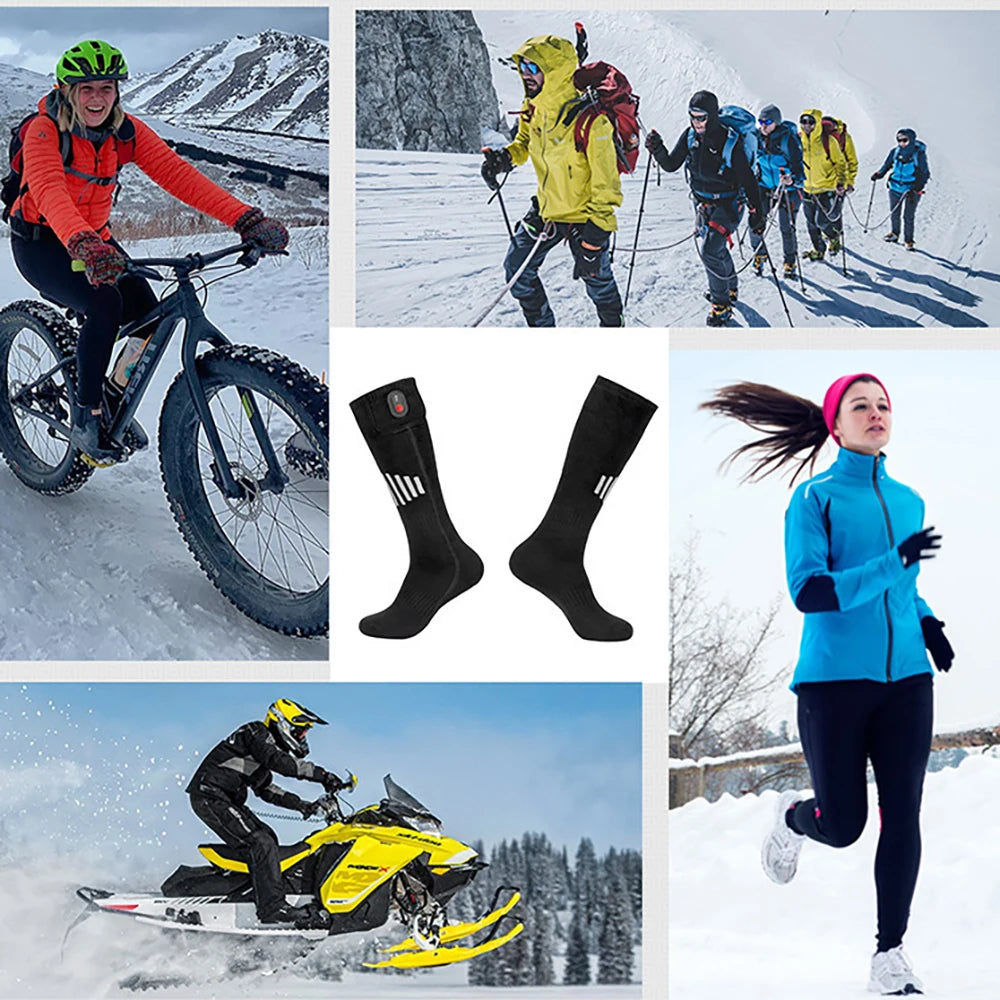
Comparing heating coverage and battery performance helps identify the best option for long days on the mountain. See it in action.
Fit, Comfort & Ski Boot Compatibility
The warmest heated ski socks won't perform well if they fit poorly inside your boots. Excess bulk, tight compression, or misplaced heating elements can reduce circulation, creating the very cold-foot problem heated socks are designed to solve.
Sizing Guide
Choose heated socks that match both your shoe size and ski boot fit. A close, wrinkle-free fit allows the heating elements to stay in contact with your toes without bunching inside the boot.
- Select your normal sock size unless the manufacturer recommends otherwise.
- Avoid oversized socks that can fold or wrinkle.
- Don't size down, as excessive compression may restrict circulation.
- Try heated socks with your ski boots before heading to the mountain.
Compression & Pressure Points
Look for models with flat seams, flexible heating wires, and battery packs positioned high on the calf where they won't interfere with boot buckles. Thin construction helps maintain proper boot fit while reducing pressure across the instep and forefoot.
- Low-profile heating elements
- Flat toe seams
- Comfortable stretch without excessive compression
- Secure battery placement above the boot cuff
Moisture Management
Even in freezing weather, your feet produce sweat during active skiing. Moisture-wicking merino wool blends or technical synthetic fabrics help move perspiration away from the skin, reducing evaporative cooling during chairlift rides and improving overall comfort throughout the day.
Best Heated Ski Socks by Skier Type
Resort Skiers
Most resort skiers benefit from rechargeable heated ski socks that balance warmth, comfort, and 6–8 hours of battery life. Toe-focused heating is usually sufficient for lift-served skiing.
Backcountry Skiers
Backcountry skiers should prioritize lightweight construction, breathable materials, and efficient batteries that provide reliable warmth without adding unnecessary weight during long climbs.
Beginners
New skiers often spend more time standing and riding chairlifts, making heated socks a practical investment. Mid-range models with simple controls typically provide the best value.
Racers
Performance-focused skiers should look for ultra-thin heated socks that preserve precise boot fit while delivering targeted warmth without creating pressure points.
Many skiers pair them with other comfort essentials from the Lifestyle collection to stay warm and relaxed all day.
How to Get the Most Warmth from Heated Ski Socks
- Fully charge the batteries the night before your ski trip.
- Turn the socks on a few minutes before putting on your ski boots to preheat the heating elements.
- Ensure the heating zones sit directly over your toes without wrinkles.
- Begin on a low or medium setting and increase the heat only during long chairlift rides or particularly cold weather.
- Avoid wearing thick socks over heated socks, as extra layers can reduce heat transfer and restrict circulation.
- Allow the batteries to cool before recharging, and follow the manufacturer's washing instructions to extend product life.
Using rechargeable heated ski socks correctly not only improves comfort but also helps maximize battery life throughout a full day on the slopes.
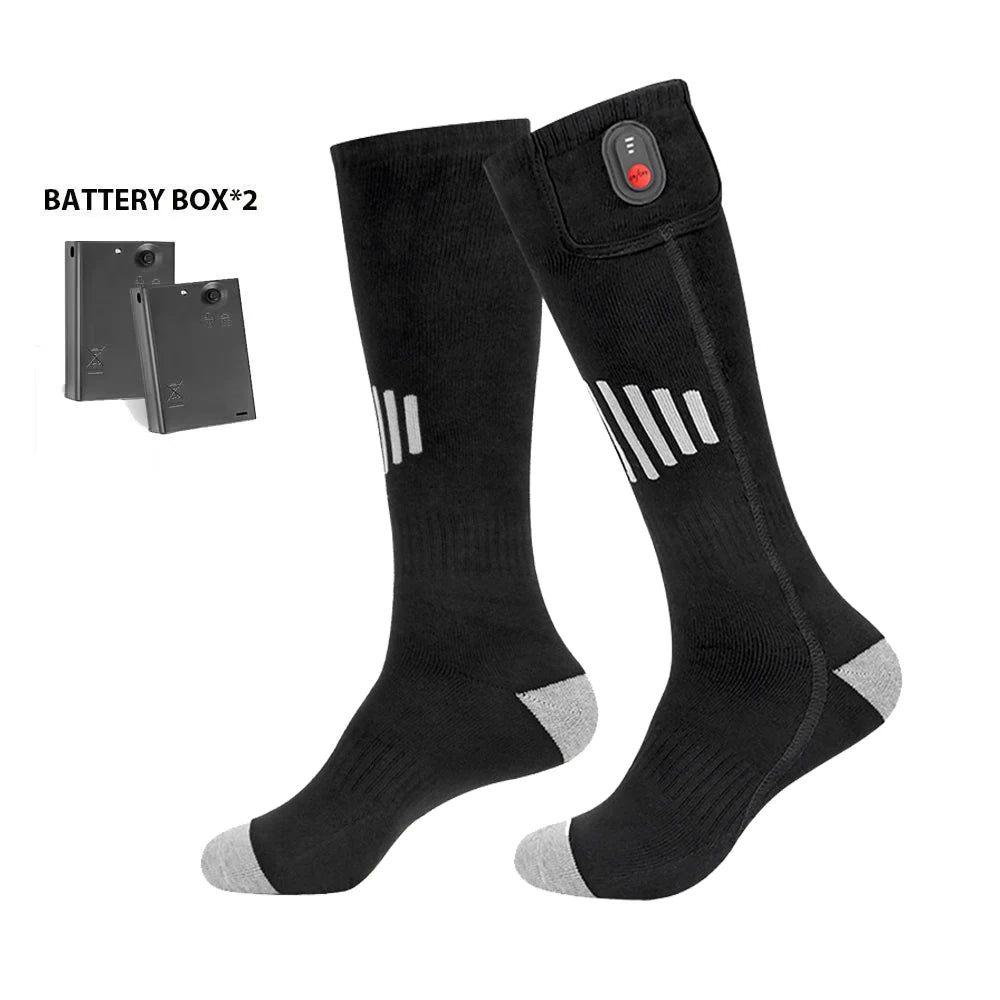
Designed for dependable warmth and all-day comfort on the slopes. See it in action.
How to Choose the Best Heated Ski Socks
Battery Type
Rechargeable lithium-ion batteries provide the best balance of runtime, weight, and convenience. Choose a capacity that matches the length of your typical ski day.
Heating Elements
Look for flexible heating elements positioned around the toes or forefoot. They should distribute warmth evenly without creating noticeable pressure inside your boots.
Washability & Durability
Many heated ski socks are machine washable after removing the battery packs. Reinforced heels, toes, and durable wiring help extend their lifespan through multiple ski seasons.
App Control vs Manual Control
Some premium rechargeable heated ski socks allow heat adjustment through a smartphone app, while others use simple onboard buttons or battery-mounted controls. App-enabled models provide finer temperature adjustments, whereas manual controls are straightforward and reliable in cold conditions.
Heated Ski Socks FAQ
What are the best heated ski socks for skiing in 2026?
The best heated ski socks combine reliable battery life, targeted toe heating, moisture-wicking materials, and a low-profile fit that remains comfortable inside ski boots throughout a full day.
How long do battery heated ski socks last on a single charge?
Most battery heated ski socks provide between 3 and 10+ hours of runtime depending on battery capacity, outdoor temperature, and the selected heat setting.
Are rechargeable heated ski socks safe inside ski boots?
Yes. Quality heated socks are designed with insulated wiring, temperature controls, and rechargeable battery systems that are safe for normal skiing when used according to the manufacturer's instructions.
Do heated socks help with numb toes while skiing?
Yes. By delivering continuous warmth directly to the toes, heated socks can significantly reduce numbness caused by cold temperatures, long chairlift rides, and restricted circulation.
Can heated ski socks be washed?
Most models can be washed after removing the batteries. Always follow the manufacturer's care instructions to protect the heating elements and electrical connections.
Should I choose heated socks or heated insoles for skiing?
Heated socks warm the entire forefoot and toes, making them the preferred option for most skiers. Heated insoles can be a good alternative if your feet fit comfortably in standard ski socks but you need extra warmth underfoot.
How thick should heated ski socks be for ski boots?
Thin to medium-thickness heated socks generally provide the best combination of warmth, circulation, and precise boot fit. Thick socks may create pressure points and actually make your feet colder.
Choose heated ski socks that match your skiing style and enjoy warmer, more comfortable days from first chair to last run.
Related Guide: Best Heated Socks for Winter Compared Side by Side













