

Do Shock Absorbing Insoles Really Work?
Yes, shock absorbing insoles can reduce the amount of impact and pressure your feet experience during walking, running, jumping, and prolonged standing. They work by cushioning heel strike, distributing pressure across the foot, and sometimes improving foot stability so force is not concentrated in one area.
The best insoles for shock absorption typically use materials such as gel, EVA foam, PU foam, or TPU. However, more cushioning is not automatically better. The right design depends on your activity, foot shape, footwear, and whether you prioritize softness, stability, or energy return.
How We Tested the Best Shock Absorbing Insoles
We evaluated shock absorbing insoles using the factors that matter most in everyday use and high-impact activities: cushioning response, pressure distribution, arch support, heel stability, thickness, shoe compatibility, durability, and activity-specific performance.
We also considered how different materials behave over time. A soft foam insert may feel comfortable initially but compress faster, while TPU or a hybrid design may offer better resilience for repeated impact. The goal is to identify the best shock absorbing insoles for different users rather than claim that one insole works equally well for everyone.
Who Benefits Most from Shock Absorption
Shock absorbing shoe inserts can be especially useful for people who run, participate in jumping or court sports, stand on hard floors for long periods, walk frequently, hike, or wear work boots. They may also improve comfort for people who experience foot fatigue when their footwear provides limited cushioning.
However, insoles are not a substitute for medical evaluation when pain is severe, persistent, or caused by an underlying injury or condition. If an insole increases discomfort, causes numbness, or changes your gait significantly, discontinue use and reassess the fit and support level.
Best Insoles for Shock Absorption (2026 Review & Comparison)
⏱ 7 min read
If your feet feel sore after long days, workouts, or repeated impact, the right insole can improve comfort by cushioning impact and distributing pressure more evenly. This guide compares the best insoles for shock absorption by material, support, activity, durability, and shoe compatibility.
Quick Comparison Table: Best Shock Absorbing Insoles
The best shoe inserts for shock absorption vary by use case. A runner may need lightweight, resilient cushioning, while someone standing all day may prefer thicker pressure-relieving foam. Use this overview to narrow down the right type.
| Insole Type | Cushioning | Support | Best Use Case | Typical Thickness | Durability |
|---|---|---|---|---|---|
| Gel + Foam Hybrid | High | Medium to high | Daily wear and general impact reduction | Medium to thick | Good |
| Responsive Foam | Medium to high | Medium | Running and walking | Thin to medium | Good |
| Thick Cushioning Foam | Very high | Medium | Standing all day and hard floors | Thick | Moderate to good |
| TPU-Based | Medium to high | High | Sports and repeated high-impact movement | Thin to medium | Very good |
| Deep Heel Cup + Cushioning | High | High | Users seeking added heel and joint support | Medium | Good |
Top Picks: Best Insoles for Shock Absorption
There is no single best insole for every foot or activity. The options below are organized by the user profile most likely to benefit from each design.
Best Overall Shock Absorbing Insoles
A high-density foam and gel hybrid is the strongest all-purpose choice for many users because it balances cushioning, pressure distribution, and everyday support. The combination can soften heel strike without creating the unstable feeling that sometimes comes with extremely soft foam.
Best for: Daily wear, walking, mixed activities, and users who want one versatile pair.
Key cushioning technology: A hybrid construction that combines impact cushioning with resilient foam support.
Pros: Versatile, comfortable, and suitable for a range of activities.
Cons: May be too thick for low-volume shoes.
Value recommendation: Choose this type when you want balanced performance rather than maximum softness or specialized sports performance.
Best for Running
Running shock absorbing insoles should balance impact protection with low weight and energy return. A responsive foam design can provide cushioning while helping the foot transition through repeated strides without feeling excessively soft.
Best for: Road running, treadmill training, walking, and other repetitive-impact activities.
Key cushioning technology: Lightweight, resilient foam designed to compress and recover repeatedly.
Pros: Lightweight, responsive, and less likely to feel bulky.
Cons: May provide less maximum cushioning than thick gel-based designs.
Fit consideration: Check that the insole does not crowd the toes or raise the foot too high inside the running shoe.
Best for Standing All Day
People who stand on concrete or other hard surfaces often benefit from thicker shock absorbing insoles that distribute pressure across the heel and forefoot. A comfortable design should reduce pressure without allowing the foot to sink excessively.
Best for: Retail, healthcare, warehouse, hospitality, and other jobs involving prolonged standing.
Key cushioning technology: Thick foam or a foam-gel combination for pressure distribution.
Pros: Helps improve comfort during long periods on hard surfaces.
Cons: Thick designs may not fit well in narrow or already snug footwear.
Value recommendation: Prioritize durability and pressure distribution over the softest possible first impression.
Best for Heavy Impact Sports
Shock absorbing insoles for sports need to handle repeated jumping, sprinting, landing, and lateral movement. TPU-based or hybrid designs are often a good choice because they can provide a balance of resilience, structure, and impact management.
Best for: Basketball, tennis, volleyball, soccer, and other sports involving frequent changes in direction.
Key cushioning technology: Responsive TPU or a durable hybrid structure.
Pros: Resilient, supportive, and suitable for repeated high-impact movement.
Cons: May feel firmer than comfort-focused gel or foam inserts.
Best for Joint Pain Relief
For users who want to reduce the discomfort associated with repeated impact, a combination of heel cushioning, pressure distribution, and appropriate arch support may be more useful than simply choosing the softest insole.
Best for: Users who experience foot fatigue or discomfort during walking and standing.
Key cushioning technology: Heel cushioning combined with a stable support structure.
Pros: Can help distribute pressure and reduce the harshness of repeated foot strikes.
Cons: The wrong arch height or firmness can create new pressure points.
Insoles for joint pain should be selected carefully. Persistent or worsening pain should be assessed by a qualified healthcare professional rather than managed only by changing insoles.
Best for High Arches
People with high arches may benefit from cushioning that fills pressure gaps across the foot while providing support that does not create excessive pressure under the arch. A well-shaped insole can help distribute load more evenly between the heel, midfoot, and forefoot.
Best for: High-arched feet that experience concentrated pressure or foot fatigue.
Fit consideration: Avoid choosing an extremely rigid arch support solely because it feels supportive in the first few minutes. Comfort and even pressure distribution matter over longer periods.
Best for Work Boots
Work boots often have enough interior volume for a supportive, durable insole, but the available space varies widely. Shock absorbing shoe inserts for work boots should provide cushioning while maintaining enough stability for standing, walking, and carrying loads.
Best for: Construction, warehouse, industrial, outdoor, and other demanding work environments.
Key considerations: Durability, heel stability, moisture management, and compatibility with the boot's original footbed.
Before adding a thick insole, check whether the original removable footbed can be taken out. Stacking insoles can make the boot too tight and may reduce comfort.
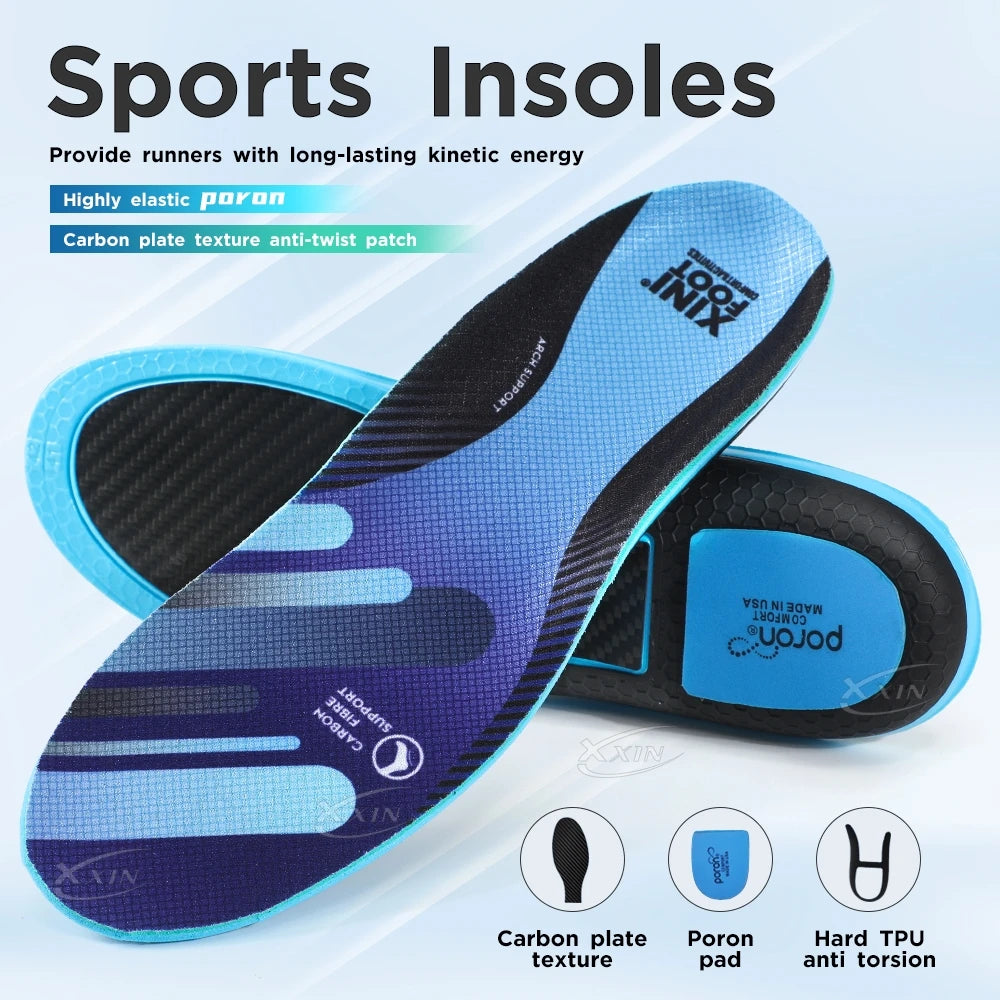
Shock absorption starts at the base—reduce impact and move with confidence. See it in action.
How Shock Absorption Works in Insoles
When your foot contacts the ground, the insole helps manage how quickly and efficiently that force is transferred through the shoe. Cushioning materials compress under load, distribute pressure, and in some cases return energy as the foot moves through the stride.
The best impact absorbing material depends on the activity. A soft material may maximize comfort, while a resilient material may perform better under repeated impact. The most effective design is often a combination of cushioning and structural support.
Gel vs EVA vs PU Foam vs TPU
Different materials create different performance characteristics:
- Gel: Provides a cushioned feel and can help soften pressure in high-impact areas such as the heel. It may add weight and can feel less responsive than resilient foam.
- EVA foam: Lightweight and commonly used for cushioning. It offers a comfortable feel but can compress over time depending on density and use.
- PU foam: Often valued for resilience and long-term cushioning. It may maintain its performance longer than some basic foams but can be heavier.
- TPU: Provides a responsive, durable structure and is often used when stability and repeated-impact performance are important.
How Insoles Reduce Joint Stress
Shock absorbing insoles can reduce the harshness of repeated impact by cushioning contact, distributing pressure, and improving how force is managed under the foot. A stable heel area can also help prevent excessive movement inside the shoe.
However, an insole cannot eliminate impact entirely, and comfort improvements do not guarantee that it will resolve an underlying injury or joint condition. Fit, footwear, activity level, and individual biomechanics all influence the result.
Best Impact Absorbing Material Explained
For maximum softness, gel and thick foam are common choices. For a balance of cushioning and resilience, PU foam and hybrid designs can be attractive. For high-impact sports where responsiveness and durability matter, TPU-based designs may be more suitable.
In practical terms, the best impact absorbing material is the one that provides enough cushioning for your activity without making the shoe unstable, overly tight, or uncomfortable.
Shock Absorption vs Ankle Stability: Which Matters More?
Shock absorption and ankle stability serve different purposes. Cushioning helps manage impact and pressure, while stability helps control unwanted foot movement and maintain a more consistent base inside the shoe. The right balance depends on your foot type and activity.
When Cushioning Is More Important
Prioritize cushioning when your main problem is discomfort from repeated contact with hard surfaces, long-distance walking, running, or prolonged standing. A well-cushioned insole may help reduce foot fatigue and make repeated impact feel less harsh.
Users who spend long hours on concrete or participate in repetitive-impact activities may prefer more cushioning, provided the insole still offers enough stability for the shoe and activity.
When Stability Should Come First
Stability may matter more during sports involving rapid lateral movement, uneven terrain, or activities where excessive foot movement inside the shoe affects control. A very soft insole can feel comfortable initially but may reduce confidence if the foot sinks or shifts too much.
For high-impact sports, a structured insole can offer a better balance of cushioning and control than a maximum-softness design. Foot type also matters: a person who needs more structured support may not benefit from simply adding more padding.
What Matters Most in Shock Absorbing Insoles
Impact Reduction vs Energy Return
Some insoles prioritize a soft, cushioned feel, while others compress and rebound more quickly to create a responsive sensation. Softer cushioning may be preferable for comfort, whereas energy return can be useful for running and active sports.
The best shock absorbing insoles balance impact management with the level of responsiveness you need for your activity.
Arch Support and Alignment
Appropriate arch support can help distribute pressure more evenly and provide a more stable base. The ideal amount varies by foot shape, so a higher arch is not automatically better.
An insole that creates pressure directly under the arch, causes numbness, or changes your gait may be poorly matched to your foot.
Cushioning Thickness vs Stability
Thicker cushioning can improve comfort, but additional material also takes up more space and can sometimes reduce stability inside the shoe. The ideal thickness is the maximum that fits comfortably without compressing the toes or lifting the heel excessively.
Fit and Shoe Compatibility
Shock absorbing insoles should fit the shoe securely without crowding the foot. Trim-to-fit designs can improve versatility, while full-length insoles may provide more consistent cushioning from heel to toe.
Always consider the shoe's available interior volume, the original removable footbed, toe-box space, and heel fit before choosing a thick insert.
Side-by-Side Comparison: Insole Materials & Types
Choosing between different impact absorbing insoles involves more than comparing the softness of the materials. Weight, resilience, flexibility, thickness, and footwear compatibility all influence real-world performance.
Material Durability Comparison
| Material | Weight | Flexibility | Durability Profile | Ideal Footwear |
|---|---|---|---|---|
| Gel | Medium to heavy | Flexible | Good, depending on construction | Casual shoes and comfort-focused footwear |
| EVA Foam | Light | Flexible | Moderate to good | Running shoes, walking shoes, everyday footwear |
| PU Foam | Medium | Moderate | Very good resilience | Work shoes, walking shoes, daily footwear |
| TPU | Light to medium | Structured | Very good | Sports shoes and performance footwear |
| Hybrid | Varies | Varies | Good to very good | General-purpose and specialized footwear |
Thickness and Shoe Compatibility
Thicker shock absorbing shoe inserts can provide more cushioning, but they also require more room inside the shoe. Thin designs are easier to fit into performance footwear and dress shoes, while thick designs are often more suitable for roomy work boots or casual shoes.
If the shoe becomes tight after installing an insole, do not assume that the insert simply needs more break-in time. Excessive pressure on the toes, top of the foot, or heel can make the fit worse.
Real-World Performance by Activity
Running and High-Impact Training
Running shock absorbing insoles should manage repetitive impact without adding unnecessary weight. Responsive foam or a lightweight hybrid design can help maintain comfort over longer distances while preserving a natural stride.
Runners should also check whether the insole changes the shoe's heel-to-toe feel or reduces toe-box space. A comfortable insole that fits poorly can create new problems.
Standing All Day
For people who spend hours standing all day , pressure distribution is often as important as maximum impact absorption. A supportive, resilient foam design can help reduce the feeling of fatigue associated with hard floors.
Look for a design that remains comfortable after several hours rather than judging it only by how soft it feels when first inserted.
Court and Field Sports
Shock absorbing insoles for sports need to balance cushioning with lateral stability. Excessively soft cushioning may feel comfortable during straight-line movement but less controlled during quick cuts, jumps, and direction changes.
Structured TPU or hybrid designs may be a better fit for users who need both impact management and responsiveness.
Walking and Everyday Use
For everyday walking, comfort and versatility usually matter more than specialized performance characteristics. A medium-cushioning foam or hybrid insole can provide a practical balance of softness, support, and fit.
Because daily-use insoles may be worn for many hours, breathability, durability, and compatibility with different shoes can matter as much as cushioning.
Hiking and Work Boots
Hiking and work boots place additional demands on an insole because users may walk on uneven surfaces, carry extra weight, or spend long periods on their feet. A durable design with heel cushioning and stable support can improve comfort without making the boot feel unstable.
Check the boot's interior volume before choosing a thick insert, and consider whether the original footbed should be removed first.
How to Choose the Best Shock Absorbing Insoles for You
The best insoles for shock absorption should match your foot type, activity, footwear, and budget. Use the following decision framework instead of choosing solely by material or thickness.
Choose by Foot Type
- High arches: Look for cushioning and support that help distribute pressure without creating excessive pressure under the arch.
- Low or flatter arches: Consider a design that provides comfortable structure and stability without feeling overly rigid.
- Neutral arches: A balanced cushioning and support profile is often the easiest starting point.
- Foot fatigue: Prioritize pressure distribution, comfortable cushioning, and a secure fit.
Choose by Activity
- Running: Choose lightweight, resilient cushioning with a secure fit.
- Work: Prioritize durable cushioning and pressure relief for prolonged standing.
- Joint discomfort: Look for balanced heel cushioning and appropriate support rather than maximum softness alone.
- Sports: Select responsive, durable materials that provide cushioning without sacrificing stability.
- Walking: Choose a versatile design that remains comfortable over extended wear.
Choose by Cushioning Material
Choose gel when you prefer a softer cushioning sensation, EVA when low weight is important, PU foam when resilience and long-term cushioning matter, and TPU when you need a more structured and responsive design. Hybrid constructions can provide a useful middle ground.
Consider Your Budget
Budget-friendly foam inserts can be suitable for occasional use, while frequent runners, athletes, and workers may benefit from investing in more durable materials that retain their cushioning and structure longer.
The best value is not necessarily the lowest purchase price. A more durable insole that maintains comfort for longer may provide better value than repeatedly replacing a low-cost insert.
What Users Say After Long-Term Use
Long-term users commonly value shock absorbing insoles for improved comfort during walking, running, standing, and other repetitive activities. The most noticeable benefit is often reduced foot fatigue rather than a dramatic change in performance.
Durability varies by material and workload. Basic foam can compress with repeated use, while resilient PU, TPU, and well-constructed hybrid designs may maintain their shape longer under demanding conditions.
Common complaints include excessive thickness, incorrect arch height, loss of cushioning, odor, and discomfort caused by an insole that does not match the shoe. These issues are often signs that the design or fit is not appropriate for the user's footwear or activity.
Replacement timing depends on wear rather than a universal calendar date. Replace an insole when it becomes visibly compressed, loses its original cushioning, develops permanent deformation, or begins causing discomfort that was not present when new.
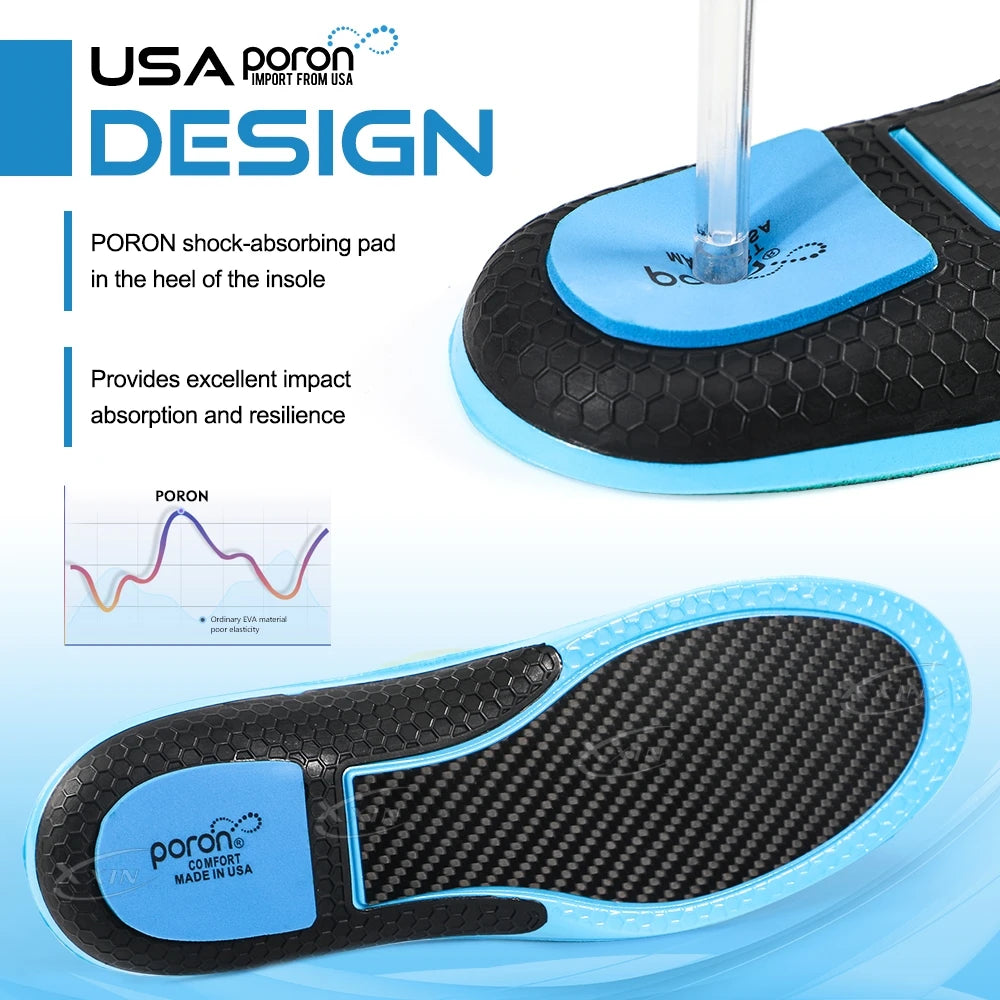
Consistent comfort over time—support that holds up under pressure. See it in action.
FAQ: Shock Absorbing Insoles
What are the best insoles for shock absorption?
The best insoles for shock absorption depend on your activity and foot shape. Hybrid gel-and-foam designs are versatile, responsive foam is well suited to running and walking, and TPU or structured hybrids can work well for high-impact sports.
Which material provides the best impact absorption?
There is no single best material for every user. Gel and thick foam can provide a soft cushioning feel, EVA is lightweight, PU foam offers resilience, and TPU provides a durable, responsive structure. Hybrid designs combine several performance characteristics.
Do shock absorbing insoles help knee and joint pain?
They may improve comfort by cushioning impact and distributing pressure more evenly, but they do not treat every cause of knee, hip, or joint pain. Persistent, severe, or worsening pain should be evaluated by a qualified healthcare professional.
Are shock absorbing insoles good for running?
Yes, running shock absorbing insoles can improve comfort during repetitive impact when they provide appropriate cushioning without making the shoe too tight or unstable. Lightweight, resilient materials are often preferred for running.
Are running insoles different from regular insoles?
Running insoles generally prioritize low weight, responsive cushioning, and repeated-impact performance. Everyday insoles may place more emphasis on general comfort, pressure distribution, and versatility.
How often should shock absorbing insoles be replaced?
Replacement timing depends on usage, material, and wear. Inspect the insole regularly and replace it when cushioning becomes permanently compressed, the structure deforms, or comfort and support noticeably decline.
Can I use shock absorbing insoles in work boots?
Yes. Shock absorbing shoe inserts can work well in work boots, especially when the boot has enough interior space and the insole provides durable cushioning and stable support. Remove the original footbed first if necessary to prevent an overly tight fit.
Can shock absorbing insoles fit all shoes?
No. Insole thickness and shape must match the available space inside the shoe. Trim-to-fit designs offer more flexibility, but very thick inserts may not work in narrow, low-volume, or snug-fitting footwear.













