

Do insulated door curtains really work?
Yes, an insulated door curtain can help reduce cold drafts and improve indoor comfort when it is correctly sized and installed. By adding a thermal barrier over the doorway, it slows down air movement and helps reduce the amount of warm air escaping during cold weather. A quality door insulation curtain for cold weather is especially useful for drafty entry doors, garages, balconies, and rooms with older doors that lack effective sealing.
Real heat loss reduction explained
Insulated door curtains work by combining draft protection with thermal resistance. Thick fabrics, quilted layers, foam inserts, and air pockets inside the curtain material help slow heat transfer between indoor and outdoor spaces. While results depend on the door condition, climate, installation method, and curtain design, many homeowners notice fewer cold drafts and a more stable room temperature after installation.
An energy saving door curtain does not replace proper insulation or professional weatherproofing, but it can be a practical improvement for reducing everyday heat loss. The biggest benefits usually come from covering doors that are frequently exposed to outdoor air, such as front entrances, patio doors, and garage access doors.
When they work best (and when they don’t)
- Work best: drafty exterior doors, older homes, apartments, rental properties, garages, and high-traffic entryways where cold air frequently enters.
- Less effective: doors with major structural gaps, damaged frames, or severe alignment problems that allow large amounts of air leakage.
- Best results: when combined with weather stripping, door sweeps, or other home weatherproofing improvements.
For many households, an insulated door cover for winter is worth considering because it provides a simple, removable way to improve comfort without replacing the entire door. The best performance comes from choosing a curtain with enough coverage, insulation thickness, and sealing ability for your specific doorway.
Best Insulated Door Curtain for Winter (2026): Do They Really Work + Top Picks Compared
Cold drafts around doors are a common source of winter discomfort and unnecessary heat loss. Small gaps around door frames, worn seals, and poorly insulated entryways allow cold air to enter while warm indoor air escapes. An insulated door curtain offers a simple solution by creating an additional barrier between your living space and colder areas outside.
From magnetic thermal door curtains for busy entrances to heavy-duty insulated designs for extreme climates, different curtain types provide different levels of protection. This guide explains how they work, what materials perform best, and which features matter when choosing the right option for your home.
⏱ 6 min read
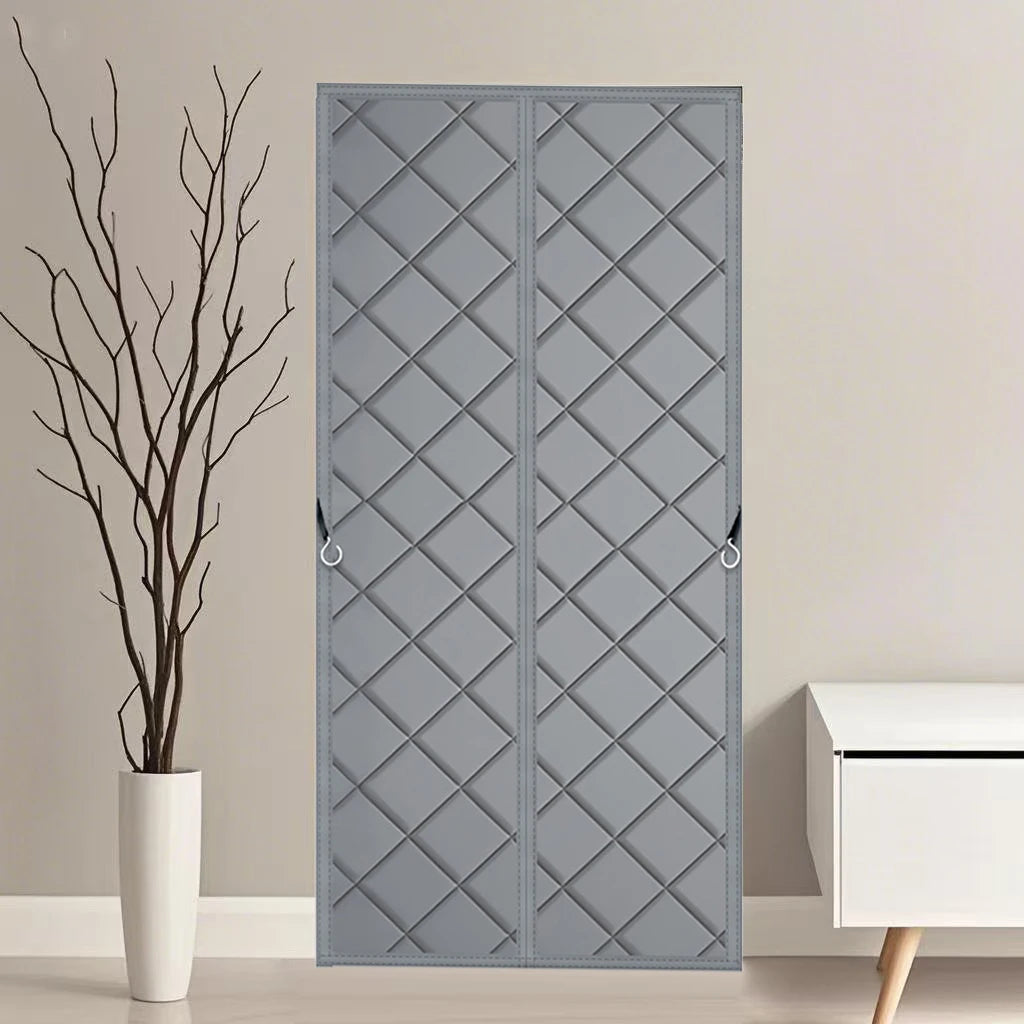
Magnetic doorway curtains designed to prevent door drafts and block cold air from door gaps See it in action
Why cold air gets in through doors (and how to stop it)
Cold air enters homes through doors mainly because of air leakage and poor sealing. When outdoor temperatures drop, pressure differences between indoor and outdoor environments can push cold air through even small openings around the doorway. These leaks can make rooms feel colder than the thermostat setting suggests and force heating systems to work harder.
Common areas where heat escapes through doors include:
- Gaps between the door slab and frame
- Cracked or worn-out weather stripping
- Spaces underneath doors and unsealed thresholds
- Poor insulation in older exterior doors
- Large openings around garage or utility room entrances
Learning how to insulate a door for winter starts with controlling both airflow and heat transfer. While weather stripping and door sweeps help seal specific gaps, an insulated curtain provides full doorway coverage. A winter door draft stopper curtain can act as an additional protective layer, reducing cold air movement across the entire entrance instead of only blocking one small area.
How insulated door curtains block drafts (science simplified)
A thermal door curtain for winter works through two main insulation principles: reducing airflow and slowing heat transfer. Unlike a standard decorative curtain, an insulated design uses thicker materials and specialized construction to create a stronger thermal barrier.
- Air sealing: Magnetic strips, hook-and-loop fasteners, weighted edges, or full-frame coverage help reduce drafts by limiting uncontrolled airflow.
- Thermal resistance: Multiple fabric layers, foam insulation, cotton filling, or reflective materials slow the movement of heat from warmer indoor spaces to colder outdoor areas.
Many insulated door curtains contain trapped air pockets between layers. These pockets act as small barriers that reduce convection, while the thicker materials help slow conduction. This is why a magnetic thermal door curtain or heavy-duty insulated curtain can provide better winter protection than a basic fabric curtain.
Magnetic designs are especially popular for frequently used doors because the center opening can separate easily for hands-free entry and automatically close afterward. For less frequently used doors, heavier rod-mounted or fixed insulation curtains may provide stronger long-term coverage.
Quick Comparison Table: Best Insulated Door Curtains
The best insulated door curtain depends on where it will be installed, how often the door is used, and the level of protection needed. Magnetic designs prioritize convenience, while heavy-duty and foam-lined options focus on maximum insulation and long-term heat retention.
| Product Type | Best For | Insulation Material & Level | Installation & Size Flexibility | Key Feature |
|---|---|---|---|---|
| Magnetic thermal door curtain | High-traffic entry doors, apartments, kitchens, and frequently used rooms | Medium insulation with layered thermal fabric and magnetic center closure | Easy adhesive or hook-and-loop installation; available in multiple doorway sizes | Hands-free entry with automatic resealing |
| Heavy duty insulated door curtain | Garages, workshops, basements, and colder climates | High insulation using thick quilted fabric, foam, or multi-layer construction | Usually rod-mounted; requires accurate measuring for full coverage | Maximum draft blocking and durable construction |
| Foam-lined door cover | Energy-conscious homeowners and rarely used doors | High insulation from foam layers designed to reduce heat transfer | Velcro, adhesive, or fixed mounting depending on design | Full doorway coverage and strong thermal barrier |
| Budget thermal curtain | Mild winters, temporary use, and rental properties | Low–Medium insulation with lightweight thermal fabrics | Simple installation with minimal tools | Affordable draft reduction without permanent changes |
7 Best Insulated Door Curtains for Winter (Tested & Reviewed)
Choosing the best insulated door curtain depends on your climate, door location, and how much convenience you need. The options below represent different use cases, from everyday entrances to extreme cold environments.
Best overall insulated door curtain
A well-balanced insulated door curtain should combine reliable draft protection, simple installation, and durable materials. Multi-layer thermal fabrics with secure edge coverage are usually the best choice for most homes because they provide noticeable comfort improvements without requiring permanent modifications.
Best for: Front doors, bedrooms, living spaces, and homeowners who want an effective all-around solution.
Pros: Good balance of insulation, convenience, and appearance.
Limitations: May not provide enough protection for extremely cold garages or poorly sealed exterior openings.
Best magnetic thermal door curtain
A magnetic thermal door curtain is ideal for areas where people frequently enter and exit. The magnetic center seam allows quick passage while automatically closing afterward to help block cold air.
Best for: Busy entryways, families, pet owners, and spaces where hands-free access matters.
Pros: Easy to use, renter-friendly, and convenient for daily traffic.
Limitations: The insulation level depends heavily on fabric thickness and how well the edges seal.
Best heavy duty insulated door curtain
A heavy duty insulated door curtain is designed for environments where maximum protection matters. These curtains often use thicker quilted fabrics, Oxford cloth, foam layers, or reinforced construction to withstand colder conditions.
Best for: Garages, workshops, storage areas, and homes in freezing climates.
Pros: Strong insulation performance and improved durability.
Limitations: Heavier materials may require stronger mounting hardware and more installation effort.
Best for apartments & renters
Renters often need insulation improvements without drilling holes or making permanent changes. Adhesive-backed, hook-and-loop, or lightweight magnetic designs offer a practical way to add a winter barrier around doors.
Best for: Apartments, dorm rooms, temporary housing, and rental properties.
Pros: Easy removal and minimal installation requirements.
Limitations: Removable designs may provide less insulation than permanently mounted curtains.
Best budget option
Budget thermal curtains provide basic protection against drafts at a lower price point. They work well when the goal is improving comfort in mildly cold conditions rather than creating maximum insulation.
Best for: Short-term use, mild climates, and secondary doors.
Pros: Affordable, lightweight, and easy to install.
Limitations: Usually thinner and less durable than premium insulated designs.
Best for extreme cold climates
For severe winter conditions, look for full-coverage curtains with thick insulation layers and strong sealing around the doorway. Heavy fabrics help reduce heat transfer while preventing cold air movement.
Best for: Cold regions, garages, exterior utility doors, and poorly insulated entrances.
Pros: Maximum warmth retention and improved indoor comfort.
Limitations: Larger and heavier designs may need careful measuring and installation.
Best energy saving door curtain
An energy saving door curtain focuses on reducing unnecessary heat loss by combining insulation materials with effective sealing. The most efficient options typically include multiple layers, full doorway coverage, and materials designed to trap air.
Best for: Homeowners looking to improve winter heating efficiency and reduce cold spots.
Pros: Helps maintain a more comfortable indoor temperature.
Limitations: Results vary depending on existing door insulation and installation quality.
What to look for in the best insulated door curtain
Selecting the best insulated door curtain involves more than choosing the thickest option available. The right design should match your door size, climate, usage habits, and preferred installation method.
Thickness, materials, and insulation types
The insulation performance of a thermal door curtain for winter depends largely on its construction. Common materials include quilted fabric, Oxford cloth, foam lining, PVC layers, and cotton-filled insulation.
- Quilted fabric: Uses stitched layers to create insulation pockets and is often comfortable for indoor use.
- Foam-lined curtains: Provide stronger thermal resistance and are useful for colder spaces where heat retention is a priority.
- Oxford cloth: A durable, water-resistant material often used in heavy duty insulated door curtain designs.
- PVC-coated materials: Offer strong wind and moisture resistance, making them suitable for garages or utility areas.
- Cotton-filled designs: Provide soft insulation and can help improve comfort in residential spaces.
Magnetic vs rod-mounted curtains
Magnetic thermal door curtains are usually the most convenient choice for frequently used entrances because they open easily and reseal automatically. Rod-mounted curtains are often better for doors that remain closed most of the time because they can support heavier, thicker materials.
Fit, sealing, and coverage
Proper sizing is essential for an insulated door cover winter solution to work effectively. A curtain that is too small can leave gaps around the edges, allowing cold air to bypass the insulation.
Look for designs that extend beyond the full width and height of the doorway. Edge sealing, bottom coverage, and secure attachment points all contribute to better draft protection.
Durability and condensation resistance
Cold weather environments can create moisture challenges, especially around exterior doors. Choose materials that are easy to clean, resist moisture buildup, and maintain their shape after repeated opening and closing.
Regular maintenance, including cleaning fabric surfaces and checking attachment points, can help extend the life of your curtain and maintain insulation performance.
How to measure your door before buying
Incorrect measurements are one of the most common reasons insulated door curtains fail to perform well. Before purchasing, measure the complete doorway opening rather than only the door panel.
- Measure the total width from one side of the frame to the other.
- Measure the height from the top of the frame to the floor or bottom sealing area.
- Add extra coverage on each side to reduce edge gaps.
- Check whether nearby walls, handles, or trim could affect installation.
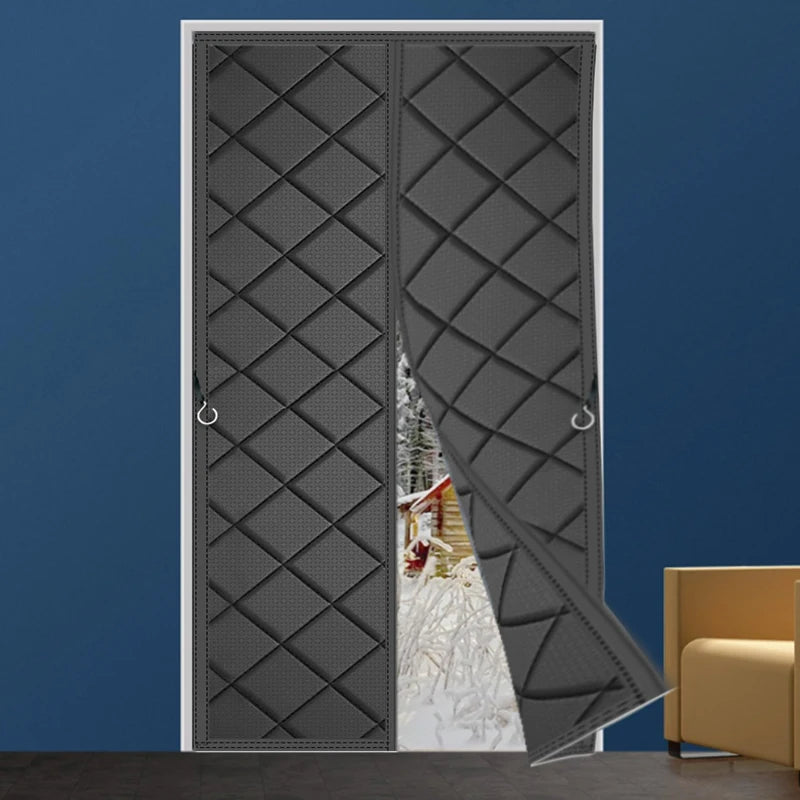
Comparing insulated door cover designs that block cold air from door frames See it in action
Quick Comparison Table: Best Insulated Door Curtains
The best insulated door curtain depends on where it will be installed, how often the door is used, and the level of protection needed. Magnetic designs prioritize convenience, while heavy-duty and foam-lined options focus on maximum insulation and long-term heat retention.
| Product Type | Best For | Insulation Material & Level | Installation & Size Flexibility | Key Feature |
|---|---|---|---|---|
| Magnetic thermal door curtain | High-traffic entry doors, apartments, kitchens, and frequently used rooms | Medium insulation with layered thermal fabric and magnetic center closure | Easy adhesive or hook-and-loop installation; available in multiple doorway sizes | Hands-free entry with automatic resealing |
| Heavy duty insulated door curtain | Garages, workshops, basements, and colder climates | High insulation using thick quilted fabric, foam, or multi-layer construction | Usually rod-mounted; requires accurate measuring for full coverage | Maximum draft blocking and durable construction |
| Foam-lined door cover | Energy-conscious homeowners and rarely used doors | High insulation from foam layers designed to reduce heat transfer | Velcro, adhesive, or fixed mounting depending on design | Full doorway coverage and strong thermal barrier |
| Budget thermal curtain | Mild winters, temporary use, and rental properties | Low–Medium insulation with lightweight thermal fabrics | Simple installation with minimal tools | Affordable draft reduction without permanent changes |
7 Best Insulated Door Curtains for Winter (Tested & Reviewed)
Choosing the best insulated door curtain depends on your climate, door location, and how much convenience you need. The options below represent different use cases, from everyday entrances to extreme cold environments.
Best overall insulated door curtain
A well-balanced insulated door curtain should combine reliable draft protection, simple installation, and durable materials. Multi-layer thermal fabrics with secure edge coverage are usually the best choice for most homes because they provide noticeable comfort improvements without requiring permanent modifications.
Best for: Front doors, bedrooms, living spaces, and homeowners who want an effective all-around solution.
Pros: Good balance of insulation, convenience, and appearance.
Limitations: May not provide enough protection for extremely cold garages or poorly sealed exterior openings.
Best magnetic thermal door curtain
A magnetic thermal door curtain is ideal for areas where people frequently enter and exit. The magnetic center seam allows quick passage while automatically closing afterward to help block cold air.
Best for: Busy entryways, families, pet owners, and spaces where hands-free access matters.
Pros: Easy to use, renter-friendly, and convenient for daily traffic.
Limitations: The insulation level depends heavily on fabric thickness and how well the edges seal.
Best heavy duty insulated door curtain
A heavy duty insulated door curtain is designed for environments where maximum protection matters. These curtains often use thicker quilted fabrics, Oxford cloth, foam layers, or reinforced construction to withstand colder conditions.
Best for: Garages, workshops, storage areas, and homes in freezing climates.
Pros: Strong insulation performance and improved durability.
Limitations: Heavier materials may require stronger mounting hardware and more installation effort.
Best for apartments & renters
Renters often need insulation improvements without drilling holes or making permanent changes. Adhesive-backed, hook-and-loop, or lightweight magnetic designs offer a practical way to add a winter barrier around doors.
Best for: Apartments, dorm rooms, temporary housing, and rental properties.
Pros: Easy removal and minimal installation requirements.
Limitations: Removable designs may provide less insulation than permanently mounted curtains.
Best budget option
Budget thermal curtains provide basic protection against drafts at a lower price point. They work well when the goal is improving comfort in mildly cold conditions rather than creating maximum insulation.
Best for: Short-term use, mild climates, and secondary doors.
Pros: Affordable, lightweight, and easy to install.
Limitations: Usually thinner and less durable than premium insulated designs.
Best for extreme cold climates
For severe winter conditions, look for full-coverage curtains with thick insulation layers and strong sealing around the doorway. Heavy fabrics help reduce heat transfer while preventing cold air movement.
Best for: Cold regions, garages, exterior utility doors, and poorly insulated entrances.
Pros: Maximum warmth retention and improved indoor comfort.
Limitations: Larger and heavier designs may need careful measuring and installation.
Best energy saving door curtain
An energy saving door curtain focuses on reducing unnecessary heat loss by combining insulation materials with effective sealing. The most efficient options typically include multiple layers, full doorway coverage, and materials designed to trap air.
Best for: Homeowners looking to improve winter heating efficiency and reduce cold spots.
Pros: Helps maintain a more comfortable indoor temperature.
Limitations: Results vary depending on existing door insulation and installation quality.
What to look for in the best insulated door curtain
Selecting the best insulated door curtain involves more than choosing the thickest option available. The right design should match your door size, climate, usage habits, and preferred installation method.
Thickness, materials, and insulation types
The insulation performance of a thermal door curtain for winter depends largely on its construction. Common materials include quilted fabric, Oxford cloth, foam lining, PVC layers, and cotton-filled insulation.
- Quilted fabric: Uses stitched layers to create insulation pockets and is often comfortable for indoor use.
- Foam-lined curtains: Provide stronger thermal resistance and are useful for colder spaces where heat retention is a priority.
- Oxford cloth: A durable, water-resistant material often used in heavy duty insulated door curtain designs.
- PVC-coated materials: Offer strong wind and moisture resistance, making them suitable for garages or utility areas.
- Cotton-filled designs: Provide soft insulation and can help improve comfort in residential spaces.
Magnetic vs rod-mounted curtains
Magnetic thermal door curtains are usually the most convenient choice for frequently used entrances because they open easily and reseal automatically. Rod-mounted curtains are often better for doors that remain closed most of the time because they can support heavier, thicker materials.
Fit, sealing, and coverage
Proper sizing is essential for an insulated door cover winter solution to work effectively. A curtain that is too small can leave gaps around the edges, allowing cold air to bypass the insulation.
Look for designs that extend beyond the full width and height of the doorway. Edge sealing, bottom coverage, and secure attachment points all contribute to better draft protection.
Durability and condensation resistance
Cold weather environments can create moisture challenges, especially around exterior doors. Choose materials that are easy to clean, resist moisture buildup, and maintain their shape after repeated opening and closing.
Regular maintenance, including cleaning fabric surfaces and checking attachment points, can help extend the life of your curtain and maintain insulation performance.
How to measure your door before buying
Incorrect measurements are one of the most common reasons insulated door curtains fail to perform well. Before purchasing, measure the complete doorway opening rather than only the door panel.
- Measure the total width from one side of the frame to the other.
- Measure the height from the top of the frame to the floor or bottom sealing area.
- Add extra coverage on each side to reduce edge gaps.
- Check whether nearby walls, handles, or trim could affect installation.
Comparing insulated door cover designs that block cold air from door frames See it in action
Insulated door curtain vs other winter door insulation options
When learning how to insulate a door for winter , it is important to compare different solutions based on the type of draft problem, installation needs, and long-term convenience. No single method works perfectly for every doorway, but insulated door curtains provide a flexible option that combines coverage, reusability, and easy installation.
- Door draft stoppers: These mainly block airflow underneath the door. They are useful for small bottom gaps but do not protect the sides or upper areas of the doorway.
- Weather stripping: This seals cracks around door frames and improves air tightness, but it does not add a thermal barrier over the door surface.
- Foam tape and gap fillers: These are helpful for sealing specific leaks but may require replacement over time and do not provide full doorway coverage.
- Plastic film door covers: These can create a temporary insulation layer but are usually less convenient because they are not designed for repeated opening and closing.
- Insulated door curtains: These cover a larger area, help reduce drafts, and can be removed, reused, or adjusted depending on seasonal needs.
For many homes, an insulated door cover winter solution offers a practical balance between effectiveness and convenience. It is especially useful for renters, older homes, frequently used entrances, and spaces where permanent upgrades are not possible.
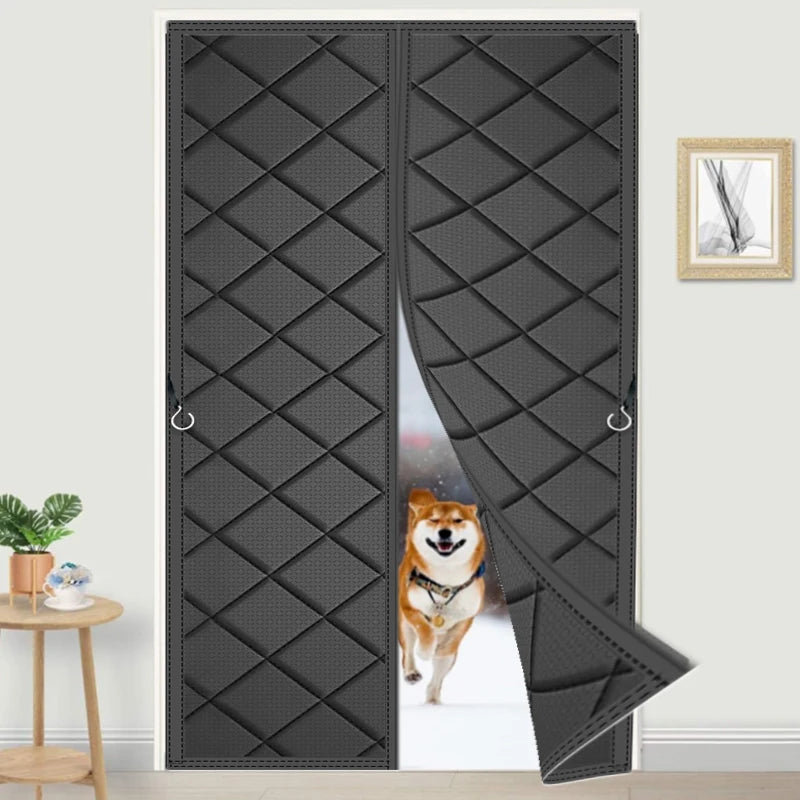
A winter seal door solution that helps prevent door drafts and reduce heat loss See it in action
Frequently Asked Questions
Do insulated door curtains damage door frames?
Most insulated door curtains are designed for simple installation and do not damage door frames when installed correctly. Many models use removable adhesive strips, hook-and-loop fasteners, or tension-based mounting methods that can be removed without permanent changes.
Can pets go through magnetic curtains?
Yes. Magnetic thermal door curtains are commonly designed to allow easy passage for people and pets. The center magnets separate when pushed and automatically reconnect afterward to help maintain the seal.
Are they only for winter?
No. Although insulated door curtains are especially useful during colder months, they can provide benefits throughout the year. They may help reduce dust, improve privacy, block some outdoor light, and create a more comfortable indoor environment.
Do they reduce noise too?
Yes, to a limited extent. Thicker insulated curtains can absorb and soften some outside sounds, although they are not a replacement for dedicated soundproofing materials.
How long do insulated door curtains last?
A high-quality insulated door curtain can last several seasons with proper care. Durability depends on fabric quality, installation method, frequency of use, and maintenance. Regular cleaning and checking mounting points can help extend its useful life.
What is the best insulated door curtain for winter?
The best insulated door curtain depends on your specific needs. For frequently used entrances, a magnetic thermal door curtain offers convenience and reliable draft protection. For garages, workshops, or very cold climates, a heavier multi-layer insulated curtain may provide better coverage and durability.
Can insulated door curtains reduce heating bills?
An insulated door curtain can help improve heating efficiency by reducing drafts and limiting heat loss through door areas. However, the amount of energy saved depends on factors such as existing insulation, weather conditions, heating system efficiency, and how well the curtain fits the doorway.
Are magnetic thermal door curtains worth it?
For high-traffic doors, magnetic thermal door curtains are often worth considering because they combine easy access with draft reduction. Their automatic closing design makes them convenient for everyday use while still adding an extra layer of insulation.
Do insulated door curtains really reduce cold drafts?
Yes. When properly sized and installed, insulated door curtains can reduce noticeable cold air movement by creating a barrier over draft-prone areas. They work best when combined with proper door sealing methods.
How much heat can an insulated door curtain save?
The amount of heat retained varies depending on the doorway, climate, curtain material, and installation quality. Insulated door curtains can improve comfort by reducing heat loss, but they should be considered one part of a complete winter insulation strategy.
What type of insulated door curtain works best for garages?
Garages usually benefit from heavy duty insulated door curtains made with thicker fabrics, foam layers, or reinforced materials. These designs are better suited for larger openings and areas exposed to stronger temperature changes.
Are magnetic thermal door curtains better than regular curtains?
Yes, for many entryways. Magnetic thermal door curtains are specifically designed for draft reduction and frequent use, while regular curtains are mainly decorative and usually lack the insulation layers needed for winter protection.
How do I choose the right size insulated door curtain?
Measure the full doorway width and height before buying. Choose a curtain that provides enough extra coverage around the edges to reduce gaps, while ensuring the installation method matches your door type and available space.













