

Best Personal Cooling Fans of 2026: Tested for Real-World Cooling
The best personal cooling fan is not necessarily the one with the longest feature list. For hot-weather travel, commuting, desk work, and outdoor use, what matters most is whether a fan delivers useful personal airflow while remaining easy to carry, comfortable to use, and practical for the amount of time you need it.
This guide compares the main personal fan formats—handheld, neck, clip-on, and desktop—and focuses on the factors that actually affect everyday cooling: airflow direction, cooling range, portability, battery considerations, noise, comfort, and placement flexibility. Because personal fans are designed primarily for localized airflow rather than whole-room cooling, the right choice depends heavily on where and how you plan to use it.
Best Personal Cooling Fans of 2026 at a Glance
If portability is your priority, a compact handheld fan is usually the most flexible option. A neck fan makes more sense when you need hands-free cooling, while a clip-on or desktop fan is better when you want continuous airflow without holding the device.
Quick Comparison Matrix
- Handheld fan: Direct airflow, excellent portability, easy to aim, best for commuting and travel.
- Neck fan: Hands-free personal airflow, useful for walking and outdoor activities, but comfort and weight distribution matter.
- Clip-on fan: Flexible placement and directional airflow, useful for desks, bedsides, and fixed locations.
- Desktop fan: Stable personal airflow for work, studying, and bedside use, with less need to carry it.
Our Top Picks by Use Case
- Best overall flexibility: Foldable handheld personal cooling fan.
- Best for direct airflow: Handheld fan with adjustable positioning and useful airflow strength.
- Best for travel: Compact foldable handheld fan that fits easily into a bag.
- Best for hands-free cooling: Neck fan.
- Best for fixed placement: Clip-on fan.
- Best for desk work: Compact desktop fan with directional airflow.
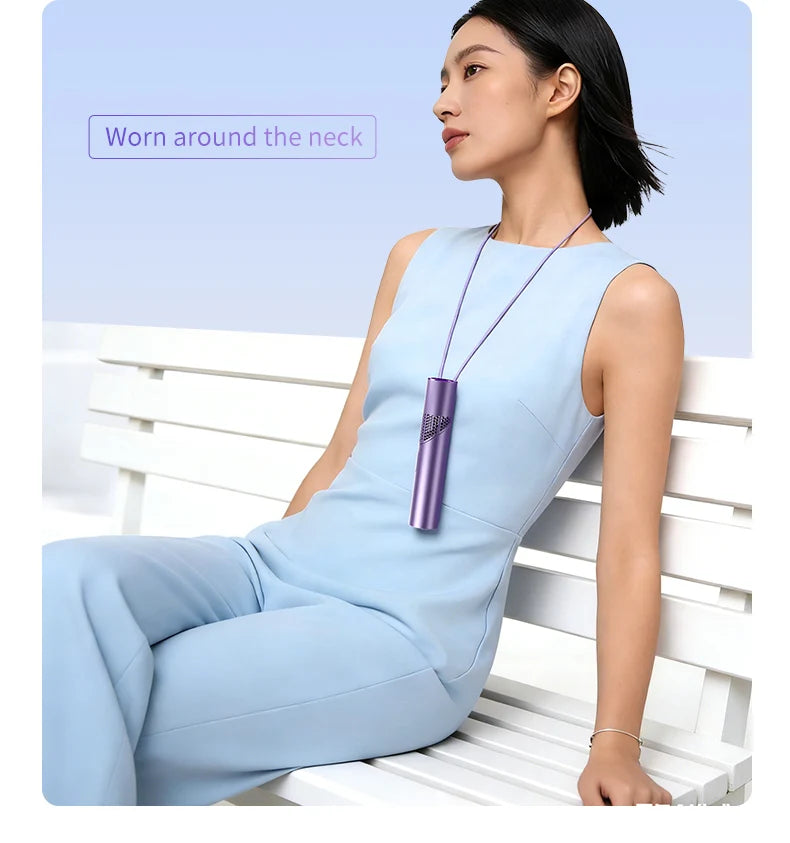
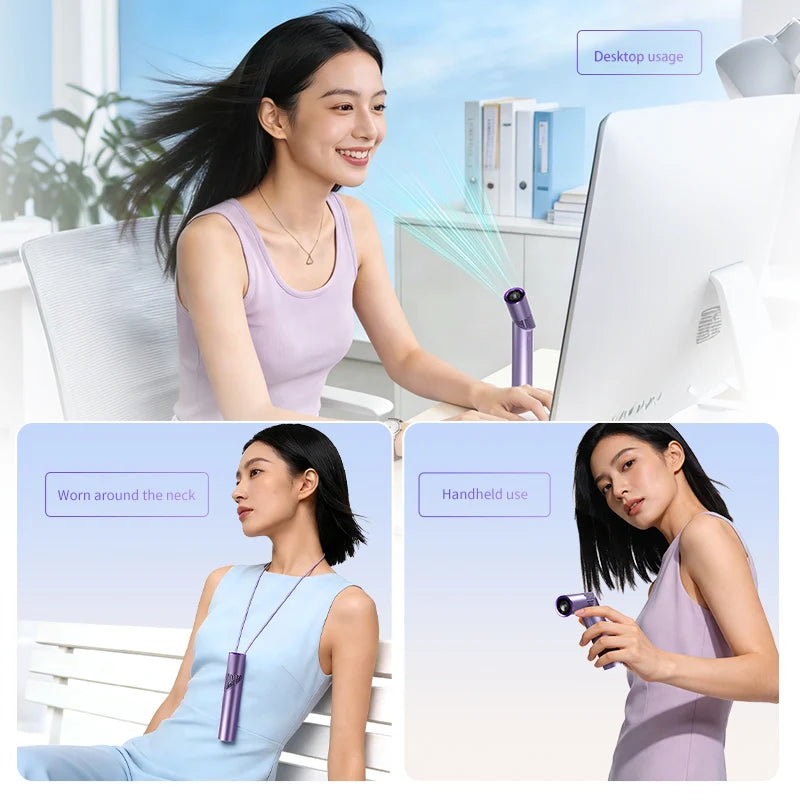
For shoppers who want one compact fan that can move between a bag, desk, commute, and outdoor setting, a foldable handheld design is particularly versatile. The Portable Handheld Fan | Foldable Cooling Comfort for Travel! uses a compact ABS body and foldable design for handheld, desktop, and neck-hanging personal cooling.
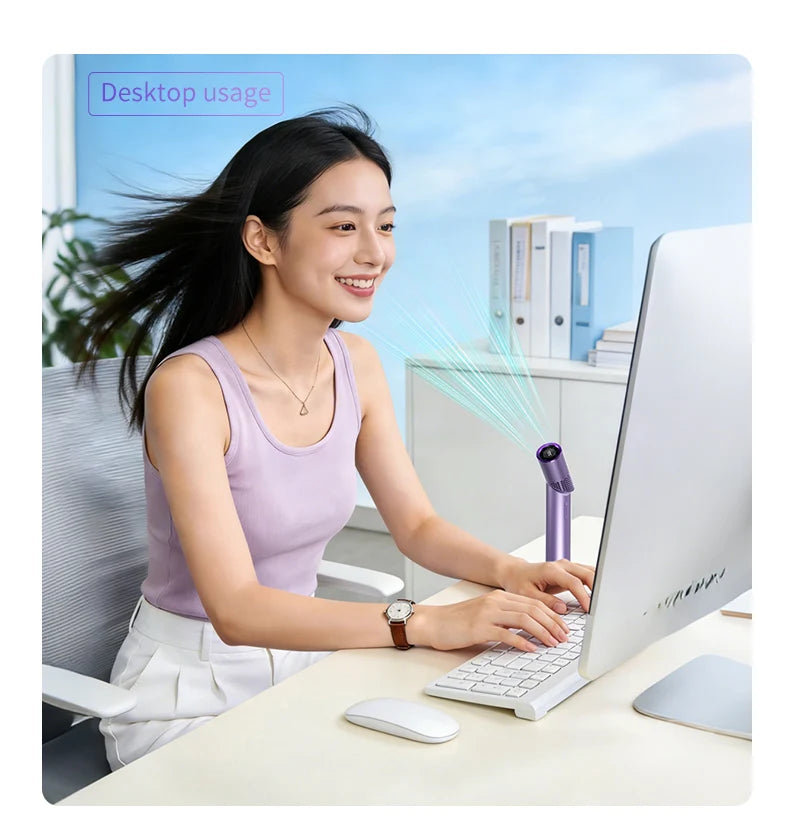
Its biggest advantage is flexibility rather than a claim of maximum airflow. The compact construction makes it easier to keep nearby when heat follows you from the office to the commute or from indoor spaces to outdoor activities.
How We Evaluate Personal Cooling Fans
A useful personal cooling fan should be judged by how well its design matches the situation. Maximum fan speed alone does not tell you whether a model will be comfortable or convenient during a full commute, several hours at a desk, or a day outdoors.
Airflow Strength and Cooling Range
Airflow strength determines how noticeable the cooling effect feels, while airflow direction determines whether that air reaches the area that needs it. A handheld fan has an advantage here because you can aim the airflow directly toward your face, neck, or upper body.
Cooling range also matters. A small personal fan is intended to create localized airflow rather than replace an air conditioner or circulate an entire room. The closer you are to the airflow path, the more useful the fan can be for personal comfort.
Battery Life and Charging
For travel and commuting, battery runtime can be more important than having the highest possible speed. A fan that can operate throughout a commute or work session is more practical than one that requires frequent charging.
When comparing rechargeable portable fans, check the manufacturer's stated runtime and remember that higher operating speeds generally consume more power. The supplied product information for the featured foldable fan describes it as electric and rechargeable-friendly, but does not provide a specific battery capacity or runtime, so those specifications should not be assumed.
Noise Level and Comfort
Personal fans operate close to the user, making noise more noticeable than it might be with a larger room fan positioned several feet away. For an office, study area, or bedroom, comfortable airflow at a moderate setting may be preferable to running a fan continuously at maximum speed.
Physical comfort matters too. A handheld fan should be easy to grip, while a wearable fan should not feel excessively heavy around the neck. For long sessions, weight, vibration, grip shape, and airflow position can affect satisfaction as much as raw airflow.
Portability and Build
A portable fan needs to be genuinely convenient to transport. Compact dimensions, low weight, foldability, and a design that fits into a bag can make the difference between a fan you carry every day and one that stays at home.
ABS plastic is common in lightweight portable fans because it supports a compact form factor without adding unnecessary weight. The featured foldable fan uses an ABS plastic body, plastic fan cover, and plastic fan rib.
Cooling Modes and Controls
Controls should match your use case. Adjustable speed is useful when moving between intense outdoor heat and quieter indoor environments. Directional adjustment is valuable when you need airflow in a precise location.
Do not assume that a product has multiple speeds, oscillation, timers, remote controls, or special cooling modes unless those specifications are explicitly provided. The featured fan, for example, does not include a remote control.
The Best Personal Cooling Fans for 2026
Best Overall Personal Cooling Fan: Foldable Handheld Design
For shoppers who want one fan that can handle several everyday situations, the foldable handheld category offers an excellent balance of portability and versatility. You can carry it during a commute, aim it directly at yourself outdoors, or position it nearby when working.
The featured Portable Handheld Fan is particularly suited to this use because its compact foldable construction supports handheld, desktop, and neck-hanging use. Its value is its flexible form rather than a claim that it outperforms every other fan design.
- Best for: Travel, commuting, everyday summer cooling, and flexible placement.
- Key strengths: Compact body, foldable construction, lightweight ABS design, personal airflow.
- Pros: Easy to carry; flexible positioning; useful for multiple environments; compact storage.
- Cons: Supplied specifications do not state battery capacity, runtime, fan-speed count, or noise rating.
Best Personal Cooling Fan for Strong Airflow: Performance-Focused Handheld
If your priority is feeling a stronger stream of air against your face or upper body, look for a handheld model that provides clearly documented airflow performance and multiple useful speed settings. A handheld format lets you reduce the distance between the fan and your body, which can make airflow feel more immediate.
For high-heat conditions, however, stronger airflow is only one consideration. Battery endurance, noise, grip comfort, and the ability to maintain comfortable airflow for an extended period should also influence the decision.
- Best for: People who prioritize direct, noticeable airflow.
- Look for: Documented airflow performance, speed adjustment, comfortable grip, and adequate runtime.
- Pros: Direct control over airflow direction; easy to position close to the body.
- Cons: Stronger settings may increase noise and battery consumption.
Best Handheld Fan for Portability: Compact Foldable Fan
A foldable handheld fan is particularly practical for travel because it can occupy less usable space when stored. Instead of carrying a larger traditional fan, you can keep a compact personal cooling device in a handbag, backpack, or travel essentials kit.
The featured fan is designed around this use case, with a foldable, compact body and lightweight ABS construction. It is intended for personal comfort at home, work, while traveling, or outdoors.
- Best for: Travelers, commuters, and anyone who wants personal cooling without carrying a bulky fan.
- Pros: Foldable; compact; lightweight; versatile positioning.
- Cons: It is designed for personal airflow rather than broad room circulation.
Best Neck Fan for Hands-Free Cooling: Wearable Design
A neck fan is useful when holding a fan is inconvenient. Walking, sightseeing, commuting, or working outdoors can become easier when airflow is available without occupying your hands.
The trade-off is comfort. Before buying a neck fan, consider weight distribution, neck contact, airflow direction, operating noise, and how comfortable the design remains during extended use.
- Best for: Walking, commuting, outdoor activities, and hands-free use.
- Pros: Hands-free operation; continuous access to personal airflow.
- Cons: Wearability and neck comfort vary significantly between designs.
Best Clip-On Fan for Flexible Placement
Clip-on fans are useful when you need a personal cooling source but do not want to hold it. A stable clip can attach the fan to a desk, bedside surface, stroller, or another compatible location, depending on the product design.
- Best for: Fixed locations where adjustable personal airflow is useful.
- Pros: Hands-free placement; directional positioning; useful around desks and beds.
- Cons: Less convenient for carrying continuously than a handheld design.
Best Desktop Fan for Focused Personal Cooling
A desktop fan makes the most sense when your primary cooling location is predictable. If you spend several hours working or studying at one desk, a stable fan can provide continuous airflow without requiring you to hold or wear anything.
- Best for: Offices, study spaces, bedside tables, and home workstations.
- Pros: Stable placement; no need to hold the fan; convenient for extended desk sessions.
- Cons: Less portable than a foldable handheld model.
Handheld vs Neck vs Clip-On vs Desktop Fans
Handheld Fans
Choose a handheld fan when direct control and portability matter most. You can point airflow exactly where you want it and move the fan between locations easily. This makes the format especially useful for travel, commuting, outdoor events, and everyday summer heat.
Neck Fans
Choose a neck fan when you want hands-free cooling. They can be convenient while walking or commuting, but comfort becomes a major buying criterion because the device remains close to your neck for extended periods.
Clip-On Fans
Choose a clip-on model when you have a consistent location but want flexibility in where airflow comes from. This format can be useful for desks, bedsides, and other compatible surfaces.
Desktop Fans
Choose a desktop fan when you mainly need cooling at one workstation. It is less convenient for travel but can be more practical for continuous personal airflow while working, studying, or relaxing.
Which Personal Cooling Fan Is Best for Different Situations?
Best for Desk Work and Studying
A desktop or foldable personal fan is a strong choice for desk work. Prioritize manageable noise, stable placement, directional airflow, and enough runtime for your expected work session.
Best for Bedroom and Bedside Cooling
For bedside use, quiet operation and comfortable airflow deserve more attention than maximum power. A compact desktop-style fan can be more convenient than a handheld model if you want continuous airflow without holding anything.
Best for Travel and Commuting
Travel favors compactness. A portable fan should fit easily into your luggage or daily bag without becoming another bulky item. A foldable handheld fan is particularly practical because it can transition between handheld and nearby placement.
The featured foldable fan is designed specifically around this type of flexibility. Its compact ABS construction and foldable form make it suitable for travel essentials, commuting, work, and everyday summer use.
Best for Outdoor Use
Outdoor cooling requires realistic expectations. A personal fan can improve comfort by moving air across your skin, but it does not lower the ambient temperature. In very hot or humid conditions, combine personal airflow with shade, hydration, breathable clothing, and appropriate heat-safety practices.
Best for Long Periods of Continuous Cooling
For extended use, look beyond maximum speed. A comfortable medium airflow, manageable noise, ergonomic design, and adequate battery runtime can make a fan more useful over several hours than a model that is impressive only at its highest setting.
How Strong Should a Personal Cooling Fan Be?
Understanding Airflow and Fan Speed
Fan speed affects how quickly air moves through the fan and how strong the airflow feels at a given distance. However, perceived cooling also depends on how close the airflow is to your skin and whether the air is aimed effectively.
For personal cooling, direct airflow can be more useful than simply choosing the largest fan. This is one reason handheld designs remain practical for commuting and outdoor use.
High Airflow vs Quiet Operation
There is usually a practical trade-off between maximum airflow and noise. If you are sitting outdoors in intense heat, stronger airflow may be your priority. At a desk, in a library, or beside a bed, quieter operation may be more valuable.
How Much Cooling Range Do You Need?
Decide whether you need airflow primarily on your face, neck, and upper body or whether you want broader circulation around a workspace. Personal fans are best suited to the first scenario. A regular room fan is generally more appropriate when the goal is wider air circulation.
Personal Cooling Fan Battery Life: What to Expect
Short vs Long Battery Runtime
Shorter runtime can be sufficient for a commute or brief outdoor activity, while longer sessions require greater battery endurance. When evaluating a rechargeable portable fan, match the manufacturer's stated runtime to your actual usage pattern rather than choosing based on a headline number alone.
Rechargeable vs Replaceable Batteries
Rechargeable designs eliminate the need to carry replacement batteries and can be convenient for everyday use, provided you remember to charge them. Replaceable-battery models can be useful when access to charging is limited, but they add another item to your travel kit.
The featured product is described as rechargeable-friendly, but its supplied specifications do not state a battery capacity or exact runtime. Those details should therefore be confirmed from the current product listing before purchase.
How to Extend Battery Life
- Use a moderate speed when maximum airflow is unnecessary.
- Keep the fan's airflow path unobstructed.
- Charge the device before extended travel or outdoor activities.
- Avoid assuming maximum-speed operation will provide the same runtime as lower settings.
What to Look for Before Buying a Personal Cooling Fan
Airflow Performance
Look for clear information about airflow strength, speed settings, and directional control. If the manufacturer does not provide airflow measurements, avoid inventing or assuming a specific performance level.
Battery Life
Match stated runtime to your daily routine. A commuter may need only a few hours, while someone spending a full day outdoors may need substantially more endurance or access to charging.
Noise Level
Noise is especially important when the fan operates close to your face or ears. For work, studying, and sleeping, consider whether moderate airflow at a lower setting will be more useful than maximum airflow.
Portability and Comfort
Consider the actual dimensions, weight, foldability, grip, and storage requirements. A compact fan that is easy to carry can provide more real-world value than a larger model that stays at home.
Speed Settings and Cooling Modes
Choose features that solve a real problem. Adjustable airflow can be useful, but additional modes should not automatically be treated as better if they add complexity without improving your intended use.
Personal Cooling Fan vs Regular Room Fan
When a Personal Fan Is the Better Choice
A personal cooling fan is better when you want targeted airflow rather than broad circulation. Its smaller size makes it easier to carry between rooms, take to work, pack for travel, or use during a commute.
When a Room Fan Makes More Sense
A traditional room fan is preferable when multiple people need airflow or when the objective is to circulate air across a larger room. Larger blades and a wider airflow pattern can be better suited to this purpose.
Can a Personal Fan Cool a Room?
Generally, a small personal fan should not be treated as a substitute for a room-cooling system. A fan moves air and can improve perceived comfort, but it does not provide the same function as air conditioning or another system designed to reduce room temperature.
Best Portable Cooling Choice for Everyday Summer Use
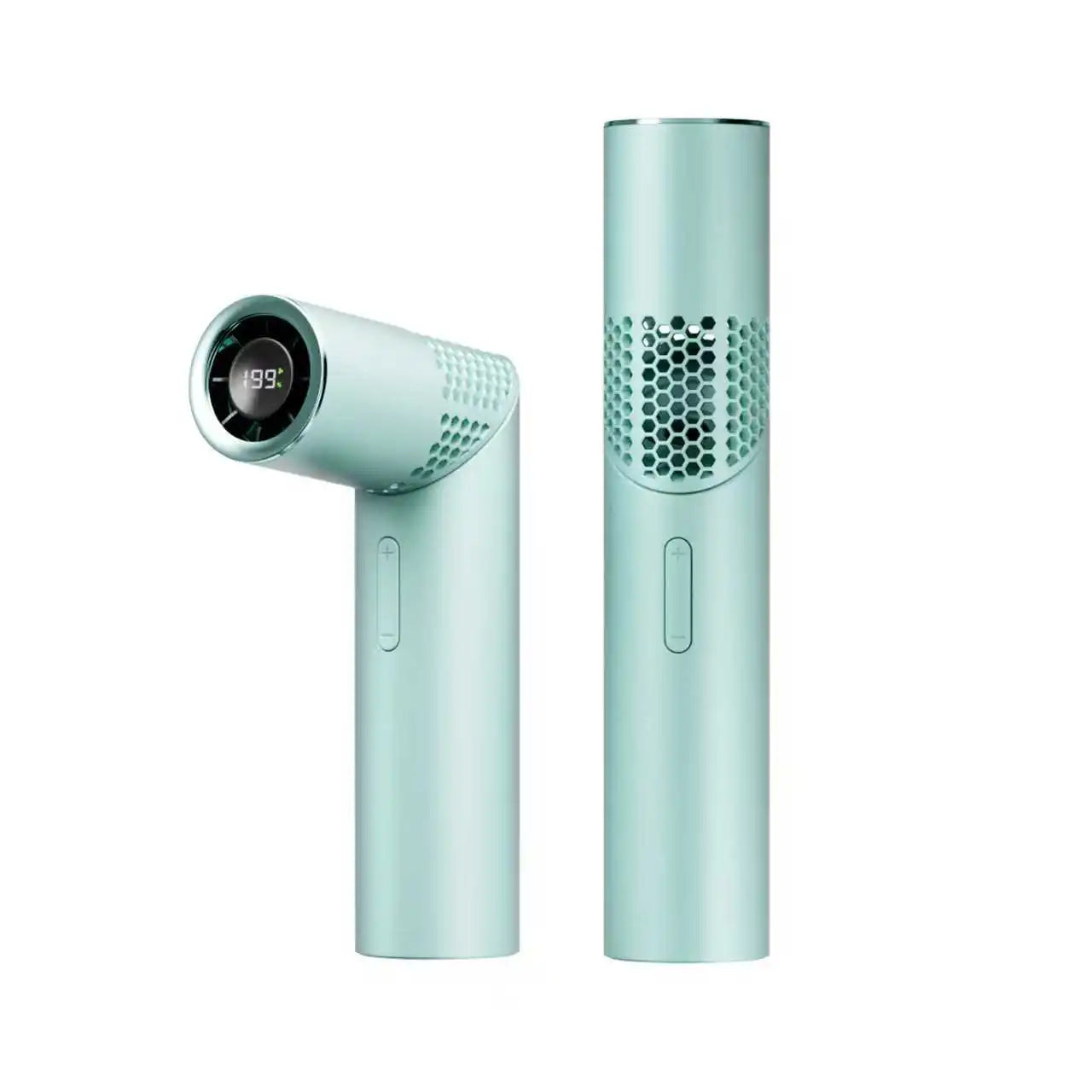
If your priority is a fan that can move with you, a compact foldable handheld design is one of the most practical options. It provides the flexibility to hold the fan when you need direct airflow, position it nearby when working, and fold it for storage when you are finished.
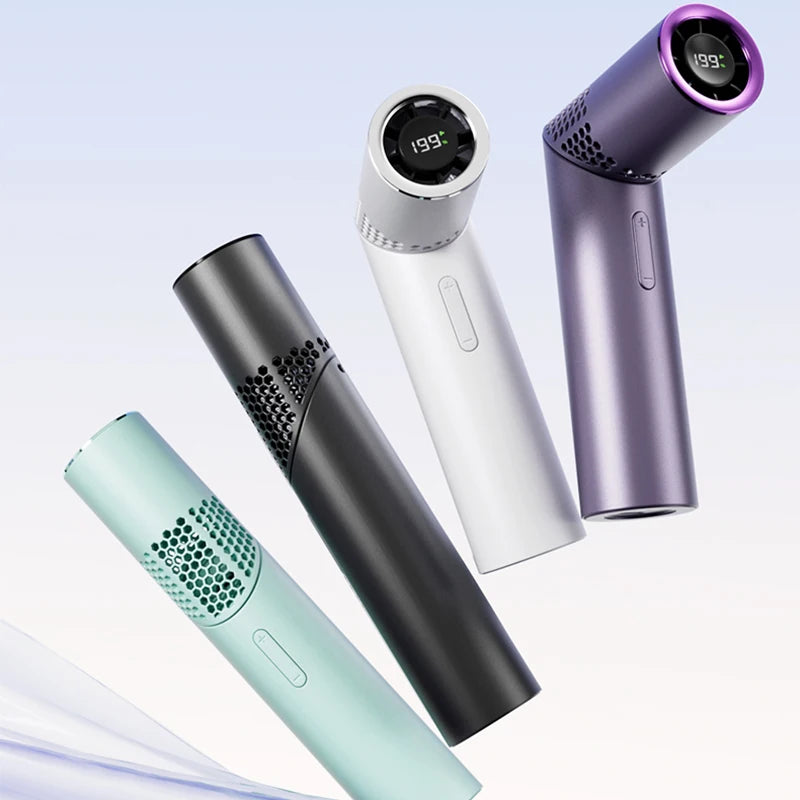
The featured Portable Handheld Fan | Foldable Cooling Comfort for Travel! is built around that everyday-use concept. It uses a lightweight ABS construction, foldable design, and compact form, with white, grey, and purple color options. The product information also identifies it as suitable for handheld, desktop, and neck-hanging personal cooling.
It is a particularly sensible fit for shoppers whose main concern is avoiding the inconvenience of carrying a bulky fan during summer travel or commuting.
Final Verdict: Which Personal Cooling Fan Should You Buy?
Choose Based on Your Cooling Priority
- Choose handheld if portability and direct airflow are your priorities.
- Choose foldable handheld if you want compact storage plus flexible positioning.
- Choose neck if hands-free cooling matters most.
- Choose clip-on if you need flexible fixed placement.
- Choose desktop if most of your cooling happens at a workstation or bedside.
Best Value for Everyday Personal Cooling
For shoppers who want one compact cooling device for travel, commuting, work, and everyday summer use, the foldable handheld format offers a strong balance of portability and versatility. The featured portable handheld fan is a practical option when the goal is simple personal airflow without carrying a bulky fan.
Its product specifications are straightforward: ABS construction, plastic fan components, foldable compact design, electric operation, no remote control, and multiple color options. Because battery capacity, exact runtime, airflow measurements, noise rating, and fan-speed count are not included in the supplied specifications, those factors should be verified before purchase if they are decisive for your needs.
For more everyday devices and practical personal-care technology, explore the Body Care and Health Devices collection and the Lifestyle collection. These broader categories can also help when building a practical summer travel or everyday comfort kit.
Frequently Asked Questions
What is the best personal cooling fan for strong airflow?
The best choice depends on how close you need the airflow and how much noise you can tolerate. A handheld fan is often the most flexible because you can position it directly toward your face or upper body. For a stronger-airflow purchase, prioritize documented airflow performance and speed settings rather than relying only on product size.
How long should a personal cooling fan battery last?
There is no single ideal runtime. A short commute may require only a few hours, while travel and outdoor use can demand substantially longer operation. Compare the manufacturer's stated runtime with your expected use and remember that higher speeds can reduce operating time.
Are handheld, neck, clip-on, or desktop fans better for cooling?
None is universally best. Handheld fans offer direct and portable airflow, neck fans provide hands-free cooling, clip-on fans provide flexible fixed placement, and desktop fans work well for stable airflow at a workstation.
What should I look for in a personal cooling fan for outdoor use?
Prioritize portability, comfortable operation, useful airflow, battery endurance, and durability. For very hot conditions, remember that a fan improves perceived comfort through airflow but does not lower the surrounding air temperature.
Is a personal cooling fan better than a regular room fan?
A personal fan is better when you need targeted airflow that can travel with you. A regular room fan is generally better when you need broader air circulation across a room or for several people.
Pillar Article: Best Portable Handheld Fan for Travel: 2026 Tested Picks













