

Best Portable Travel Fans of 2026: Tested Picks for Every Trip
The best portable travel fans are not necessarily the fans with the biggest motors or the longest specification sheets. For travel, the better choice is the one you will actually carry, recharge, and use when heat becomes uncomfortable. A fan that works well on a desk may be too bulky for sightseeing, while a tiny fan may be easy to pack but provide disappointing personal airflow.
This guide takes a travel-first approach to portable cooling. Instead of treating every model as interchangeable, we compare the qualities that matter when you are moving between airplanes, hotels, offices, campsites, commutes, and hot-weather attractions: portability, airflow, battery considerations, noise, charging convenience, durability, positioning, and overall versatility.
Important note: the KentDO fan evaluated here is assessed from its stated product design and specifications. No unsupported battery-runtime, noise, airflow-speed, or charging figures are presented as independently measured results.
Best Portable Travel Fans of 2026 at a Glance
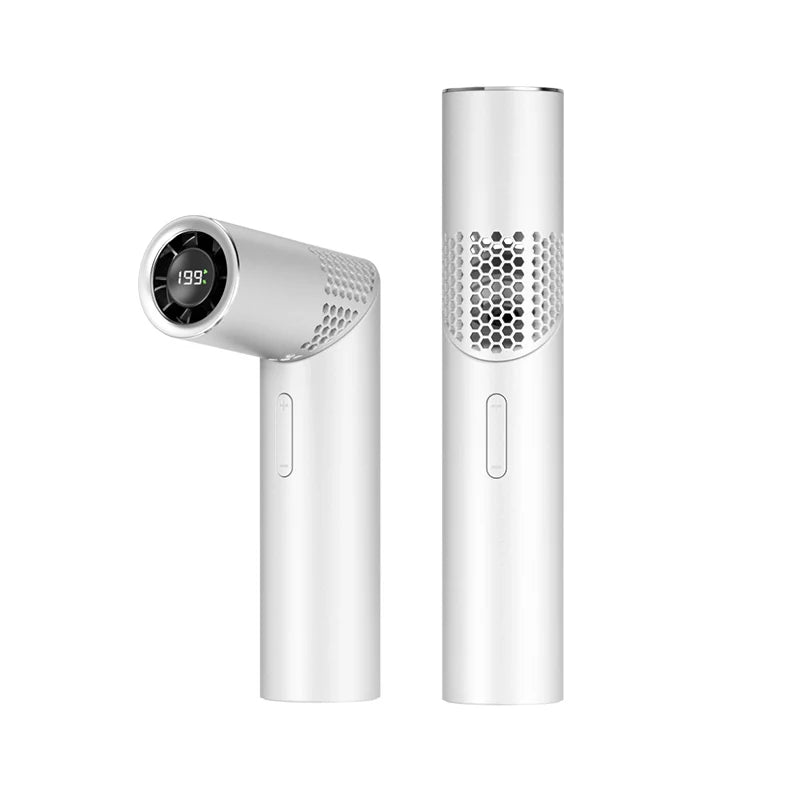
For most travelers, a compact foldable handheld fan offers one of the best compromises between direct airflow and packability. Neck fans are convenient when you need both hands free, while clip-on models make more sense when you want stationary airflow. Traditional desktop fans can provide broader airflow but generally sacrifice portability.
Quick Comparison Matrix
- Best overall travel format: Foldable personal fan — combines portability, flexible positioning, and direct airflow.
- Best for direct cooling: Handheld fan — easy to point toward your face, neck, or upper body when heat rises.
- Best for hands-free use: Neck fan — useful when walking, commuting, or sightseeing with both hands occupied.
- Best for fixed airflow: Clip-on fan — practical for desks, beds, camping setups, or other attachment points.
- Best for hotel rooms: Foldable or desktop-capable fan — easier to position beside a bed or workspace.
- Best for lightweight packing: Compact handheld fan — takes less luggage space than a traditional room fan.
Our Top Picks by Travel Scenario
- Airplane: Choose a compact, quiet design that fits easily into carry-on storage.
- Hotel: A foldable fan with flexible positioning is especially useful on a nightstand or desk.
- Camping: Prioritize battery endurance, durability, and airflow over minimum size.
- Commuting: A lightweight handheld fan is convenient for quick personal cooling between stops.
- Hot-weather sightseeing: Direct handheld airflow can provide immediate personal comfort without carrying a larger fan.
For travelers who want one compact device that can move between hand-held and stationary use, the Portable Handheld Fan | Foldable Cooling Comfort for Travel is a practical option to consider. Its foldable ABS design is intended for personal airflow, desk use, travel, commuting, and outdoor comfort.
Product page: https://kentdohealthybeauty.com/products/portable-handheld-fan-foldable-cooling
How We Evaluate Portable Travel Fans
A useful travel-fan comparison should look beyond marketing claims. The most important question is not simply whether a fan produces airflow, but whether its overall design makes that airflow useful in the situations where travelers actually need it.
Airflow and Cooling Performance
Personal fans work by moving air across the skin, which can improve perceived comfort when the surrounding air is hot. A compact fan does not replace air conditioning or lower the temperature of an entire room, but focused airflow can be valuable when you need relief at your seat, desk, bedside, or while walking.
When comparing fans, consider whether airflow can be directed easily, whether multiple positions are available, and whether the fan remains comfortable to hold. Maximum airflow is only one part of useful cooling.
Battery Endurance
Rechargeable operation can make a portable fan much more convenient than a cord-dependent model, particularly when traveling between outlets. However, battery life varies substantially according to motor speed, battery capacity, operating conditions, and fan design.
Do not assume that a manufacturer's maximum runtime will match your everyday experience. If a fan is intended for long outdoor excursions, check its actual battery specification and consider carrying an appropriate power bank when permitted and practical.
Noise Level
Noise matters differently depending on where you use the fan. A little motor noise may be insignificant outdoors but distracting in a hotel room, office, airplane cabin, or quiet sleeping environment.
A useful travel fan should therefore be judged not only by how much air it moves but also by whether you can comfortably operate it in your most likely travel environments.
Size, Weight, and Portability
Portability is more than fitting a fan into a suitcase. A good travel fan should be easy to retrieve, carry, position, and store repeatedly throughout a trip.
Foldability can be particularly valuable because it reduces the fan's footprint when packed. A lightweight ABS construction can also make repeated carrying more manageable than a larger traditional fan.
Charging and Durability
Travel exposes small electronics to repeated packing, unpacking, handling, and storage. Hinges, fan covers, controls, clips, and charging components deserve attention because they can become weak points over time.
Charging compatibility is another practical consideration. USB-powered or rechargeable designs can simplify travel, but you should verify the actual connector and charging specifications of any model before relying on it for a trip. The KentDO model described here is electric and rechargeable-friendly in its positioning, but the supplied product specifications do not establish a specific USB-C connector or battery-runtime figure.
Best Portable Travel Fans: Picks by Design
Best Overall Portable Travel Fan: Foldable Personal Design
A foldable personal fan is arguably the most versatile travel format when you want direct cooling without carrying a traditional fan. Its major advantage is flexibility: you can hold it when moving around, then position it nearby when working or relaxing.
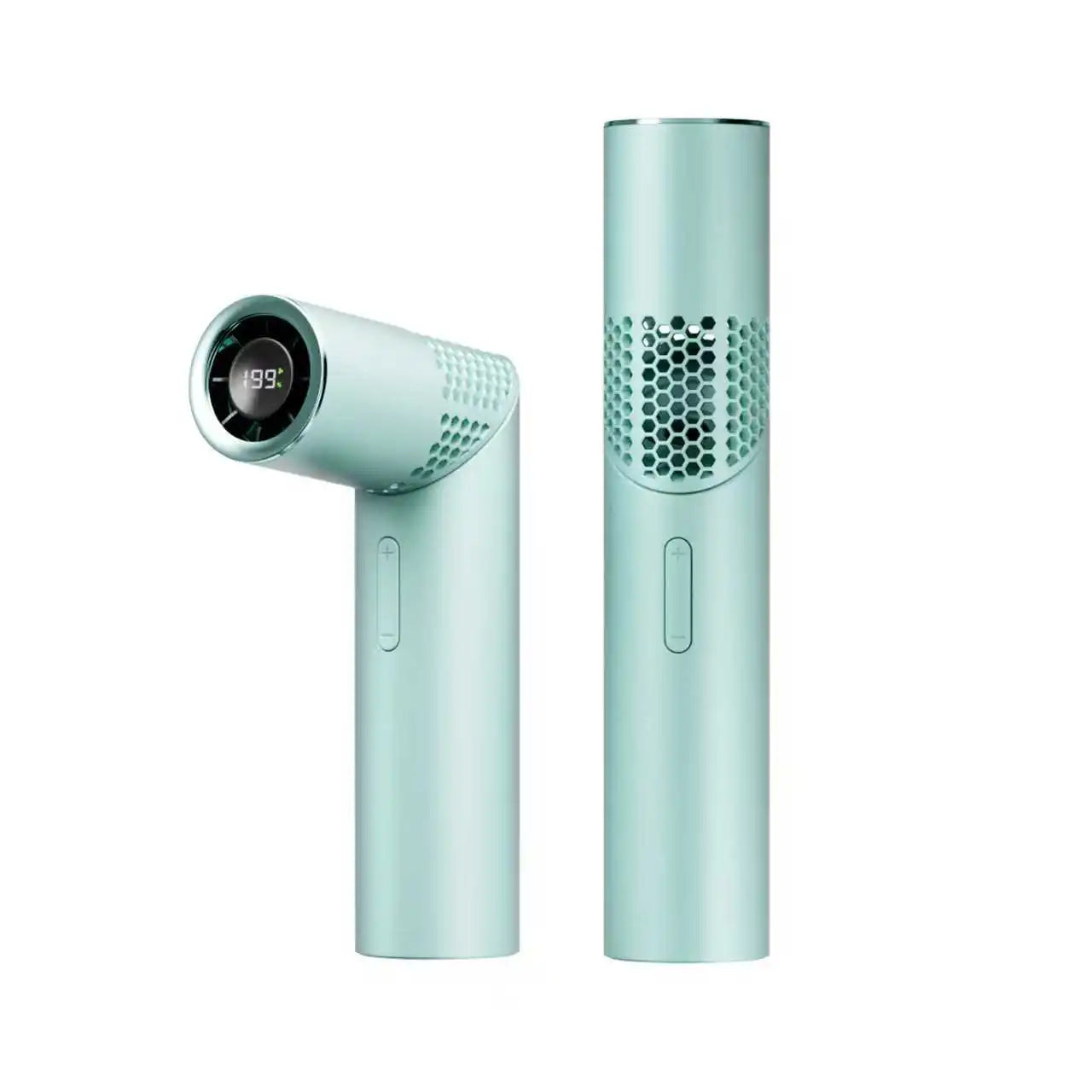
The KentDO Portable Handheld Fan fits this category with a compact ABS body and foldable construction. It is designed to provide personal airflow for travel, work, commuting, relaxation, and outdoor use.
Pros:
- Compact and foldable for easier storage
- Can be used as a handheld personal fan
- Can be positioned for desk use
- Lightweight ABS construction supports portability
- Suitable for multiple everyday environments
Cons:
- Personal airflow is not a substitute for whole-room cooling
- No remote control
- Supplied specifications do not provide a confirmed battery-runtime figure
- Compact construction may not deliver the room-wide airflow of a larger fan

Best Lightweight Personal Fan for Travel
For sightseeing and commuting, carrying comfort matters almost as much as airflow. A fan that is technically portable but noticeably inconvenient to carry may end up staying in your luggage.
A compact handheld design is useful when you expect frequent transitions between outdoor heat and indoor spaces. You can keep it in a bag, retrieve it when needed, and direct airflow precisely rather than carrying a larger device.
Best Handheld Fan for Direct Airflow
Handheld fans are particularly effective when the goal is immediate, targeted cooling. Instead of positioning a fan across a room, you can direct airflow toward your face, neck, or upper body.
The trade-off is that one hand remains occupied. That makes a handheld model less convenient than a neck fan for activities where you need both hands free, but it also gives you greater control over exactly where the airflow goes.
Best Neck Fan for Hands-Free Cooling
Neck fans are designed for users who want personal cooling while walking or performing activities with their hands occupied. They can be useful for sightseeing, outdoor events, and commuting.
The main trade-offs are weight around the neck, fit, airflow direction, and motor noise. A neck fan is not automatically better than a handheld fan; it is simply better suited to a different use case.
Best Clip-On Fan for Fixed-Position Cooling
Clip-on fans are useful when you have a stable attachment point. They can make sense beside a bed, at a desk, on certain camping setups, or around other stationary locations.
Their biggest limitation for general travel is that they require something suitable to attach to. If you spend most of your trip walking between destinations, a handheld or foldable fan is usually more flexible.
Portable Travel Fan Types Compared

Handheld Fans
Handheld fans prioritize direct, user-controlled airflow. They are easy to point toward the area where you feel hottest and can be useful during commuting, sightseeing, waiting in lines, or sitting outdoors.
Foldable Travel Fans
Foldable models add storage and positioning flexibility to the handheld concept. When folded, they can take up less space in luggage. Depending on the construction, they may also be positioned on a desk or other surface.
Neck Fans
Neck fans provide hands-free personal airflow. Their advantage becomes more apparent when walking, carrying luggage, taking photographs, or participating in activities where holding a fan is inconvenient.
Clip-On Fans
Clip-on fans excel when fixed positioning is more important than mobility. They can be particularly useful for camping, desks, bedside use, and other locations with a secure attachment point.
What to Look for in a Portable Travel Fan
Airflow and Cooling Power
Look for airflow that reaches you comfortably at the distance where you expect to use the fan. A small fan with well-directed personal airflow may be more useful for sightseeing than a larger fan that is awkward to carry.
Battery Life and Rechargeability
If you will spend hours away from outlets, battery capacity becomes a major buying factor. Consider how long you typically need cooling between charging opportunities rather than choosing a fan solely because its battery specification looks impressive.
Charging Convenience
A travel fan should fit naturally into your existing charging routine. Before buying, verify the charging connector, input requirements, included cable, and whether your travel setup can conveniently power the device.
Noise Level
Think about your quietest use case. A fan that is acceptable outdoors may be irritating in an airplane seat, hotel bedroom, or shared office. If quiet operation is important, look for credible noise information rather than assuming every compact fan is silent.
Size, Weight, and Foldability
Measure portability by how easily the fan moves through your entire trip. A compact foldable body can be especially useful because the same fan can be carried in a bag, used in hand, and positioned on a desk.
Build Quality and Travel Durability
Inspect the fan's materials, hinge mechanism, grille, controls, and attachment points. Plastic construction is not inherently poor; lightweight ABS can be useful for a travel product because reducing bulk and weight is part of the design goal.
Which Portable Fan Is Best for Your Trip?
Best Fan for Airplane Travel
Choose a compact model that is easy to store and retrieve. Noise becomes especially important in confined spaces, and the fan should not take up unnecessary carry-on space. Always follow the airline's current rules for electronic devices and batteries when applicable.
Best Fan for Hotels
A foldable design has a major advantage in hotel rooms because it can serve as a handheld fan during the day and a positioned personal fan while working or relaxing. A desk-compatible configuration is particularly convenient.
Best Fan for Camping
Camping changes the priorities. Battery endurance, durability, airflow strength, and positioning can matter more than achieving the absolute smallest packed size. A clip-on model may work well at a fixed campsite, while a handheld model is better for moving around.
Best Fan for Commuting
For commuting, prioritize quick access, low weight, and easy storage. A compact handheld fan can be useful on buses, trains, platforms, sidewalks, or during walks between destinations.
Best Fan for Hot-Weather Sightseeing
Direct personal airflow is valuable when walking through hot outdoor environments. A lightweight handheld or foldable fan lets you direct cooling where you need it without adding the bulk of a conventional fan to your travel bag.
Portable Travel Fan Pros and Cons
Advantages of Portable Fans
- Provide focused personal airflow rather than requiring an entire room to be cooled.
- Take up substantially less luggage space than traditional room fans.
- Can be useful during commuting, travel, work, outdoor activities, and relaxation.
- Foldable designs can improve storage and positioning flexibility.
- Rechargeable designs can reduce dependence on fixed wall outlets.
- Different formats allow travelers to choose between handheld, hands-free, and fixed-position cooling.
Limitations to Know Before Buying
- A portable fan generally provides personal comfort rather than whole-room temperature control.
- Higher airflow settings may produce more operating noise.
- Rechargeable models depend on available battery capacity and charging access.
- Very small fans may sacrifice airflow strength to achieve minimal size.
- Handheld designs require one hand during use unless they can be positioned separately.
How to Choose the Best Portable Travel Fan
Step 1: Decide Where You Will Use It
Start with the trip rather than the product. Airplanes favor compactness and quietness. Hotels favor flexible positioning. Camping favors endurance and durability. Commuting favors low weight. Sightseeing favors direct personal airflow.
Step 2: Choose the Right Fan Design
Choose handheld if precise airflow is your priority. Choose foldable if storage and positioning matter. Choose a neck fan when hands-free operation is essential. Choose a clip-on fan when you have a reliable fixed location.
Step 3: Prioritize Battery and Charging
Estimate your typical daily use and identify when you can recharge. If you expect extended outdoor use, battery capacity should receive more attention than it would for occasional hotel-room cooling.
Step 4: Balance Airflow Against Noise
Do not evaluate airflow in isolation. The strongest setting may not be the setting you use most often if it creates excessive noise. For travel, the most useful fan is often the one that provides sufficient personal cooling while remaining comfortable to operate.
For a compact option that emphasizes portability and flexible use, the KentDO foldable handheld fan uses an ABS plastic body and can be used as a handheld, desktop, or neck-hanging personal cooling fan. Its compact format makes it especially relevant for travelers who want one device for several everyday situations.
Product page: https://kentdohealthybeauty.com/products/portable-handheld-fan-foldable-cooling
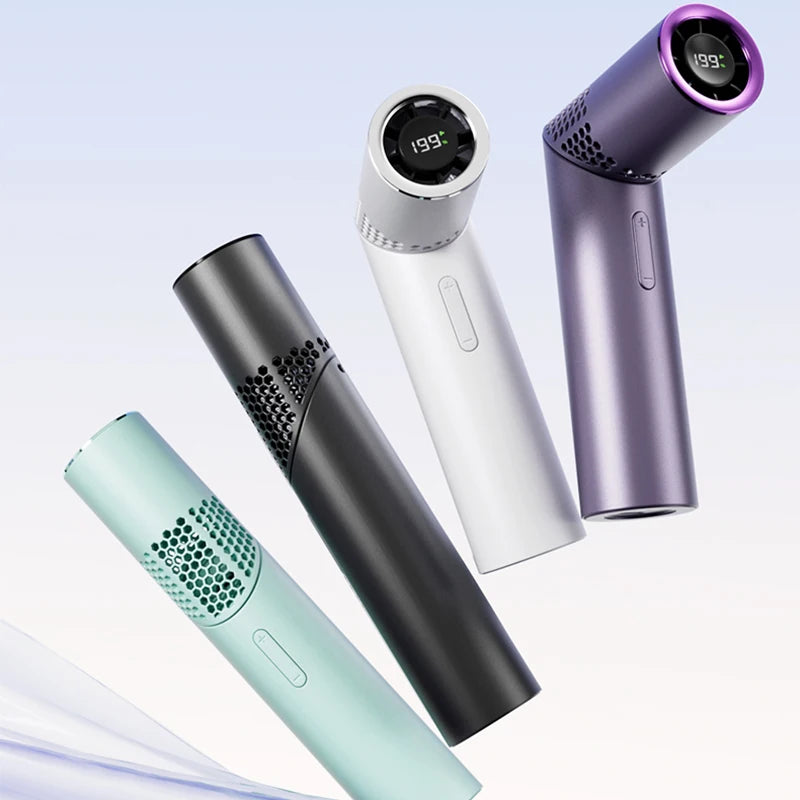
For other everyday wellness and personal-care devices, the KentDO Lifestyle collection is another relevant place to explore: https://kentdohealthybeauty.com/collections/lifestyle
Travel cooling is ultimately about matching the device to the environment. A compact fan does not need to cool an entire room to be useful; it needs to deliver convenient personal airflow when and where you need it.
Final Verdict: Which Portable Travel Fan Should You Choose?
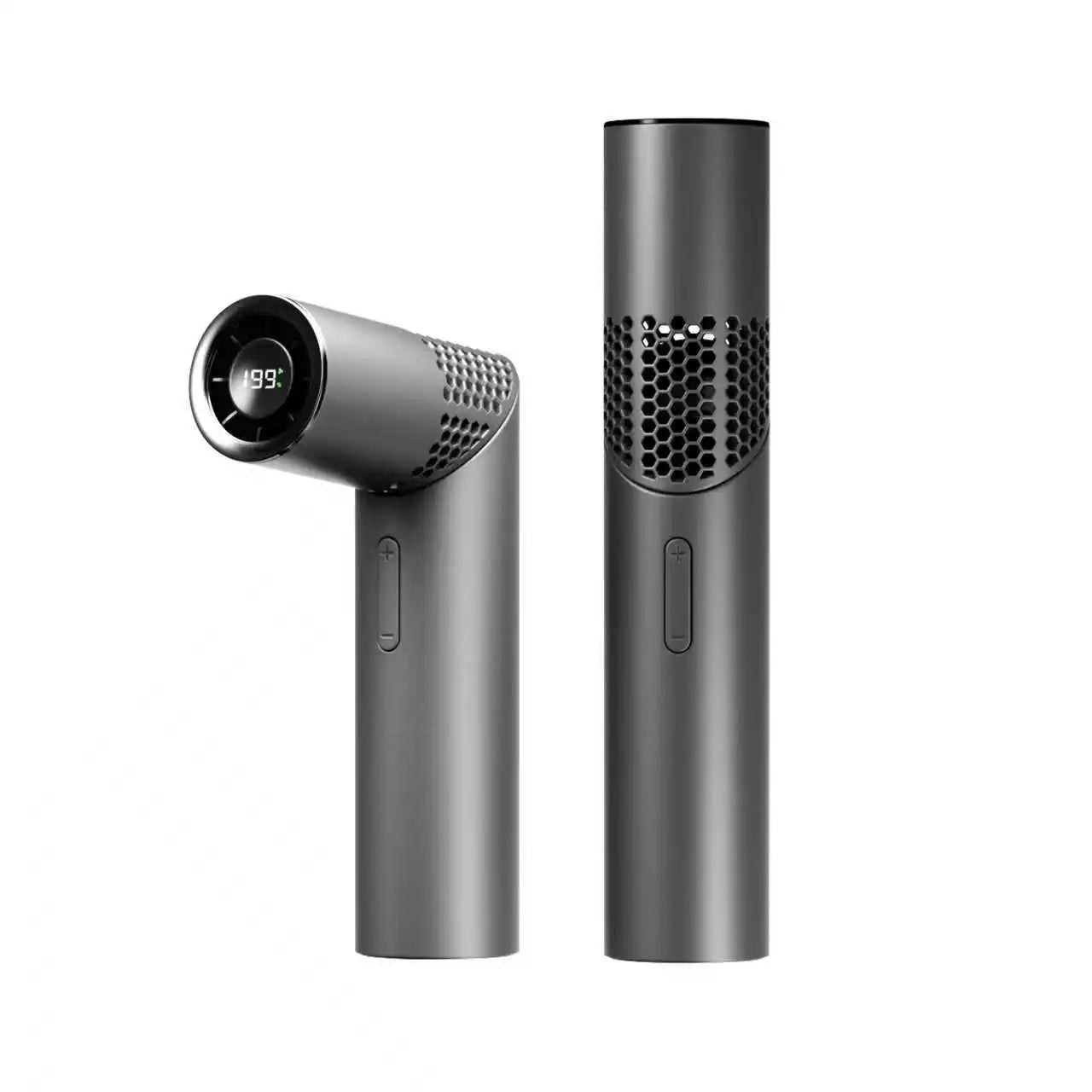
The best portable travel fan is the one that balances cooling performance with the practical realities of your trip. For hands-free cooling, consider a neck fan. For fixed-position airflow, a clip-on design can make more sense. For direct cooling while walking, a handheld fan is difficult to beat. And when you want a combination of compact storage, handheld airflow, and flexible positioning, a foldable personal fan offers a particularly useful middle ground.
The KentDO Portable Handheld Fan is designed around that middle ground. Its compact foldable ABS construction supports portability, while its versatile design allows handheld, desktop, and neck-hanging use. The supplied specifications do not establish independent battery-runtime, noise, or airflow measurements, so those factors should be verified against your specific needs before purchase.
If your priority is a lightweight personal cooling companion for commuting, travel, desk use, or hot-weather outings, a foldable handheld design is a practical place to start. Choose based on the environment, carrying requirements, expected runtime, noise tolerance, and charging setup—not simply the largest airflow claim.
Pillar Article: Best Portable Handheld Fan for Travel: 2026 Tested Picks













