

Best Quiet Bladeless Fans of 2026: Tested for Noise & Airflow
The quietest bladeless fan on a specification sheet is not automatically the quietest fan in a bedroom. Motor hum, airflow turbulence, oscillation sounds, fan speed, room acoustics, and the distance between the fan and the sleeper can all change how loud a fan actually feels. That is why a useful quiet-fan comparison should look beyond one headline decibel number.
This guide takes a noise-first approach, focusing on quiet operation, airflow, room coverage, bedroom suitability, oscillation, controls, energy use, and overall value. One important limitation: the product information supplied for this guide provides an advertised noise range of 36–45 dB, but it does not provide independent laboratory measurements at low, medium, or sleep speeds. The recommendations below therefore distinguish clearly between published specifications and independently measured performance rather than presenting manufacturer figures as test results.
Best Quiet Bladeless Fans of 2026: At a Glance
| Pick | Best For | Published Noise | Coverage | Power | Oscillation | Heating |
| Best All-Season Pick: KentDO 42-Inch Bladeless Tower Fan | Bedrooms, living spaces, year-round use | 36–45 dB | 15–25 m² | 40W | Left & right | Yes |
| Traditional Fan Alternative | Maximum airflow at a lower purchase price | Varies by model | Varies by model | Varies | Varies | No |
| Air Conditioner Alternative | Lowering room temperature | Varies by model | Varies | Typically higher | Varies | Usually no |
Best Overall Quiet Bladeless Fan
For shoppers who want one appliance to handle cooling, heating, circulation, and everyday room comfort, the KentDO 42-Inch Bladeless Tower Fan is the strongest verified all-season option in the supplied product set. Its published 36–45 dB noise range, enclosed bladeless construction, remote control, left-and-right oscillation, multiple speeds, natural wind mode, and 15–25 m² application make it particularly relevant to bedroom and home use.
Quietest for Bedrooms
A bedroom fan should not be judged by its minimum dB figure alone. Stable airflow, low-speed behavior, oscillation noise, display brightness, and timer functionality can matter just as much overnight. The KentDO model lists a 2–8 hour timer and a 36–45 dB operating range, making it a practical candidate for nighttime use. However, the supplied specifications do not establish a laboratory-tested sleep-mode noise result, so it should not be described as objectively the quietest fan available.
Best Budget Quiet Bladeless Fan
Budget shoppers should compare the actual noise and airflow performance they need rather than paying simply for the word “bladeless.” A traditional fan may provide strong airflow for less money, while a tower design can provide a cleaner footprint, enclosed airflow path, oscillation, and additional seasonal functions.
Best Premium Pick
Premium bladeless fans can justify higher prices when they deliver measurable improvements in acoustic performance, airflow control, filtration, sensing, smart features, or build quality. A higher price alone, however, does not prove that a fan is quieter or better for sleeping. If those premium features do not solve a specific problem, a simpler tower fan can provide better value.
How We Evaluated Quiet Bladeless Fans
A meaningful quiet-fan test should separate manufacturer specifications from independent measurements. The supplied product information gives a published 36–45 dB range for the KentDO tower fan, but it does not include independent readings. Rather than invent measurements, the evaluation framework below shows what should be compared before declaring one model the quietest.
Noise Testing at Low, Medium, and Sleep Speeds
Noise should be measured at a consistent distance and under the same room conditions at low, medium, and practical nighttime settings. A single minimum dB number can hide the fact that a fan becomes considerably louder as airflow increases.
It is also useful to listen for tonal characteristics. A steady broadband airflow sound may be less distracting during sleep than a fluctuating motor hum, even when both produce similar average readings.
Airflow and Projection Testing
Quietness is only useful if the fan moves enough air to create meaningful comfort. Airflow testing should consider velocity, projection distance, and how effectively the fan distributes air across a room.
The KentDO tower is specified for rooms of approximately 15–25 m² and includes left-and-right oscillation. Those specifications suggest a whole-room circulation role rather than a device designed solely for close-range desk cooling.
Oscillation, Controls, and Nighttime Usability
Oscillation can improve room-wide circulation, but the mechanism itself can introduce mechanical noise. A remote control and timer are particularly useful in bedrooms because they allow users to adjust or shut down the fan without getting out of bed.
The KentDO model provides remote control operation, left-and-right oscillation, adjustable fan speeds, and a 2–8 hour timer. These features support practical nighttime operation even though the supplied specifications do not provide independent measurements of oscillation noise.
Bedroom Suitability
A good bedroom fan needs more than a low advertised dB number. Consider the fan's minimum practical speed, airflow stability, footprint, timer, control method, and whether its operation introduces distracting sounds.
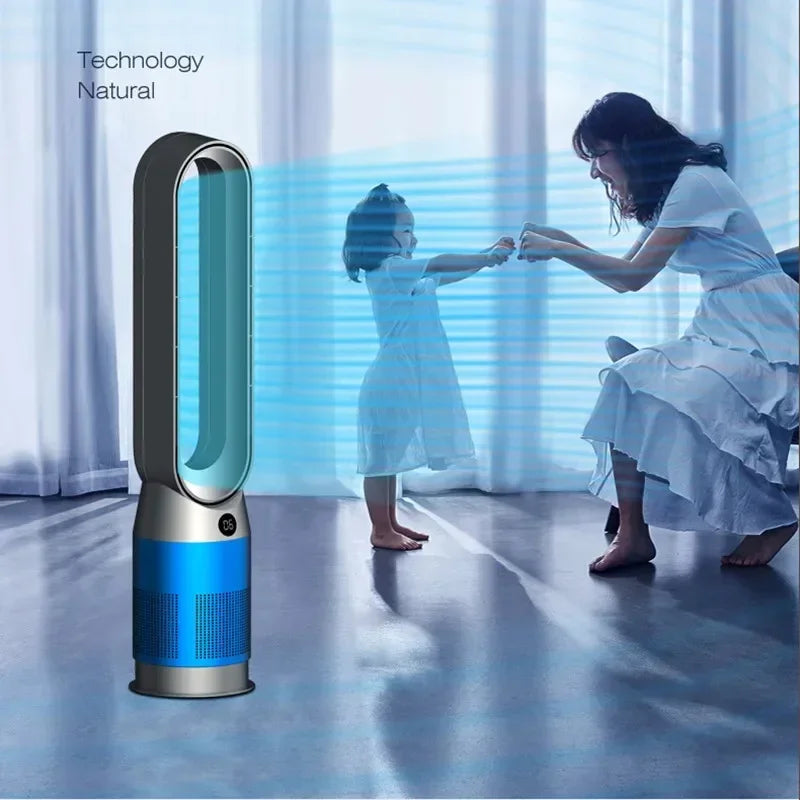
What Makes a Bladeless Fan Quiet?
Motor Noise vs. Airflow Noise
Two major sound sources are the motor and the movement of air. Motor noise can appear as a mechanical hum or tonal whine, while airflow noise is generated as air passes through the internal fan system and exits into the room.
A fan can therefore have a respectable headline dB rating while still sounding distracting to a sensitive sleeper if its noise has a noticeable tonal character.
Why Advertised dB Ratings Can Be Misleading
Decibel measurements are meaningful only when the measurement conditions are understood. Distance from the fan, background noise, room reflections, fan speed, microphone placement, and measurement equipment can all influence the result.
For that reason, a published 36 dB minimum should not automatically be compared with another manufacturer's 36 dB figure as though the two were produced under identical conditions.
What dB Level Is Quiet Enough for Sleeping?
There is no single dB number that guarantees comfortable sleep for everyone. Some sleepers tolerate steady background airflow easily, while light sleepers may notice relatively subtle motor tones or changes in volume.
The practical approach is to prioritize the quietest usable setting that still provides enough airflow for the room and sleeping position.
Quietest Bladeless Fans: Detailed Pick
Best Overall: KentDO 42-Inch Bladeless Tower Fan
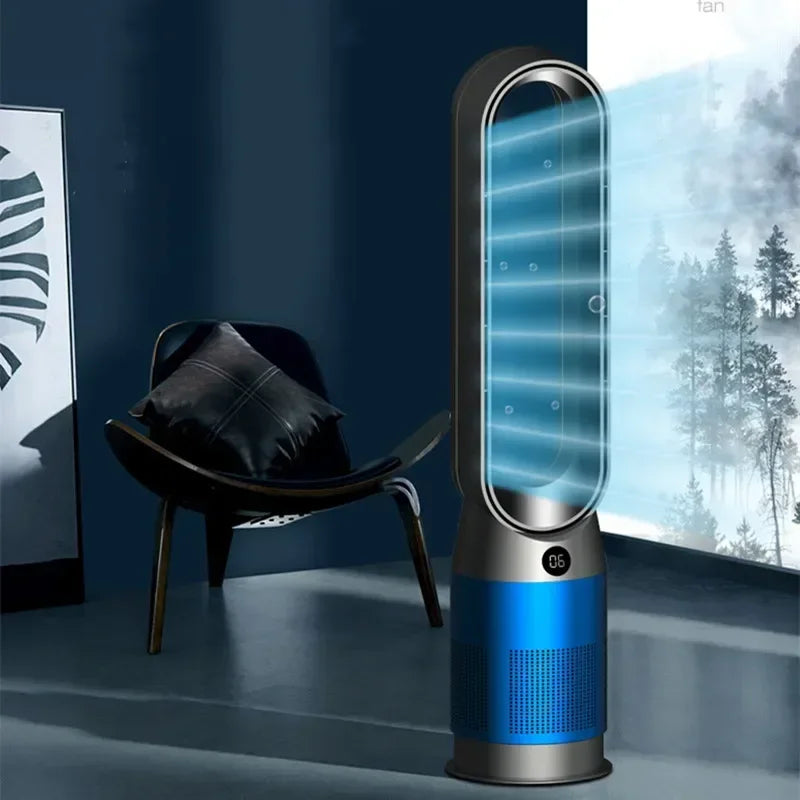
The KentDO 42-inch tower fan is designed around a different proposition from a basic cooling-only fan: one vertical appliance provides cooling, heating, circulation, and purification functionality while taking up relatively little floor space.
Its published specifications include 36–45 dB noise, 40W power consumption, 15–25 m² application, left-and-right oscillation, remote control, multiple fan speeds, natural wind mode, and a 2–8 hour timer. The enclosed bladeless design also eliminates exposed rotating fan blades.
The combination is especially relevant when one room is used throughout different seasons. Instead of storing separate cooling and heating appliances, the tower can provide both cool-air and warm-air modes.
Pros:
- Published 36–45 dB operating range
- Cooling and heating in one tower
- Designed for approximately 15–25 m² rooms
- Remote control operation
- Left-and-right oscillation
- 2–8 hour timer
- Enclosed bladeless design
- Natural wind and purification functionality
- 40W listed power consumption
Cons:
- No independent low-, medium-, and sleep-speed noise measurements are supplied
- 110V availability may vary and should be confirmed before ordering
- A 40W fan is not a substitute for an air conditioner when the goal is substantially lowering room temperature
- Users seeking maximum raw airflow may prefer a traditional fan design
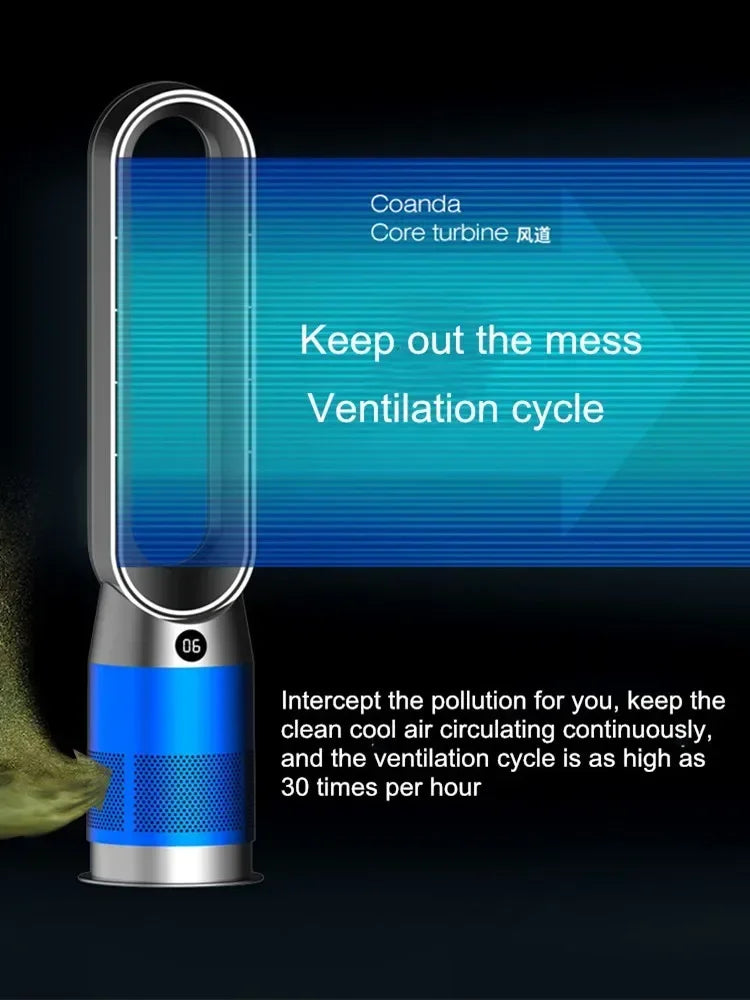
Best for Bedroom and Sleep
The bedroom use case favors quiet operation, controllable airflow, and nighttime convenience. The KentDO tower's published 36–45 dB range places quietness near the center of its positioning, while its remote and timer reduce the need for manual adjustments during the night.
For a sleeper who prefers some airflow without running a separate cooling appliance continuously, a timer can also help limit unnecessary operating hours.
Best for Small Bedrooms and Offices
For rooms toward the smaller end of the 15–25 m² application range, a tower fan can be more practical than a bulky pedestal fan. The vertical format concentrates the appliance into a relatively narrow footprint while oscillation helps distribute airflow.
In an office, the remote control and adjustable speeds are useful when the user wants to change airflow without repeatedly reaching behind or around the appliance.
Best for Larger Rooms
For larger rooms, the important question is not simply whether a fan is quiet. Airflow reach and circulation become increasingly important. A very quiet fan that cannot move enough air to the occupied area can feel less effective than a somewhat louder model with substantially stronger projection.
The KentDO product is specified for 15–25 m². That range should be treated as the intended application rather than a guarantee of uniform cooling throughout every room of that size.
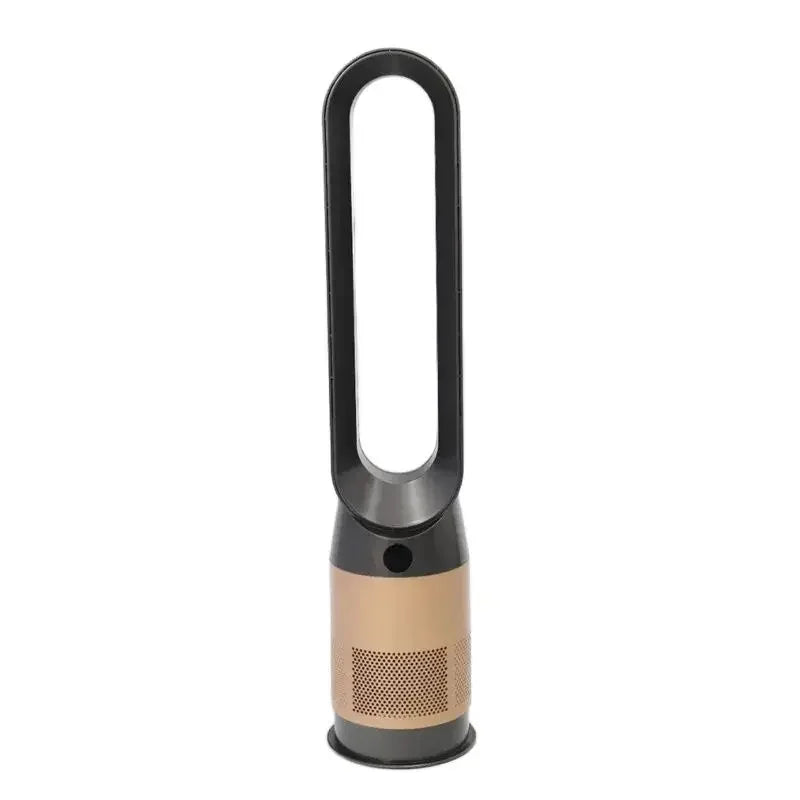
Quiet Bladeless Fan vs. Traditional Fan: Which Is Actually Quieter?
Noise Differences at Typical Sleep Speeds
Bladeless does not automatically mean silent. Traditional fans can be surprisingly quiet at low speeds, and their simple mechanical construction can deliver strong airflow at relatively low cost. Bladeless tower designs can instead appeal to shoppers who value enclosed construction, a streamlined appearance, controlled airflow, and additional functions.
The fairest comparison is therefore measured noise at the same useful airflow level rather than comparing the product categories by name.
Airflow Differences
Traditional pedestal and floor fans can be excellent when the primary goal is moving a large volume of air toward a particular location. Tower fans can be more attractive when vertical airflow distribution, oscillation, footprint, and appearance are priorities.
When a Traditional Fan May Be the Better Buy
Choose a traditional fan if your priority is maximum airflow per dollar, highly directional cooling, or simple operation. A bladeless tower is more compelling when you want a cleaner enclosed design, oscillation, remote control, or multi-season functionality.
Are Expensive Bladeless Fans Worth It?
What You Actually Get at Premium Prices
Premium bladeless fans can include more sophisticated motors, quieter airflow systems, smart controls, air-quality sensing, filtration, improved displays, and better control over airflow patterns. These features can matter if they solve a specific problem.
But a premium price does not automatically produce a quieter sleeping environment. Compare the performance characteristics that actually matter to you before paying for brand recognition or cosmetic upgrades.
When Premium Pricing Is Justified
Higher spending makes more sense for users who specifically need advanced automation, sensing, filtration, sophisticated airflow control, or premium build quality. For someone who primarily needs quiet bedroom airflow, a simpler model with appropriate noise characteristics may be sufficient.
When a Budget Model Is the Smarter Choice
A budget model can be the better choice when you only need basic circulation and cooling. If heating, remote control, oscillation, and year-round use are valuable, however, a multifunction tower may reduce the need to purchase and store separate appliances.
How to Choose a Quiet Bladeless Fan for Your Room
Start With Your Noise Priority
Decide whether you need ultra-quiet operation for sleep, quiet general bedroom cooling, or simply a fan that is unobtrusive in an office. The stricter the noise requirement, the more important independent measurements become.
Match Airflow to Room Size
Room size is a starting point, not a guarantee. Ceiling height, insulation, sunlight, doors, windows, humidity, and room layout can affect comfort. Make sure the fan can project airflow to where people actually sit or sleep.
Check Oscillation and Air Circulation
Oscillation helps distribute air beyond one narrow stream. A tower with left-and-right movement can be useful when several parts of a room need circulation rather than one person needing direct airflow.
Consider Timer and Remote Controls
For bedrooms, timers and remote controls can be more useful than smart-home connectivity. A 2–8 hour timer, for example, can provide overnight convenience without requiring the fan to operate indefinitely.
Consider Energy Efficiency and Running Cost
Running cost depends on power consumption and hours of operation. The KentDO tower lists 40W power consumption. At that rated level, using the fan for fewer hours generally consumes less electricity than continuous operation, although actual energy use can vary with operating mode.
Look for Features That Reduce Nighttime Disruption
Prioritize stable airflow, quiet operation, controllable speed, a useful timer, and convenient remote access. Features that look impressive on a specification sheet are less valuable if they make nighttime operation more complicated.
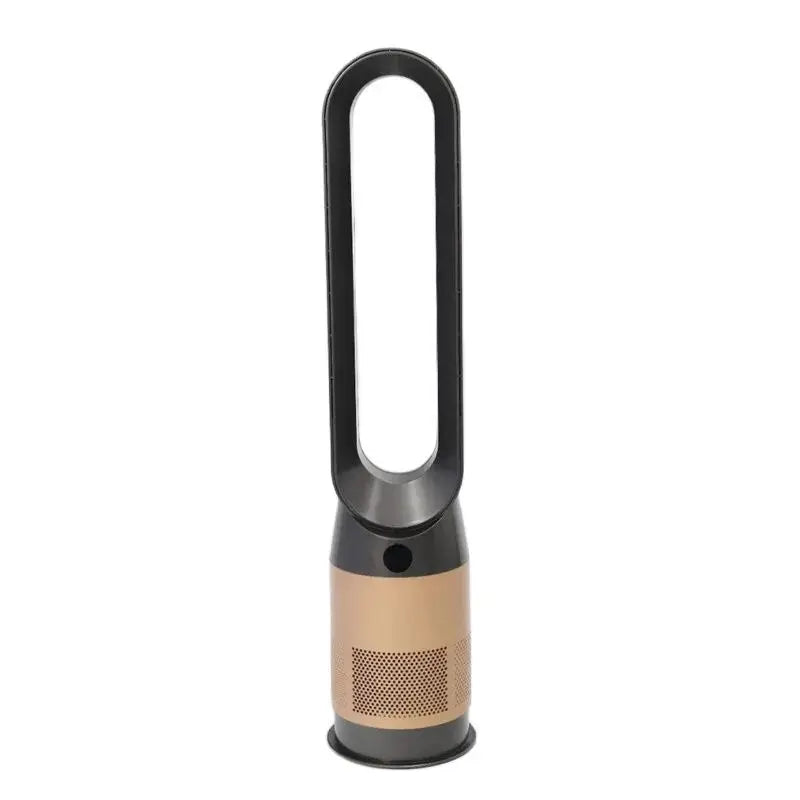
Quiet Bladeless Fan Buying Checklist
The 7 Specs That Matter Most
- Noise: Look for measurements at multiple speeds rather than one minimum dB claim.
- Sleep performance: Check whether the quietest setting still provides useful airflow.
- Airflow: Consider how far the air reaches and whether it reaches your bed or seating area.
- Coverage: Match the stated room application to your actual space.
- Oscillation: Whole-room circulation can matter more than maximum direct airflow.
- Controls: Remote operation and timers can significantly improve bedroom usability.
- Power consumption: Compare wattage with expected daily operating hours.
Red Flags to Avoid
- Only one unexplained dB number
- No information about measurement conditions
- Very low noise claims paired with weak airflow
- No indication of useful room coverage
- Noisy or abrupt oscillation
- Bright or distracting nighttime controls
- Claims that “bladeless” automatically means silent
Quiet Bladeless Fan Comparison Matrix
| Criterion | What to Look For | KentDO 42-Inch Tower Fan | Why It Matters |
| Noise | Multiple speed measurements | 36–45 dB published range | Helps assess nighttime comfort |
| Airflow | Useful projection and room circulation | Multiple speeds + natural wind | Quiet airflow must still feel effective |
| Coverage | Room-size suitability | 15–25 m² stated application | Prevents undersizing |
| Oscillation | Wide room distribution | Left and right | Reduces concentrated airflow |
| Controls | Remote and convenient adjustment | Remote included | Useful for bedrooms and offices |
| Timer | Automatic shutoff | 2–8 hours | Useful for nighttime operation |
| Heating | Year-round use | Yes | Can replace a separate seasonal appliance |
| Power | Lower operating demand | 40W listed | Relevant to running cost |
Our Verdict: Which Quiet Bladeless Fan Should You Buy?
Best for Most People
If you want a single tower appliance for everyday home comfort rather than a cooling-only device, the KentDO 42-inch bladeless tower fan offers a strong combination of published quietness, oscillating airflow, remote control, timer functionality, heating, and a stated 15–25 m² application range.
Best for Light Sleepers
Light sleepers should prioritize independently measured sleep-setting noise whenever possible. The KentDO's published 36–45 dB range is promising for shoppers seeking quieter operation, but the available product information does not provide independent sleep-speed testing, so it should be treated as a candidate rather than a laboratory-proven winner.
Best for Maximum Airflow
If maximum airflow is the only priority, compare tower fans directly against traditional pedestal or floor fans. A traditional design may deliver stronger directional airflow for less money. If you instead want airflow distributed around a room, oscillation and tower form can be more important.
Best Value
The strongest value comes from buying only the capabilities you will actually use. A cooling-only fan may be enough for summer. But if your room alternates between hot and cold conditions, a tower that combines cooling and heating can reduce appliance clutter while providing remote operation, oscillation, natural wind, and timed use.
For shoppers specifically seeking a quiet bladeless tower with both cooling and heating, the KentDO 42-Inch Bladeless Tower Fan is the clearest match to the supplied requirements. Its published 36–45 dB range, 40W power rating, 15–25 m² application, remote control, left-and-right oscillation, and 2–8 hour timer make it particularly suited to buyers who want year-round room comfort from one appliance.
Before purchasing, confirm voltage compatibility if you require 110V, because the supplied specification lists 220V and states that 110V availability may vary. Most importantly, judge quietness by the operating setting you will actually use. The best quiet bladeless fan is not necessarily the one with the lowest advertised dB number or the highest price; it is the model that delivers enough airflow for your room without creating more nighttime noise than you can comfortably tolerate.
Pillar Article: Best Bladeless Tower Fan Heaters of 2026: Tested & Compared













