

Best Reusable Shoe Washing Bag: 2026 Comparison & Buying Guide
The best reusable shoe washing bag should do more than hold a pair of sneakers. It should help reduce rough contact with the washer drum, keep footwear contained, maintain enough water and detergent flow for cleaning, and survive repeated wash cycles without a weak zipper or torn seams. For shoppers comparing a reusable shoe laundry bag, the most useful criteria are protection, construction, closure security, ventilation, capacity, washing-machine compatibility, and long-term reusability.
This guide evaluates those factors first so you can choose a shoe washing bag based on how you actually wash your footwear rather than on generic feature lists. The goal is not simply to find the thickest bag, but to find the right balance between shoe protection, water circulation, durability, and ease of maintenance.
Best Reusable Shoe Washing Bags at a Glance
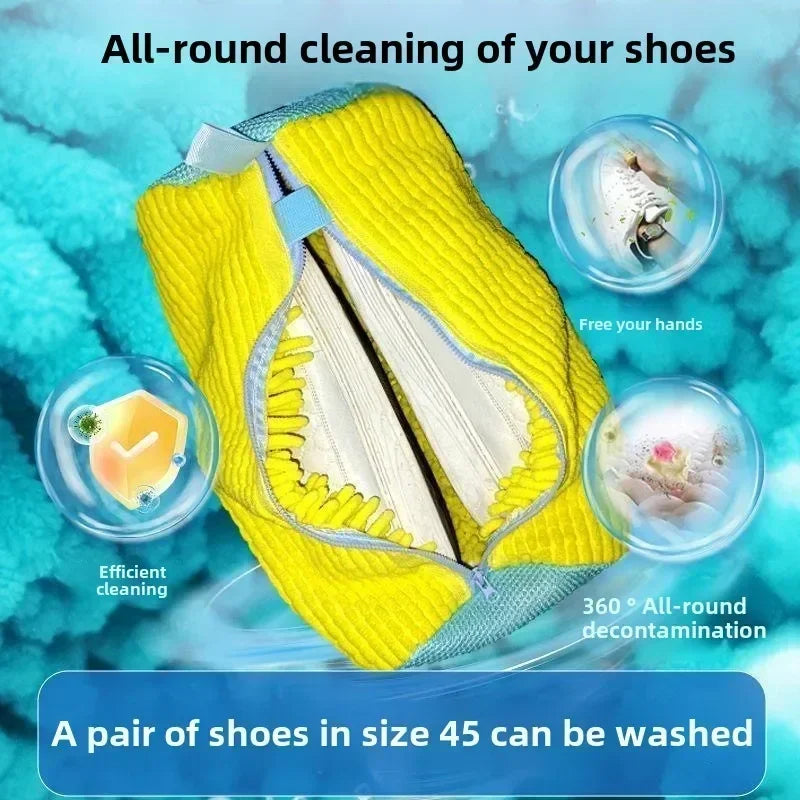
For everyday machine-washing of suitable sneakers and similar footwear, a dedicated shoe laundry bag is generally more purpose-built than a basic laundry bag because its construction is intended to contain footwear during the wash cycle. The KentDo Shoe Washing Bag is a practical reference option for shoppers looking for a reusable, zippered design made from polyester nylon.
Quick Comparison Matrix
| Evaluation Factor | What to Look For | Why It Matters |
|---|---|---|
| Material | Durable polyester, nylon, reinforced fabric, or suitable mesh | Supports repeated use and helps contain shoes during tumbling |
| Protection | Protective construction with enough structure around footwear | Helps reduce rubbing and direct impacts |
| Closure | Secure zipper or reliable closure | Helps keep shoes enclosed throughout the cycle |
| Water flow | Fabric or mesh that allows water and detergent through | Supports washing and rinsing without completely isolating footwear |
| Capacity | Enough room for the intended shoe size and quantity | Prevents compression and restricted movement |
| Reusability | Washable construction and durable seams | Improves long-term value |
| Drying | Good airflow and convenient storage or hanging design | Helps the bag dry between uses |
Best for Different Shoe-Washing Needs
- Everyday sneakers: Look for a secure closure, protective construction, and sufficient room for natural movement.
- Athletic shoes: Prioritize capacity, drainage, structural support, and durable construction.
- Canvas shoes: Favor adequate water and detergent circulation with gentle containment.
- Large shoes: Choose a bag that does not compress the footwear or place excessive strain on the zipper.
- Delicate footwear: Check the manufacturer's care instructions first. A washing bag cannot make unsuitable footwear safe for machine washing.
The KentDo Shoe Washing Bag is made from polyester nylon, measures 39 × 19 cm, and uses a zipper closure, hook, and reusable construction. It is designed to help reduce rubbing and impact while allowing water and detergent to flow through the protective layer. The product is available at: https://kentdohealthybeauty.com/products/shoe-washing-bag
Pros and Cons of a Dedicated Reusable Shoe Washing Bag
Pros:
- Helps reduce direct rubbing between shoes and the washer drum.
- Keeps footwear enclosed during the wash cycle.
- Reusable construction can support repeated cleaning.
- Secure zipper helps prevent shoes from escaping the bag.
- Lightweight design is convenient for storage or travel.
- A hook can make post-wash drying more convenient.
Cons:
- A washing bag does not make every type of shoe machine-washable.
- One bag may not provide enough room for bulky shoes if overfilled.
- Protective containment cannot prevent all deformation, color bleeding, adhesive failure, or normal wear.
- The bag still needs to be cleaned and completely dried between uses.
How We Evaluate Reusable Shoe Washing Bags
A useful evaluation should focus on how a bag performs during actual machine washing. Manufacturer claims alone do not tell you whether the construction will remain practical after repeated use. The following framework gives shoppers a consistent way to compare reusable sneaker washing bags.
Material and Construction
Start with the material and the way the bag is assembled. Polyester nylon can provide a useful combination of lightweight construction and durability for a reusable shoe laundry bag. Look for secure seams, dependable stitching, and a fabric structure appropriate for repeated washing.
A bag that looks substantial but has weak seams can fail before the material itself wears out. Construction should therefore be evaluated as a complete system rather than by fabric thickness alone.
Zipper Reliability and Closure Security
The zipper is one of the most important functional components because the footwear needs to remain enclosed while the washer agitates and tumbles it. A secure zipper reduces the risk of the bag opening and releasing shoes into the washer.
Before repeated use, inspect the zipper for broken teeth, difficult movement, loose stitching, or other signs of wear. A damaged closure compromises the main purpose of a zippered sneaker washing bag.
Protective Padding and Shoe Separation
The main advantage of dedicated shoe protection is containment. Instead of allowing footwear to repeatedly strike the washer drum without any barrier, the bag creates an additional layer between the shoe and surrounding surfaces.
However, shoppers should avoid assuming that any bag completely eliminates impact. Shoes still move during a wash cycle, and the level of protection depends on the bag's construction, how much space it provides, and the selected wash cycle.
Mesh Density, Ventilation, Drainage, and Drying
Protection must be balanced against water flow. A fabric structure that is too restrictive can interfere with water and detergent circulation, while an overly open mesh may provide less containment and impact protection.
For practical machine washing, look for a design that permits water and detergent to reach the footwear while allowing rinse water to escape. After washing, airflow also matters because trapped moisture can contribute to unpleasant odors.
Capacity and Shoe-Size Compatibility
Bag size should match the footwear being washed. A shoe washing bag that is too small can compress shoes, restrict movement, strain its zipper, and limit water circulation. An unnecessarily oversized bag may provide less controlled containment.
The goal is enough room for the shoes to fit comfortably without filling the bag so tightly that the footwear becomes compressed.
Washing-Machine Compatibility and Reusability
Always consider both the shoe manufacturer's care instructions and the washing-machine instructions. A reusable shoe washing bag is an accessory for suitable machine-washable footwear; it is not a replacement for those instructions.
For long-term value, inspect the material, seams, zipper, and overall construction after repeated washing. Reusability is most useful when the bag remains functional and easy to maintain over time.
Do Shoe Washing Bags Actually Protect Shoes and Washing Machines?
Yes, a shoe washing bag can help reduce direct rubbing and impact during machine washing, but it cannot guarantee that shoes or a washing machine will never experience damage. Its primary benefit is creating a protective barrier and keeping footwear contained during tumbling.
How a Shoe Washing Bag Reduces Washer-Drum Impact
Loose shoes can repeatedly contact the washer drum and other laundry. That movement can create unwanted noise, rubbing, and impacts. A dedicated shoe washing bag keeps the footwear enclosed and adds a layer between the shoes and the surrounding washer environment.
This containment can also help prevent shoes from becoming separated from the intended wash load. A secure closure is particularly important because an opened bag loses much of its protective function.
What a Washing Bag Cannot Prevent
A shoe washing bag cannot reverse unsuitable shoe-care instructions. It also cannot guarantee protection against deformation, color transfer, adhesive failure, peeling components, or material damage caused by water, detergent, heat, or agitation.
For this reason, the correct order of decisions is simple: first determine whether the footwear can be machine washed, then choose an appropriate cycle, and finally use a suitable protective bag when appropriate.
When a Reusable Shoe Laundry Bag Is Worth Using
A reusable bag is especially practical for people who regularly machine wash suitable sneakers or athletic shoes. Instead of using improvised containment for every wash, a dedicated shoe washing bag provides a repeatable method for enclosing footwear.
Choosing the Best Reusable Shoe Washing Bag
1. Choose the Right Material and Build Quality
Look for durable fabric, reliable stitching, and construction designed for repeated washing. Polyester nylon is one example of a lightweight material used for reusable shoe laundry bags. The important point is whether the complete construction can withstand normal handling and repeated cycles.
2. Check Zipper or Closure Security
A secure zipper is essential because the footwear needs to remain inside the bag. Examine the zipper path, stitching around the closure, and overall construction. Avoid continuing to use a bag if the zipper is broken or the surrounding seams are separating.
3. Match the Bag to Your Shoe Size
Capacity should be based on the actual footwear you plan to wash. Bulky athletic shoes require more room than small footwear. The shoes should fit without forcing the zipper closed or compressing the bag excessively.
4. Prioritize Ventilation and Drainage
Water and detergent need to reach the shoes, while rinse water needs a route out of the bag. A good protective shoe washer bag therefore needs a practical balance between containment and water circulation.
5. Consider Long-Term Reusability
Reusable value depends on durability and maintenance. A washable bag with a secure closure, durable material, and easy drying can be more practical for repeated shoe cleaning than a disposable or improvised alternative.
6. Verify Washing-Machine Compatibility
Do not assume that every bag is appropriate for every washer or cycle. Check the bag's instructions and your washer's operating guidance. Also verify that the shoes themselves are suitable for machine washing.
If you are comparing shoe-care accessories for regular household use, the decision should be based on the footwear you wash most often, how frequently you wash it, and how much protection you need during the cycle.
How Many Shoes Can Fit in a Reusable Shoe Washing Bag?
There is no universal number because capacity depends on the bag's dimensions, shoe size, footwear construction, and internal space. In most situations, one pair is easier to contain and clean than multiple pairs packed into a restricted space.
One Pair vs. Multiple Pairs
A single pair allows the bag to maintain more usable internal space around the footwear. Multiple pairs can reduce movement, restrict water circulation, and place additional strain on seams and the zipper.
Unless the bag is specifically designed and sized for multiple pairs, avoid assuming that adding more shoes improves efficiency.
How Shoe Size Changes Capacity
Large athletic shoes occupy considerably more volume than children's shoes or smaller sneakers. High-volume footwear can quickly turn an apparently roomy bag into an overloaded one.
Always compare the bag's dimensions with the physical size of the shoes instead of relying only on a generic capacity claim.
Signs You Are Overloading the Bag
- The shoes are tightly compressed.
- The zipper is difficult to close.
- The bag becomes visibly strained around its seams.
- The footwear has almost no room to move.
- Water cannot circulate effectively around the shoes.
Which Shoe Washing Bag Is Best for Different Types of Shoes?
Sneakers
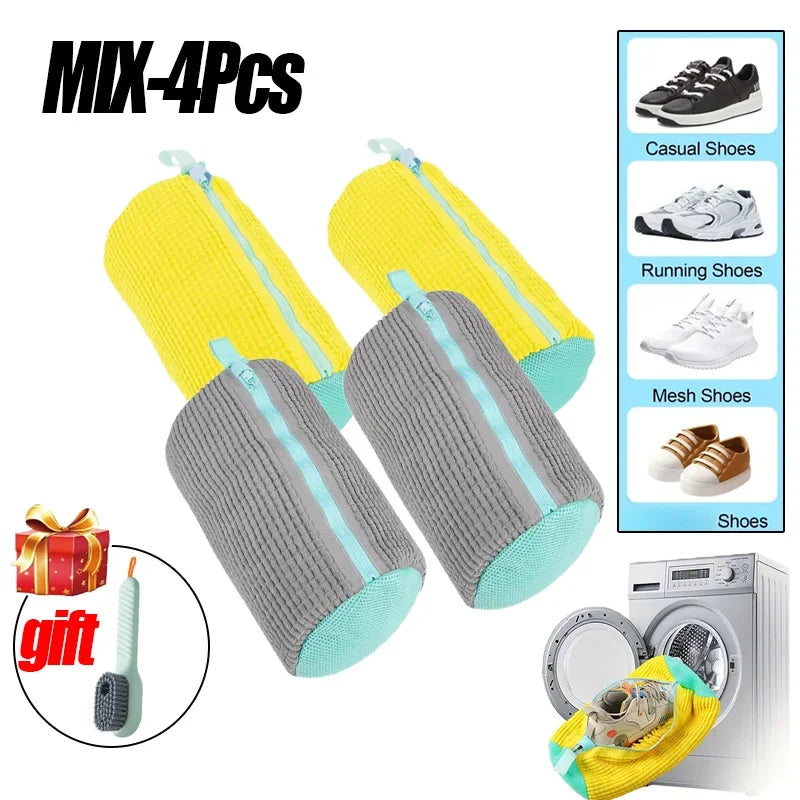
For everyday sneakers, prioritize protective containment, a secure closure, sufficient space, and reasonable water circulation. A reusable sneaker washing bag is particularly useful when machine washing is already permitted by the shoe manufacturer.
Athletic Shoes
Athletic shoes can be bulkier and more structurally complex than casual sneakers. Choose a bag with enough capacity to avoid compression and consider drainage and durability when evaluating options.
Canvas Shoes
Canvas footwear may benefit from adequate water circulation because cleaning depends on water and detergent reaching the fabric. Gentle containment can help reduce unnecessary rubbing while still allowing the wash water to move through the bag.
Delicate Footwear
Extra protection does not automatically make delicate footwear suitable for a washer. Shoes made from sensitive materials or containing vulnerable decorative or structural components should be evaluated according to their care instructions before using any washing bag.
Common Mistakes When Washing Shoes in a Laundry Bag
Overfilling the Bag
Putting too many shoes into a bag can restrict movement and water circulation. It can also place unnecessary strain on the zipper and seams. Use the bag's physical capacity as the limit rather than trying to maximize the number of shoes per cycle.
Using the Wrong Wash Cycle
A shoe washing bag does not determine the correct wash cycle. Follow the footwear manufacturer's care instructions and the washer's guidance. Avoid assuming that a standard cycle is appropriate for every pair of shoes.
Leaving Laces, Insoles, or Debris Unprepared
Before washing, remove loose dirt and debris that could remain trapped inside the bag. Handle laces and removable insoles according to the shoe manufacturer's instructions. Basic preparation can improve the overall cleaning process.
Using a Damaged or Weak Zipper
Inspect the zipper before each repeated use. If it no longer closes securely or the surrounding stitching is failing, replace the bag rather than relying on a compromised closure.
Putting Unsuitable Shoes in the Washer
This is the most important mistake to avoid. A protective shoe washer bag cannot override a manufacturer's instruction to hand wash, spot clean, or otherwise avoid machine washing.
How to Wash and Maintain a Reusable Shoe Washing Bag
Clean the Bag After Washing Shoes
After removing the footwear, check the bag for dirt, loose debris, and detergent residue. Cleaning the bag helps prevent old debris from being carried into the next wash.
Dry the Bag Completely
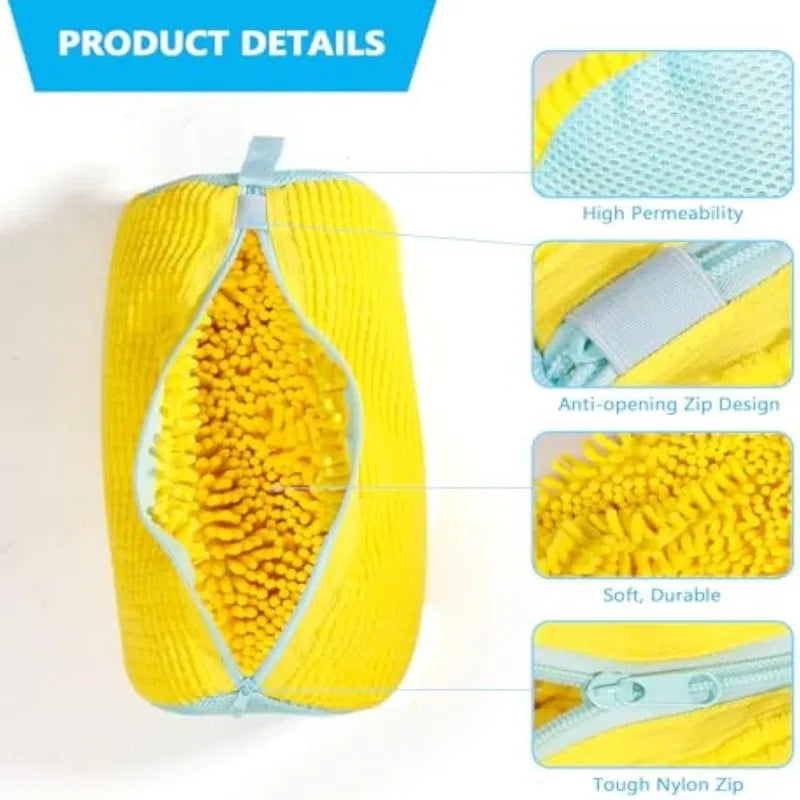
Do not store the bag while it is still damp. Open it fully and allow air to circulate through the material. The practical hook on a suitable reusable bag can make hanging it to dry easier.
Inspect the Mesh, Seams, and Zipper
Before the next use, check for tears, loose stitching, damaged fabric, and zipper problems. Small signs of failure are easier to address before they become a complete closure or containment failure.
When to Replace a Reusable Shoe Laundry Bag
Replace the bag when the material is torn, seams are separating, the zipper no longer closes securely, or any structural feature that protects or contains the shoes has become compromised.
When Should You Not Use a Shoe Washing Bag?
A shoe washing bag should not be treated as permission to machine wash footwear that the manufacturer says should be hand washed or spot cleaned. The bag can improve containment, but it cannot change the physical properties of leather, suede, adhesives, decorations, or other sensitive components.
Shoes Marked Hand-Wash or Spot-Clean Only
Manufacturer care instructions should be the first decision point. If the footwear is labeled for hand washing or spot cleaning only, use the recommended cleaning method instead of putting it into a washing machine with a protective bag.
Leather, Suede, and Other Sensitive Materials
Water, detergent, and mechanical agitation can be unsuitable for certain sensitive materials. A bag provides containment but does not prevent the cleaning process itself from affecting vulnerable footwear.
Footwear With Loose or Damaged Components
Do not use a washing machine as a repair method. Shoes with peeling soles, exposed adhesive, loose decorations, or significant structural damage may deteriorate further during agitation.
Reusable Shoe Washing Bag vs. Mesh Laundry Bag
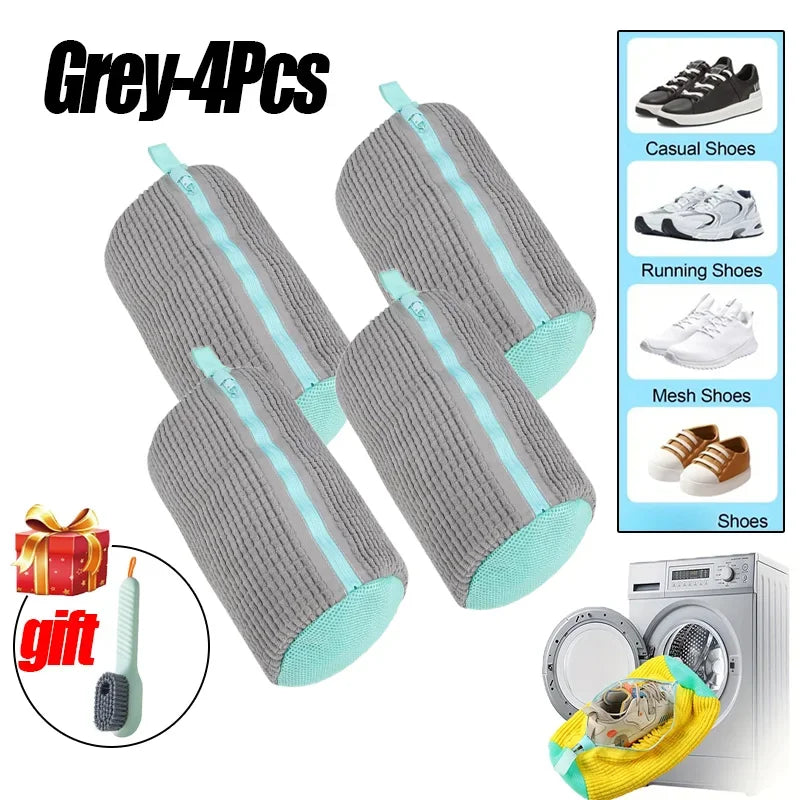
A dedicated shoe washing bag and a generic mesh laundry bag both provide containment, but they are not necessarily designed for the same purpose. A basic mesh laundry bag may be useful for lightweight clothing and general laundry organization, while a dedicated shoe bag focuses specifically on footwear containment and protection during machine washing.
Protection and Padding
The key advantage of a dedicated shoe bag is purpose-specific containment. Its construction can be selected around the shape, weight, and movement of footwear rather than around small garments.
Ventilation and Water Flow
Both options need sufficient water circulation for effective washing and rinsing. The best choice balances protective construction with enough airflow and drainage for the intended footwear.
Durability and Long-Term Value
For frequent shoe washing, reusable construction can offer better long-term convenience. Examine the fabric, seams, zipper, and maintenance requirements rather than judging value only by the initial purchase price.
Which One Should You Choose?
Choose a dedicated reusable shoe washing bag when footwear protection and secure containment are priorities. A generic mesh laundry bag may be sufficient for simple containment needs, but it is not automatically equivalent to a purpose-designed shoe washing bag.
Final Buying Checklist for a Reusable Shoe Washing Bag
What to Check Before You Buy
- Choose a durable material suitable for repeated washing.
- Check that seams and stitching appear secure.
- Prioritize a zipper or closure that remains securely closed.
- Match the bag dimensions to your shoe size.
- Avoid overloading the bag.
- Look for practical water and detergent circulation.
- Consider ventilation and drying after washing.
- Verify compatibility with your washer and intended wash cycle.
- Check whether your shoes themselves are suitable for machine washing.
- Plan to inspect and maintain the bag between uses.
Best Value Signals
The strongest value signal is not simply a low price. A reusable shoe laundry bag can provide better practical value when its construction remains reliable through repeated use, its zipper stays secure, its material is easy to maintain, and its dimensions suit the footwear you actually wash.
For shoppers looking for a simple reusable option, the KentDo Shoe Washing Bag uses polyester nylon construction, a secure zipper, a hook for hanging, and a 39 × 19 cm format. Its stated purpose is to help reduce rubbing and impact during machine washing while allowing water and detergent to flow through.
Product reference: https://kentdohealthybeauty.com/products/shoe-washing-bag
Conclusion
The best reusable shoe washing bag is not necessarily the thickest or most heavily padded option. The better choice is the one that balances protection, secure closure, ventilation, drainage, capacity, washer compatibility, durability, and easy maintenance for the footwear you intend to wash.
For everyday machine-washable sneakers, a purpose-built reusable shoe laundry bag can make the process more controlled by containing the footwear and helping reduce direct rubbing against the washer drum. Just remember that the bag is a protective accessory, not a substitute for proper shoe-care instructions.
If you regularly machine wash suitable sneakers, compare the construction, zipper security, size, water flow, and long-term reusability before buying. A practical reusable shoe washing bag can then become a simple part of a safer, more consistent shoe-cleaning routine.
Pillar Article: Best Shoe Washing Bags: Top Picks for Safer Machine Washing













