

Best Small Portable Fan for Travel: 2026 Picks
The best small portable fan for travel is not necessarily the one with the biggest motor or the most settings. For travelers, useful cooling has to fit around real-world constraints: limited luggage space, long commutes, crowded transit, hotel rooms, outdoor heat, and the need to keep personal airflow close without carrying a bulky fan.
A good travel fan should balance portability, packed size, airflow, noise, battery practicality, charging convenience, stability, and ease of use. A foldable handheld fan can be especially useful because it can provide focused personal airflow while also adapting to a desk or other nearby surface. For travel, that versatility can matter more than maximum airflow alone.
This guide focuses on how to choose a small portable fan for travel based on actual travel scenarios rather than generic claims. Because portable-fan specifications vary widely, manufacturer-stated features should be separated from independently measured performance. Where a specification is not provided, it is better to treat it as unknown than to assume a particular runtime, charging port, noise rating, or airflow output.
Best Small Portable Fan for Travel at a Glance
There is no single best fan for every traveler. The right choice depends on whether you spend most of your time walking, commuting, flying, working in hotels, or relaxing outdoors.
| Travel Priority | Best Fan Type | Why It Works | Key Trade-Off |
| Best overall versatility | Foldable handheld fan | Combines handheld portability with flexible placement | Not designed to cool an entire room |
| Smallest packing footprint | Mini fan | Easy to fit into a personal item or small bag | Usually sacrifices airflow or battery capacity |
| Hands-free cooling | Wearable or neck fan | Keeps both hands available while walking | Can add weight around the neck or shoulders |
| Hotel-room cooling | Small desk or foldable fan | Better suited to stable placement | Less convenient while moving between destinations |
| Outdoor use | Handheld or high-airflow personal fan | Directs airflow toward your face or upper body | Strong airflow can reduce battery life faster |
Our Top Travel Fan Picks
Best overall for flexible travel use: A foldable handheld fan is a strong choice when you want one compact device that can be carried by hand and positioned nearby.
Best for minimum luggage space: A compact mini fan makes sense when every inch of bag space matters, provided you accept that smaller designs may provide less airflow.
Best for hands-free use: A wearable or neck-hanging fan is useful for sightseeing, walking, and commuting when holding a fan is inconvenient.
Best for hotel rooms: A small desk fan or foldable fan provides more flexibility when you want personal cooling while working, relaxing, or sleeping.
Best for mixed travel situations: A foldable personal fan offers a practical middle ground because it can be used as a handheld fan or positioned nearby.
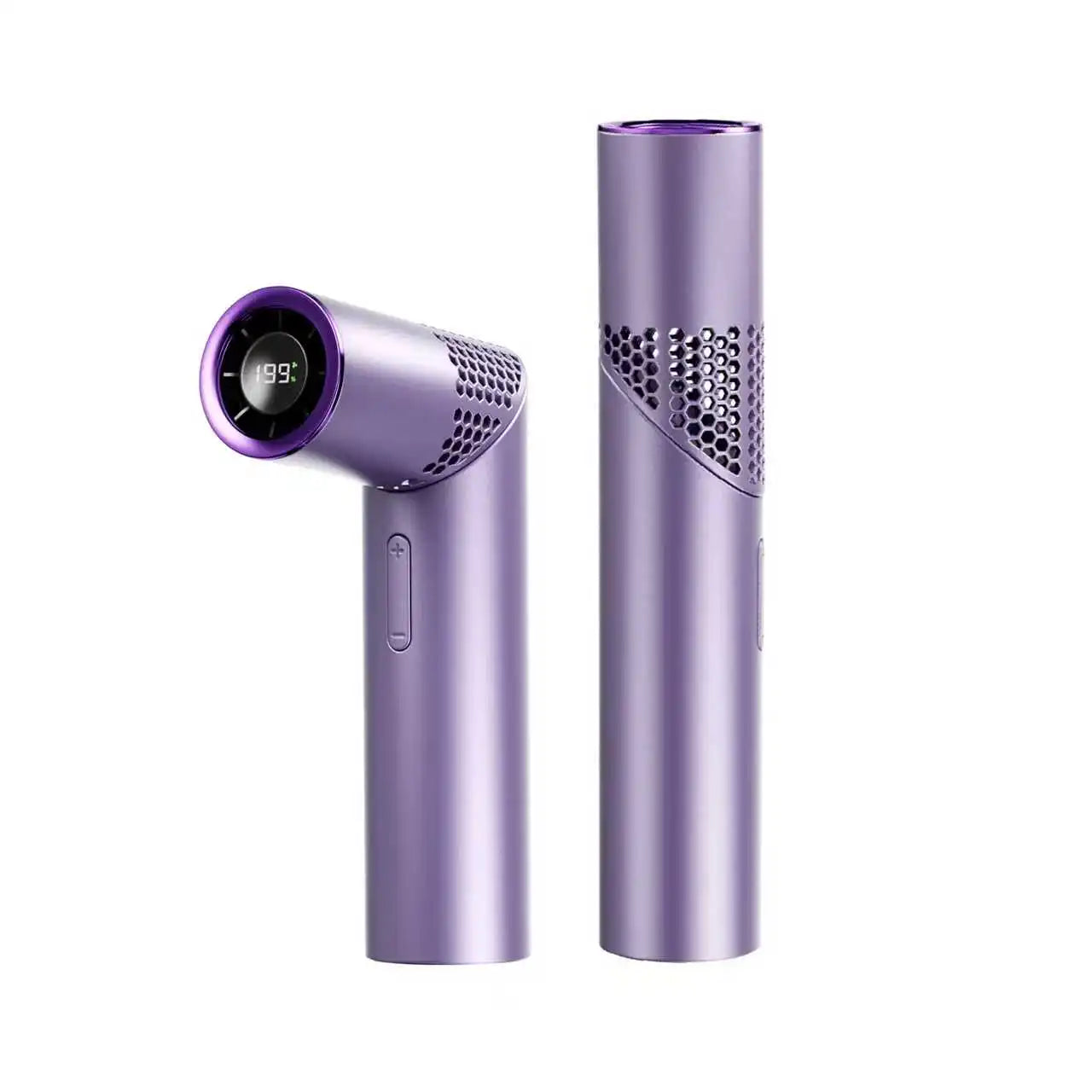
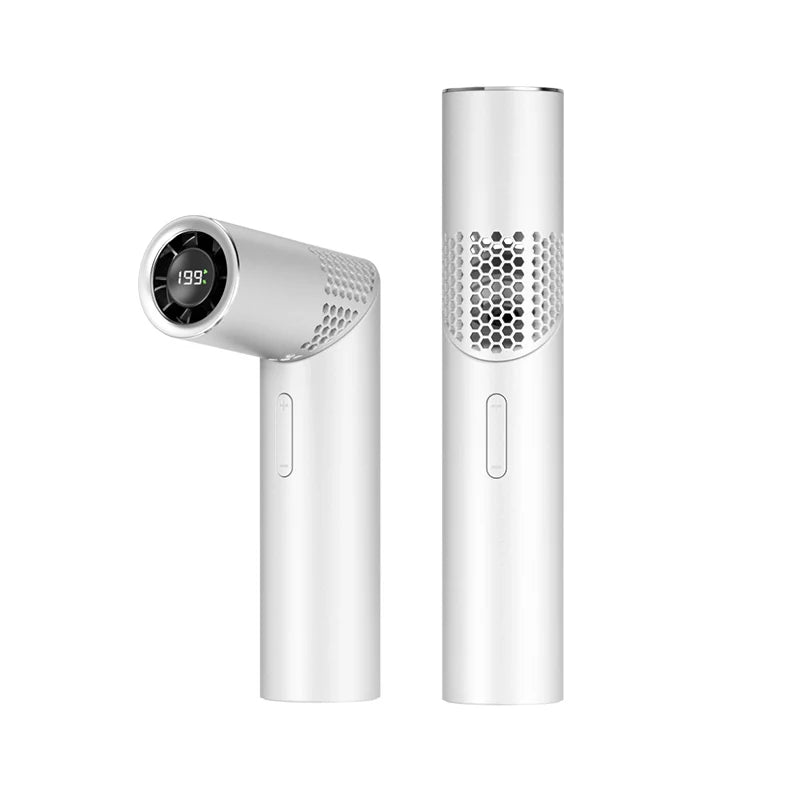
For travelers who want that combination of portability and flexibility, the KentDO Portable Handheld Fan uses a compact ABS construction and foldable design intended for handheld, desktop, and neck-hanging personal cooling. The available product information does not specify battery capacity, runtime, charging port, charging time, noise level, or speed count, so those attributes should not be assumed when comparing it with fans that publish those measurements.
How We Evaluated Small Travel Fans
A useful travel-fan comparison should start with the conditions in which the fan will actually be used. A fan that looks impressive on a product page may be inconvenient when packed inside a small personal item. Likewise, a fan with a large battery may last longer but add weight that you carry throughout the day.
Portability and Packed Size
Portability is more than simply calling a fan “mini.” Look at the physical shape, whether the fan folds, how easily it fits into a bag, and whether the design creates awkward protrusions that waste packing space.
Foldability can be particularly valuable because the fan can occupy less usable space when stored. A compact ABS body can also make everyday handling easier, but travelers should still consider the actual dimensions and weight before purchasing when luggage space is extremely limited.
Battery Life and Charging
Battery life is one of the most important specifications for a rechargeable portable fan. Unfortunately, headline runtime numbers can be difficult to compare because manufacturers may test different speed levels and conditions.
If a fan lists multiple runtimes, pay attention to the runtime at higher speeds rather than considering only the maximum advertised figure. High airflow generally requires more electrical power, so maximum-speed operation can reduce runtime substantially compared with low-speed use.
Charging compatibility also matters. A travel fan that works with a travel charger, laptop, or power bank can be easier to integrate into an existing travel setup. However, do not assume USB-C charging unless the manufacturer specifically lists USB-C.
Airflow and Cooling Performance
Personal fans work primarily by moving air across the skin. That airflow can improve perceived comfort, particularly when you are hot or in a stuffy environment. It does not mean the fan is lowering the temperature of an entire room.
For travel, concentrated close-range airflow can be more useful than attempting to move air across a large area. This is why a small handheld fan can work well during a commute, while walking through a hot destination, or while sitting at a desk.
Noise Level
Noise becomes more important when a fan is used in shared environments. On a train, in an office, at a hotel, or beside another person, excessive fan noise can become more noticeable than it is outdoors.
When comparing products, look for an independently measured decibel rating if one is available. If there is no verified noise measurement, avoid describing a fan as “silent” or “ultra-quiet” simply because it is small.
Hands-Free Usability and Stability
Travel fans come in several configurations. Handheld fans provide excellent control over airflow direction, while foldable designs may add placement flexibility. Clip-on fans can attach to compatible surfaces, and wearable fans keep the hands free while walking.
A desktop configuration can be particularly useful in a hotel room or workspace. Stability matters because a fan that tips easily may be frustrating even if its airflow is strong.
Durability and Travel Practicality
Frequent packing exposes a fan to more handling than normal home use. Look for a protected fan cover, sturdy controls, a reliable folding mechanism, and a design that does not require excessive force to adjust.
Plastic construction is not automatically a disadvantage. Lightweight ABS can help reduce the carrying burden. The important question is whether the construction matches the intended travel conditions.
What to Look for in a Small Portable Fan for Travel
Weight and Dimensions
For a short trip, almost any compact fan may seem easy to carry. The difference becomes more noticeable during a full day of sightseeing. A heavier fan can become another item competing for space and weight in your personal bag.
Consider where the fan will live when you are not using it. A foldable design can have an advantage because it can be adjusted for use and folded for storage. If you travel with only a personal item, packed dimensions should be treated as a primary buying factor.
Rechargeable Battery and Runtime
A rechargeable fan can be convenient because you do not need disposable batteries. But runtime should be evaluated against your actual travel schedule.
- A short commute may require only occasional personal airflow.
- A full sightseeing day creates a greater demand for battery capacity.
- Hotel use allows easier access to a charging source.
- Outdoor trips can make backup charging more important.
The product featured in this guide is described as rechargeable-friendly, but its provided specifications do not state battery capacity or a measured runtime. That means travelers who need a specific number of operating hours should verify the current product specifications before purchase.
USB-C Charging
USB-C can be convenient because many travelers already carry USB-C cables and chargers. It can reduce the number of different cables required in a travel kit.
However, charging-port type is a specification, not something that should be inferred from the word “rechargeable.” Always confirm whether a particular fan uses USB-C, another USB connection, or a proprietary charging arrangement.
Speed Settings, Airflow, and Oscillation
Multiple speed settings can help you balance cooling and battery use. Lower airflow may be sufficient inside a hotel room, while stronger airflow can feel more useful outdoors.
Oscillation is less essential for a personal fan than it is for a room fan because the purpose is usually to direct airflow toward one person. If you mainly want focused cooling, adjustable positioning may be more valuable than wide oscillation.
Noise Level
For airplanes, offices, hotel rooms, and sleeping areas, lower noise can be a meaningful advantage. If noise is important to you, prioritize products that provide actual acoustic measurements rather than relying only on marketing descriptions.
Handheld vs Foldable vs Clip-On vs Wearable
Handheld fans offer direct control. You can point airflow exactly where it feels most useful, but one hand remains occupied.
Foldable fans add storage and positioning flexibility. Depending on the design, they may work in the hand or on a stable surface.
Clip-on fans are useful when you have a compatible surface and want hands-free airflow. Their usefulness depends heavily on what you can safely attach them to.
Wearable fans are convenient for walking and sightseeing because they leave both hands available. The trade-off is that the wearable hardware can add weight and may not suit everyone.
Blade Safety and Protective Design
When packing a fan, protected blades can reduce the chance of accidental contact and help protect the fan during everyday handling. This is particularly relevant when the device is being used in crowded environments or around children.
Safety-conscious buyers should also follow the manufacturer's handling instructions and check applicable airline and transportation requirements before flying. A portable fan should be treated as an electrical device, not simply as a lightweight accessory.
Best Small Portable Fan for Every Travel Scenario

Best Fan for Airplane Travel
Airplane travel favors compactness. A good travel fan should fit comfortably in your carry-on or personal item without taking space away from essentials. Simple controls and protected fan components are also practical when you are handling luggage in a confined cabin.
Noise is another consideration. A fan that is comfortable outdoors may feel much louder in a quiet cabin, so look for measured noise information when possible.
Before flying, check the current requirements of your airline and the relevant aviation-security authority for battery-powered devices. Rules can vary by jurisdiction, airline, and battery configuration, so a generic “all portable fans are allowed” claim is not appropriate.
Best Fan for Hotel Rooms
Hotel rooms are where a foldable or small desk fan can become particularly useful. You may want airflow while working at a desk, relaxing in bed, or getting ready in the morning.
A versatile fan that can be placed nearby can reduce the need to hold it continuously. This is one reason a foldable personal fan can be more practical for mixed travel than an ultra-small handheld-only design.
The KentDO Portable Handheld Fan is designed around this flexibility: its foldable form can be used as a handheld fan or positioned for desktop personal cooling.
Best Fan for Camping and Outdoor Trips
Outdoor travel changes the priorities. Battery capacity, physical durability, airflow strength, and placement flexibility become more important because electrical outlets may not be readily available.
A compact fan can provide personal airflow at close range, but it should not be treated as a replacement for broader heat-management measures. In hot outdoor conditions, combine airflow with shade, hydration, appropriate clothing, rest, and other sensible heat-safety practices.
Best Fan for Beach and Hot Outdoor Days
A lightweight handheld fan can be convenient at outdoor destinations because it provides airflow exactly where you need it. A smaller device is also easier to carry between activities.
Keep in mind that a personal fan primarily improves comfort through moving air over exposed skin. It does not remove the environmental heat load, and its cooling effect can be less noticeable in extremely hot or humid conditions.
Best Fan for Commuting
Commuting rewards quick access and low carrying weight. A fan that can be pulled from a bag quickly is more useful than a larger model that stays at home because it is inconvenient to transport.
For buses, trains, walking routes, and waiting areas, direct personal airflow can provide targeted comfort without requiring a full-size fan.
Best Fan for Sightseeing and Walking
Sightseeing creates a strong case for hands-free cooling, but handheld fans remain useful when you want to control airflow precisely. Choose based on how much you value keeping both hands free versus minimizing the amount of hardware you carry.
Travel Fan Types Compared: Which Design Is Right for You?
Handheld Fan
A handheld fan is the simplest personal cooling format. It gives you immediate control over airflow direction and works well for commuting, waiting outdoors, and walking.
The main limitation is obvious: you need one hand to hold it. For short periods, that may not matter. For long sightseeing sessions, a wearable design may be more convenient.
Mini Fan
A mini fan emphasizes compactness. It can be an excellent option when bag space is the biggest concern, but miniaturization often creates trade-offs in motor size, battery capacity, or airflow coverage.
Foldable Fan
A foldable fan attempts to solve two problems at once: portability and positioning. When folded, it can be easier to store. When opened or adjusted, it can provide more flexible personal cooling.
This format is especially useful for travelers who want one device for both handheld and desktop use.
Clip-On Fan
A clip-on fan is useful when you have a suitable stable surface. It can be convenient beside a bed, on a desk, or in another stationary setup, but it is less universal than a handheld fan because its usefulness depends on where you can attach it.
Wearable Fan
Wearable fans are designed around hands-free cooling. They can be useful for walking, commuting, and outdoor activities.
The trade-off is comfort. A wearable fan has to be carried on the body, so weight distribution, neck or shoulder comfort, and airflow direction matter as much as raw fan output.
Small Desk Fan
A small desk fan is best when you have a predictable stationary location. It can work well in a hotel room, home office, or workspace but is usually less convenient to carry while moving between destinations.
Small Portable Fan Battery Life: What Is Enough for Travel?
How Long Should a Rechargeable Travel Fan Last?
The right runtime depends on how you travel.
- Short commuting: prioritize compactness and quick access over maximum battery capacity.
- Full-day sightseeing: prioritize a longer practical runtime or the ability to recharge during the day.
- Hotel use: charging access reduces the importance of extremely long runtime.
- Camping: battery capacity and charging options become much more important.
Do not compare advertised maximum runtime numbers without checking the operating mode behind them. A fan may last much longer on its lowest setting than it does at maximum airflow.
Why High-Speed Mode Drains the Battery Faster
Higher fan speeds generally require more power. That creates a direct trade-off between airflow intensity and operating time.
If you only need gentle airflow while working, low or medium operation may be more efficient. If you are outside in significant heat, stronger airflow may be preferable, but you should expect greater battery consumption.
USB-C Charging and Power Banks
A power bank can be useful as a backup source for rechargeable electronics during travel, but compatibility should be confirmed before a trip. Check the fan's required input, included cable, and charging instructions rather than assuming that every power bank or cable will work.
For the KentDO fan described here, the available product information confirms electric operation and describes the design as rechargeable-friendly, but it does not provide a battery capacity, charging-port type, or runtime figure. Travelers with strict charging requirements should verify those details before ordering.
Can You Bring a Small Portable Fan on an Airplane?
Portable fans can involve different considerations depending on whether they contain a rechargeable battery, the battery's specifications, and the policies of the airline and security authority involved in the trip.
Carry-On Luggage vs Checked Baggage
Do not rely on a universal rule for every portable fan. Battery-powered devices can be subject to transportation requirements that differ according to battery type, capacity, packaging, and airline policy.
Before departure, check the latest rules published by your airline and the applicable aviation-security authority. Keeping a rechargeable electronic device accessible can also make it easier to present for inspection if requested.
Battery and Security Considerations
Know the battery specifications of any rechargeable fan you travel with. If the product documentation does not clearly state battery capacity or configuration, obtain that information from the manufacturer before flying rather than guessing.
Best Fan Features for Airplane Use
- Compact packed size
- Lightweight construction
- Protected fan components
- Simple controls
- Reasonable noise levels
- Battery specifications that are clearly documented
- Charging compatibility that matches your travel setup
Portable Fan Trade-Offs Most Buyers Miss
More Power Can Mean More Bulk
A larger motor and larger battery can provide stronger airflow or longer runtime, but they also add weight and volume. That can undermine the reason you bought a travel fan in the first place.
For many travelers, the sweet spot is not maximum output. It is enough personal airflow in a package that you are actually willing to carry every day.
Maximum Airflow Does Not Always Mean Better Cooling
Cooling sensation depends on more than raw airflow. Air temperature, humidity, distance from the fan, airflow concentration, exposed skin, and your activity level all affect how useful the breeze feels.
A compact fan directed toward your face or upper body at close range can therefore feel more useful than a larger fan positioned farther away.
Long Battery Claims Can Be Misleading
Battery-runtime claims should always be interpreted alongside operating conditions. A maximum runtime achieved at the lowest setting may not represent the experience you get outdoors at maximum speed.
When comparing fans, look for standardized testing information. If it is unavailable, treat manufacturer runtime as a reference rather than a guaranteed real-world result.
Hands-Free Designs Add Convenience but Also Weight
Wearable and neck fans solve the problem of holding a device, but the additional structure can increase weight and affect comfort. If you only need cooling for short periods, a lightweight handheld fan may be the simpler option.
Comparison Matrix: Which Travel Fan Format Fits Your Needs?
| Feature | Handheld | Foldable | Clip-On | Wearable | Small Desk Fan |
| Direct airflow control | Excellent | Excellent | Good | Moderate | Good |
| Packability | Excellent | Excellent | Good | Moderate | Moderate |
| Hands-free use | Low | Moderate to high, depending on design | High | High | High when placed on a surface |
| Best for walking | Excellent | Excellent | Low to moderate | Excellent | Low |
| Best for hotel rooms | Good | Excellent | Good | Moderate | Excellent |
| Best for limited luggage space | Excellent | Excellent | Good | Moderate | Moderate |
Which Small Portable Fan Should You Buy?
Choose a Handheld Fan If...
Choose a handheld fan if your highest priority is direct, personal airflow with minimum complexity. This format is particularly useful for commuting, outdoor waiting areas, walking, and short bursts of cooling.
Choose a Foldable or Desk Fan If...
Choose a foldable fan if you want greater versatility. A foldable design can make storage easier while allowing the fan to be positioned for desktop personal cooling.
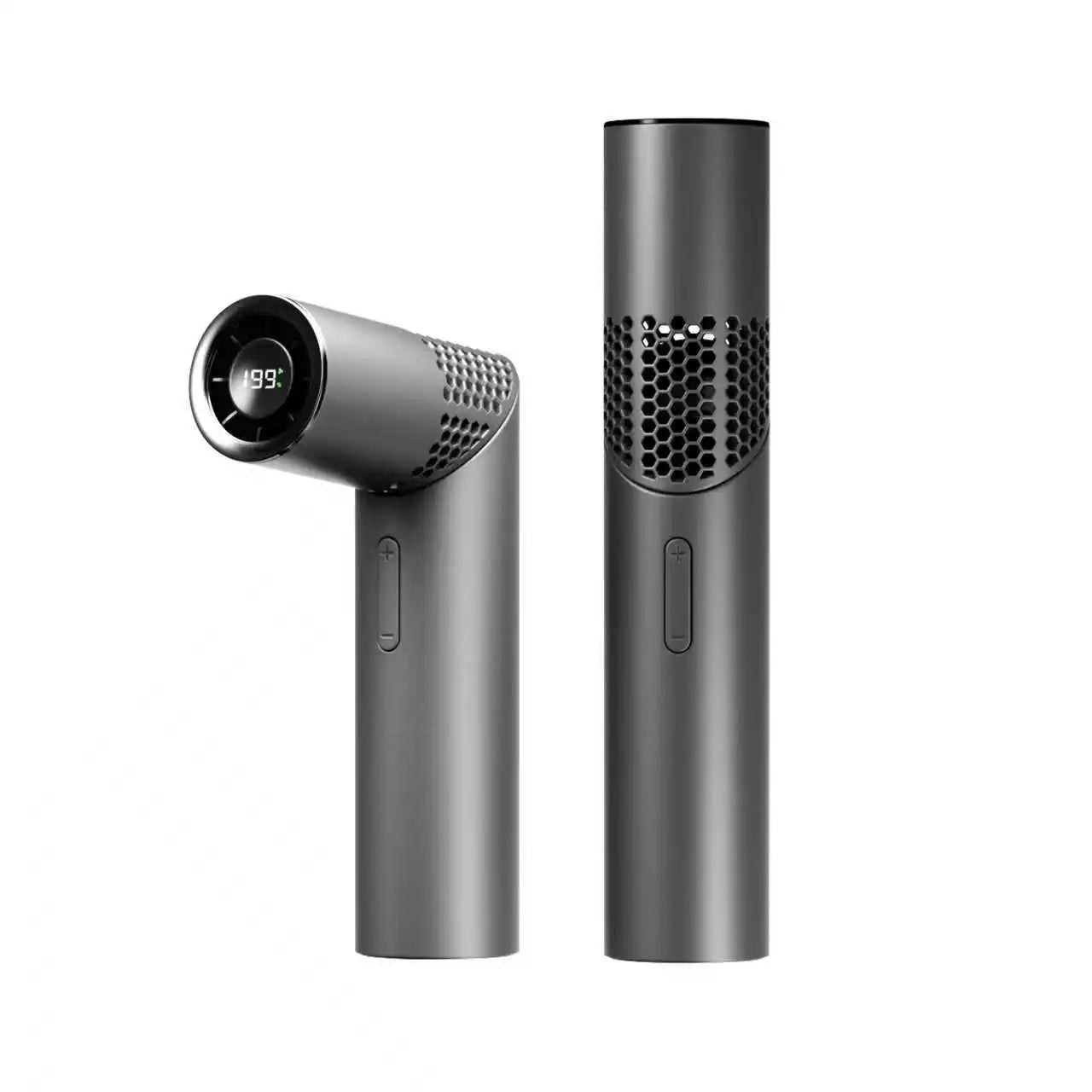
The KentDO Portable Handheld Fan fits this use case because its product design is described as compact, foldable, and suitable for handheld or desktop use. Its ABS construction is also intended to support everyday portability.
For travelers who want one compact fan that can move between a bag, hand, desk, and other nearby positions, this type of design offers a practical balance between portability and versatility.
Choose a Clip-On or Wearable Fan If...
Choose a clip-on or wearable fan if keeping both hands free is more important than achieving the smallest possible packed size. These formats can be especially useful for sightseeing, commuting, outdoor activities, and other situations where continuously holding a fan is inconvenient.
Choose the Longest-Lasting Fan If...
Prioritize runtime when you expect to spend long periods away from outlets. Camping, long outdoor excursions, and full-day sightseeing can make battery capacity more valuable than shaving a few ounces from your luggage.
Just remember to compare runtime under similar operating conditions. A longer low-speed runtime is not directly equivalent to a longer maximum-speed runtime.
Pros and Cons of a Foldable Handheld Travel Fan

Pros
- Compact format is convenient for everyday carrying.
- Foldable construction can make storage easier.
- Personal airflow is directed toward the user instead of attempting to cool an entire room.
- Can be used in different settings, including handheld and desktop use.
- Lightweight ABS construction supports portability.
- Suitable for travel, commuting, work, and outdoor personal comfort.
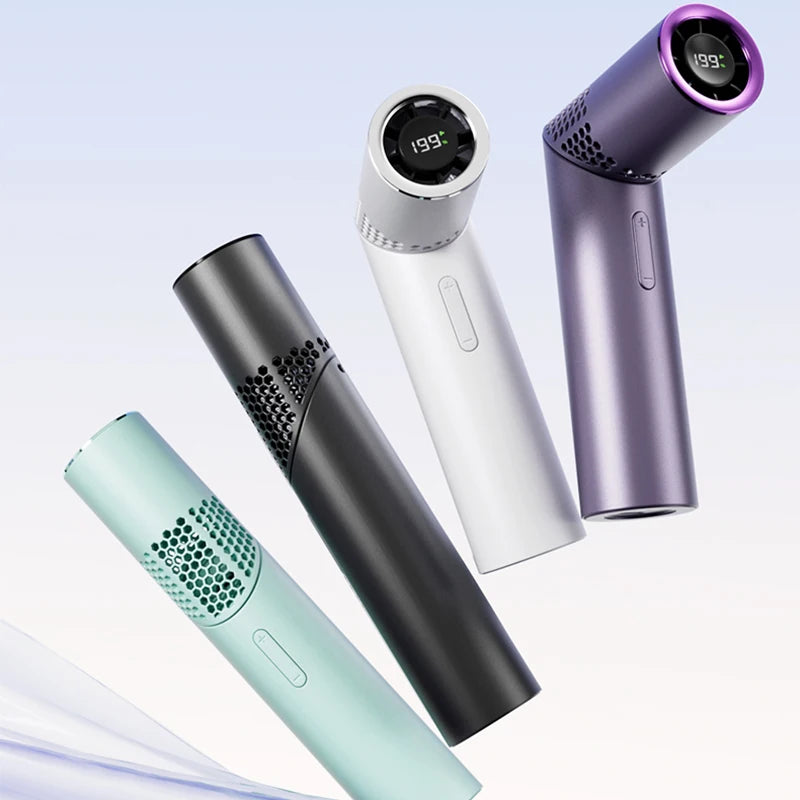
- Available in white, grey, and purple according to the supplied product information.
Cons
- It is intended for personal airflow rather than whole-room cooling.
- Battery capacity and exact runtime are not provided in the supplied specifications.
- Charging-port type is not specified in the supplied product information.
- Noise level is not independently specified.
- Airflow output and speed settings are not provided as measurable specifications.
- A handheld format may require one hand when used without a stable surface.
Portable Cooling Tips for Summer Travel
A portable fan works best as one part of a broader heat-management strategy. If you are traveling during hot weather, combine personal airflow with practical habits.
- Carry water and drink regularly according to your needs and local conditions.
- Use shade or air-conditioned spaces when available.
- Wear lightweight, breathable clothing.
- Take breaks during prolonged outdoor activity.
- Use a personal fan to improve airflow across exposed skin.
- Keep rechargeable devices charged before long periods away from outlets.
- Do not rely on a fan alone when experiencing signs of significant heat illness.
A fan can make hot conditions feel more comfortable, but moving air is not the same as removing environmental heat. When conditions are extreme, sensible heat-safety practices remain more important than fan performance.
FAQ: Small Portable Fans for Travel
Can you bring a small portable fan on an airplane?
Whether a particular portable fan can be carried on an aircraft depends on its battery configuration and the current requirements of the airline and applicable aviation-security authority. Check the latest rules before travel, especially for rechargeable battery-powered models.
What is the best small fan for travel?
The best small fan for travel depends on how you use it. A handheld fan is useful for direct airflow, a foldable fan provides greater placement flexibility, a wearable fan is convenient when you need both hands free, and a small desk fan works well in hotels or workspaces.
How long should a rechargeable travel fan last?
There is no universal ideal runtime. Short commutes may require only a few hours of occasional use, while camping or full-day sightseeing can justify a longer-lasting battery. Always compare runtime at the speed setting you actually expect to use.
Are handheld travel fans allowed in carry-on luggage?
Do not assume that every model is automatically permitted under every airline's rules. Battery-powered devices can have different requirements depending on battery type and capacity. Check the current airline and aviation-security guidance for your specific trip.
What should you look for in a portable fan for travel?
Prioritize compact packed size, low weight, useful close-range airflow, practical battery life, convenient charging, manageable noise, stable placement, durable construction, and a format that matches your travel activities. If you need hands-free cooling, also consider wearable or clip-on designs.
Final Verdict: Finding the Best Small Portable Fan for Travel
The best small portable fan for travel is the one that solves your actual cooling problem without becoming another bulky item in your luggage. For frequent commuters and walkers, direct personal airflow and low weight may matter most. For hotel stays, flexible placement can be more valuable. For camping and long outdoor days, battery capacity and durability deserve greater attention. For sightseeing, hands-free operation may justify the extra hardware of a wearable design.
A foldable handheld fan occupies an appealing middle ground because it can combine compact storage with flexible personal cooling. The KentDO Portable Handheld Fan is designed with a compact ABS body and foldable form and is described for handheld, desktop, and neck-hanging personal use. Those characteristics make it particularly relevant to travelers who want one portable cooling option for several everyday situations.
Before buying, verify the specifications that matter most to your trip—especially battery capacity, actual runtime, charging interface, noise, and dimensions. The supplied specifications for this particular model do not establish those measurements, so travelers with strict airline, battery, or runtime requirements should confirm the latest product details before ordering.
If your goal is simply to carry a compact source of personal airflow through hot commutes, summer travel, hotel stays, and outdoor activities, a lightweight foldable design can be a practical addition to your travel essentials.
For more everyday personal-care and wellness devices, explore the Body Care and Health Devices collection. For broader lifestyle-focused products, visit the Lifestyle collection.
Pillar Article: Best Portable Handheld Fan for Travel: 2026 Tested Picks













