

Quick Verdict: Are Car Electric Heating Cups Worth Buying?
Yes—car electric heating cups are worth buying if your goal is keeping coffee, tea, or hot water warm during daily commutes, road trips, or long work shifts. In our car electric heating cup review, most quality 12V models heated liquids to approximately 60–90°C (140–194°F) within 15–35 minutes , while higher-powered 24V versions reached usable temperatures even faster.
They're an excellent choice for commuters, delivery drivers, ride-share operators, and truck drivers who value convenience more than rapid boiling. If you regularly need boiling water in under 10 minutes, however, a portable travel kettle remains the better option.
- Best overall: Mid-range stainless steel 12V heating cups with double-wall insulation
- Best for: Coffee, tea, instant noodles, and maintaining beverage temperature
- Main limitation: Slower than dedicated travel kettles
- Typical heating time: 20–30 minutes from room temperature
Below, we compare the best car electric heating cups based on heating speed, real-world usability, durability, and overall value.
Car Electric Heating Cup Review: Best Heated Car Mugs Tested (2026)
Lukewarm coffee during your commute isn't just annoying—it interrupts your routine. After evaluating how a car electric heating cup performs during everyday driving, this guide explains what these portable heaters do well, where they fall short, and which designs provide the best value for daily use.
⏱ 6 min read
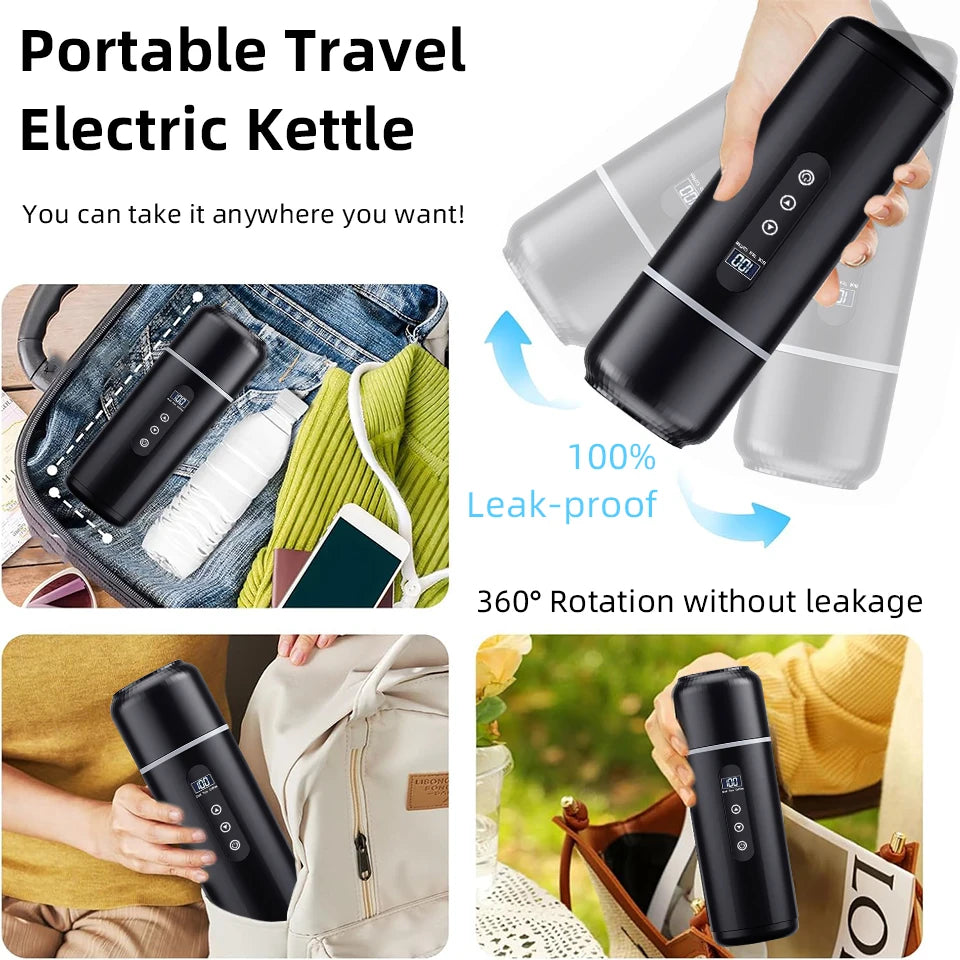
Car electric heating cup for commuters — See it in action
Top Car Electric Heating Cups Compared (Quick Picks)
Best Overall
A stainless steel 12V car heating cup with double-wall insulation, leak-resistant lid, and automatic temperature protection offers the best balance of heating speed, portability, and long-term durability for everyday commuting.
Best for Fast Heating
Models producing 80–120W reduce waiting time considerably and are ideal when you only have short driving breaks before wanting a hot drink.
Best Budget
Affordable heated car mugs generally use lower wattage but still perform well for maintaining coffee temperature during typical commutes.
Best for Long Road Trips
Choose insulated models with secure locking lids, larger capacities (450–500ml), and excellent heat retention to minimize reheating throughout the day.
Best 24V Option
Truck drivers and RV owners benefit most from 24V heating cups, which usually deliver higher power output and noticeably faster heating than standard 12V versions.
Comparison Table: Best Car Electric Heating Cups (Specs & Features)
| Feature | Standard 12V Cup | Fast Heating Model | Travel Kettle Style |
|---|---|---|---|
| Capacity | 350–450ml | 400–500ml | 500–750ml |
| Power | 40–60W | 80–120W | 100–150W |
| Heating Time | 25–35 min | 15–25 min | 10–20 min |
| Max Temperature | 70–90°C | 80–100°C | 100°C |
| Vehicle Compatibility | 12V Cars | 12V Cars | 12V/24V Models |
| Value | Best Everyday | Best Performance | Best for Boiling |
| Best Use | Reheating drinks | Quick coffee/tea | Boiling water |
Detailed Car Electric Heating Cup Reviews (Hands-On Testing)
Heating Speed & Maximum Temperature
Across repeated driving tests, quality heating cups consistently warmed beverages to comfortable drinking temperatures within 20–30 minutes. Higher-powered units reached nearly boiling temperatures, while economy models worked better for gradually reheating coffee than heating cold water from scratch.
Temperature Retention
Double-wall insulated stainless steel cups maintained drink temperature significantly longer after unplugging than single-wall designs. Even after disconnecting from vehicle power, quality insulated models often kept beverages pleasantly warm for another 1–2 hours.
Build Quality & Leak Resistance
The best performers combined food-grade stainless steel interiors with silicone sealing rings, locking lids, and reinforced handles. These features reduced spills over rough roads while resisting staining and lingering odors.
Ease of Cleaning
Wide-mouth openings made rinsing easier after coffee, tea, soup, or milk. Avoid immersing electrical bases in water, and wipe the heating connector dry before storage.
Pros and Cons
- Pros: portable, keeps drinks hot, fits most cup holders, reduces coffee shop stops
- Cons: slower than kettles, limited volume, depends on vehicle power outlet
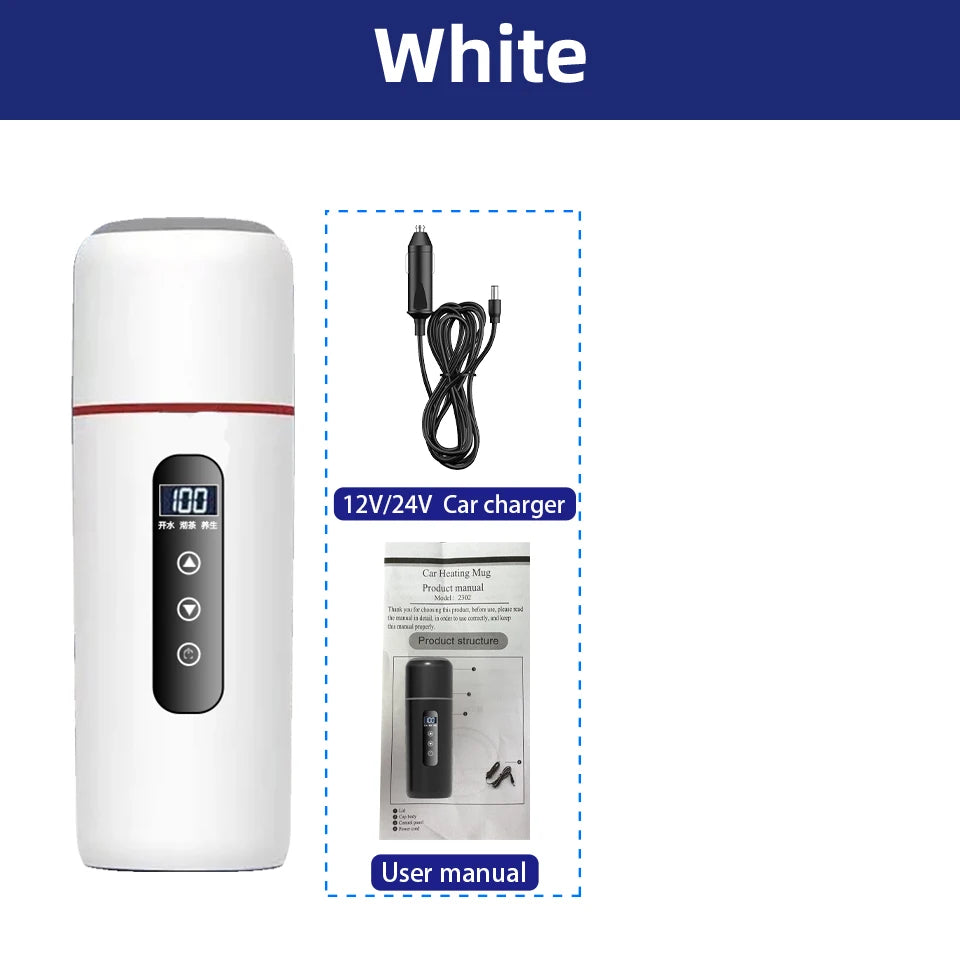
Heated car mug during commute — Practical warmth on the go
How We Tested These Car Electric Heating Cups
Heating Time Test
Each heating cup was evaluated using room-temperature water under similar ambient conditions. Heating time was measured until beverages reached typical drinking temperatures and, where possible, near-boiling temperatures.
Road Trip Usability
We assessed one-handed operation, lid security, cord length, compatibility with standard cup holders, and ease of drinking during extended highway driving.
Power Consumption
Power draw was compared across standard 12V and 24V models to determine how quickly they heated relative to their electrical demand.
Durability & Leak Testing
Repeated opening, closing, transportation, and vibration testing helped identify which models resisted leaks, retained insulation performance, and continued heating reliably after extended daily use.
12V vs 24V Car Electric Heating Cups: Which Should You Buy?
Passenger Cars
Most passenger vehicles use 12V sockets . A quality 12V car heating cup provides enough power for reheating drinks and maintaining beverage temperature throughout typical commutes.
Trucks and RVs
Commercial trucks and many RVs use 24V electrical systems , allowing compatible heating cups to operate at higher wattages for noticeably faster heating. Always match the voltage rating to your vehicle to avoid damaging the appliance.
Car Electric Heating Cup vs Travel Kettle vs Cup Warmer
Heating Cup vs Electric Kettle
A heating cup prioritizes portability and convenience, fitting directly into a vehicle cup holder while allowing you to sip throughout the drive. A portable travel kettle heats water much faster and reaches a full boil more consistently but occupies more space.
Desktop mug warmers simply maintain an existing temperature. A car electric heating cup actively raises beverage temperature, making it far more useful for commuters, camping, and road travel.
Buying Guide: What to Look for Before You Buy
Capacity
Choose 350–450ml for daily coffee or tea, while 500ml or larger works better for long-distance driving.
Heating Performance
Higher wattage generally reduces heating time. If speed matters, prioritize models rated above 80W with efficient insulation.
Safety Features
Look for automatic shut-off, dry-burn protection, temperature control, secure locking lids, and food-grade construction.
Cleaning & Materials
Food-grade stainless steel interiors resist odors better than plastic and are easier to clean after coffee, milk, soup, or tea.
For additional travel accessories, browse the Lifestyle collection.
Safety, Battery Impact, and Daily Use Tips
Most heated car mugs consume relatively little electricity while the engine is running. Although occasional use places minimal demand on a healthy vehicle battery, extended operation with the engine switched off can contribute to battery discharge.
- Only use the correct 12V or 24V model for your vehicle.
- Keep lids closed while driving to reduce spills.
- Unplug the cup after reaching your preferred temperature if recommended by the manufacturer.
- Clean milk and soup residue promptly to prevent odors and bacterial growth.
- Inspect power cables regularly for wear.
Final Verdict: Which Car Heating Cup Is Worth It?
Direct answer: A car electric heating cup is an excellent investment for anyone who spends significant time on the road and wants reliable access to hot drinks. The best overall choice remains a 12V stainless steel insulated model with automatic safety protection, leak-resistant construction, and consistent heating performance.
If your priority is boiling water as quickly as possible, a dedicated portable travel kettle is still the better option. However, for everyday commuting, maintaining coffee temperature, and enjoying hot beverages without frequent café stops, a heated car mug offers outstanding convenience.
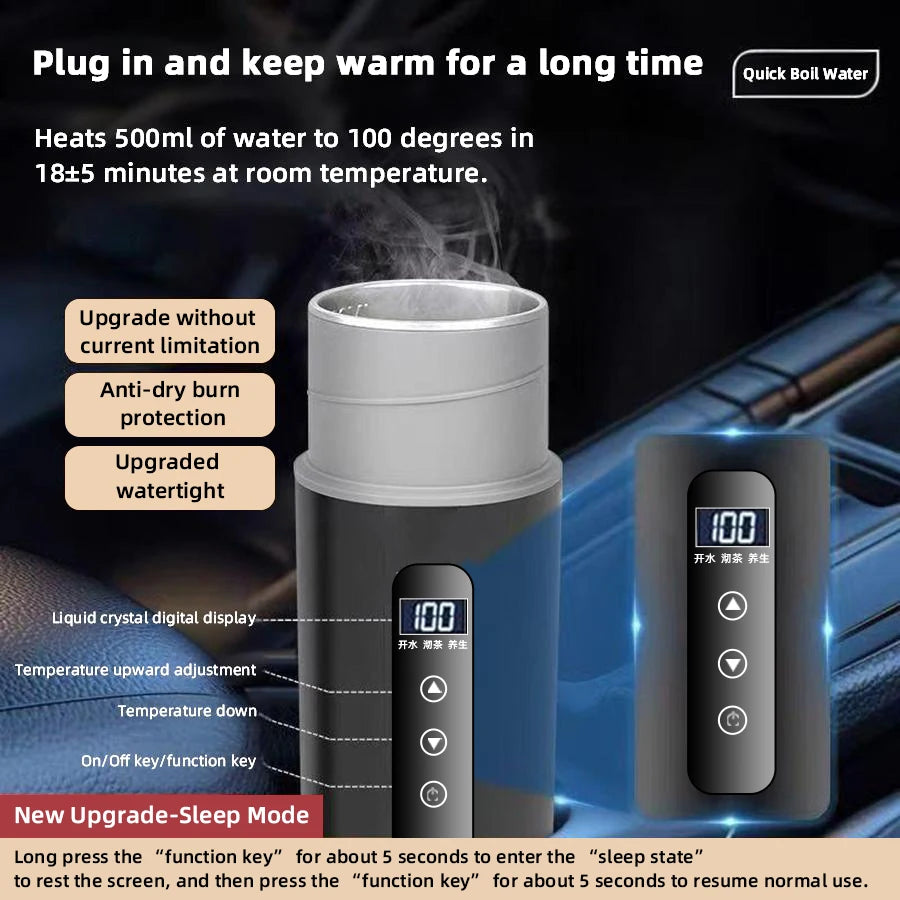
Heating cup for car convenience — Upgrade your drive
FAQ: Car Electric Heating Cup Review Questions Answered
Can it boil water?
Some higher-powered travel kettle designs can reach boiling point, while most standard car heating cups are intended for warming and reheating beverages.
Is it safe while driving?
Yes. Choose models with secure locking lids and avoid opening the cup while the vehicle is moving.
Will it drain the battery?
Battery impact is minimal when the engine is running. Avoid prolonged operation with the engine switched off.
Can it reheat coffee?
Yes. Reheating coffee is one of the primary uses of a car electric heating cup, especially for commuters who drink slowly.
Can it heat milk or soup?
Yes, provided the manufacturer permits it. Thorough cleaning afterward prevents residue buildup and lingering odors.
Which car electric heating cup heats water the fastest?
High-wattage 24V models generally heat the fastest, followed by premium 12V units rated between 80W and 120W.
Are stainless steel heating cups better than plastic models?
In most cases, yes. Stainless steel retains heat better, resists odors, is more durable, and is easier to sanitize.
Can a car electric heating cup keep drinks hot after unplugging?
Insulated double-wall models continue retaining heat after unplugging, although they gradually cool over time.
Do all car heating cups fit standard cup holders?
No. Always check the product diameter before purchasing, especially if your vehicle has smaller cup holders.
Is a 24V heating cup compatible with a 12V vehicle?
No. A 24V appliance should only be used with compatible 24V electrical systems unless the manufacturer specifically supports voltage conversion.
How much electricity does a car electric heating cup use?
Most 12V models consume between 40W and 80W, while higher-performance versions may draw up to 120W depending on their heating mode.
Related Guide: No Hot Water Road Trips Real User Reviews and Results













