Memory Foam Seat Cushion Benefits: How They Improve Comfort, Posture, Back Pain, and Long Drives
A car memory foam seat cushion can dramatically improve comfort during long drives, daily commuting, and extended sitting sessions. Whether you're looking for better posture support, reduced tailbone pressure, or a more ergonomic driving position, memory foam cushions are among the most popular seating upgrades available. This guide explains how memory foam works, explores the benefits of memory foam seat cushions, compares top products, and helps you choose the right option for your needs.

See it in action — car memory foam seat cushion for daily comfort
What Is a Memory Foam Seat Cushion?
A memory foam seat cushion is a supportive seating accessory made from viscoelastic polyurethane foam. Unlike standard foam, memory foam responds to body weight and heat, allowing it to contour around pressure points while providing personalized support.
What Memory Foam Is Made Of
Memory foam consists of a dense polyurethane material engineered to slowly compress under pressure and gradually return to its original shape after use.
What Makes Memory Foam Different From Regular Foam
Traditional foam compresses quickly and pushes back immediately. Memory foam adapts to the body's shape, distributes weight more evenly, and reduces concentrated pressure on sensitive areas such as the tailbone, hips, and lower back.
How Memory Foam Works
Viscoelastic Properties Explained
Memory foam is known as a viscoelastic material because it combines viscosity and elasticity. This allows the foam to slowly adapt to body contours while maintaining structural support.
Pressure Distribution and Weight Redistribution
When sitting for long periods, body weight concentrates on the tailbone, hips, and thighs. Memory foam spreads this load across a larger surface area, reducing pressure buildup and improving comfort.
Spinal Alignment and Ergonomic Support
By reducing uneven pressure points, memory foam cushions help encourage a more neutral sitting posture. Better alignment may reduce strain on the lower back during extended driving or desk work.
Why Memory Foam Responds to Body Heat
Body heat softens memory foam slightly, allowing it to mold more precisely to individual body shapes. This customized fit is one reason memory foam cushions are widely used for ergonomic seating applications.
Quick Comparison — Best Memory Foam Car Seat Cushions
Comparison Table: Top Car Seat Cushions
This comparison highlights popular memory foam seat cushions based on support, cooling performance, and overall comfort.
| Cushion | Best For | Foam Type | Thickness | Cooling Features |
|---|---|---|---|---|
| Everlasting Comfort Cushion | Back pain relief | High-density memory foam | 3 in | Breathable mesh cover |
| ComfiLife Gel Enhanced Cushion | Sciatica support | Memory foam + gel | 2.8 in | Cooling gel layer |
| FORTEM Seat Cushion | Budget comfort | Memory foam | 2.5 in | Breathable fabric |
| LoveHome Cushion | Long-distance driving | Dense memory foam | 3 in | Ventilated cover |
| KentDO Lumbar & Neck Memory Foam Set | Full ergonomic support | High-density memory foam | Support system | Breathable cover |
Quick Picks by Use Case
- Best car seat cushion for back pain: Everlasting Comfort
- Best memory foam cushion for long car rides: LoveHome
- Best cooling cushion for hot climates: ComfiLife Gel Enhanced
- Best budget memory foam seat cushion: FORTEM
- Best ergonomic support setup: KentDO Lumbar & Neck Memory Foam Set
How We Tested the Best Memory Foam Car Seat Cushions
To identify the best memory foam car seat cushions, we focused on measurable comfort and ergonomic factors relevant to drivers and daily users.
Evaluation Criteria
- Memory foam density: Pressure relief and durability.
- Ergonomic design: Contours and coccyx cutouts.
- Cooling performance: Gel layers and airflow.
- Durability: Resistance to flattening.
- Seat stability: Anti-slip performance.
Testing Scenarios
- Daily commuting (30–90 minutes)
- Road trips exceeding 4 hours
- Rideshare and delivery driving
- Office chair crossover use
Memory Foam Seat Cushion Benefits
Reduces Pressure on the Tailbone and Hips
One of the most important memory foam seat cushion benefits is pressure relief. The foam distributes body weight more evenly, reducing stress on the coccyx and hip joints.
Supports Better Sitting Posture
Ergonomic memory foam cushions help stabilize the pelvis and encourage healthier spinal positioning, particularly during long periods of sitting.
Helps Reduce Lower Back Pain
By supporting natural posture and minimizing pressure concentration, memory foam cushions may help reduce discomfort associated with prolonged sitting.
May Improve Circulation During Long Sitting Sessions
Reducing pressure under the thighs can help minimize compression of soft tissues and support healthy blood flow during extended sitting.
Enhances Comfort on Long Drives
Drivers often experience discomfort due to vibration, static posture, and prolonged pressure. Memory foam cushions help improve overall seating comfort.
Reduces Fatigue for Daily Commuters
Improved support can reduce muscle strain and help drivers feel less fatigued during daily commuting.
Supports Sciatica and Coccyx Pain Relief
Cushions with ergonomic contours or coccyx cutouts can reduce direct pressure on sensitive nerve pathways and tailbone regions.
Helps Create a More Ergonomic Driving Position
Properly designed cushions improve seating geometry, helping drivers maintain a more balanced and supported posture behind the wheel.
Memory Foam Car Seat Cushion Benefits for Drivers
Benefits for Long-Distance Drivers
Long driving sessions place continuous stress on the lower back and hips. Memory foam cushions help reduce pressure accumulation over time.
Benefits for Truck Drivers and Rideshare Drivers
Professional drivers spend many hours seated every day. Additional cushioning and support can improve comfort throughout extended shifts.
Benefits for Daily Commuters
Even short commutes can contribute to discomfort over time. A supportive cushion may improve everyday driving comfort.
Benefits for Older Drivers
Older adults often experience increased sensitivity to pressure points. Memory foam provides a softer and more supportive seating surface.
Who Should Use a Memory Foam Seat Cushion?
Office Workers
People who spend most of the day seated at a desk often benefit from additional pressure relief and posture support.
Drivers
Drivers frequently experience discomfort from prolonged sitting and road vibration, making memory foam cushions a practical upgrade.
People With Back Pain
Supportive cushions may help reduce strain associated with poor seating ergonomics and extended sitting.
Wheelchair Users
Pressure management is especially important for wheelchair users who remain seated for extended periods.
Frequent Travelers
Air travelers and passengers on long journeys often appreciate the additional cushioning memory foam provides.
Memory Foam vs Other Seat Cushion Materials
Memory Foam vs Gel Cushions
Gel cushions generally provide better cooling, while memory foam typically offers superior contouring and pressure distribution.
Memory Foam vs Latex Cushions
Latex tends to feel more responsive and resilient, whereas memory foam offers greater body-conforming support.
Memory Foam vs Standard Foam
Standard foam is usually less expensive but often provides less personalized support and pressure relief.
Which Cushion Material Is Best for Back Pain?
The ideal material depends on body type, preferences, and the specific seating challenge being addressed.
Key Features of the Best Memory Foam Car Seat Cushions
High-Density Memory Foam
Higher-density foam generally offers better durability and pressure relief than lower-density alternatives.
Ergonomic Contours
Contoured designs support the hips and thighs while helping distribute body weight more evenly.
Coccyx Cutout Design
Tailbone cutouts help reduce pressure on sensitive lower-spine areas.
Cooling Gel Layers
Gel-infused models improve airflow and help reduce heat buildup.
Breathable Covers
Removable mesh covers improve comfort and simplify maintenance.
Anti-Slip Base
Stable placement helps maintain consistent support while driving.
Adjustable Lumbar Support Options
Combining a seat cushion with lumbar support often creates a more complete ergonomic seating setup.
Potential Drawbacks of Memory Foam Seat Cushions
Heat Retention
Traditional memory foam can retain heat, although many modern cushions include cooling features.
Cushion Height Changes Driving Position
Some thicker cushions raise seating height, which may affect visibility and steering-wheel positioning.
Foam Quality Differences
Density and manufacturing quality significantly influence durability and comfort.
When Memory Foam May Not Be the Best Choice
Users seeking maximum airflow or a firmer feel may prefer gel, latex, or hybrid designs.
What Should You Look for When Choosing a Car Seat Cushion for Back Pain?
Cushion Density and Firmness
Higher-density foam generally offers better long-term support, while softer foam prioritizes plush comfort.
Seat Size Compatibility
The cushion should fit both your body and vehicle seat without excessive movement.
Coccyx Relief vs Full Support Designs
Tailbone cutout cushions target pressure relief, while full-support designs focus on broader weight distribution.
Lumbar Support Integration
Combining a seat cushion with lumbar support may improve overall posture and comfort.
Durability and Warranty Considerations
Look for durable foam construction and warranty coverage from reputable manufacturers.
Best Car Seat Cushions for Different Driving Scenarios
Best Car Seat Cushion for Long Trips
Long-distance travelers often benefit most from thicker memory foam cushions with pressure-relieving contours.
Best Car Seat Cushion for Back Pain
Supportive ergonomic designs help reduce pressure concentration and encourage healthier posture.
Most Comfortable Car Seat Cushions for Daily Driving
Medium-firm cushions often provide the best balance of comfort and support.
Best Cushion for Hot Weather
Cooling gel-infused foam and breathable covers help reduce heat buildup.
Best Cushion for Professional Drivers
Drivers who spend many hours seated should prioritize support, durability, and pressure management.
Best Memory Foam Car Seat Cushions for Comfort and Back Support
Everlasting Comfort Seat Cushion — Best Overall
This high-density memory foam cushion is known for pressure relief, ergonomic support, and a coccyx cutout design that helps reduce tailbone discomfort.
- High-density orthopedic memory foam
- Coccyx cutout
- Non-slip base
- Machine-washable cover
ComfiLife Gel Enhanced Cushion — Best for Sciatica Relief
The ComfiLife design combines memory foam and cooling gel to improve comfort during longer sitting sessions.
- Gel-enhanced memory foam
- Cooling airflow channels
- Ergonomic contour support
- Portable design
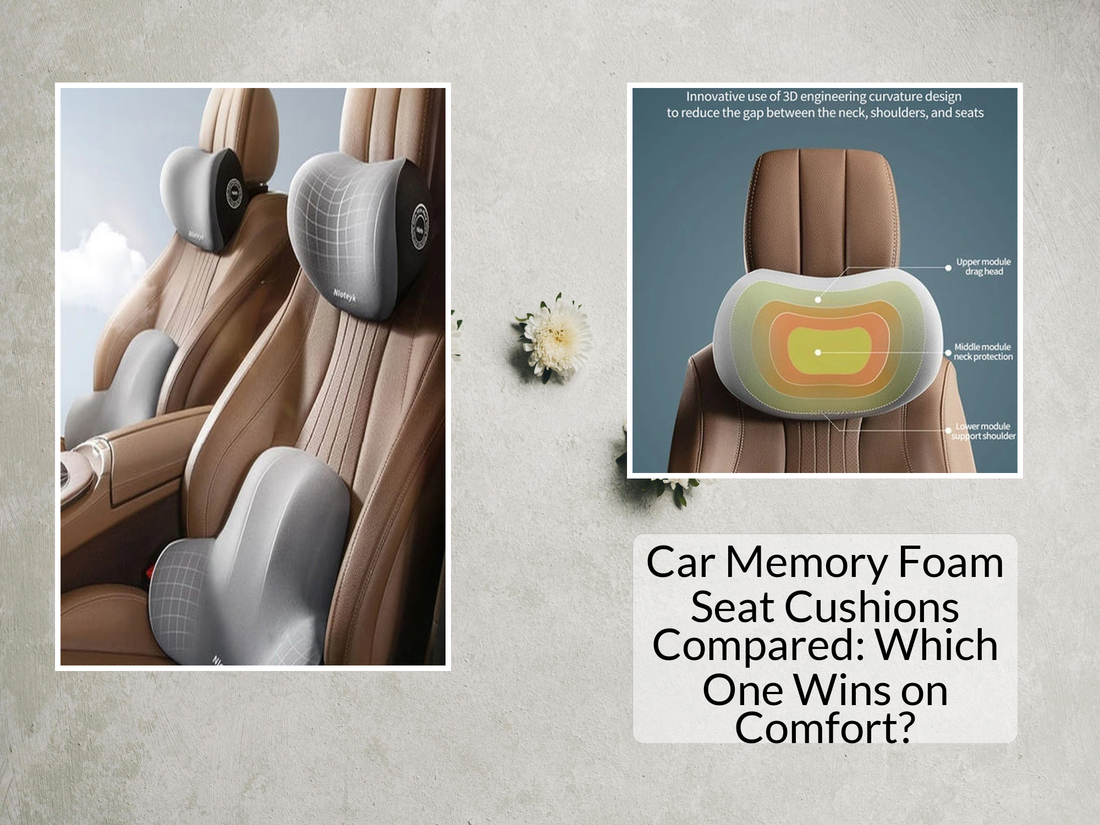
KentDO Lumbar & Neck Memory Foam Set — Best Ergonomic Support
The KentDO support set complements seat cushioning by supporting both lumbar and neck alignment, creating a more complete ergonomic driving experience.
- High-density supportive memory foam
- Dual support zones
- Breathable removable cover
- Ideal for commuters and professional drivers

Real back support car seat cushion — contour-tested for long commutes
When and Where to Use a Memory Foam Seat Cushion
Driving and Daily Commuting
Memory foam cushions can make extended driving sessions more comfortable by improving support and pressure distribution.
Office Chairs and Home Workstations
Desk workers often use memory foam cushions to improve comfort during long periods of computer work.
Air Travel and Long Flights
Portable seat cushions can make long flights more comfortable by reducing pressure on key contact points.
Wheelchairs and Mobility Seating
Many users rely on memory foam cushions to improve seating comfort during extended periods of use.
Final Verdict: Are Memory Foam Seat Cushions Worth It?
For many people, memory foam seat cushions provide meaningful improvements in comfort, posture support, pressure relief, and long-sitting tolerance. They are especially useful for drivers, commuters, office workers, and anyone who spends several hours seated each day.
Who Benefits Most
People who regularly sit for extended periods typically experience the greatest benefits from memory foam support.
When to Consider Alternative Cushion Types
If maximum cooling or a firmer seating feel is your priority, gel, latex, or hybrid cushions may be worth considering.

KentDO memory foam car seat pad — comfort that travels with you
FAQ — Memory Foam Seat Cushion Benefits
What are the benefits of memory foam seat cushions?
Memory foam cushions help distribute pressure, improve comfort, support posture, and reduce strain during extended sitting.
Are memory foam seat cushions good for back pain?
Many users find that ergonomic memory foam cushions improve support and reduce discomfort associated with prolonged sitting.
What is the best foam for car seats?
High-density memory foam is one of the most popular options because it combines support, comfort, and pressure relief.
What is the best memory foam car seat cushion?
The best choice depends on body type, seating needs, and whether tailbone relief, lumbar support, or cooling performance is the priority.
Do memory foam cushions help on long drives?
Yes. Their ability to redistribute pressure makes them especially useful during extended driving sessions.
How long does memory foam last?
Quality memory foam cushions typically last several years depending on density, usage frequency, and maintenance.
Are memory foam cushions safe for daily use?
Yes. When properly fitted to the seat, they are generally safe and comfortable for everyday use.
Pillar Article: 7 Back Support Car Pillows That Actually Work—Tested & Ranked
Other Related Articles:
- Ergonomic Neck Pillows for Driving: Top 5 Picks You’ll Regret Skipping
- What’s the Best Back Support for a Car Seat? Here’s the Breakdown
- Best Lumbar Support Car Pillows for Daily Drivers in 2025
- Inflatable Lumbar Supports for Car Seats: Are They Worth It?
Explore More: