

Are Cheap Ski Goggles Worth It?
Yes—cheap ski goggles can absolutely be worth it if you buy the right pair for your skiing style. Today's affordable ski goggles often include UV400 protection, dual-lens construction, anti-fog coatings, and helmet-compatible frames for less than $50. For beginners, families, and casual riders, these core features provide excellent value without paying for premium extras.
The biggest differences between budget and premium models are optical clarity, long-term durability, advanced anti-fog technology, and interchangeable lens systems. If you ski only a few weekends each season, inexpensive goggles usually deliver everything you need. Frequent skiers, racers, or riders who spend long days in changing mountain weather will appreciate the performance improvements of higher-end models.
- Worth it for: Beginners, occasional skiers, families, backup goggles, and budget-conscious buyers
- Consider upgrading if: You ski frequently, encounter severe weather, or want premium optics and faster lens changes
- Typical lifespan: 2–5 seasons with proper care for occasional use, depending on lens maintenance and storage
Understanding these trade-offs helps you avoid overspending while still choosing cheap ski goggles that offer reliable eye protection, comfort, and visibility.
Our Testing & Value Rating Methodology
To evaluate good cheap ski goggles fairly, we focus on the features that matter most to real skiers instead of brand names alone. Every recommendation emphasizes value, usability, and safety.
- Optical clarity: Image sharpness, distortion, and overall visibility.
- Anti-fog performance: Dual-lens construction, ventilation efficiency, and moisture management.
- Comfort: Face foam quality, strap adjustment, and helmet compatibility.
- Durability: Scratch resistance, frame flexibility, and long-term reliability.
- Value: Features delivered relative to price, especially under the $50 category.
This consistent approach makes it easier to compare the best affordable ski goggles across different budgets and riding styles.
Best Cheap Ski Goggles (2026): Top Budget Picks Under $50 Compared
Quick Comparison: Best Cheap Ski Goggles Under $50
If you're searching for the best budget ski goggles, this comparison highlights which type offers the best value depending on your priorities.
| Category | Typical Price | Lens Type | Best VLT Range | Helmet / OTG | Best For |
|---|---|---|---|---|---|
| Best Overall | Under $50 | Dual lens | 20–35% | Helmet compatible | Most recreational skiers |
| Best Under $30 | Under $30 | Single or dual lens | 25–40% | Basic compatibility | First-time buyers |
| Best Anti-Fog | Under $50 | Dual lens | 20–35% | Helmet compatible | Longer ski sessions |
| Best for Night Skiing | Under $50 | High VLT | 70–90% | Helmet compatible | Low-light slopes |
| Best OTG | Under $50 | Dual lens | 25–40% | OTG compatible | Prescription glasses |
Rather than choosing solely by price, match your goggles to the conditions you ski most often. Lens tint, VLT, and fit typically have a greater impact on performance than the brand name.
Best Cheap Ski Goggles by Category
Best Under $30
Entry-level goggles focus on essential safety features including UV400 protection, basic anti-fog coatings, and adjustable straps. They're ideal for beginners, children, rental replacements, or anyone skiing only a few days each year.
Best Under $50 Overall
Moving closer to the $50 price point often adds dual lenses, improved ventilation, better foam padding, and higher-quality optics. This price range delivers the strongest value for most recreational skiers.
Best Anti-Fog Budget Option
Look for dual-lens construction combined with well-designed top and bottom ventilation ports. These features reduce condensation much more effectively than anti-fog coatings alone.
Best for Night Skiing
Choose lenses with high Visible Light Transmission (VLT), typically clear or yellow tints between 70% and 90%, to maximize visibility under floodlights or during overcast evenings.
Best OTG (Over Glasses)
OTG-compatible goggles include extra internal volume and discreet frame cutouts that reduce pressure on prescription glasses while maintaining a secure seal around the face.
Best Budget Snowboarding Goggles
Snowboarders often benefit from cylindrical or oversized lenses that provide a wider peripheral view, improved helmet integration, and modern styling without significantly increasing cost.
⏱ 7 min read
Cheap ski goggles have a bad reputation—but is it deserved? The real question isn't price—it's performance. What do budget ski goggles actually deliver when visibility drops, temperatures swing, and fog threatens your run?
Quick check: Are you paying for safety—or just a logo? Let's break it down.

Budget-friendly clarity with cheapest ski goggles — See it in action
What You Really Get With Cheap Ski Goggles
Budget ski goggles concentrate on the features that matter most while leaving out premium upgrades. Knowing which compromises are acceptable helps you choose the right model.
Features worth paying for
- UV400 protection for complete UVA and UVB coverage.
- Dual-lens construction to reduce fogging.
- Helmet compatibility for a comfortable, secure fit.
- Soft multi-layer face foam that seals without excessive pressure.
Features you can skip
- Magnetic lens swapping if you rarely change conditions.
- Premium photochromic lenses for occasional skiing.
- Luxury frame materials designed for heavy multi-season use.
Most inexpensive ski goggles provide dependable protection and comfort for recreational use, even if they don't match premium optics or long-term durability.
How Budget Anti-Fog Ski Goggles Actually Perform
Budget anti-fog ski goggles rely primarily on dual lenses, ventilation, and entry-level coatings rather than expensive proprietary technologies. For more detailed prevention techniques, see our how to prevent ski goggles from fogging guide.
What actually helps prevent fogging
- Dual-lens construction
- Proper face ventilation
- Avoiding contact with the inner lens
- Allowing goggles to dry naturally between runs
- Maintaining a proper helmet-to-goggle seal
Real-world fog test scenarios
During cold, dry days, many budget ski goggles remain surprisingly clear throughout multiple runs. Performance usually declines during wet snowfall, repeated lift rides with temperature swings, or intense exertion that generates excess moisture.
How to keep budget goggles from fogging
- Never wipe the inside lens while wet.
- Store goggles in a breathable pouch after skiing.
- Dry them at room temperature instead of using direct heat.
- Keep helmet vents aligned with the goggles whenever possible.
Lens Guide: Visibility, VLT & Conditions
Choosing the right lens matters more than choosing the most expensive goggles. Visible Light Transmission (VLT) indicates how much light passes through the lens.
Understanding VLT percentages
- 10–20% VLT: Bright sunny days.
- 20–40% VLT: Mixed conditions and everyday skiing.
- 40–70% VLT: Cloudy weather.
- 70–90% VLT: Night skiing and very low light.
Best lens colors for different weather
- Dark gray or mirrored: Bright sunshine.
- Rose or pink: Variable conditions and improved contrast.
- Amber: Flat light and overcast skies.
- Yellow or clear: Night skiing and poor visibility.
Choosing the right tint for snow conditions
Most ski goggles under 50 dollars include one fixed lens, so select a VLT that matches your typical weather. If conditions frequently change, choose a medium VLT around 25–35% for the best balance.

Enhanced contrast for skiing in low visibility — See it in action
Why UV400 Protection Matters Even on a Budget
Snow reflects a significant amount of ultraviolet radiation, increasing exposure even on cloudy days. Fortunately, most cheap ski goggles include UV400 protection that blocks harmful UVA and UVB rays.
Always verify UV400 protection in the specifications, but don't assume a higher price automatically provides better UV protection.
Cheap vs Expensive Ski Goggles: Key Differences
The biggest differences between budget and premium ski goggles appear in long-term performance rather than basic safety.
| Feature | Budget Goggles | Premium Goggles |
|---|---|---|
| Optical clarity | Good | Excellent |
| Anti-fog durability | Moderate | Superior |
| Lens technology | Basic dual lens | Advanced contrast-enhancing lenses |
| Lens changes | Usually fixed | Often magnetic |
| Expected lifespan | 2–5 seasons (casual use) | Many seasons with heavy use |
When premium goggles are worth upgrading
If you ski every week, regularly encounter changing weather, or prioritize the sharpest possible vision, premium goggles justify the extra investment. Casual skiers, however, often receive nearly all the essential performance they need from quality budget models.
Helmet Compatibility, Fit & OTG Buying Tips
Even excellent lenses perform poorly if the goggles don't fit correctly. Before buying, check these factors:
- Choose goggles designed to match your helmet size.
- Ensure the upper frame seals cleanly against the helmet without creating a "gaper gap."
- Select OTG models if you wear prescription glasses regularly.
- Pick frame sizes that match your face width to prevent pressure points or air leaks.
For additional guidance, compare sizing recommendations in a ski helmet compatibility guide before purchasing new eyewear.
How Long Do Budget Ski Goggles Last?
With occasional recreational use, affordable ski goggles commonly last between two and five ski seasons. Longevity depends more on care than purchase price.
- Avoid wiping the inside lens coating.
- Store goggles inside a microfiber pouch.
- Allow them to dry completely after every ski day.
- Replace goggles if lenses become heavily scratched or foam loses its seal.
Unlike premium models, replacement lenses are often unavailable for inexpensive ski goggles, so replacing the entire unit is usually the most economical option once the lens is damaged.
Who Should Buy Budget Ski Goggles (And Who Shouldn't)
Budget ski goggles are a smart choice for certain types of users—but not everyone. Pairing them with proper gear like a well-fitted helmet (see best ski helmets) can improve both comfort and safety.
- Best for: Beginners, occasional skiers, families, and budget-conscious buyers.
- Good for: Backup goggles, travel kits, rental replacements, and weekend trips.
- Less suitable for: Advanced riders, competitive skiers, or frequent mountain visitors.
If you ski only a few times each season, affordable ski goggles provide outstanding value. Heavy users generally benefit from better optics, longer-lasting coatings, and greater durability. New skiers can also explore ski gear for beginners for a complete setup.
For added convenience and upgraded features, some skiers explore options like magnetic ski goggles that simplify lens changes while staying affordable.
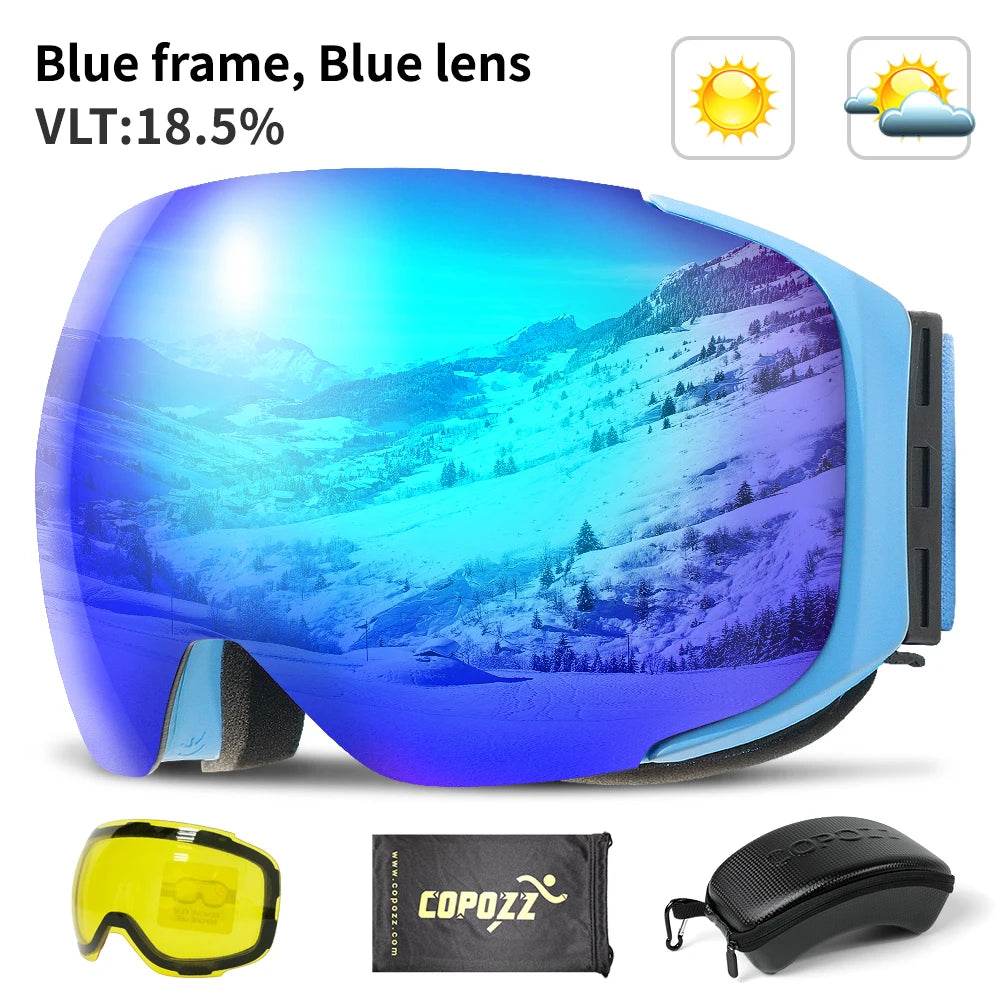
Comfort-focused cheapest ski goggles with UV400 protection — See it in action
Many skiers pair goggles with off-slope recovery routines found in the Lifestyle collection to stay comfortable during multi-day trips.
FAQ: Cheap Ski Goggles Buying Questions
Do cheap ski goggles fog faster?
Generally yes. Budget goggles rely on simpler coatings and ventilation, so they are more likely to fog during wet weather, heavy exertion, or rapid temperature changes. Dual-lens designs and proper maintenance help reduce this issue significantly.
Are cheap ski goggles safe for eye protection?
Yes. Most reputable budget ski goggles include UV400 protection that blocks harmful UVA and UVB rays. Always verify this specification before purchasing.
Can I use cheap goggles for night skiing?
Yes. Choose clear or yellow lenses with a VLT between 70% and 90% to maximize visibility in low-light conditions.
What are the best ski goggles under $50?
The best budget ski goggles combine dual lenses, effective ventilation, comfortable face foam, helmet compatibility, and UV400 protection while offering the VLT best suited to your local conditions.
Are budget ski goggles good for snowboarding?
Yes. Many affordable ski goggles work equally well for snowboarding. Look for wide peripheral vision, helmet compatibility, and durable dual-lens construction.
How do I choose the right VLT for skiing?
Select your VLT based on the weather you encounter most often. Around 25–35% works well for mixed conditions, while higher VLT values are better for cloudy days and night skiing.













