

Deep Conditioning Hair Mask Review: Best Masks for Dry, Damaged, and Curly Hair (2026 Guide)
⏱ 7 min read
What Is a Deep Conditioning Hair Mask and Does It Really Work?
A deep conditioning hair mask is a concentrated treatment designed to improve hair's moisture retention, softness, elasticity, and manageability beyond what a typical rinse-out conditioner usually provides. The best deep conditioning hair mask formulas combine conditioning agents, oils, humectants, or proteins to target specific concerns such as dryness, frizz, breakage, or chemical damage.
Unlike a quick conditioner used mainly for detangling and surface smoothing, a deep conditioning treatment typically remains on the hair longer. That extended contact time can improve how the hair feels and behaves, although results depend on the formula, hair condition, and how consistently it is used.
How Deep Conditioning Differs from Regular Conditioner
Regular conditioner is generally designed for frequent use and quick detangling. A deep conditioning mask is usually more concentrated and may contain a richer blend of conditioning ingredients, oils, humectants, or strengthening proteins. It is left on for a longer processing period, often around 10–30 minutes depending on the product instructions.
In practical terms, a deep conditioning hair mask can provide more noticeable softness and manageability when hair feels unusually dry, rough, tangled, or difficult to style. However, a richer formula is not automatically better for every hair type. Fine or low-density hair may need a lighter mask, while coarse, highly porous, or chemically processed hair may tolerate a more substantial treatment.
What Hair Masks Can and Cannot Improve
A quality hair mask can temporarily improve the feel, appearance, and manageability of damaged hair by conditioning the hair fiber, reducing friction, and helping strands retain moisture. Protein-containing formulas may also help improve the feel of weak hair when the formula is appropriate for the hair's needs.
However, a hair mask cannot permanently reverse structural damage or fuse split ends back together. A hair mask for dry damaged hair can make strands look and feel smoother, but severely damaged ends may still require trimming. For this reason, a useful deep conditioning treatment review should consider both visible cosmetic results and realistic limitations rather than treating every improvement as permanent repair.

Deep conditioning mask improving dry, dull hair — See it in action
Quick Comparison: Best Deep Conditioning Hair Masks at a Glance
Comparison Table: Hair Type, Key Ingredients, Best For, Value
| Category | Best For | Ingredients or Formula Focus | Key Benefits | Potential Limitation |
|---|---|---|---|---|
| Best Overall | Most hair types needing balanced conditioning | Balanced moisturizing and conditioning ingredients with optional protein support | Softness, manageability, shine, and everyday maintenance | May not provide enough intensity for severe damage |
| Best for Dry and Damaged Hair | Rough, brittle, or chemically processed strands | Rich conditioning agents, oils, butters, and damage-supporting ingredients | Improved softness, flexibility, and reduced dry feel | Can feel heavy on fine or low-density hair |
| Best for Curly and Coily Hair | Hair that needs moisture and frizz control | Rich emollients and moisture-retaining ingredients | Better curl manageability and reduced dryness-related frizz | Some formulas may cause buildup if overused |
| Best for Color-Treated Hair | Dyed, bleached, or chemically processed hair | Conditioning formulas selected to support treated hair | Softness and easier detangling without unnecessary stripping | Formula compatibility still depends on individual hair needs |
| Best Budget Option | Routine conditioning on a lower budget | Hydrating and smoothing conditioning ingredients | Accessible maintenance and improved feel | May offer fewer specialized benefits |
When comparing deep conditioning hair mask reviews , the most important question is not simply which product is richest. The better choice depends on whether your priority is moisture, softness, frizz control, damage support, curl manageability, or lightweight conditioning. A formula that works well for coarse, dry hair may be too heavy for fine strands.
Best Deep Conditioning Hair Masks: Tested and Reviewed
The categories below are organized by the type of result a reader is most likely seeking. To make the comparisons more useful, each category considers conditioning performance, hair-type suitability, formula characteristics, ease of use, value, and realistic limitations.
Best Overall Deep Conditioning Hair Mask
The best overall option should provide a reliable balance of softness, manageability, moisture support, and ease of rinsing without being excessively heavy. Balanced formulas are usually the most versatile choice for people whose hair has moderate dryness but does not require an intensely rich treatment.
- Pros: Versatile, practical for regular use, and suitable for a broad range of hair concerns
- Cons: May not be rich enough for severely porous or heavily damaged hair
- Ideal for: Normal to dry hair seeking balanced conditioning
- Notable limitation: “Best overall” does not mean it is the best match for every hair texture
Best Hair Mask for Dry and Damaged Hair
A mask for dry and damaged hair should prioritize substantial conditioning and improved manageability rather than promising to permanently repair the hair fiber. Richer formulas may help rough or brittle hair feel smoother and more flexible, especially when dryness is caused by heat styling, chemical processing, or environmental exposure.
- Pros: Stronger conditioning feel and better support for rough, dry strands
- Cons: Rich formulas may weigh down fine hair
- Ideal for: Coarse, dry, porous, or chemically processed hair
- Notable limitation: Cannot permanently repair split ends or eliminate severe structural damage
Best for Curly and Coily Hair
Curly and coily hair often benefits from consistent conditioning because dryness can make detangling and frizz management more difficult. The best formulas for these textures generally focus on improving slip, softness, and moisture retention without leaving excessive residue.
- Pros: Can improve detangling, softness, curl manageability, and frizz control
- Cons: Heavy formulas may reduce volume or create buildup
- Ideal for: Curly, coily, and textured hair that feels dry or difficult to manage
- Notable limitation: Results vary significantly with curl pattern, density, porosity, and styling routine
Best for Color-Treated Hair
Color-treated hair often needs conditioning support because bleaching and chemical processing can change how the hair feels and responds to products. A suitable mask should improve softness and manageability without relying on unrealistic claims that a treatment can reverse all processing damage.
- Pros: Helps maintain a smoother, more conditioned feel between color services
- Cons: Not every rich formula is suitable for every treated hair type
- Ideal for: Dyed, highlighted, or chemically processed hair
- Notable limitation: Hair color longevity depends on the full washing and styling routine, not a mask alone
Best Budget Deep Conditioning Hair Mask
A budget mask can be a practical choice when the main goal is regular conditioning rather than a highly specialized treatment. Consistent use of a well-matched affordable formula can be more useful than purchasing an expensive product that is too heavy, too light, or poorly suited to the hair.
- Pros: Accessible for regular maintenance and frequent use
- Cons: May offer fewer targeted ingredients or specialized benefits
- Ideal for: Dryness, routine softness, and basic manageability support
- Notable limitation: Lower price does not guarantee poor performance, but expectations should match the formula's purpose
How We Evaluated These Deep Conditioning Hair Masks
A useful deep conditioning hair mask review should look beyond packaging claims. The evaluation focuses on how a product is likely to perform during actual use and whether its formula makes sense for the hair concern it targets.
Moisture, Softness and Frizz Control
We consider whether the treatment improves the feel of dry or rough hair, makes strands easier to detangle, and reduces the friction that can contribute to a frizzy or unruly appearance. These are primarily observable conditioning outcomes rather than claims of permanent repair.
Ingredients and Hair-Type Suitability
Ingredients are evaluated by their function. Oils and butters can provide emollient conditioning, humectants can support moisture retention under suitable conditions, and proteins may help improve the feel of some weakened hair. No single ingredient automatically makes a mask suitable for everyone.
We also consider whether the formula is likely to suit fine, coarse, curly, coily, dry, damaged, or color-treated hair. A product's performance should be judged alongside its potential limitations, including heaviness, buildup, or sensitivity to protein-rich formulas.
Application Experience, Results and Value
Application matters because a mask that spreads evenly, distributes without excessive product, and rinses clean is easier to use consistently. We also separate immediate cosmetic improvements from longer-term routine benefits and consider whether the expected performance justifies the product's cost.
Deep Conditioning Hair Mask Reviews: What Results Can You Expect?
Texture, Absorption and Ease of Use
Texture can strongly affect the user experience. A thicker mask may be useful for coarse or highly dry hair, while a lighter cream can be easier to distribute through fine strands without leaving them flat. The best application experience allows the product to coat the hair evenly without requiring excessive amounts.
Absorption should also be interpreted realistically. A product does not necessarily need to disappear into the hair to work well. What matters is whether it provides the intended conditioning effect, rinses appropriately, and leaves the hair feeling manageable rather than coated or weighed down.
Moisture, Frizz Control and Manageability
The most noticeable short-term improvements from a deep conditioning mask are often improved softness, easier detangling, smoother texture, and better manageability. Frizz may also appear reduced when dryness and surface friction are contributing to the problem.
Results can vary by hair type. A formula that produces a rich, conditioned finish on coarse hair may feel excessive on fine hair. Likewise, hair that is protein-sensitive may respond better to a moisture-focused routine than to frequent strengthening treatments.
30-Day Hair Mask Review Results
With consistent use over approximately 30 days, a suitable hair mask may help maintain a softer feel, improve detangling, and make hair easier to style. The most meaningful longer-term benefit usually comes from reducing repeated dryness and improving routine manageability rather than permanently rebuilding damaged hair.
Over-conditioning can also become a problem. Hair that begins to feel limp, coated, unusually soft, or difficult to style may need less frequent masking or a lighter formula. A realistic 30 day hair mask review should therefore consider both improvements and signs that the routine needs adjustment.
Deep Conditioning Hair Mask Before and After Results
What Can Change After the First Use
- Hair may feel softer and smoother
- Detangling may become easier
- Dry-feeling strands may feel more conditioned
- Frizz caused by surface dryness may appear reduced
- Hair may look shinier because the surface feels smoother
These immediate effects are primarily cosmetic and conditioning improvements. They do not mean that permanent structural damage has been reversed.
What May Improve After 30 Days
- More consistent softness between washes
- Improved manageability during styling and detangling
- Better moisture maintenance when the formula suits the hair
- Less rough-feeling hair when dryness is managed consistently
Results from a deep conditioning hair mask before and after comparison depend on the starting condition of the hair, the mask used, washing frequency, heat styling, chemical processing, and other products in the routine. Severely damaged hair may show improved feel without fully recovering its original condition.
Consistent deep conditioning improves hair texture over time — See results
How to Choose the Best Deep Conditioning Hair Mask for Your Hair
Match the Mask to Dry, Damaged, Curly, Fine or Color-Treated Hair
Start with your primary concern rather than choosing a mask based only on its most popular ingredient.
- Dry hair: Look for a conditioning formula that improves softness and helps hair feel less rough.
- Damaged hair: Consider a formula that supports conditioning and, when appropriate, includes strengthening ingredients.
- Curly and coily hair: Prioritize slip, manageability, moisture support, and a finish that does not create unwanted buildup.
- Fine hair: Choose a lighter formula and use a smaller amount to reduce the risk of heaviness.
- Color-treated hair: Look for a formula compatible with your broader color-care routine and focus on maintaining conditioning.
Protein vs Moisture: Which Does Your Hair Need?
Moisture-focused masks are generally useful when hair feels dry, rough, or lacking softness. Protein-containing formulas may be useful when hair feels weak or overly fragile, although individual responses vary.
Using too much of either type can be counterproductive. Excessive protein use may leave some hair feeling stiff, while excessive rich conditioning can make hair feel limp or coated. Alternating products or adjusting frequency can help maintain a better balance.
Low vs High Porosity and Ingredient Considerations
Porosity can be a useful way to think about how hair responds to products, but it should not be treated as the only selection factor. Hair density, texture, chemical history, damage level, and styling habits also affect product performance.
For ingredients, consider function rather than blanket avoid lists. Conditioning oils and butters can help improve softness, humectants can support moisture retention, and proteins can provide a strengthening-focused approach for some hair types. If buildup is a concern, adjust product amount and frequency before assuming that every conditioning ingredient is unsuitable.
How to Use a Deep Conditioning Hair Mask Properly
Step-by-Step Application
- Cleanse the hair according to your normal routine and remove excess water.
- Apply an appropriate amount of mask, focusing primarily on the lengths and ends unless the product specifically directs otherwise.
- Distribute the product evenly with your fingers or a suitable wide-tooth comb if appropriate for your hair type.
- Leave the mask on for the time recommended by the product instructions, commonly around 10–30 minutes.
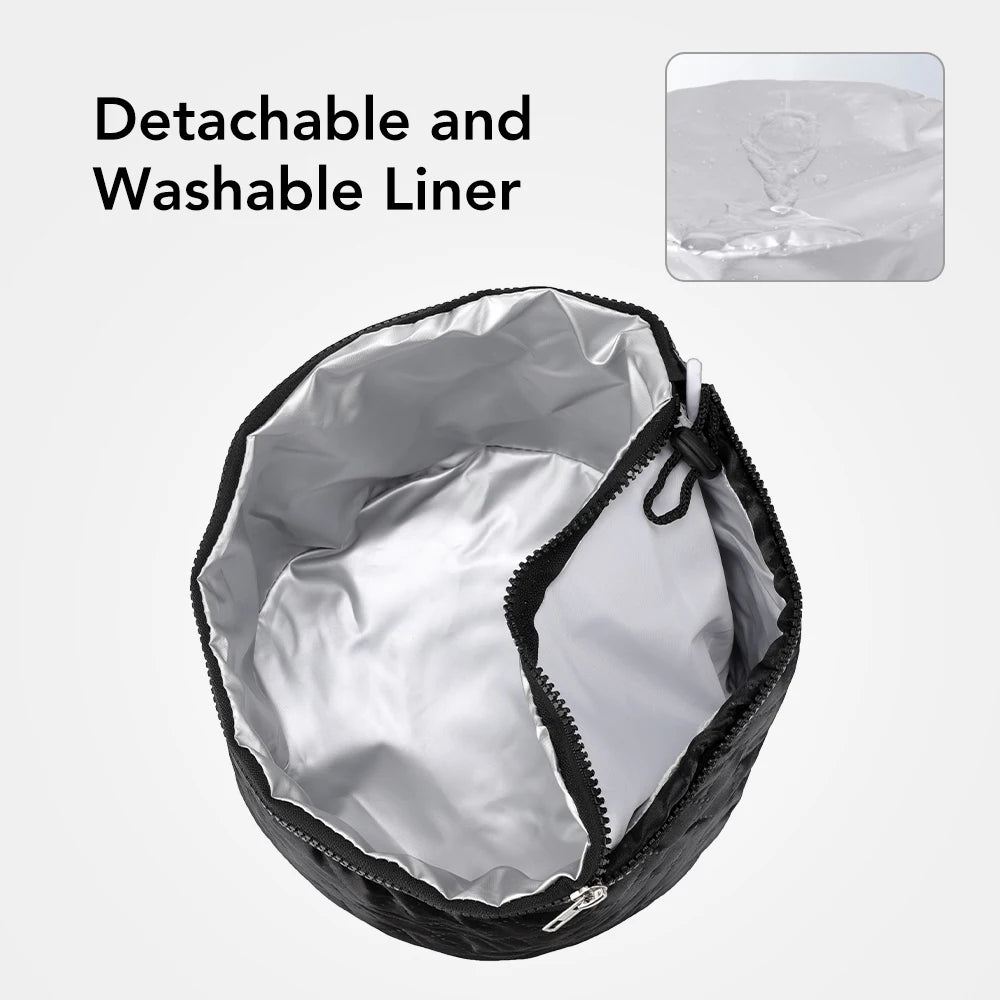
- For products designed to work with gentle warmth, a warm towel or suitable hair steamer may help create a more comfortable conditioning routine, but heat should not replace the product's instructions.
- Rinse thoroughly with lukewarm water and style as usual.
Common Mistakes to Avoid
- Using too much product: More product does not automatically mean better conditioning.
- Applying too close to the roots: This can make some fine or oily hair types feel heavy.
- Leaving the mask on far longer than directed: Extended processing is not always necessary for better results.
- Overusing rich treatments: Frequent masking can contribute to buildup or limpness for some hair types.
- Ignoring your hair's response: Adjust frequency or formula if hair becomes stiff, coated, flat, or unusually difficult to style.
This routine pairs well with tools from Hair Care and Styling Devices collections for a complete at-home routine.
At-Home Deep Conditioning Treatment vs Salon Results
For routine conditioning, an at-home mask is often the more convenient and affordable option. It allows consistent maintenance and can be adjusted according to how the hair responds over time.
- At-home treatment: More convenient, lower cost per use, and practical for regular maintenance
- Salon treatment: May provide access to professional services, specialized formulations, and stylist assessment
- Cost: At-home care is generally more economical for ongoing conditioning
- Intensity: Salon services may involve additional steps or treatments beyond a standard home hair mask
For mild to moderate dryness, a well-matched at-home mask may be sufficient as part of a consistent routine. More significant chemical damage or persistent hair concerns may benefit from professional evaluation. The best choice depends on hair condition, desired results, convenience, and budget.

At-home deep conditioning for long-term hair repair — See it in action
Frequently Asked Questions
How often should I use a deep conditioning hair mask?
Many hair types benefit from a deep conditioning mask about once per week, while very dry or damaged hair may require more frequent use depending on the product and how the hair responds. Fine or easily weighed-down hair may need less frequent treatment. If hair begins to feel coated, limp, or overly soft, reduce the frequency or switch to a lighter formula.
Can a hair mask repair damaged hair permanently?
No. A hair mask can improve the feel, appearance, softness, and manageability of damaged hair, but it cannot permanently reverse all structural damage or fuse split ends back together. Severely damaged ends may still need trimming, while consistent conditioning can help support the appearance and manageability of the remaining hair.
Should I use conditioner after a hair mask?
Usually, a deep conditioning mask can replace your regular conditioner for that wash. Applying both is not always necessary. If your hair is fine or the mask leaves it feeling rough after rinsing, a small amount of lightweight conditioner may be appropriate depending on the product instructions and your hair's response.
Can fine hair use deep conditioning masks?
Yes. Fine hair can benefit from deep conditioning, but lightweight formulas, smaller amounts, and less frequent use may work better than rich masks applied heavily. Focus the product mainly on the mid-lengths and ends and adjust the routine if the hair feels flat or weighed down.
How long does it take to see results from a deep conditioning hair mask?
Softness, smoother texture, and easier detangling may be noticeable after the first use. More consistent improvements in manageability and moisture maintenance may develop over several weeks of suitable, regular use. Results vary according to hair type, damage level, product formula, and the rest of the hair-care routine.













