

Desk Portable Fans: Best Options for Work, Home & Travel
Desk portable fans make personal cooling easier when you want airflow without giving up valuable workspace. Unlike bulky traditional fans, compact models can fit beside a laptop, move between rooms, or travel with you. The right choice depends less on maximum size and more on how well the fan matches your needs for airflow, noise, portability, power, adjustability, and everyday convenience.
For office work, studying, home use, commuting, or summer travel, a portable fan can provide localized airflow without attempting to cool an entire room. This guide explains what to look for, how portable desk fans compare with other personal cooling options, and where a foldable design can make sense.
What Are Desk Portable Fans?
Desk portable fans are compact electric fans designed to provide localized airflow from a small footprint. They are generally easier to move and store than full-size room fans and are intended primarily for personal comfort at a desk, bedside table, counter, or other nearby location.
The biggest advantage is flexibility. Instead of dedicating a permanent area to a large fan, you can move a compact fan wherever personal airflow is useful. Some designs are specifically desktop-oriented, while others can transition between handheld and desktop use.
Portable Desk Fan vs. Traditional Desktop Fan
A traditional desktop fan is usually designed to remain on a table or desk, with stability and continuous operation as major priorities. A portable desk fan puts more emphasis on compact dimensions, easy movement, and flexible positioning.
- Traditional desktop fan: Better suited to a fixed workspace where stability and broader airflow are priorities.
- Portable desk fan: Better suited to users who move between desks, rooms, workstations, or travel locations.
- Compact personal fan: Often prioritizes targeted airflow over room-wide circulation.
Portable Desk Fan vs. Handheld Fan
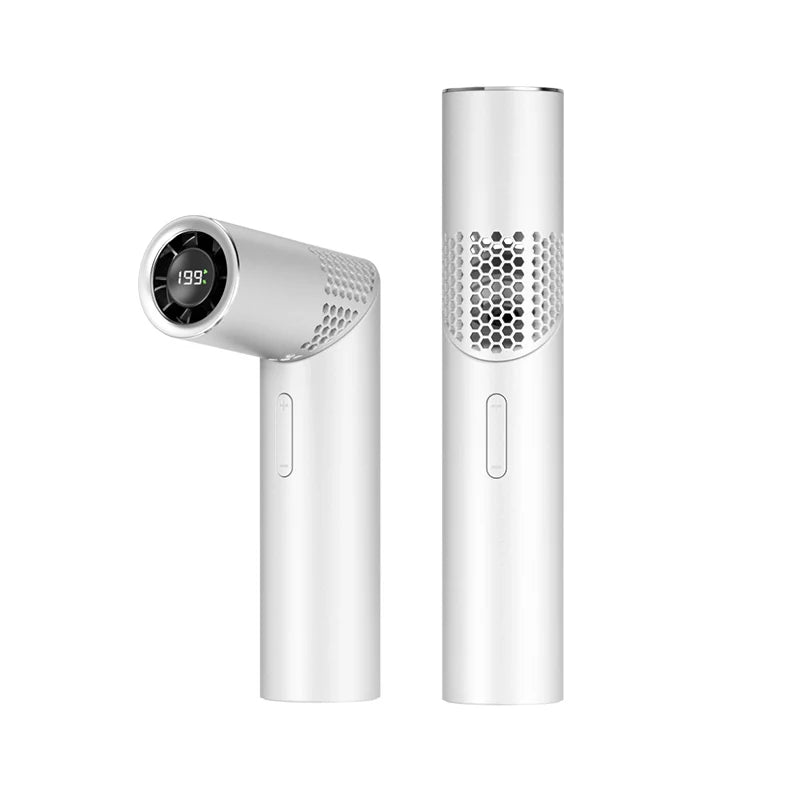
A handheld fan requires you to hold the device, which can be useful when walking, commuting, or waiting outdoors. A portable desk fan can provide hands-free airflow when placed on a stable surface. Some flexible designs bridge the gap by allowing the fan to be used in more than one position.
If you spend most of the day seated, hands-free operation can be more convenient. If you are moving continuously, a lightweight handheld design may be more practical.
Best Desk Portable Fans for Work, Home & Travel
There is no single portable fan format that is best for every situation. Instead, match the design to the environment in which you expect to use it most.
Best Portable Desk Fan for Office Work
For an office, prioritize a compact footprint, controlled airflow, stable positioning, and an appropriately low noise level. A fan that takes up little desk space is especially useful when your workstation already contains a monitor, keyboard, notebook, and other equipment.
Noise matters because even a comfortable airflow can become distracting during meetings, calls, studying, or concentrated work. If a manufacturer provides noise specifications, consider them alongside the fan's airflow settings rather than judging performance from maximum speed alone.
Best Compact Fan for Home Desks
At home, flexibility may matter more than absolute compactness. You might use the same fan at a desk during the afternoon, beside a bed in the evening, or in another room later.
Look for a design that is easy to reposition and provides useful directional airflow. A compact foldable model can be particularly convenient because it can be adjusted for use and folded down for storage.
Best Rechargeable Fan for Travel
Travel creates different priorities. A fan needs to be easy to pack, lightweight enough to carry, and convenient to use when access to a wall outlet is limited. Battery-powered or rechargeable models can offer greater freedom than cord-dependent fans, but you should verify the actual battery capacity, runtime, charging port, and charging specifications before buying.
The product discussed in this guide is described as rechargeable-friendly, but its supplied specifications do not provide a battery capacity, measured runtime, or USB-C specification. Those details should therefore be confirmed from the current product listing rather than assumed.
Best Small USB Fan for Flexible Setups
USB-powered fans can work well beside laptops, power banks, and compact workstations when a compatible USB power source is available. The main benefit is flexibility: you can avoid dedicating valuable space to a larger powered fan.
However, always distinguish between a fan that is USB-powered and one with an internal rechargeable battery. They are not necessarily the same thing.
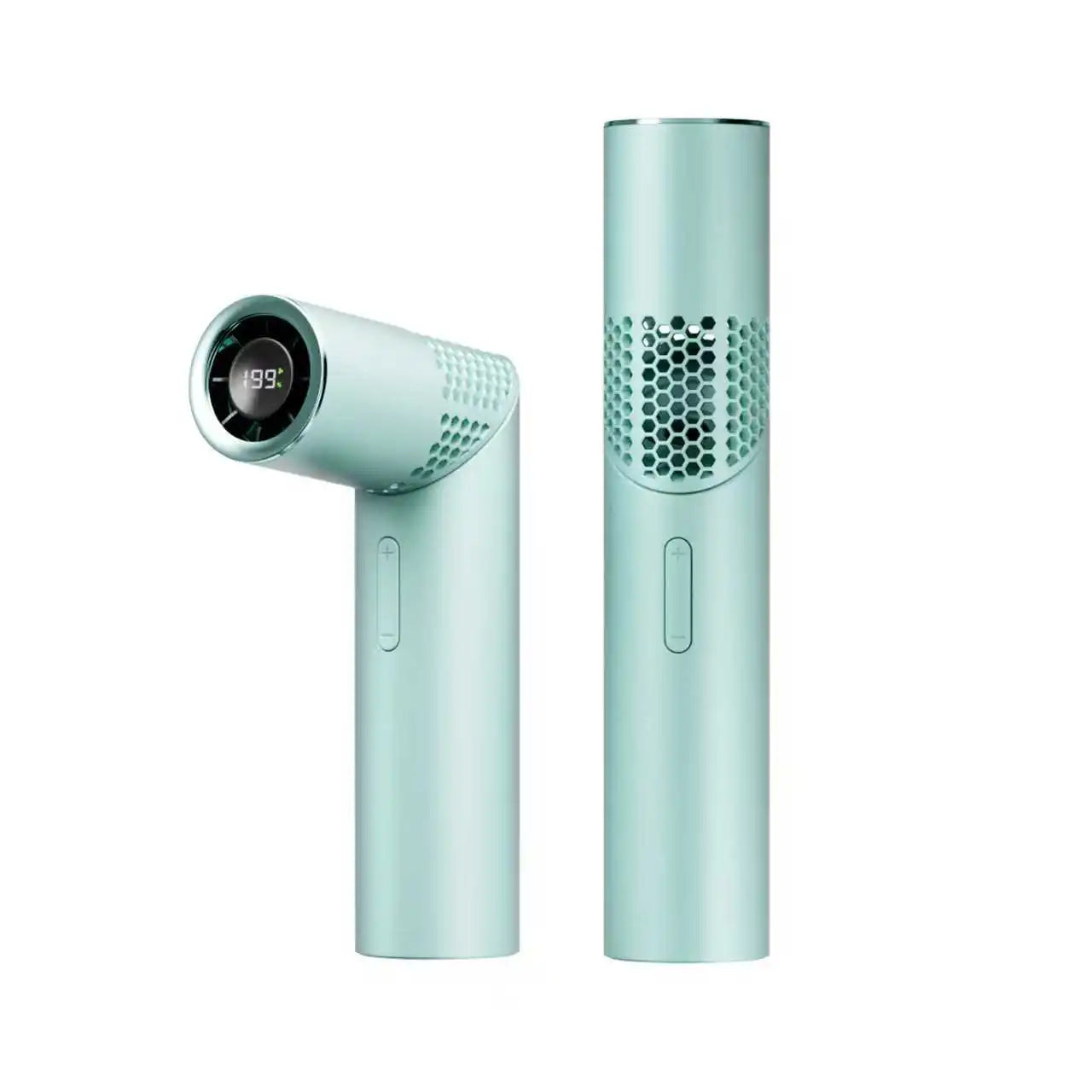
For a compact, multi-position option, the Portable Handheld Fan | Foldable Cooling Comfort for Travel is designed around portability and personal airflow. Its ABS body, foldable construction, and ability to function as a handheld, desktop, or neck-hanging fan make it relevant when flexibility is more important than room-wide circulation.
How to Choose a Portable Desk Fan
The best portable desk fan should solve your specific cooling problem rather than simply offer the largest motor or highest advertised speed. Use these criteria to compare models.
Airflow and Cooling Performance
Airflow direction is often more important for personal cooling than physical size. A compact fan positioned correctly can deliver useful air movement directly toward your face, neck, hands, or upper body.
Consider speed settings, airflow direction, tilt adjustment, and oscillation if available. More settings can make it easier to balance comfort with noise and energy consumption.
Noise Level for Workspaces
A fan intended for an office, library, bedroom, or study area should not be evaluated only by its maximum airflow. Higher speeds generally produce more audible airflow and mechanical noise, so a useful low-speed mode can be valuable.
When comparing products, look for published decibel information where available. Also consider that perceived noise can vary depending on the desk surface, room acoustics, fan speed, and distance from the user.
Battery Life
Battery life matters when you want cordless cooling during travel or away from a convenient outlet. Compare claimed runtime at the settings you are likely to use rather than assuming a maximum advertised figure applies to every speed.
For the featured foldable fan, the supplied product information does not specify battery capacity or runtime. That information should be verified before making battery life a deciding factor.
USB-C Charging and Power Options
USB-C is convenient because it is widely used across modern electronics, but you should not assume a product has USB-C charging unless its specifications confirm it. Other portable fans may use standard USB charging, a dedicated charging connector, replaceable batteries, or direct electrical power.
For travel, the important question is whether the fan's power system fits the charging equipment you already carry.
Size, Stability, and Desk Footprint
A small footprint is valuable when your desk is crowded. However, extreme compactness can reduce stability, so consider how the fan stands or positions itself on a surface.
Foldability adds another practical advantage: the fan can occupy less space when stored in a drawer, bag, or travel kit.
Motor Type and Durability
Brushless DC motors are commonly discussed in portable fan comparisons because they can provide efficient operation and potentially longer service life. However, motor type alone does not determine overall product quality. Construction, bearings, blade design, electronics, ventilation, and manufacturing quality also matter.
Do not treat a brushless motor as an automatic guarantee of quieter operation, greater airflow, or longer battery life unless the manufacturer provides supporting specifications.
Adjustability and Airflow Direction
Adjustability is especially important for personal cooling. A fan that can be aimed toward the area that feels warmest can be more useful than a larger fan with less convenient positioning.
For a flexible portable design, the ability to fold or change its orientation can also make one fan useful across several environments.
Are Portable Desk Fans Powerful Enough to Cool You?
Yes, a portable desk fan can provide meaningful personal cooling, but it should not be confused with an air conditioner or room-cooling system. A compact fan primarily moves air around the person using it rather than significantly lowering the temperature of an entire room.
Personal Cooling vs. Room Cooling
Fans can improve comfort by increasing air movement across exposed skin. This can make you feel cooler when the surrounding conditions allow sweat to evaporate effectively. The fan itself does not necessarily make the room colder.
This distinction is important when shopping. If your goal is personal comfort while working at a desk, a compact fan may be exactly what you need. If your goal is to lower the temperature of a large room, a room fan, ventilation strategy, or air-conditioning system may be more appropriate.
When a Small Fan Works Best
- Desk work and studying
- Bedside or home-office use
- Commuting and waiting outdoors
- Travel and hotel rooms
- Outdoor personal cooling when conditions permit
- Situations where a large fan would be inconvenient
What Makes a Desk Fan Quiet Enough for an Office?
A quiet office fan generally combines moderate airflow with controlled motor and blade noise. Rather than choosing solely by the highest airflow setting, look for a fan with adjustable speeds and a practical low setting for calls and concentrated work.
Noise Level and Fan Speed
Fan noise commonly increases as airflow speed increases. A low setting may therefore be preferable during video meetings, reading, or focused tasks, while a higher setting can be useful when stronger personal airflow is needed.
Best Features for Shared Workspaces
- Low-speed operation
- Stable positioning
- Targeted airflow
- Compact desk footprint
- Smooth, consistent operation
- Simple controls that do not require frequent adjustment
Portable Desk Fan Buying Guide: Features That Matter Most
Quick Comparison Matrix
- Office work: Prioritize low noise, targeted airflow, compact size, and stable positioning.
- Home desk: Prioritize adjustability, convenient placement, and easy everyday use.
- Travel: Prioritize low weight, foldability, packability, and a suitable power system.
- Outdoor use: Prioritize portability, personal airflow, and cordless convenience where available.
- Small workspace: Prioritize minimal desk footprint and flexible positioning.
Which Features Matter for Each Use Case?
The most important feature changes with the environment. Office users typically care more about noise and targeted airflow. Travelers tend to care more about portability and power independence. Home users may value adjustability and versatility because the fan can remain available for different rooms or activities.

How to Get Better Cooling From a Small Desk Fan
Position the Fan for Direct Personal Airflow
Place the fan so its airflow reaches the area where you actually feel warm. Direct personal airflow can be more useful than simply increasing the fan's speed when the device is poorly positioned.
Avoid positioning a small fan so close to an obstruction that airflow is immediately blocked. Give the intake and outlet enough open space to function normally.
Keep the Air Intake and Blades Clean
Dust and debris can accumulate around fan openings and moving components. Regular cleaning according to the manufacturer's instructions can help maintain airflow and keep the device operating as intended.
Match Fan Speed to Your Workspace
Use the lowest speed that provides adequate comfort. This can help balance airflow and noise and may also reduce power consumption on battery-operated models.
Portable Desk Fan vs. Other Personal Cooling Options
Portable Desk Fan vs. Handheld Fan
A handheld fan is ideal when you need cooling while walking, commuting, standing, or waiting outdoors. A portable desk fan is more convenient when you want hands-free airflow at a stable location.
A foldable hybrid design can bridge these use cases. The featured portable fan is designed to be used as a handheld, desktop, or neck-hanging personal cooling fan, making it more versatile than a strictly desktop-only design.
Portable Desk Fan vs. Personal Cooling Fan
The terms overlap considerably. A personal cooling fan describes the intended function—localized airflow for an individual—while a desk fan describes a common placement. Some personal fans can therefore be used on desks without being traditional desktop fans.
USB Fan vs. Rechargeable Fan
A USB fan can draw power from a compatible USB source, while a rechargeable fan stores energy internally for cordless operation. Some products support both approaches, but the distinction should always be checked in the manufacturer's specifications.
For additional lifestyle-oriented products and personal-use devices, you can also explore the Lifestyle collection.
Who Should Buy a Portable Desk Fan?
Best for Office and Study Desks
Choose a portable desk fan if your main goal is localized airflow without sacrificing much workspace. Focus on noise, stability, airflow direction, and a compact footprint.
Best for Home and Bedroom Use
A versatile compact fan can work well when you want to move it between locations. Look for convenient positioning, appropriate airflow, and simple controls.
Best for Travel and Flexible Workspaces
Travelers benefit from designs that are lightweight, compact, and easy to pack. Foldability can be particularly useful because the fan can take up less room in luggage when it is not being used.
The Portable Handheld Fan | Foldable Cooling Comfort for Travel fits this use case with its compact ABS construction, foldable design, and flexible handheld, desktop, and neck-hanging configurations. The supplied specifications do not confirm specific battery capacity, runtime, or USB-C charging, so those details should be checked before purchase if they are essential to your setup.
Final Takeaway: Choose the Fan That Fits Your Cooling Routine
The best desk portable fan is not necessarily the largest, fastest, or most feature-heavy model. It is the one that provides useful personal airflow while fitting naturally into the way you work, travel, study, or relax.
For office use, focus on noise, targeted airflow, and desk footprint. For home use, prioritize flexibility and adjustability. For travel, consider weight, foldability, storage space, and the actual power system. And when comparing rechargeable models, verify battery capacity and runtime rather than assuming those specifications.
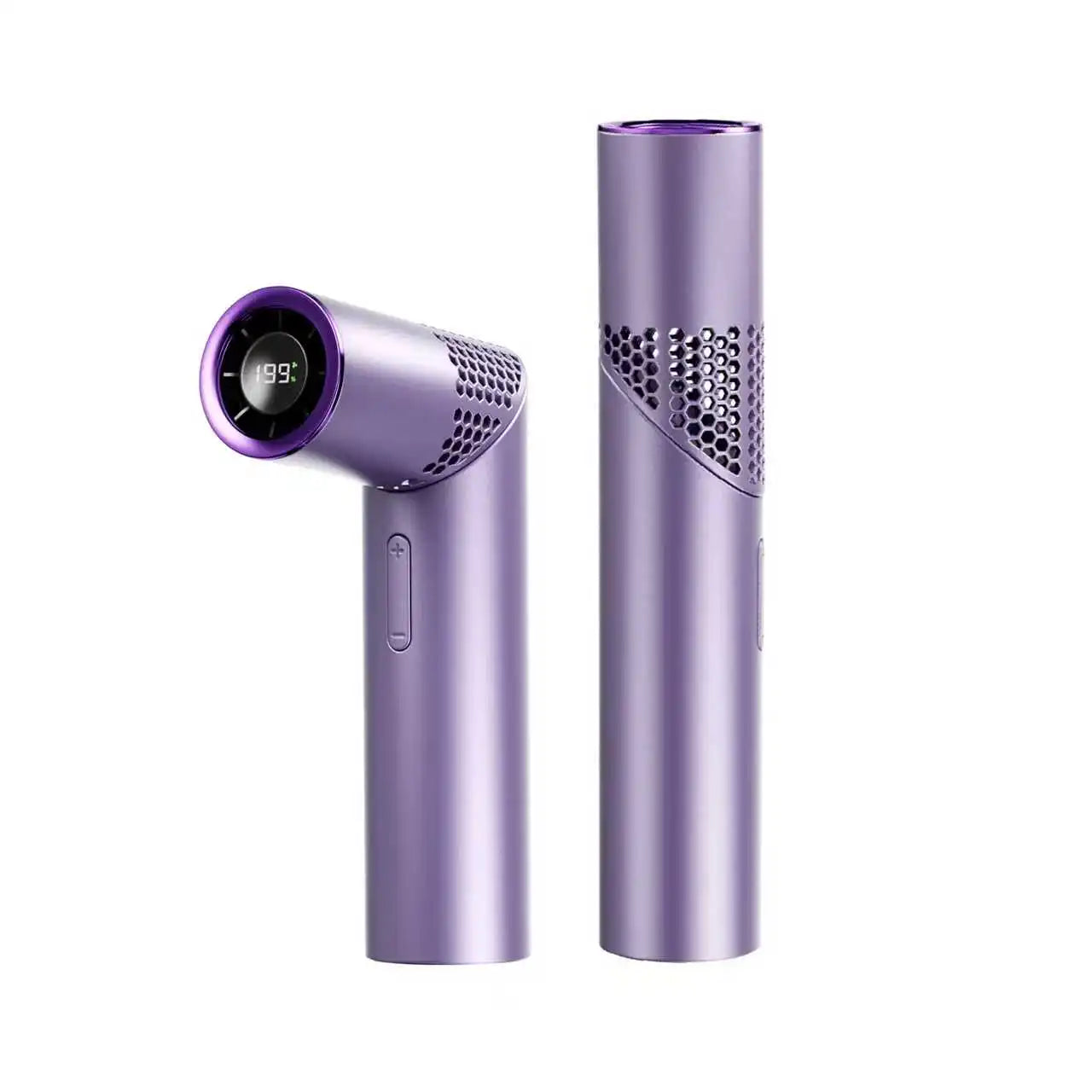
A compact foldable fan can be especially useful when you need one cooling device for several situations. The featured portable handheld fan combines an ABS body with a foldable form and versatile handheld, desktop, and neck-hanging use, making it a practical option for personal cooling when a traditional fan feels too bulky.
For more personal-care and everyday-use devices, visit the Body Care and Health Devices collection or browse the Beauty & Self-Care Blog for additional practical guides.
Pillar Article: Best Portable Handheld Fan for Travel: 2026 Tested Picks













