Exfoliating Gloves vs Scrub: Which Wins the Smooth Skin Test?
When it comes to exfoliating gloves vs scrub, the smooth skin debate often comes down to personal skincare habits. Both methods help remove dead skin cells, but they work in different ways and offer different benefits. Bath gloves exfoliating routines are growing in popularity because they’re reusable and simple to use, while body scrubs combine exfoliation with moisturizing ingredients. Understanding how each method works can help you choose the right approach for smoother, healthier-looking skin.
⏱ 6 min read

💡 Exfoliating gloves vs scrub in action — see which tool your skin will love most
👉 See price — stock low! Shop the KentDO Deep Exfoliating Glove
Exfoliating Gloves vs Scrub: What’s the Difference?
When comparing a body scrub vs exfoliating gloves, the biggest difference is how dead skin cells are removed. Both methods provide physical exfoliation, but the mechanism and overall experience can vary significantly.
How Exfoliating Gloves Remove Dead Skin
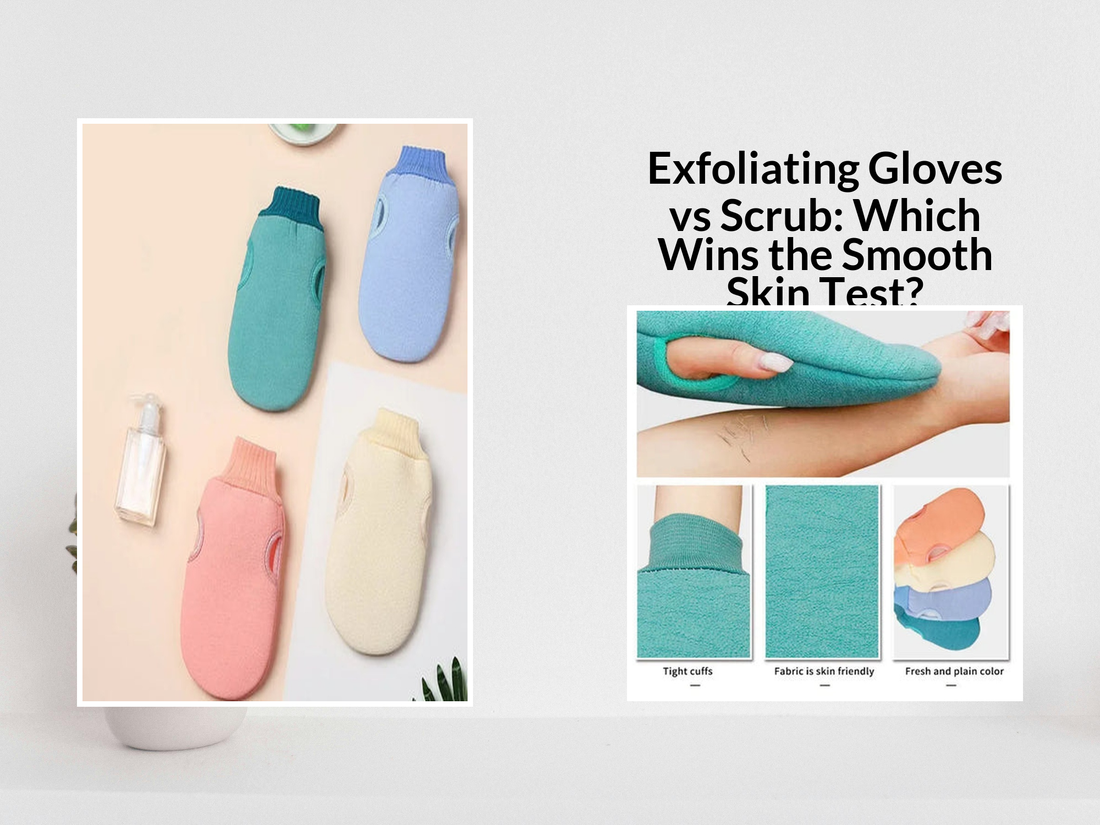
Exfoliating gloves (sometimes called an exfoliating mitt) are textured fabric gloves used during a shower to gently rub away dead skin cells through controlled friction.
- No added exfoliating particles or chemicals
- Uses mechanical friction to lift dead skin buildup
- Works best on damp skin during a warm shower
- Often paired with body wash for smoother gliding
How Body Scrubs Exfoliate the Skin
A body scrub uses small abrasive particles—commonly sugar, salt, coffee, or crushed seeds—mixed with oils or creams. As you massage the scrub onto the skin, the particles polish away dull surface cells.
- Uses physical exfoliating particles
- Often contains moisturizing oils or butters
- Available in different textures from gentle to coarse
- Typically applied after cleansing
Quick Comparison Table: Exfoliating Gloves vs Body Scrub
- Mechanism: Gloves = friction, Scrub = particles
- Cost: Gloves are reusable; scrubs require repurchase
- Mess factor: Gloves stay cleaner; scrubs may leave residue
- Hydration: Scrubs often contain oils; gloves do not
- Travel convenience: Gloves are lightweight and easy to pack
How Each Method Affects the Skin Barrier
Your skin naturally sheds dead cells every 28–40 days. Exfoliation speeds up this process and helps reveal smoother, brighter skin underneath. However, the method you choose can affect your skin barrier differently.
Mechanical Friction vs Particle Exfoliation
Exfoliating gloves rely on friction created by textured fibers. When used gently, they loosen and lift dead skin cells without leaving residue behind. Too much pressure, however, may cause irritation.
Body scrubs rely on particles to buff the skin’s surface. Because many scrubs include oils or creams, they can feel gentler while also delivering hydration during exfoliation.
When Exfoliation Helps the Skin Barrier
- Removes buildup of dead skin cells
- Improves absorption of moisturizers
- Helps prevent clogged pores and ingrown hairs
- Encourages smoother skin texture
Signs You’re Over-Exfoliating
- Persistent redness or stinging
- Skin feels tight or overly dry
- Increased sensitivity to products
- Small irritation bumps
Most dermatology experts recommend exfoliating the body 1–3 times per week depending on your skin type and the intensity of the exfoliation method.
Benefits of Exfoliating Gloves
Exfoliating gloves benefits go beyond basic exfoliation. Because they provide direct contact with the skin, they offer strong control over pressure and coverage across larger areas.
Why Many People Prefer Exfoliating Gloves
- Reusable and eco-friendly alternative to bottled scrubs
- Provides deeper exfoliation with adjustable pressure
- Helps reduce ingrown hairs and clogged pores
- Improves circulation through gentle massage
- Works well for prepping skin before shaving or tanning
Best Situations to Use an Exfoliating Mitt
- For rough areas like elbows, knees, and heels
- When prepping skin before self-tanning
- During hot showers when pores are softened
- When you want full-body exfoliation quickly

💡 Try a deep exfoliating glove like KentDO for better glow & less buildup
✨ Ready for smoother skin in one shower? Try the KentDO Exfoliating Glove today
Benefits of Body Scrubs
While exfoliating gloves are simple and reusable, many people prefer body scrubs because they combine exfoliation with skincare ingredients.
Why Scrubs Feel More Nourishing
- Often contain oils that moisturize the skin
- Can leave skin softer immediately after use
- Available in many textures and scents
- May include skin-soothing ingredients like shea butter
When Scrubs Work Better Than Gloves
- If your skin feels dry and needs extra moisture
- If you enjoy a spa-like exfoliation routine
- If you want exfoliation combined with skincare ingredients
- If you prefer targeted exfoliation on specific areas
For example, a sugar scrub vs exfoliating gloves comparison often favors sugar scrubs for people with dry skin because they exfoliate while leaving behind hydrating oils.
Pros and Cons: Exfoliating Gloves vs Body Scrub
Exfoliating Gloves Pros and Cons
- Pros:
- Reusable and budget-friendly
- Provides strong exfoliation control
- Quick full-body exfoliation
- Cons:
- Requires proper pressure to avoid irritation
- Needs regular washing to stay hygienic
Body Scrub Pros and Cons
- Pros:
- Often contains moisturizing oils
- Available in different textures and fragrances
- Feels more luxurious or spa-like
- Cons:
- Requires frequent repurchasing
- Can leave residue in showers
Side-by-Side Comparison Table
| Feature | Exfoliating Gloves | Body Scrub |
|---|---|---|
| Reusability | Reusable | Single product use |
| Hydration | None by itself | Often contains oils |
| Cost Over Time | Lower long-term cost | Higher ongoing cost |
| Mess Factor | Low | Moderate |
Which One Is Better for Different Skin Types?
The best option in the exfoliating gloves vs body scrub debate often depends on your skin type and skincare goals.
Sensitive Skin
Body scrubs with very fine particles and moisturizing bases are typically gentler than aggressive rubbing with gloves.
Rough or Bumpy Skin (Keratosis Pilaris)
Exfoliating gloves can help smooth rough texture because they provide consistent friction across larger areas like arms and thighs.
Body Acne
Both methods can help remove pore-clogging buildup. However, gentle scrubs formulated for acne-prone skin may be less irritating than heavy friction.
Pre-Shaving or Self-Tanning Prep
Exfoliating gloves are often preferred before shaving or applying self-tanner because they quickly remove dead skin and create a smoother surface.
How to Use Exfoliating Gloves for Best Results
Step-by-Step Routine
- Start with a warm shower to soften the skin.
- Slip on your bath gloves exfoliating pair.
- Use gentle circular motions across arms, legs, back, and torso.
- Focus on rough areas such as elbows or knees.
- Rinse your skin and apply moisturizer afterward.
How Often to Use Exfoliating Gloves
Most people benefit from using exfoliating gloves 2–3 times per week. Adjust frequency based on skin sensitivity.
Common Mistakes to Avoid
- Applying too much pressure
- Using gloves on broken or irritated skin
- Skipping moisturizer after exfoliation
- Using them every day on sensitive skin
For more guidance, see our guide on using soap with exfoliating gloves.
How to Use Body Scrub Correctly
Using body scrub correctly helps prevent irritation while maximizing skin smoothness.
Step-by-Step Scrub Routine
- Start with warm water to soften the skin.
- Apply a small amount of scrub to damp skin.
- Massage gently using circular motions.
- Focus on rough areas like elbows, knees, and heels.
- Rinse thoroughly and apply moisturizer.
How Often to Use Body Scrub
Most skin types benefit from body scrubs 1–2 times per week.
Tips to Prevent Irritation
- Avoid very coarse scrubs if your skin is sensitive
- Use gentle pressure instead of aggressive rubbing
- Always moisturize after exfoliating
Exfoliating Gloves vs Scrub: Which One Should You Choose?
If you’re deciding between an exfoliating glove or scrub, the best option depends on your skincare preferences and routine.
Choose Exfoliating Gloves If…
- You want a reusable and budget-friendly exfoliation tool
- You prefer quick exfoliation during showers
- You want an easy way to prep skin before shaving or tanning
Choose Scrub If…
- You want exfoliation combined with moisturizing oils
- You enjoy spa-style skincare routines
- Your skin often feels dry after exfoliating
Best Routine: Using Both Together
Many skincare routines combine both methods. For example, you might use exfoliating gloves once a week for deeper exfoliation and a gentle scrub for lighter maintenance.

💡 Prefer tools over products? See how exfoliating gloves outperform scrubs over time
👉 Ready to ditch the scrub? Get the KentDO Glove while it's in stock
Mini FAQ
Do exfoliating gloves really work?
Yes. Exfoliating gloves physically remove dead skin cells through friction, helping improve skin texture and unclog pores when used consistently.
Are exfoliating gloves better than scrubs?
They can be better for full-body exfoliation and long-term savings because they are reusable. However, scrubs may feel gentler for people with very sensitive or dry skin.
Do exfoliating gloves cause microtears?
When used gently, exfoliating gloves should not cause microtears. Excess pressure or overly frequent use can irritate the skin.
Can I use exfoliating gloves every day?
Daily exfoliation is usually unnecessary. Most people benefit from using them two to three times per week.
How do I clean exfoliating gloves?
Rinse thoroughly after each use, hang them to dry, and wash them weekly on a gentle cycle or by hand.
Are exfoliating gloves good for ingrown hairs?
Yes. Gentle exfoliation helps remove dead skin buildup that can trap hair follicles, which may help reduce ingrown hairs.
Pillar Article: Do Exfoliating Gloves Work? Real Reviews That Might Surprise You
Other Related Articles:
- Do You Use Soap With Exfoliating Gloves? Users Say This Works Best
- What Is the Best Deep Exfoliating Glove? (And What Isn’t)
- The Hidden Differences Between Shower Exfoliating Gloves Brands
- 7 Best Exfoliating Gloves for Body: Which One’s Worth It?
Explore More: