

Fog machine vs smoke machine: which creates better visual impact?
If your goal is maximum visual impact, a fog machine is usually the better choice. It produces dense, long-lasting clouds that reveal light beams, add depth, and create an immersive atmosphere. A smoke machine typically generates a lighter, faster-dispersing effect that's better suited to brief dramatic accents or quick reveals rather than filling an entire space.
Quick verdict: Choose a fog machine for concerts, parties, photography, theaters, and Halloween displays. Choose a smoke machine when you need temporary bursts that clear quickly. In most smoke machine vs fog machine comparisons, fog offers greater versatility and a stronger visual experience.
Fog Machine vs Smoke Machine: Key Differences, Effects, and Which One to Choose
Choosing between a fog machine and a smoke machine can be confusing because the two terms are often used interchangeably. In reality, their output, hang time, particle density, and ideal applications can differ significantly. Whether you're planning a stage production, DJ set, haunted house, wedding, or photo shoot, understanding the difference between a fog machine and a smoke machine helps you choose the right atmospheric effect for your venue and lighting setup. This guide compares performance, visual effects, operating principles, and practical use cases so you can decide which is better for your needs.
⏱ 5 min read
Explore how modern fog machines create jaw-dropping effects
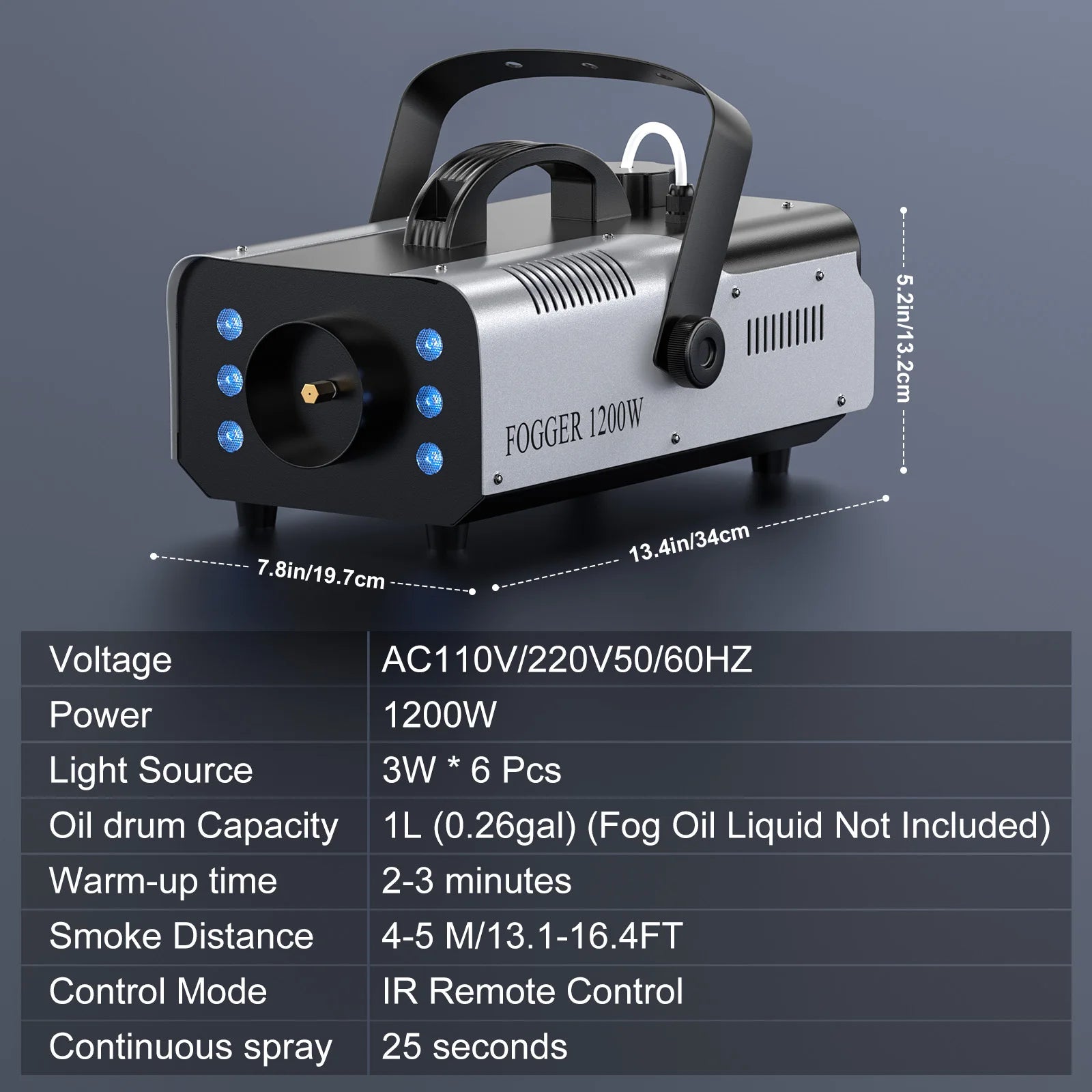
Dense stage fog effects bring lighting smoke effects to life See it in action
Fog Machine vs Smoke Machine: What’s the Real Difference?
The biggest difference between a fog machine and a smoke machine is the appearance and behavior of the airborne particles they produce. While both devices commonly heat a specialized fluid to create an atmospheric effect, fog is typically thicker, stays suspended longer, and fills a room more evenly. By comparison, output marketed as "smoke" is usually lighter and disperses much faster.
How fog is created
Most fog machines heat a water-based fog fluid inside a heat exchanger. As the heated vapor exits the nozzle, it rapidly cools and condenses into tiny droplets that form a dense, visible cloud. The size of these droplets determines how long the fog remains in the air and how effectively it interacts with lighting.
Why "smoke machines" usually produce fog
A common misconception is that smoke machines generate real smoke. In reality, most entertainment "smoke machines" also use fog fluid rather than combustion. Manufacturers often use the term smoke machine to describe units that produce a thinner, faster-clearing atmospheric effect. What does a smoke machine do? It creates a temporary visual effect that mimics smoke without producing actual smoke from burning materials.
- Fog machines create dense clouds that linger, improve beam visibility, and build immersive atmosphere.
- Smoke machines generally produce lighter output that disperses more quickly, making them suitable for brief dramatic moments.
- Both commonly use specially formulated fluids, but output characteristics vary by machine design, fluid formulation, and operating temperature.
Quick takeaway: If you're comparing the difference between fog machine and smoke machine performance, fog is the better option for sustained atmosphere, while smoke-style effects excel when fast clearing is preferred.
Side-by-Side Comparison: Fog Machine vs Smoke Machine
| Feature | Fog Machine | Smoke Machine |
|---|---|---|
| Output Density | Dense, full atmospheric fog | Lighter, thinner effect |
| Hang Time | Long-lasting under stable conditions | Clears more quickly |
| Coverage | Evenly fills small to large spaces | Better for localized effects |
| Visual Effect | Immersive clouds with depth | Short dramatic bursts |
| Best Applications | Concerts, stages, photography, parties, Halloween | Quick reveals, theatrical cues, accent effects |
| Lighting Performance | Excellent beam visibility and color diffusion | Limited due to faster dispersion |
| Indoor Use | Common with proper ventilation | Suitable when rapid clearing is preferred |
| Fluid Type | Water-based fog fluid | Typically similar fluid with different output characteristics |
| Typical Cost | Available from entry-level to professional models | Comparable pricing depending on output and features |
How Fog Machines and Smoke Machines Actually Work
Although smoke and fog machines often appear similar, the technology behind them is based on heating a specially formulated fluid into vapor that condenses into microscopic airborne droplets. The machine's heating system, fluid formulation, nozzle design, and particle size all influence how dense the effect appears, how long it remains suspended, and how well it interacts with lighting.
Fog Machines: Heated Fluid Technology
A fog machine pumps water-based fog fluid through a heated chamber known as a heat exchanger. As the fluid reaches the proper temperature, it instantly vaporizes and exits the nozzle. When the hot vapor mixes with cooler surrounding air, it condenses into a thick cloud of tiny droplets that create the familiar atmospheric fog used for stage performances, parties, photography, and special effects.
Professional machines maintain a consistent heating temperature, allowing them to produce dense fog machine effects with reliable output and minimal interruption between bursts.
Smoke Machines: Why They Aren't True Smoke
Despite the name, most entertainment smoke machines do not generate real smoke through combustion. Instead, they operate using technology similar to fog machines but are designed or configured to produce a lighter, faster-dispersing effect. This is why many products marketed as smoke machines actually create theatrical fog rather than genuine smoke.
The visual difference comes primarily from particle concentration, output volume, and dispersion rather than burning any material.
Fog Fluid Types
The type of fluid used has a major influence on the final effect. Manufacturers formulate fluids for different applications, including:
- Standard fog fluid for balanced density and hang time.
- Fast-dissipating fluid when rapid clearing is preferred.
- Long-lasting fluid for concerts, theaters, and continuous atmospheric effects.
- Ground fog fluid designed to remain close to the floor when paired with compatible equipment.
For best performance and machine longevity, always use fluid recommended by the manufacturer instead of generic substitutes.
Particle Size and Dispersion
Particle size plays an important role in how an atmospheric effect behaves. Larger concentrations of fine droplets create fuller clouds with greater visibility, while smaller or less concentrated particles disperse more quickly. Environmental factors such as room temperature, humidity, airflow, and ventilation also affect hang time and coverage.
This combination of fluid chemistry, heating technology, and particle behavior explains why two machines using similar fluids can produce noticeably different results.
Fog Machine Effects vs Smoke Machine Effects (Visual Comparison)
Choosing between fog and smoke becomes easier when you compare how each performs in real environments. The right effect depends on whether your priority is immersive atmosphere, dramatic reveals, beam visibility, or photographic depth.
Fog Machine Effects
- Creates dense, rolling clouds that fill rooms evenly.
- Produces impressive stage fog effects for concerts, theaters, and live performances.
- Makes laser beams, moving lights, and LED effects significantly more visible.
- Can produce dramatic ground fog when used with compatible cooling systems.
- Adds depth, texture, and cinematic atmosphere for photography and filmmaking.
Smoke Machine Effects
- Produces lighter atmospheric output that disperses more rapidly.
- Works well for quick dramatic entrances, reveals, and special effects.
- Allows spaces to clear faster between scenes or performances.
- Provides subtle visual enhancement without filling an entire venue.
- Requires more frequent activation when continuous atmosphere is desired.
Lighting Performance
Lighting is where the differences become most noticeable. Dense fog reflects and scatters light far more effectively than lighter smoke-style effects, making beams easier to see from multiple angles.
- Laser beams become sharply defined.
- Moving-head fixtures create visible shafts of light through the air.
- LED wash lights appear richer with improved color separation.
- Photos and videos gain additional depth, contrast, and cinematic atmosphere.
- Thicker fog provides longer-lasting lighting smoke effects before dispersing.
For productions where lighting is a major part of the experience, fog generally delivers stronger visual results than smoke because it remains suspended longer and provides greater beam visibility.
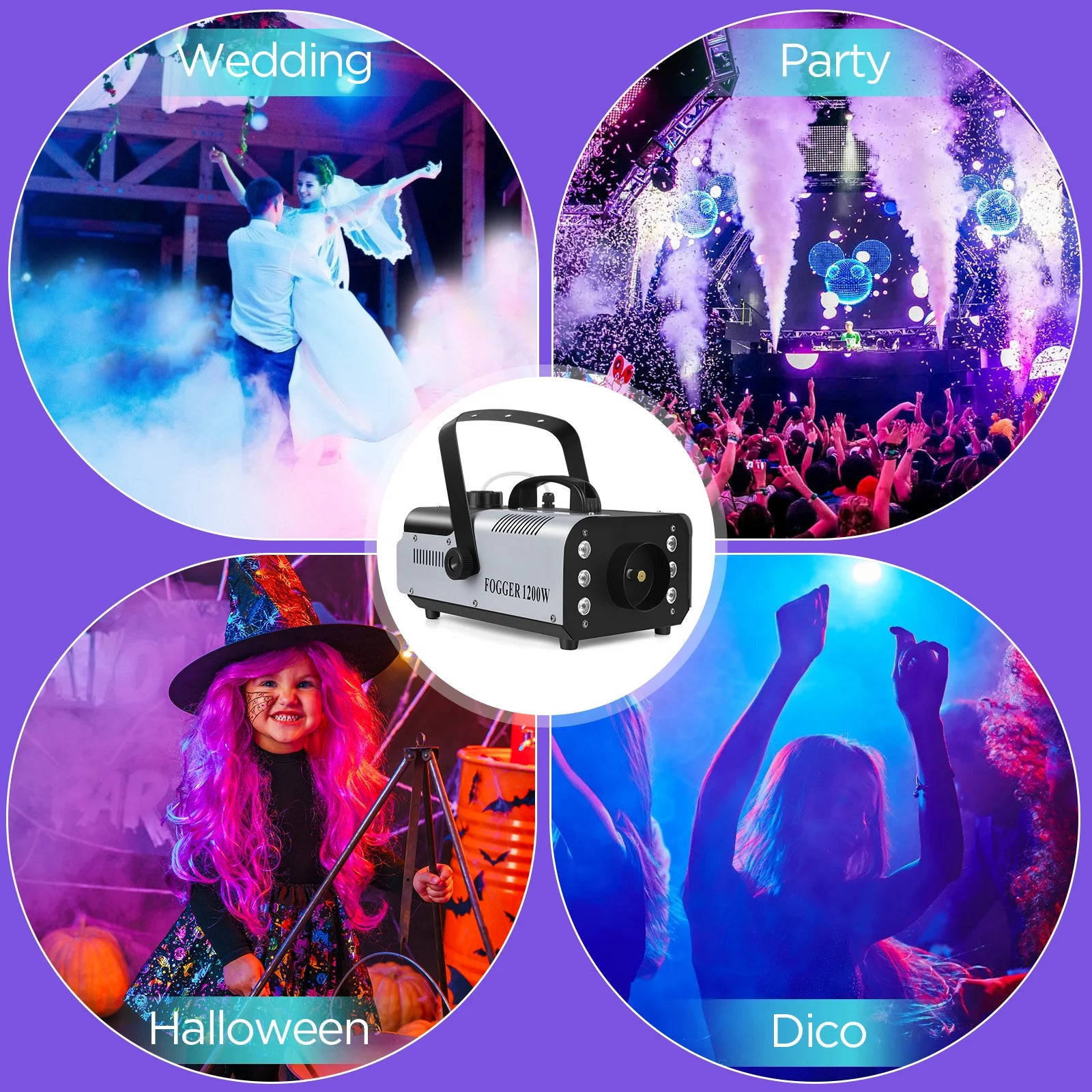
Lighting smoke effects feel cinematic with a concert fog machine See it in action
Fog vs Haze vs Smoke: Understanding the Differences
Fog, haze, and smoke are often grouped together, but each creates a different atmospheric effect. Choosing the right option depends on how visible you want the effect to be and whether your priority is filling a space or enhancing lighting.
Fog Machine vs Haze Machine
- Fog machines produce thick, highly visible clouds that quickly fill a room and create dramatic atmosphere.
- Haze machines generate a fine, nearly invisible mist that makes light beams stand out without creating obvious clouds.
- Smoke-style effects generally appear lighter than fog and disperse faster, making them suitable for short-lived visual accents.
When to Use a Hazer
A haze machine is often the preferred choice for concerts, conferences, broadcast studios, and theatrical productions where lighting needs to remain visible throughout an event without filling the venue with dense fog. Haze creates consistent beam definition while maintaining clear sightlines for performers and audiences.
Choosing the Right Effect
- Choose fog for Halloween displays, immersive stage effects, dance floors, and cinematic photography.
- Choose haze for continuous lighting enhancement and professional productions.
- Choose smoke-style effects when rapid dispersion and brief dramatic moments are more important than long-lasting atmosphere.
Best Choice by Use Case
Halloween and Haunted Houses
Fog machines are the most popular choice for Halloween because they create thick, eerie clouds that transform ordinary spaces into immersive environments. When paired with ground fog accessories, they produce dramatic low-lying effects around walkways, props, and entrances. Smoke-style effects can be added for sudden bursts during jump scares, but fog provides the stronger overall atmosphere.
A concert fog machine is ideal for live performances because it dramatically improves beam visibility from lasers, moving heads, and LED fixtures. Dense fog enhances stage fog effects while creating an energetic environment that complements synchronized lighting and music.
Theater and Stage Productions
Theater productions often benefit from using both effects strategically. Fog provides continuous atmosphere during dramatic scenes, while lighter smoke-style output can emphasize entrances, exits, or special effects that need to clear quickly before the next scene.
Photography and Film
Photographers and filmmakers frequently use fog to introduce depth, separate subjects from the background, and create cinematic lighting. The lingering atmosphere allows multiple shots without constantly recreating the effect, while lighter smoke is better suited to brief action sequences or controlled visual accents.
Weddings and Special Events
For weddings and formal events, fog machines are commonly used to create memorable first dances, elegant entrances, and atmospheric lighting displays. Low-lying fog can produce a "dancing on the clouds" effect, while subtle atmospheric fog also enhances event photography without overwhelming the venue.
Performance Factors That Matter
Output Volume
Output volume determines how quickly a machine fills a space. Higher-wattage units produce denser fog machine effects or smoke machine effects, making them better suited for large venues, stages, and outdoor events. Lower-output models are often sufficient for home parties, photography setups, and smaller rooms.
Hang Time
Hang time refers to how long the atmospheric effect remains visible. Fog typically stays suspended much longer than the lighter output commonly associated with smoke machines, making it the preferred option when continuous lighting enhancement or long-lasting ambiance is required.
Coverage Area
Choose a machine based on the size of your venue. Compact units work well in small indoor spaces, while larger performance venues benefit from higher-output machines capable of maintaining consistent coverage without frequent reheating.
Ventilation Effects
Airflow has a major impact on performance. Fans, air conditioning, open doors, and outdoor wind can rapidly disperse atmospheric effects. For the most consistent results, reduce unnecessary airflow or increase machine output to compensate for challenging environments.
Residue and Cleanup
Quality water-based fluids generally leave minimal residue when used correctly. Following the manufacturer's maintenance schedule, using approved fluids, and cleaning the heating system periodically helps preserve performance while preventing clogs and buildup.
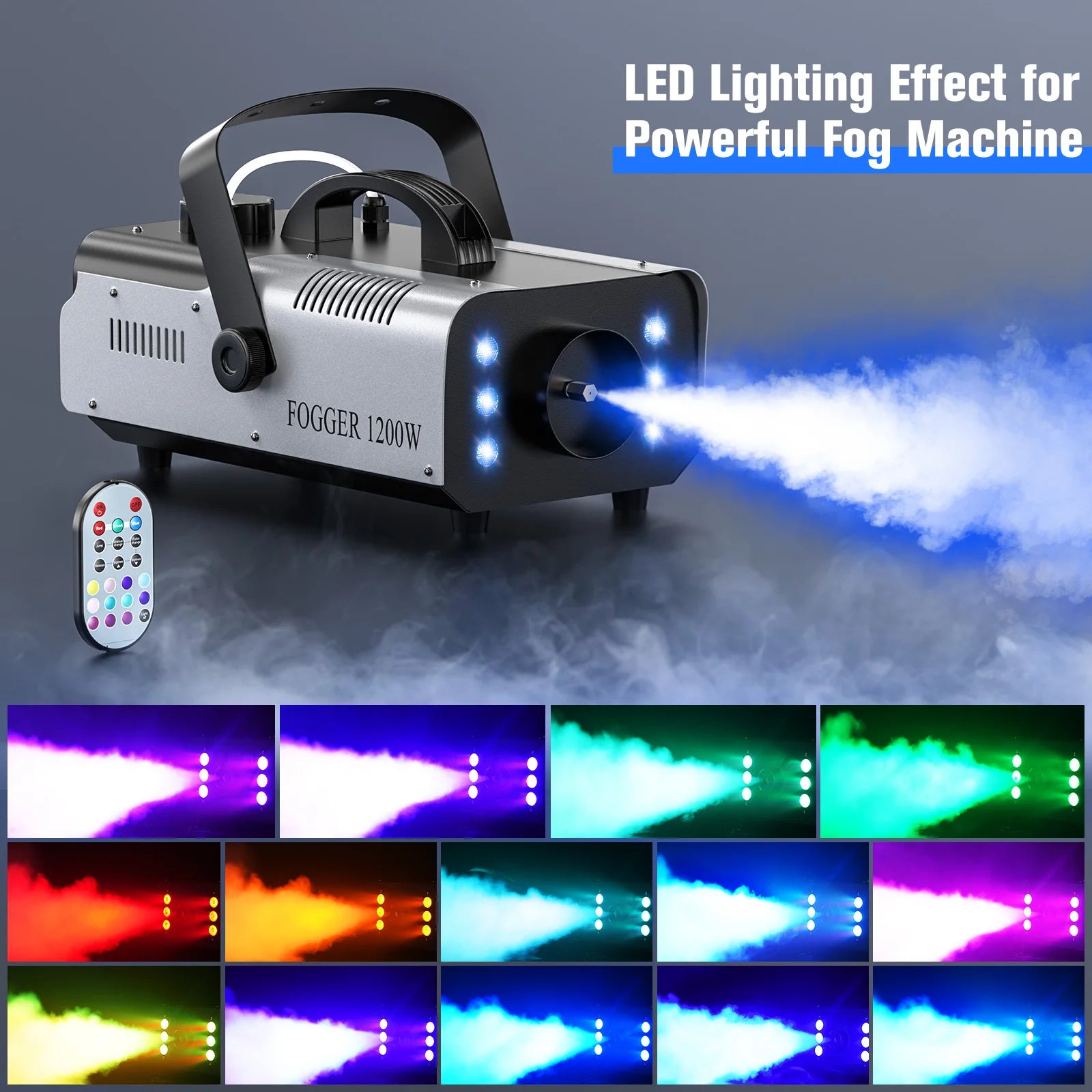
Professional-grade fog fills the room evenly. See it in action.
Get yours now — limited stock!
Which Should You Choose? (Simple Decision Guide)
The right choice depends on your venue, budget, experience level, and the type of visual effect you want to create.
- Choose a fog machine if you want thick, long-lasting atmosphere, visible lighting beams, or immersive stage and event effects.
- Choose a smoke machine if your goal is brief visual accents that clear quickly between scenes.
- Choose a portable fog machine for home parties, DJs, photographers, or smaller venues where mobility is important.
- Select a higher-output model for concerts, theaters, and large event spaces requiring consistent coverage.
- Beginners usually achieve better results with fog machines because they produce more noticeable effects with less precise timing.
For most users comparing which is better—a fog or smoke machine—a fog machine offers greater versatility, stronger visual impact, and better compatibility with modern lighting systems.
Frequently Asked Questions
Are smoke machines and fog machines the same?
Not exactly. Most products marketed as smoke machines actually generate theatrical fog using specialized fluid rather than real smoke. The main differences are output density, particle behavior, and how long the effect remains visible.
Can fog machines trigger smoke alarms?
Yes. Dense fog can activate certain optical smoke detectors, especially in enclosed spaces. Always check venue policies, provide adequate ventilation, and avoid directing fog toward detectors.
Is fog fluid safe to breathe?
Quality fog fluids designed for theatrical equipment are generally considered safe when used according to the manufacturer's instructions in properly ventilated areas. Avoid using homemade or unapproved fluids.
Can I use any fluid in a fog machine?
No. Always use the fluid recommended for your specific machine. Using incompatible fluids can reduce performance, clog the heating element, and potentially damage the equipment.
Does fog work outdoors?
Yes, but wind and open-air conditions reduce hang time significantly. Higher-output machines or calmer weather provide better outdoor performance.
What does a smoke machine do?
A smoke machine creates a light atmospheric effect for visual enhancement rather than producing real combustion smoke. It is commonly used for dramatic reveals, stage productions, photography, and entertainment lighting.
What is the difference between fog and haze?
Fog creates dense, visible clouds that fill a space, while haze produces a much finer mist designed primarily to make light beams visible without creating thick clouds.
Is a haze machine better than a fog machine?
Neither is universally better. Haze machines excel at subtle beam enhancement for concerts and live productions, while fog machines are better for dramatic atmosphere, Halloween displays, theatrical scenes, and immersive environments.
Which machine works best for concerts?
A high-output fog or haze machine is generally preferred because it enhances stage lighting, lasers, and moving-head fixtures throughout the performance.
Can fog machines be used indoors?
Yes. When paired with proper ventilation and approved fluid, fog machines are widely used indoors for parties, theaters, weddings, concerts, and special events.
Do fog machines leave residue?
Modern water-based fluids typically leave very little residue when used correctly. Routine cleaning and high-quality fluid help keep equipment and nearby surfaces clean.
Which is better for photography?
Fog is usually the better choice because it creates depth, softens backgrounds, and makes directional lighting more visible for cinematic images.
Which is best for Halloween?
Fog machines are the most popular choice for Halloween because they produce thick atmospheric effects, while smoke-style effects are better reserved for quick dramatic moments.
Related Guide: Best Fog Machine for DJs Compared for Gigs and Home Sets













