

Do foldable clothes dryers really work?
Yes. A foldable clothes dryer can dry everyday clothing faster than air drying while taking up far less space than a conventional tumble dryer. Models with enclosed heated airflow and a remote control provide more consistent drying, quieter operation, and convenient cycle adjustments. They work best for shirts, trousers, underwear, sportswear, towels, and other routine laundry, although bulky comforters and oversized bedding may still require a full-size dryer.
Foldable Clothes Dryer: Best Portable & Compact Drying Solutions for Small Spaces (2026 Guide)
Whether you live in an apartment, dorm, RV, or simply want a practical secondary dryer, a foldable clothes dryer offers an excellent balance of convenience, portability, and energy efficiency. Modern designs use gentle heated airflow to dry clothing evenly, fold away when not in use, and occupy only a fraction of the floor space required by traditional machines. This guide compares today's best options and explains which style delivers the best value for different households.
⏱ 6 min read
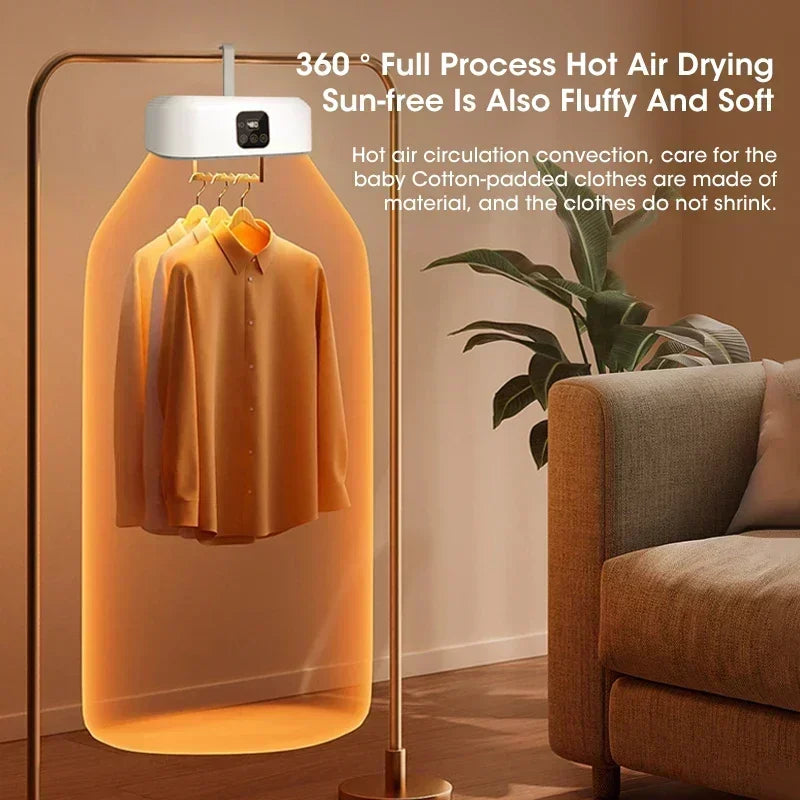
A foldable clothes dryer with remote designed for modern homes — See it in action.
Best Foldable Clothes Dryers (Top Picks for 2026)
Best Overall Foldable Clothes Dryer
The best overall foldable clothes dryer combines drying performance, durability, and easy storage. A multi-layer drying chamber with even heated airflow allows clothing to dry consistently while remaining compact enough for everyday apartment living.
Best for: Families, couples, and anyone doing regular weekly laundry.
Pros
- Large drying capacity for multiple garments
- Even heat circulation helps reduce damp spots
- Sturdy reinforced frame for long-term use
- Folds flat for convenient storage
Cons
- Requires more storage space than mini travel models
- Drying time depends on fabric thickness
Best Foldable Clothes Dryer with Remote
A foldable clothes dryer with remote adds everyday convenience by allowing you to adjust heat levels and timers without interrupting other household tasks. This style is especially useful when drying clothes overnight or while working from home.
Best for: Apartment residents, busy professionals, and seniors seeking easy operation.
Pros
- Remote-controlled timer and heat settings
- Auto shut-off improves safety
- Quiet operation suitable for shared spaces
- Convenient hands-free control
Cons
- Typically costs slightly more than manual models
Best Compact Clothes Dryer
A compact clothes dryer focuses on delivering reliable everyday performance while keeping costs and storage requirements low. It works well for individuals, couples, and smaller laundry loads.
Best for: Small households and budget-conscious buyers.
Pros
- Affordable purchase price
- Lightweight and portable
- Simple controls with minimal setup
- Good value for occasional drying
Cons
- Smaller load capacity
Best Mini Clothes Dryer for Travel
A mini clothes dryer is designed for maximum portability. It packs easily into luggage or vehicle storage and is ideal for drying essential clothing while traveling, camping, or staying in temporary accommodation.
Best for: Travelers, students, RV owners, and business trips.
Pros
- Ultra-compact footprint
- Easy to transport
- Quick drying for lightweight garments
- Simple plug-and-use operation
Cons
- Not intended for larger family loads
Best Electric Clothes Drying Rack
An electric clothes drying rack uses gentle heat combined with natural airflow instead of an enclosed cabinet. It is particularly suitable for delicate fabrics that benefit from lower drying temperatures.
Best for: Wool, knitwear, baby clothing, and delicate garments.
Pros
- Low electricity consumption
- Gentle fabric care
- Expandable drying surface
- Safe for indoor use
Cons
- Usually slower than enclosed heated cabinet dryers
Quick Comparison Table: Top Foldable Clothes Dryers
| Type | Best For | Capacity | Typical Drying Time | Storage Size | Key Feature |
|---|---|---|---|---|---|
| Overall | Daily household laundry | Medium–Large | 30–60 minutes* | Fold-flat | Balanced performance |
| With Remote | Convenience | Medium | 30–60 minutes* | Compact | Remote control operation |
| Budget Compact | Occasional use | Small–Medium | 40–70 minutes* | Compact | Affordable and simple |
| Mini Travel | Travel & dorms | Small | 45–90 minutes* | Ultra portable | Maximum portability |
| Electric Drying Rack | Delicate fabrics | Medium | 60–120 minutes* | Foldable | Gentle heated drying |
*Actual drying time varies depending on fabric thickness, spin speed, humidity, and room temperature.
Key Features You'll Notice From Day One
- Even heated airflow helps clothes dry more consistently while reducing damp areas.
- Remote-controlled drying cycles make it easy to adjust settings without interrupting your routine.
- Fold-flat construction allows convenient storage in closets, under beds, or behind doors.
- Lightweight portable design makes relocation simple between rooms or when traveling.
- Automatic safety features such as timers and overheat protection improve everyday reliability.
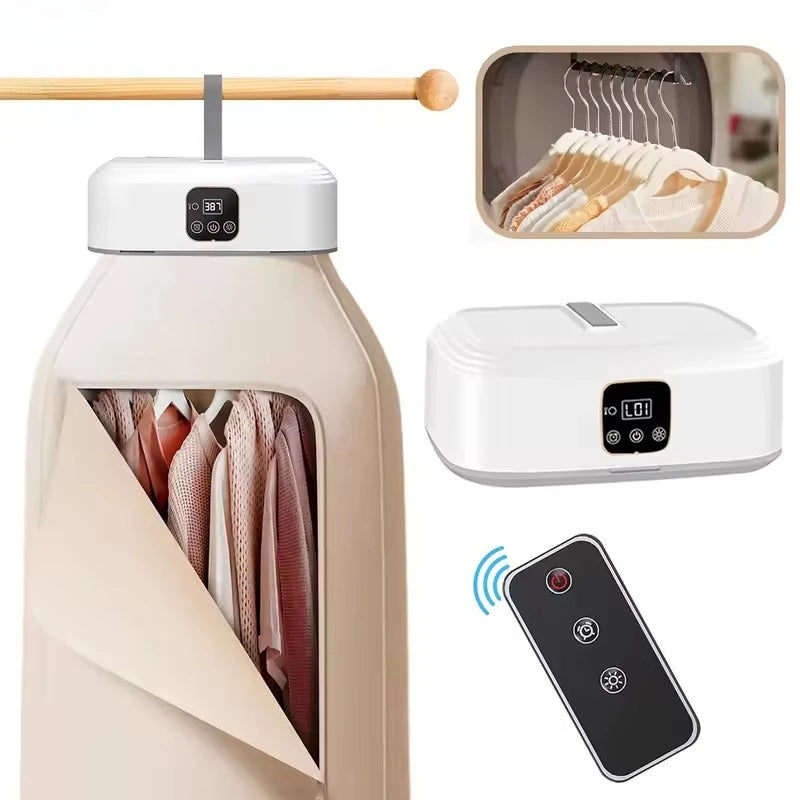
Hands-free controls simplify everyday laundry while maintaining consistent drying performance.
Foldable Clothes Dryer vs Traditional Drying Options
The right drying solution depends on your available space, laundry volume, and budget. A foldable clothes dryer fills the gap between slow air drying and a permanent full-size appliance by offering portable heated drying without requiring dedicated floor space.
Versus Compact Tumble Dryers
Compact tumble dryers generally dry larger loads more quickly, making them suitable for households with frequent laundry. A foldable clothes dryer, however, is easier to store, lighter to move, and typically consumes less space when not in use.
Versus Drying Racks
Traditional drying racks require little electricity but rely entirely on room temperature and airflow. A heated foldable clothes dryer significantly shortens drying times, especially during humid weather or colder seasons, while still being gentle on everyday fabrics.
Versus Laundromats
Using a portable clothes dryer at home can reduce repeated trips to shared laundry facilities for smaller loads. It is especially convenient for drying daily essentials, children's clothing, workout gear, and garments that need to be ready quickly.
| Option | Space Required | Typical Dry Time | Best For |
|---|---|---|---|
| Foldable Clothes Dryer | Temporary, fold-away storage | 30–60 minutes* | Small apartments, daily laundry |
| Compact Tumble Dryer | Permanent installation | 30–75 minutes* | Frequent medium-sized loads |
| Air Drying Rack | Open indoor floor space | Several hours to overnight | Delicate garments and zero-energy drying |
| Laundromat Dryer | None at home | 30–60 minutes* | Large or bulky loads |
*Drying time varies depending on garment thickness, spin cycle efficiency, humidity, and room temperature.
What to Look for Before Buying a Foldable Clothes Dryer
Capacity
Choose a model that matches your typical laundry routine. Singles and couples usually need a compact unit, while families benefit from multi-layer drying cabinets that accommodate several garments simultaneously.
Heating Power
Higher-powered heating systems generally shorten drying times, but consistent airflow is equally important. Look for designs that distribute warm air evenly throughout the drying chamber instead of concentrating heat in one area.
Energy Consumption
Compare power ratings alongside expected drying performance. An efficient foldable dryer should balance reasonable electricity use with practical drying times for everyday clothing.
Quiet operation is particularly valuable in apartments, dormitories, and shared living spaces where laundry may run during evenings or while people are working from home.
Safety
Look for features such as automatic shut-off, overheat protection, flame-resistant covers, and stable support frames. These features improve both safety and long-term durability during regular indoor use.
Portability
If you plan to move the dryer between rooms or travel with it, prioritize lightweight construction, fast folding mechanisms, and a compact stored footprint that fits easily into closets or storage areas.
How to Use a Foldable Clothes Dryer for Best Results
- Run clothes through a high-speed spin cycle or wring out excess water before placing them inside the dryer.
- Hang garments with enough spacing to allow warm air to circulate freely around each item.
- Avoid overloading the drying chamber, as crowded loads increase drying time and reduce efficiency.
- Choose an appropriate timer or remote setting based on fabric thickness to prevent unnecessary energy use.
- Place the dryer in a dry, well-ventilated room for consistent airflow and faster drying performance.
For more practical organization and home-care ideas, explore the Lifestyle collection.
Who Should Buy a Foldable Clothes Dryer?
Apartments
A portable clothes dryer for small spaces is ideal for apartments where permanent laundry appliances are impractical. Its fold-away design keeps valuable floor space available when drying is complete.
Dorms
Students can dry smaller laundry loads conveniently without relying on shared laundry rooms for every wash.
RV Owners
Compact storage and lightweight construction make foldable dryers suitable for RV living, vacation cabins, and other limited-space environments.
Travelers
Frequent travelers who stay in extended accommodations benefit from a travel clothes dryer that handles everyday essentials without requiring laundromat visits.
Families
Families can use a foldable dryer as a secondary appliance for children's clothing, school uniforms, sportswear, or garments that need quick drying between larger laundry loads.
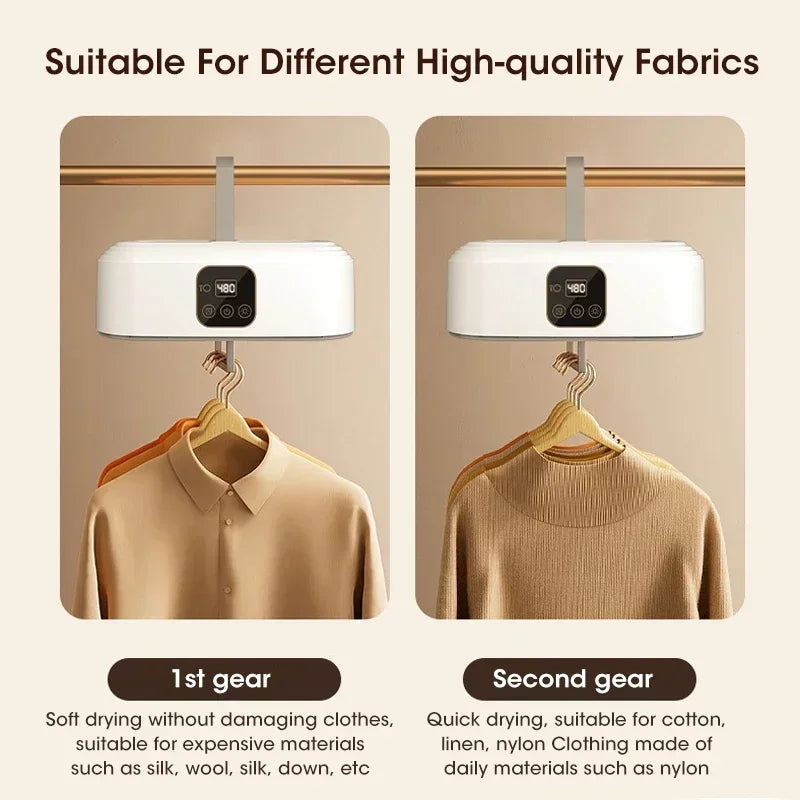
Compact storage meets everyday convenience for apartments, dorms, and family homes.
Pros and Cons of Foldable Clothes Dryers
Pros
- Excellent space-saving solution for apartments and compact homes.
- Portable, lightweight, and easy to move or store.
- Uses gentle heated airflow that helps protect many everyday fabrics.
- Generally consumes less electricity than many full-size dryers for smaller loads.
- Convenient for year-round indoor drying, even during wet or humid weather.
Cons
- Drying times can be longer than full-size tumble dryers for heavy fabrics.
- Limited capacity makes them less suitable for oversized family loads.
- Bulky comforters, thick blankets, and large bedding may require a conventional dryer.
- Performance depends on proper garment spacing and room ventilation.
Frequently Asked Questions
Are foldable clothes dryers worth buying?
Yes. They are an excellent investment for apartments, dorms, RVs, and homes where saving space is a priority while still enjoying faster drying than traditional air drying.
What is the best foldable clothes dryer for apartments?
Look for a model with enclosed heated airflow, automatic shut-off, quiet operation, and a fold-flat design that stores easily after each use.
How long does a foldable clothes dryer take to dry clothes?
Most everyday garments dry in approximately 30 to 60 minutes, while thicker fabrics such as jeans or towels may require additional time depending on humidity and spin speed.
Do foldable clothes dryers consume a lot of electricity?
No. Most models are designed for efficient operation and typically use less electricity than operating a large household tumble dryer for small laundry loads.
Can a foldable clothes dryer dry towels and jeans?
Yes. Towels, jeans, sweatshirts, and similar heavier garments can be dried successfully, although they generally require longer drying cycles than lightweight clothing.
Is a foldable clothes dryer with remote worth the extra cost?
For many users, yes. Remote controls make it easier to adjust timers and heat settings without interrupting other activities, adding convenience to everyday laundry.
What's the difference between a foldable dryer and an electric drying rack?
A foldable clothes dryer usually encloses garments in a heated chamber for faster drying, while an electric drying rack exposes clothing to gentle heated rails and natural airflow, making it better suited to delicate fabrics.













