

Diesel Heater Fuel Consumption: How Much Fuel Do Diesel Air Heaters Really Use?
How Much Fuel Does a Diesel Heater Use?
Most modern diesel air heater fuel consumption falls between 0.1 and 0.5 liters per hour (L/h) . Actual usage depends on the heater's output, thermostat setting, insulation quality, outside temperature, and how often the unit cycles between heating and maintenance mode.
For most camper vans, RVs, trucks, and cabins, a properly sized heater spends much of its time maintaining temperature rather than running at maximum output. This is why real-world diesel heater fuel usage is often lower than many first-time buyers expect.
Average fuel consumption per hour
| Operating Level | Typical Fuel Consumption | Typical Use |
|---|---|---|
| Low | 0.10–0.20 L/h | Mild weather, overnight maintenance |
| Medium | 0.20–0.35 L/h | Normal winter camping |
| High | 0.35–0.50+ L/h | Fast warm-up and extreme cold |
Manufacturer ratings vs real-world usage
Manufacturer specifications are usually measured under controlled laboratory conditions. In real use, fuel consumption changes throughout the heating cycle.
- Startup: Fuel use is temporarily higher while the combustion chamber reaches operating temperature.
- Steady-state operation: Once the cabin is warm, consumption drops as the thermostat reduces output.
- Maintenance mode: Many heaters burn only a small amount of diesel to maintain a stable indoor temperature.
As a general benchmark, many users see average consumption close to 0.15–0.30 L/h during an overnight stay in a reasonably insulated vehicle.
⏱ 5 min read
Diesel Heater Fuel Consumption Explained (L/h & kW Relationship)
Heat output and fuel consumption are closely related, but not perfectly proportional because modern heaters continuously adjust fuel delivery according to demand.
A useful rule of thumb is:
Fuel Consumption (L/h) ≈ Heat Output (kW) × 0.1
This provides a reasonable estimate, although actual usage varies with thermostat settings and environmental conditions.
- 2kW heater: approximately 0.10–0.30 L/h
- 5kW heater: approximately 0.20–0.50 L/h
- 8kW heater: approximately 0.25–0.60 L/h
Diesel Heater Fuel Consumption by Heater Size
Choosing the correct heater size often improves efficiency more than simply buying the most powerful model. An oversized heater may cycle frequently, while an undersized heater can run continuously at maximum output.
2kW diesel heater fuel consumption per hour
A 2kW unit is ideal for compact campers, small vans, rooftop tents, and tiny cabins.
- Low: 0.10–0.15 L/h
- Medium: 0.15–0.25 L/h
- High: 0.25–0.30 L/h
5kW diesel heater fuel consumption
5kW heaters are the most common choice for medium-sized camper vans and RVs.
- Low: 0.20–0.25 L/h
- Medium: 0.25–0.35 L/h
- High: 0.35–0.50 L/h
8kW diesel heater fuel consumption
Large vans, trucks, garages, and larger RVs benefit from higher heating capacity. Although maximum fuel consumption is greater, these heaters often reduce output once the desired temperature is reached, keeping average usage surprisingly efficient.
| Heater Size | Typical Fuel Consumption | Best For |
|---|---|---|
| 2kW | 0.10–0.30 L/h | Small campers and cars |
| 5kW | 0.20–0.50 L/h | Camper vans and RVs |
| 8kW | 0.25–0.60 L/h | Large vans, trucks, workshops |
Diesel Heater Fuel Consumption at Low vs High Settings
Low thermostat setting
Running at a lower thermostat setting is usually the most fuel-efficient approach. Once the cabin reaches the target temperature, the heater supplies only enough fuel to maintain comfortable conditions.
High heat output
Maximum output burns more fuel because the heater delivers its full heating capacity. This mode is useful when warming a cold vehicle quickly or during severe winter weather.
Startup vs maintenance mode
Fuel usage is highest during ignition and warm-up. Afterward, the heater enters maintenance mode where fuel delivery is significantly reduced. Keeping the heater running steadily overnight is often more efficient than repeatedly turning it off and restarting it.
What Affects Diesel Heater Fuel Consumption?
Outside temperature
Lower outdoor temperatures require the heater to work harder and remain at higher output for longer periods.
Insulation quality
Well-insulated vans and campers retain heat longer, allowing the heater to spend more time at low fuel consumption levels.
Altitude
Higher elevations contain less oxygen, which can reduce combustion efficiency. Some diesel heaters include altitude compensation to maintain cleaner combustion and consistent performance.
Maintenance and airflow
Blocked air intakes, dirty fuel filters, carbon buildup, or restricted ducts reduce efficiency. Routine servicing helps maintain proper airflow and stable combustion while minimizing unnecessary fuel use.
Recirculation vs Fresh Air: Which Is More Fuel Efficient?
Recirculation mode is generally more fuel efficient because the heater reheats already-warm cabin air instead of continuously warming cold outside air.
| Mode | Fuel Efficiency | Best Use |
|---|---|---|
| Recirculation | Higher | Cold overnight heating |
| Fresh Air | Lower | Extra ventilation when needed |
Many travelers combine recirculation with occasional ventilation to balance comfort, humidity, and indoor air quality.
Real-World Diesel Heater Fuel Consumption Examples
Overnight camping
An 8-hour night at approximately 0.15 L/h uses about 1.2 liters of diesel.
Van life in winter
In freezing conditions, consumption commonly ranges between 2.4 and 4 liters over an eight-hour period depending on insulation and thermostat settings.
Truck sleeper cab
Professional drivers frequently report average overnight fuel usage between 1.5 and 2.5 liters while maintaining comfortable sleeping temperatures.
Off-grid cabin
A well-insulated cabin using a properly sized diesel heater often averages 0.15–0.30 L/h after reaching operating temperature.
How Long Will a Diesel Tank Last?
Estimating runtime is simple once you know your average fuel consumption.
| Tank Size | Runtime at 0.2 L/h | Runtime at 0.4 L/h |
|---|---|---|
| 5 L | About 25 hours | About 12.5 hours |
| 10 L | About 50 hours | About 25 hours |
| 20 L | About 100 hours | About 50 hours |
Knowing these estimates makes it easier to plan multi-day camping trips or extended off-grid stays without unexpected refueling stops.
Diesel Heater Fuel Cost Per Night, Week, and Month
Running costs depend on local diesel prices. Using a sample fuel cost of $1.20 per liter :
- 1 liter per night = approximately $1.20
- 1.5 liters per night = approximately $1.80
- 3 liters per night = approximately $3.60
Estimated monthly costs for nightly operation:
- Light use: around $36
- Moderate winter use: approximately $60–90
- Heavy cold-weather use: higher depending on climate and fuel prices
Diesel Heater Efficiency vs Other Heating Systems
| Feature | Diesel Air Heater | Propane Heater | Electric Heater |
|---|---|---|---|
| Typical operating cost | Low | Moderate | Depends on electricity source |
| Fuel efficiency | Very high | Good | Excellent when grid power is available |
| Off-grid suitability | Excellent | Very good | Limited by battery capacity |
| Continuous overnight heating | Excellent | Good | Depends on available power |
How to Reduce Diesel Heater Fuel Consumption
Optimize thermostat
Maintain a consistent temperature instead of repeatedly raising and lowering the thermostat.
Improve insulation
Seal drafts, insulate windows, and reduce heat loss to lower overall fuel consumption.
Routine maintenance
Regularly inspect the fuel system, combustion chamber, intake, and exhaust to keep the heater operating efficiently.
Choose the right heater size
Selecting a heater that matches your vehicle or room size provides the best balance between comfort and fuel economy.
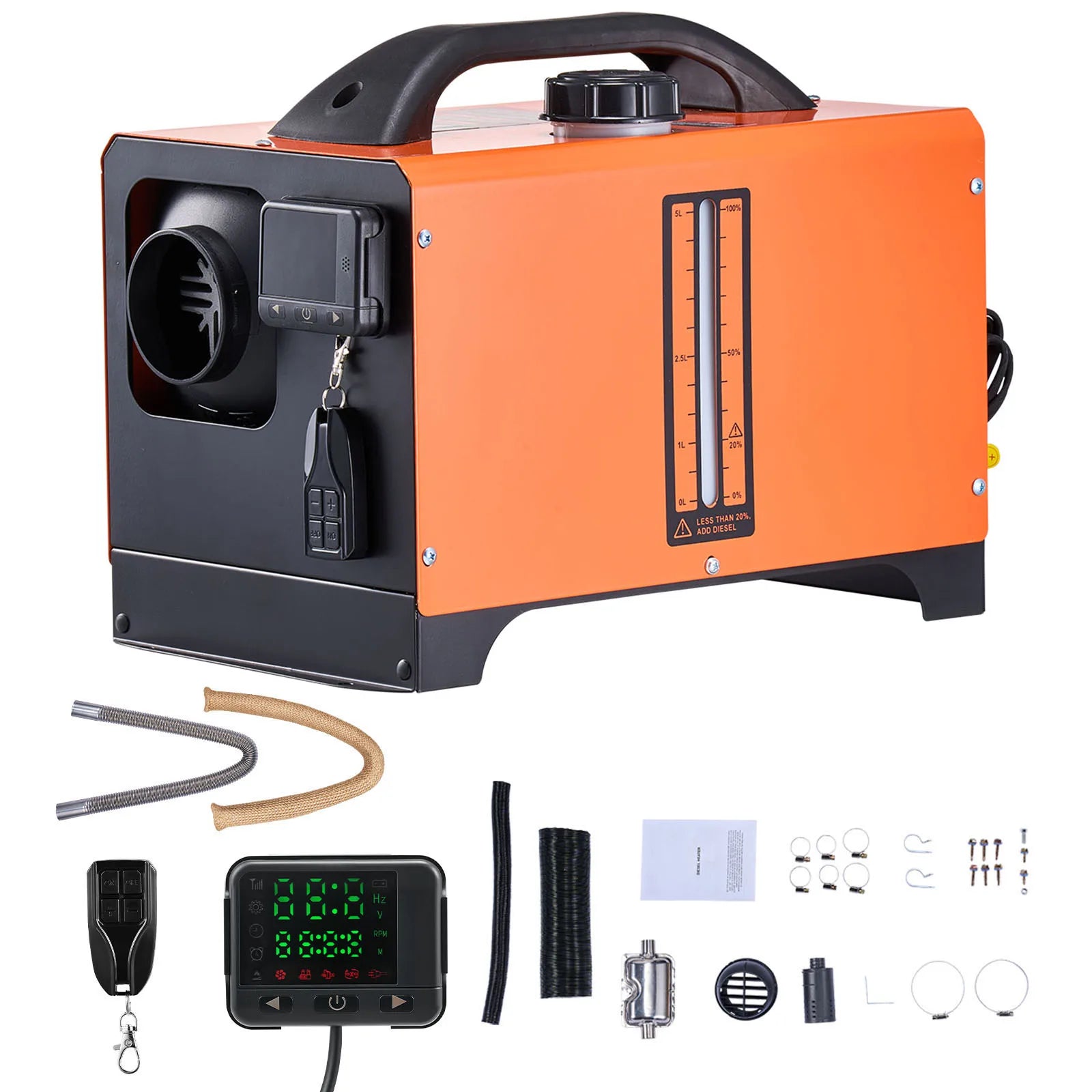
Explore the full system here: 8KW Diesel Air Heater
For more lifestyle upgrades, browse the Lifestyle collection to enhance comfort beyond heating.
Diesel Heater Fuel Consumption FAQ
How much fuel does a 2kW diesel heater use per hour?
Most 2kW heaters consume approximately 0.10 to 0.30 liters per hour , depending on thermostat settings and outdoor temperature.
How much diesel does a heater use overnight?
Most heaters burn between 1 and 3 liters during an eight-hour night, although excellent insulation can reduce fuel usage even further.
How long will a 5L diesel tank last?
At an average consumption of 0.2 L/h, a 5-liter tank provides roughly 25 hours of operation.
Do diesel heaters burn fuel continuously?
No. After the initial warm-up, the thermostat reduces fuel delivery as needed to maintain the desired temperature.
Why does fuel consumption increase in very cold weather?
Extreme temperatures increase heat loss, requiring the heater to operate at higher output for longer periods.
Does altitude affect diesel heater fuel consumption?
Yes. Higher elevations contain less oxygen, which can affect combustion unless the heater includes altitude compensation.
Is recirculation mode more fuel efficient than fresh air?
Yes. Recirculating warm cabin air generally reduces fuel consumption because less energy is required to maintain temperature.
Are diesel air heaters more efficient than propane heaters?
In many off-grid applications, diesel heaters provide excellent fuel efficiency, steady heat output, and lower operating costs over long periods.
What is the average cost to run a diesel heater overnight?
Depending on local fuel prices and operating conditions, overnight heating typically costs only a few dollars.
Can better insulation reduce diesel heater fuel usage?
Absolutely. Better insulation allows the heater to remain at lower output for longer, reducing both fuel consumption and operating costs.













