

Do Full Length Carbon Plate Insoles Really Improve Running Performance?
Yes— full length carbon plate insoles can improve running performance for many runners when paired with appropriate footwear and consistent training. Rather than creating free speed, they help optimize how force moves through each stride by increasing stiffness, improving energy transfer, and reducing excessive foot flexion. The result can be a smoother toe-off, better running economy, and reduced fatigue over longer distances.
If you're wondering do carbon plate insoles increase speed , the answer is: they can help improve pace by making each stride more efficient, especially during tempo runs, races, and long-distance training. Recreational runners often notice improved comfort and fresher legs, while experienced runners may benefit from enhanced propulsion at faster speeds.
- Best for: Distance runners, marathoners, triathletes, and runners seeking better efficiency
- Expected benefits: Improved energy return, reduced fatigue, increased stability, and smoother transitions
- Buying expectation: They enhance performance but cannot replace proper training, running form, or well-fitting shoes.
Carbon Plate Insoles: Best Picks, Benefits & Performance Guide (2026)
⏱ 7 min read
If your legs feel heavy too soon, your joints ache after every run, or your pace plateaus despite consistent training, the problem may not be your effort. It may be how efficiently your body returns energy with every step. What if a thin, lightweight layer inside your shoe could change how power flows through your stride?
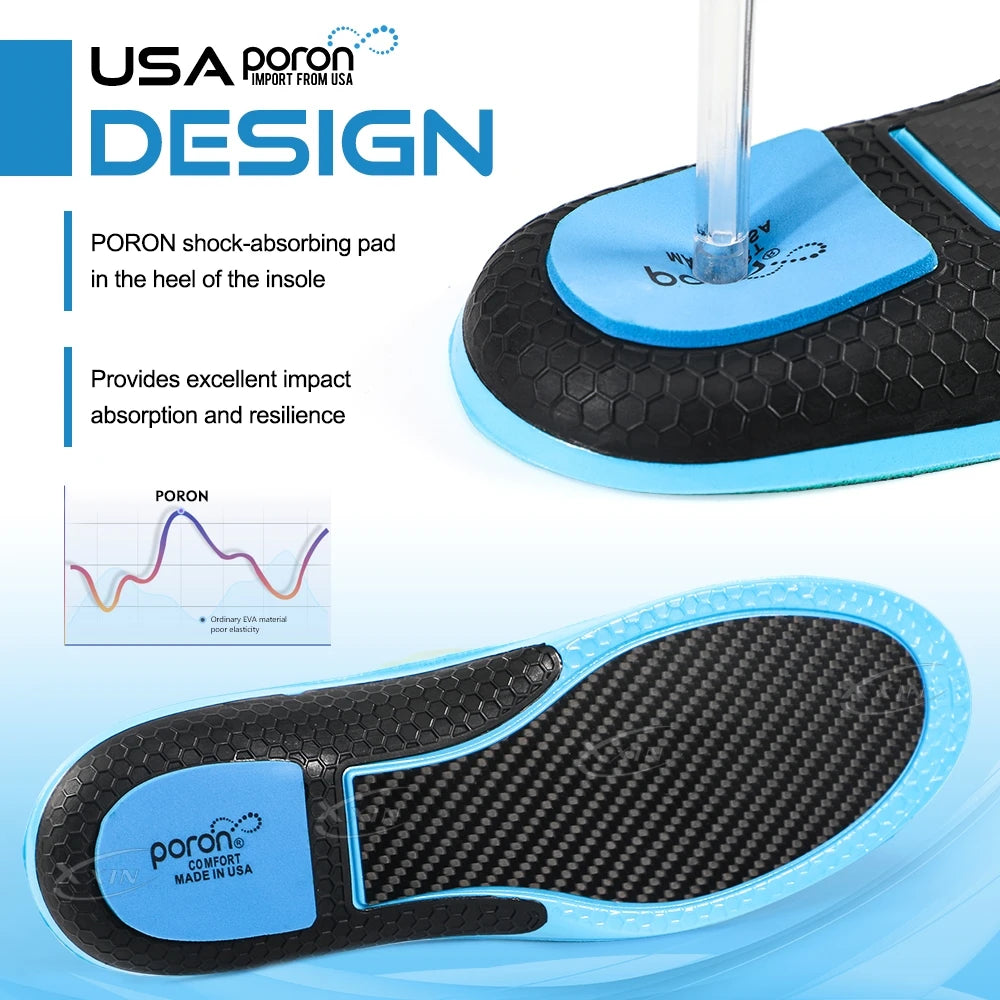
Full length carbon plate insoles designed for kinetic energy running and joint impact reduction. See them in action.
Quick Comparison: Best Full Length Carbon Plate Insoles (2026)
| Category | Best Use | Plate Stiffness | Value | Editor's Pick |
|---|---|---|---|---|
| Overall Performance | Daily training & races | Medium-High | ★★★★★ | ✔ |
| Endurance Running | Half & full marathons | Medium | ★★★★★ | |
| Speed Training | Intervals & tempo runs | High | ★★★★☆ | |
| Turf Toe & Recovery | Reduced toe joint motion | Very High | ★★★★☆ | |
| Budget Choice | Entry-level performance | Medium | ★★★★★ | |
| Flat Feet & Stability | Overpronation support | Medium | ★★★★☆ |
Best Full Length Carbon Plate Insoles (Top Picks 2026)
Best Overall
A balanced option combining propulsion, comfort, and durability for runners who want a noticeable improvement without sacrificing everyday usability.
- Pros: Excellent energy return, comfortable cushioning, versatile.
- Cons: Higher initial stiffness than foam insoles.
- Ideal for: Most road runners and regular training.
Best for Endurance Running
Designed to maintain efficient stride mechanics during long mileage while helping reduce muscular fatigue late in a run.
- Pros: Lightweight, durable, consistent energy return.
- Cons: May feel too firm for casual walking.
- Ideal for: Marathon and half-marathon runners.
Best for Speed Training
Higher stiffness helps maximize toe-off efficiency during intervals, tempo workouts, and race efforts.
- Pros: Responsive feel, aggressive propulsion.
- Cons: Less forgiving during recovery runs.
- Ideal for: Competitive runners.
Best for Turf Toe & Recovery
Rigid construction limits excessive forefoot bending, helping reduce stress around the big toe while maintaining walking efficiency.
- Pros: Excellent forefoot protection.
- Cons: Primarily intended for rehabilitation and limited activity.
- Ideal for: Turf toe recovery under professional guidance.
Best Budget Option
An affordable introduction to carbon fiber insoles for runners curious about performance technology.
- Pros: Great value, breathable materials.
- Cons: Lower energy return than premium models.
- Ideal for: New users.
Best for Flat Feet & Stability
Combines structured arch support with carbon reinforcement to improve stability throughout the gait cycle.
- Pros: Improved foot alignment, supportive ride.
- Cons: Proper sizing is essential.
- Ideal for: Mild overpronators.
Best Lightweight Performance
Ultra-thin construction minimizes added weight while preserving responsiveness.
- Pros: Race-ready feel, minimal bulk.
- Cons: Less cushioning.
- Ideal for: Fast 5K to marathon racing.
What Are Carbon Plate Insoles?
Carbon plate insoles are performance-oriented inserts that incorporate a rigid carbon fiber layer to improve force transfer and running efficiency. They differ from conventional comfort insoles by emphasizing propulsion rather than soft cushioning.
Full length carbon plate insoles extend from heel to toe, providing continuous stiffness throughout the gait cycle. Partial-length models reinforce only the forefoot or midfoot and are commonly used for injury management or targeted support.
- Full-length models maximize energy transfer during running.
- Partial-length designs prioritize localized stiffness or rehabilitation.
- Most combine carbon fiber with EVA or PU foam for cushioning.
- Common applications include racing, endurance training, hiking, and turf toe support.
How Carbon Plate Insoles Work
Carbon Fiber Technology
Carbon fiber is exceptionally strong while remaining lightweight. Its stiffness limits unnecessary bending of the shoe, allowing more efficient force transmission from landing to push-off.
Energy Return & Propulsion
Although the carbon plate itself stores relatively little energy, it works with the shoe's foam to improve forward momentum. By stabilizing the foot and reducing energy loss through excessive flexion, the overall system can improve running economy.
Foot Biomechanics
A stiffer platform encourages a smoother transition through the gait cycle and may reduce mechanical stress on the forefoot during toe-off. These biomechanical effects are most noticeable at faster running speeds and longer distances.
Benefits of Carbon Plate Insoles
Speed & Energy Return
Carbon plate insoles help improve running efficiency by optimizing force transfer, which may contribute to maintaining faster paces with less perceived effort.
Reduced Fatigue
More efficient mechanics can reduce muscular workload over extended runs, helping many runners finish long sessions with fresher legs.
Stability & Foot Protection
The rigid plate improves stability during push-off while distributing pressure more evenly across the foot, potentially reducing stress on ankles, knees, and hips.
Recovery Support
Some carbon fiber insoles are also prescribed to restrict forefoot motion during recovery from conditions such as turf toe, helping protect healing tissues while walking.
Carbon Plate Insoles vs Regular Insoles
| Feature | Carbon Plate Insoles | Regular Insoles |
|---|---|---|
| Performance | Optimized for energy transfer and propulsion | Focused on comfort |
| Comfort | Initially firm | Soft and flexible |
| Support | High structural stability | Varies by design |
| Best Use Cases | Running, racing, endurance, rehabilitation | Walking, casual wear, general comfort |
Choosing the Right Stiffness for Your Activity
Running
Medium to high stiffness generally offers the best balance of propulsion and comfort for training and racing.
Hiking & Work
A slightly more flexible plate provides better comfort during prolonged standing or slower-paced activities while still improving stability.
Turf Toe Recovery
Maximum stiffness helps minimize bending at the big toe joint. Always follow recommendations from your healthcare provider if recovering from injury.
Are Carbon Plate Insoles Safe?
Who Should Use Them
Experienced runners, endurance athletes, and individuals seeking additional forefoot support generally adapt well to carbon plate insoles.
Who Should Avoid Them
People with acute foot injuries, significant gait abnormalities, or those new to running should introduce them cautiously and seek professional advice when appropriate.
Common Mistakes
- Switching immediately to long-distance runs.
- Using insoles in shoes with poor fit.
- Ignoring persistent discomfort or pain.
- Assuming stiffer always means faster.
How to Choose Full Length Carbon Plate Insoles
Sizing
Select an insole that matches your shoe size without bunching or lifting inside the shoe.
Shoe Compatibility
Most work best in running shoes with removable factory insoles and adequate internal volume.
Arch Support
Choose a model appropriate for your arch height and pronation pattern to maximize comfort.
Durability
Look for genuine carbon fiber construction, quality foam layers, breathable top fabrics, and reinforced edges for longer service life.
How to Use Carbon Plate Insoles for Best Results
- Wear them for short runs during the first week.
- Increase mileage gradually as your feet adapt.
- Reserve them for key workouts and races if maximum responsiveness is your goal.
- Replace worn shoe liners if necessary to ensure a secure fit.
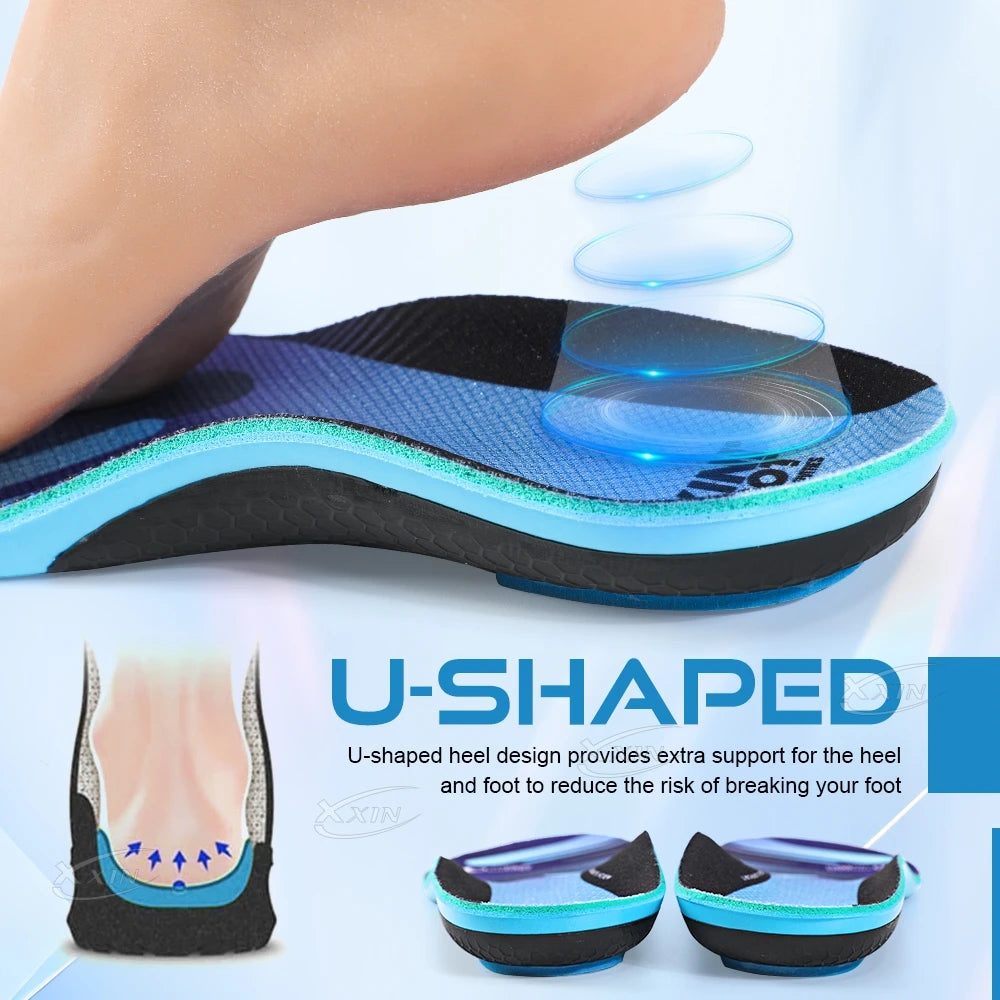
Precision-engineered carbon plate insoles supporting running efficiency. See them in action.
How We Tested and Rated These Insoles
Our recommendations prioritize characteristics that matter most to runners rather than marketing claims. Each category is evaluated using the following criteria:
- Running comfort over short and long distances
- Energy transfer and perceived responsiveness
- Overall stability and foot support
- Durability after repeated use
- Value relative to performance and build quality
Who Should Buy Full Length Carbon Plate Insoles?
Competitive Runners
Ideal for athletes seeking improved running economy during training and racing.
Marathoners
Helpful for maintaining efficiency over extended distances where fatigue becomes a limiting factor.
Trail Runners
Certain models provide additional protection from rocks while improving stability on uneven terrain.
Recovery Users
Rigid carbon fiber designs may help limit forefoot motion during recovery from selected injuries when recommended by a medical professional.
They also complement recovery tools commonly explored in the Body Care and Health Devices collection for holistic performance support.
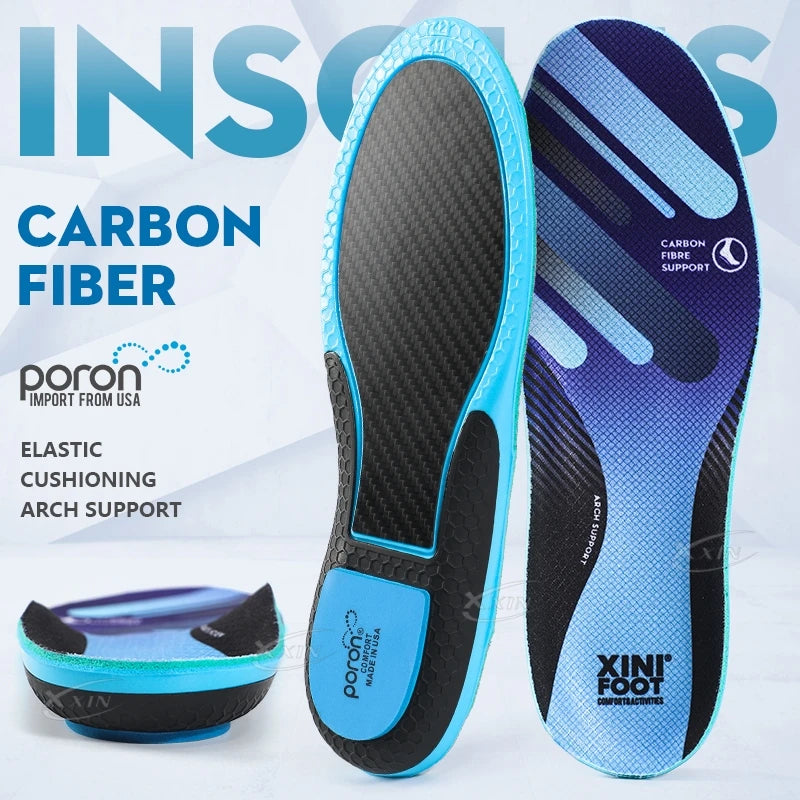
Upgrade your stride with full length carbon plate insoles. See them in action.
Frequently Asked Questions
Do carbon plate insoles increase speed?
They can improve running economy and propulsion, which may help runners maintain faster paces. The greatest benefits are typically seen in experienced runners during faster efforts.
Are carbon plate insoles safe?
Yes, when properly fitted and introduced gradually. They should not cause pain, and persistent discomfort should be evaluated by a healthcare professional.
Can beginners use them?
Yes, although beginners often benefit more from improving running technique before investing in high-performance equipment.
Will they fit most running shoes?
Most full length carbon plate insoles fit running shoes with removable insoles, but always check thickness and available shoe volume before purchasing.
How long do carbon plate insoles last?
Quality carbon fiber plates typically outlast traditional foam insoles. Depending on mileage, usage, and materials, many remain effective for hundreds of running miles before cushioning layers begin to compress.













