

Does a glass perfume bottle really keep fragrance fresh?
A glass perfume bottle can help keep fragrance fresh because glass is chemically stable, while a well-designed bottle can also reduce exposure to oxygen, heat, and light. The best fragrance storage bottle combines non-reactive glass with a reliable seal, an efficient atomizer, and—when appropriate—UV protection. These features help slow oxidation and evaporation so the perfume stays closer to its intended scent profile for longer.
However, the bottle is only part of the equation. Even the best glass perfume bottle cannot prevent fragrance degradation if it is repeatedly exposed to sunlight, heat, humidity, or unnecessary air exchange.
⏱ 6 min read
Perfume Bottle Design: How Aesthetics, Materials, and Engineering Shape Fragrance Experience
Perfume bottle design goes far beyond aesthetics—it influences how a fragrance is protected, dispensed, experienced, and remembered. Material selection, bottle geometry, closure engineering, spray performance, color, and visual identity all contribute to the final product.
A successful perfume bottle design has to solve two problems at once: protect a volatile fragrance formula and communicate what the brand stands for. A sculptural bottle may create a powerful first impression, while a precise atomizer and dependable seal quietly determine how practical the product is throughout its life.
What Makes a Great Perfume Bottle Design?
A great perfume bottle design balances beauty, function, preservation, and brand identity . The strongest packaging does not force consumers to choose between an attractive object and a practical fragrance container. Instead, its visual and engineering decisions work together.
Beauty, function, and user experience
Shape, weight, proportion, surface finish, and color establish the visual character of a fragrance, but usability matters just as much. A bottle should feel stable in the hand, dispense a consistent amount of fragrance, resist leaks, and close securely after each use.
Good perfume bottle design features therefore include more than decorative details. A comfortable grip, dependable actuator, protective cap, stable base, and appropriate bottle size can make everyday use easier while supporting fragrance preservation.
How packaging psychology influences fragrance perception
Consumers often form expectations before smelling the perfume. Clear glass and restrained typography can suggest freshness or modernity, while dark colors, heavy glass, metallic accents, or ornate details may communicate depth, luxury, or tradition.
These visual signals do not change the formula itself, but they can influence how shoppers interpret the fragrance and its perceived value. Packaging effectively becomes part of the sensory experience.
Brand identity and emotional connection
A distinctive bottle can become a recognizable brand asset. Repeated use of a particular silhouette, cap structure, color palette, or material language helps consumers associate the packaging with a specific fragrance house or product family.
This is why luxury fragrance packaging often treats the bottle as more than a container. It can function as a keepsake, display object, and physical expression of the brand story.
Explore practical bottle formats designed for convenient fragrance storage and everyday use.
Which style suits you best? Read on!

glass perfume bottle - nan See it in action — Shop the 30ml bottle
Perfume Bottle Materials: Glass, Plastic, Metal, and Sustainable Alternatives
Perfume bottle materials affect chemical compatibility, durability, appearance, weight, cost, recyclability, and fragrance protection. Glass remains the traditional choice for many perfumes, but alternative materials can make sense for specific applications.
Why glass is the preferred material for luxury fragrances
Glass is widely used because it is relatively inert and provides a strong barrier between the fragrance and the outside environment. It also offers excellent design flexibility: manufacturers can create clear, tinted, frosted, thick-walled, sculptural, or highly polished surfaces.
For luxury fragrances, glass also contributes to perceived quality through its weight, clarity, and tactile feel. This combination of chemical stability and premium presentation helps explain why glass is used for perfume bottles so frequently.
Glass vs plastic vs metal performance comparison
| Material | Key strengths | Potential limitations |
|---|---|---|
| Glass | Chemically stable, premium appearance, strong barrier, highly customizable | Heavier and more fragile than many alternatives |
| Plastic | Lightweight, impact-resistant, convenient for travel formats | Material compatibility and long-term barrier performance depend on the specific polymer and formula |
| Metal | Durable, opaque, and useful for protective outer housings | Requires appropriate internal compatibility and may hide the fragrance from view |
Sustainable materials and refillable packaging
Sustainability is changing how perfume packaging is designed. Refillable bottles can reduce the need to replace the primary bottle, while recycled glass, lightweighting, recyclable components, and simplified packaging can reduce material use.
The most sustainable option depends on the complete packaging system rather than one material alone. A heavier reusable glass bottle may have a different environmental profile from a lightweight disposable format, so durability, refillability, manufacturing, transportation, and end-of-life recovery all matter.
Core Perfume Bottle Design Features That Affect Longevity
Specific engineering decisions can influence how well a bottle protects fragrance over time. The most important considerations are air exchange, light exposure, dispensing behavior, and the amount of empty space above the liquid.
Airtight sealing systems and atomizer engineering
An airtight perfume bottle should minimize unintended air exchange and leakage when closed. Crimped atomizer assemblies are commonly used for permanent fragrance packaging because the pump assembly is securely attached to the bottle neck.
Sealing quality ultimately depends on the entire closure system. A high-quality bottle should maintain a secure connection between the bottle, pump, collar, and cap rather than relying on the cap alone.
UV protection and tinted glass design
Light can contribute to chemical changes in fragrance formulas, making light protection an important consideration for storage. Amber, cobalt, green, opaque, or specially coated glass can reduce light transmission compared with completely clear glass.
A UV protection perfume bottle is especially useful when the fragrance may be exposed to ambient light. Still, keeping perfume in a dark location is generally a stronger storage habit than relying on bottle tint alone.
Spray mechanisms and air exposure control
An atomizer dispenses fragrance as a fine spray and allows the bottle to remain closed between applications. A well-engineered pump should deliver consistent doses while minimizing unnecessary air exchange and preventing drips around the neck.
Bottle shape, headspace, and evaporation
Shape does not automatically determine fragrance longevity. What matters more is how the design affects internal volume, surface area, closure performance, and the amount of air above the liquid.
As perfume is used, the empty space inside the bottle increases. Minimizing unnecessary headspace can reduce the volume of air in contact with the remaining fragrance, although proper sealing and storage conditions remain critical.
Perfume Bottle Shapes and Their Design Meaning
Perfume bottle shapes are visual communication tools as much as packaging structures. Designers use proportion, symmetry, edges, curves, and scale to create different emotional associations while also considering manufacturing and usability.
Minimalist and modern bottle shapes
Simple rectangular, cylindrical, and geometric bottles often communicate clarity, sophistication, and modernity. Their straightforward construction can also make labeling, stacking, and manufacturing more predictable.
Luxury artistic and sculptural designs
Unusual silhouettes, oversized caps, faceted glass, and sculptural forms can turn the bottle into a collectible object. These designs prioritize visual distinction and shelf presence but must still account for stability, production tolerances, weight, and safe handling.
Vintage-inspired fragrance bottles
Ornate glass, decorative caps, engraved details, and traditional silhouettes can evoke heritage and craftsmanship. Vintage-inspired design works particularly well when the packaging supports a fragrance story centered on classic luxury or nostalgia.
Travel-friendly functional designs
Travel formats usually prioritize compact dimensions, leak resistance, impact protection, and ease of use. Smaller bottles can also reduce the amount of fragrance exposed to air over a shorter usage period, but the quality of the seal remains more important than size alone.
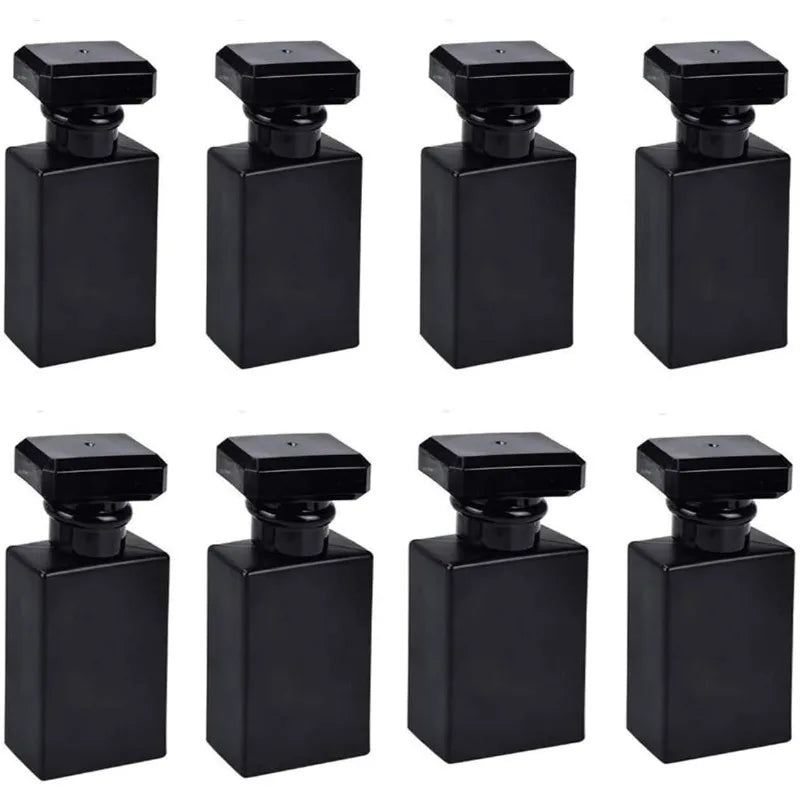
glass perfume bottle - nan See it in action — compare sizes and finishes
How Perfume Bottle Design Is Created: Step-by-Step Process
Designing a custom perfume bottle requires more than creating an attractive shape. Designers, fragrance brands, packaging engineers, and manufacturers have to balance visual identity with material compatibility, manufacturing constraints, closure performance, and user experience.
Concept development and brand storytelling
The process typically begins with the fragrance concept and target customer. A design team defines the desired personality, references, proportions, color direction, decoration, and interaction before developing sketches or digital concepts.
The bottle should communicate the fragrance's positioning without compromising practical requirements such as stability, ergonomics, label placement, and dispensing.
Material selection and prototype creation
Once a concept is established, the team selects appropriate materials and develops prototypes. For glass bottles, factors can include wall thickness, weight, transparency, color, molding complexity, neck dimensions, and compatibility with the intended closure and pump.
Prototypes help identify issues that are difficult to see in a drawing, including whether the bottle feels comfortable, stands securely, fits the intended cap, and can be manufactured consistently.
Manufacturing, testing, and final production
Before production, packaging components can be evaluated for leakage, closure fit, dispensing performance, durability, decoration quality, and compatibility with the fragrance formula. Manufacturing specifications are then refined so the finished bottles can be produced consistently at scale.
This workflow explains how perfume bottles are made as a coordinated packaging system rather than as a purely decorative glass object.
Best Bottle for Storing Perfume: Comparing Materials and Formats
Glass perfume bottles vs travel atomizers
For long-term storage, a purpose-built glass perfume bottle with a secure atomizer is generally a strong choice. Travel atomizers are more convenient for carrying smaller quantities, but their performance depends heavily on construction quality and how frequently the fragrance is transferred.
Decorative bottles vs functional storage bottles
Decorative bottles can provide exceptional visual appeal, but appearance alone does not indicate preservation quality. For a fragrance storage bottle , prioritize chemical compatibility, closure integrity, light protection, and controlled dispensing before decorative details.
Refillable vs sealed perfume bottles
Refillable systems can reduce packaging waste and make long-term use more convenient. Sealed or factory-filled bottles can minimize unnecessary transfers and handling. The better choice depends on whether preservation, portability, sustainability, or refill convenience is the primary goal.
How to Keep Perfume Fresh in the Bottle
Knowing how to keep perfume fresh in bottle storage is just as important as choosing a well-designed container. Light, heat, oxygen, and repeated environmental changes can gradually alter fragrance character.
Proper storage habits
- Store perfume in a cool, dry, dark location away from direct sunlight.
- Keep the bottle tightly closed whenever you are not using it.
- Avoid storing fragrance in places with frequent temperature swings, such as bathrooms.
- Keep the bottle upright when practical to reduce the chance of leakage around the closure.
- Handle the atomizer and cap gently to avoid damaging the sealing components.
Common mistakes that damage fragrance quality
- Leaving the bottle open between applications.
- Keeping perfume on a sunny windowsill or near a heat source.
- Frequently transferring the same fragrance between containers.
- Storing perfume in a hot, humid bathroom.
- Assuming a decorative cap or thick glass automatically guarantees airtight protection.
Use smart storage and handling habits to protect scent quality between applications.
Perfume Bottle Cap Types and Their Impact on Preservation
Screw caps vs magnetic caps vs crimp seals
Cap style and closure construction should be evaluated separately. Crimp seals securely attach the atomizer assembly to the bottle and are widely used for permanent fragrance packaging. Screw caps can be effective when manufactured with appropriate tolerances and sealing components. Magnetic caps are often chosen for their premium user experience, but the magnet itself does not automatically make a bottle airtight.
Leak prevention and evaporation control
A well-designed closure should fit securely, resist accidental opening, and minimize leakage around the bottle neck. Evaporation control depends on the complete closure system rather than on the decorative outer cap alone.
For consumers comparing an airtight perfume bottle , inspect the connection between the bottle, atomizer, collar, and cap instead of judging performance by appearance.
Current Perfume Bottle Design Trends
Modern perfume bottle design trends increasingly combine recognizable visual identity with sustainability, convenience, and personalization. The most interesting developments are not simply about making bottles look different; they aim to make fragrance packaging more useful and responsible.
Sustainable and refillable luxury packaging
Refillable formats are gaining attention because they allow the primary bottle to remain in use while replacement fragrance is supplied separately. Lightweighting, recycled glass, recyclable components, and reduced secondary packaging are also important directions for sustainable perfume packaging .
Personalized and interactive bottle designs
Customization can include interchangeable components, engraved details, collectible editions, or packaging designed to create a more interactive unboxing experience. Digital elements such as scannable information can also connect physical packaging with product stories, ingredient information, or brand experiences.
Minimalist and gender-neutral aesthetics
Clean silhouettes, neutral colors, restrained decoration, and adaptable forms are increasingly useful for fragrances positioned beyond traditional gender categories. This approach can make packaging feel contemporary while placing more emphasis on the fragrance itself.
Iconic Perfume Bottle Design Examples
Iconic fragrance packaging demonstrates how bottle form can become inseparable from brand recognition. Studying famous designs is useful not simply because they are visually memorable, but because they show how shape, proportion, decoration, and storytelling can work together.
Geometric bottles and recognizable silhouettes
Strong geometric forms can make a bottle immediately identifiable from a distance. Consistent proportions and distinctive edges help establish a visual signature that can remain recognizable even when labels are minimal.
Sculptural bottles as brand symbols
Sculptural fragrance bottles use unusual shapes or oversized structural elements to create a sense of exclusivity. Their success comes from turning the container into part of the product story rather than treating packaging as an afterthought.
Heritage-inspired bottles and visual continuity
Classic bottles often rely on familiar materials, decorative details, and repeated design elements to communicate history. When updated carefully, heritage packaging can preserve brand recognition while introducing modern manufacturing, refillability, or usability improvements.
How to Choose the Right Perfume Bottle Design
Whether you are selecting a bottle for personal fragrance storage or evaluating packaging quality, use a checklist that covers both aesthetics and performance.
- Material: Prefer chemically compatible materials appropriate for the fragrance formula.
- Sealing: Check that the bottle, atomizer, collar, and cap create a secure closure.
- Light protection: Consider tinted, opaque, or UV-resistant construction if light exposure is difficult to control.
- Atomizer: Look for consistent spray performance and minimal leakage or dripping.
- Headspace: Avoid unnecessarily large empty space when selecting a storage format.
- Usability: Choose a shape that is stable, comfortable to hold, and easy to dispense.
- Storage environment: Remember that even excellent packaging performs best when kept cool, dry, and away from direct light.
- Sustainability: If environmental impact matters, consider refillable construction, recycled materials, durability, and packaging waste as a complete system.
When cross-shopping, consider pairing the bottle with items from the Skin and Beauty Care Devices collection or explore Lifestyle accessories.
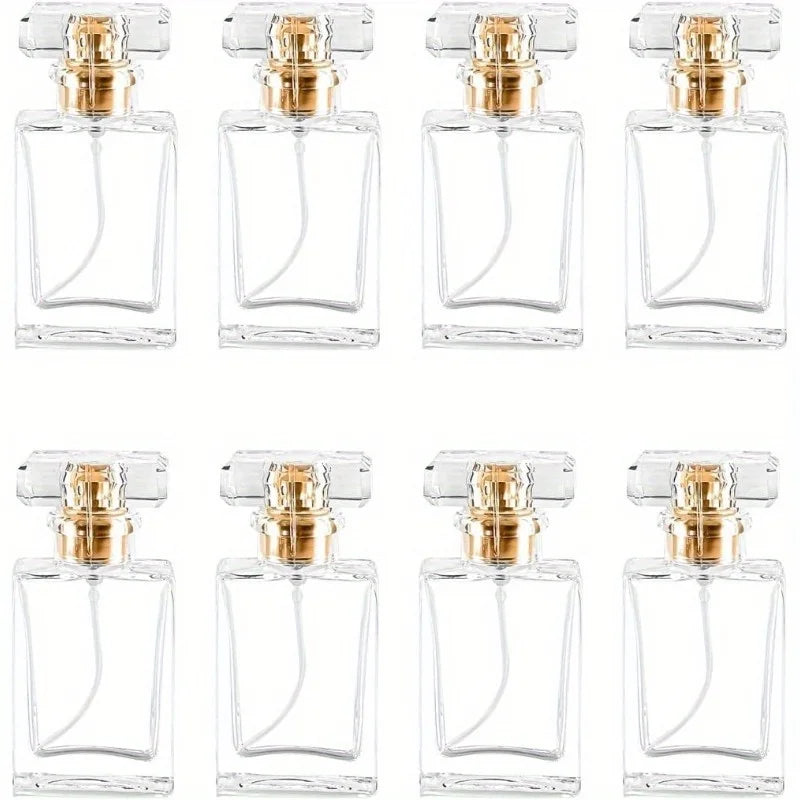
glass perfume bottle - nan See it in action — Get yours now
FAQ: Perfume Bottle Design and Fragrance Storage
How long does perfume last in a glass bottle?
There is no single expiration period for every fragrance. Properly stored perfume can retain its intended character for many months or years, depending on the formula, packaging, storage conditions, and amount of air and light exposure. A cool, dark environment and secure closure can help extend its usable life.
Why are most perfume bottles made of glass?
Glass is widely used because it is generally chemically stable, provides a strong barrier, can be molded into many shapes, and supports premium visual finishes. These properties make it well suited to protecting and presenting alcohol-based fragrance formulations.
What makes a perfume bottle airtight?
An airtight or highly sealed perfume bottle depends on the entire closure assembly, including the bottle neck, atomizer, crimp or threaded connection, collar, and cap. A secure connection that minimizes unintended air exchange and leakage is more important than the decorative cap style alone.
Does UV protection help preserve perfume?
Yes. Reducing exposure to UV and other light can help limit light-related degradation of fragrance components. Tinted or opaque packaging can provide additional protection, but storing perfume in a cool, dark place is still one of the simplest ways to reduce light exposure.
Which perfume bottle material is best for storage?
For many traditional fragrance formulas, glass is an excellent storage material because of its chemical stability and barrier properties. However, the best choice depends on formula compatibility, closure quality, intended use, durability, and storage conditions rather than material alone.
Should I use travel perfume bottles?
Travel perfume bottles are useful when portability matters, especially when you want to carry a small amount rather than the full bottle. Choose a well-sealed format and avoid repeatedly transferring fragrance between containers because every transfer can increase handling and air exposure.
Does bottle shape affect fragrance quality?
Shape alone does not determine fragrance quality. Bottle geometry can influence headspace, surface area, stability, and closure design, but sealing, light exposure, temperature, and storage habits generally have a more direct effect on preservation.
Secure a protective 30ml bottle today and preserve your signature scent. Buy the KentDO 30ml glass perfume bottles
Related reading: explore product pairings in Beauty & Self-Care Blog or packaging solutions in Lifestyle .
Pillar Article: 30ml Perfume Bottles Explained: Why This Size Delivers the Best Value
Other Related Articles:
Explore More:
- Glass Perfume Bottles Compared: Which Ones Protect Your Fragrance Best
- Refillable Travel Size Perfume Bottles Tested: Which Are Worth Buying
Conclusion: Why Perfume Bottle Design Matters More Than You Think
Perfume bottle design sits at the intersection of preservation, usability, aesthetics, and brand identity. Glass remains a strong choice for many fragrance formulas because of its chemical stability and protective barrier, but the bottle material is only one part of effective fragrance storage.
For the best results, look at the complete system: reliable sealing, appropriate light protection, efficient dispensing, sensible headspace, and proper storage habits. At the same time, shape, decoration, and material finish can transform an ordinary container into a memorable part of the fragrance experience. Understanding these design choices makes it easier to appreciate why the right bottle is both a functional storage solution and an important part of the perfume itself.













