

Heat Therapy for Menstrual Cramps: What Science Says
Why can something as simple as warmth over your lower abdomen make menstrual cramps feel easier? The answer is connected to how period pain develops in the first place. Menstrual cramps, medically called dysmenorrhea, are commonly caused by uterine contractions influenced by prostaglandins. Heat does not remove the underlying cause, but research suggests that local heat can provide meaningful short-term pain relief for many people with primary dysmenorrhea.
A 2026 systematic review and meta-analysis that included 57 randomized controlled trials and more than 5,300 participants found that heat therapy reduced pain intensity compared with no treatment and may provide pain relief comparable to NSAIDs in the studies analyzed. The authors also noted that the quality and consistency of evidence vary across studies, so heat should be viewed as a symptom-management option rather than a cure. :contentReference[oaicite:0]{index=0}
This guide explains how heat therapy for menstrual cramps may work, what the evidence actually shows, how to use abdominal heat safely, and how heating pads compare with heat wraps and hot-water bottles.
What Are Menstrual Cramps and Why Do They Hurt?
Primary dysmenorrhea refers to recurring menstrual pain that occurs without another identifiable pelvic disorder. The pain typically develops around the beginning of menstruation and is often felt in the lower abdomen. It may also radiate toward the lower back or thighs and can interfere with work, sleep, exercise, or everyday activities.
The main driver is not simply that the uterus is “tight.” During menstruation, the uterine lining releases substances called prostaglandins. Higher prostaglandin activity is associated with stronger uterine contractions and the pain and discomfort associated with primary dysmenorrhea.
The Role of Prostaglandins in Period Pain
Prostaglandins help regulate inflammation and smooth-muscle activity. During menstruation, they contribute to uterine contractions that help the uterus shed its lining. When these contractions are particularly strong, they can contribute to the familiar cramping sensation.
This is one reason NSAIDs such as ibuprofen and naproxen can be effective for menstrual pain: they reduce prostaglandin production. Heat works differently. It is primarily a local comfort and pain-modulation strategy rather than a medication that directly changes prostaglandin production.
Primary vs. Secondary Dysmenorrhea
Not all menstrual pain is ordinary primary dysmenorrhea. Secondary dysmenorrhea describes period pain associated with another condition, such as endometriosis, adenomyosis, fibroids, or another pelvic disorder.
Heat may still make symptoms feel more comfortable, but it does not diagnose or treat those underlying conditions. Pain that is newly severe, progressively worse, unusually persistent, or significantly disrupting normal life deserves medical evaluation rather than repeated self-treatment alone.
How Heat Therapy May Relieve Menstrual Cramps
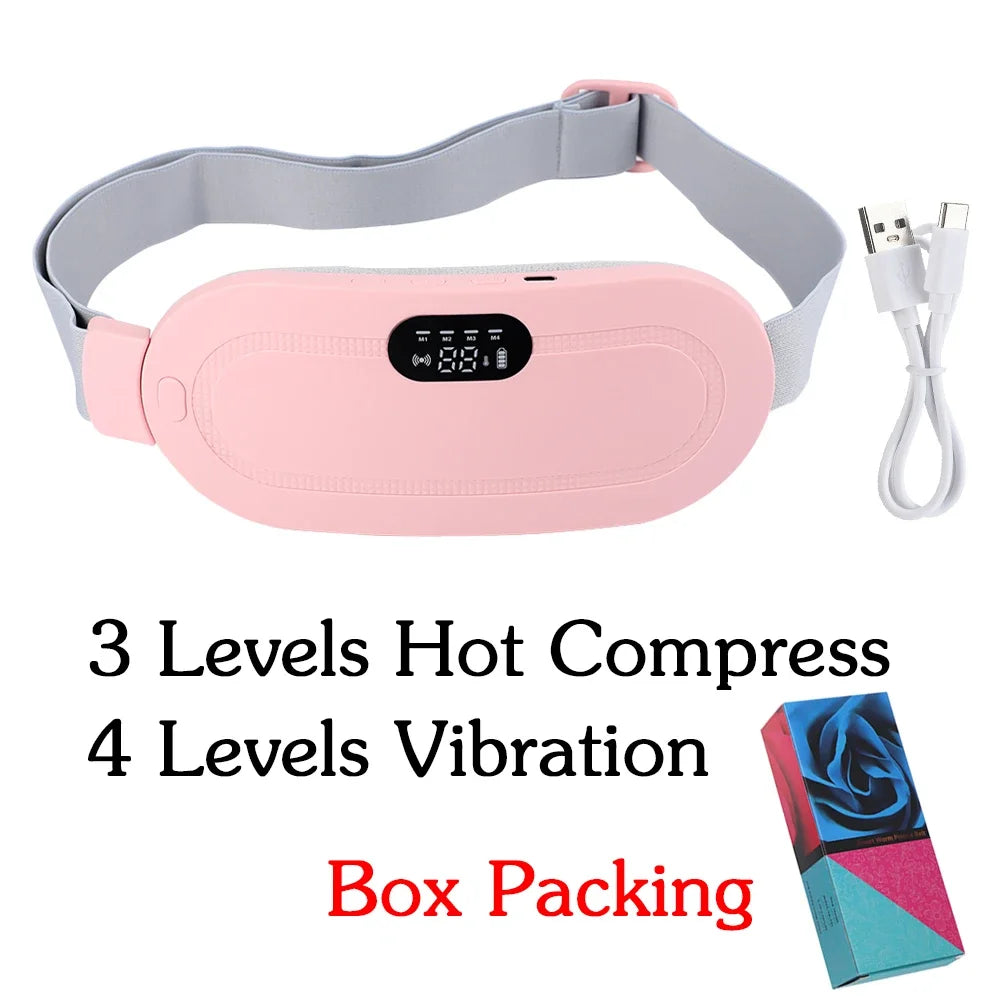
Heat therapy for menstrual cramps is thought to work through several overlapping effects. Local warmth can influence how pain signals are processed, encourage relaxation of tense muscles, and create a soothing sensory input that competes with or modifies the perception of cramping.
Heat and Pain Signaling
Thermal stimulation activates temperature-sensitive nerves in the skin. These signals can influence the way the nervous system processes other sensory information, including pain. In practical terms, the sensation of comfortable warmth can make cramping feel less prominent even though the underlying uterine activity has not necessarily stopped.
This distinction matters. Heat can reduce the experience of pain without eliminating the biological process responsible for menstruation.
Heat, Muscle Relaxation, and Abdominal Comfort
Warmth can also feel relaxing when muscles are tense. Applying comfortable heat to the lower abdomen may help reduce the sensation of tightness and create a more relaxed physical state. Some people prefer placing heat over the lower back instead, particularly when menstrual discomfort radiates beyond the abdomen.
These mechanisms are biologically plausible, but it is important not to turn them into unsupported promises. Clinical research is more useful for answering the practical question: does heat actually reduce menstrual pain?
What the Research Shows
The evidence is encouraging. A 2018 systematic review identified randomized trials in which heating pads or other heat interventions reduced menstrual pain compared with no treatment, placebo heat, and, in some studies, analgesic medication. However, that review emphasized that the evidence base was limited by small trials and methodological concerns. :contentReference[oaicite:1]{index=1}
More recent evidence is broader. A 2026 systematic review analyzed 57 randomized controlled trials involving 5,359 participants and concluded that heat therapy likely reduces pain intensity during both acute episodes and preventive use. The review also found heat therapy may offer comparable pain relief to NSAIDs in the included studies, although the authors appropriately described the certainty and clinical interpretation of the evidence with caution. :contentReference[oaicite:2]{index=2}
So the evidence-based takeaway is straightforward: heat is a legitimate non-drug option for menstrual cramp relief, but it should not be presented as a cure for dysmenorrhea or every cause of period pain.
How Effective Is Heat Therapy for Period Pain?
How Quickly Can Heat Help?
There is no single scientifically established minute mark at which heat “starts working” for everyone. Individual response depends on pain intensity, the heat source, temperature, duration, and personal sensitivity.
Clinical studies have demonstrated reductions in pain during relatively short treatment periods, including within the first day of treatment, but study protocols differ. :contentReference[oaicite:3]{index=3} Rather than chasing a precise universal timeframe, use comfortably warm heat and assess whether your symptoms are improving.
Heat Therapy vs. NSAIDs
Heat and NSAIDs have different mechanisms. NSAIDs such as ibuprofen and naproxen reduce prostaglandin production, whereas heat provides local thermal stimulation and symptomatic comfort.
Interestingly, the newer systematic review found that heat therapy may provide pain relief comparable to NSAIDs in the analyzed trials. That does not mean heat should automatically replace medication for everyone, nor does it mean every study found the same result. :contentReference[oaicite:4]{index=4}
For someone who cannot or does not want to use an NSAID, heat may be a useful non-drug option. For someone who already uses an appropriate pain-management plan, heat may also be one component of a broader approach.
Can Heat Be Used With Other Period-Pain Strategies?
Yes, heat can fit alongside other appropriate comfort measures. Depending on individual circumstances, these may include medication used according to label directions or professional advice, gentle movement, rest, relaxation techniques, and massage.
Research into non-drug approaches also supports heat as one potentially useful intervention, although the evidence quality varies considerably between techniques and studies. :contentReference[oaicite:5]{index=5}
Best Ways to Apply Heat for Menstrual Cramps
Where to Place the Heat
For lower abdominal cramps, place the heat source over the lower abdomen where the discomfort is strongest. If menstrual pain extends toward the back, some people may prefer lower-back warmth instead or alternate locations.
The goal is targeted, comfortable warmth rather than maximum temperature.
How Warm Should It Be?
A useful rule is comfortably warm, never painfully hot. Follow the manufacturer's instructions for your particular heating device rather than assuming that the highest setting is the most effective setting.
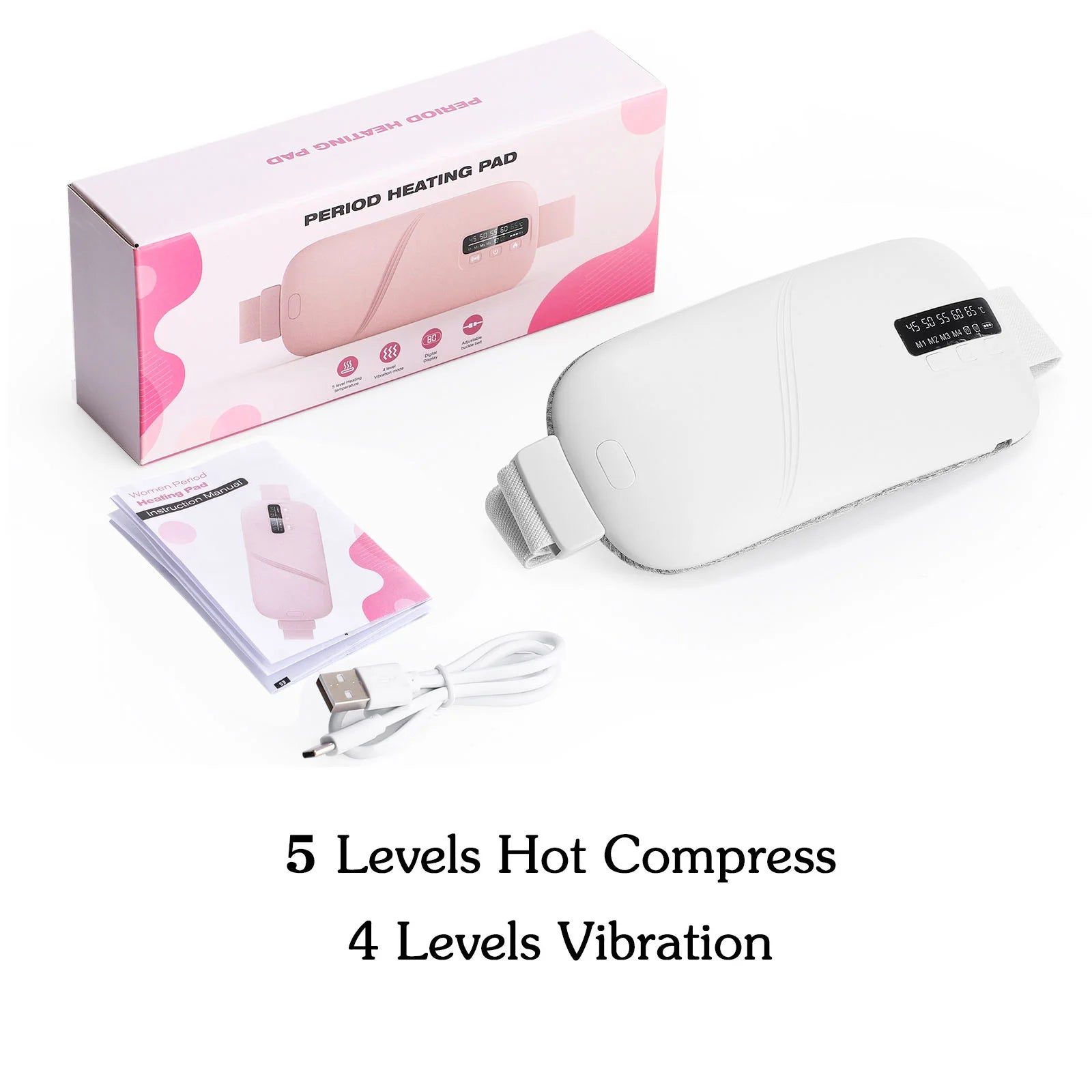
For example, the Menstrual Heating Pad for Period Relief & Soothing Heat Belt offers adjustable heat settings, vibration intensity options, and automatic 15- or 30-minute sessions. Its listed maximum heat is up to 65°C depending on model, which makes following the device's instructions and monitoring your skin particularly important.
How Long Should You Use Heat?
Session length should follow the instructions for the specific device and your comfort level. Avoid treating longer or hotter sessions as automatically better.
A device with an automatic timer can make this easier. The KentDO belt, for example, provides 15- and 30-minute automatic session options. For any heating product, check your skin during use and stop if the area becomes excessively red, painful, numb, irritated, or unusually hot.
Protecting Your Skin From Burns
Heat-related skin injury can happen even when a heating device initially feels comfortable. Risk increases with excessive temperature, prolonged exposure, sleeping while using a heat source, or reduced ability to sense heat.
- Use the lowest temperature that provides comfortable warmth.
- Follow the manufacturer's recommended operating instructions.
- Check your skin periodically during use.
- Do not continue if you feel burning, excessive heat, numbness, or irritation.
- Do not fall asleep with a heating device unless it is specifically designed and approved for that type of use.
- Take extra care if you have reduced heat sensation or a condition that affects your ability to detect skin injury.
For more device-focused self-care options, you can also explore Body Care and Health Devices when considering products designed for targeted personal comfort.
Heating Pads vs. Heat Wraps vs. Hot-Water Bottles
There is no universally “best” heat method. The right choice depends on where you use it, how much temperature control you want, and whether you need to move around while using it.
| Heat method | Best suited for | Main advantage | Main limitation |
| Heating pad | Home or seated use | Consistent, adjustable warmth | Many models require an outlet or cord |
| Wearable heat belt | Work, travel, reading, daily activities | Hands-free and portable | Battery life and fit vary by device |
| Heat wrap | Portable short-term comfort | Convenient and easy to carry | Some have limited temperature adjustment |
| Hot-water bottle | Relaxing at home | Simple, familiar, no electronics | Requires hot water and careful temperature control |
Heating Pads
Traditional electric heating pads can provide consistent warmth and are often useful when relaxing at home. Their main drawback is mobility: a cord can make walking around, commuting, or working less convenient.
Heat Wraps and Wearable Heat Belts
Wearable heat belts address the portability problem. A cordless design can provide targeted abdominal warmth while leaving your hands free for reading, working, or other low-intensity activities.
The rechargeable period relief belt with heat and vibration combines adjustable warmth with selectable vibration intensity and a rechargeable 1800mAh battery. It is designed for abdominal and waist use and charges through USB Type-C.
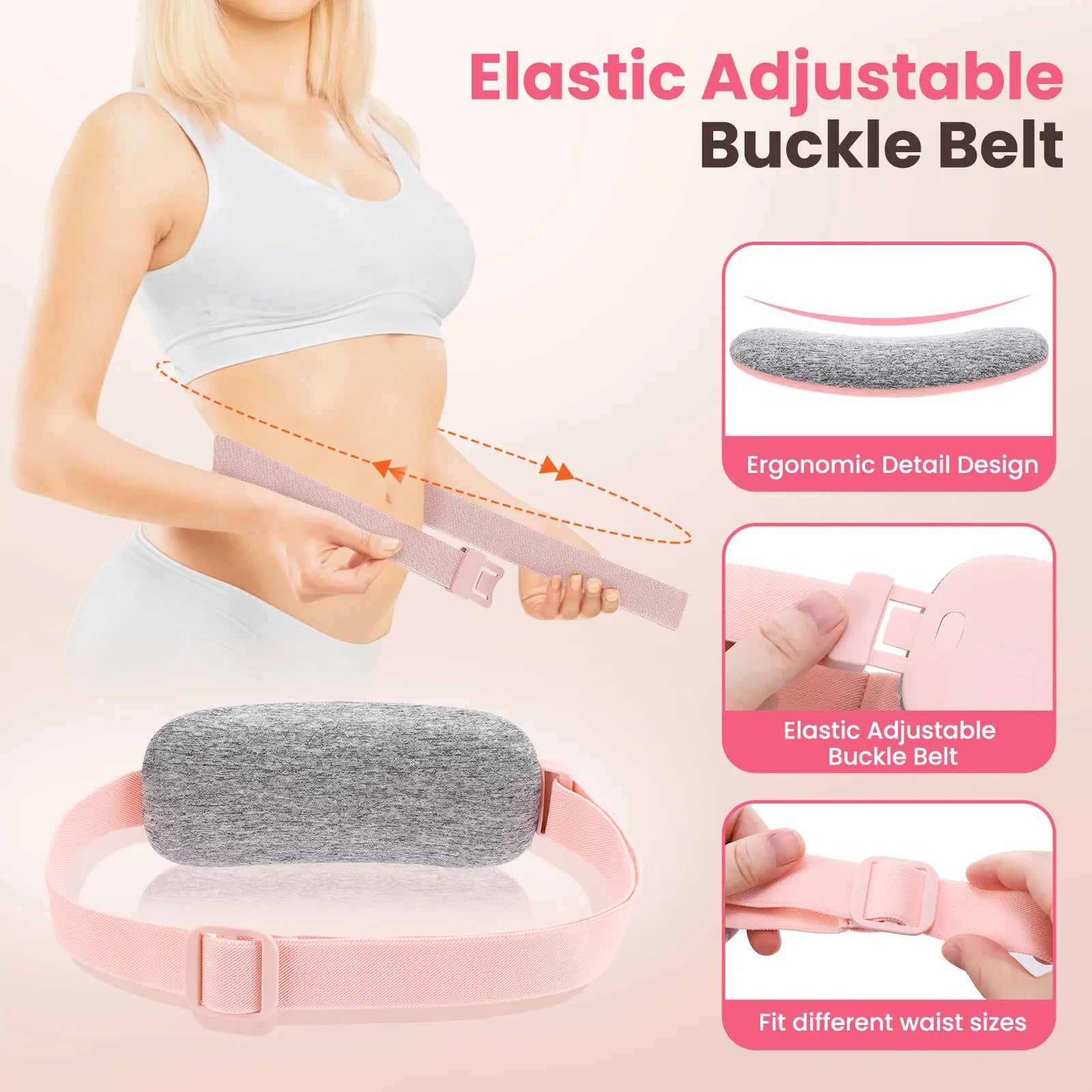
That combination may be particularly practical for people looking for portable heat for period cramps rather than a stationary heating pad. The vibration function should be viewed as an additional comfort feature, not as proof that vibration itself treats the underlying cause of dysmenorrhea.
Hot-Water Bottles
Hot-water bottles are inexpensive and familiar, but they require careful preparation. Water that is too hot can cause burns, while a damaged or poorly sealed bottle can leak. Use warm rather than dangerously hot water and inspect the bottle before use.
Which Heat Method Is Best?
Think in terms of use case rather than a universal winner. A traditional heating pad may make sense for resting at home. A hot-water bottle can be convenient when you prefer a simple, non-electronic option. A wearable rechargeable belt may be more practical when you want cordless abdominal heat during work, travel, or everyday activities.
For readers comparing options for self-care and everyday wellness, the broader Beauty & Self-Care Blog provides additional context on practical personal-care routines.
Heat Therapy Safety: What to Know Before You Use It
When Heat Can Cause Skin Injury
The biggest practical concern with heating pads and wearable heat devices is excessive heat exposure. A sensation that feels soothing can become harmful if the temperature is too high or exposure lasts too long.
Do not assume that a device's maximum setting is appropriate for prolonged use. In particular, a listed maximum temperature such as 65°C is a product specification, not a recommendation to expose your skin to that temperature continuously.
Who Should Use Extra Caution?
People with reduced heat sensation, certain skin conditions, circulation concerns, or other health circumstances that could increase the risk of burns should seek individualized medical guidance before using sustained heat.
Children should not use adult menstrual heating devices without appropriate supervision, and anyone who cannot reliably recognize excessive heat should avoid unsupervised use.
When Heat Is Not Enough
Heat should not become a reason to ignore significant changes in menstrual pain. If symptoms are severe, worsening, newly developed, persistent between periods, or associated with other concerning symptoms, professional assessment is more appropriate than simply increasing the heat setting.
When Severe Menstrual Cramps Should Be Evaluated
Signs Your Period Pain May Not Be Typical
Consider speaking with a healthcare professional if your menstrual pain:
- Becomes substantially worse over time.
- Starts for the first time after years of relatively normal periods.
- Regularly prevents you from working, studying, sleeping, exercising, or participating in normal activities.
- Persists outside your menstrual period.
- Does not improve with the strategies that normally help you.
- Occurs alongside other symptoms that concern you.
Possible Causes of Secondary Dysmenorrhea
Conditions associated with secondary dysmenorrhea can include endometriosis, adenomyosis, uterine fibroids, and other pelvic disorders. These conditions require clinical assessment rather than diagnosis based on symptoms alone.
Heat may still provide temporary comfort, but symptom relief does not establish the cause of pain.
What a Healthcare Professional Can Evaluate
A healthcare professional can consider your pain pattern, menstrual history, associated symptoms, medications, and other relevant factors. Depending on the situation, examination or additional testing may be appropriate.
This distinction is especially important because effective self-care should complement appropriate medical care rather than delay it.
Other Evidence-Based Ways to Manage Menstrual Cramps
NSAIDs Such as Ibuprofen and Naproxen
NSAIDs are commonly used for primary dysmenorrhea because they inhibit prostaglandin production. Follow the product label and consider professional advice if you have medical conditions, take other medications, or are unsure whether an NSAID is appropriate for you.
Gentle Movement and Exercise
Exercise is another non-drug strategy with supportive evidence. A systematic review of non-pharmacological interventions found that exercise and topical heat were among approaches associated with reductions in menstrual pain, although the certainty and quality of evidence varied. :contentReference[oaicite:6]{index=6}
Gentle walking, stretching, yoga, or other comfortable movement may be preferable during painful periods. The goal is not to force intense exercise when your body needs rest.
Other Comfort Measures
Relaxation, massage, adequate rest, and individualized comfort strategies can also have a role. A systematic review of heat and TENS found evidence that heat can reduce pain in primary dysmenorrhea, while also emphasizing the need for stronger trials. :contentReference[oaicite:7]{index=7}
The most practical approach may therefore be a combination of strategies rather than searching for one universal solution.
Quick Reference: Using Heat for Menstrual Cramps
Heat Therapy Quick-Use Checklist
- Placement: Start over the lower abdomen where cramps are most noticeable; lower-back placement may also be comfortable.
- Temperature: Choose comfortably warm rather than painfully hot.
- Duration: Follow the specific device instructions and use automatic timers when available.
- Skin protection: Check your skin regularly and stop if you experience burning, numbness, excessive redness, or irritation.
- Portability: A rechargeable wearable belt can be useful when you want hands-free warmth away from an outlet.
- Combination care: Heat can be used as part of a broader pain-management strategy when appropriate.
- Medical care: Seek evaluation for severe, worsening, unusual, or unexplained menstrual pain.
The Bottom Line on Heat Therapy for Menstrual Cramps
Heat therapy for menstrual cramps can provide meaningful short-term relief for many people with primary dysmenorrhea. Research increasingly supports topical heat as a useful non-drug approach, although studies vary in quality and heat does not address every underlying cause of menstrual pain. :contentReference[oaicite:8]{index=8}
Heat also works differently from NSAIDs. Rather than directly reducing prostaglandin production, it provides local warmth and pain-modulating sensory input. For some people, that makes it a convenient standalone comfort measure; for others, it can complement an appropriate broader pain-management plan.
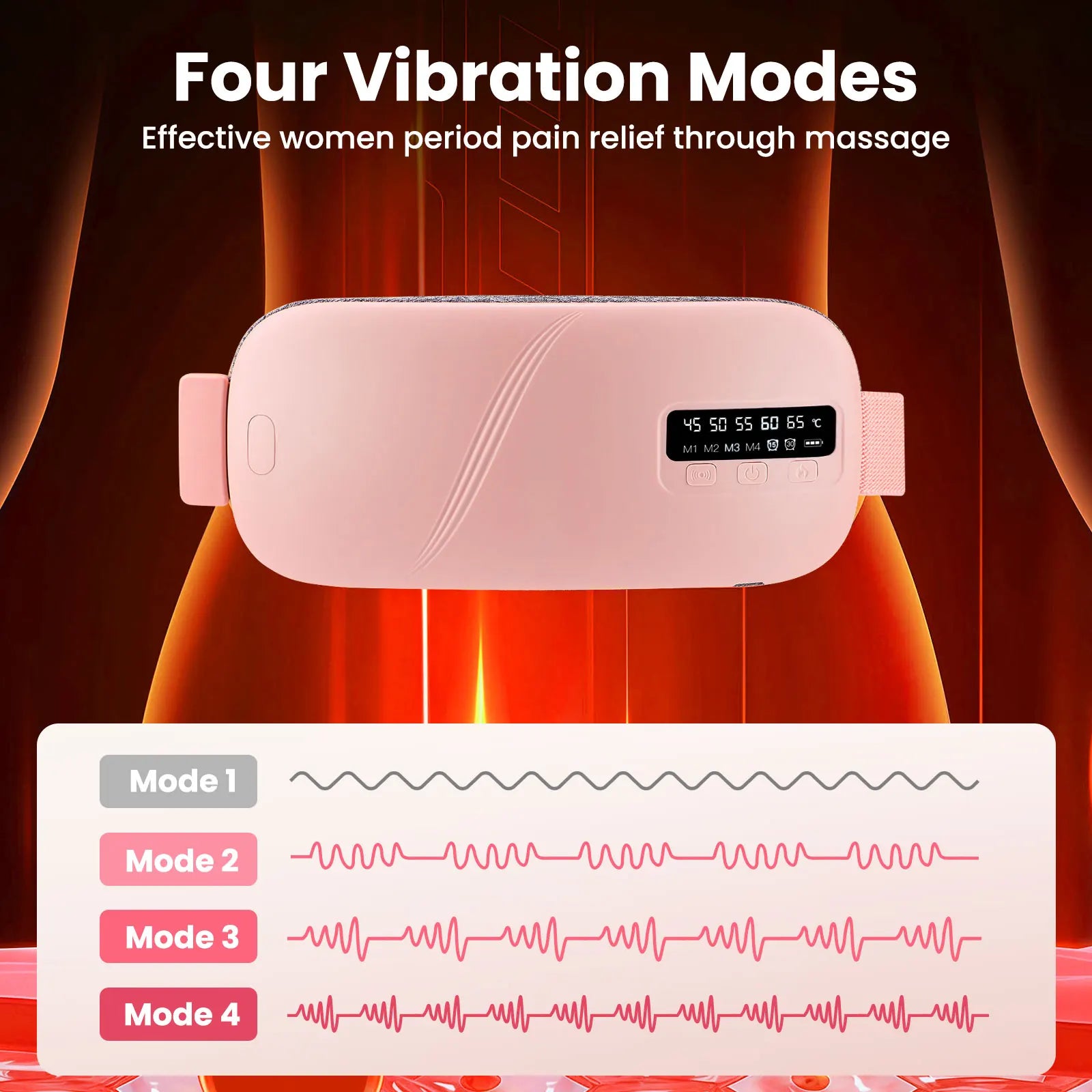
If portability matters, a cordless device such as the Menstrual Heating Pad for Period Relief & Soothing Heat Belt offers adjustable warmth, optional gentle vibration, automatic 15- or 30-minute sessions, and rechargeable cordless operation. Its practical advantage is convenience—not a claim to treat or cure dysmenorrhea.
For readers who prefer portable personal-care solutions, exploring Lifestyle products can also help put cordless comfort devices into the broader context of everyday routines.
Most importantly, use heat safely and listen to changes in your symptoms. If menstrual pain becomes unusually severe, progressively worse, or difficult to manage, the next step should be medical evaluation—not simply more heat.
Pillar Article: Best Heated Abdominal Belt for Women: Top Picks for Comfort













