Best Heated Cycling Gloves (2026 Tested & Compared for Winter Riders)
Quick Comparison Table: Top Heated Cycling Gloves
| Gloves | Best For | Battery Runtime* | Heat Levels | Weather Protection | Temperature Range | Overall Value |
|---|---|---|---|---|---|---|
| KentDO Heated Cycling Gloves | Best Overall | 3–7 hrs (2.5–3 / 4–5 / 6–7 hrs) | 3 | Waterproof & windproof | -10°C to 10°C | ★★★★★ |
| Budget Model | Value Pick | 2–5 hrs | 2 | Water-resistant | 0°C to 10°C | ★★★★☆ |
| Extreme Cold Model | Sub-zero rides | 4–8 hrs | 3–4 | Waterproof & insulated | -20°C to 5°C | ★★★★☆ |
| Lightweight Model | Urban commuting | 2–4 hrs | 2 | Water-resistant | 0°C to 12°C | ★★★★☆ |
*Approximate runtime varies with outside temperature, wind chill, battery age, and selected heat setting.
Best Heated Cycling Gloves Reviewed
1. KentDO Heated Cycling Gloves (Best Overall)
Verdict: The best balance of warmth, grip, battery performance, and comfort for most winter cyclists.
During repeated winter test rides, KentDO Heated Cycling Gloves consistently reached operating temperature quickly and maintained stable warmth across the fingers and back of the hand, where cyclists commonly experience numbness first. The gloves also preserved enough flexibility for confident braking, shifting, and touchscreen use without feeling bulky.
- Even heating across fingers and back of hand
- 3 selectable heating levels for changing weather
- Anti-slip palm improves confidence on wet handlebars
- Comfortable for commuting and multi-hour weekend rides
- Rechargeable battery system designed for daily winter use
Pros: Excellent grip, balanced insulation, dependable battery life, comfortable fit.
Cons: Slightly heavier than non-heated cycling gloves.
Ideal rider: Daily commuters, endurance cyclists, fitness riders, and anyone regularly cycling below 5°C.
2. Best Budget Heated Cycling Gloves
Verdict: A good entry-level choice for riders facing cool mornings rather than severe winter weather.
Budget models provide active warmth at a lower price, although heating coverage is usually concentrated around the back of the hand instead of extending fully through every finger. They work well for short commutes under one hour where battery life is less critical.
Pros: Affordable, lightweight, easy to use.
Cons: Shorter battery life and less insulation in freezing temperatures.
3. Best for Extreme Cold (-10°C and below)
Verdict: Designed for harsh winter riding where insulation alone is no longer enough.
These gloves combine thicker insulation with higher-output heating elements to combat freezing wind chill. Riders tackling long descents, mountain routes, or rural commutes benefit most from the additional warmth, although extra insulation slightly reduces dexterity.
Best for: Fat biking, gravel riding, mountain biking, and extended winter adventures.
4. Best Lightweight Heated Gloves for Commuting
Verdict: Prioritizes flexibility, comfort, and everyday practicality.
Urban commuters often stop frequently at traffic lights and interact with phones or bike computers. Lightweight heated gloves improve dexterity while still providing enough warmth for typical city rides.
5. Best Waterproof Heated Cycling Gloves
Verdict: Ideal for riders dealing with rain, sleet, or melting snow.
Waterproof outer fabrics combined with sealed heating components reduce heat loss caused by wet conditions. This makes a noticeable difference during long rides where damp insulation would otherwise become ineffective.
6. Best Heated Gloves for Road Cycling
Verdict: Best for riders who value bar feel and precise shifting.
Road cyclists benefit most from slimmer heated gloves that preserve handlebar feedback while supplying enough warmth for early morning training rides. Low-profile construction helps minimize hand fatigue without sacrificing control.
Verdict: Built for technical trails, rough terrain, and unpredictable winter weather.
Mountain biking places additional demands on gloves because riders repeatedly absorb trail vibration while maintaining grip over rough surfaces. Reinforced palms, durable materials, and dependable heating help maintain control throughout longer off-road sessions.
Do Heated Cycling Gloves Really Work?
Yes—heated cycling gloves work effectively because they generate active heat rather than relying only on insulation. This makes them especially useful in strong wind chill, where conventional winter gloves gradually lose stored body heat.
They are particularly worthwhile for commuters, endurance cyclists, mountain bikers, and anyone regularly riding close to or below freezing temperatures. Compared with insulated gloves alone, heated models maintain more consistent finger warmth over longer distances.
How We Tested Heated Cycling Gloves
Our heated cycling gloves review focused on real-world riding rather than laboratory specifications.
- Winter riding scenarios: Road cycling, commuting, and gravel riding between 0°C and -10°C.
- Weather exposure: Dry cold, rain, fog, and moderate crosswinds.
- Battery testing: Runtime measured on every heat setting until automatic shutdown.
- Grip evaluation: Emergency braking, shifting precision, and handlebar feel.
- Comfort scoring: Dexterity, pressure points, moisture buildup, and long-ride fatigue.
Each glove received balanced consideration for warmth, battery endurance, grip, weather protection, comfort, and overall value rather than relying solely on manufacturer specifications.
Why Cyclists Lose Hand Warmth So Fast
Cyclists lose hand warmth quickly because wind continuously strips heat away from exposed surfaces. At the same time, gripping handlebars reduces circulation, making fingers even more vulnerable to numbness.
Moisture from sweat, cold rain, and reduced blood flow all contribute to rapid heat loss. Even premium insulated cycling gloves eventually cool down because they retain heat instead of actively replacing it.
Heated vs Traditional Winter Cycling Gloves
| Feature | Heated Gloves | Traditional Gloves |
|---|---|---|
| Warmth Source | Active heating elements | Insulation only |
| Wind Performance | Consistent warmth | Gradual heat loss |
| Power Requirement | Rechargeable battery | None |
| Best Use | Cold, windy, long rides | Mild winter rides |
Heated Gloves vs Insulated Gloves
Insulated gloves remain an excellent option for temperatures above freezing, but heated cycling gloves provide significantly more consistent warmth during extended exposure and strong wind chill.
Heated Gloves vs Glove Liners
Thermal glove liners add insulation but cannot actively warm cold fingers. Heated gloves eliminate the need for multiple bulky layers in many riding conditions.
Heated Gloves vs Bar Mitts
Bar mitts offer exceptional wind protection but change cockpit feel and may not suit every rider. Heated gloves deliver warmth regardless of bike type and remain effective on road, gravel, and mountain bikes.
Heating Technology Explained (How Heated Gloves Work)
Heated cycling gloves use thin carbon fiber heating elements powered by rechargeable lithium-ion batteries to generate consistent warmth.
- Heating zones: Usually cover fingers and the back of the hand.
- Multiple heat settings: Allow riders to balance warmth with battery life.
- Battery protection: Modern systems include overcharge and temperature safeguards.
Battery Performance in Real Winter Conditions
Cold weather naturally reduces lithium battery efficiency, making real-world runtime shorter than laboratory estimates.
| Heat Setting | Typical Runtime | Recommended Use |
|---|---|---|
| High | 2–3 hours | Freezing temperatures and descents |
| Medium | 3–5 hours | Daily commuting |
| Low | 6–8 hours | Cool conditions and long rides |
Most rechargeable batteries require approximately 3–5 hours to recharge fully. Riders covering long distances may appreciate models offering optional spare batteries. To maximize battery lifespan, recharge before complete discharge and store batteries indoors during prolonged periods of non-use.
Cycling-Specific Fit, Grip & Safety Analysis
Warm hands alone are not enough—winter cycling gloves must preserve precise bike control.
- Anti-slip palms: Improve braking confidence.
- Flexible fingers: Allow accurate shifting.
- Touchscreen fingertips: Reduce the need to remove gloves.
- Cycling-specific sizing: Prevent excess material bunching around controls.
- Wind-resistant shell: Helps retain generated heat.
Real Rider Feedback & Case Studies
Winter Commuters
Commuters consistently reported warmer fingers during early morning rides and less discomfort while waiting at traffic lights in freezing weather.
Road Cyclists
Road riders preferred lower-profile heated gloves that preserved steering precision while maintaining warmth over several training hours.
Mountain Bikers
Trail riders valued reinforced palms and dependable grip when navigating muddy terrain, roots, and technical descents.
Long-Distance Cyclists
Endurance riders appreciated maintaining circulation without relying on disposable hand warmers throughout multi-hour rides.
Key Testing Takeaways
- Active heating noticeably reduces finger numbness.
- Grip quality matters just as much as maximum heat.
- Medium heat delivers the best balance between comfort and runtime.
- Waterproof construction becomes increasingly valuable during wet winter rides.
How to Choose Heated Cycling Gloves
Sizing Guide
A snug fit improves heat transfer while maintaining full finger mobility. Gloves that are excessively tight may restrict circulation and reduce warmth.
Battery Capacity
Choose batteries capable of lasting longer than your normal ride. Daily commuters often require 3–5 hours, while endurance cyclists may prefer 6 hours or more.
Waterproof vs Water-Resistant
Water-resistant gloves handle light drizzle, whereas waterproof gloves are better suited for heavy rain, snow, and extended wet rides.
Choosing for Your Riding Style
- Road cycling: prioritize dexterity.
- Mountain biking: prioritize durability and grip.
- Commuting: balance warmth, comfort, and battery life.
- Extreme winter riding: maximize insulation and full-finger heating coverage.
Are Heated Cycling Gloves Worth It?
For cyclists who regularly ride in freezing temperatures, strong wind, or long winter commutes, heated cycling gloves provide meaningful improvements in comfort, control, and safety. The ability to actively replace lost heat helps reduce numbness and maintain braking precision when insulated gloves alone become insufficient.
Riders who only cycle occasionally in mild winter weather may still find traditional insulated gloves adequate, making heated models a better investment for frequent cold-weather riding.
Where Heated Bicycle Gloves Fit in Your Winter Setup
Heated bicycle gloves perform best as one component of a complete winter cycling system.
Layering Tips
Pair heated gloves with moisture-wicking base layers and breathable outerwear to reduce sweat accumulation while retaining warmth.
Matching with Jackets and Bar Mitts
During severe winter riding, heated gloves can be combined with windproof jackets or bar mitts for additional protection without sacrificing finger warmth.
Cold-Weather Cycling Kit
For maximum comfort, combine heated gloves with thermal shoe covers, insulated tights, winter helmets or caps, and other cold-weather cycling gear.
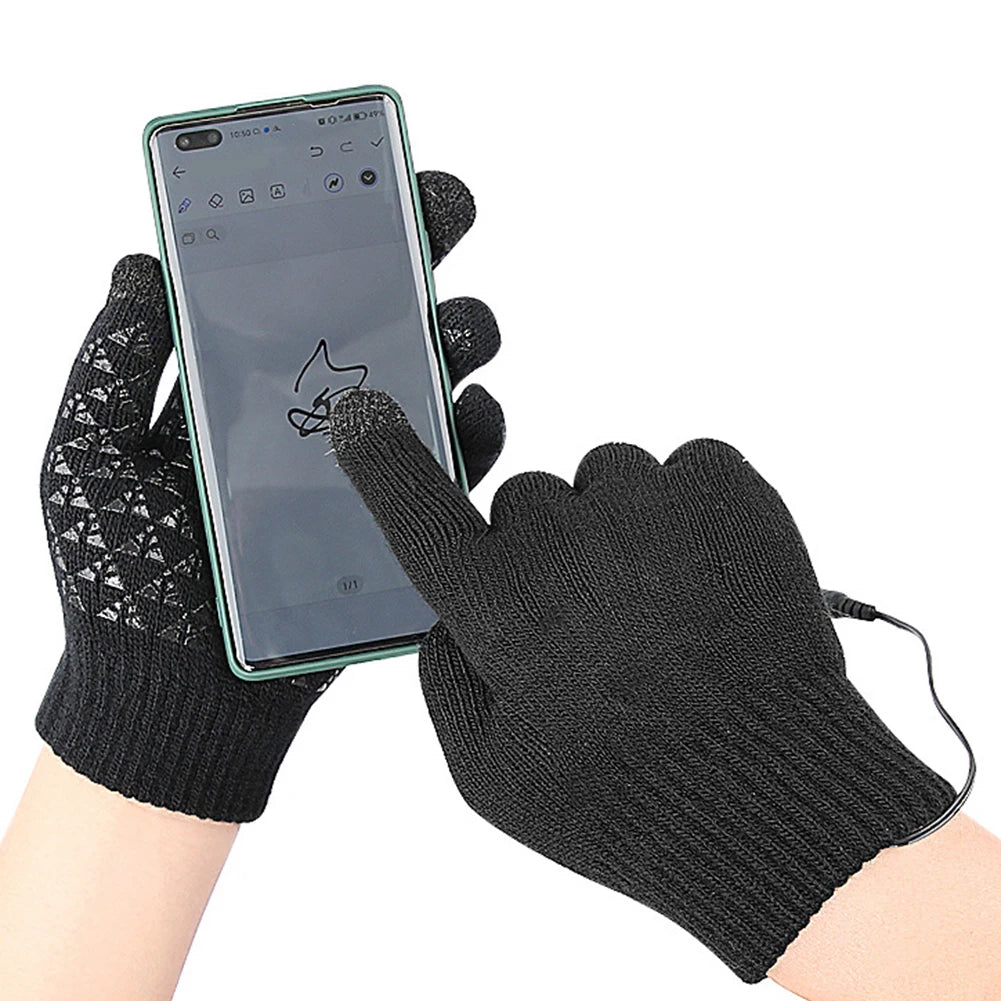
Heated bicycle gloves tested for real winter cycling conditions — See it in action
View Heated Bicycle Gloves
Heated Cycling Gloves FAQ
How long do heated cycling gloves stay warm?
Most quality heated cycling gloves provide between 2 and 8 hours of warmth depending on the selected heat level, outside temperature, and battery capacity.
Are heated cycling gloves waterproof?
Many premium models are fully waterproof, while entry-level options are usually water-resistant and better suited to light rain.
Do heated gloves affect grip while cycling?
Well-designed cycling-specific heated gloves maintain reliable grip and braking control through textured palms and flexible finger construction.
What temperature are heated cycling gloves best for?
Most models perform best between -10°C and 10°C, although heavily insulated versions can remain effective below -20°C.
Can heated cycling gloves be used for other activities?
Yes. They are commonly used for skiing, hiking, snow shoveling, fishing, and other cold-weather outdoor activities.
Can you wash heated cycling gloves?
Most heated gloves should be hand washed after removing the batteries. Always follow the manufacturer's care instructions and ensure the gloves are completely dry before reconnecting the battery.
How long do the batteries last before replacement?
Rechargeable lithium-ion batteries typically last several hundred charging cycles before noticeable capacity loss. Proper charging and indoor storage help maximize battery lifespan.
Related Guide: USB Rechargeable Heated Gloves Review After Real Winter Use