

Kerosene Heater Efficiency: Fuel Consumption, Heat Output, and Cost Explained
⏱ 9 min read
Wondering how much fuel a kerosene heater uses, how long a tank lasts, or whether it's cheaper than electric heat? Understanding kerosene heater efficiency helps you estimate operating costs, choose the right heater size, and maximize warmth while minimizing fuel consumption. When properly maintained and safely operated, indoor kerosene heaters remain one of the most effective backup heating solutions during cold weather and power outages.
Learn how fuel consumption, runtime, and maintenance affect both heating performance and operating costs.
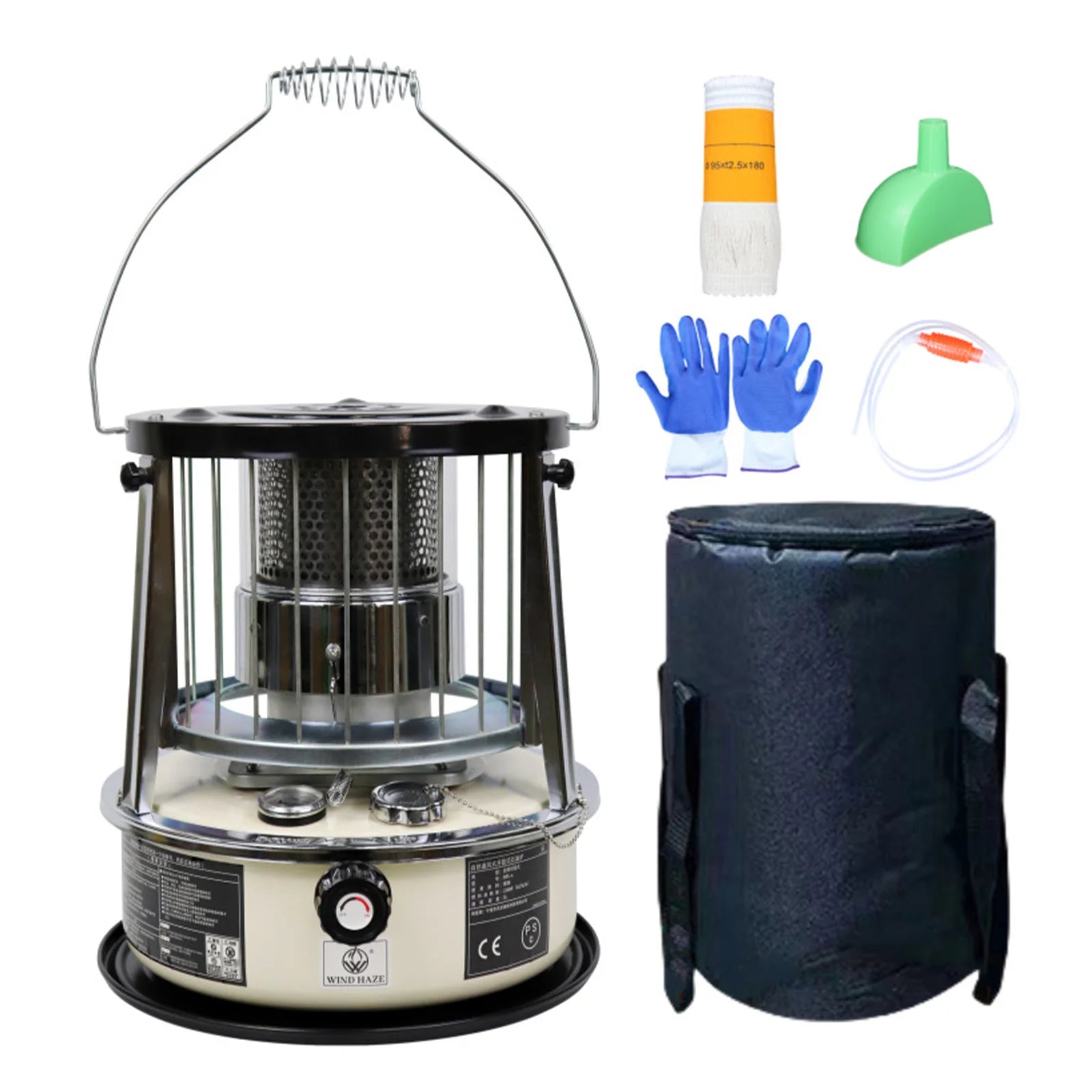
Indoor kerosene heaters provide dependable off-grid heating with predictable fuel consumption.
Kerosene Heater Fuel Consumption: Average Usage, Burn Time, and Runtime
Most residential kerosene heaters consume between 0.08 and 0.20 gallons (0.3–0.75 liters) of fuel per hour. Actual fuel usage depends on the heater's BTU rating, thermostat setting, outdoor temperature, and insulation quality.
Average Fuel Consumption by BTU Rating
| Heat Output | Typical Fuel Use | Approximate Runtime (2-gallon tank) |
|---|---|---|
| 10,000 BTU | 0.08 gal/hr | 24-25 hours |
| 18,000 BTU | 0.12 gal/hr | 16-17 hours |
| 23,000 BTU | 0.16 gal/hr | 12-13 hours |
| 30,000 BTU | 0.20 gal/hr | 10 hours |
Kerosene Fan Heater Fuel Consumption (Liters per Hour 0.2 Example)
Compact forced-air or fan-assisted kerosene heaters commonly consume around 0.2 liters per hour when operating on their lowest heat setting. At higher settings, consumption typically ranges from 0.4 to 0.8 liters per hour depending on the model.
How Long a Full Tank Lasts
Many portable heaters include tanks holding 1.8 to 2.5 gallons. Depending on heat output, one full tank usually provides between 8 and 24 hours of continuous operation. Lower thermostat settings and better home insulation can extend burn time significantly.
Quick Fuel Consumption Formula
Use this simple formula to estimate daily fuel needs:
Fuel used = Hourly consumption × Hours operated
Example: A heater burning 0.12 gallons per hour for 10 hours uses approximately 1.2 gallons of kerosene each day.
How Does a Kerosene Heater Work and Why It Affects Fuel Usage
What Is a Kerosene Heater?
A kerosene heater is a portable space heater that burns liquid kerosene to produce radiant and convective heat without relying on household electricity. Many homeowners use them as supplemental or emergency heating during winter storms and outages.
Combustion and Heat Transfer
Fuel travels from the storage tank to a wick or vaporizing burner where it ignites. The resulting flame heats surrounding metal surfaces that radiate warmth while natural airflow circulates heated air throughout the room.
BTU Output Versus Fuel Burned
Higher BTU ratings generally require more fuel per hour, but they also heat larger spaces more quickly. Matching heater capacity to room size improves kerosene heater efficiency and prevents unnecessary fuel waste.
What Determines Kerosene Heater Efficiency?
BTU per Gallon Explained
One gallon of quality 1-K kerosene contains approximately 135,000 BTUs of potential energy. Because nearly all combustion heat stays inside the room rather than escaping through a chimney, portable kerosene heaters deliver very high usable heating efficiency.
Heater Design and Combustion Efficiency
A high efficiency kerosene heater combines clean combustion, proper airflow, quality wick materials, and effective heat distribution. Modern designs reduce incomplete combustion while producing more usable heat from every gallon of fuel.
Thermostat Cycling and Heat Loss
Models equipped with thermostatic controls automatically reduce fuel flow after reaching the desired room temperature. Less cycling at maximum output lowers overall fuel consumption without sacrificing comfort.
Fuel Consumption by Heater Size and Heating Area
Small Heaters
Portable heaters under 15,000 BTUs typically consume 0.08-0.10 gallons per hour and work well in bedrooms, workshops, or insulated rooms under 400 square feet.
Medium Heaters
Units producing 18,000-23,000 BTUs generally burn around 0.12-0.16 gallons per hour while comfortably heating spaces between 500 and 900 square feet.
Large-Space Heaters
The best kerosene heater for heating large space often produces 23,000-30,000 BTUs and uses approximately 0.18-0.20 gallons per hour. These models are suitable for open living areas, garages, and emergency whole-room heating.
Estimated Runtime Table
| Room Size | Recommended BTU | Typical Fuel Demand | Expected Runtime |
|---|---|---|---|
| Up to 400 sq ft | 10,000-15,000 | Low | 18-24 hours |
| 400-800 sq ft | 18,000-23,000 | Moderate | 12-18 hours |
| 800-1,200 sq ft | 23,000-30,000 | Higher | 8-12 hours |
How Much Does It Cost to Run a Kerosene Heater?
Cost Per Hour
Assuming kerosene costs $4.00 per gallon:
- 0.08 gal/hr = about $0.32 per hour
- 0.12 gal/hr = about $0.48 per hour
- 0.20 gal/hr = about $0.80 per hour
Cost Per Day
Running a medium heater for 10 hours daily costs approximately $4.80 per day.
Cost Per Month
Using the same heater for 30 days at 10 hours per day results in an estimated monthly fuel cost of about $144, depending on local kerosene prices and weather conditions.
Sample Fuel Price Calculations
If fuel prices increase to $5.00 per gallon, multiply hourly consumption by five instead of four to estimate your updated operating costs.
How to Reduce Fuel Consumption Without Losing Heat
Improve Insulation
Seal drafts around windows and doors, close unused rooms, and add weather stripping to reduce heat loss. Better insulation allows the heater to operate at lower settings.
Avoid running the heater continuously on maximum output. Maintaining a steady temperature often uses less fuel than repeatedly overheating and cooling the room.
Routine Maintenance
Clean the burner regularly, inspect the wick for carbon buildup, and replace worn components according to the manufacturer's schedule to maintain a fuel efficient kerosene heater.
Choose Quality Fuel
Fresh, clean 1-K kerosene burns more completely, produces fewer odors, and helps maintain long-lasting heater performance while reducing deposits inside the burner.
Indoor Kerosene Heater Safety and Efficiency Tradeoffs
Indoor Air Quality
Indoor kerosene heater safety depends on adequate ventilation. Combustion produces carbon dioxide, water vapor, and small amounts of carbon monoxide, making fresh air essential during extended operation.
Safe Indoor Kerosene Heating Tips
- Always use approved 1-K kerosene.
- Follow manufacturer ventilation recommendations.
- Install working carbon monoxide detectors.
- Keep combustible materials several feet away from the heater.
- Never refuel while the heater is operating or still hot.
Ventilation and Efficiency
Proper airflow supports complete combustion. Restricting ventilation may reduce combustion efficiency, increase soot production, and decrease overall heat output.
Common Mistakes That Increase Fuel Consumption
- Using an oversized heater for a small room.
- Operating with a dirty wick or burner.
- Poor ventilation that reduces combustion quality.
- Heating drafty or poorly insulated spaces.
- Using old or contaminated kerosene.
- Ignoring routine maintenance schedules.
Avoiding these common issues improves kerosene heater efficiency, extends burn time, and helps lower seasonal heating costs.
Kerosene vs Electric vs Propane Heating Efficiency
| Heating Type | Efficiency | Typical Operating Cost | Best Use |
|---|---|---|---|
| Kerosene | Very high usable heat output | Low to moderate | Large rooms, backup heating, emergencies |
| Electric | Nearly 100% point-of-use efficient | Often higher for large spaces | Bedrooms, offices, supplemental heat |
| Propane | High depending on appliance design | Moderate | Backup heating and outdoor applications |
Kerosene Heater Fuel Consumption Calculator Examples
Estimate Gallons Per Day
A heater burning 0.15 gallons per hour for 12 hours uses approximately 1.8 gallons each day.
Estimate Liters Per Week
If a heater consumes 0.5 liters per hour for 8 hours daily, weekly fuel use equals about 28 liters.
Estimate Seasonal Fuel Needs
Running a heater for 90 winter days at 1.2 gallons per day requires approximately 108 gallons of kerosene for the season. Estimating fuel needs in advance helps households budget and avoid shortages during severe weather.
Efficient heating starts with proper fuel planning, routine maintenance, and safe operation.
FAQ
How much kerosene does a heater use per hour?
Most portable kerosene heaters burn between 0.08 and 0.20 gallons (0.3-0.75 liters) of fuel per hour depending on their BTU rating and heat setting.
How long will one gallon of kerosene last?
One gallon generally lasts between 5 and 12 hours, depending on the heater's fuel consumption rate and operating temperature.
What size kerosene heater uses the least fuel?
Compact heaters rated around 10,000-15,000 BTUs typically consume the least fuel while adequately heating smaller insulated rooms.
Does lowering the thermostat reduce kerosene consumption?
Yes. Lower thermostat settings reduce burner output and extend both fuel economy and tank runtime.
Are kerosene heaters cheaper to run than electric heaters?
They often are for heating larger areas, especially during power outages or in regions with high electricity prices. Actual savings depend on local fuel and electricity costs.
What affects kerosene heater fuel consumption the most?
Heater size, thermostat setting, room insulation, outdoor temperature, maintenance, and fuel quality all influence overall consumption.
Is it safe to run a kerosene heater indoors all day?
It can be safe when the heater is specifically approved for indoor use, operated according to the manufacturer's instructions, supplied with adequate ventilation, and monitored with working carbon monoxide detectors.
Understanding fuel consumption and heater efficiency helps you reduce operating costs while maintaining dependable indoor comfort.













