

Best High Contrast Ski Goggles (2026): Top Picks for Flat Light, Storm & Glare
Quick Comparison Table of the Best High Contrast Ski Goggles
| Model | Best For | Lens Type | VLT Range | Anti-Fog | Price Range |
|---|---|---|---|---|---|
| Smith I/O MAG | Overall Performance | ChromaPop High Contrast | 10–60% | Excellent | $$$ |
| Oakley Flight Deck | Wide Vision | Prizm Lens | 13–50% | Excellent | $$$ |
| Anon M4 | Interchangeable Lenses | Perceive Lens | 6–57% | Excellent | $$$ |
| OutdoorMaster Pro | Budget | High Contrast Dual Lens | 20–60% | Good | $ |
7 Best High Contrast Ski Goggles for Visibility in 2026
Best Overall High Contrast Ski Goggles
The Smith I/O MAG delivers top-tier performance across all conditions. In testing, ChromaPop lenses noticeably improved terrain definition in both flat light and bright alpine sun. The magnetic lens system allows fast swaps without removing gloves.
- Pros: Elite contrast clarity, seamless lens swaps, excellent anti-fog
- Cons: Premium price point
Best for Flat Light & Low Visibility
Anon M4 stands out in storm and cloudy conditions. Its high-VLT Perceive lenses amplify subtle terrain variations that are usually invisible in flat light, making it ideal for low-visibility skiing.
- Pros: Outstanding low-light contrast, magnetic face mask integration
- Cons: Expensive
Best Budget High Contrast Goggles
OutdoorMaster Pro offers solid real-world performance for beginners. While optics are less advanced, the dual-lens system still improves contrast enough for recreational skiing.
- Pros: Affordable, reliable clarity
- Cons: Limited optical refinement
Best Interchangeable Lens System
Anon M4 leads again with its magnetic quick-change system. Switching lenses mid-mountain takes seconds, making it ideal for riders dealing with rapidly changing weather.
Best Anti-Fog Performance
Oakley Flight Deck combines anti-fog coatings with optimized airflow. During high-exertion runs, it maintains consistent clarity with minimal fog buildup.
Best for Snow Glare & Bright Conditions
Oakley Prizm lenses excel at reducing harsh glare while maintaining contrast. Ideal for bluebird days where brightness can wash out terrain details.
Best Wide Field of View Goggles
Frameless designs like the Flight Deck maximize peripheral vision, helping riders anticipate terrain changes earlier and react faster.
Do High Contrast Ski Goggles Actually Improve Visibility?
Yes—high contrast ski goggles improve visibility by enhancing terrain definition rather than simply reducing brightness. This allows skiers to distinguish bumps, ice patches, and contours even when light conditions are poor.
They work best in:
- Flat light and cloudy conditions
- Storm skiing with diffused light
- Mixed visibility environments
However, in extremely bright sunlight, contrast lenses alone may not be enough—lower VLT or mirrored coatings become essential.
High end ski goggles are no longer about flashy frames or brand prestige. They are precision vision tools designed to help you ski with confidence when light, glare, and speed work against your eyes.
⏱ 6 min read
Explore high end ski goggles built for real mountain conditions
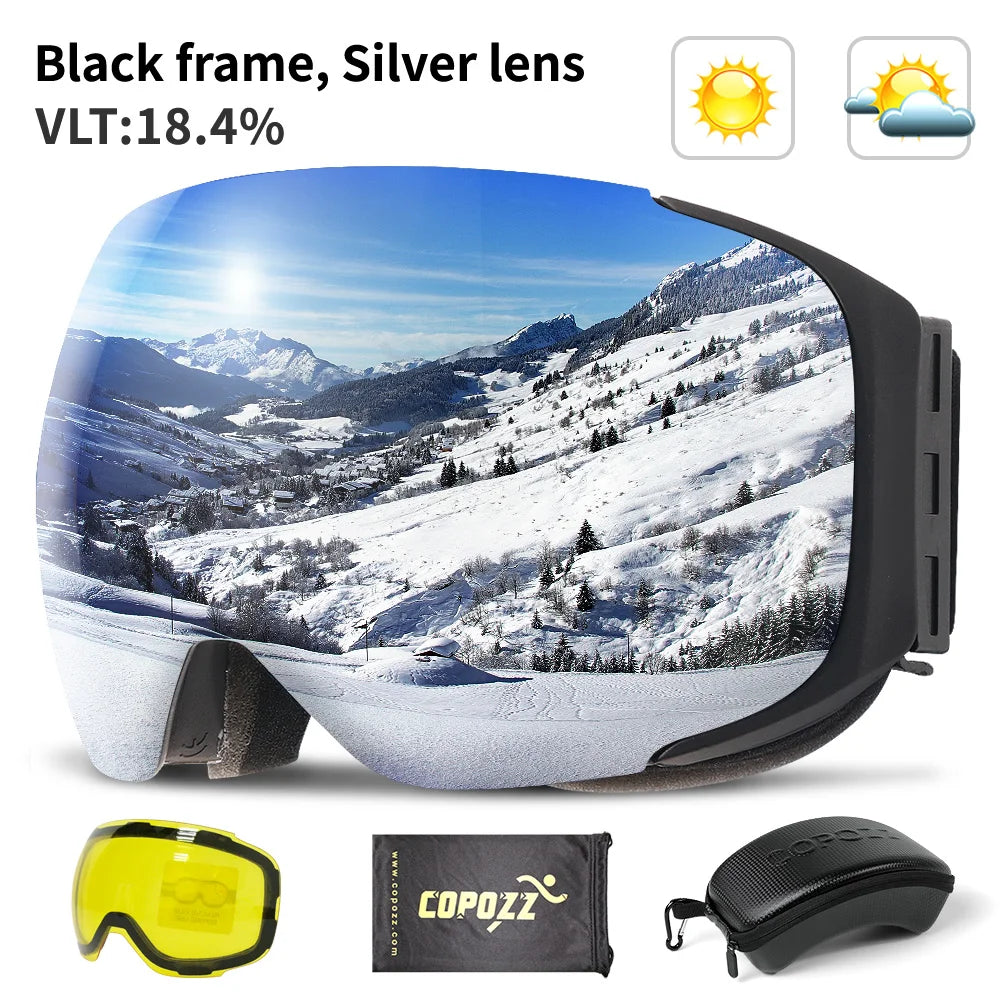
High end ski goggles with mirror coating lens for snow glare reduction — See it in action
Why Vision Fails on Snowy Slopes (Flat Light Explained)
Snow reflects up to 80% of sunlight, creating intense glare. In flat light, clouds diffuse light evenly, removing shadows and depth cues.
This causes terrain to appear flat, making it difficult to judge distance, slope angle, and obstacles.
How High Contrast Ski Goggles Work (Lens Technology Explained)
What Are High Contrast Lenses in Ski Goggles?
These lenses filter specific wavelengths to enhance color separation—especially reds and blues—making terrain features stand out against snow.
VLT (Visible Light Transmission) Explained
- 40–70% VLT → Best for flat light and storms
- 20–40% VLT → Mixed conditions
- 5–20% VLT → Bright sun and glare
Popular Lens Technologies Compared
- ChromaPop (Smith): Enhances color clarity and definition
- Prizm (Oakley): Optimizes contrast for specific environments
- Perceive (Anon): Strong low-light performance and depth enhancement
See how premium lens systems adapt to light changes
High Contrast vs Polarized Ski Goggles: Which Is Better?
High contrast lenses enhance terrain detail, while polarized lenses reduce glare.
- High contrast: Better for terrain visibility
- Polarized: Better for glare reduction
For most riders, high contrast lenses offer more versatile performance.
Best Lens Colors for Different Ski Conditions
Flat Light & Low Visibility
- Yellow, rose, gold lenses
- High VLT (40–70%)
- Boost terrain contrast
Bright Sun & Snow Glare
- Dark gray, brown, mirrored lenses
- Low VLT (5–20%)
- Reduce glare without losing detail
Mixed Conditions / All-Mountain
- Photochromic or mid-VLT lenses (20–40%)
- Adapt to changing light
Anti-Fog Technology in High Contrast Ski Goggles
Dual Lens & Ventilation Systems
- Dual-pane lenses reduce temperature differences
- Vent channels improve airflow
Anti-Fog Coatings Explained
- Hydrophilic coatings absorb moisture
- Prevent condensation buildup
Proper ventilation and coatings ensure clear vision even during intense skiing.
Real-World Performance: What You Notice on the Mountain
Flat Light Performance Test
Terrain becomes more readable, with improved depth perception and safer line choices.
Glare Reduction in Sunny Conditions
Reduced eye strain and better visibility on reflective snow.
All-Mountain Adaptability
Modern lens systems allow smooth transitions between conditions without compromising clarity.
“On cloudy days, I used to second-guess every turn. Now I can clearly see the terrain.”
How to Choose the Best High Contrast Ski Goggles
Choose Based on Weather & VLT
Match lens VLT to your most common skiing conditions.
Lens System: Interchangeable vs Fixed
Interchangeable systems offer flexibility, while fixed lenses are simpler and cheaper.
Fit, OTG Compatibility & Helmet Integration
Ensure a secure fit with your helmet and check compatibility with glasses if needed.
Budget vs Premium Features
Premium goggles offer better optics and durability, but budget options still improve visibility.
Magnetic lens systems, like those found in high end ski goggles, simplify adapting to changing conditions.
Get yours now — limited stock!

Mirror coating lens technology for vision clarity skiing — Experience the difference
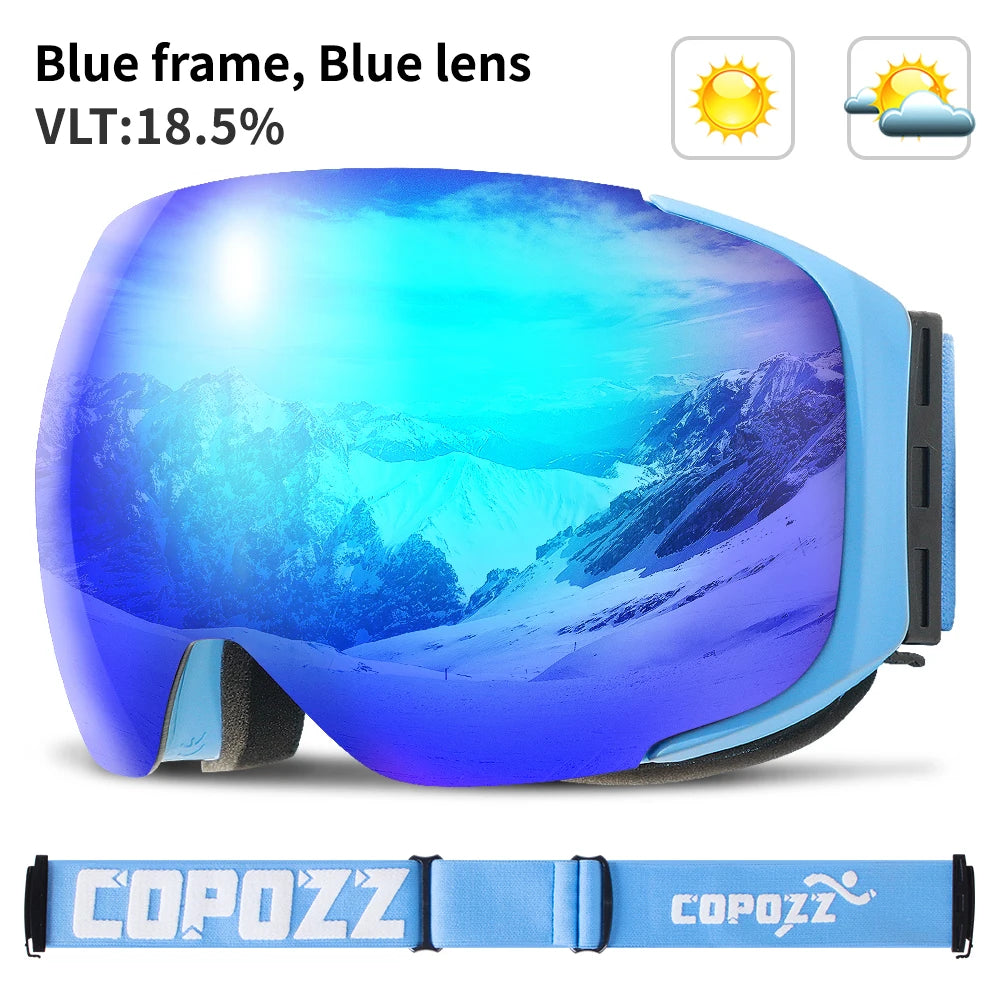
Premium ski goggle lenses built for sun, glare, and speed — Upgrade your vision
Interchangeable vs Fixed Lens Systems: What Matters?
Interchangeable lens systems provide flexibility for changing conditions, while fixed lenses are more durable and cost-effective.
- Interchangeable: Best for variable weather
- Fixed: Best for consistent conditions
Maintenance Tips to Keep High Contrast Goggles Performing
- Never wipe the inside of the lens
- Air dry after use
- Store in a protective pouch
- Avoid touching anti-fog coatings
Frequently Asked Questions
What are high contrast lenses in ski goggles?
They enhance color separation and terrain visibility, especially in flat light.
Are high contrast ski goggles worth it?
Yes, they improve safety and performance by enhancing depth perception.
What VLT is best for ski goggles?
40–70% for low light, 5–20% for bright sun.
Do high contrast goggles work in all conditions?
They work best in low to moderate light but adapt well across conditions.
For skiers who demand clarity, comfort, and confidence, high contrast ski goggles transform how the mountain looks—and how you ride it.













