

Hot Weather Work Gear: How to Stay Cool, Safe, and Protected
Hot-weather work gear has to do more than feel lightweight. The right setup should help manage sweat, improve airflow, limit sun exposure, preserve mobility, withstand the job, and work alongside required personal protective equipment (PPE). For outdoor workers, landscapers, construction crews, delivery drivers, farmers, and anyone working in a hot indoor environment, choosing gear as a complete heat-management system is often more useful than simply looking for the thinnest shirt or most powerful fan.
The best approach combines breathable, moisture-managing clothing with appropriate sun protection, hydration, rest, shade or other heat controls, and cooling accessories when useful. A wearable fan can add personal airflow, but it should complement—not replace—workplace heat-safety practices and required PPE.
What Should You Wear for Work in Hot Weather?
For most hot-weather jobs, start with lightweight moisture-wicking clothing, breathable construction, appropriate sun protection, durable materials suited to the task, and all required PPE. The best combination depends on whether you are working in direct sunlight, moving continuously, exposed to dust or abrasion, or required to wear high-visibility or protective equipment.
The basic hot-weather workwear system
- Base layer: Choose lightweight, moisture-wicking fabric that moves sweat away from the skin and dries relatively quickly.
- Work shirt: Look for breathable fabric, ventilation panels, and a fit that permits movement without creating snag hazards.
- Bottoms: Select work pants or shorts according to the job's safety requirements, with stretch and reinforcement where necessary.
- Sun protection: Use a suitable hat, UPF-rated clothing, sleeves, or neck coverage when practical.
- PPE: Wear the protective equipment required for the task and keep its fit and function ahead of comfort accessories.
- Cooling accessories: Cooling towels, breathable neck coverings, and hands-free fans can provide additional comfort in suitable conditions.
The five features to prioritize
- Moisture management: Sweat that remains against the skin can make clothing feel heavy and uncomfortable.
- Ventilation: Mesh panels, vented backs, and breathable construction can encourage air movement.
- Sun protection: Physical coverage and UPF-rated garments can reduce direct solar exposure.
- Mobility: Stretch and practical garment cuts matter when climbing, bending, walking, lifting, or operating equipment.
- Durability: Outdoor workwear needs to tolerate abrasion, repeated washing, tools, and the specific demands of the job.
How to Choose Hot Weather Workwear That Actually Works
Hot-weather clothing involves tradeoffs. The lightest fabric is not automatically the best choice for a construction site, and maximum coverage is not automatically the coolest option. Consider the combination of heat, humidity, sun, physical activity, job hazards, and required protective equipment.
Moisture-wicking fabric vs. ordinary cotton
Moisture-wicking synthetic blends and technical fabrics are commonly chosen for active work because they can move perspiration away from the skin and dry faster than many conventional cotton garments. That can be useful when workers sweat heavily or repeatedly move between tasks.
Cotton can still be comfortable for lighter-duty work, particularly in dry conditions. Its main limitation is that it can retain moisture and become heavier once saturated with sweat. The practical choice depends on workload, climate, drying conditions, and personal preference rather than a universal rule that one fabric is always best.
Breathable workwear and airflow
Breathability concerns how readily heat and moisture can move through a garment. Look for vented backs, mesh sections positioned away from hazards, lightweight construction, and a fit that allows reasonable air movement without becoming loose enough to interfere with machinery or equipment.
Airflow can also come from outside the garment. A wearable fan can provide localized personal airflow when environmental conditions and job requirements make it appropriate. Positioning matters: a waist-mounted fan can direct air upward or around the torso while leaving the hands available for work.
UPF clothing and sun protection
UPF, or ultraviolet protection factor, describes how effectively a fabric reduces ultraviolet radiation reaching covered skin. When working outdoors for long periods, UPF-rated garments can be useful alongside hats, shade, sunscreen, and other sun-protection practices.
Coverage should not be viewed as a reason to choose excessively heavy clothing. A breathable long-sleeve UPF garment may provide a more practical balance between coverage and comfort than simply adding multiple layers.
Durability, mobility, and job-site practicality
Hot-weather workwear still has to perform as workwear. Consider reinforced knees, abrasion resistance, secure pockets, stretch panels, range of motion, and resistance to repeated washing. For tradespeople, a lightweight garment that tears easily may be less useful than a slightly heavier garment engineered for the job.
Fit is equally important. Clothing should allow the movement required for the task while avoiding excessive fabric that can catch on equipment. The same principle applies to cooling accessories: comfort should never create a new snag, trip, or interference hazard.
Essential Hot Weather Work Gear Beyond Clothing
Clothing is only one part of staying comfortable in the heat. Cooling accessories can supplement a breathable workwear system, particularly when workers cannot simply move into air conditioning.
Cooling towels
Cooling towels can provide temporary localized cooling when moistened and used according to their instructions. They are portable and require little equipment, making them convenient for breaks or periods of intense heat.
Evaporative cooling can be less noticeable in very humid environments because evaporation occurs more slowly. A cooling towel therefore works best as one component of a broader heat-management strategy rather than a complete solution.
Neck gaiters and sun-protective neck coverage
A breathable neck gaiter can help manage sweat and provide additional physical coverage around the neck. For outdoor jobs with prolonged sun exposure, look for lightweight materials and, where relevant, a stated UPF rating.
Wearable fans and hands-free cooling
Wearable fans come in several forms, including neck-mounted, clip-on, and waist-mounted designs. Their main advantage over a traditional handheld fan is that they can provide personal airflow while leaving both hands available for work or exercise.
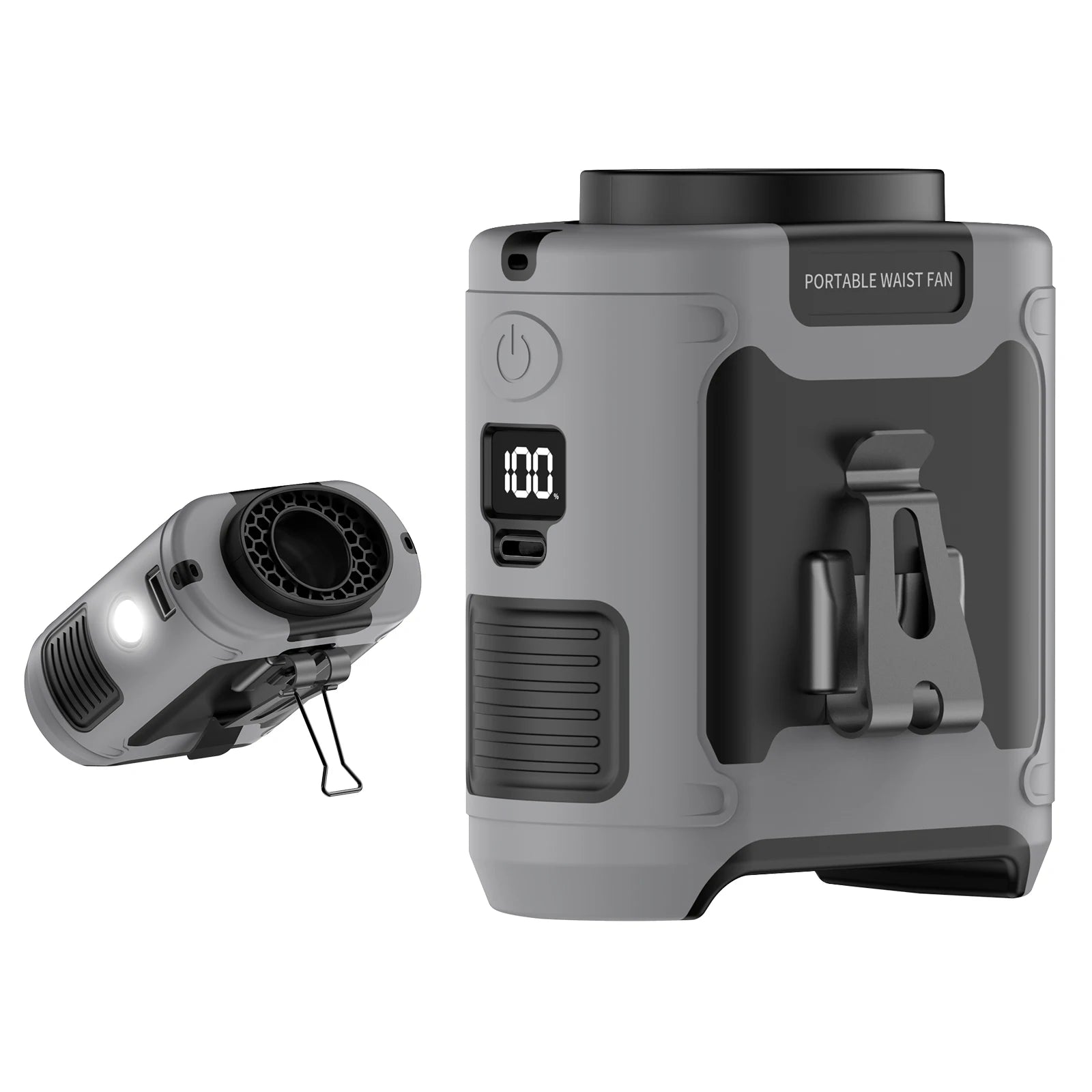
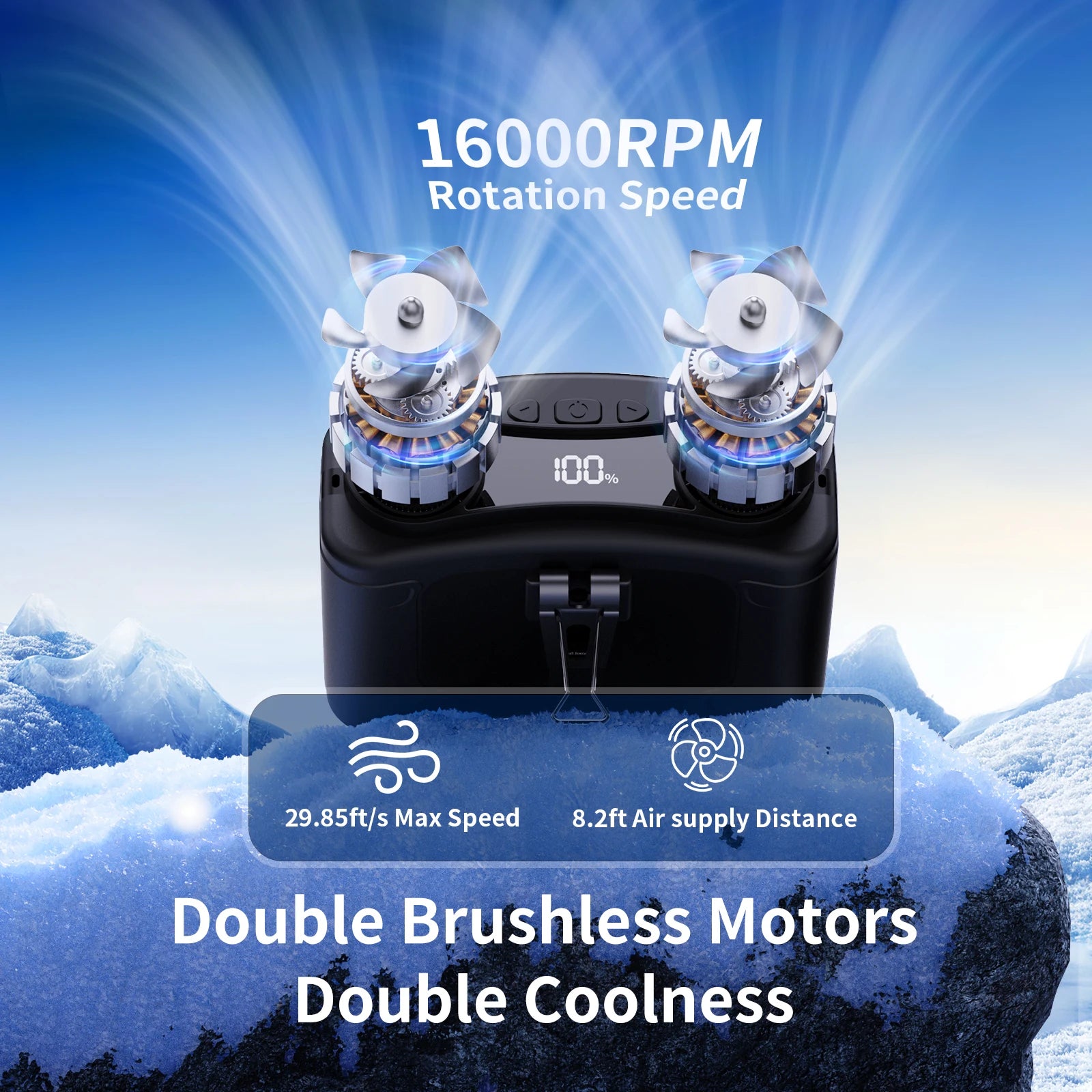
A waist fan is particularly useful when the goal is to position airflow around the torso without holding a device. The Waist Fan Portable Cooling Device uses a waist-buckle design that can be positioned at the front, side, or back. Its high-speed brushless motor is rated at 16,000 RPM, while 10 speed settings allow airflow to be adjusted to changing conditions.
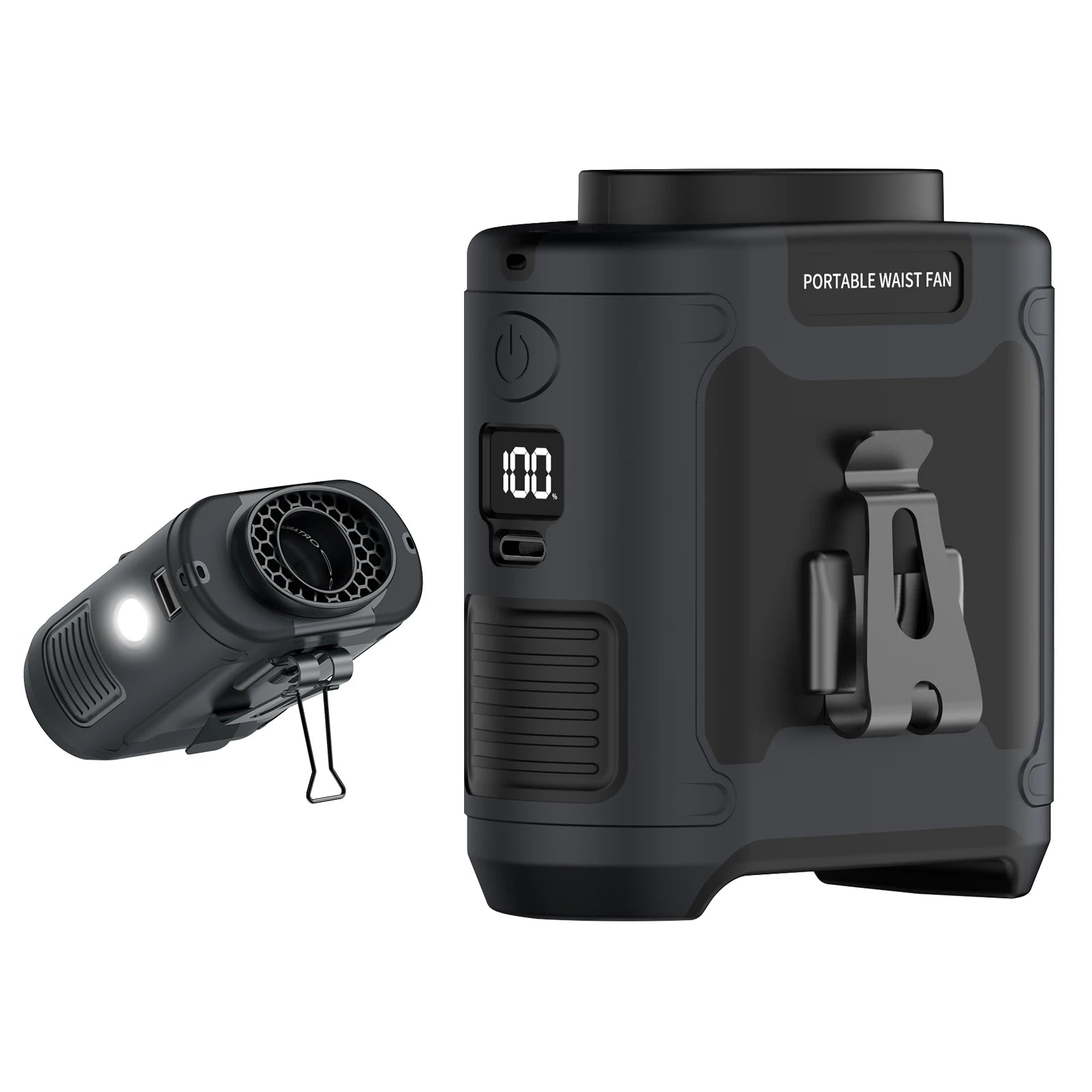
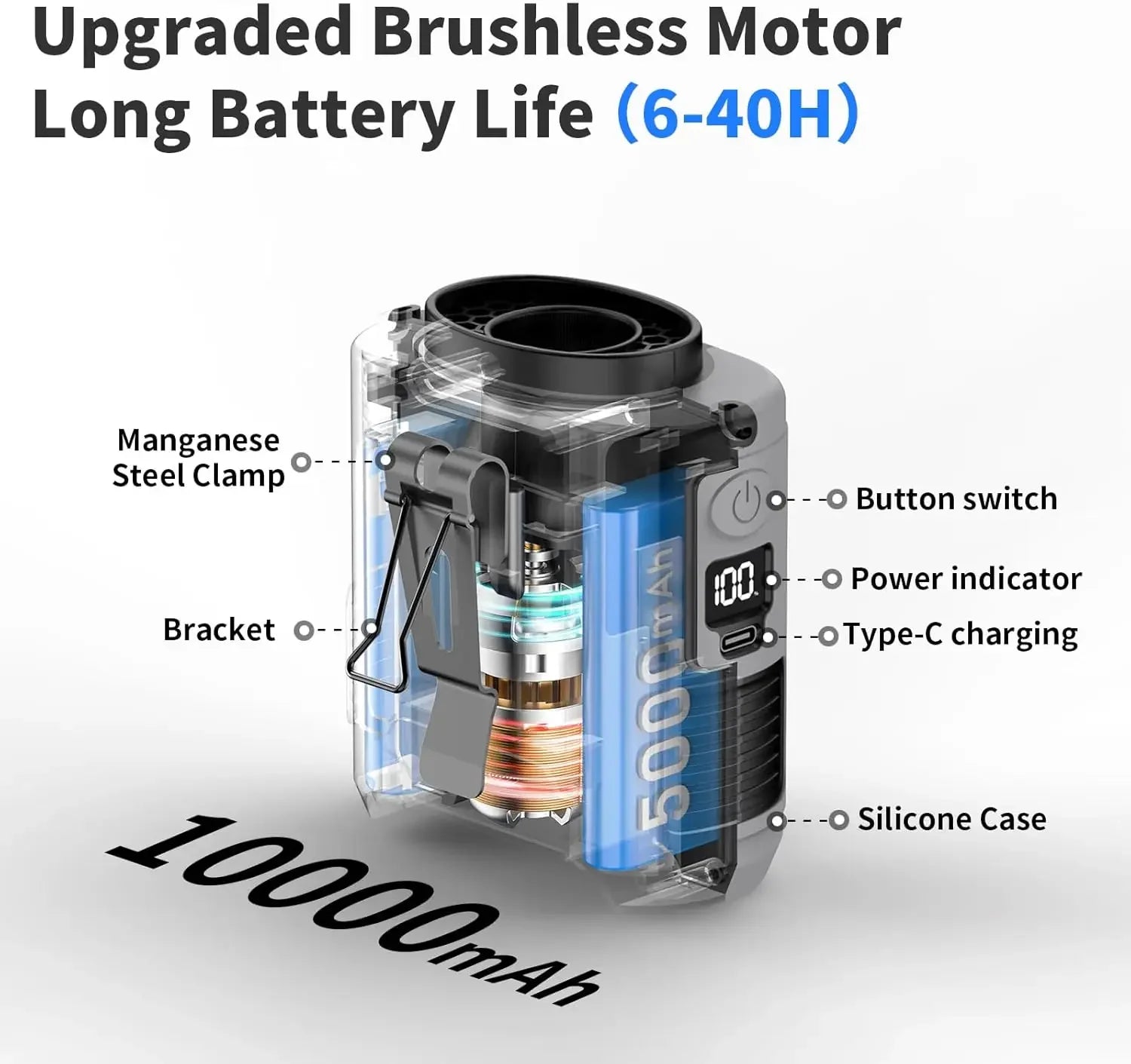
The device also has a rechargeable USB Type-C connection and an LED display for monitoring speed and remaining power. Battery options are listed as 10,000mAh and 20,000mAh. For workers who want portable airflow without holding a fan, these features make a waist-mounted design worth considering.
Before using any wearable cooling device on a job site, check whether its placement interferes with tools, harnesses, high-visibility garments, respiratory equipment, or other PPE.
Explore the Waist Fan Portable Cooling Device if hands-free personal airflow fits your work or outdoor activity setup.
Hats, cooling accessories, and hydration support
Wide-brim or otherwise appropriate sun-protective headwear can reduce direct sun exposure when permitted by the job. Cooling accessories can improve comfort, but hydration, shade, breaks, acclimatization, and workplace heat controls remain fundamental.
For additional body-care and health devices, workers can also browse the Body Care and Health Devices collection.
Hot Weather Work Gear by Job and Work Environment
Construction and general outdoor work
Construction workers typically need to balance heat management with hard hats, high-visibility garments, protective footwear, eye protection, gloves, and task-specific PPE. Prioritize breathable workwear that meets site requirements rather than removing protective layers simply because conditions are hot.
For stationary tasks, ventilation and shade can be particularly valuable. For mobile tasks, a hands-free cooling device may offer localized airflow without requiring a worker to hold a fan.
Landscaping and grounds maintenance
Landscaping combines sun exposure, physical exertion, repeated movement, and potential contact with vegetation, dust, equipment, or chemicals. Lightweight moisture-managing clothing, suitable sun coverage, durable workwear, and breathable neck protection can form a practical foundation.
Cooling accessories are especially useful when workers move continuously and cannot conveniently stop to use a handheld fan.
Warehouse and indoor hot environments
Indoor heat can be different from outdoor heat. Workers may have little direct UV exposure but still face elevated temperatures, radiant heat, poor ventilation, or high physical workloads. In these settings, breathable layers and airflow can be more important than maximum sun coverage.
Where permitted, improving general ventilation may address the environment more effectively than relying only on personal cooling equipment.
Road work, delivery, and mobile outdoor jobs
Delivery workers and mobile crews often move between vehicles, buildings, pavement, and exposed outdoor areas. Portability matters because the ideal setup may change throughout the day.
Hands-free cooling can be useful during walking or active work, while sun protection and required visibility gear remain essential. A wearable fan should be positioned so it does not interfere with seat belts, vehicle controls, cargo handling, or required PPE.
Agriculture, farming, and field work
Field work often means prolonged sun exposure combined with sustained physical activity. Breathable full coverage, moisture management, a suitable hat, neck protection, and durable clothing can help create a practical system.
For long shifts, cooling equipment should be evaluated alongside battery life, charging access, durability, and whether the device remains comfortable during repeated bending and movement.
How to Stay Cool While Working Outside in the Heat
Staying cool outside is not simply a clothing problem. The most effective approach combines environmental controls, work practices, hydration, appropriate clothing, and personal cooling where useful.
Build a heat-management system, not just a cooler outfit
Start by reducing heat exposure where possible. Use shade, schedule demanding tasks appropriately when workplace procedures permit, take planned rest periods, maintain hydration, and follow your employer's heat-safety program. Clothing and cooling accessories then become additional layers of comfort and heat management.
Workers should also allow their bodies time to acclimatize to increased heat exposure according to workplace procedures. People who are not accustomed to working in hot conditions may be at greater risk when workload and environmental heat rise quickly.
Use ventilation strategically
Open or vented clothing can improve air exchange when safe and appropriate. A wearable fan can supplement that airflow by moving air around the body, particularly when natural air movement is limited.
However, personal airflow is not equivalent to reducing the actual environmental heat load. In extremely hot conditions, airflow may not provide sufficient cooling by itself, especially when the surrounding air is already very hot.
Recognize heat stress warning signs
Heat stress is a workplace safety issue, not merely a comfort problem. Symptoms can include unusual fatigue, headache, dizziness, weakness, nausea, heavy sweating, confusion, or other changes in physical or mental function. Workers should follow their employer's heat-illness prevention procedures and seek appropriate assistance when symptoms occur.
Cooling gear should never be treated as permission to continue working through symptoms or to ignore required rest, hydration, shade, emergency procedures, or medical guidance.
How to Choose Hot Weather Gear That Works With PPE
Cooling equipment has to fit into the safety system already established for the job. OSHA requirements, employer procedures, equipment manufacturers' instructions, and applicable product certifications or standards take priority over convenience.
Hard hats and head cooling
Do not modify a hard hat or its suspension system simply to improve ventilation. Added accessories should not compromise the approved configuration, fit, impact protection, or other protective functions of the helmet.
If heat inside a hard hat is a concern, use manufacturer-approved accessories and follow the helmet manufacturer's instructions.
High-visibility clothing
High-visibility garments may be mandatory in traffic, construction, roadway, and other environments. Choose compliant high-visibility workwear designed for the conditions rather than covering or replacing it with a non-compliant cooling layer.
Breathable high-visibility garments can provide a better balance between visibility and comfort than simply removing required outer layers.
Cooling gear around respiratory and other PPE
Any fan, clip, strap, cable, or wearable device should be checked for interference with respiratory protection, eye protection, harnesses, hearing protection, gloves, tools, and other PPE. Never position cooling equipment where it can compromise a seal, obstruct vision, catch on equipment, or alter the intended function of protective gear.
For regulated workplaces, consult the applicable employer procedures and equipment instructions before introducing new accessories. A comfortable cooling device is useful only when it remains compatible with the safety system.
Hot Weather Work Gear Comparison: Which Cooling Approach Fits the Job?
| Cooling option | Best suited for | Main advantage | Key limitation |
| Cooling towel | Breaks, short periods of intense heat | Simple and highly portable | Evaporative effect can be reduced by high humidity |
| Neck gaiter | Outdoor sun exposure and sweat management | Combines coverage with lightweight wear | Does not actively move air |
| Handheld fan | Stationary work and personal use | Direct airflow can be aimed manually | Requires one hand |
| Neck-mounted fan | Walking, light activity, personal cooling | Hands-free airflow near the upper body | May be less suitable with some collars or PPE |
| Waist-mounted fan | Outdoor work, sports, and active tasks | Hands-free airflow with flexible positioning | Must be checked for interference with belts, harnesses, tools, and PPE |
| Cooling vest | Situations requiring sustained torso cooling | Provides broader-body cooling | Can add weight, layers, or bulk |
The best choice depends on the source of discomfort. Someone mainly dealing with direct sun may benefit most from UPF clothing and shade, while someone working in stagnant air may prefer additional ventilation. A worker who needs both hands continuously may find a wearable fan more practical than a handheld model.
Hot Weather Work Gear: Quick Decision Guide
If your biggest problem is sweat
Start with moisture-wicking, fast-drying layers and breathable construction. Reduce unnecessary layers and choose garments that allow movement without becoming excessively loose.
If your biggest problem is direct sun
Prioritize UPF-rated clothing, appropriate neck coverage, a suitable hat, shade, and other sun-protection measures. Breathability remains important because excessive coverage can otherwise increase discomfort.
If your biggest problem is stagnant air
Look for ventilated workwear and consider appropriately positioned personal airflow. A wearable waist fan can be useful when you want hands-free cooling while walking, working, or exercising.
If your job requires extensive PPE
Start with PPE compatibility. Required protective equipment should remain correctly fitted and functional. Select breathable compliant garments where available, and use cooling accessories only when they do not interfere with protective equipment.
How to Build a Practical Hot-Weather Work Setup
A useful hot-weather setup can be built in layers rather than by searching for one product that solves every problem. Begin with the work hazards and environmental conditions, then add comfort-focused equipment around them.
- Identify the heat source: Direct sunlight, high ambient temperature, humidity, radiant heat, poor ventilation, and physical exertion can create different challenges.
- Choose the clothing foundation: Select breathable, moisture-managing garments appropriate for the task.
- Add sun protection: Use UPF garments, hats, neck coverage, shade, and other suitable measures when exposed to sunlight.
- Account for PPE: Confirm that every garment and accessory works with required protective equipment.
- Add personal cooling: Consider cooling towels or wearable airflow when they address a specific comfort problem without creating interference.
- Support the system with work practices: Follow hydration, rest, acclimatization, shade, and heat-illness prevention procedures.
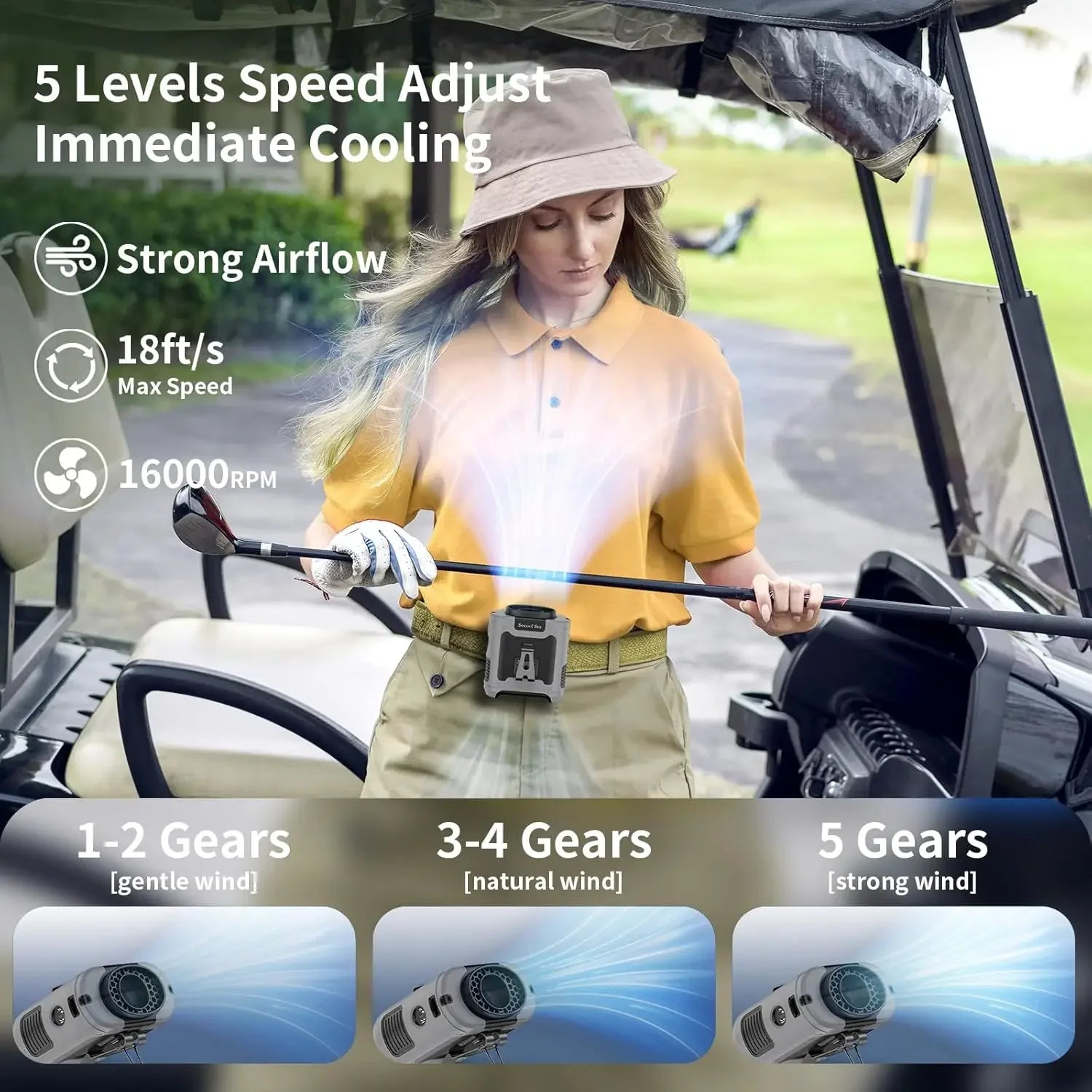
For workers who specifically need portable personal airflow, the Waist Fan Portable Cooling Device is designed around hands-free use. Its 16,000 RPM brushless motor, 10 airflow settings, rechargeable Type-C charging, and LED display make it a practical option to evaluate alongside other cooling methods.
The goal is not to maximize cooling equipment. It is to create a setup that addresses the actual conditions of the job while preserving safety, mobility, and comfort.
Final Takeaway: The Best Hot Weather Work Gear Is a System
The most effective hot-weather work setup combines several elements rather than relying on a single cooling product. Moisture-wicking and breathable workwear can improve comfort during physical activity. UPF-rated clothing and appropriate coverage can help manage sun exposure. Durable, mobile garments keep the setup practical for demanding jobs. Cooling towels and wearable fans can add targeted comfort when environmental and safety conditions allow.
Most importantly, cooling gear should complement—not replace—shade, hydration, rest, acclimatization, ventilation, heat-safety procedures, and required PPE. Choose each part of the system according to the work environment, physical workload, exposure to sunlight, and job-specific hazards.
If hands-free airflow is one of the missing pieces in your summer work setup, you can explore the wearable waist cooling fan and compare its features with the cooling approach that best fits your job.
Pillar Article: Best Portable Waist Fan: 2026 Tested Picks for Cooling













