

How Does a Bladeless Fan Work? The Airflow Technology Explained
A bladeless fan is not literally a fan with no moving parts. Instead, an electric motor drives a hidden impeller inside the housing. The impeller draws room air into the unit, increases its pressure, and sends it through a narrow outlet. The fast-moving air stream then entrains surrounding air, creating a smooth, directed flow into the room.
The basic airflow journey is: air intake → hidden impeller → pressurization → narrow outlet → air entrainment → projected airflow.
How Does a Bladeless Fan Work?
The Short Answer
A bladeless fan works by hiding its rotating impeller inside the base or housing instead of exposing traditional fan blades. The motor powers the impeller, which pulls air into the device and moves it toward an engineered air outlet. As air passes through the narrow outlet at higher velocity, it helps draw additional surrounding air into the moving stream. The result is a continuous, directed airflow that feels smoother than the pulsing airflow commonly associated with exposed fan blades.
The Airflow Journey at a Glance
- Air enters through the intake: Room air is drawn into the fan housing.
- A hidden impeller pulls the air in: An electric motor rotates an enclosed impeller.
- The impeller increases air pressure: Moving air is pressurized and directed toward the outlet.
- Air accelerates through the narrow outlet: The outlet geometry creates a faster primary air stream.
- Surrounding air is entrained: The moving stream influences nearby room air and draws some of it along.
- A projected stream reaches the room: The combined airflow travels outward as a continuous stream.
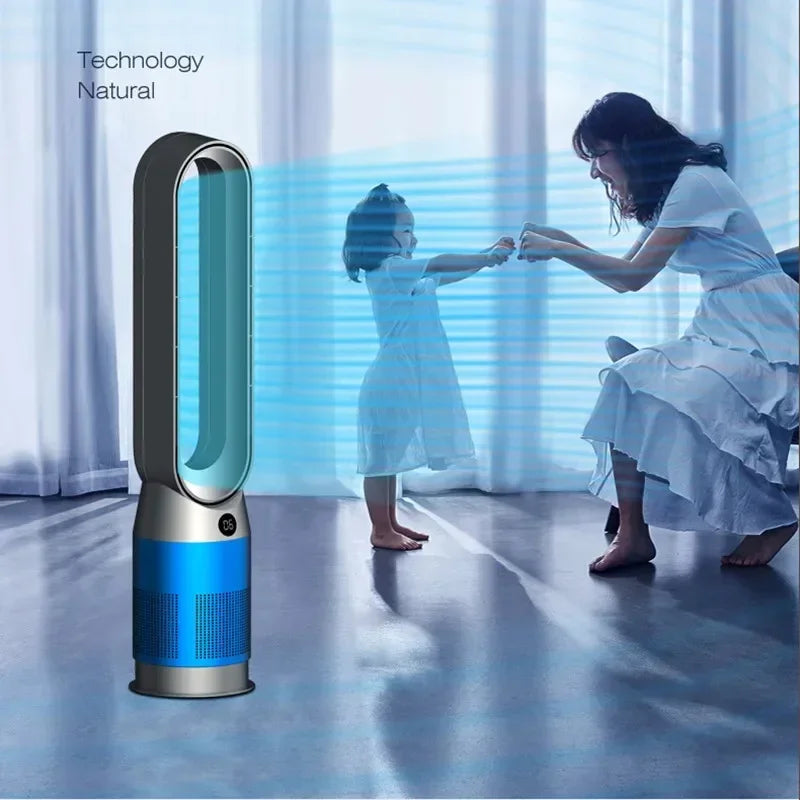
How a Bladeless Fan Generates Airflow Step by Step
1. Air Enters Through the Intake
Every fan needs a source of air. In a bladeless design, room air enters through an intake opening, commonly located around the base or another concealed portion of the housing.
The intake allows the fan to continuously draw air from the room. Once inside, that air is moved through the internal airflow path rather than being pushed directly by an exposed blade assembly.
2. A Hidden Impeller Pulls the Air In
The term “bladeless” can be misleading because these fans still contain moving mechanical components. An electric motor drives an internal impeller, which performs the fundamental job of moving air.
Because the impeller is enclosed, users do not see rotating blades at the front of the fan. This is one of the defining characteristics of the bladeless form factor: the moving mechanism is contained inside the housing.
3. The Impeller Increases Air Pressure
After entering the housing, air is moved and pressurized by the rotating impeller. The exact internal geometry varies by manufacturer and model, but the basic purpose is the same: create a controlled flow of air that can be directed toward the outlet.
This internal pressure difference helps the fan move air through the narrow outlet rather than simply releasing air randomly around the housing.
4. Air Accelerates Through the Narrow Outlet
The pressurized air reaches an engineered outlet, often shaped as a continuous slot around the fan's loop or front opening. The narrow passage helps create a relatively fast primary air stream.
In simple terms, the fan takes air moving inside the housing and directs it through a carefully designed opening. The geometry of that opening influences airflow speed, direction, turbulence, and the overall character of the air stream.
5. Surrounding Air Is Entrained
Air entrainment describes the process in which a moving air stream influences nearby air and carries some of it along. Inducement is another term used to describe the way a primary moving stream can cause surrounding fluid to move with it.
This is important because the airflow experienced in front of a bladeless fan is not simply the small amount of air that initially passes through the narrow outlet. The primary jet interacts with surrounding room air, contributing to a broader moving stream.
This phenomenon is sometimes described commercially as “air multiplication.” It does not mean that the fan creates additional air from nothing. Instead, the outlet stream helps move surrounding air that was already present in the room.
6. A Smooth Stream of Air Is Projected Into the Room
Once the primary air stream leaves the outlet and interacts with surrounding air, the resulting airflow travels outward into the room. Oscillation can then move the projected stream from side to side, increasing the area affected by the airflow.
The user ultimately experiences this process simply as moving air. The sophisticated part is the airflow path inside and around the housing that produces that sensation without exposed front-facing blades.
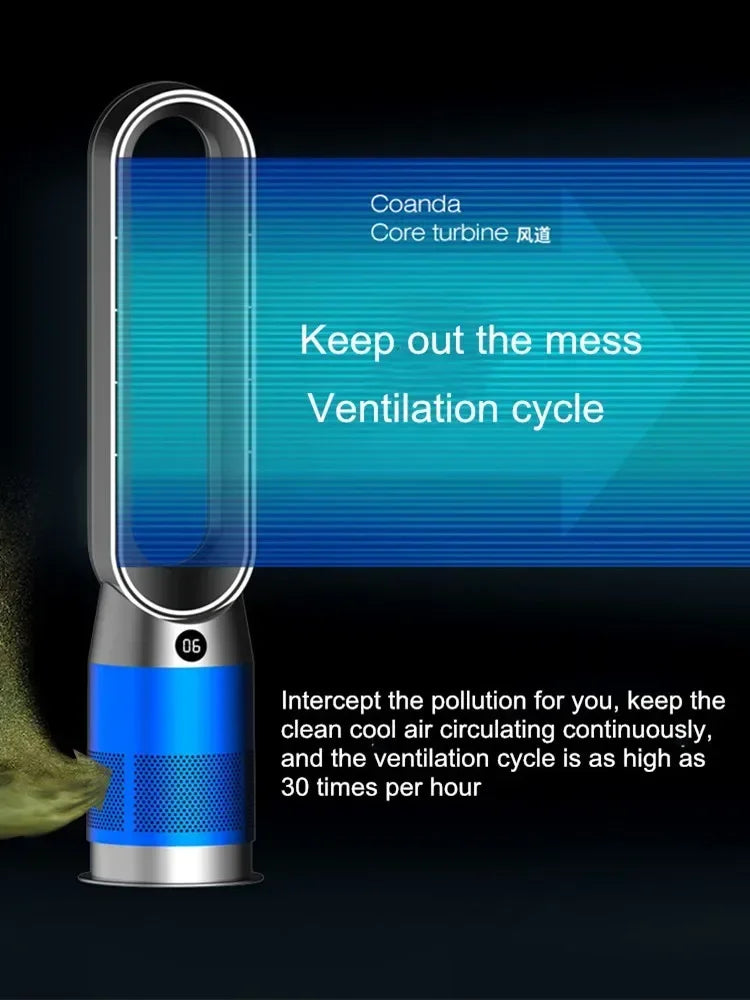
What Is Air Multiplier Technology?
How Air Entrainment Helps Increase Airflow
Air Multiplier technology is a term associated with certain commercial bladeless fan designs. At its simplest, the concept involves using a primary air stream to influence and entrain surrounding air.
The fan's internal impeller generates the initial airflow. That air is then accelerated through the outlet, producing a high-velocity primary stream. As the stream travels outward, it interacts with nearby air and helps pull some of that surrounding air into the overall flow.
Air Multiplier Technology vs. Literal Air Multiplication
The word “multiplier” should not be interpreted as the fan creating new air. Air is not produced from nothing. The terminology refers to the way the engineered primary stream can entrain additional surrounding air and contribute to a larger projected airflow.
This distinction matters when evaluating claims about bladeless technology. A bladeless fan still depends on an electric motor, an internal impeller, and the air already present in the room.
What Is the Coandă Effect in a Bladeless Fan?
The Coandă Effect in Simple Terms
The Coandă effect describes the tendency of a moving fluid, including air, to follow or remain attached to a nearby curved surface under suitable conditions.
In a bladeless fan, outlet geometry can help guide the moving air along surfaces and shape how the airflow leaves the device. The exact contribution of the Coandă effect depends on the design, but the principle is useful for understanding why the shape of the airflow path matters.
Why the Coandă Effect Matters to Airflow
A bladeless fan is not simply an open hole that blows air forward. Its housing and outlet are engineered to control the direction and behavior of the moving air.
Curved surfaces, outlet dimensions, pressure, velocity, and surrounding air all influence the resulting airflow pattern. This is why two bladeless fans can look similar while producing noticeably different airflow characteristics.

Are Bladeless Fans Really Bladeless?
Where Are the Fan Blades?
In most products marketed as bladeless fans, the rotating component is hidden inside the base or housing. The impeller still has blades, but those blades are not exposed to the user in the way they are on a conventional fan.
This enclosed configuration can also make the exterior easier to approach and clean because there is no exposed rotating blade assembly at the front.
Bladeless vs. Fanless
Bladeless does not mean fanless. A bladeless fan still needs a mechanism to move air. Usually, an electric motor and hidden impeller perform that task.
The more accurate description is an enclosed-blade or enclosed-impeller fan design. The main visual difference is that the moving blades are positioned inside the device rather than exposed.
Bladeless Fan vs. Traditional Fan: What Is the Difference?
Airflow
Traditional axial fans use visible rotating blades to push air directly forward. Bladeless designs use an enclosed impeller and engineered outlet to create a primary stream that interacts with surrounding air.
Neither design automatically guarantees better airflow. Actual performance depends on motor power, impeller design, outlet geometry, fan speed, room size, oscillation, and other engineering factors.
Noise
A common misconception is that every bladeless fan is automatically quieter. In reality, acoustic performance depends on the motor, internal impeller, airflow velocity, housing, outlet design, vibration control, and selected speed.
For bedrooms and offices, look for published noise information and multiple speed settings rather than relying solely on the word “bladeless.”
Safety
One practical advantage of a bladeless design is the absence of exposed rotating blades. This enclosed structure can reduce direct access to the moving mechanism compared with a conventional fan with exposed blades behind a grille.
Cleaning and Maintenance
Traditional fans can accumulate dust on their blades and protective grilles. A bladeless fan removes the exposed blade assembly from the visible airflow path, although the intake, housing, filters where applicable, and internal components may still require maintenance.
Always follow the manufacturer's cleaning instructions rather than assuming an enclosed design is maintenance-free.
Energy Use
Being bladeless does not automatically make a fan more energy efficient. Electricity consumption depends on factors such as motor efficiency, operating speed, airflow output, internal design, and total power draw.
When comparing models, check the stated wattage and consider how much airflow you need for the space instead of using the bladeless label as an efficiency guarantee.
Do Bladeless Fans Actually Cool a Room?
How Moving Air Makes You Feel Cooler
A fan can make people feel cooler by increasing air movement across the skin. Moving air can increase convective heat loss and promote evaporation of moisture from the skin, which can make a person feel more comfortable in warm conditions.
This is why a fan can provide meaningful personal cooling even when the room's actual air temperature remains unchanged.
Why a Fan Usually Does Not Lower Room Temperature
A standard fan primarily moves air rather than removing heat from the room. Unlike an air conditioner, it does not normally use a refrigeration cycle to extract heat and reject it elsewhere.
So if a bedroom feels hot at night, a fan can improve perceived comfort by circulating air over the body, but it should not be treated as a replacement for an air conditioner when the goal is to reduce the actual room temperature.
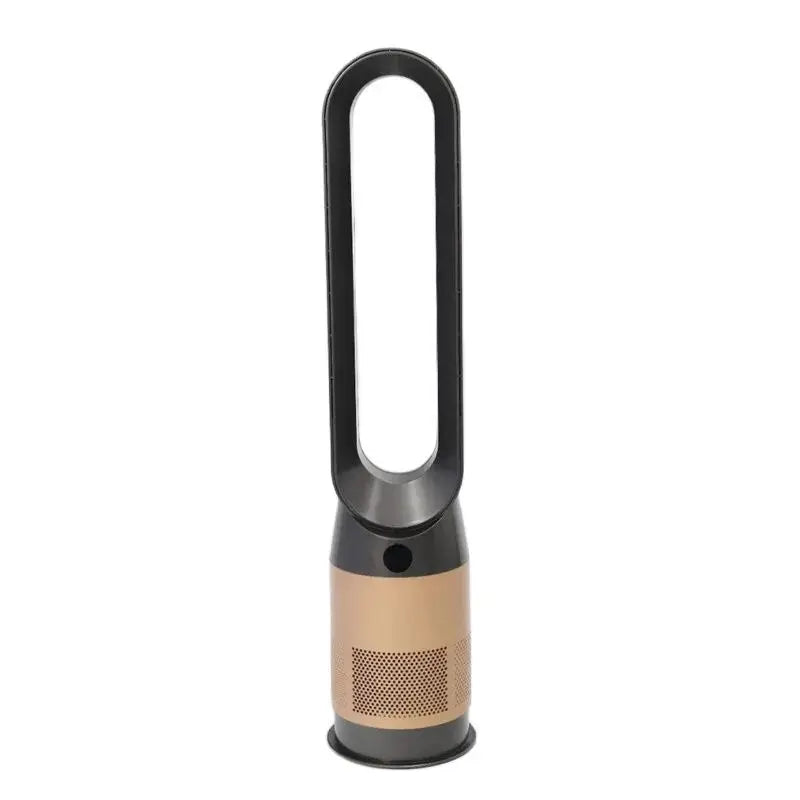
Common Bladeless Fan Misconceptions
Bladeless Means There Are No Moving Parts
False. Most bladeless fans contain an electric motor and a hidden impeller. “Bladeless” primarily describes the absence of exposed rotating fan blades.
Bladeless Fans Create Air From Nothing
False. The fan moves air that is already in the room. Air entrainment can make the resulting airflow stream larger, but the device does not create new air.
Bladeless Fans Are Always Quieter
Not necessarily. Noise varies between models and operating speeds. A well-designed bladeless fan can operate quietly, but motor noise, impeller noise, turbulence, vibration, and airflow speed all influence the final sound level.
Bladeless Fans Always Use Less Electricity
Not automatically. Energy consumption must be evaluated using actual power draw and airflow performance. A higher-powered model can consume more electricity regardless of whether its blades are visible.
What to Look for When Choosing a Bladeless Fan
Airflow Performance
Start with the room rather than the marketing terminology. Consider the size of the space, desired airflow strength, oscillation range, and whether you need circulation across a large area.
For example, the 42-inch bladeless tower fan described for this article is specified for rooms of approximately 15–25 m². That makes its stated coverage an important consideration when deciding whether the form factor fits your room.
Noise and Speed Settings
If the fan will operate in a bedroom or office, noise matters as much as airflow. Multiple speed settings allow you to balance cooling comfort and sound according to the situation.
The featured 42-inch model is specified at approximately 36–45 dB and offers adjustable fan speeds, making those specifications relevant for users prioritizing quieter indoor air circulation.
Oscillation and Airflow Direction
A fan that only points in one direction can leave parts of a room with limited airflow. Left-and-right oscillation can distribute the moving air across a wider area.
Remote control can also make directional and speed adjustments easier when the fan is positioned across a bedroom or living space.
Energy Efficiency
Check the product's actual power specification rather than assuming a bladeless fan consumes less energy. The featured model is rated at 40W, while its actual energy consumption will depend on how and how often it is operated.
Ease of Cleaning
An enclosed design eliminates exposed rotating blades, but it does not eliminate maintenance. Look for an accessible exterior, clear cleaning instructions, and an intake design that can be kept reasonably free of dust.
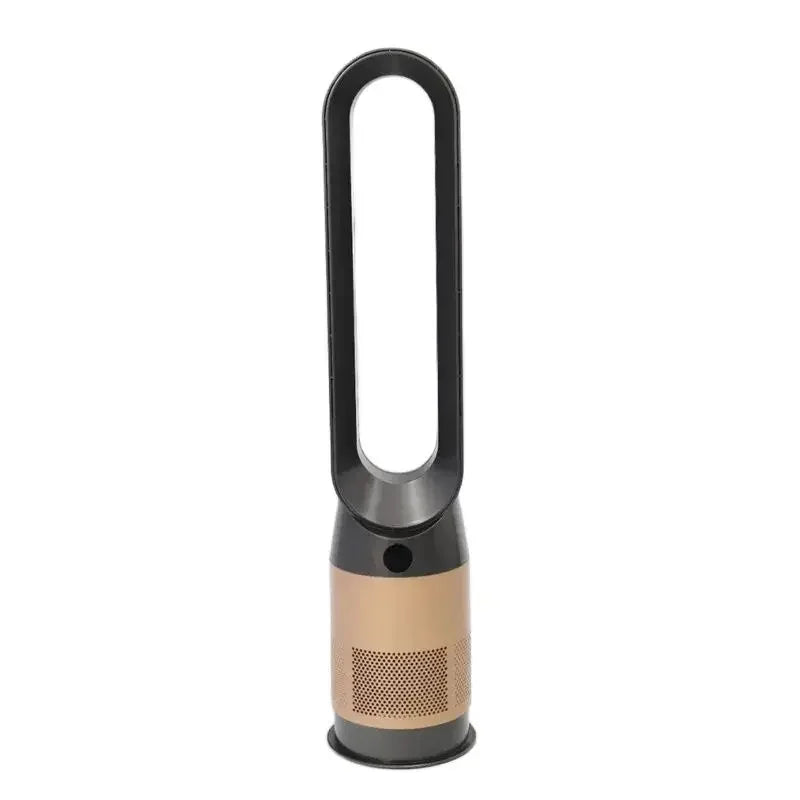
For a home that needs more than seasonal cooling, this 42-inch tower combines cool-air and warm-air modes with oscillation, remote control, adjustable speeds, natural wind mode, and purification functionality. Its stainless-steel construction, 2–8 hour timer, and stated 15–25 m² application make it a practical example of how modern tower fans can combine several comfort functions in one space-saving design.
Explore the 42-inch bladeless tower fan if you want one tower-style appliance for year-round airflow, cooling, and heating.
Bladeless Fan Technology in One Simple Explanation
A bladeless fan works by hiding the impeller rather than eliminating it. The motor rotates the internal impeller, which draws room air into the device and pressurizes it. The air then accelerates through a narrow outlet, producing a primary stream. That stream interacts with and entrains surrounding air before projecting the resulting airflow into the room.
The technology therefore combines conventional mechanical air movement with carefully engineered airflow geometry. Terms such as air entrainment, inducement, the Coandă effect, and Air Multiplier technology describe parts of that process, but they do not mean the fan creates air from nothing.
When choosing a model, focus on measurable characteristics such as airflow performance, room coverage, noise, power consumption, oscillation, speed control, cleaning requirements, and seasonal functions. A bladeless design can provide a clean, enclosed alternative to a traditional fan, but the best choice depends on how you intend to use it and the size of the room.
For users who want cooling and heating in one appliance, a tower design can also reduce the need for separate seasonal devices. The right model should support the actual comfort problem you are trying to solve—whether that is a stuffy bedroom, uneven airflow, summer cooling, winter heating, or reducing appliance clutter.
Pillar Article: Best Bladeless Tower Fan Heaters of 2026: Tested & Compared













