How can you heat water in a car safely?
You can heat water in a car safely by using equipment designed for vehicle power systems, such as a 12V or 24V electric kettle, while the engine is running. Other safe options include a properly sized power inverter with a household kettle, a portable power station, a camping stove used outside the vehicle, or carrying preheated water in an insulated thermos. Never use an open flame inside your car, and always choose a method that matches your vehicle's electrical capacity.
How to Heat Water in a Car Safely (Step-by-Step Guide for Every Situation)
Whether you're commuting, road-tripping, camping, or driving for work, having hot water on demand makes coffee, tea, instant meals, and even warming baby bottles much more convenient. The key is choosing the right equipment for your vehicle and following safe operating practices to protect both your electrical system and passengers.
⏱ 7 min read
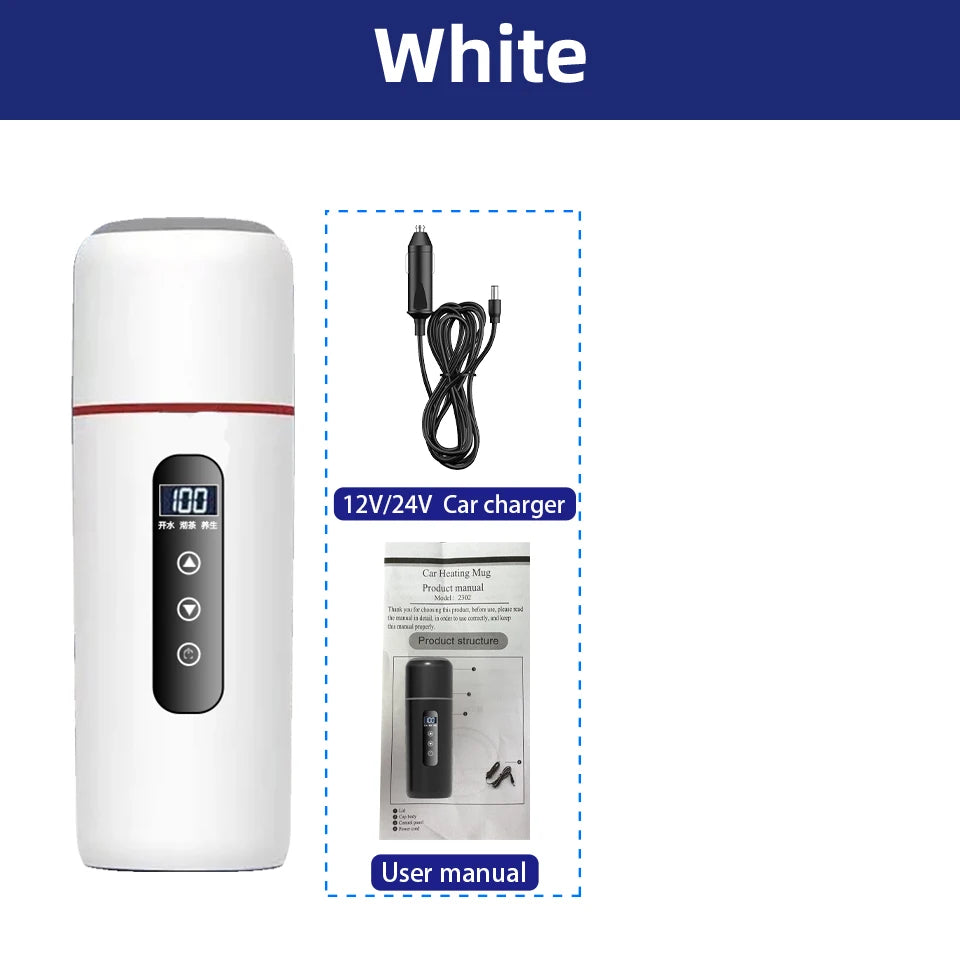
How to heat water in a car safely with a portable solution — See it in action
Why Heating Water in Your Car Is Useful on the Road
Heating water in a car adds convenience without requiring frequent fuel station stops. Depending on your travel style, it can improve comfort and save both time and money.
- Make coffee or tea during long drives.
- Prepare instant noodles, oatmeal, or soup.
- Warm water for baby bottles while traveling.
- Stay comfortable during winter road trips.
- Reduce unnecessary stops on highways.
- Support camping, van life, and outdoor adventures.
5 Safe Ways to Heat Water in a Car (Compared)
1. 12V electric kettle
An electric kettle for car use plugs directly into a 12V outlet and is engineered to stay within your vehicle's electrical limits. For most drivers, it's the safest balance of portability, efficiency, and convenience.
- Best for: commuting, road trips, delivery drivers
- Heating speed: approximately 10–20 minutes
- Power: 120–150W
- Pros: simple, compact, built-in safety features
- Cons: slower than household kettles
2. Power inverter + household kettle
A power inverter converts 12V DC into household AC power so you can use a standard electric kettle. This setup boils water faster but demands significantly more electrical power.
- Best for: extended trips with a properly sized inverter
- Heating speed: similar to home use
- Pros: faster boiling
- Cons: higher power draw, requires quality inverter and wiring
3. Portable power station
A portable power station lets you heat water without drawing power from the vehicle while parked. Many support small electric kettles depending on their output rating.
- Best for: camping, overlanding, parked vehicles
- Pros: protects the car battery, versatile
- Cons: higher upfront cost, requires recharging
4. Camping stove (outside vehicle only)
Camping stoves boil water quickly but should only be used outdoors in a well-ventilated area. Never use gas or solid-fuel stoves inside a vehicle because of fire and carbon monoxide risks.
- Best for: campsites and outdoor cooking
- Pros: very fast boiling
- Cons: unsuitable inside vehicles
5. Insulated thermos (preheated water)
A quality thermos filled before departure keeps water hot for several hours without consuming electricity.
- Best for: short journeys and emergency backup
- Pros: zero battery use, simplest option
- Cons: limited capacity and heat retention time
Vehicle Power Limits Explained
12V outlet wattage
Most passenger vehicles provide 120–180 watts through their 12V accessory outlet. That's why dedicated car kettles typically operate between 120W and 150W rather than the 1,000W or higher found in household models.
Inverter sizing
If you plan to use a household kettle, the inverter must be rated higher than the kettle's continuous wattage. For example, a 1,000W kettle generally requires an inverter rated above 1,000W with appropriate wiring directly connected to the battery.
Engine on vs. engine off
Whenever possible, keep the engine running while heating water. The alternator supplies electricity during operation, reducing strain on the starter battery.
Battery drain
Repeatedly heating water with the engine off can discharge the battery enough to prevent the vehicle from starting, especially in cold weather or older vehicles.
Best Method Based on Your Situation
Daily commuting
A portable car kettle offers the best combination of convenience, safety, and compact storage.
Road trips
Pair a 12V kettle with an insulated thermos so you'll always have hot water available, even during short stops.
Camping and van life
Combine a portable power station or car kettle with a camping stove for outdoor meal preparation.
Truck drivers
Drivers spending long hours on the road often benefit from a larger water boiler for car use or a higher-capacity travel kettle that can prepare multiple drinks throughout the day.
Emergencies
If electricity isn't available, a thermos is safer than improvising with unreliable heating methods.
Step-by-Step: How to Heat Water in a Car Using a 12V Kettle
- Park safely whenever possible before preparing hot water.
- Start the engine so the alternator supplies power.
- Fill the kettle to the recommended level without overfilling.
- Secure the lid to minimize splashing.
- Plug the kettle firmly into the 12V outlet.
- Switch it on and monitor the heating process.
- Unplug after boiling once the automatic shutoff activates or the water reaches the desired temperature.
- Pour carefully using both hands if the vehicle is parked on uneven ground.
Most vehicle kettles require approximately 10 to 20 minutes depending on water volume, ambient temperature, and power output.
How Long Does It Take to Boil Water in a Car?
Boiling time depends on the heating method, water volume, and starting temperature.
| Method | Typical Time | Notes |
|---|---|---|
| 12V car kettle | 10–20 minutes | Most common choice for drivers |
| Power inverter + household kettle | 3–7 minutes | Requires high-power inverter |
| Portable power station | 4–8 minutes | Depends on inverter output |
| Camping stove | 3–6 minutes | Outdoor use only |
Safety Rules You Must Follow When Heating Water in a Car
- Keep the engine running when using vehicle-powered appliances.
- Never exceed the rated capacity of your 12V outlet.
- Use only equipment designed for automotive electrical systems.
- Do not leave heating devices unattended.
- Avoid preparing hot water while driving on rough roads.
- Prevent spills by securing lids and placing kettles on stable surfaces.
- Never use open flames inside a vehicle.
- Unplug electrical appliances immediately after use.
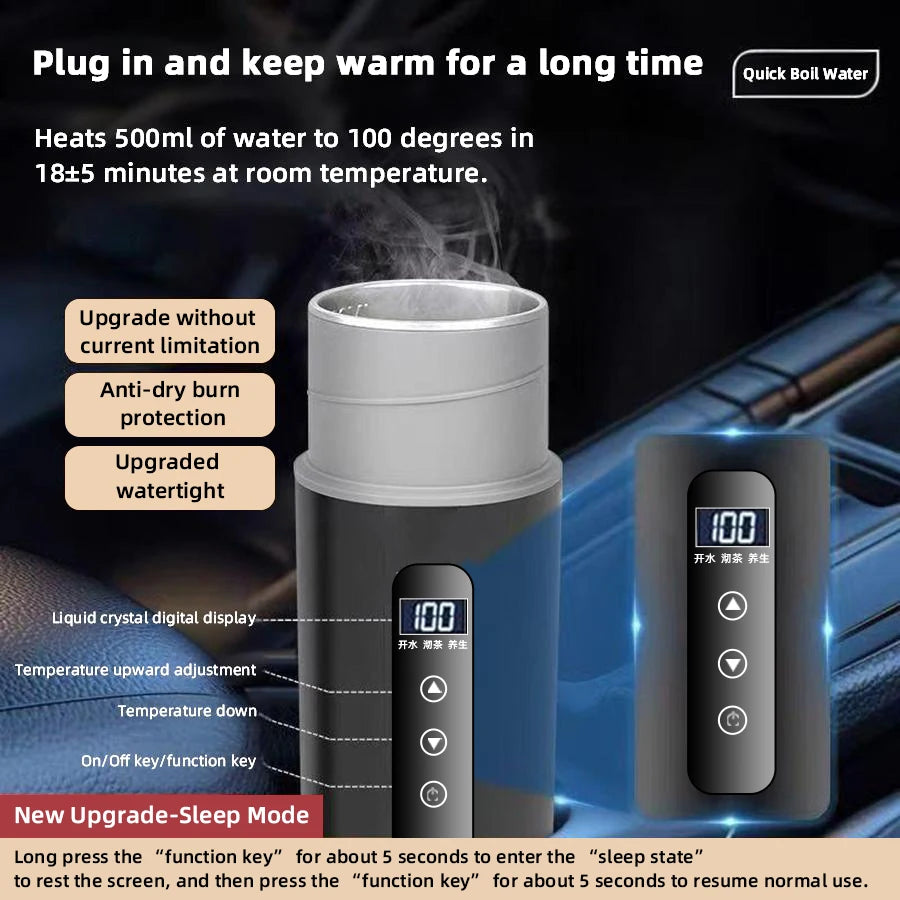
Electric kettle for car use during travel — See it in action
Portable Heating Options Compared
| Method | Speed | Capacity | Power Source | Portability |
|---|---|---|---|---|
| 12V electric kettle | Medium | Small–Medium | 12V outlet | Excellent |
| Power inverter + kettle | Fast | Medium–Large | Vehicle battery via inverter | Good |
| Portable power station | Fast | Medium | Rechargeable battery | Very good |
| Camping stove | Very fast | Any | Gas fuel | Outdoor only |
| Thermos | Instant | Limited | Preheated water | Excellent |
For wellness-focused travel essentials, browse Body Care and Health Devices .
Common Mistakes to Avoid
- Running a kettle with the engine switched off.
- Overloading a 12V outlet with high-power appliances.
- Using a household kettle without a properly sized inverter.
- Leaving hot water unattended.
- Using gas burners inside the vehicle.
- Placing the kettle where it can tip during sudden braking.
Real-Life Situations Where Hot Water Makes a Difference
| Situation | Benefit |
|---|---|
| Morning commute | Fresh coffee or tea before work |
| Camping | Instant meals and hot drinks |
| Parents traveling with babies | Warm water for baby bottles |
| Rideshare and delivery drivers | Convenient refreshments between jobs |
| Winter travel | Comfort during cold weather stops |
Many drivers choose a portable electric kettle for car because it offers an excellent balance of portability, safety, and everyday convenience.
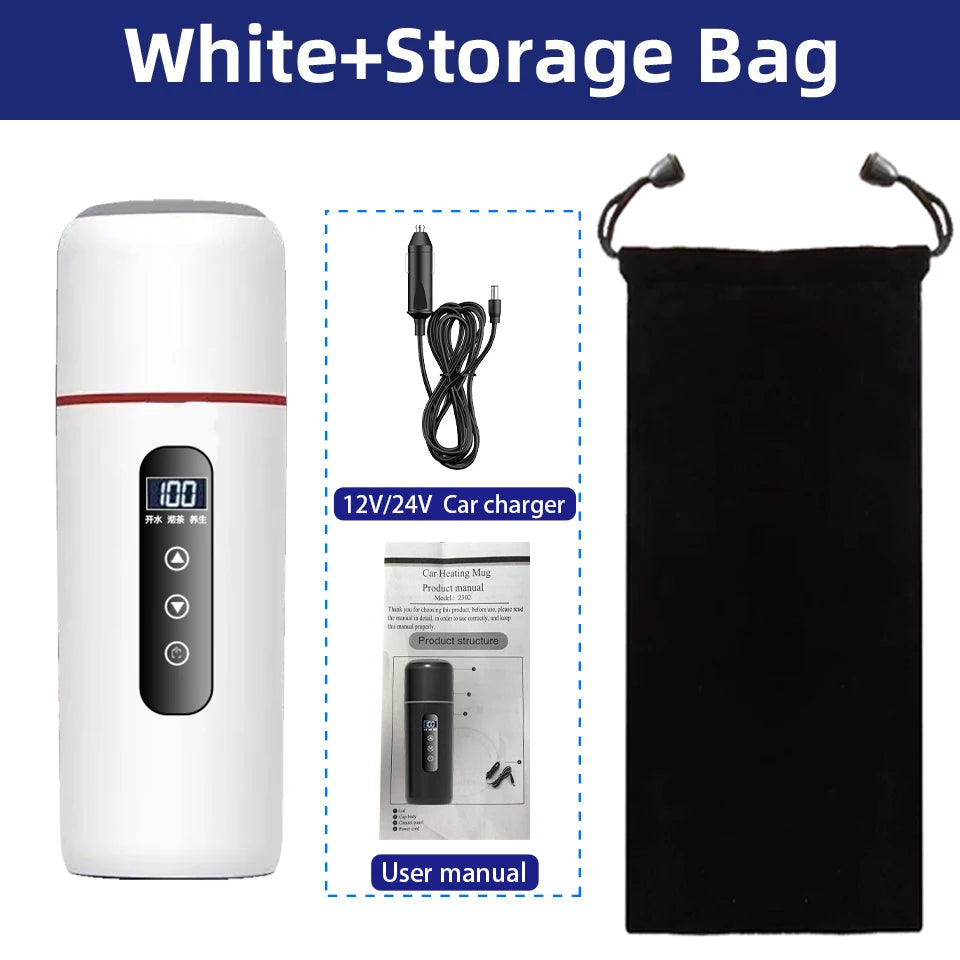
Portable car kettle for everyday travel — See it in action
Frequently Asked Questions
Can heating water in a car drain the battery?
Yes. Heating appliances consume significant power, so it's best to keep the engine running while using a vehicle-powered kettle.
How long does it take to boil water in a car?
Most 12V kettles take 10–20 minutes, while household kettles powered through a suitable inverter boil considerably faster.
Can I use a regular electric kettle in my car?
Only if you have a correctly sized power inverter capable of handling the kettle's electrical demand. Plugging a household kettle directly into a 12V outlet is not possible.
Is a 12V kettle worth buying?
For frequent travelers, commuters, truck drivers, and campers, a dedicated 12V kettle is usually the safest and most practical solution.
Can I heat water without electricity in a car?
Yes. An insulated thermos works well for shorter trips, while camping stoves can safely boil water outdoors.
Can you boil water using a 12V car outlet?
Yes, with a vehicle-specific 12V kettle designed for automotive power systems.
What size inverter is needed for an electric kettle?
The inverter should exceed the kettle's continuous wattage rating and be installed according to the manufacturer's recommendations.
Will a portable car kettle work in every vehicle?
Most passenger vehicles with a standard 12V outlet are compatible, but always verify the outlet's fuse rating and the kettle's power requirements.
Is it better to use a power station or a car outlet?
If you're parked for extended periods, a portable power station can reduce strain on the vehicle battery. While driving, a dedicated 12V kettle connected to the car is usually more convenient.
Can you heat water safely while the car is parked?
Yes, provided the engine is running when using vehicle power, or you're using a separate portable power station.
What is the fastest way to heat water in a car?
A household kettle powered through a properly sized inverter or a camping stove used outdoors generally heats water faster than a standard 12V kettle.
Final Thoughts
For most drivers, the safest way to heat water in a car is with a purpose-built 12V electric kettle while the engine is running. It offers reliable performance without exceeding the limits of your vehicle's electrical system.
If you travel frequently, camp often, or spend long hours on the road, consider your typical driving scenario before choosing between a portable car kettle, power inverter, portable power station, or insulated thermos. Matching the right method to your needs delivers the best balance of convenience, efficiency, and safety.