

How to Improve Mobility Safely at Home
To improve mobility safely at home, follow a consistent routine that combines gentle mobility exercises, strength training, flexibility work, and balance practice. Start with movements that match your current ability, warm up before exercising, and increase intensity gradually to reduce the risk of injury while improving joint function and muscle control.
- Begin with gentle range of motion exercises to loosen stiff joints.
- Add light strength training to support healthy movement patterns.
- Include daily stretching to improve flexibility and mobility.
- Practice balance and coordination to improve functional movement.
- Use rehabilitation tools only when they support your recovery goals.
Safe mobility training at home is most effective when performed consistently. Even 10–15 minutes of focused movement each day can help improve joint mobility, reduce stiffness, and build confidence in everyday activities.
Safety Checklist Before You Begin
- Wear supportive footwear or exercise barefoot on a non-slip surface if appropriate.
- Clear the surrounding area of obstacles that could increase fall risk.
- Keep a sturdy chair or countertop nearby for balance support.
- Move within a comfortable range without forcing painful positions.
- Keep water nearby and rest whenever needed.
Warm Up Before Moving
A brief warm-up prepares muscles, tendons, and joints for exercise. Spend 3–5 minutes performing gentle shoulder rolls, arm swings, ankle circles, marching in place, or slow seated movements before progressing to more challenging exercises.
When to Stop Exercising
Mild muscle fatigue is expected, but stop exercising if you experience sharp pain, dizziness, chest pain, sudden swelling, numbness, or increasing weakness. If symptoms persist or worsen, consult a healthcare professional before continuing your mobility program.
How to Improve Mobility Safely at Home
Regaining movement after injury, stroke, surgery, or long periods of inactivity can feel overwhelming. Whether your goal is to improve flexibility, restore joint motion, or rebuild hand function, a structured home program can help you make steady progress. By combining safe movement patterns, gradual strengthening, and consistent practice, many people can improve mobility at home while reducing unnecessary strain.
⏱ 8 min read
Stiff fingers. Limited joint movement. Reduced grip strength. Difficulty buttoning a shirt or holding a cup. These everyday challenges often develop gradually, but regular mobility training can help restore confidence and independence over time.

How to improve mobility with hand therapy equipment and stroke hand exercises. See it in action.
Why Improving Mobility Restores Independence and Confidence
Mobility is the ability to move a joint through its available range while maintaining strength, stability, and control. Healthy mobility supports everything from walking and climbing stairs to dressing, cooking, and carrying groceries. When muscles weaken or joints become stiff, these everyday activities often become slower, more difficult, and more tiring.
How Better Range of Motion Improves Daily Life
- ✔ Makes dressing, grooming, and self-care easier.
- ✔ Improves grip strength for carrying and holding objects.
- ✔ Helps reduce everyday joint stiffness.
- ✔ Supports healthy circulation and muscle activation.
- ✔ Builds confidence during daily movement and exercise.
Consistent mobility exercises encourage healthy joint movement, improve muscle coordination, and support long-term physical function. For older adults and people recovering from injury or stroke, regular practice can also help maintain independence and improve overall quality of life.
How to Improve Mobility Step by Step at Home
Step 1: Warm Up With Dynamic Movements
Begin every session with gentle dynamic movements such as shoulder circles, arm swings, marching in place, ankle rotations, or seated knee lifts. A proper warm-up increases blood flow, prepares joints for exercise, and reduces injury risk.
Step 2: Improve Joint Range of Motion
Move each major joint through a comfortable range using slow, controlled motions. For the hands, wrists, shoulders, hips, knees, and ankles, prioritize smooth movement rather than forcing a larger range.
Step 3: Build Strength Through Full Range
Add light resistance exercises once movement becomes comfortable. Strengthening muscles through their available range improves stability and makes everyday activities such as lifting, reaching, standing, and gripping easier.
Step 4: Improve Balance and Coordination
Practice simple coordination drills such as reaching while stepping, standing with support on one leg, or controlled weight shifts. Better balance helps reduce fall risk and improves overall functional mobility.
Step 5: Cool Down and Recover
Finish each session with gentle stretching and relaxed breathing. Cooling down helps maintain flexibility, reduces post-exercise stiffness, and prepares your body for the next day's mobility routine.
Mobility Exercises at Home by Body Area (Beginner-Friendly)
A balanced mobility routine should address every major joint rather than focusing on one area alone. These beginner-friendly mobility exercises at home help improve movement quality, reduce stiffness, and support everyday activities without requiring specialized equipment.
Shoulders
The shoulders rely on both mobility and stability for reaching, lifting, and carrying objects. Perform each movement slowly and stay within a comfortable range.
- Arm circles to improve shoulder mobility and circulation.
- Wall slides to encourage healthy overhead movement.
- Shoulder blade squeezes to improve posture and upper-back control.
- Gentle cross-body shoulder stretches after exercise.
Hands and Wrists
Regular hand therapy exercises can improve dexterity, grip strength, and coordination, especially after injury or prolonged inactivity.
- Finger stretches to improve flexibility.
- Gentle fist opening and closing to maintain joint mobility.
- Grip squeezes using a soft therapy ball.
- Finger lifts on a flat surface to improve independent finger control.
- Wrist flexion, extension, and slow wrist circles.
Hips
Healthy hip mobility supports comfortable walking, climbing stairs, and standing from a seated position.
- Seated knee lifts to activate hip flexors.
- Standing hip circles while holding a chair for support.
- Hip abduction exercises to strengthen stabilizing muscles.
- Sit-to-stand repetitions performed with controlled movement.
Ankles
Good ankle mobility improves balance, walking efficiency, and lower-body stability.
- Ankle circles in both directions.
- Heel-to-toe rocking to improve ankle flexibility.
- Seated ankle pumps to encourage circulation.
- Supported calf raises to strengthen the lower legs.
Spine and Core
Maintaining spinal mobility helps support posture, balance, and efficient movement throughout the body.
- Seated spinal twists using slow, controlled movements.
- Pelvic tilts to activate core muscles.
- Gentle back extensions to improve posture.
- Cat-cow movements if comfortable and medically appropriate.
How to Increase Mobility Safely (Beginner, Seniors, Injury Recovery)
Mobility Exercises for Beginners
Begin with low-impact exercises that emphasize proper technique instead of intensity. Perform each movement slowly, breathe normally, and stop before discomfort becomes painful. Consistent practice several days each week is more effective than occasional long workouts.
Older adults often benefit from seated or supported exercises that improve strength, flexibility, and balance simultaneously. Use a sturdy chair or countertop for stability when needed, progress gradually, and allow adequate recovery between sessions if fatigue develops.
How to Regain Mobility After Injury
Recovery should begin with pain-free, assisted movements before progressing to active strengthening exercises. Increase repetitions or resistance only after you can perform current exercises with good control. If swelling, severe pain, or loss of function develops, seek guidance from a qualified healthcare professional.
How the Right Hand Therapy Equipment Supports Recovery
Rehabilitation equipment is optional, but it can make home rehabilitation exercises easier to perform consistently for individuals recovering from neurological conditions, surgery, or hand injuries. The goal is to assist natural movement—not replace active participation.
The Rehabilitation Robot Glove is designed to provide guided hand movement that may help users practice repetitive opening and closing exercises with less fatigue while following a rehabilitation program.
Why Assisted Rehabilitation Tools Can Help
- ✔ Encourage consistent, repeatable movement patterns.
- ✔ Help reduce unwanted compensatory motions.
- ✔ Support gradual progression during home rehabilitation.
- ✔ Accommodate different stages of hand mobility training.
While rehabilitation tools can be beneficial, they work best when combined with regular mobility exercises, strength training, stretching, and guidance from a healthcare professional when appropriate.
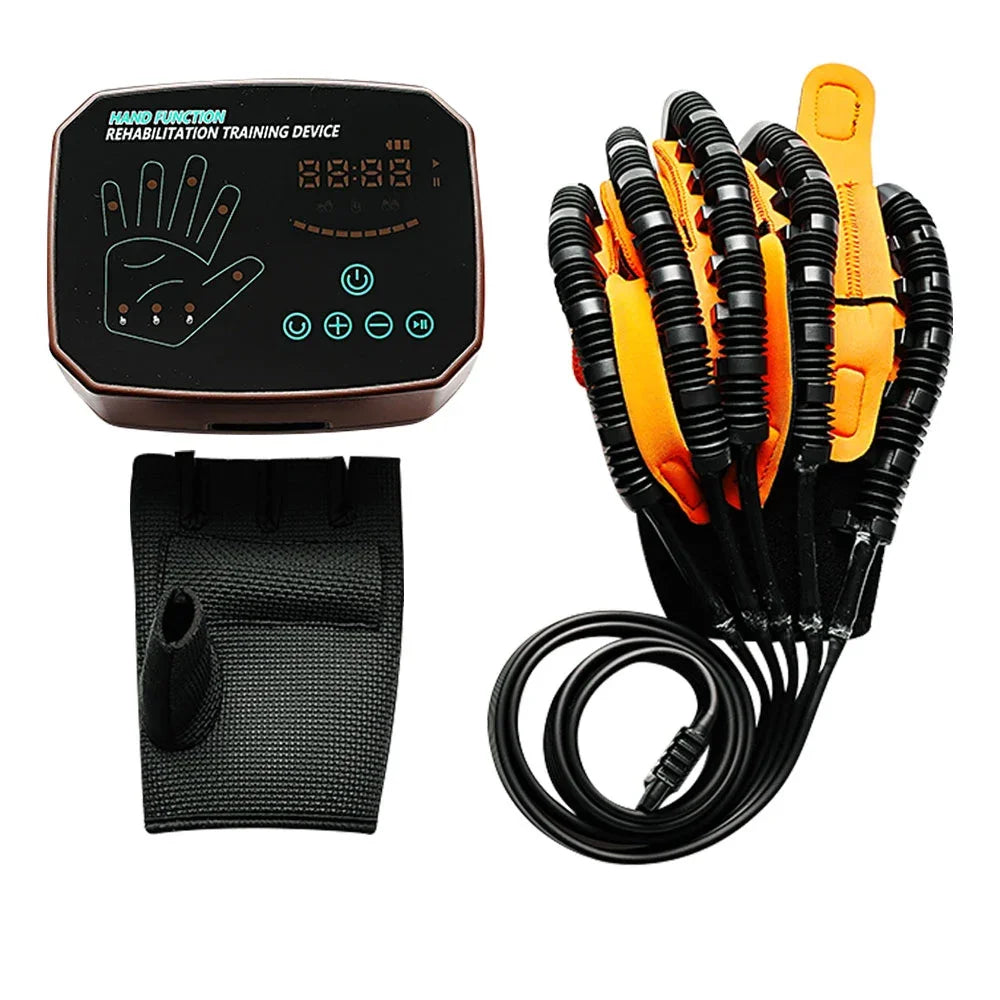
Hand therapy equipment and medical rehabilitation equipment used to support home mobility exercises and daily recovery practice.
A 15-Minute Daily Mobility Routine at Home
This simple daily mobility routine combines flexibility, strength, balance, and coordination into a time-efficient workout. Perform the routine three to seven days per week, adjusting repetitions and intensity to match your current ability.
Warm-Up (5 Minutes)
- Shoulder circles × 10 forward and backward.
- March in place or seated marching for 60 seconds.
- Wrist flexion and extension × 10 repetitions.
- Ankle circles × 10 each direction.
- Gentle finger opening and closing × 10 repetitions.
Full-Body Mobility Circuit (5 Minutes)
- Supported sit-to-stand × 8–10 repetitions.
- Wall slides or shoulder reaches × 10 repetitions.
- Hip circles × 10 each direction.
- Grip strengthening or guided hand exercises × 10 repetitions.
- Standing weight shifts or supported balance practice for 30–60 seconds.
Cool-Down (5 Minutes)
- Gentle finger and wrist stretches, holding each stretch for 10–15 seconds.
- Calf and hamstring stretches.
- Seated spinal twists performed slowly.
- Relaxed breathing for one to two minutes to encourage recovery.
How to Progress Weekly
Rather than following separate day-by-day plans, gradually increase your workload from week to week. Begin with comfortable ranges of motion and one set of each exercise. As mobility improves, add repetitions, increase resistance slightly, extend balance exercises, or perform an additional set while maintaining good form. Small, consistent progressions help build lasting mobility more safely than rapid increases in intensity.
Common Mistakes That Slow Recovery
Improving mobility is a gradual process. Avoiding these common mistakes can reduce injury risk and help you make steady, long-term progress.
- Skipping the warm-up: Cold muscles and stiff joints are more vulnerable to strain. Spend a few minutes preparing your body before every session.
- Doing too much too soon: Increasing repetitions or resistance too quickly can lead to soreness, inflammation, and setbacks.
- Using poor technique: Controlled, high-quality movement is more beneficial than completing more repetitions with incorrect form.
- Ignoring pain signals: Mild muscular effort is expected, but sharp or worsening pain is a sign to stop and reassess the exercise.
- Training only one body area: A balanced routine that includes the shoulders, hands, hips, ankles, and core promotes better overall mobility.
- Neglecting recovery: Adequate sleep, hydration, and rest days support muscle repair and long-term improvements.
- Not progressing over time: Once exercises become easy, gradually increase the challenge to continue building strength and mobility safely.
A successful mobility program focuses on gradual progression, consistent practice, proper movement mechanics, and listening to your body's feedback. Over time, these habits can improve joint function, increase confidence during daily activities, and support long-term physical independence.
Optional Rehabilitation Tools for Home Use
Most people can improve mobility at home using bodyweight exercises alone. However, a few simple rehabilitation tools may make certain exercises more comfortable or help add gradual resistance as strength and coordination improve.
- Resistance bands: Ideal for improving joint stability, strengthening major muscle groups, and progressing mobility exercises without heavy weights.
- Foam rollers: Useful for reducing muscle tightness before or after mobility sessions and improving overall movement quality.
- Therapy balls or hand exercisers: Help build grip strength, finger coordination, and hand endurance during rehabilitation.
- Guided hand rehabilitation devices: For people recovering from stroke or significant hand weakness, devices such as the Rehabilitation Robot Glove may assist repetitive movement practice when used alongside an appropriate rehabilitation program.
Choose equipment that matches your current ability rather than the most advanced option. Consistent exercise, proper technique, and gradual progression remain the most important factors for improving mobility safely.
Frequently Asked Questions
How long does it take to improve mobility at home?
Many people notice small improvements in flexibility and joint comfort within one to two weeks. More meaningful gains in strength, balance, and functional mobility typically develop after four to eight weeks of regular practice, although recovery timelines vary depending on age, fitness level, and underlying health conditions.
What are the best mobility exercises for beginners?
Begin with gentle joint rotations, shoulder circles, seated leg extensions, ankle circles, light stretching, and simple balance exercises. Focus on controlled movement and consistency before increasing intensity.
Can mobility exercises help after a stroke?
Yes. Home mobility exercises can support recovery by improving joint range of motion, muscle activation, and coordination. People recovering from a stroke should follow guidance from their healthcare team and progress exercises according to their individual rehabilitation plan.
How often should I do mobility exercises?
Short daily sessions are ideal for maintaining flexibility and joint health. Aim for at least three to five sessions per week if daily exercise is not practical, while allowing time for recovery when needed.
What is the safest way to regain mobility after injury?
Start with gentle, pain-free movements, increase activity gradually, and prioritize proper technique over intensity. Stop exercising if pain worsens or new symptoms develop, and seek medical advice if recovery is not progressing as expected.
What is the difference between mobility and flexibility?
Flexibility describes the ability of muscles to lengthen, while mobility refers to how well a joint moves through its full range of motion with strength and control. Both are important for healthy, efficient movement.
How can I improve mobility at home without equipment?
You can build mobility using bodyweight exercises such as shoulder circles, hip rotations, seated leg lifts, ankle mobility drills, gentle stretching, and balance exercises. No specialized equipment is required for most beginners.
How many days per week should I do mobility exercises?
For the best results, perform mobility exercises most days of the week. Brief sessions completed consistently are generally more effective than occasional longer workouts.
Can seniors safely improve mobility at home?
Yes. Many seniors benefit from seated or supported exercises that improve flexibility, strength, and balance. Using stable support and progressing gradually helps reduce the risk of falls.
What are the best exercises for hip and shoulder mobility?
Hip circles, seated knee lifts, wall slides, shoulder circles, and controlled reaching exercises are excellent choices for improving movement while maintaining joint stability.
Can mobility exercises reduce joint stiffness?
Yes. Regular mobility training increases circulation, promotes joint lubrication, and helps maintain healthy movement patterns, which can reduce feelings of stiffness over time.
When should I stop exercising and seek medical advice?
Stop exercising if you experience severe pain, sudden swelling, dizziness, chest pain, loss of balance, or numbness that does not improve with rest. Contact a healthcare professional if symptoms persist or worsen.
Are home rehabilitation exercises effective after injury?
Home rehabilitation exercises can be highly effective when performed consistently and progressed appropriately. Following recommendations from a physical therapist or healthcare provider is especially important after surgery, fractures, or neurological conditions.













