

How to Stop Shoes Rubbing the Washer Drum: A Practical Guide
When shoes repeatedly bang, scrape, or rub against the washer drum, the problem is usually uncontrolled movement during agitation and spinning. The safest approach for machine-washable footwear is to contain the shoes in a protective shoe washing bag, use a gentle cycle with cold water when permitted, avoid unnecessarily aggressive spinning, balance the load, and follow both the shoe manufacturer's care instructions and the washing machine manual.
How Do You Stop Shoes From Rubbing the Washer Drum?
To stop shoes from rubbing the washer drum, follow these five basic steps: first confirm that the footwear is approved for machine washing; then remove loose dirt and prepare the shoes according to their care instructions. Place the shoes inside a protective shoe washing bag, select a gentle or delicate cycle with cold water when appropriate, reduce high-speed spinning when the washer allows it, and make sure the load is properly distributed.
The 5-Step Prevention Method
- Check shoe care instructions. Do not assume every sneaker or running shoe is machine-washable.
- Contain the shoes. Use a purpose-built shoe washing bag to reduce uncontrolled contact with the drum.
- Select a gentle cycle. Lower agitation is generally preferable for footwear approved for machine washing.
- Use cold water when appropriate. Follow the footwear manufacturer's temperature guidance.
- Balance the load. Avoid overloading and redistribute items if the washer begins moving excessively.
Why Shoes Hit or Rub the Washer Drum
Loose shoes can tumble freely inside the washer. As the drum changes direction, agitates the load, and accelerates into a spin cycle, footwear can repeatedly contact the drum or other hard surfaces. This can create loud banging and unnecessary friction while potentially contributing to scuffing, deformation, or damage to the shoes.
Why Shoes Rub Against the Washer Drum
Loose Shoes Tumble and Bounce
Unlike clothing, shoes have rigid soles, structured uppers, and relatively concentrated weight. When they are placed directly into a washer, they can move independently instead of staying distributed throughout the load. That uncontrolled movement is one of the main reasons shoes repeatedly hit the drum.
A protective shoe washing bag changes the movement pattern by keeping the footwear contained. It does not eliminate movement inside the washer, but it can create a protective barrier that helps reduce direct rubbing and impact.
High-Speed Spin Cycles Increase Movement
High-speed spinning can make loose footwear move more aggressively. The faster the drum rotates, the greater the potential for shoes to strike surrounding surfaces or create excessive noise. For machine-washable footwear, a gentle program or reduced spin setting can be a more conservative choice when supported by the washer and shoe-care instructions.
Unbalanced Loads Create Uneven Movement
A poorly distributed load can cause the washer to move unevenly. Two shoes repeatedly landing on one side of the drum can contribute to an imbalanced load, particularly during spinning. Adding random items is not a universal solution, however, because every washer has different load requirements.
The goal is not simply to add more laundry. Instead, follow the washer manufacturer's guidance and redistribute compatible items when necessary.
The Washer Design Also Matters
Front-load and top-load machines can handle footwear differently, and drum dimensions, wash programs, agitation systems, and spin speeds vary between models. For that reason, there is no single setting that is guaranteed to be appropriate for every washer.
Before washing shoes, check the washing machine manual as well as the footwear manufacturer's instructions. If a washer manufacturer specifically advises against washing shoes in the machine, follow that guidance.
Use a Protective Shoe Washing Bag to Reduce Drum Contact
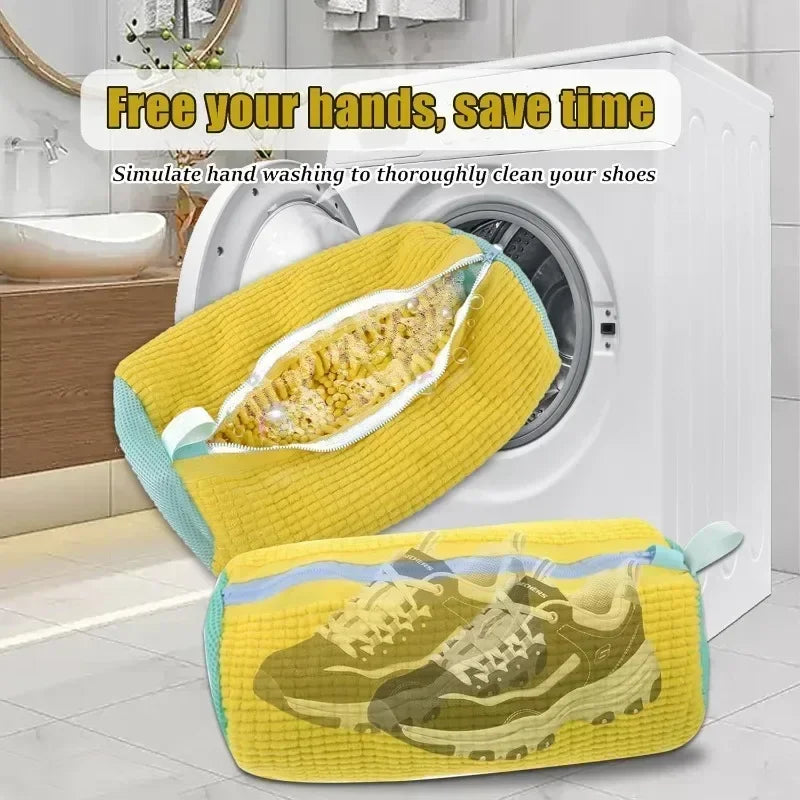
A purpose-built shoe washing bag is one of the most practical ways to contain sneakers during machine washing. Instead of allowing footwear to tumble freely around the drum, the bag keeps the shoes enclosed while allowing water and detergent to pass through the material.
For example, a reusable shoe washing bag made from polyester nylon can provide a lightweight protective layer around machine-washable sneakers. The Shoe Washing Bag for Gentle Sneaker Machine Wash Tool uses durable polyester nylon, a secure zipper, and a hook for hanging the bag to dry after use.
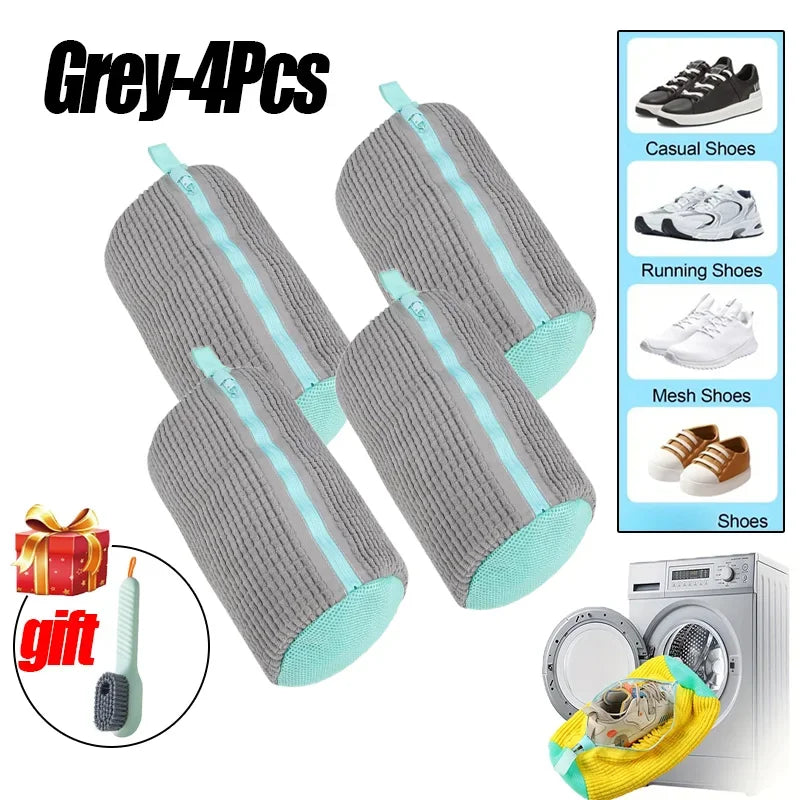
The bag measures 39 × 19 cm and is designed as a reusable shoe laundry bag. Its zipper helps keep footwear enclosed throughout the wash cycle, while the material allows water and detergent to flow through. It should still be used only with footwear that the manufacturer permits you to machine wash.
How a Protective Shoe Washing Bag Helps
Containing shoes can help reduce direct shoe-to-drum contact and limit uncontrolled bouncing. The bag also keeps the footwear together, which can make loading and removing the shoes easier.
A washing bag should not be viewed as a guarantee against all shoe damage. Machine washing can still affect adhesives, finishes, cushioning materials, and structural components. The bag is a protective accessory, not a replacement for proper shoe-care instructions.
Protective Shoe Washing Bag vs. Mesh Laundry Bag
| Feature | Purpose-Built Shoe Washing Bag | Generic Mesh Laundry Bag |
| Primary purpose | Designed to contain footwear during washing | Designed primarily for general laundry organization |
| Containment | Typically sized around shoes | May provide less structured footwear containment |
| Closure | Secure zipper or similar closure may help keep shoes enclosed | Closure type varies by bag |
| Protection focus | Designed around shoe-washing use | General protection and laundry separation |
| Reusable design | Commonly designed for repeated shoe washing | Usually reusable for various laundry items |
What to Look for in a Shoe Washing Bag
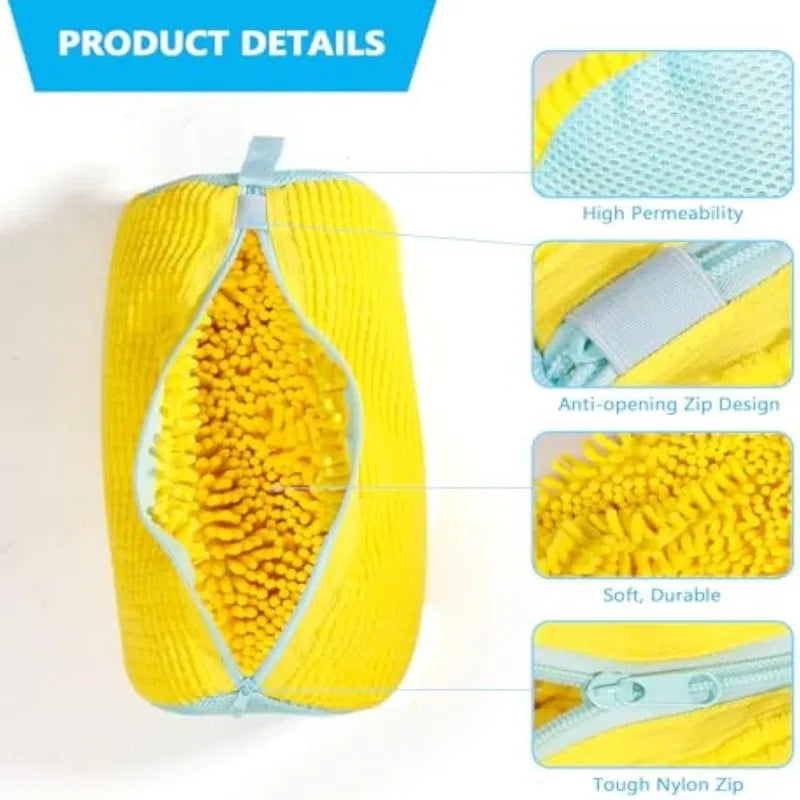
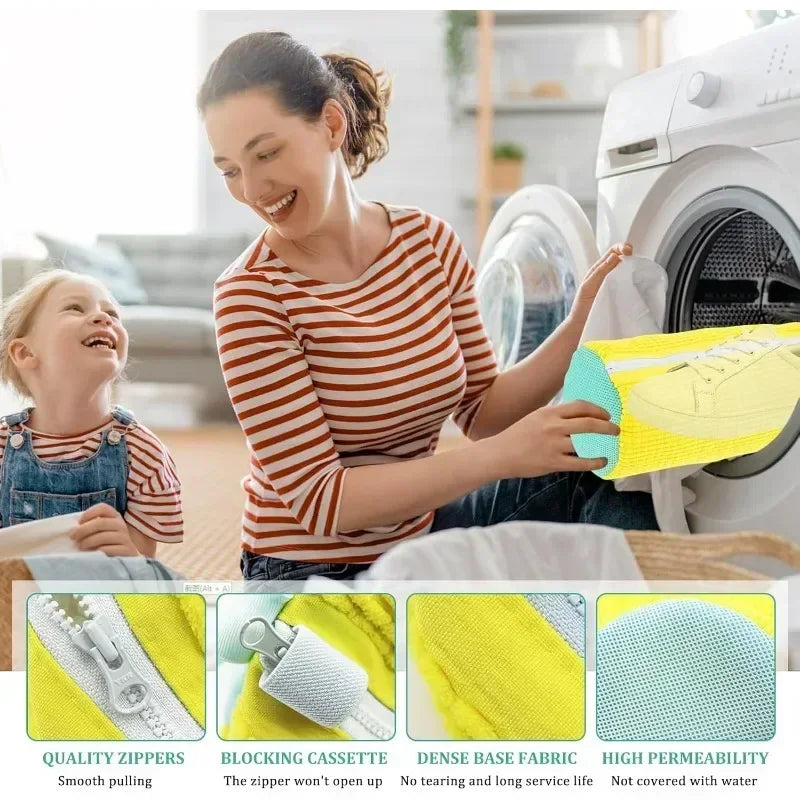
Look for a secure closure, durable fabric, sufficient space for the footwear, and construction intended for repeated washing. A zipper should remain closed during the cycle, while the material should permit water and detergent to reach the shoes.
Durable polyester nylon is one practical option because it can combine lightweight construction with repeated-use durability. A hook can also make drying and storage more convenient after washing.
How to Load Shoes Into the Bag
Clean off loose dirt before loading. Place the shoes inside without forcing them into an overfilled bag. Make sure the zipper is fully closed before the bag goes into the washer. If the shoes have removable components, such as laces or insoles, handle them according to the footwear manufacturer's instructions rather than assuming they should always be removed.
Choose the Safest Washer Settings for Shoes
Use a Gentle or Delicate Wash Cycle
When machine washing is approved, a gentle or delicate program is generally a more conservative choice than an aggressive wash cycle. Lower agitation can reduce unnecessary movement and mechanical stress on footwear.
Choose Cold Water
Cold water is a practical default when the shoe-care instructions permit it. It avoids unnecessary exposure to heat, which may be unsuitable for certain materials, adhesives, finishes, or constructions. Always give the manufacturer's temperature guidance priority over a general rule.
Avoid High-Speed Spin When Possible
If your washer provides adjustable spin speeds, a lower setting may reduce the amount of aggressive movement footwear experiences. The correct setting depends on the machine and the shoes, so use the washer's available guidance rather than assuming every model should use the same spin speed.
Use the Right Amount of Detergent
More detergent does not necessarily mean cleaner shoes. Excess detergent can make rinsing more difficult and may leave residue behind. Use an amount appropriate for the load and detergent instructions.
Should You Wash Shoes Alone or With Other Laundry?
When Washing Shoes With Other Laundry Can Help
In some machines, a small amount of compatible laundry can help distribute movement. However, the objective is balanced loading rather than simply filling the washer. Any additional items should be suitable for the same wash conditions and should not introduce color-transfer, material, or care concerns.
When Shoes Should Be Washed Separately
Separate washing can be preferable when shoes are heavily soiled, contain delicate materials, or have care instructions recommending separate treatment. Washing shoes separately can also make it easier to monitor unusual movement, noise, or washer imbalance.
How to Balance the Load
Do not overload the washer. Place the enclosed shoes into the machine according to the manufacturer's loading guidance and distribute compatible items appropriately. If the washer begins banging, vibrating excessively, or repeatedly attempting to rebalance, stop the cycle when safe and redistribute the load.
Which Shoes Should Not Go in a Washing Machine?
Check the Shoe Care Instructions First
The footwear manufacturer's care instructions should be the first decision point. A protective washing bag cannot make unsuitable footwear machine-safe. If the manufacturer recommends hand cleaning or another method, follow that recommendation.
Shoes That May Require Extra Caution
Leather, suede, footwear with delicate embellishments, specialty finishes, and shoes that rely heavily on glued construction may require extra caution. Water, agitation, and repeated tumbling can affect materials and construction in ways that a washing bag cannot prevent.
Sneakers and Running Shoes: What to Check
Some sneakers and running shoes may be suitable for machine washing, but construction varies considerably. Check the upper material, sole construction, adhesives, decorative components, cushioning system, and manufacturer care label before placing them in a washer.
When Hand Cleaning Is the Safer Choice
If the footwear manufacturer does not approve machine washing, hand cleaning is the safer alternative. Gentle surface cleaning with an appropriate method can avoid the mechanical agitation and repeated tumbling associated with a washer.
A Pre-Wash Checklist to Prevent Shoes From Hitting the Drum
Before You Start the Washer
- Confirm that the shoes are approved for machine washing.
- Remove loose dirt and debris.
- Remove laces or insoles only if the care instructions recommend it.
- Inspect the shoes for loose parts or existing damage.
- Place the shoes in a protective shoe washing bag.
- Check the washing machine manual for footwear-specific guidance.
Before Selecting the Cycle
- Choose a gentle or delicate program when appropriate.
- Select cold water when permitted by the shoe-care instructions.
- Reduce aggressive spinning when the washer allows it.
- Use an appropriate amount of detergent.
After Loading the Washer
- Do not overload the machine.
- Confirm that the shoe bag is securely closed.
- Distribute the load according to the washer instructions.
- Stop the cycle if unusual banging or excessive movement occurs.
What to Do If Shoes Are Still Rubbing the Washer Drum
Recheck the Shoe Bag and Closure
If shoes continue to move excessively, make sure the bag is correctly loaded and the zipper is completely closed. An overfilled or unsuitable bag may not contain the footwear effectively.
Reduce Agitation and Spin
When supported by the washer and shoe-care instructions, switch to a gentler program or lower spin setting. This can reduce the intensity of movement during the wash and spin portions of the cycle.
Check for an Unbalanced Washer Load
Persistent banging, excessive vibration, or repeated attempts by the machine to redistribute the load can indicate an imbalance. Pause the cycle when appropriate and redistribute the contents according to the washer manual.
Follow the Washing Machine Manufacturer's Guidance
If unusual movement continues even with an appropriately loaded wash, follow the manufacturer's troubleshooting instructions. Persistent abnormal washer behavior should not be treated as a shoe-washing problem alone and may require professional inspection or servicing.
The Safest Way to Machine Wash Shoes Without Drum Rubbing
The Recommended Prevention Sequence
The most practical prevention sequence is straightforward: verify that the shoes are machine-washable, remove loose dirt, contain the footwear in a protective shoe washing bag, load the washer appropriately, select a gentle cycle and cold water when permitted, reduce aggressive spinning when possible, and monitor the machine for unusual movement.
A reusable shoe washing bag can be especially useful when the main concern is uncontrolled shoe movement. A zipper-secured polyester nylon design can keep sneakers enclosed while allowing water and detergent to pass through during the wash.
For footwear approved for machine washing, combining containment with conservative washer settings is a practical way to reduce unnecessary drum contact. The key is to treat the shoe bag as one part of the process rather than a substitute for manufacturer instructions.
If you regularly machine-wash compatible sneakers, a reusable shoe washing bag can be a convenient addition to your laundry routine. Explore the shoe washing bag when you want a simple way to contain footwear during machine washing.
For related self-care and household-friendly accessories, you can also explore the Lifestyle collection and Body Care and Health Devices collection for other practical products.
The main takeaway is simple: to stop shoes rubbing the washer drum, control their movement first. A protective shoe washing bag, a gentle wash cycle, appropriate water temperature, sensible load distribution, and careful attention to shoe and washer instructions provide a conservative approach for footwear that is approved for machine washing.
Pillar Article: Best Shoe Washing Bags: Top Picks for Safer Machine Washing













