

How to Use a Seat Cushion Correctly (Quick Start Guide)
Using a seat cushion correctly is essential for relieving pressure, improving posture, and maximizing comfort. Whether you are using a memory foam, ergonomic, coccyx, or tailbone cushion, proper positioning determines how effectively it supports your body during long sitting periods.
Step 1: Position the Cushion Properly
Place the seat cushion flat on your chair with the wider portion toward the backrest. If you are using a coccyx cushion, the U-shaped cutout should face the back of the chair to reduce pressure on the tailbone.
Step 2: Sit With Your Hips Fully Supported
Sit all the way back so your hips rest completely on the cushion. Avoid sitting on the front edge because it reduces pressure distribution and can encourage poor posture.
Step 3: Align Your Spine and Feet
Keep your feet flat on the floor, knees close to a 90-degree angle, and shoulders relaxed. Maintain the natural curve of your lower back for better ergonomic support.
Step 4: Adjust Your Sitting Time
Start with 30–60 minute sessions and gradually increase usage as your body adapts to the new sitting position.
How to Use a Seat Cushion Correctly: Complete Guide to Better Posture and Tailbone Support
A memory foam seat cushion is designed to improve sitting comfort, support posture, and reduce pressure on sensitive areas. However, even the best seat cushion for tailbone pain only works effectively when positioned and used correctly. Learning how to use a chair cushion properly can improve your daily sitting experience at work, in the car, or at home.
⏱ 8 min read
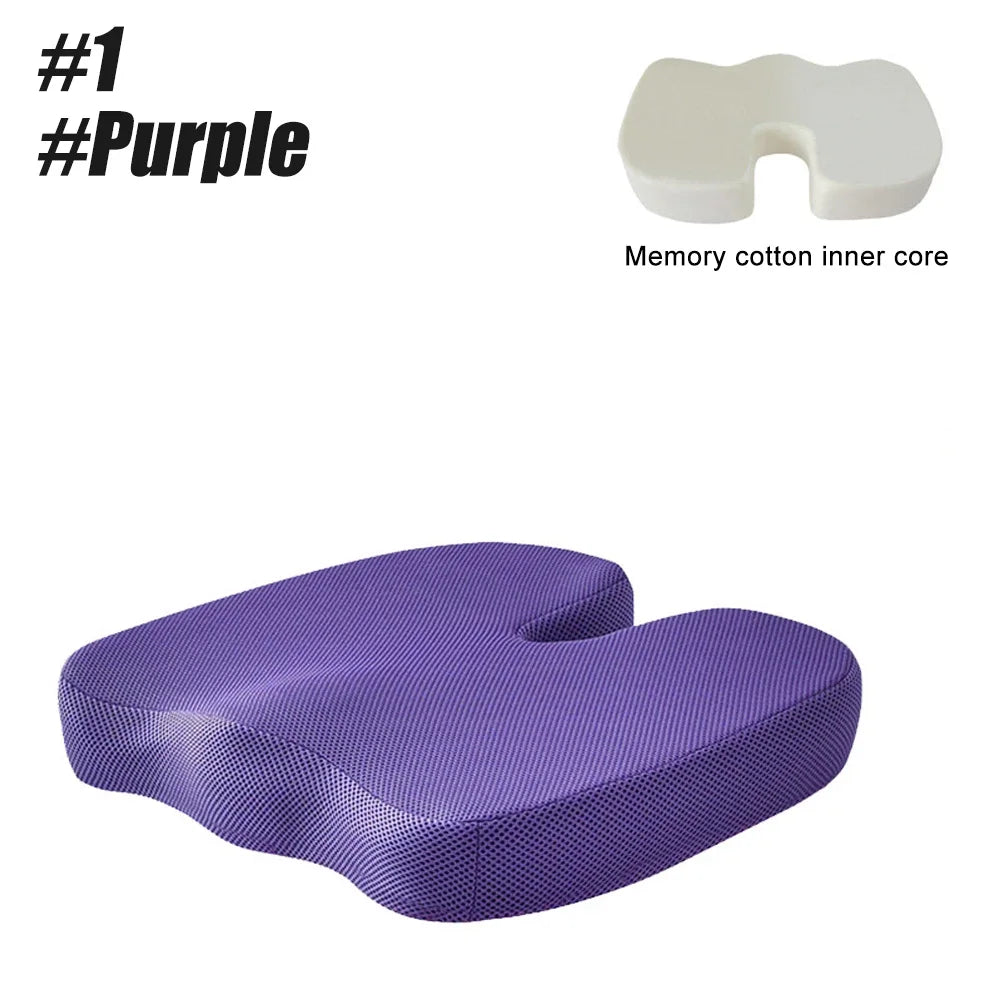
Memory foam for seat cushion — see how it supports posture and tailbone relief
Why Proper Seat Cushion Position Matters
The effectiveness of a seat cushion depends largely on proper placement and sitting posture. Correct positioning helps redistribute body weight, reduce pressure points, and support healthy spinal alignment.
How Seat Cushions Redistribute Pressure
Ergonomic cushions spread body weight across a larger surface area, reducing concentrated pressure on the tailbone, hips, and lower spine. This makes memory foam for seat cushion designs popular among office workers and people who sit for extended periods.
How Ergonomic Cushions Improve Posture
A properly positioned ergonomic cushion can encourage a more balanced pelvis position, helping reduce slouching and supporting a healthier sitting posture.
Learn more about posture correction techniques that complement your ergonomic sitting setup.
Why Incorrect Placement Reduces Effectiveness
Placing a cushion backward, sitting too far forward, or using a cushion that does not match your chair can reduce support and may increase discomfort.
How to Use a Coccyx Cushion the Correct Way
Coccyx cushions are designed to reduce pressure on the tailbone by creating space beneath the coccyx area while supporting the hips and pelvis.
Which Direction Should the U-Shaped Opening Face?
The U-shaped cutout should always face the back of the chair. This opening helps prevent direct pressure on the tailbone.
How to Sit on a Coccyx Cushion
Sit fully back with both sides of your buttocks evenly supported around the cutout. Avoid leaning heavily to one side because uneven weight distribution can reduce comfort.
Correct Way to Use a Tailbone Cushion
Keep your feet flat, hips level, and spine neutral. Pairing the cushion with lumbar support can further improve sitting alignment.
How Long Does It Take to Adjust?
Many users adapt within several days to two weeks. A short adjustment period is common when changing your sitting position.
How to Sit on a U-Shaped Cushion
U-shaped cushions are designed to reduce tailbone pressure while supporting the pelvis and hips.
Sitting Position for Office Chairs
Place the cushion firmly against the backrest and sit with your back supported. Adjust chair height so your feet remain flat.
Sitting Position for Car Seats
Place the cushion securely on the seat while maintaining proper driving visibility and pedal access.
Sitting Position for Wheelchairs
Choose a cushion size that fits the wheelchair and ensures equal weight distribution.
Sitting Position for Gaming Chairs
Combine the cushion with proper lumbar support and armrest adjustment to maintain neutral posture during long sessions.
How to Use a Seat Cushion on Different Chairs
Office Chair Setup
Position the cushion against the chair back and adjust your workstation height so your feet stay flat and your hips remain supported.
See our ergonomic workstation setup guide for better desk positioning.
Car Seat Setup
Make sure the cushion does not change your driving posture or reduce visibility. Adjust the seat if needed.
Dining Chair Setup
Use a thinner cushion that improves comfort without making your hips sit too high.
Airplane and Travel Seating
Portable memory foam cushions can reduce pressure during flights, commutes, and extended travel.
Recliner and Home Office Setup
Combine seat support with lumbar support to maintain a balanced sitting position.
Benefits of Using an Ergonomic Seat Cushion
- ✅ Tailbone pressure relief – Helps reduce direct coccyx pressure during sitting.
- ✅ Improved spinal alignment – Supports healthier posture habits.
- ✅ Better sitting endurance – Makes longer sitting sessions more comfortable.
- ✅ Reduced hip and lower back strain – Helps distribute weight more evenly.
Explore tailbone pain relief options that support daily comfort.
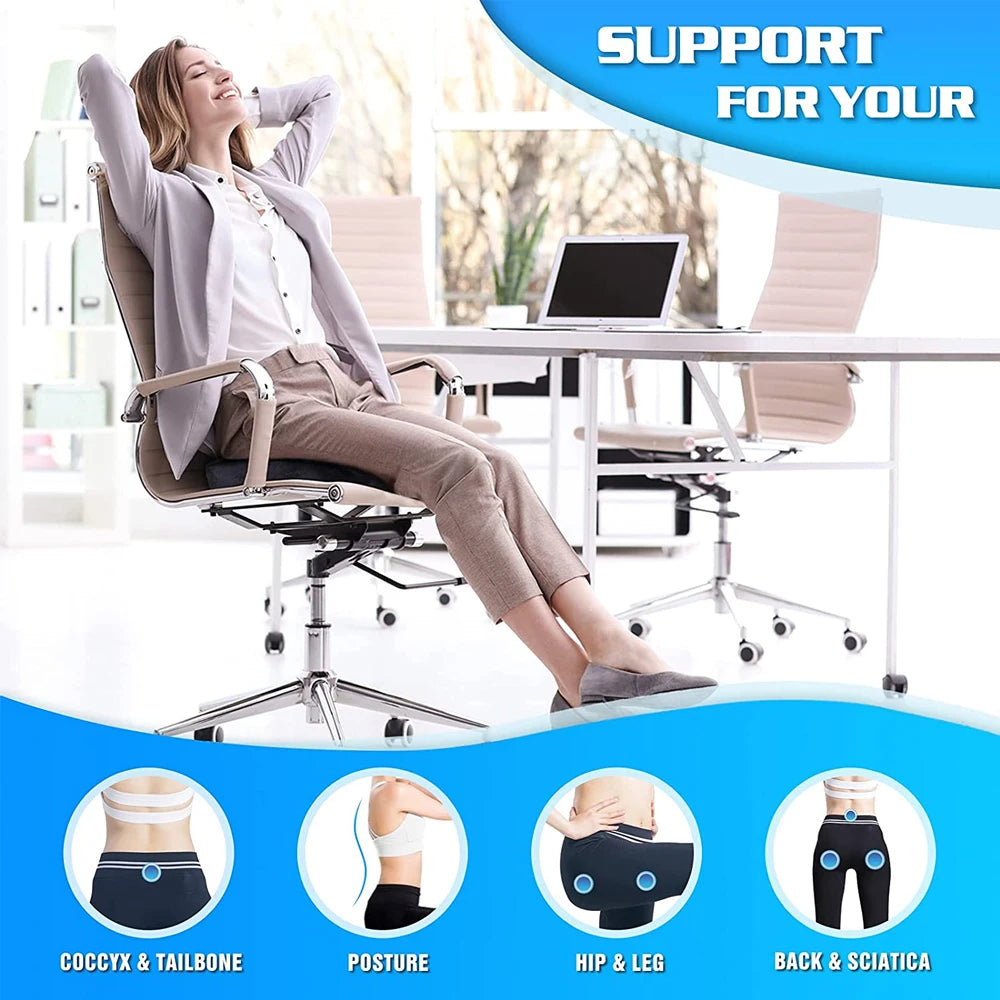
Correct way to use coccyx cushion for ergonomic comfort
Common Seat Cushion Mistakes and How to Fix Them
Using the Cushion Backwards
Always position coccyx cutouts toward the rear of the chair.
Sitting Too Far Forward
Sit fully back so the cushion can distribute pressure evenly.
Choosing the Wrong Cushion Height
A cushion that is too thick can change hip alignment and increase discomfort.
Slouching Despite Using a Cushion
A cushion supports posture but does not replace good sitting habits.
Expecting Immediate Pain Relief
Your body may need several days to adjust before the cushion feels natural.
Memory Foam vs Other Seat Cushion Materials
| Material | Support | Durability | Best For |
|---|---|---|---|
| Memory Foam | Adaptive pressure relief and body contouring | 2–3 years | Tailbone pain, office workers, long sitting |
| Gel Cushions | Cooling feel with moderate support | 1–2 years | Warm environments |
| Latex Cushions | Responsive and supportive | Several years | Users wanting firmer support |
| Air Cushions | Adjustable firmness | Varies | Travel and temporary relief |
| Orthopedic Foam Cushions | Firm structural support | Varies | Posture-focused users |
Read our seat cushion buying guide before choosing the right option.
How Long Should You Sit on a Seat Cushion Each Day?
First-Time Users
Begin with shorter sessions of 30–60 minutes and gradually increase use.
Long Office Work Sessions
Most ergonomic cushions are designed for extended use when combined with regular movement breaks.
Chronic Tailbone Pain Users
People with ongoing pain may benefit from professional guidance when adjusting their sitting routine.
Travel and Commuting Use
Seat cushions can be used during flights, road trips, and daily commuting.
Combining a Seat Cushion With Lumbar Support
Proper Seat Cushion Position
Ensure your pelvis remains level and fully supported on the cushion.
Proper Lumbar Pillow Placement
Place lumbar support at the natural curve of your lower back.
Learn how to position lumbar support pillows correctly .
Creating an Ergonomic Sitting Setup
Combine chair height, monitor position, armrest adjustment, and cushion support for better ergonomics.
Cleaning, Maintenance, and Replacement Guidelines
Cleaning Memory Foam Cushions
Most memory foam inserts should be spot cleaned and completely air dried.
Cover Maintenance
Wash removable covers according to manufacturer instructions.
When to Replace a Seat Cushion
Replace your cushion when it loses shape, stays compressed, or no longer provides even support.
Troubleshooting Persistent Discomfort
If Tailbone Pain Gets Worse
Check cushion direction and confirm the coccyx cutout is positioned correctly.
If Lower Back Pain Persists
Review chair height, lumbar support, and overall posture.
Learn more about lower back pain while sitting .
If Your Legs Become Numb
The cushion may be too thick or incorrectly positioned.
When to Consult a Healthcare Professional
Seek professional advice if discomfort continues despite proper ergonomic adjustments.
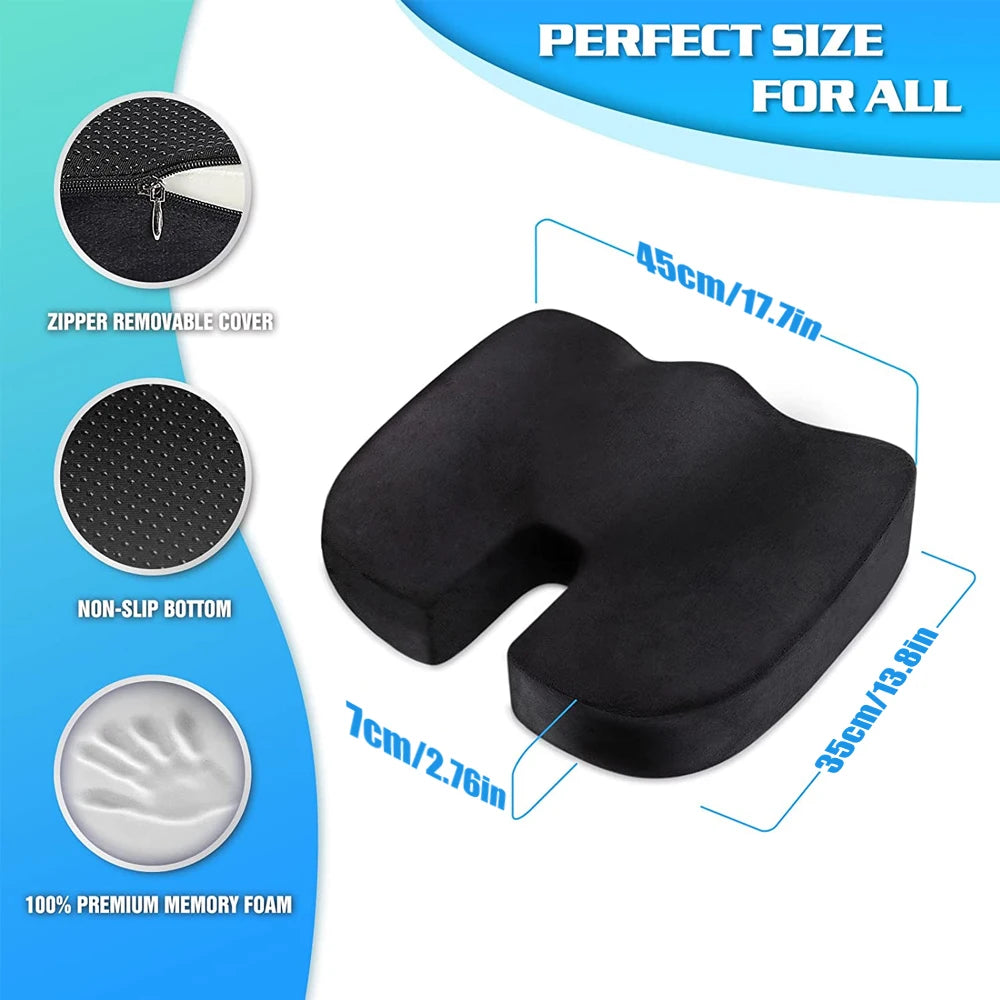
Best seat cushion for tailbone pain — elevate your desk comfort
Frequently Asked Questions
How to use a chair cushion properly?
Place the cushion flat on the chair, position the back of the cushion toward the backrest, sit fully back, and keep your feet flat on the floor.
How to sit on a seat cushion?
Sit with your hips centered on the cushion and avoid sitting on the front edge. Maintain relaxed shoulders and neutral spine alignment.
How to sit on a coccyx cushion?
Sit evenly on both sides of the U-shaped opening so your tailbone is suspended above the cutout.
How to sit on a tailbone cushion?
Use the cushion on a firm chair, keep your hips level, and allow the cushion to reduce direct pressure on the coccyx.
Should the coccyx cutout face forward or backward?
The coccyx cutout should face the back of the chair because it is designed to reduce pressure under the tailbone.
Can you sit on a seat cushion all day?
Yes, many ergonomic cushions are designed for long sitting, but regular movement breaks are still recommended.
Are ergonomic seat cushions worth it?
For people who sit for long periods, a properly selected ergonomic cushion can improve comfort and reduce pressure points.













