

How to Wash Sneakers Safely: A Step-by-Step Machine Washing Guide
Machine washing can make cleaning sneakers much easier, but the wrong shoes, settings, or drying method can cause deformation, color changes, loose adhesives, or material damage. The safest approach is simple: check the shoe manufacturer's care instructions first, confirm the sneakers are suitable for machine washing, prepare them carefully, use cold water and a gentle cycle, protect them from excessive impact, and air dry them away from concentrated heat.
Can You Wash Sneakers in a Washing Machine?
Yes, some sneakers can be washed in a washing machine, but not every pair is machine-safe. Fabric, canvas, polyester, nylon, and some synthetic sneakers may tolerate gentle machine washing when the manufacturer's care instructions allow it. Shoes made from leather, suede, nubuck, or delicate materials generally require a different cleaning method.
Sneakers Usually Suitable for Machine Washing
Many casual sneakers made primarily from washable textile or synthetic uppers can be machine washed when their care instructions permit it. The important issue is not simply whether a shoe looks washable. Its construction, adhesives, decorations, soles, and other components also need to tolerate water and mechanical agitation.
Sneakers You Should Not Machine Wash
Avoid putting leather, suede, and nubuck sneakers into a conventional washing machine unless the manufacturer specifically says they are machine washable. You should also avoid machine washing footwear with fragile decorations, electronic components, lights, delicate glued elements, or significant structural damage.
The 30-Second Wash-or-Don't-Wash Decision
- Check the footwear care instructions.
- Identify the main upper material.
- Inspect the sole, stitching, adhesives, and panels for existing damage.
- Remove fragile or detachable components.
- If the manufacturer's instructions are unclear and the shoe appears delicate, choose hand cleaning instead.
What to Check Before Washing Sneakers
A few minutes of preparation can prevent many of the problems associated with washing shoes in a machine. Before starting a cycle, inspect both sneakers rather than assuming they can handle the same treatment as ordinary laundry.
Read the Footwear Care Instructions
Manufacturer-specific care instructions should take priority over general sneaker-washing advice. Different materials and construction methods can react differently to water, detergent, agitation, and heat. If the manufacturer recommends hand washing or another cleaning method, follow that guidance.
Inspect the Soles, Glue, Stitching, and Uppers
Look for loose glue, separated sole edges, cracked rubber, damaged stitching, or panels that are already pulling away. A washing cycle introduces repeated movement and flexing, so existing structural problems may become worse.
Remove Laces, Insoles, and Loose Dirt
Remove the laces and insoles when the shoe design allows it. These components can be cleaned separately and dry more easily outside the shoe. Brush away mud, sand, gravel, and loose surface dirt before washing so that unnecessary debris does not enter the machine or create additional abrasion.
Pre-Wash Checklist
- Confirm the care instructions allow machine washing.
- Check the shoe material and construction.
- Inspect the soles, glue, stitching, and upper for damage.
- Remove laces and removable insoles when appropriate.
- Brush away loose dirt and mud.
- Check pockets or shoe compartments for debris.
- Prepare a protective shoe laundry bag if using one.
How to Prepare Sneakers for Machine Washing
Brush Off Mud and Surface Debris
Remove as much loose dirt as possible before the shoes enter the washer. Dried mud can become abrasive when combined with mechanical movement, while large pieces of debris can circulate through the machine. A soft brush is usually sufficient for surface cleaning.
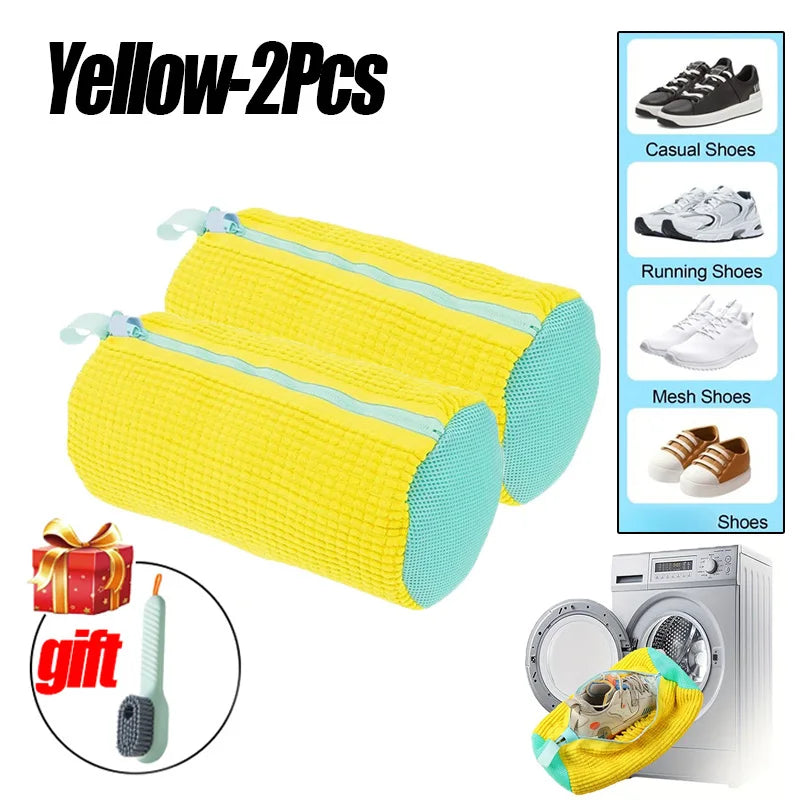
Place Sneakers in a Shoe Laundry Bag or Mesh Laundry Bag
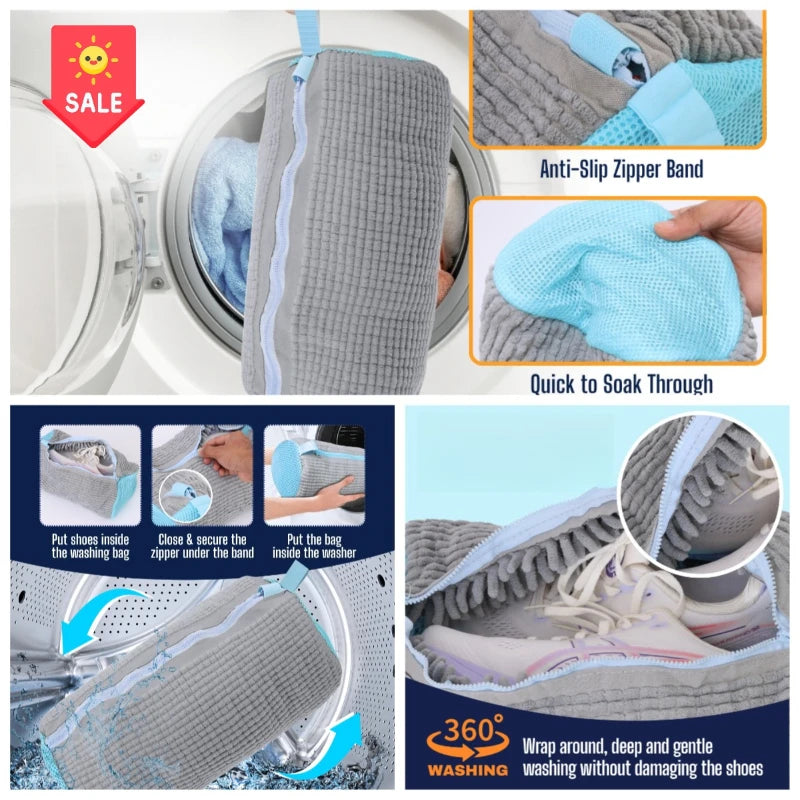
A protective laundry bag can reduce direct contact between sneakers and the washer drum during the cycle. Containment also helps keep the shoes together and can reduce excessive rubbing and impact.
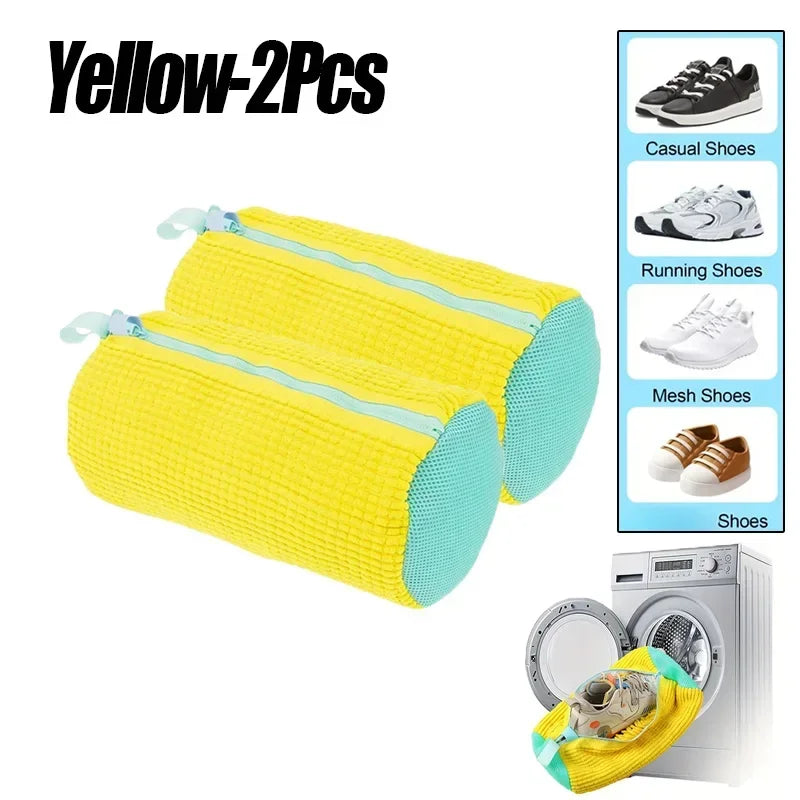
For example, the Shoe Washing Bag is made from polyester nylon and uses a secure zipper to keep sneakers enclosed while allowing water and detergent to flow through the bag. Its reusable design is intended for repeated machine washing, while the protective layer helps reduce rubbing and impact during the wash.
Keep Laces and Small Parts Contained
Loose laces can become tangled during washing. Keep them contained with the sneakers or clean them separately according to the shoe's construction. The goal is to prevent small components from becoming separated or caught during the cycle.
Use a Balanced, Appropriate Load
Avoid filling the washer with heavy items that could create excessive friction against the sneakers. At the same time, putting a single heavy pair into an otherwise empty machine may create an unbalanced load. Use an appropriate load arrangement for your washer and avoid overloading the drum.
The Safest Washing Machine Settings for Sneakers
Use Cold Water
Cold water is a practical default when the manufacturer's instructions permit machine washing. It can reduce the risk of dye bleeding, material distortion, and heat-related problems affecting adhesives or synthetic components.
Choose a Gentle or Delicate Cycle
A gentle or delicate cycle generally uses less aggressive agitation than a standard heavy-duty program. Lower mechanical stress helps minimize unnecessary impact, flexing, and rubbing.
Select a Low or Moderate Spin
Excessive spinning can subject shoes to additional mechanical stress. When your machine provides a choice, a low or moderate spin is a safer starting point for compatible sneakers.
Choose the Right Laundry Detergent
Use a small amount of mild liquid laundry detergent rather than adding more detergent in an attempt to improve cleaning. Excess detergent can be difficult to rinse from shoe materials and may leave visible or tactile residue.
How to Wash Sneakers Safely in a Washing Machine
Once the sneakers have passed the washability check, follow a simple sequence that minimizes unnecessary stress on the footwear.
- Prepare the sneakers. Confirm they are machine-safe, remove loose dirt, and take out removable components where appropriate.
- Put the shoes in a protective laundry bag. Close the zipper securely and make sure the sneakers are properly contained.
- Add a small amount of mild detergent. Avoid excessive detergent that could remain trapped in the shoe material.
- Run a cold, gentle cycle. Use low or moderate spin when available, while following the shoe manufacturer's instructions if they specify different settings.
- Remove the sneakers immediately. Do not leave wet shoes sitting in the machine for an extended period because trapped moisture can contribute to odor and shape-retention problems.
How to Dry Sneakers After Machine Washing
Air Dry Sneakers at Room Temperature
Air drying is the safer default after machine washing. Place the sneakers in a well-ventilated area at room temperature and allow moisture to escape naturally. Good airflow is more useful than exposing the shoes to concentrated heat.
Use Towels or Paper to Help Maintain Shape
Temporary internal support can help the upper retain its shape while drying. Clean towels or suitable paper can be placed inside the sneakers without packing them so tightly that airflow is restricted. Replace damp material as necessary.
Avoid High Heat, Radiators, and Hot Dryers
Concentrated heat can affect synthetic materials, rubber components, and adhesives. Avoid placing wet sneakers directly against radiators or other intense heat sources, and do not assume a hot dryer is safe simply because the shoes survived the washing cycle.
How Long Do Machine-Washed Sneakers Take to Dry?
There is no universal drying time. Lightweight textile sneakers may dry faster than shoes with thick padding or dense construction. Ventilation, humidity, temperature, and how much water remains in the shoes also matter. Instead of relying on a fixed number of hours, allow the sneakers to dry completely before wearing or storing them.
When You Should Never Machine Wash Sneakers
Leather, Suede, and Nubuck Sneakers
These materials generally require specialized footwear-care methods rather than conventional machine washing. Water exposure and mechanical agitation can alter their appearance or texture, so follow the specific care instructions for the material.
Shoes With Delicate Decorations or Electronic Components
Sequins, glued decorations, lights, electronics, and other fragile components may not tolerate repeated soaking and agitation. Unless the manufacturer explicitly confirms machine washing is appropriate, choose a safer cleaning method.
Sneakers With Weak Adhesives or Structural Damage
If a sole is already separating, the midsole is cracked, or the upper has damaged stitching, machine washing can add mechanical stress to an already weakened structure. Repair or hand clean the shoes instead of putting them through a wash cycle.
When the Manufacturer Says Hand Wash Only
If the manufacturer says hand wash only, treat that instruction as the controlling guidance. A general sneaker-washing method should never override a specific care requirement for a particular shoe.
Common Problems After Washing Sneakers and How to Fix Them
Sneakers Still Smell After Washing
Lingering odor can result from incomplete drying, trapped moisture, dirty insoles, or odor sources that were not fully cleaned. Allow the sneakers and removable components to dry thoroughly in a ventilated area before storing them.
Sneakers Came Out Discolored
Discoloration may be associated with dye transfer, unsuitable detergent, heat exposure, or washing incompatible colors together. Future washes should follow the manufacturer's care instructions and use appropriately cool, gentle settings.
Sneakers Became Misshapen
Deformation can be associated with aggressive agitation, high spin, excessive heat, overloading, or inadequate shape support during drying. Reduce mechanical and heat exposure on future washes and use temporary internal support while the shoes dry.
Glue or Soles Started Coming Loose
Adhesive separation may be influenced by heat, repeated flexing, age, or pre-existing adhesive weakness. If the shoe already showed signs of separation before washing, machine cleaning may accelerate the problem.
There Is Detergent Residue on the Shoes
Visible residue often indicates excessive detergent or insufficient rinsing. Use less detergent on future washes and, when appropriate for the footwear, rinse thoroughly using a gentle method that does not introduce unnecessary mechanical stress.
How to Protect Sneakers During Future Machine Washes
Use a Protective Shoe Laundry Bag Every Time
A reusable shoe laundry bag provides a practical layer of containment between compatible sneakers and the washing machine environment. It can help reduce rubbing and direct impact against the drum while allowing water and detergent to pass through.
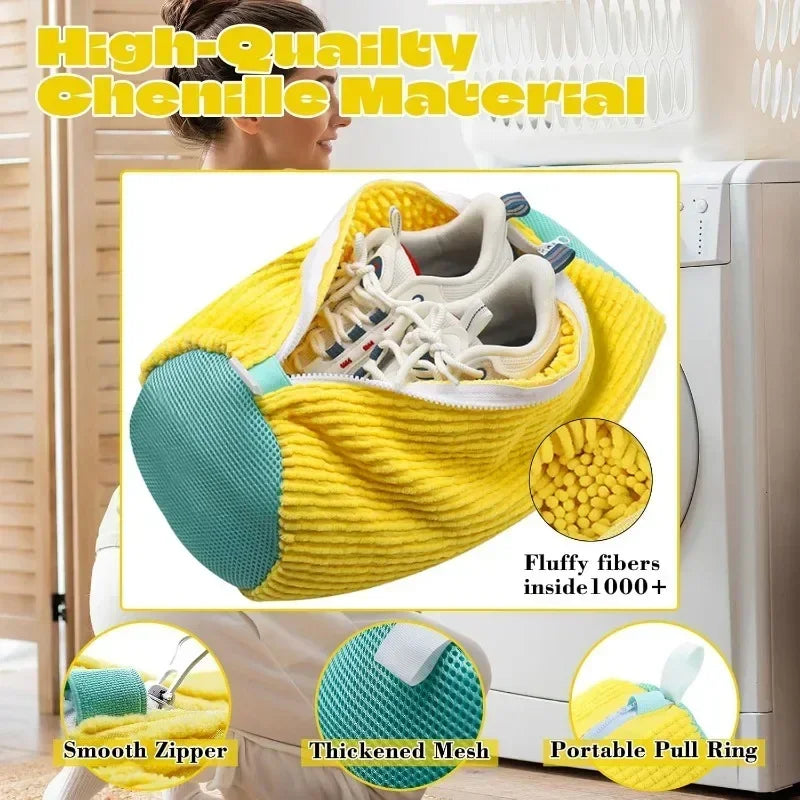
The reusable shoe washing bag uses tear-resistant polyester nylon, a secure zipper, and a practical hanging hook. Its 39 × 19 cm size is designed as a dedicated shoe laundry bag, and the product is available in packages containing one or two bags.
Keep Water Temperature and Agitation Low
For sneakers that are approved for machine washing, maintain the safer routine of cold water and gentle agitation unless the footwear manufacturer specifies otherwise. Lower mechanical and thermal stress can help reduce unnecessary wear.
Clean Sneakers Only When Needed
Machine washing should not become the default response to every small mark. Spot cleaning or brushing may be sufficient for light dirt. Reducing unnecessary full washes can help limit repeated exposure to water, agitation, and detergent.
Follow the Shoe Manufacturer's Care Guidance
The most reliable long-term routine combines general washing principles with the manufacturer's instructions for the specific shoe. When the two conflict, the footwear-specific guidance should take priority.
Quick Reference: Safe Sneaker Washing Settings
Recommended Settings at a Glance
- Washability: Machine wash only when the manufacturer permits it.
- Water: Cold water is a safer default.
- Cycle: Gentle or delicate.
- Spin: Low or moderate when available.
- Detergent: Small amount of mild liquid laundry detergent.
- Protection: Use a dedicated shoe laundry bag or suitable protective containment.
- Load: Avoid overloading and avoid creating an unnecessarily unbalanced load.
- Drying: Air dry at room temperature with good ventilation.
- Heat: Avoid concentrated heat, radiators, and hot drying methods.
Final Takeaway: Wash Sneakers With a Safety-First Routine
Knowing how to wash sneakers safely starts before the washing machine is turned on. First determine whether the footwear is genuinely machine-safe, then inspect its materials and construction, remove loose dirt and detachable components, and protect the shoes during the cycle. For compatible sneakers, cold water, a gentle cycle, limited mild detergent, and low or moderate spin provide a practical starting point. After washing, remove the shoes promptly and let them air dry naturally away from concentrated heat.
A protective shoe laundry bag can make repeated machine washing more convenient by reducing direct rubbing and impact while keeping sneakers contained. For readers who regularly clean compatible sneakers in a washer, the Shoe Washing Bag offers a reusable way to add that protective layer to the routine.
Pillar Article: Best Shoe Washing Bags: Top Picks for Safer Machine Washing













