

Does Infrared Hair Heating Technology Really Work?
Yes—infrared hair heating technology works by delivering gentle, penetrating heat that moves beyond the surface of the hair strand. Instead of overheating the outer cuticle, it warms the inner layers of the hair shaft, helping conditioners, oils, and masks absorb more effectively.
From a scientific perspective, infrared heat uses longer wavelengths that can distribute energy more evenly. This reduces hot spots and allows lower temperatures to achieve similar—or better—results compared to traditional heat caps.
What Research Says About Infrared Heat for Hair Care
While direct clinical studies on infrared heat caps are limited, heat-assisted conditioning is well understood. Controlled heat helps lift the cuticle slightly, improving product penetration. Infrared technology enhances this process by distributing heat more evenly and reducing moisture loss.
Realistic expectation: Infrared heat won’t “repair” hair permanently, but it can significantly improve how well treatments work—leading to softer, more hydrated, and more manageable hair over time.
Infrared Hair Heating Technology vs Traditional Heat Caps
⏱ 6 min read
Dryness, breakage, and slow results often come down to inefficient heat delivery. Choosing the right heat method can make the difference between surface-level conditioning and deeper, longer-lasting results.
Which approach actually improves results without damaging your hair? Below is a clear, evidence-based comparison.
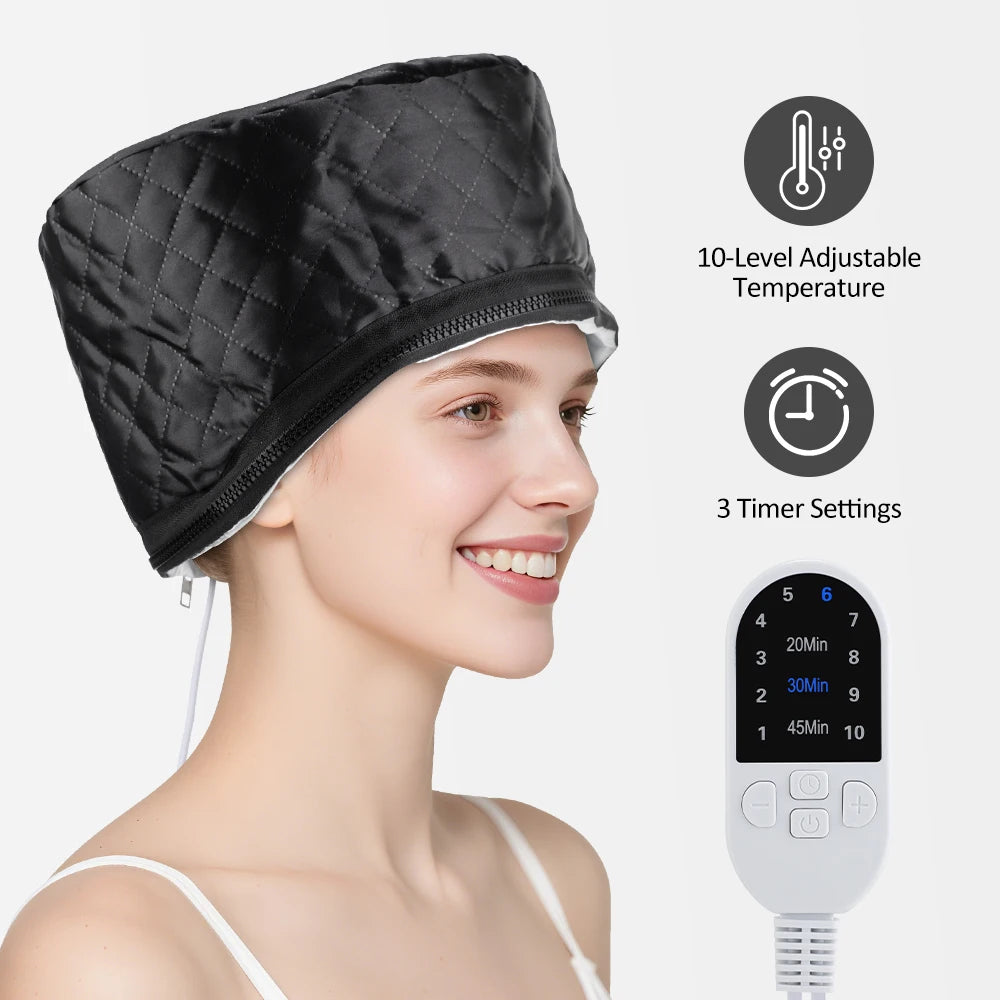
Infrared hair heating technology supporting deeper moisture absorption
How Infrared Heat Caps Work for Hair (Technology Explained)
Infrared heat caps use longer wavelengths that penetrate into the hair shaft instead of sitting on the surface. This allows heat to reach the cortex, where moisture balance and strength are maintained.
Infrared vs Surface Heat: What Happens Inside the Hair Shaft
- Infrared heat: penetrates inward → supports moisture retention
- Traditional heat: stays on surface → increases evaporation risk
- Result: more efficient conditioning with less stress on hair
Why Even Heat Distribution Matters
Even heat prevents hot spots that can damage the cuticle. With infrared, lower temperatures can still deliver consistent results across the entire head, improving comfort and reducing risk.
Many users pair infrared caps with a hair steamer cap for deep conditioning depending on their hydration needs.
How Traditional Heat Caps Work
Traditional heat caps rely on resistance heating—either electric coils or microwave-heated inserts—to warm the hair externally.
Resistance Heating Explained
This method heats the cuticle layer first, causing it to lift and allow products to enter. However, penetration depends heavily on temperature intensity.
Common Heat Distribution Limitations
- Surface-only heating
- Uneven temperature distribution
- Higher heat required for noticeable results
- Greater risk of dryness if overused
Infrared Hair Heating Technology vs Traditional Heat Caps: Complete Comparison
Feature Comparison Table
| Feature | Infrared Heat Caps | Traditional Heat Caps |
|---|---|---|
| Heat Type | Penetrating (internal) | Surface-level |
| Absorption Efficiency | High | Moderate |
| Temperature Required | Lower | Higher |
| Moisture Retention | Better | Less consistent |
| Heat Consistency | Even | Variable |
| Comfort | Higher | Moderate |
Pros and Cons of Each Technology
- Infrared: deeper conditioning, lower heat, more consistent results
- Traditional: lower cost, simple design, widely available
Does Infrared Heat Improve Hair Product Absorption?
Yes—infrared heat improves absorption by gently opening the cuticle while maintaining internal moisture balance.
How Heat Affects Deep Conditioning Treatments
- Encourages deeper penetration of conditioners
- Improves distribution across strands
- Reduces product buildup on the surface
Limitations: Results still depend on product quality, hair porosity, and treatment time. Infrared enhances performance but doesn’t replace good hair care practices.
Hair Steaming vs Infrared Heat: What's the Difference?
When Steam Outperforms Infrared
- Severely dry hair needing hydration
- Pre-treatment softening
- Moisture-focused routines
When Infrared Is the Better Choice
- Maximizing product absorption
- Reducing frizz and improving manageability
- Maintaining long-term moisture balance
Many routines combine both methods for best results.
Which Hair Types Benefit Most From Each Technology?
Low-Porosity Hair
Infrared heat helps products penetrate resistant cuticles more effectively.
Color-Treated or Damaged Hair
Lower, even heat reduces stress on fragile strands while improving hydration.
Curly and Natural Hair
Infrared supports moisture retention and definition, making it ideal for textured hair care routines.
Benefits of Infrared Hair Heat Caps
Short-Term Results
- Smoother texture after treatments
- Better product absorption
- Reduced frizz
Long-Term Hair Health Benefits
- Improved moisture retention
- Stronger, more elastic strands
- Less cumulative heat damage
Explore tools in Hair Care and Styling Devices to build a complete routine.
Infrared hair therapy supporting moisture and repair
Are Infrared Heat Caps Safe?
Infrared vs Traditional Heat Safety
- Infrared: lower temperature, even heat, reduced risk
- Traditional: higher surface heat, more variability
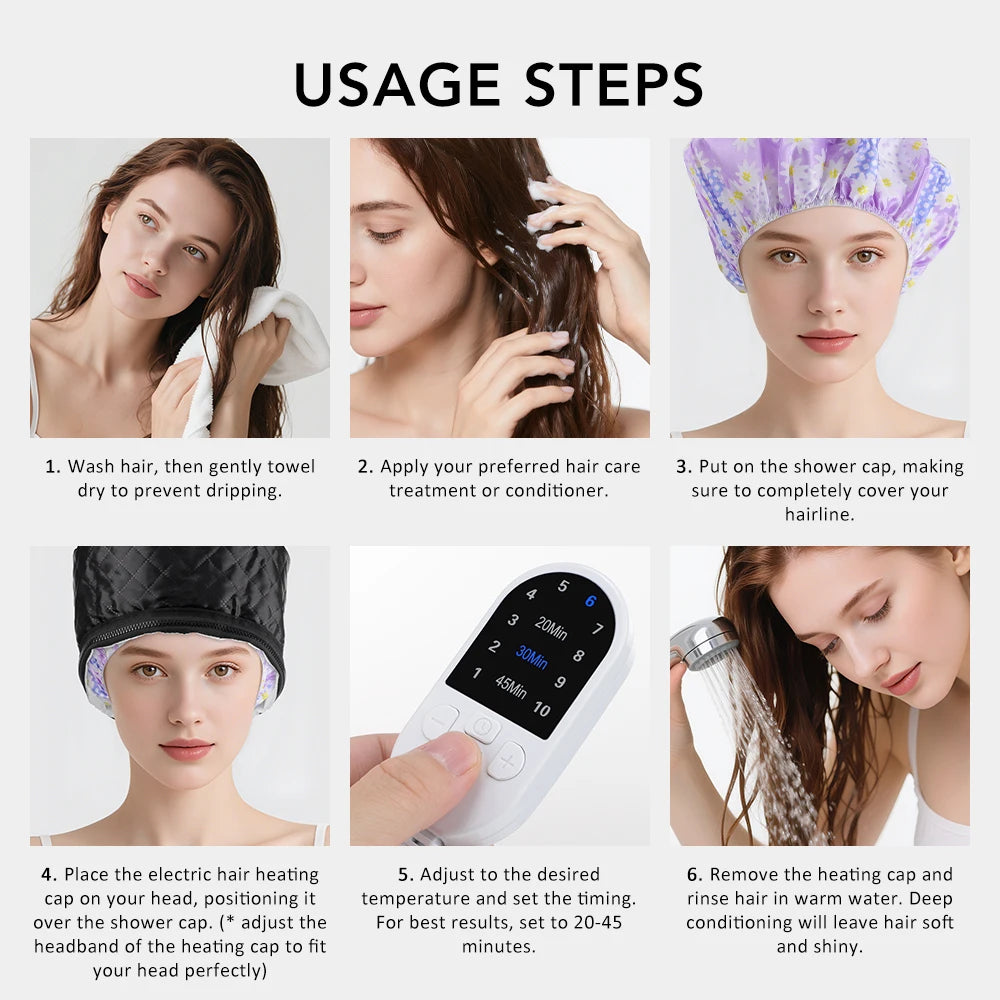
Safe Usage Tips
- Limit sessions to 15–30 minutes
- Always use with conditioning products
- Avoid excessive frequency (1–2 times weekly)
- Follow manufacturer guidelines
Overall, infrared heat caps are considered safe for regular use when used correctly.
How to Choose the Best Heat Cap for Hair Treatment
Choose Infrared If...
- You want deeper conditioning results
- You have dry, damaged, or low-porosity hair
- You prefer consistent, lower heat
Choose Traditional If...
- You need a budget-friendly option
- You use heat treatments occasionally
- You prefer simple tools
Buying Checklist
- Adjustable temperature settings
- Even heat distribution
- Comfortable fit
- Reliable materials

Comparing infrared vs traditional heat caps for better hair care
FAQ
Is infrared better than a traditional heat cap for deep conditioning?
For most users, yes—infrared provides more consistent heat and better absorption.
Does infrared heat improve conditioner absorption?
Yes, it helps ingredients penetrate deeper into the hair shaft.
Can infrared heat replace hair steaming?
It can, but many users alternate both depending on hydration needs.
Are infrared heat caps safe for color-treated hair?
Yes, they are generally safer due to lower and more even heat.
Which heat cap works best for low-porosity hair?
Infrared heat caps are typically more effective for low-porosity hair.
How long should you use an infrared heat cap?
Most treatments last between 15–30 minutes per session.
Is infrared worth the extra cost compared with a traditional heat cap?
If you deep condition regularly or struggle with dryness, the improved efficiency and results often justify the higher cost.
Related Guide: Best Hair Steamer Cap Home: Top Picks Compared













