

How to Use a Portable Jump Starter: Step-by-Step Guide
⏱ 7 min read
A dead car battery can happen without warning—before work, after shopping, or during a road trip. If you've never used a portable jump starter before, the situation can feel overwhelming. Fortunately, modern jump starters are designed to let you safely restart your vehicle without another car or traditional jumper cables. This guide explains how to use a portable jump starter correctly, when it's safe to use one, and what to check before you connect it to a dead battery.
Explore how this jump starter works in real emergencies

Portable power when a car battery suddenly dead strikes — See it in action
Quick check: If your engine won't crank but the battery isn't physically damaged, a portable jump starter can often get you back on the road in just a few minutes.
What Is a Portable Jump Starter and How Does It Work?
A portable jump starter is a self-contained battery pack that delivers the high burst of current needed to start a vehicle with a weak or dead battery. Unlike traditional jumper cables, it doesn't require another vehicle, making it one of the safest and most convenient roadside emergency tools to keep in your car.
A quality jump starter for a dead car battery also includes built-in electronics that help protect both the device and your vehicle during use, making it suitable for experienced drivers and first-time users alike.
How Does a Car Jump Starter Work?
Understanding how does a car jump starter work makes the process much less intimidating. Inside the unit is a rechargeable lithium battery capable of storing enough energy to briefly power your vehicle's starter motor.
After the clamps are connected correctly, the jump starter transfers a controlled surge of current to the vehicle battery. This provides enough power for the starter motor to crank the engine. Once the engine starts, the alternator takes over and begins recharging the vehicle's battery while you drive.
Unlike jumper cables, which depend on another running vehicle, a portable jump starter works independently and can usually be used almost anywhere.
Main Components and Safety Features
Most modern portable jump starters include several features that make them both effective and easy to use:
- Rechargeable lithium battery that stores high-output starting power.
- Heavy-duty battery clamps for secure connections to the battery terminals.
- Smart protection circuitry that helps prevent reverse polarity, short circuits, overcurrent, overheating, and overcharging.
- Status indicators that confirm when the clamps are connected correctly and the unit is ready to start the vehicle.
- Extra functions such as USB charging ports, LED flashlights, and emergency SOS lighting on many models.
These built-in protections greatly reduce the chance of user error compared with older jump-starting methods.
Types of Portable Jump Starters
- Basic Models: Compact units designed for motorcycles, sedans, and small gasoline engines with occasional emergency use.
- Mid-Range Models: Higher cranking power with USB charging, LED lighting, and improved safety features for most passenger vehicles.
- Premium Models: High-capacity jump starters suitable for SUVs, trucks, larger gasoline engines, many diesel vehicles, and demanding cold-weather conditions.
Before purchasing, always check the manufacturer's recommended engine size, peak current rating, and diesel compatibility to ensure the jump starter matches your vehicle.
Why Car Batteries Die Without Warning
Many drivers assume a battery will gradually fail, but that's not always the case. Modern vehicles continue drawing small amounts of power even after the engine is turned off. Combined with weather, battery age, and driving habits, this can leave you with a battery that suddenly won't start the engine.
Common Causes of a Dead Battery
- Cold temperatures reduce available battery power.
- Frequent short trips prevent the alternator from fully recharging the battery.
- Interior lights, dash cameras, or phone chargers slowly drain power while parked.
- Aging batteries naturally lose capacity over time.
- Corroded or loose battery terminals restrict electrical flow.
Signs Your Battery Can Be Jump-Started
In many situations, a portable jump starter can safely restart the vehicle if the battery is simply discharged. Common signs include slow engine cranking, dim headlights, clicking sounds when turning the key, or electrical accessories working while the engine refuses to start.
When Not to Jump-Start a Battery
Do not attempt to jump-start a battery that is cracked, leaking, swollen, frozen, or giving off a strong sulfur smell. Physical battery damage can create serious safety risks and usually indicates that the battery should be replaced rather than recharged. If you're unsure whether the problem is battery-related, professional inspection is the safest option.
Benefits of Using a Jump Starter for Dead Car Batteries
A portable jump starter helps you get back on the road without depending on another vehicle or waiting for roadside assistance. Besides saving time, it gives you a reliable emergency solution that can be used almost anywhere, provided your battery is safe to jump-start.
| Starting Method | Typical Wait Time | Requires Another Vehicle? | Best For |
|---|---|---|---|
| Roadside assistance | 30–120 minutes | No | Major mechanical problems |
| Traditional jumper cables | 10–20 minutes | Yes | When another driver is available |
| Portable jump starter | Often under 2 minutes | No | Independent emergency starting |
Many portable jump starters also include practical extras such as USB charging ports, LED emergency lights, and built-in safety protections, making them useful additions to any vehicle emergency kit.
Quick Checklist Before You Connect the Jump Starter
Confirm the Jump Starter Charge Level
- Ensure the jump starter is adequately charged before use. Many manufacturers recommend at least a 75% charge for reliable engine starting.
- Check the battery indicator and confirm there are no warning lights or fault messages.
- If the device has not been used for several months, recharge it fully before relying on it in an emergency.
Verify Battery Terminals
- Inspect the positive (+) and negative (-) battery terminals for corrosion, dirt, or loose connections.
- Clean away light corrosion if necessary to improve electrical contact.
- Never attempt to jump-start a battery that is leaking, cracked, swollen, or otherwise physically damaged.
Park and Prepare the Vehicle
- Park on a stable surface and shift the transmission into Park (automatic) or Neutral (manual).
- Apply the parking brake before opening the hood.
- Turn off the ignition and all electrical accessories, including headlights, climate control, and infotainment systems.
- Keep metal tools, jewelry, and other conductive objects away from the battery terminals while connecting the clamps.
- If your jump starter has smart clamp indicators, verify they show a correct connection before attempting to start the engine.
How to Use a Portable Jump Starter Step by Step
Step 1: Prepare the Vehicle
Before connecting the jump starter, switch off the ignition and all electrical accessories, including headlights, air conditioning, and the radio. Place the transmission in Park (automatic) or Neutral (manual), apply the parking brake, and open the hood. Locate the battery terminals and confirm they are clean, dry, and free from visible damage.
Step 2: Connect the Clamps Correctly
- Identify the positive (+) and negative (-) battery terminals.
- Connect the red clamp to the positive (+) terminal first.
- Connect the black clamp to the negative (-) terminal or the manufacturer-recommended grounding point if specified for your vehicle.
- Verify that both clamps are firmly attached and cannot touch each other.
- Check the jump starter's indicator lights to confirm the connection is correct before continuing.
Connecting the clamps in the proper order helps reduce the risk of sparks and ensures the jump starter's built-in safety protections function as intended.
Step 3: Start the Engine
Turn on the jump starter if your model requires manual activation, then start the engine. Crank the engine for no more than 3 to 5 seconds at a time. If the vehicle does not start immediately, stop and wait 30 to 60 seconds before trying again. Multiple long cranking attempts can overheat the starter motor and reduce the jump starter's available power.
If the engine still will not start after several attempts, disconnect the unit and inspect for battery damage or other mechanical problems rather than continuing to crank repeatedly.
Step 4: Disconnect the Jump Starter Safely
Once the engine is running smoothly, switch off the jump starter if required by the manufacturer. Remove the clamps in reverse order:
- Disconnect the black (negative) clamp.
- Disconnect the red (positive) clamp.
- Keep the clamps separated while storing the cables.
Proper disconnection protects both the vehicle's electrical system and the jump starter from accidental short circuits.
Step 5: What to Do After the Car Starts
- Allow the engine to idle briefly before driving.
- Drive for at least 20 to 30 minutes, or as recommended by your vehicle manufacturer, to help the alternator recharge the battery.
- Recharge the portable jump starter as soon as possible so it is ready for the next emergency.
- Inspect the battery terminals for corrosion or loose connections if starting problems continue.
- If the battery repeatedly goes dead, have the battery and charging system professionally tested.
Learn step-by-step with this emergency car jump starter

Simple clamps, instant confidence — See it in action
Portable Jump Starter Safety Tips
Avoid Reverse Polarity
- Always connect the red clamp to the positive (+) terminal first.
- Connect the black clamp only to the correct negative terminal or approved grounding point.
- Never force a connection if the indicator shows a reverse polarity warning.
- Do not allow the clamps to touch each other while the jump starter is powered on.
Never Jump-Start a Damaged Battery
- Do not use a jump starter on batteries that are cracked, leaking, swollen, or frozen.
- Stop immediately if you notice excessive heat, smoke, or a strong sulfur odor.
- Replace damaged batteries instead of attempting repeated jump starts.
Cold and Hot Weather Precautions
- Use a jump starter with sufficient cranking power for your engine size and local climate.
- If temperatures are extremely cold, allow the jump starter to warm slightly before use whenever possible.
- Avoid leaving the unit in direct sunlight or inside a hot vehicle for extended periods.
- Recharge the jump starter every 3 to 4 months, even when it has not been used.
Many drivers keep their jump starter alongside other everyday essentials from the Lifestyle collection so they're prepared for unexpected roadside situations.
Troubleshooting: What to Do If the Car Still Won't Start
Indicator Lights and Error Messages
If your portable jump starter displays a warning light or emits an audible alert, stop before making another attempt. Many smart jump starters use these indicators to warn of reverse polarity, poor clamp contact, low internal battery charge, or a short circuit.
- Reconnect the clamps if the connection is loose.
- Verify the red clamp is attached to the positive (+) terminal and the black clamp to the correct negative terminal or grounding point.
- Recharge the jump starter if its battery level is too low to deliver sufficient starting current.
Battery Still Dead
If the engine still does not crank after several properly performed attempts, the battery may be deeply discharged, internally damaged, or no longer capable of holding a charge.
- Wait 30 to 60 seconds between starting attempts.
- Avoid repeated continuous cranking, which can overheat the starter motor.
- Arrange for battery testing if the vehicle repeatedly requires jump-starting.
- Replace the battery if testing confirms it has reached the end of its service life.
Possible Mechanical or Electrical Problems
A dead battery is not always the cause of a vehicle that won't start. If the jump starter is functioning correctly but the engine still refuses to run, another component may be at fault.
- A failing starter motor.
- An alternator that is no longer charging the battery.
- Blown fuses or damaged electrical wiring.
- Fuel delivery or ignition system problems.
If you suspect a fault beyond the battery, discontinue repeated jump-start attempts and have the vehicle inspected by a qualified technician.
Choosing the Best Portable Jump Starter for Your Car
Power Requirements
The best portable jump starter for cars is one that matches your vehicle's engine size and fuel type. Check the manufacturer's recommended peak current and engine compatibility before purchasing.
- Compact gasoline engines generally require less starting current.
- Larger SUVs, trucks, and diesel engines often need significantly higher peak amperage.
- If you regularly drive in freezing temperatures, choose a model designed to deliver reliable cold-weather performance.
Essential Safety Features
Modern jump starters should include multiple layers of protection to reduce the risk of accidental damage and simplify operation for first-time users.
- Reverse polarity protection.
- Short-circuit protection.
- Overcurrent and overload protection.
- Overcharge and overheat protection.
- Clear LED indicators or smart clamp diagnostics.
Useful Extra Functions
Many portable jump starters offer features beyond emergency engine starting. While these extras should not replace adequate starting power, they can add everyday value.
- USB-A or USB-C ports for charging mobile devices.
- Built-in LED flashlight with SOS or strobe modes.
- Digital battery status display.
- Compact carrying case for organized storage.
- Air compressor or tire inflator on combination models.
When comparing models, prioritize reliable starting performance, verified safety features, and compatibility with your vehicle before considering additional convenience features.
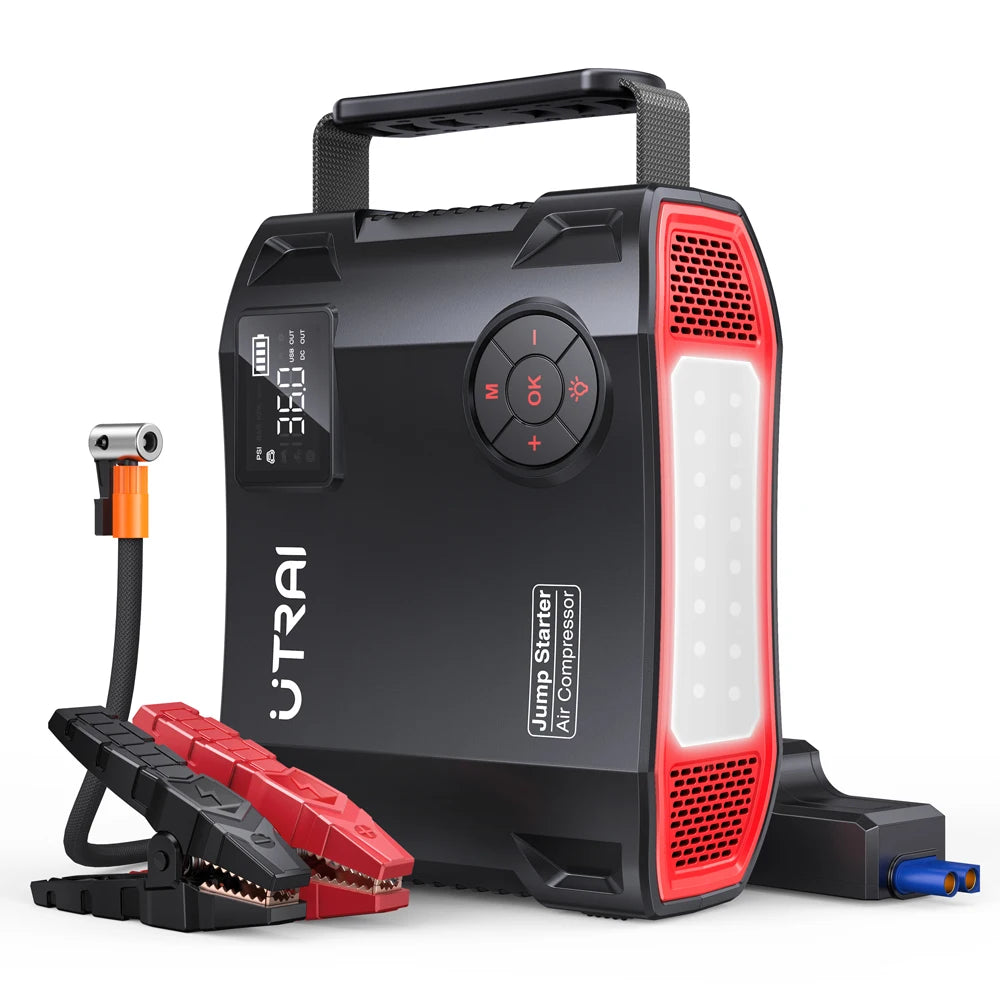
Be ready anywhere, anytime — See it in action
Get yours now — limited stock!
Frequently Asked Questions
How do you use a portable jump starter safely for the first time?
Read the manufacturer's instructions before use, verify the jump starter is sufficiently charged, identify the positive (+) and negative (-) battery terminals, connect the clamps in the correct order, and follow the recommended starting procedure. Built-in safety features help reduce mistakes, but correct clamp placement remains essential.
How charged should a portable jump starter be before use?
Most manufacturers recommend keeping the battery at least 75% charged for dependable performance. Check the charge indicator regularly and recharge the unit every 3 to 4 months, even if it has not been used.
Can a portable jump starter damage my car?
When used correctly, a quality portable jump starter is designed to protect your vehicle. Most models include reverse polarity, short-circuit, overload, and overcurrent protection to help prevent accidental damage.
Can a portable jump starter start a completely dead battery?
In many cases, yes. A fully charged jump starter can start a vehicle with a deeply discharged battery, provided the battery is not physically damaged and the problem is not caused by another mechanical or electrical fault.
What should you do after your car starts successfully?
Disconnect the jump starter in the correct order, recharge the jump starter as soon as possible, and drive long enough for the alternator to replenish the vehicle battery. If the battery repeatedly loses charge, have both the battery and charging system inspected.
Can you use a portable jump starter on diesel vehicles?
Yes, but only if the jump starter is rated for your engine size. Diesel engines generally require higher cranking current than gasoline engines, so always verify compatibility before use.
What happens if the clamps are connected incorrectly?
Most modern jump starters detect reverse polarity and prevent power from flowing until the clamps are connected properly. If the device displays a warning or sounds an alarm, disconnect the clamps and reconnect them correctly before attempting to start the engine.
Can I use a jump starter in cold weather?
Yes. Choose a model with sufficient cranking power for winter conditions. Extremely low temperatures reduce battery performance, so allowing the jump starter to warm slightly before use may improve starting success.
Can I leave the jump starter connected after the engine starts?
No. Once the engine is running normally, disconnect the jump starter promptly following the manufacturer's recommended sequence. Leaving it connected longer than necessary serves no purpose and increases the risk of accidental damage.
Is a portable jump starter better than jumper cables?
For most drivers, a portable jump starter offers greater convenience because it does not require another vehicle. It also includes built-in safety protections and can be used independently during roadside emergencies.
Related Guide: How to Jumpstart a Car Safely Without Damaging Electronics













