
Best Latex Free Makeup Sponges in 2026: Tested Picks for Flawless, Sensitive-Skin-Friendly Blending
Finding the right latex free makeup sponge can make a major difference in foundation coverage, blending speed, and skin comfort. The best latex-free beauty sponges deliver an airbrushed finish without using traditional latex materials, making them a popular choice for sensitive skin, allergy-conscious users, and anyone looking for a softer makeup application tool.
In this guide, we compare the best latex free makeup sponges based on softness, blending performance, durability, cleaning, texture, and value to help you choose the right sponge for your makeup routine.
Discover how a latex free makeup sponge can transform your daily routine. From knowing how to properly wash makeup sponges to choosing the perfect mini beauty blender sponge, we reveal which makeup sponge squishy options actually deliver a smooth, flawless finish.
⏱ 12 min read
What Is a Latex Free Makeup Sponge and Why It Matters for Sensitive Skin
A latex free makeup sponge is a cosmetic blending sponge made without natural rubber latex. Instead, most modern beauty sponges are manufactured from hydrophilic polyurethane (PU) foam or similar synthetic materials designed to expand when wet and deliver a smooth, streak-free finish.
This matters especially for people with latex allergies or highly reactive skin. Even small amounts of natural latex can trigger irritation, redness, or allergic reactions in sensitive users. Latex-free beauty sponges eliminate this risk while still providing the soft, bouncy texture needed for seamless foundation blending.
What materials replace latex in modern beauty sponges
Most high-quality latex free makeup sponges use hydrophilic PU foam. This material absorbs water, expands in size, and creates a soft pore structure that helps distribute foundation evenly across the skin.
- Hydrophilic polyurethane foam (most common)
- Open-cell foam for better product distribution
- Synthetic cosmetic-grade foam designed for repeated washing
- Microfiber-infused foam for reduced product absorption
Related reading: Makeup sponge materials and application guide | Beauty sponge comparison guide
Who should choose a latex-free makeup sponge?
Latex-free makeup sponges are a strong option for users who want a gentler alternative to traditional latex foam. They are especially useful for:
- People with latex sensitivity or concerns about latex exposure
- Users with reactive or sensitive skin who prefer softer application tools
- Beauty lovers looking for hypoallergenic makeup sponge options
- Anyone wanting reusable beauty sponges made from alternative foam materials
- Makeup users who want smoother blending with liquid and cream products
- Professional makeup artists who require hygienic, washable tools

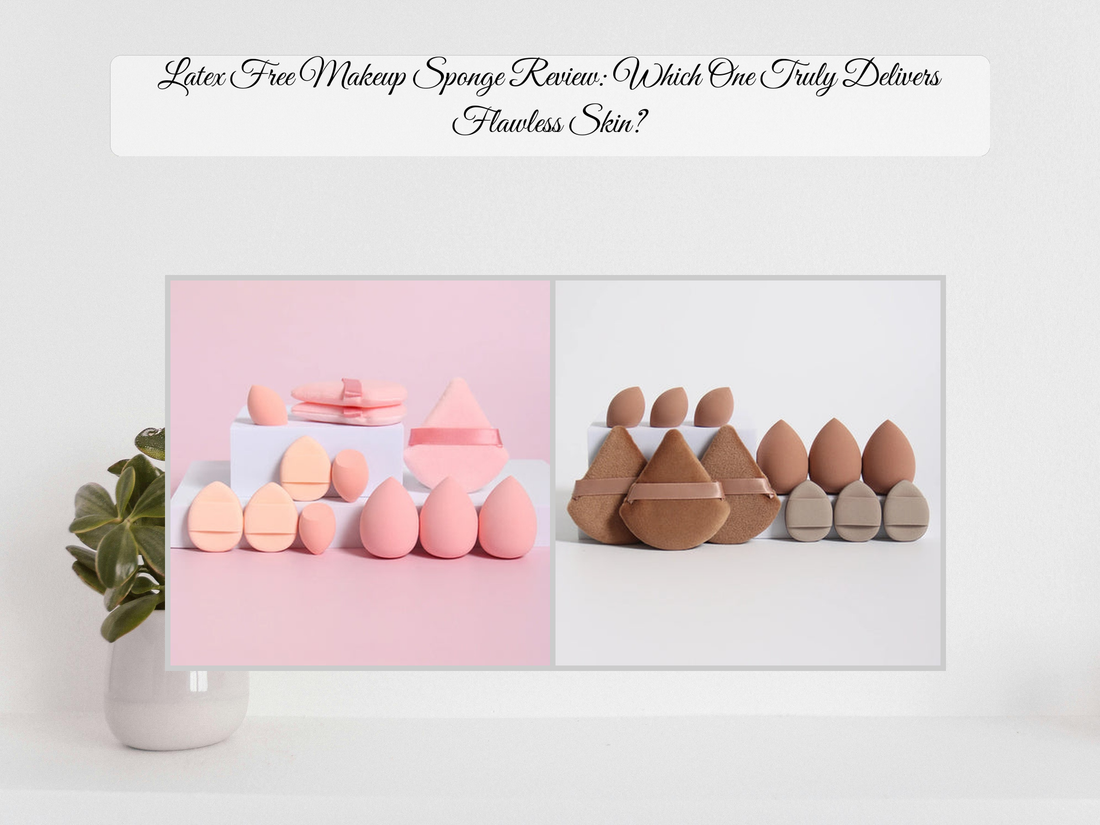
Latex free makeup sponge in action — achieve flawless coverage with ease.
Ready to upgrade your routine? See price — stock low!
Why Choose Latex Free Makeup Sponges?
Latex free makeup sponges have become the industry standard because they combine skin safety with superior blending performance. Compared with traditional latex sponges, modern synthetic sponges are softer, more hygienic, and better suited for liquid and cream makeup formulas.
Benefits for allergy-prone and sensitive skin
- Eliminates exposure to natural rubber latex
- Reduces risk of redness or irritation
- Safer for users with sensitive or allergy-prone skin
- Compatible with most dermatology-tested cosmetics
Makeup performance advantages for foundation, concealer, and cream products
A high-quality latex free foundation sponge should do more than avoid latex. It should help makeup apply evenly while minimizing streaks and heavy texture.
- Liquid foundation: Soft damp sponges create a seamless, skin-like finish.
- Concealer: Smaller shapes improve precision around the eyes and nose.
- Cream products: Dense latex-free sponges help blend without removing too much product.
- Powder products: Certain dry-use sponges provide controlled application and touch-ups.
Latex-Free vs Traditional Makeup Sponges: Material, Texture, and Performance Comparison
While both types of sponges can apply makeup, the materials used in latex and latex-free sponges create noticeable differences in texture, performance, and safety.
Difference between latex and latex-free makeup sponge appearance
- Latex sponges often appear denser with smaller pores
- Latex-free beauty sponges typically have visible open pores
- Latex-free sponges expand more when wet
- Latex versions tend to feel firmer and less bouncy
Latex foam vs polyurethane (PU) and hydrophilic foam
Hydrophilic polyurethane foam is engineered to absorb water and expand during use. This expansion creates a softer texture and allows the sponge to blend makeup without dragging across the skin.
Latex foam, on the other hand, remains more rigid and does not expand significantly when wet, which can make blending foundation less seamless.
How material affects blending, absorption, and finish
The material of a makeup sponge affects how much product it absorbs, how smoothly foundation applies, and what type of finish you achieve.
- Latex foam: Traditional sponges that may feel firmer but are avoided by users with latex concerns.
- Hydrophilic PU foam: A common latex-free option that expands when damp and creates a softer blending effect.
- Microfiber foam: Designed to reduce product absorption and provide more coverage with liquid makeup.
For most users searching for a latex free beauty blender, soft PU or hydrophilic foam provides the closest combination of comfort, flexibility, and professional blending performance.
Quick Comparison: Best Latex Free Makeup Sponges in 2026
The following comparison highlights popular latex free beauty sponges based on softness, blending performance, durability, and value.
| Product | Material | Texture | Finish | Durability | Best For | Skin Type | Price |
|---|---|---|---|---|---|---|---|
| KentDO 12-piece Set | Hydrophilic PU | Soft/Bouncy | Natural | High | Versatility | All skin types | Budget+ |
| Beautyblender Original | Hydrophilic foam | Ultra-soft | Airbrushed | High | Foundation | Sensitive | Premium |
| Real Techniques Miracle Complexion Sponge | Latex-free foam | Medium-soft | Medium coverage | Good | Daily use | Normal | Affordable |
| EcoTools Bioblender | Plant-based foam | Soft | Natural | Moderate | Eco-conscious users | Sensitive | Mid-range |
| JUNO & Co Microfiber Velvet Sponge | Microfiber foam | Dense | High coverage | Good | Full coverage makeup | All skin types | Mid-range |
What to Look for in a Latex Free Beauty Sponge Before Buying
Not all latex free makeup sponges perform the same. Differences in foam structure, density, and shape can significantly affect how foundation blends on the skin.
Pore structure and blending performance
Open-cell foam structures help distribute makeup evenly while preventing heavy product buildup. Finer pores typically create a smoother finish for liquid foundation.
Density, softness, and water absorption
The ideal latex free beauty sponge should balance softness with enough structure to blend effectively.
- Very soft sponges create a natural finish but may absorb more product.
- Denser sponges provide more control and are useful for fuller coverage.
- Water-activated latex-free sponges often become softer and more flexible when damp.
Shape and application areas
- Rounded sides for blending foundation
- Flat edges for contouring
- Pointed tips for under-eye concealer
- Mini sponges for detailed areas
Learn more: Foundation application tutorial | Concealer blending techniques
Reusable vs disposable latex-free makeup sponges
Reusable latex-free makeup sponges are usually preferred by users who want better value and a more sustainable option. Disposable non latex makeup sponges can be convenient for travel, professional kits, or situations where frequent replacement is preferred.
How We Tested Latex Free Beauty Sponges
Each latex-free makeup sponge was evaluated using practical makeup application criteria to compare real-world performance.
Testing criteria: softness, bounce, blending, cleaning, durability
- Softness: How comfortable the sponge feels during repeated use.
- Blending: How evenly it applies foundation, concealer, and cream products.
- Absorption: Whether it wastes product or maintains coverage.
- Cleaning: How easily makeup residue washes away.
- Durability: How well the sponge maintains shape over time.
Top Latex Free Makeup Sponge Reviews (Tested Picks)
We compared several latex free makeup sponges based on softness, pore structure, expansion when wet, and blending performance with liquid foundation.
Best overall latex free beauty blender
The KentDO 12-piece makeup sponge set offers a strong balance of softness, shape variety, durability, and value. Multiple shapes allow foundation, contour, and concealer application using one affordable set.
Best budget latex free makeup sponge
Real Techniques Miracle Complexion Sponge remains one of the best budget-friendly latex-free options for everyday makeup routines.
Best latex-free reusable makeup sponges
Reusable sponge sets such as KentDO and Beautyblender provide excellent value for users who rotate clean sponges throughout the week.
Best soft latex free makeup sponge for sensitive skin
Beautyblender Original and EcoTools Bioblender provide exceptionally soft textures that reduce friction against delicate skin.
Best mini beauty blender sponge for precision blending
Mini sponges work especially well for concealer, inner-eye blending, and nose contour areas where full-size sponges lack precision.
| Criteria | KentDO Set | Beautyblender | Real Techniques | EcoTools |
|---|---|---|---|---|
| Skin Sensitivity | ✅ Safe for all skin | ✅ Excellent | ✅ Good | ✅ Excellent |
| Shape Variety | 12 styles included | Limited | Moderate | Limited |
| Durability | Lasts months with care | High | Good | Moderate |
| Value | High (12 pcs set) | Premium | Excellent | Good |
Mini Beauty Blender Sponge: When Smaller Shapes Work Better
Small areas deserve precision. A mini beauty blender sponge is ideal for concealer, under-eye coverage, and contouring around the nose. These compact sponges give better control when blending makeup in tight or delicate areas.
Best uses for concealer, eyes, nose, and detailed blending
- Inner corners of the eyes
- Around the nose and nostrils
- Under-eye concealer blending
- Precise cream contour placement
Because mini sponges use less product and offer higher control, they are ideal for detail work that larger beauty sponges struggle to handle.

Mini beauty blender sponge for precision — ✨ discover soft blending textures.
✨ Don't wait! Upgrade your beauty tools with the KentDO 12-piece makeup sponge set .
How to Identify Truly Latex Free Makeup Sponges
If you have latex allergies or sensitive skin, it is important to confirm that a beauty sponge truly contains no natural rubber latex.
Labeling terms to look for
- Latex free
- Hydrophilic foam
- Polyurethane foam
- Vegan and cruelty-free
Ingredients and materials to avoid
- Natural rubber latex
- Rubber-based cosmetic foam
- Unlabeled sponge materials
Latex-free does not always mean hypoallergenic
Although latex-free makeup sponges remove natural latex materials, users with sensitive skin should still consider the overall material, dyes, fragrance exposure, and cleaning routine.
Look for clear material descriptions and reputable manufacturers when choosing a hypoallergenic makeup sponge.
Cleaning and Maintaining Latex-Free Makeup Sponges
Regular cleaning keeps latex free makeup sponges hygienic and helps maintain their soft texture and blending performance.
Daily cleaning method
- Wet the sponge with warm water
- Add a small amount of gentle cleanser
- Squeeze repeatedly until makeup residue releases
- Rinse thoroughly
- Air dry in a ventilated area
Deep cleaning routine
Once per week, soak the sponge in warm soapy water for several minutes before rinsing thoroughly.
When to replace your sponge
- Every 1–3 months with regular use
- When foam begins to tear
- When the sponge loses elasticity
- When stains no longer wash out completely
Explore skin and beauty care devices to complement your sponge cleaning routine.
Additional reading: Makeup sponge cleaning guide | Beauty hygiene and skincare routines

Your flawless finish starts here — latex free makeup sponge essentials.
Final Call: Don't miss out on the KentDO latex free makeup sponge set — perfect for beauty lovers seeking safe, flawless application.
Frequently Asked Questions About Latex Free Makeup Sponges
Do latex-free makeup sponges work as well as traditional ones?
Yes. Most high-quality latex-free makeup sponges provide equal or better blending performance because hydrophilic foam expands when wet and creates a softer application surface.
Are latex-free beauty sponges better for sensitive skin?
Latex-free beauty sponges can be a better choice for users avoiding latex materials, but skin sensitivity varies. Choosing a soft, cleanable sponge and replacing it regularly is important.
How often should you replace a makeup sponge?
Most reusable makeup sponges should be replaced every one to three months depending on usage frequency, cleaning habits, and signs of wear.
What are the best latex-free makeup sponges for beginners?
Beginners usually benefit from soft, easy-to-control latex-free beauty sponges with a rounded side for foundation and a pointed tip for detailed blending.
Which makeup sponges are latex-free and safe for allergies?
Most modern beauty sponges made from hydrophilic polyurethane foam are latex-free. Always check product labeling or manufacturer details to confirm the material composition.
Related Articles:
- Disposable Face Sponges Comparison: Quick & Easy Makeup Tips
- Reusable Makeup Sponge Review: Worth the Hype?
- How to Use a Makeup Sponge: The Ultimate Comparison Guide
- Cosmetic Makeup Sponges Showdown: Find Your Perfect Match
- Top 5 Cosmetic Makeup Wedges Compared: Pros, Cons & Verdicts
Pillar Articles:













