
Latex Free Makeup Sponge Review: Which One Truly Delivers Flawless Skin?
Discover how a latex free makeup sponge can transform your daily routine. From knowing how to properly wash makeup sponges to choosing the perfect mini beauty blender sponge, we reveal which makeup sponge squishy options actually deliver a smooth, flawless finish. Are you ready to finally ditch streaks and uneven coverage once and for all?
⏱ 12 min read
What Is a Latex Free Makeup Sponge and Why It Matters for Sensitive Skin
A latex free makeup sponge is a cosmetic blending sponge made without natural rubber latex. Instead, most modern beauty sponges are manufactured from hydrophilic polyurethane (PU) foam or similar synthetic materials designed to expand when wet and deliver a smooth, streak-free finish.
This matters especially for people with latex allergies or highly reactive skin. Even small amounts of natural latex can trigger irritation, redness, or allergic reactions in sensitive users. Latex-free beauty sponges eliminate this risk while still providing the soft, bouncy texture needed for seamless foundation blending.
What materials replace latex in modern beauty sponges
Most high-quality latex free makeup sponges use hydrophilic PU foam. This material absorbs water, expands in size, and creates a soft pore structure that helps distribute foundation evenly across the skin.
- Hydrophilic polyurethane foam (most common)
- Open-cell foam for better product distribution
- Synthetic cosmetic-grade foam designed for repeated washing
Who should use latex-free makeup sponges
- People with latex allergies
- Anyone with sensitive or reactive skin
- Makeup artists working on multiple clients
- Users looking for softer, more hygienic reusable beauty sponges

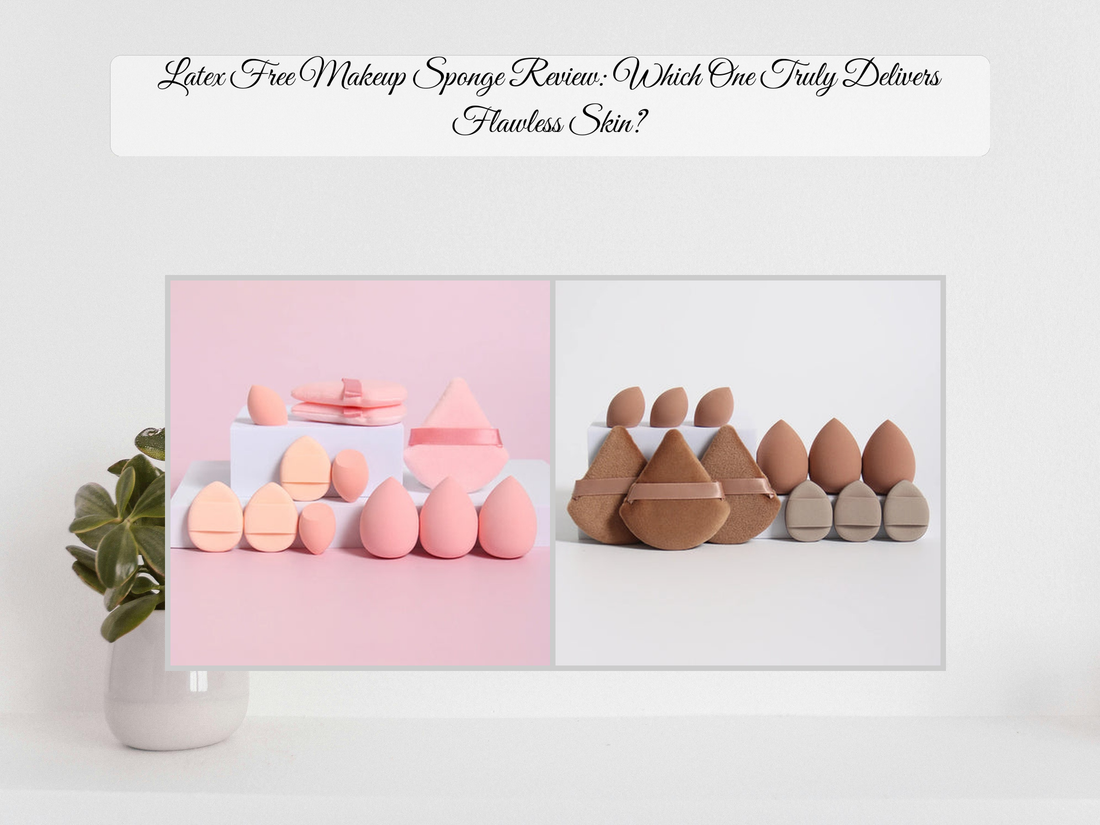
Latex free makeup sponge in action — 💡 achieve flawless coverage with ease.
👉 Ready to upgrade your routine? See price — stock low!
Why Choose Latex Free Makeup Sponges?
Latex free makeup sponges have become the industry standard because they combine skin safety with superior blending performance. Compared with traditional latex sponges, modern synthetic sponges are softer, more hygienic, and better suited for liquid and cream makeup formulas.
Benefits for allergy-prone or reactive skin
- Eliminates exposure to natural rubber latex
- Reduces risk of redness or irritation
- Safer for users with sensitive or allergy-prone skin
- Compatible with most dermatology-tested cosmetics
Performance benefits compared with traditional latex sponges
- Better expansion when damp
- More even foundation blending
- Reduced product absorption
- Smoother finish with liquid and cream formulas
Latex vs Latex-Free Makeup Sponges: Materials, Texture, and Appearance
While both types of sponges can apply makeup, the materials used in latex and latex-free sponges create noticeable differences in texture, performance, and safety.
Difference between latex and latex-free makeup sponges appearance
- Latex sponges often appear denser with smaller pores
- Latex-free beauty sponges typically have visible open pores
- Latex-free sponges expand more when wet
- Latex versions tend to feel firmer and less bouncy
Hydrophilic PU foam vs traditional latex foam
Hydrophilic polyurethane foam is engineered to absorb water and expand during use. This expansion creates a softer texture and allows the sponge to blend makeup without dragging across the skin.
Latex foam, on the other hand, remains more rigid and does not expand significantly when wet, which can make blending foundation less seamless.
Quick Comparison: Best Latex Free Makeup Sponges in 2026
The following comparison highlights popular latex free beauty sponges based on softness, blending performance, and value.
- Best overall: balanced softness and durability
- Best budget: affordable multi-pack options
- Best for sensitive skin: ultra-soft low-density foam
- Best precision sponge: mini beauty blender style
When comparing sponges, consider material type, pore structure, shape, and durability after repeated washing.
What to Look for When Buying a Latex Free Beauty Sponge
Not all latex free makeup sponges perform the same. Differences in foam structure, density, and shape can significantly affect how foundation blends on the skin.
Pore structure and blending performance
Open-cell foam structures help distribute makeup evenly while preventing heavy product buildup. Finer pores typically create a smoother finish for liquid foundation.
Density and softness levels
Softer sponges tend to create more natural coverage, while slightly denser sponges may work better for building fuller foundation coverage.
Shape and application areas
- Rounded sides for blending foundation
- Flat edges for contouring
- Pointed tips for under-eye concealer
- Mini sponges for detailed areas
Top Latex Free Makeup Sponge Reviews (Tested for Softness & Blendability)
We compared several latex free makeup sponges based on softness, pore structure, expansion when wet, and blending performance with liquid foundation.
Best overall latex free beauty blender
Balanced softness and durability make this sponge ideal for everyday foundation blending and cream products.
Best budget latex free makeup sponge
Affordable multipacks deliver strong performance while keeping replacement costs low.
Best latex-free reusable makeup sponges (multi-pack)
Reusable sponge sets are ideal for frequent makeup users who prefer rotating clean sponges throughout the week.
Best soft latex free makeup sponge for sensitive skin
Ultra-soft low-density foam reduces pressure on delicate or reactive skin while still blending foundation evenly.
Best mini beauty blender sponge for precision blending
Mini sponges work especially well for concealer, inner-eye blending, and nose contour areas.
| Criteria | KentDO Set | Other Brands |
|---|---|---|
| Skin Sensitivity | ✅ Safe for all skin | ❌ Mixed results |
| Shape Variety | 12 styles included | 2–3 styles |
| Durability | Lasts months with care | Wears faster |
| Value | High (12 pcs set) | Moderate |
Mini Beauty Blender Sponge: Perfect for Detail Work
Small areas deserve precision. A mini beauty blender sponge is ideal for concealer, under-eye coverage, and contouring around the nose. These compact sponges give better control when blending makeup in tight or delicate areas.
Where mini sponges outperform full-size sponges
- Inner corners of the eyes
- Around the nose and nostrils
- Under-eye concealer blending
- Precise cream contour placement
Best uses (concealer, inner eye, nose area)
Because mini sponges use less product and offer higher control, they are ideal for detail work that larger beauty sponges struggle to handle.

Mini beauty blender sponge for precision — ✨ discover soft blending textures.
✨ Don’t wait! Upgrade your beauty tools with the KentDO 12-piece makeup sponge set.
How to Check If a Makeup Sponge Is Latex Free and Vegan
If you have latex allergies or sensitive skin, it is important to confirm that a beauty sponge truly contains no natural rubber latex.
Labeling terms to look for
- Latex free
- Hydrophilic foam
- Polyurethane foam
- Vegan and cruelty-free
Ingredients and materials to avoid
- Natural rubber latex
- Rubber-based cosmetic foam
- Unlabeled sponge materials
When in doubt, check the manufacturer's material description or customer support page before purchasing.
How to Wash and Maintain Latex-Free Makeup Sponges Safely
Regular cleaning keeps latex free makeup sponges hygienic and helps maintain their soft texture and blending performance.
Daily cleaning method
- Wet the sponge with warm water
- Add a small amount of gentle cleanser
- Squeeze repeatedly until makeup residue releases
- Rinse thoroughly
- Air dry in a ventilated area
Deep cleaning routine
Once per week, soak the sponge in warm soapy water for several minutes before rinsing thoroughly.
When to replace your sponge
- Every 1–3 months with regular use
- When foam begins to tear
- When the sponge loses elasticity
💡 Explore skin and beauty care devices to complement your sponge cleaning routine.

Your flawless finish starts here — 💄 latex free makeup sponge essentials.
💡 Final Call: Don’t miss out on the KentDO latex free makeup sponge set — perfect for beauty lovers seeking safe, flawless application.
FAQ: Latex Free Makeup Sponges
Do latex free makeup sponges work better than latex ones?
In many cases, yes. Latex-free sponges typically expand when wet and create a softer blending surface, which helps distribute foundation more evenly without irritating sensitive skin.
Which makeup sponges are latex-free and safe for allergies?
Most modern beauty sponges made from hydrophilic polyurethane foam are latex-free. Always check product labeling or manufacturer details to confirm the material composition.
How often should you wash makeup sponges?
Ideally after every few uses. Regular washing prevents bacteria buildup and maintains the sponge’s soft texture and blending performance.
What are the top latex-free makeup sponges for sensitive or allergy-prone skin?
Soft hydrophilic foam sponges with open-cell structures tend to perform best because they expand when damp and reduce friction against delicate skin.
Which brand of sponge should I buy if I want something latex-free and suitable for reactive skin?
Look for reputable cosmetic brands that clearly label their products as latex-free, hypoallergenic, and made from cosmetic-grade polyurethane foam.
Related Articles:
- Disposable Face Sponges Comparison: Quick & Easy Makeup Tips
- Reusable Makeup Sponge Review: Worth the Hype?
- How to Use a Makeup Sponge: The Ultimate Comparison Guide
- Cosmetic Makeup Sponges Showdown: Find Your Perfect Match
- Top 5 Cosmetic Makeup Wedges Compared: Pros, Cons & Verdicts
Pillar Articles:













