

Lower Abdominal Cramps Relief: Causes, Symptoms & What Helps
Lower abdominal cramps can have many causes, and the right approach depends on the pattern. Menstrual cramps are common, but digestive problems, urinary conditions, gynecologic conditions, pregnancy-related problems, infections, inflammation, and other causes can produce similar discomfort. Before choosing a relief method, consider where the pain is located, when it started, whether it is linked to your period, what other symptoms are present, whether pregnancy is possible, and whether the pain is mild, severe, worsening, or persistent. Symptoms can help guide next steps, but they cannot confirm a diagnosis on their own. :contentReference[oaicite:0]{index=0}
Lower Abdominal Cramps Relief: What Helps First?
For mild, familiar cramps without warning signs, lower abdominal cramps relief may include local heat, gentle movement, rest, hydration when appropriate, and label-directed over-the-counter pain medicine. For menstrual cramps specifically, the American College of Obstetricians and Gynecologists (ACOG) lists heat, exercise, adequate sleep, relaxation, and appropriate pain relievers among home-management options. :contentReference[oaicite:1]{index=1}
Quick relief options for mild cramps
- Heat: A warm bath or heating pad can be soothing for menstrual cramps and some muscle-related discomfort.
- Gentle movement: Walking or comfortable stretching may help when movement does not worsen the pain.
- Rest: A comfortable position and adequate sleep can make familiar menstrual discomfort easier to manage.
- Hydration: Fluids can be useful when cramps occur alongside dehydration, constipation, vomiting, or diarrhea.
- Over-the-counter pain relief: NSAIDs such as ibuprofen or naproxen can be effective for menstrual cramps when they are appropriate for the individual and used according to the label or clinician guidance.
When home treatment is reasonable
Self-care is generally most appropriate when the cramps are mild, familiar, short-lived, and similar to previous episodes, with no concerning associated symptoms. A person who regularly experiences predictable menstrual cramps may use a familiar comfort strategy such as heat while monitoring how symptoms develop.
When relief should not delay medical care
Do not rely on a heating pad or pain medicine to mask severe, sudden, rapidly worsening, unexplained, or pregnancy-associated abdominal pain. Fainting, significant weakness, heavy bleeding, persistent vomiting, high fever, difficulty breathing, confusion, or a markedly tender or rigid abdomen are reasons to seek prompt medical evaluation.
What Causes Lower Abdominal Cramps?
Lower abdominal cramps can arise from several body systems. The same general location can represent menstrual, gastrointestinal, urinary, reproductive, inflammatory, infectious, muscular, or functional pain. This is why symptom pattern and associated symptoms matter more than location alone.
Menstrual cramps and dysmenorrhea
Menstrual cramps, medically called dysmenorrhea, are caused in part by uterine contractions and prostaglandins. Primary dysmenorrhea typically occurs just before or during menstruation. Some people also experience nausea, diarrhea, vomiting, headaches, dizziness, lower-back discomfort, or difficulty sleeping. ACOG notes that severe or increasingly disruptive period pain deserves discussion with an obstetrician-gynecologist or another qualified health professional. :contentReference[oaicite:2]{index=2}
Period pain that becomes progressively worse, occurs outside the expected menstrual pattern, or repeatedly interferes with normal activities may have an underlying cause such as endometriosis, fibroids, adenomyosis, or an ovarian problem rather than uncomplicated primary dysmenorrhea.
Digestive causes
Constipation can cause cramping, bloating, abdominal discomfort, and difficulty passing stool. Irritable bowel syndrome can produce recurrent abdominal pain associated with changes in bowel movements, including diarrhea, constipation, or both. Gastroenteritis and other digestive disorders can also cause cramping, particularly when pain occurs with diarrhea, nausea, vomiting, bloating, or changes in bowel habits. :contentReference[oaicite:3]{index=3}
Urinary causes
A bladder infection may cause lower abdominal discomfort along with burning during urination, frequent urination, urgency, or cloudy, bloody, or strong-smelling urine. Kidney stones can produce sharp pain involving the back, side, lower abdomen, or groin, sometimes with blood in the urine, nausea, vomiting, or urinary symptoms. :contentReference[oaicite:4]{index=4}
Gynecologic and reproductive causes
Endometriosis, uterine fibroids, ovarian cysts, adenomyosis, and pelvic inflammatory disease can all contribute to pelvic or lower abdominal pain. The pattern can vary considerably. Recurrent menstrual pain that becomes more severe or begins interfering with work, school, sleep, or daily activities should not automatically be treated as ordinary period discomfort. :contentReference[oaicite:5]{index=5}
Pregnancy-related causes
If pregnancy is possible, abdominal or pelvic cramps require more cautious assessment. Ectopic pregnancy can cause lower abdominal or pelvic pain, often on one side, and may occur with vaginal bleeding, dizziness, fainting, or shoulder-tip pain. Sudden intense pain with dizziness or fainting can indicate rupture and requires emergency care. :contentReference[oaicite:6]{index=6}
Appendicitis and other inflammatory or infectious causes
Appendicitis can begin with abdominal pain and may become progressively worse, sometimes moving toward the lower right abdomen. Loss of appetite, vomiting, constipation, diarrhea, or fever may occur. Because untreated appendicitis can cause serious complications, suspected appendicitis should be medically assessed rather than treated solely with home remedies. :contentReference[oaicite:7]{index=7}
Musculoskeletal, medication-related, and functional causes
Abdominal-wall muscle strain can cause localized pain that changes with movement or muscle use. Some medications can contribute to constipation or gastrointestinal discomfort. Functional gastrointestinal disorders can also produce real symptoms without visible structural damage. The important point is that abdominal cramps are not automatically gynecologic or digestive, and symptom context is necessary.
Lower Abdominal Pain Location: What the Pattern May Suggest
Location can provide a clue, but it cannot establish a diagnosis. A pain map is most useful when combined with timing, associated symptoms, pregnancy status, and progression.

Lower middle abdominal cramps
Central lower abdominal cramps may occur with menstrual pain, bladder problems, constipation, gas, or other pelvic conditions. If the discomfort appears predictably around menstruation and follows a familiar pattern, menstrual cramps may be more likely. Burning urination, urinary frequency, bowel changes, fever, or unusual bleeding point toward other possibilities.
Lower right abdominal cramps
Lower-right pain can occur with bowel, urinary, ovarian, or other pelvic conditions. Appendicitis is particularly important when pain becomes progressively worse or localizes to the lower right side. Location alone is not enough to diagnose appendicitis, so worsening localized pain should receive medical attention. :contentReference[oaicite:8]{index=8}
Lower left abdominal cramps
Lower-left discomfort can occur with bowel conditions, urinary problems, or pelvic causes. Diverticular disease and diverticulitis are examples of gastrointestinal conditions that may produce lower-left abdominal pain, particularly when accompanied by bowel changes, fever, chills, nausea, or vomiting. :contentReference[oaicite:9]{index=9}
Pain on both sides or across the lower abdomen
Cramping across the lower abdomen may occur with menstruation, constipation, diarrhea, bladder problems, pelvic conditions, or muscular tension. Broad, familiar menstrual cramping is different from sudden severe pain that spreads or progressively intensifies.
Pain that spreads to the back, groin, or shoulder
Radiating pain can provide an additional clue. Kidney stones can cause pain in the back, side, lower abdomen, or groin. Shoulder-tip pain in someone who may be pregnant is a particularly important warning sign because it can occur with internal bleeding from a ruptured ectopic pregnancy. :contentReference[oaicite:10]{index=10}
Lower Abdominal Cramps by Symptoms, Sex, Age, and Timing
If you menstruate: period cramps versus other causes
Period cramps usually have a recognizable relationship with the menstrual cycle. Pain that begins around menstruation and improves as the period ends may fit primary dysmenorrhea. However, pain that becomes more severe, changes pattern, occurs between periods, or repeatedly disrupts daily life warrants evaluation for conditions such as endometriosis, fibroids, adenomyosis, ovarian conditions, or infection. :contentReference[oaicite:11]{index=11}
If you are pregnant or could be pregnant
Pregnancy changes the threshold for seeking care. Lower abdominal pain accompanied by bleeding, severe or persistent pain, dizziness, fainting, shoulder-tip pain, or significant one-sided pain should be assessed promptly. Do not assume that cramps are simply a normal part of early pregnancy. :contentReference[oaicite:12]{index=12}
Lower abdominal cramps in men
In men, common considerations include bowel problems, constipation, urinary infection, kidney stones, abdominal-wall strain, and other abdominal or pelvic conditions. Urinary symptoms, groin radiation, fever, vomiting, or worsening pain can change the urgency of evaluation.
Lower abdominal cramps in children and teens
Children may have difficulty describing exactly where or how pain feels. Monitor hydration, vomiting, fever, bowel movements, urination, behavior, and progression. A child with severe, worsening, persistent, or unexplained abdominal pain should be evaluated rather than repeatedly treated at home.
Lower abdominal cramps in older adults
New abdominal pain in an older adult may deserve earlier medical assessment, particularly when it is unexplained, persistent, severe, or associated with weakness, fever, vomiting, bleeding, or changes in bowel or urinary function.
Cramping by timeline: sudden, recurrent, or persistent
Sudden pain can require urgent assessment, especially when severe. Recurrent pain may point toward menstrual, functional gastrointestinal, urinary, or chronic gynecologic conditions. Persistent or worsening pain deserves reassessment instead of repeated self-treatment.
How to Tell Whether Cramps Are From Your Period, Digestion, Urinary Problems, or Something Else
No symptom table can replace an examination, but comparing patterns can help determine the next appropriate step.
Symptom comparison table
| Pattern | Clues that may occur | Typical next consideration |
|---|---|---|
| Menstrual cramps | Predictable timing around menstruation; lower abdominal or back cramping | Heat, movement, appropriate pain relief, and monitoring when familiar and mild |
| Constipation | Hard or infrequent stools, difficulty passing stool, bloating | Address bowel habits and seek care if symptoms persist or warning signs occur |
| IBS | Recurrent abdominal pain with diarrhea, constipation, or changing bowel movements | Medical evaluation for persistent or recurrent symptoms |
| UTI | Burning urination, frequency, urgency, lower abdominal discomfort | Contact a health professional for assessment and appropriate treatment |
| Kidney stone | Sharp back, side, lower abdominal, or groin pain; possible blood in urine | Prompt medical assessment, especially with severe pain, vomiting, fever, or urinary problems |
| Gynecologic condition | Recurrent pelvic pain, unusually painful periods, abnormal bleeding, or pain outside menstruation | Clinical evaluation, potentially including pelvic examination or imaging |
| Appendicitis | Progressively worsening pain, often moving toward the lower right abdomen; possible vomiting or fever | Urgent medical assessment |
| Ectopic pregnancy | Possible pregnancy with one-sided pain, bleeding, dizziness, fainting, or shoulder-tip pain | Urgent or emergency assessment |
Questions to ask before choosing a relief strategy
- Could I be pregnant?
- Is this pain connected to my menstrual cycle?
- Is the pain mild and familiar, or substantially different from normal?
- Where exactly is the pain located?
- Is it getting worse?
- Do I have fever, vomiting, fainting, unusual bleeding, or severe weakness?
- Do I have burning, urgency, frequency, or blood when urinating?
- Have my bowel movements changed?
- Does the pain spread to my back, groin, or shoulder?
- Is this becoming a recurring problem that affects normal activities?
Evidence-Based Lower Abdominal Cramps Relief Options
Heat therapy
Heat is one of the more practical non-drug options for familiar menstrual cramps. ACOG specifically recommends a warm bath or heating pad on the abdomen or lower back as a home-management measure for period pain. Heat can also feel soothing when muscle tension contributes to discomfort. :contentReference[oaicite:13]{index=13}
Heat should be viewed as symptom relief, not as treatment for the underlying cause of unexplained abdominal pain. If pain is severe, progressively worsening, associated with significant systemic symptoms, or potentially pregnancy-related, medical evaluation takes priority.
Over-the-counter pain medicines
For menstrual cramps, NSAIDs such as ibuprofen and naproxen can reduce prostaglandin-related pain and are commonly used as first-line medication options. ACOG notes that NSAIDs generally work best when started at the first sign of the period or pain. However, NSAIDs are not appropriate for everyone. People with certain bleeding disorders, asthma related to aspirin or NSAIDs, stomach ulcers, liver problems, or other contraindications should obtain appropriate medical advice before using them. :contentReference[oaicite:14]{index=14}
Acetaminophen may be an option for some people, but medication choice depends on the individual. Follow the product label and avoid casually combining medicines that contain the same active ingredient. Pregnancy, chronic medical conditions, allergies, anticoagulants, and other medications can change what is appropriate.
Hydration and nutrition
Hydration is especially relevant when cramping occurs with vomiting, diarrhea, constipation, heavy activity, travel, or inadequate fluid intake. Simple meals may be more comfortable during digestive upset. There is not enough evidence to treat unexplained abdominal cramps with detoxes or unproven supplements, and persistent symptoms should not be attributed to a nutritional deficiency without evaluation.
Gentle movement and positioning
Walking, light stretching, yoga, or changing position can be useful for some menstrual or muscular discomfort. Stop if movement makes the pain worse. Rest is also reasonable when activity increases discomfort or when the underlying cause has not been established.
Condition-specific relief
The best relief strategy depends on the suspected cause. Heat may be reasonable for familiar menstrual cramps. Hydration and bowel-focused measures may be relevant to constipation. Urinary symptoms may require medical assessment rather than heat alone. Kidney-stone symptoms, appendicitis patterns, pregnancy-associated pain, or severe infection symptoms require appropriate clinical evaluation.
For readers looking for a broader range of at-home comfort devices, the Body Care and Health Devices collection can be explored as a general category, but a device should never be used to delay needed medical care.
Pros and cons of common relief approaches
| Approach | Pros | Cons or limitations |
|---|---|---|
| Heat | Simple, non-drug, convenient for familiar menstrual cramps | Does not identify or treat an underlying abdominal condition |
| NSAIDs | Evidence-based option for menstrual cramping | Not appropriate for everyone; interactions and contraindications matter |
| Acetaminophen | Non-NSAID pain-relief option for some people | Must follow dosing limits and consider liver-related risks and combination products |
| Gentle movement | No medication required; may help menstrual discomfort | Not appropriate when movement worsens severe or unexplained pain |
| Hydration | Useful when fluid loss or inadequate intake contributes to symptoms | Does not treat many underlying causes of abdominal pain |
How to Use Heat for Menstrual or Lower Abdominal Cramps
Where to place the heat source
For familiar menstrual cramps, place the heat source comfortably over the lower abdomen or lower back. Avoid excessive pressure and avoid placing a very hot device directly against bare skin for prolonged periods. Follow the manufacturer's instructions for temperature, placement, session duration, and automatic shutoff.
How long to use heat
Use the manufacturer's recommended session duration and monitor your skin throughout use. More heat or longer exposure is not automatically better. If your skin becomes excessively hot, painful, numb, irritated, or unusually red, stop using the device.
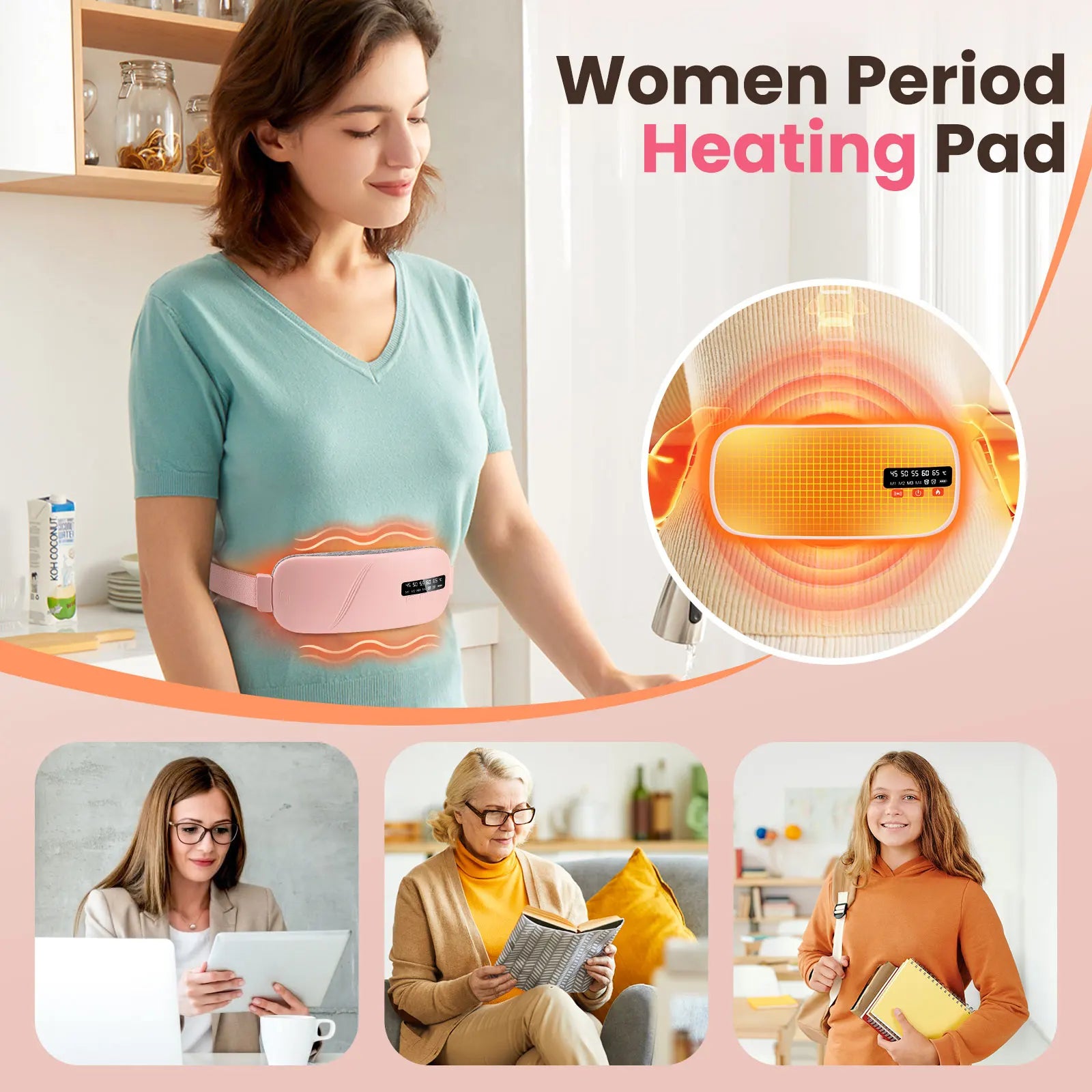
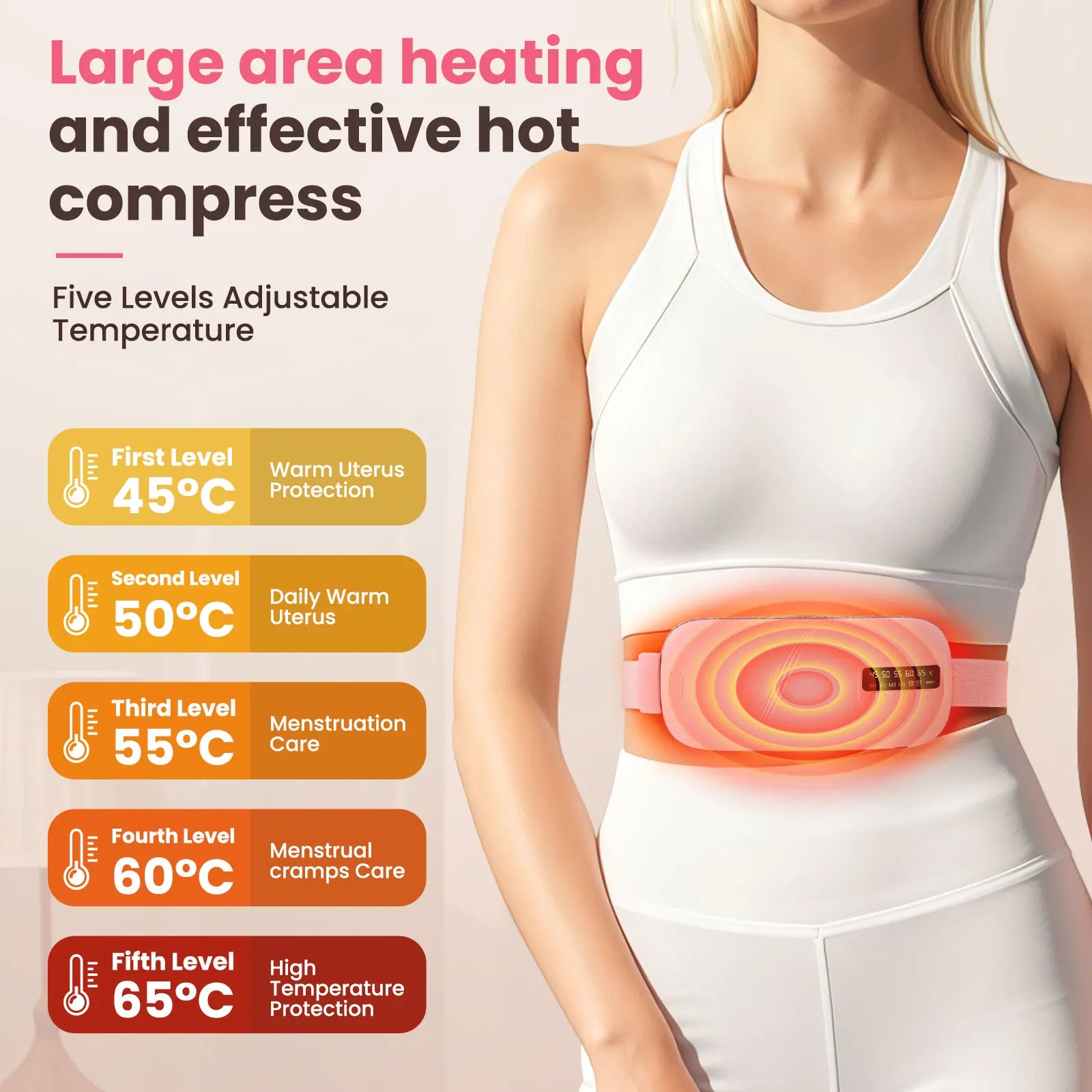
A rechargeable device can be particularly convenient when cramps occur away from an outlet. The Menstrual Heating Pad for Period Relief & Soothing Heat Belt described for this article combines adjustable warmth, selectable vibration, a 15- or 30-minute timer, and a rechargeable 1800mAh battery. These features make it a comfort option for appropriate mild menstrual discomfort, not a treatment for undiagnosed abdominal pain.

When not to rely on heat
Do not keep increasing heat because a serious or unexplained pain is not improving. If pain is severe, rapidly worsening, associated with fever, vomiting, fainting, heavy bleeding, pregnancy, or other warning signs, stop treating it as routine menstrual discomfort and seek appropriate medical care.
When Lower Abdominal Cramps Are an Emergency
Seek urgent medical care for severe or rapidly worsening pain
Severe abdominal pain, rapidly worsening pain, or pain that does not go away should not be managed indefinitely at home. Appendicitis, kidney stones, serious infections, ectopic pregnancy, bowel problems, and other conditions can overlap in their early symptoms. :contentReference[oaicite:15]{index=15}
Emergency warning signs
- Severe or rapidly worsening abdominal pain
- Fainting, severe dizziness, confusion, or marked weakness
- Heavy or unusual bleeding
- Persistent vomiting or inability to keep fluids down
- High fever or chills with significant abdominal pain
- A rigid or markedly tender abdomen
- Difficulty breathing or other severe systemic symptoms
- Blood in urine accompanied by severe pain or other concerning symptoms
These signs do not identify one specific diagnosis, but they indicate that self-treatment may be inappropriate.
Pregnancy-related red flags
If pregnancy is possible, seek urgent assessment for significant one-sided lower abdominal pain, vaginal bleeding, dizziness, fainting, or shoulder-tip pain. Ectopic pregnancy can be life-threatening if rupture occurs. :contentReference[oaicite:16]{index=16}
Appendicitis, kidney stones, infection, and other time-sensitive patterns
Progression matters. Appendicitis may worsen over time. Kidney stones may cause severe waves of pain and urinary or gastrointestinal symptoms. A bladder infection can progress to a kidney infection, particularly when fever, chills, nausea, vomiting, or back, side, or groin pain develops. :contentReference[oaicite:17]{index=17}
When to See a Doctor for Recurrent or Persistent Lower Abdominal Cramps
Cramps that keep returning
Recurring cramps that interfere with work, school, sleep, exercise, or relationships deserve evaluation. This is particularly important when menstrual pain is consistently severe or when the pattern is changing. ACOG recommends discussing period pain with a health professional when it is severe or disrupts everyday activities. :contentReference[oaicite:18]{index=18}
Symptoms that are changing or becoming more severe
A change from your usual pattern is important. New pain, increasing pain, pain between periods, abnormal bleeding, unexplained weight loss, persistent bowel changes, urinary symptoms, fever, or pain that no longer responds to your usual measures should prompt medical assessment.
What a clinician may evaluate
Evaluation may include a detailed history, physical examination, pregnancy testing when relevant, urine or blood tests, imaging, or specialist referral. Not everyone needs every test. For suspected appendicitis, for example, clinicians may use blood testing, urinalysis, pregnancy testing, and imaging depending on the circumstances. :contentReference[oaicite:19]{index=19}
Condition-Specific Relief: What May Help and What Needs Evaluation
Menstrual cramps and dysmenorrhea
For familiar primary dysmenorrhea, heat, regular exercise, adequate sleep, relaxation, and appropriate pain medication can help. Persistent or severe pain may require evaluation for a secondary cause. :contentReference[oaicite:20]{index=20}
Endometriosis and uterine fibroids
Endometriosis and fibroids can cause painful periods and pelvic symptoms. When pain is recurrent, unusually severe, or increasingly disruptive, treatment should be based on clinical evaluation rather than repeated use of home comfort measures alone. :contentReference[oaicite:21]{index=21}
Ovarian cysts and pelvic inflammatory disease
Pelvic pain associated with unusual bleeding, fever, abnormal discharge, sudden severe pain, or other systemic symptoms requires medical evaluation. A heating pad may temporarily make discomfort feel better but cannot determine or treat the underlying cause.
Constipation and irritable bowel syndrome
When cramping follows bowel changes, constipation or IBS may be relevant. Constipation can include hard or infrequent stools and difficult bowel movements, while IBS commonly involves recurrent abdominal pain with diarrhea, constipation, or both. Persistent symptoms or warning signs such as bleeding, constant abdominal pain, vomiting, fever, or unexplained weight loss require medical evaluation. :contentReference[oaicite:22]{index=22}
Urinary tract infection and kidney stones
Burning urination, frequent or urgent urination, cloudy or bloody urine, and lower abdominal discomfort are compatible with bladder infection symptoms. Sharp pain extending from the back or side toward the lower abdomen or groin can occur with kidney stones. Neither condition should be assumed to be menstrual cramps simply because the discomfort is near the lower abdomen. :contentReference[oaicite:23]{index=23}
Appendicitis and ectopic pregnancy
Appendicitis and ectopic pregnancy remain important time-sensitive possibilities because delaying evaluation can have serious consequences. Worsening right-sided abdominal pain can occur with appendicitis, while one-sided pain with possible pregnancy, bleeding, dizziness, fainting, or shoulder-tip pain can occur with ectopic pregnancy. :contentReference[oaicite:24]{index=24}
A Simple Decision Tree: Self-Care, Doctor Visit, or Urgent Care?
Step 1: Check for emergency warning signs
If you have severe or rapidly worsening pain, fainting, heavy bleeding, persistent vomiting, high fever, confusion, difficulty breathing, or another major warning sign, seek urgent medical care instead of starting with a heating pad.
Step 2: Check pregnancy possibility and menstrual timing
If pregnancy is possible, use a lower threshold for clinical assessment. If the pain is clearly familiar, mild, and follows your usual menstrual pattern, conservative menstrual-cramp relief may be reasonable while monitoring symptoms.
Step 3: Check bowel and urinary symptoms
Constipation, diarrhea, bloating, burning urination, urinary urgency, blood in the urine, or flank and groin pain can shift the likely cause away from routine menstrual cramping.
Step 4: Choose an appropriate low-risk relief strategy
For mild, familiar menstrual cramps without warning signs, consider heat, gentle movement, rest, and an appropriate label-directed pain reliever. A portable heating belt can be convenient for people who want cordless heat while working, reading, resting, or traveling.
The rechargeable menstrual heating belt used as the product example in this guide provides adjustable heat, selectable vibration, automatic 15- or 30-minute sessions, and USB Type-C charging. Its stated use is the abdomen and waist. :contentReference[oaicite:25]{index=25}
Step 5: Reassess symptoms
If the pain persists, becomes more severe, repeatedly returns, develops new symptoms, or feels substantially different from your normal cramps, move from self-care toward medical evaluation. Do not keep increasing heat or repeatedly taking pain medicine simply because symptoms have not improved.
For broader self-care and wellness-device information, readers can also explore the Lifestyle collection or the Beauty & Self-Care Blog for related general wellness content.
Lower Abdominal Cramps Relief: What to Expect From Recovery
Short-lived cramps
Mild, familiar cramps may improve with conservative measures, particularly when the trigger is temporary. Menstrual cramps often follow a predictable cycle, while digestive cramps may improve as the underlying bowel disturbance resolves.
Recurrent menstrual or functional symptoms
Recurring symptoms may require a longer-term management plan. If menstrual pain repeatedly interferes with normal activities, evaluation can help determine whether primary dysmenorrhea or an underlying condition is involved. :contentReference[oaicite:26]{index=26}
Symptoms that do not improve
Failure to improve is itself useful information. Persistent or worsening abdominal pain should prompt reassessment rather than indefinite repetition of the same home treatment.
How This Guide Approaches Safety and Evidence
Evidence grading for relief options
The strongest practical support in this guide is reserved for commonly recommended approaches such as appropriate treatment of menstrual cramps with NSAIDs, heat, exercise, sleep, and relaxation. ACOG specifically identifies heat and appropriate pain medication as home-management options for dysmenorrhea. :contentReference[oaicite:27]{index=27}
Medication and contraindication considerations
Medication safety depends on the person, not only the symptom. NSAIDs can be inappropriate in certain situations, including some bleeding disorders, aspirin-sensitive asthma, stomach disorders or ulcers, and other medical circumstances. Pregnancy and medication interactions also need individual consideration. Follow the label and ask a pharmacist or clinician when the correct choice is uncertain. :contentReference[oaicite:28]{index=28}
Limits of symptom-based self-assessment
Lower abdominal cramps are a symptom rather than a diagnosis. Menstrual cramps, constipation, IBS, UTI, kidney stones, ovarian conditions, appendicitis, and ectopic pregnancy can overlap in presentation. A symptom pattern can help determine whether self-care is reasonable or whether evaluation is warranted, but it cannot reliably rule out every serious condition.
“Do not try to diagnose the problem yourself.” — NHS guidance on abdominal pain and appendicitis. :contentReference[oaicite:29]{index=29}
Clinical references and update history
This article's clinical framework prioritizes guidance from organizations such as ACOG, the National Institute of Diabetes and Digestive and Kidney Diseases, and NHS patient guidance. It should be treated as educational information rather than a personal diagnosis or substitute for professional medical care. The article structure is intentionally symptom-first, with explicit attention to diagnostic uncertainty, emergency warning signs, medication safety, and escalation thresholds. :contentReference[oaicite:30]{index=30}
Frequently Asked Questions About Lower Abdominal Cramps Relief
What is the fastest way to get lower abdominal cramps relief?
For mild, familiar menstrual cramps, heat and appropriate pain relief can provide practical symptom relief. ACOG recommends heat, exercise, sleep, relaxation, and appropriate medications as home-management options for painful periods. If pain is severe, unusual, worsening, or associated with warning signs, the priority is medical evaluation rather than faster symptom suppression. :contentReference[oaicite:31]{index=31}
What causes lower abdominal cramps besides menstrual cramps?
Possible causes include constipation, IBS, gastroenteritis, urinary tract infection, kidney stones, endometriosis, fibroids, ovarian conditions, pelvic inflammatory disease, abdominal muscle strain, appendicitis, pregnancy-related conditions, and other gastrointestinal, urinary, gynecologic, inflammatory, or infectious problems.
Can abdominal tension during menstruation cause lower abdominal cramps?
Menstrual cramping commonly involves uterine contractions and can produce discomfort in the lower abdomen and back. Muscle tension can also contribute to how discomfort feels. Heat may provide soothing comfort, but unusually severe or changing pain should not automatically be attributed to normal menstrual tension. :contentReference[oaicite:32]{index=32}
When should lower abdominal cramps be considered an emergency?
Seek urgent or emergency medical care for severe or rapidly worsening pain, fainting, significant dizziness, heavy bleeding, persistent vomiting, high fever, confusion, difficulty breathing, a markedly tender or rigid abdomen, or pregnancy-associated pain with bleeding, dizziness, fainting, or shoulder-tip pain. :contentReference[oaicite:33]{index=33}
How can you tell if lower abdominal cramps are from your period, digestion, urinary problems, or another cause?
Look at timing, location, associated symptoms, and progression. Pain that predictably accompanies menstruation may fit dysmenorrhea. Bowel changes can point toward digestive causes, while burning or frequent urination suggests a urinary problem. Sharp pain radiating toward the groin can occur with kidney stones. Pregnancy possibility, fever, bleeding, vomiting, fainting, or progressively worsening pain changes the urgency and may require clinical assessment.
Lower Abdominal Cramps Relief: Final Takeaway
The safest approach to lower abdominal cramps relief starts with identifying the pattern rather than assuming every cramp is menstrual. For mild, familiar period cramps, heat, gentle movement, rest, sleep, and appropriate over-the-counter pain relief can be useful. A rechargeable heat belt can be a convenient comfort tool when you want targeted warmth without an outlet, including during work, travel, reading, or rest.
However, comfort products should remain supportive rather than diagnostic or curative. Severe, persistent, recurrent, worsening, pregnancy-associated, or unexplained abdominal pain deserves appropriate medical evaluation. If you are looking for a cordless option for familiar mild menstrual discomfort, you can review the menstrual heating pad and soothing heat belt as one optional self-care tool.
Pillar Article: Best Heated Abdominal Belt for Women: Top Picks for Comfort













