Q: Do magnetic anti snore nose clips really work?
A: Magnetic anti-snoring nose clips can help reduce snoring for some people by gently widening the nasal passages and improving airflow during sleep. They tend to work best for mild snorers whose snoring is caused by nasal congestion or restricted nasal breathing. However, they are less effective for throat-based snoring or sleep apnea.
Magnetic Anti Snoring Nose Clip Review: Do They Really Work or Just Another Sleep Gimmick?
Quick Verdict: Are Magnetic Anti-Snoring Nose Clips Worth Trying?
If you're searching for a magnetic anti snoring nose clip review, the short answer is: they can work for some people — but not everyone.
Magnetic anti-snoring nose clips are small silicone devices placed inside the nostrils. Their purpose is to gently open the nasal passages and improve airflow during sleep. Some models also include small magnets that manufacturers claim help stimulate nasal circulation and reduce airway restriction.
For people whose snoring is primarily caused by nasal congestion or restricted airflow through the nose, these clips may noticeably reduce snoring. However, they tend to be less effective for snoring caused by:
- Sleep apnea
- Throat obstruction
- Soft palate vibration
- Sleeping on the back
That said, magnetic nose clips are inexpensive, non-invasive, and easy to try. For mild snoring, many users report meaningful improvement — which is why these devices have become increasingly popular in recent years.
The magnetic anti snore nose clip promises quieter nights—but does it actually work? With countless magnetic nose clip reviews online, many still wonder whether this tiny device is a legitimate snore stopper solution or just another sleep gimmick.
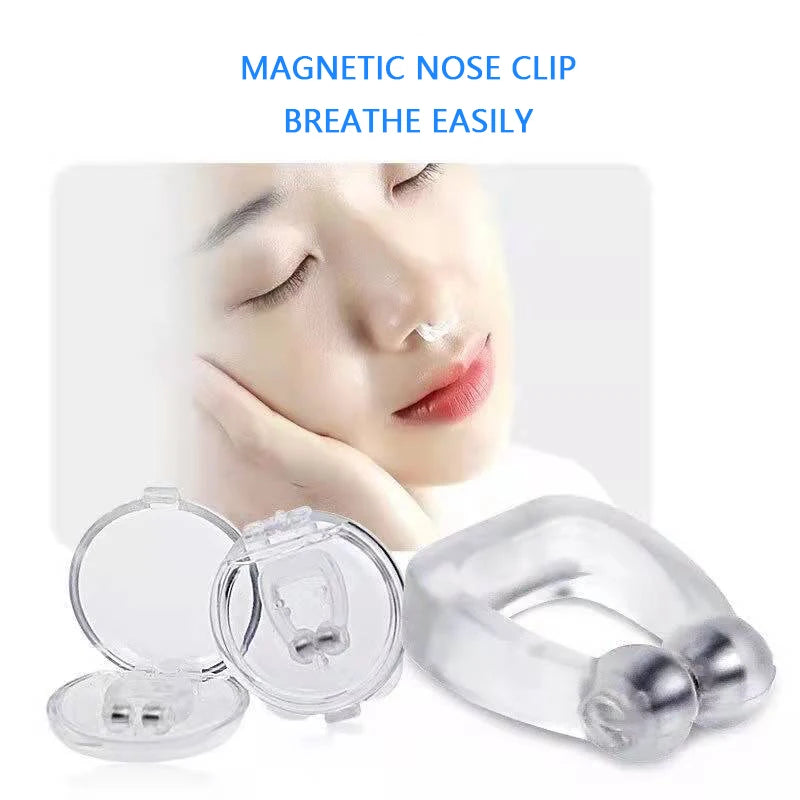
💡 See it in action: magnetic anti snore nose clip as a natural snore stopper solution
What Causes Snoring in the First Place?
Before evaluating whether magnetic nose clips work, it helps to understand why snoring happens. Snoring occurs when airflow through the upper airway becomes partially blocked during sleep. This restriction causes surrounding tissues to vibrate, producing the familiar snoring sound.
Airflow obstruction in the nose
Nasal blockage is one of the most common causes of snoring. Allergies, sinus congestion, or naturally narrow nasal passages can restrict airflow, forcing air to move more forcefully through the airway.
Soft palate vibration
The soft palate and tissues at the back of the throat relax during sleep. When air moves past these relaxed tissues, they vibrate and create snoring sounds.
Sleep position and nasal congestion
Sleeping on your back, alcohol consumption before bed, and chronic congestion can increase snoring. Devices that improve nasal airflow—like nasal strips or magnetic nose clips—attempt to reduce this restriction.
How Do Magnetic Anti-Snoring Nose Clips Work?
A magnetic nose clip for snoring is a small silicone device that sits just inside the nostrils. It typically consists of two soft prongs connected by a flexible bridge with small embedded magnets.
Nasal airway expansion
The primary mechanism is mechanical. The device gently expands the nostrils, which may increase airflow through the nasal passages and reduce snoring caused by restricted breathing.
Magnetic stimulation theory
Manufacturers often claim the magnets stimulate pressure points or improve circulation in the nasal area. While this theory is commonly used in marketing, strong clinical evidence specifically supporting magnetic stimulation for snoring remains limited.
What the science says
Research shows that nasal dilators—devices that widen nostrils—can help reduce snoring in people with nasal airflow restriction. The improvement likely comes from airflow expansion rather than the magnets themselves.
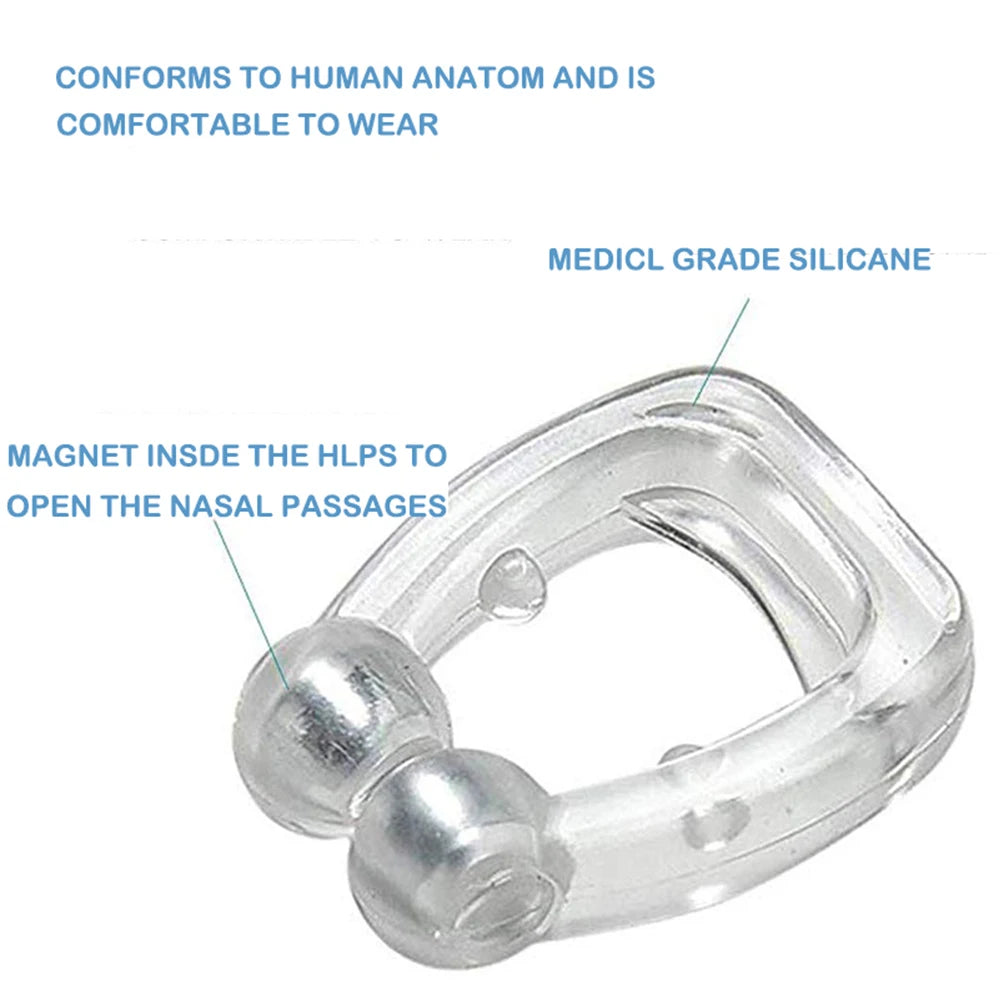
💡 Magnetic nose clip reviews show how nasal airflow support may improve breathing during sleep
Magnetic Anti Snoring Nose Clip Review: Real-World Performance
Ease of use and comfort
Most users find nasal clips simple to use. The soft silicone prongs sit inside the nostrils and usually become comfortable after a few nights of adjustment.
Snoring reduction results
Real-world reports suggest the best results occur when snoring is caused by nasal congestion or restricted airflow through the nose.
Sleep quality improvements
Many users report quieter sleep, improved breathing, and fewer nighttime awakenings when nasal airflow is improved.
Do Magnetic Nose Clips Actually Work for Snoring? (Evidence & Studies)
Clinical research specifically focused on magnetic nose clips is limited. However, studies on nasal airflow devices suggest that expanding the nasal passages can reduce snoring intensity in certain individuals.
What sleep specialists say
Sleep experts generally agree that nasal dilators can help mild snorers whose airflow is restricted in the nose rather than deeper in the airway.
Magnetic nose clip snoring evidence
Evidence suggests the airflow improvement from nasal dilation is the main factor behind reduced snoring. The added benefit of magnets remains unclear.
Who benefits the most
- Mild snorers with nasal blockage
- People with allergies or congestion
- Individuals seeking a non-invasive solution
Pros and Cons of Magnetic Anti-Snoring Nose Clips
Pros
- Affordable compared with other anti-snoring devices
- Non-invasive and drug-free solution
- Easy to use and travel-friendly
- Reusable and easy to clean
- May improve nasal airflow immediately
Cons
- Limited effectiveness for throat-based snoring
- May feel uncomfortable for some users
- Small magnets have limited scientific backing
- Not a treatment for sleep apnea
- Can fall out during sleep for some people
Magnetic Nose Clip vs Other Anti-Snoring Solutions
KentDO™ Magnetic Nose Clip
The KentDO™ Magnetic Nose Clip is a reusable silicone anti-snoring device designed to gently open nasal airways and support airflow during sleep.
- Price: $8.99
- Medical-grade silicone material
- Reusable and easy to clean
- Includes travel case
- Compact and lightweight
Magnetic nose clip vs nasal strips
Nasal strips widen nostrils from the outside. They can work similarly but must be replaced nightly and may irritate sensitive skin.
Magnetic nose clip vs chin straps
Chin straps keep the mouth closed to reduce mouth breathing. They help mouth snorers but do not improve nasal airflow.
Magnetic nose clip vs mandibular mouthguards
Mandibular advancement devices move the lower jaw forward to keep the airway open. They are more aggressive solutions typically used for moderate snoring.
Are Magnetic Nose Clips Safe to Use?
Medical safety considerations
For most healthy adults, nasal clips are considered safe when used as directed. They are non-invasive and drug-free.
Who should avoid them
- People with chronic sinus infections
- Individuals with nasal injuries
- Those diagnosed with severe sleep apnea
If snoring is severe or accompanied by breathing pauses during sleep, medical evaluation is recommended.
How to Use a Magnetic Anti-Snoring Nose Clip Correctly
- Wash the device with warm water and mild soap before first use.
- Insert the soft prongs gently into each nostril.
- Ensure the bridge rests comfortably under the nose.
- Adjust the position until airflow feels unobstructed.
- Remove and clean the device each morning.
Consistent use for several nights helps determine whether the device improves snoring.
Real User Magnetic Nose Clip Reviews (What Buyers Say)
To better understand real-world effectiveness, we reviewed hundreds of magnetic anti snoring nose clip reviews across multiple retailers.
Positive review patterns
- Reduced mild snoring
- Easier breathing during sleep
- Comfortable after adjustment period
- Affordable alternative to larger devices
Negative review patterns
- Some users find the clip uncomfortable
- May fall out during the night
- Limited results for severe snoring
- Does not treat sleep apnea
Overall customer sentiment
Overall feedback is mixed but generally positive. Most benefits appear when nasal airflow restriction is the primary cause of snoring.
Who Should Try a Magnetic Nose Clip for Snoring?
- Mild snorers
- People with nasal congestion
- Travelers seeking compact sleep solutions
- Those wanting a non-invasive option
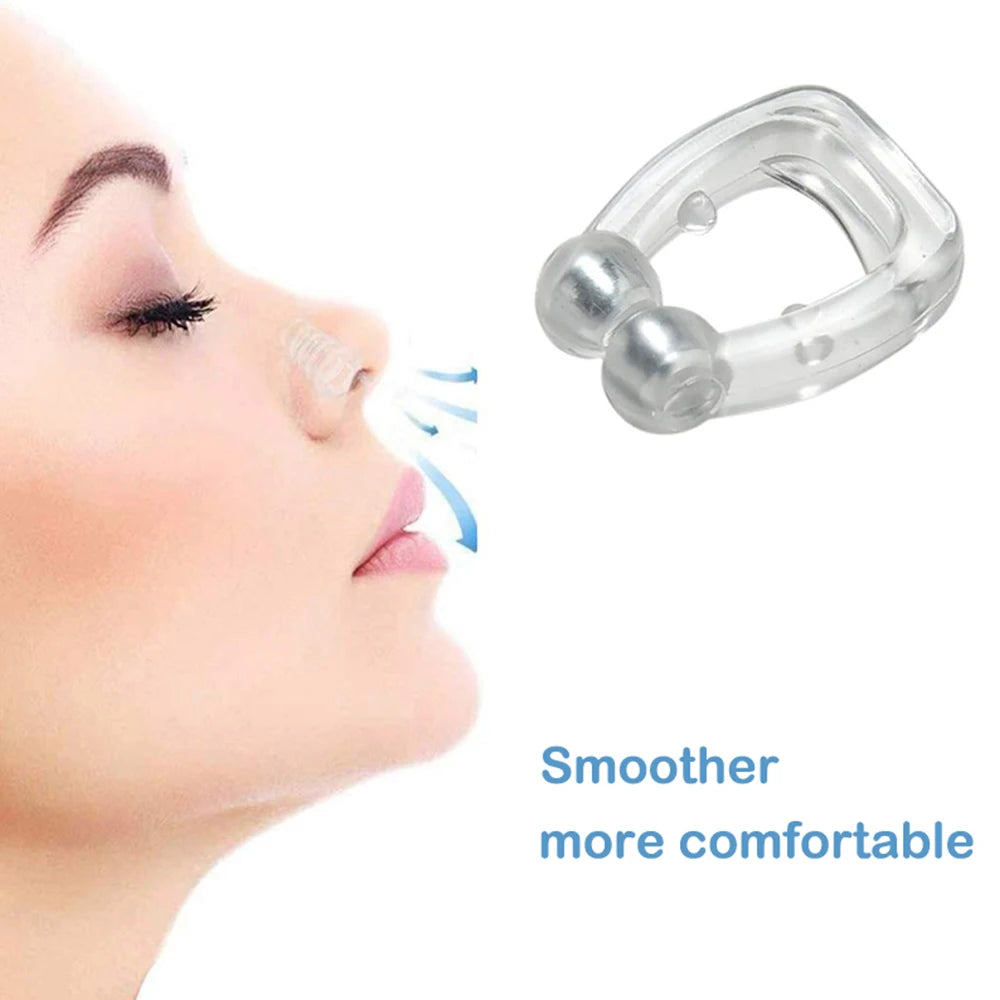
💡 Magnetic anti snore nose clip: a simple non-invasive device designed to improve airflow
FAQ: Magnetic Anti-Snoring Nose Clip Reviews
Do magnetic nose clips work for snoring?
They can help reduce snoring caused by nasal airflow restriction. However, they are less effective for snoring caused by throat obstruction or sleep apnea.
Are magnetic nose clips safe?
For most people, magnetic nose clips are safe to use. However, individuals with nasal injuries or chronic sinus conditions should consult a doctor first.
How long does it take to see results?
Many users notice improved airflow immediately, though consistent use for several nights helps determine effectiveness.
Can you sleep all night with a nose clip?
Yes. Most devices are designed for overnight use and can be worn throughout the night if positioned comfortably.
Do anti-snoring nose clips work better than nasal strips?
Both aim to improve nasal airflow. Clips are reusable, while nasal strips are disposable but sometimes more comfortable for sensitive users.
Related Articles:
Pillar Articles: