

Is UV400 Good for Skiing? Complete Guide to Ski Goggles UV Protection
What Does UV400 Mean on Ski Goggles?
Quick Answer: Is UV400 Enough for Skiing?
Yes. UV400 protection is a must-have for skiing because it blocks 100% of harmful UVA and UVB rays up to 400 nanometers. That said, UV protection is only one part of choosing the right ski goggles. To see terrain clearly and reduce eye strain, you also need an appropriate lens category (S0–S4) and a visible light transmission (VLT) level suited to the weather.
What Is UV400 Protection?
UV400 is a lens standard indicating that the goggles filter ultraviolet wavelengths up to 400 nm, covering both UVA and UVB radiation. These invisible rays can contribute to painful conditions such as snow blindness, increase eye fatigue, and cause long-term damage after repeated exposure.
Although UV400 protects your eyes from ultraviolet radiation, it does not determine how bright the world appears through the lens. Brightness, glare reduction, and terrain contrast depend on lens tint, coatings, and VLT.
Does UV400 Mean 100% UV Protection?
For reputable ski goggles, the answer is yes. A genuine UV400-rated lens blocks virtually 100% of UVA and UVB rays up to 400 nm. However, this rating should not be confused with lens darkness. Even a clear ski goggle lens can provide full UV400 protection if it is manufactured to the proper standard.
⏱ 7 min read
Long days on snowy slopes expose your eyes to far more ultraviolet radiation than many skiers realize. If you've finished a day with sore eyes, headaches, or blurred vision, excessive UV exposure and unsuitable lenses may be contributing factors. Understanding how UV400 protection works—and how it combines with the right VLT—helps you choose goggles that improve comfort, visibility, and safety throughout changing mountain conditions.
Explore how modern goggle design protects your eyes and sharpens visibility.
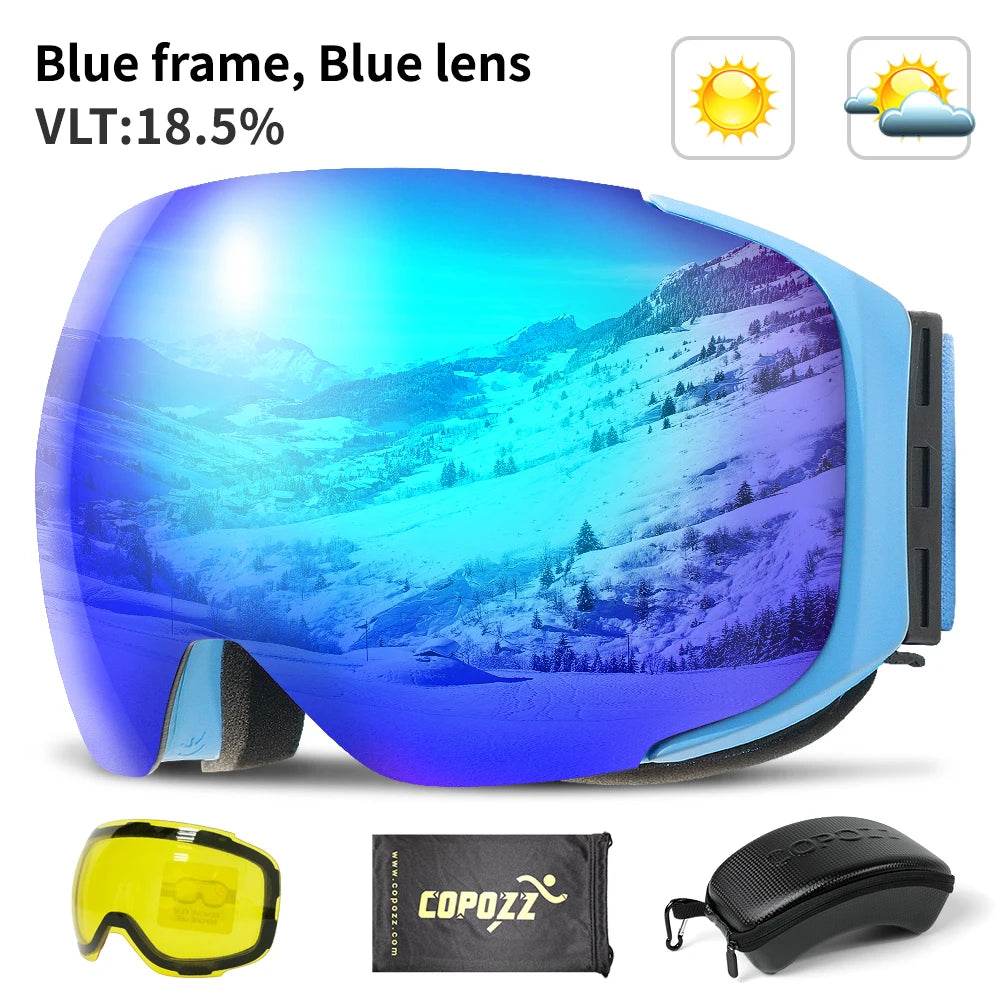
Clear vision starts here — magnetic ski goggles UV400 in action. See how the right lens improves visibility on the slopes.
Why UV400 Protection Is Critical on Snow
Snow Reflection and UV Exposure
Fresh snow can reflect up to 80–90% of incoming ultraviolet radiation, dramatically increasing total exposure compared with most everyday environments. Instead of receiving UV only from direct sunlight, your eyes are exposed to reflected rays bouncing upward from the snow, making comprehensive eye protection especially important.
How Altitude Increases UV Risk
Ultraviolet intensity rises by approximately 10–12% for every 1,000 meters of elevation. Because many ski resorts sit well above sea level, skiers experience stronger UV exposure even on cool or cloudy days.
How UV Damage Can Affect Your Eyes
Excessive ultraviolet exposure may lead to temporary snow blindness, eye irritation, light sensitivity, excessive tearing, and blurred vision. Over time, repeated UV exposure can also contribute to long-term eye health concerns. Wearing properly certified UV400 ski goggles is therefore a basic safety requirement rather than simply a comfort feature.
UV400 vs Lens Categories (S0–S4): What Skiers Must Know
What Are Lens Categories?
Lens categories describe how much visible light reaches your eyes—they do not indicate UV protection. A clear S0 lens and a dark S3 lens can both provide full UV400 protection while serving completely different lighting conditions.
- S0: Very low tint for night skiing or very low-light conditions
- S1–S2: Light to moderate tint for cloudy weather and variable visibility
- S3: Darker tint for bright sunshine and typical resort skiing
- S4: Very dark lenses intended for extremely bright, high-altitude environments such as glaciers
UV400 vs Visible Light Transmission (VLT)
Visible Light Transmission (VLT) measures the percentage of visible light passing through a lens. Lower percentages produce darker lenses for bright conditions, while higher percentages allow more light through to improve visibility during storms or flat light.
| VLT Range | Best Conditions |
|---|---|
| 0–20% | Bright sunshine and intense glare |
| 20–40% | Mixed or partly cloudy weather |
| 40–80% | Fog, snowfall, and low-light conditions |
Why UV400 Alone Is Not Enough
UV400 protects against invisible ultraviolet radiation, while VLT controls brightness and helps improve terrain definition. Choosing goggles with both reliable UV400 protection and an appropriate VLT provides clearer vision, reduced eye fatigue, and greater confidence across changing mountain conditions.
How Magnetic Ski Goggles Improve Convenience
Magnetic Lens Swaps
Magnetic ski goggles are designed to make lens changes fast and secure without requiring complicated tools. Instead of carrying multiple pairs of goggles, you can swap to a more suitable lens in seconds while maintaining the same UV400 protection.
This flexibility is particularly useful when weather changes throughout the day. A properly aligned magnetic system keeps the replacement lens firmly in place while allowing quick adjustments as visibility changes.
Switching Lenses for Changing Weather
Selecting the appropriate lens for current conditions helps maintain contrast and reduce eye fatigue throughout your ski session.
- Sunny days: Low VLT lenses reduce brightness and glare.
- Partly cloudy conditions: Medium VLT lenses provide balanced visibility.
- Snow, fog, or flat light: High VLT lenses allow more light through for improved terrain definition.
By pairing interchangeable lenses with full UV400 protection, magnetic ski goggles offer a practical way to adapt to changing mountain conditions without sacrificing eye safety.
Looking for eyewear solutions beyond winter sports? Browse the Eye Care Devices collection for tools that support long-term visual comfort.
Choosing the Right Lens for Every Weather Condition
Sunny Days
Bright, bluebird conditions typically call for lenses with a VLT between 0% and 20%. Gray lenses preserve natural color perception, while mirrored options can further reduce glare without affecting UV400 protection.
Partly Cloudy Conditions
When light changes throughout the day, lenses with a VLT around 20% to 40% offer a good balance between brightness control and terrain visibility. Brown and amber tints enhance contrast, making bumps and contours easier to distinguish.
Storm and Flat Light
Snowfall, fog, and overcast skies reduce contrast. Lenses with a VLT between 40% and 80%, especially yellow, gold, or rose tints, help improve definition and make subtle terrain features easier to see.
Night Skiing
Night skiing generally requires clear or lightly tinted lenses with very high VLT to maximize available light while still providing full UV400 eye protection.
| Conditions | Recommended VLT | Suggested Lens Colors |
|---|---|---|
| Sunny | 0–20% | Gray, dark smoke, mirrored |
| Partly cloudy | 20–40% | Brown, amber |
| Snow, fog, flat light | 40–80% | Yellow, gold, rose, pink |
| Night skiing | 80%+ | Clear or very light tint |
Matching both VLT and lens color to the day's conditions improves depth perception, minimizes eye strain, and helps maintain consistent visibility throughout your run.
How Double Layer Anti Fog Lens Technology Keeps Vision Clear
Double-layer anti-fog lens construction helps reduce condensation by minimizing the temperature difference between the inside and outside of the lens. This design keeps your field of view clearer during changing weather and high-intensity skiing.
- The inner lens features an anti-fog coating that disperses moisture.
- An insulating air gap slows heat transfer between lens layers.
- The outer lens shields against cold air, wind, and snow.
- Ventilation helps maintain airflow and reduce condensation buildup.
It is important to remember that anti-fog technology and UV400 protection serve different purposes. Anti-fog construction maintains clear vision, while UV400 blocks harmful ultraviolet radiation. High-quality ski goggles combine both features to improve safety and comfort on the mountain.

Double layer anti fog lens performance under real conditions. See it in action.
How to Verify UV400 Protection Before Buying
Product Labels and Certifications
When comparing ski goggles, look for a clearly stated UV400 rating from the manufacturer. Reputable products should specify that the lenses block 100% of UVA and UVB rays up to 400 nanometers. Product specifications, packaging, and technical documentation should all provide consistent information.
- Clearly labeled 100% UV400 protection
- Lens specifications that match the intended skiing conditions
- Manufacturer information and warranty details
- Consistent product documentation across official listings
Trusted Brands and Testing
Established outdoor brands typically perform optical and impact testing to verify lens performance. While premium pricing alone does not guarantee quality, purchasing from reputable manufacturers or authorized retailers reduces the risk of receiving lenses with inaccurate UV protection claims.
Warning Signs of Low-Quality Goggles
Be cautious if product listings provide little technical information or make vague marketing claims without identifying the UV protection standard. Other warning signs include poor lens clarity, inconsistent labeling, or unusually low prices from unknown sellers.
Before purchasing, confirm that your goggles include:
- Certified UV400 protection
- A VLT range suitable for your typical skiing conditions
- Double-layer anti-fog lens construction
- A wide field of view
- A secure magnetic lens system if interchangeable lenses are important to you
Do Ski Goggles Need Polarization?
Polarized lenses can reduce glare reflected from bright snow, making them more comfortable on sunny days. However, polarization serves a different purpose than UV400 protection. Many skiers also prefer non-polarized lenses because they can make icy patches and subtle terrain variations easier to identify in certain conditions.
Many skiers exploring performance upgrades also browse the Lifestyle collection for gear that enhances outdoor comfort beyond the slopes.
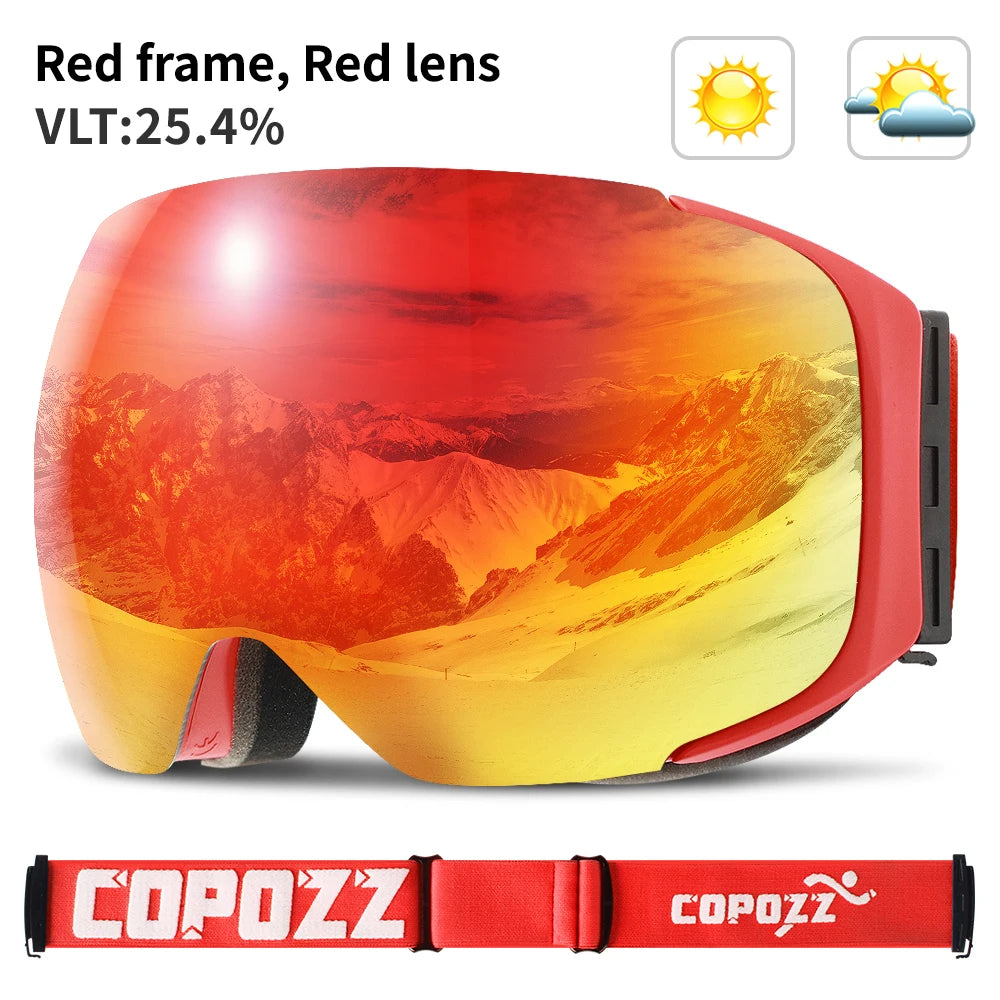
Engineered for clarity and comfort—magnetic ski goggles UV400 designed for changing mountain conditions.
Are UV400 Goggles Safe for Snow and Mountains?
Snow Blindness and Eye Protection
Yes. Properly certified UV400 ski goggles are one of the most effective ways to reduce the risk of snow blindness, also known as photokeratitis. Because snow reflects a significant amount of ultraviolet radiation, your eyes receive UV exposure from both direct sunlight and reflected light. Wearing goggles that block 100% of UVA and UVB rays helps protect your vision during long days on the mountain.
UV400 vs Polarized Lenses for Skiing
UV400 protection and polarized lenses perform different jobs. UV400 filters harmful ultraviolet radiation, while polarization minimizes glare from reflective surfaces. Depending on the terrain and lighting conditions, some skiers prefer polarized lenses for greater comfort, while others choose non-polarized lenses to preserve subtle snow texture and icy surface detail. The ideal combination is reliable UV400 protection paired with the lens tint and VLT best suited to your skiing conditions.
Magnetic Ski Goggles
Frequently Asked Questions
Do ski goggles need UV400?
Yes. UV400 protection is considered an essential safety feature because it blocks virtually 100% of harmful UVA and UVB rays encountered during skiing and other snow sports.
Is UV400 enough for high-altitude skiing?
UV400 is essential but should be combined with the correct VLT and lens category for the conditions. High elevations increase UV exposure, while changing weather requires appropriate brightness control for safe visibility.
Are UV400 sunglasses enough for snow glare?
Although UV400 sunglasses protect against ultraviolet radiation, they generally provide less peripheral coverage, wind protection, and stability than ski goggles. Dedicated ski goggles are usually the better choice for alpine environments.
Do polarized ski goggles make a difference?
They can. Polarized lenses reduce reflected glare on bright snow, improving visual comfort for many skiers. However, whether they are preferable depends on personal preference and the terrain you ski most often.
Does lens color affect UV protection?
No. Lens color influences contrast and visible light transmission, but it does not determine UV protection. A clear, yellow, or dark lens can all provide full UV400 protection if manufactured to the proper standard.
Can clear ski goggles still have UV400?
Yes. Clear lenses can offer complete UV400 protection while allowing maximum visible light to pass through, making them a popular choice for night skiing and very low-light conditions.













