

Moisture Penetration Hair Therapy: Does Heat Help Hair Treatment Penetrate?
Does Heat Help Hair Treatment Penetrate? (Quick Answer)
Short Answer for Featured Snippet
Yes, gentle heat can help hair treatments work more effectively by softening the hair fiber, improving product distribution, and helping conditioning ingredients spread more evenly through the hair. However, heat does not simply “force” every product deep into the hair shaft. Its main benefit is creating a warmer, more flexible environment that can support conditioning and moisture retention.
Whether heat helps depends on the formula, your hair's porosity, texture, condition, and the type of heat used. A controlled heat cap or steamer can be useful for deep conditioners and moisturizing masks, while excessive heat may increase dryness and damage.
Key Takeaways
- Does heat help hair treatment penetrate? It can support better conditioning and product distribution, but penetration varies by formula and hair condition.
- Does heat help hair mask work better? Often, yes—especially with moisturizing masks and treatments designed for deep conditioning.
- Heat is most useful when it is gentle, controlled, and applied for an appropriate amount of time.
- High-porosity, damaged, fine, and color-treated hair may require more caution with heat.
How Heat Affects Hair Structure and Conditioning
Understanding the Hair Cuticle and Cortex
Hair is made of several structural layers. The outer cuticle consists of overlapping cells that help protect the inner cortex, where much of the hair's strength, flexibility, and moisture balance are maintained.
Conditioning products primarily work by coating, smoothing, lubricating, and interacting with the hair fiber. Some ingredients may move into the hair to varying degrees, but not every product is designed to penetrate deeply. The formula's ingredients, molecular size, hair condition, and porosity all influence how the treatment performs.
How Gentle Heat Influences Conditioner Distribution
Warmth can make hair and conditioning products more pliable and may help a treatment spread more evenly across the hair fiber. This is one reason moisture penetration hair therapy often combines a moisturizing formula with controlled warmth rather than relying on heat alone.
Heat may also reduce the viscosity of some products, helping them distribute more easily through thick or dense hair. The result can be better coverage, improved softness, and a more consistent conditioning effect.
What Cosmetic Science Says
The common claim that heat simply “opens the hair cuticle” is an oversimplification. Hair cuticles do not open and close like doors. Warmth can influence the flexibility and behavior of the hair fiber, while water, pH, product ingredients, and the condition of the cuticle also affect how a treatment interacts with hair.
In practical terms, how heat affects hair conditioning depends on using enough warmth to support the treatment without exposing the hair to temperatures that cause unnecessary stress. The goal is improved conditioning—not maximum heat.
Does Heat Open the Hair Cuticle or Just Soften It?
Myth vs Reality
Heat does not literally open the hair cuticle like a hinged door. Instead, gentle warmth can soften the hair fiber and influence how the overlapping cuticle layers interact with water and conditioning products.
This is why the phrase “heat opens the cuticle” can be misleading. The effect is not a permanent opening that guarantees deep penetration. Rather, warmth can help create conditions that support better product distribution and conditioning during a treatment.
Does heat help hair absorb moisture? It can help some hair types and treatments take better advantage of moisture and conditioning ingredients, but the result depends on the product formula and the hair itself. Once the hair cools, the temporary effects of warmth also diminish.
Heat vs No Heat Hair Treatment: Which Works Better?
Results With Heat
Using gentle heat during a suitable conditioning treatment can improve product spread and make the treatment feel more effective. Hair may feel softer, smoother, and easier to detangle after the session.
Heat can be particularly useful for dense, dry, or low-porosity hair that tends to resist products or feels as though conditioner remains mostly on the surface.
Results Without Heat
Hair treatments can still work very well without added heat. Many conditioners, masks, leave-ins, and professional treatments are formulated to perform at room temperature. Skipping heat may also be preferable for fragile, highly damaged, or heat-sensitive hair.
So, when comparing hair mask heat vs no heat , the better option depends on the formula and your hair's needs rather than the assumption that heat is always superior.
Comparison Table
| Factor | With Gentle Heat | Without Added Heat |
|---|---|---|
| Product distribution | May improve with warmth | Depends on the formula and application |
| Best for | Dry, dense, or low-porosity hair that resists conditioning | Fragile, damaged, or heat-sensitive hair |
| Risk level | Low when heat is controlled | No added thermal exposure |
| Expected result | May improve softness and manageability | Can still provide effective conditioning |
| Main limitation | Too much heat may cause dryness or damage | Some treatments may distribute less evenly |
Which Hair Treatments Benefit From Heat?
Moisturizing Masks
Moisturizing masks are often the best candidates for gentle heat. Warmth can help the product spread through the hair more evenly and may improve the conditioning experience, particularly when the hair is dry or has a tightly compact cuticle structure.
This is why many people find that does heat help hair mask work better is answered with “sometimes, yes.” The benefit is usually improved conditioning and distribution rather than a guarantee that every ingredient penetrates deeply.
Protein Treatments
Protein treatments should be used according to the product's instructions. Some formulas may be designed to work with warmth, while others do not require it. Adding heat without checking the directions can make the treatment more intense than intended.
Because excessive protein use can leave some hair feeling stiff or brittle, heat should not be used as a way to force a protein treatment to work more aggressively.
Bond Builders
Bond-building treatments are formulated differently from traditional moisturizing masks. Follow the manufacturer's instructions carefully rather than assuming that heat will improve the result. Some products are designed to work without additional warmth.
Hair Oils and Leave-Ins
Heat is not always necessary for oils or leave-in products. In some cases, warmth may help a product spread, but excessive heat can increase the risk of dryness or thermal stress. For leave-ins, proper application and even distribution are usually more important than adding heat.
Benefits of Deep Conditioning With Heat
Improved Product Distribution
One of the most practical benefits of heat for deep conditioning hair is improved distribution. Gentle warmth can help a mask or conditioner spread more evenly, which is especially useful for thick, dense, or highly textured hair.
Better Softness and Manageability
When a treatment is distributed evenly and the hair receives adequate conditioning, the result may be improved softness, easier detangling, and better manageability. These effects are often more noticeable immediately after a deep-conditioning session.
Reduced Breakage When Used Correctly
Deep conditioning does not repair every type of hair damage, but softer, more conditioned hair may be easier to detangle and handle. Using gentle heat appropriately can support a healthy routine by helping a treatment condition the hair more evenly.
The deep conditioning with heat benefits are therefore mainly related to conditioning performance, softness, manageability, and moisture retention—not guaranteed permanent repair.
When Heat Can Reduce Hair Treatment Effectiveness
Overheating and Moisture Loss
More heat is not automatically better. Excessive temperatures or prolonged exposure can increase dryness and weaken already fragile hair. If the hair feels hot, brittle, rough, or unusually dry after a treatment, the heat may be too intense or the session may be too long.
Hair Types That Need Caution
Bleached, chemically treated, very fine, or severely damaged hair can be more vulnerable to thermal stress. High-porosity hair may also absorb water and products readily, meaning it may not need as much added heat as low-porosity hair.
Common Mistakes
- Using excessive heat because it seems more effective
- Leaving a heat tool on longer than recommended
- Applying heat to hair that is already extremely dry or fragile without adjusting the routine
- Using a treatment with heat when the product instructions advise against it
- Assuming heat can replace a well-formulated conditioner or mask
For better results, use controlled warmth, follow the product directions, and stop if the hair or scalp feels uncomfortably hot.
Best Tools for Moisture Penetration Hair Therapy at Home
Moisture penetration hair therapy is easiest to manage when the heat source distributes warmth consistently rather than creating intense hot spots. The best tool depends on your hair density, treatment type, comfort preferences, and how much control you want over the heat.
Hair Care and Styling Devices collections offer solutions that pair convenience with professional-level results.
For a dedicated option, explore the hair steamer cap deep conditioning product for consistent warmth during masks and conditioning treatments.
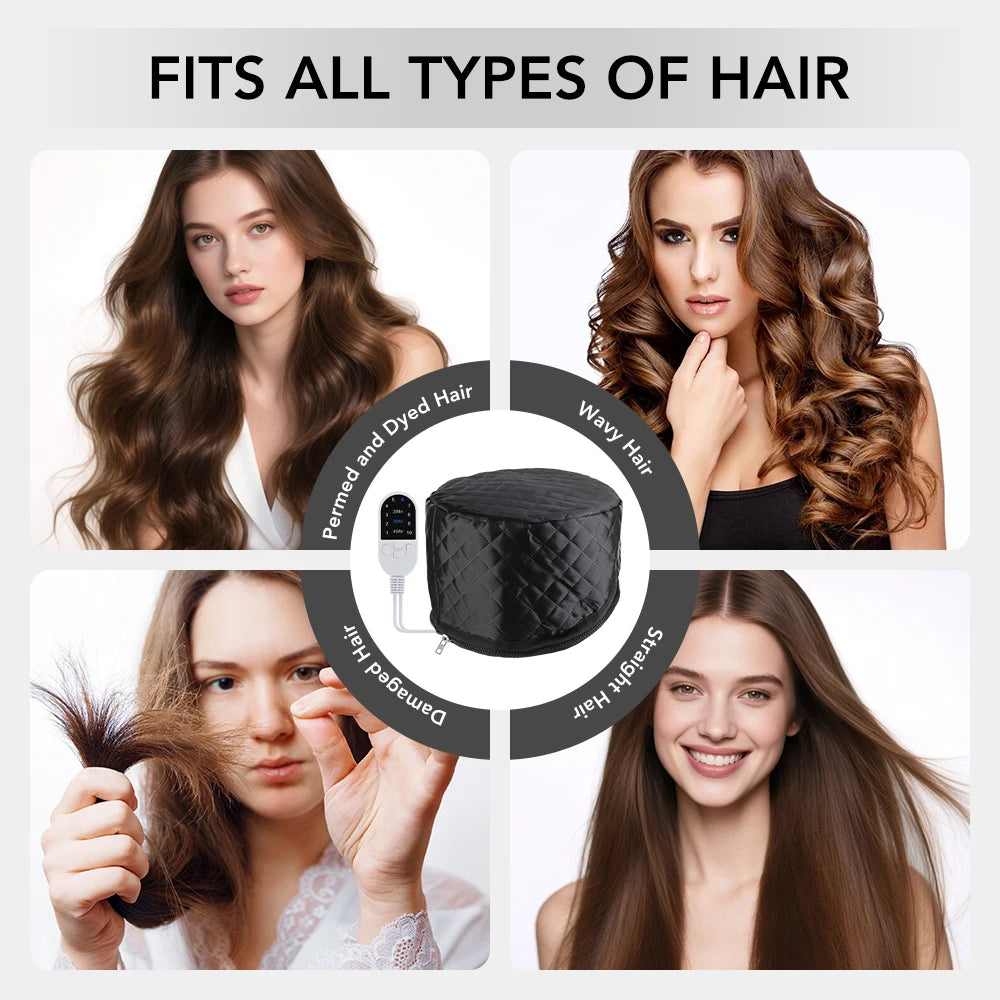
Deep conditioning heating cap enhances results See it in action
Best Ways to Apply Heat During Deep Conditioning
Using Heat Cap for Deep Conditioning
A heat cap provides convenient, consistent warmth around the hair and can be easier to control than applying direct heat with a handheld dryer. It is particularly useful for people who want a simple at-home routine.
When using heat cap for deep conditioning , apply the treatment according to its instructions, use a comfortable low-to-moderate heat setting, and avoid extending the session simply because the hair feels warm.
Warm Towel
A warm towel is an accessible option for adding mild warmth to a conditioning treatment. It is gentle but loses heat relatively quickly, so the temperature may be less consistent throughout the session.
Hair Steamer
A hair steamer adds warm moisture to the treatment environment and may help soften the hair while improving product distribution. It can be useful for people who prefer a humid, moisture-focused conditioning experience.
Hooded Dryer
A hooded dryer provides steady warmth and can work well for deep conditioning when used at a comfortable setting. It may be convenient for longer or thicker hair, but the heat should remain controlled rather than excessive.
For most at-home treatments, the goal is gentle, comfortable warmth rather than a specific maximum temperature. Always follow the instructions for your device and treatment product.
Should You Use Heat? Recommendations by Hair Type
Low Porosity Hair
Low-porosity hair often has a more compact cuticle structure and may feel as though products sit on the surface. Gentle heat can help improve the conditioning experience and product distribution.
However, low porosity does not mean the hair requires high heat. Start with mild warmth and observe how your hair responds.
High Porosity Hair
High-porosity hair can absorb water and products readily but may also lose moisture more quickly. Because it may not need as much help with product access, excessive heat can create unnecessary stress.
A balanced routine focused on conditioning and moisture retention may be more useful than increasing heat intensity.
Curly and Coily Hair
Curly and coily hair can benefit from even product distribution because density, bends, and texture may make it difficult to coat every strand consistently. Gentle warmth may help a conditioning treatment spread through the hair more effectively.
Use a method that does not create uncomfortable hot spots, especially when the hair is dense or the scalp is sensitive.
Color-Treated and Fine Hair
Fine and color-treated hair may be more vulnerable to damage from excessive heat. Lower-intensity warmth, shorter treatment times, and careful attention to product directions are generally safer choices.
If your hair is fragile or already damaged, does heat help hair absorb moisture may be less important than avoiding additional thermal stress. A well-formulated treatment without added heat may be the better option.
Frequently Asked Questions
Does Heat Really Help Hair Treatment Penetrate?
Yes, gentle heat can support better conditioning and product distribution, and it may help some treatments interact more effectively with the hair fiber. However, heat does not guarantee that every product or ingredient penetrates deeply into the hair shaft.
Does Heat Make a Hair Mask Work Better?
It can. A suitable moisturizing mask may benefit from gentle warmth because heat can help the product distribute more evenly and improve the conditioning experience. The formula and your hair type still matter.
Is a Heat Cap Better Than a Warm Towel?
A heat cap usually provides more consistent warmth, while a warm towel is simple and inexpensive but cools more quickly. Neither is automatically better for every hair type. The best option is the one that provides comfortable, controlled warmth without excessive heat.
Should Protein Treatments Be Used With Heat?
Only if the product instructions allow or recommend it. Protein treatments vary widely, so adding heat is not automatically necessary and may not improve every formula's performance.
How Long Should I Deep Condition With Heat?
Follow the directions for the specific treatment and heat tool. Many deep-conditioning sessions are designed to last for a limited period rather than indefinitely. Longer exposure is not necessarily more effective.
Can Too Much Heat Reduce Moisture?
Yes. Excessive heat can contribute to dryness and thermal stress, particularly when hair is already damaged, fine, bleached, or chemically treated. Controlled warmth is preferable to high temperatures.
Does Hair Porosity Affect Whether Heat Is Helpful?
Yes. Low-porosity hair may benefit from gentle warmth because it can be more resistant to product absorption, while high-porosity hair may need less added heat and more focus on maintaining moisture.
Is Steaming Better Than a Hooded Dryer for Deep Conditioning?
Not necessarily. Steaming provides warm moisture, while a hooded dryer provides consistent dry heat. The better option depends on your hair type, treatment formula, comfort, and the instructions for the product being used.
Is Heat Safe for Color-Treated Hair?
Gentle, controlled heat can be used with some color-treated hair, but excessive heat may increase dryness and damage. Use lower-intensity warmth when appropriate and follow the treatment and device instructions carefully.
Related Guide: Hair Steamer Cap Features That Boost Moisture Fast













