

Does motorcycle crash protection really save riders?
Yes. Motorcycle crash protection helps reduce the severity of injuries by managing impact energy before it reaches the rider. While no helmet can prevent every injury or make riding risk-free, a properly fitted, certified helmet with an impact-resistant shell, energy-absorbing EPS liner, and reinforced chin guard can significantly lower the risk of serious head, face, and jaw injuries during many real-world crashes.
What a Helmet Can and Cannot Do
A motorcycle helmet is designed to reduce injury risk—not eliminate it. It cannot guarantee survival in every crash or protect against all impact forces, but it can absorb and disperse energy that would otherwise be transferred directly to the head. Choosing a certified helmet and wearing it correctly are just as important as the helmet's construction.
Why Helmet Design Reduces Injury Risk
Modern motorcycle crash protection features work together as an integrated safety system. The outer shell spreads impact forces, the EPS liner absorbs crash energy, the chin bar protects the lower face, and the retention system keeps the helmet securely positioned throughout an impact. Understanding how motorcycle helmets protect riders begins with understanding how these components interact during a crash.
Motorcycle Helmet Safety Features: What Actually Protects Riders in a Crash
The best motorcycle helmet safety features are engineered to manage crash energy before it reaches your head. From advanced shell materials to multi-density impact liners and secure retention systems, today's helmets are designed to improve protection in a wide range of riding conditions. Knowing which features matter most helps you make a more informed buying decision.
⏱ 8 min read
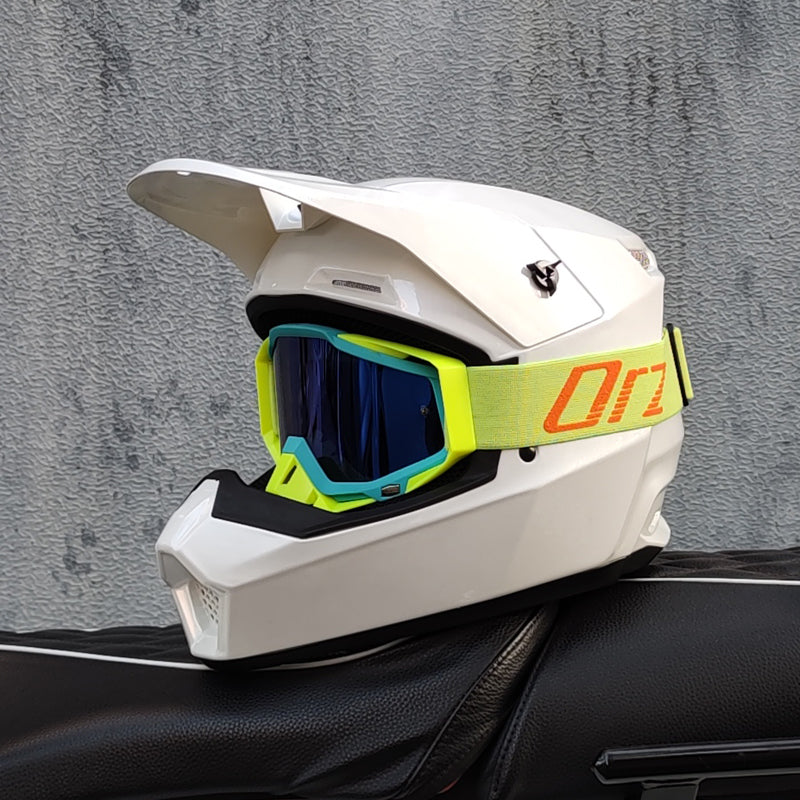
Impact resistant helmet design and motorcycle crash protection in action. See it in action.
Why Motorcycle Helmet Safety Features Matter More Than Ever
Motorcycle helmet safety features remain the most effective line of defense against serious head injuries for riders. Rather than relying on a single protective layer, modern helmets combine engineered shell materials, energy-absorbing liners, secure retention systems, and improved testing standards to reduce impact forces during a crash.
Advances in Modern Helmet Technology
Helmet engineering has evolved considerably over the past decade. Many premium models now incorporate multi-density EPS liners, reinforced chin bars, improved ventilation layouts that preserve structural strength, and technologies designed to help manage rotational forces from angled impacts. At the same time, updated certification standards such as ECE 22.06 evaluate helmets using more comprehensive testing protocols than earlier generations.
Because traffic volumes, vehicle speeds, and commuting distances continue to increase, selecting a certified helmet with the safest motorcycle helmet features is more important than ever. Protection begins with proper fit, continues with quality construction, and is supported by recognized safety certification.
How Motorcycle Helmets Protect Riders (Step-by-Step Crash Breakdown)
Understanding how motorcycle helmets protect riders is easier when you follow the path that crash energy takes through the helmet. Each component performs a specific task to reduce the amount of force transferred to the rider's head.
Stage 1: Outer Shell Impact Distribution
The outer shell is the first line of helmet impact protection. Materials such as ABS and fiberglass distribute impact forces across a wider area, helping reduce localized pressure while resisting penetration from road debris and sharp objects.
Stage 2: EPS Liner Energy Absorption
Beneath the shell, the EPS (expanded polystyrene) liner compresses under impact to absorb kinetic energy. Instead of allowing the head to stop suddenly, this helmet impact absorption technology slows the deceleration, reducing the forces transmitted to the brain.
Stage 3: Rotational Impact Reduction (MIPS & Alternatives)
Many motorcycle crashes involve angled impacts that create rotational forces as well as direct impacts. Slip-plane technologies such as MIPS are designed to allow controlled movement between the helmet and the head, helping reduce rotational acceleration that may contribute to certain brain injuries.
Stage 4: Retention System & Fit Stability
Even the most advanced helmet cannot perform properly if it shifts during a crash. A correctly adjusted chin strap and secure retention system keep the helmet in its intended position so every protective component can function as designed.
Key Motorcycle Helmet Safety Features Explained
The effectiveness of a motorcycle helmet depends on how its components work together during an impact. Understanding these motorcycle crash protection features helps riders distinguish meaningful safety improvements from marketing claims.
Multi-Density EPS
Multi-density EPS (expanded polystyrene) liners are engineered to manage different impact severities. Softer sections help absorb energy from lower-speed impacts, while denser zones are designed for higher-energy collisions. This layered approach improves overall helmet impact protection by distributing crash forces more efficiently than a single-density liner.
Helmet Impact Absorption Technology
Modern helmet impact absorption technology focuses on reducing the rate at which the head decelerates during a crash. By compressing in a controlled manner, the liner absorbs kinetic energy before it reaches the skull, helping reduce the likelihood of severe head injuries.
Chin Guard Protection
A reinforced chin guard protection helmet offers substantial benefits because impacts frequently involve the lower portion of the face. Full-face helmets provide continuous structural support around the chin and jaw, helping reduce facial fractures while contributing to the helmet's overall strength.
Visor Locking Systems
A secure visor does more than improve visibility. Reliable locking mechanisms help keep the visor closed during high-speed riding and may reduce the chance of debris entering the eye area during an impact. Quality visor systems are also designed to resist accidental opening while remaining easy to operate with gloves.
Ventilation Without Compromising Safety
Effective ventilation improves rider comfort and concentration, especially on long rides. Premium helmet designs integrate intake and exhaust channels without unnecessarily weakening the shell, balancing airflow with structural integrity for dependable protection.
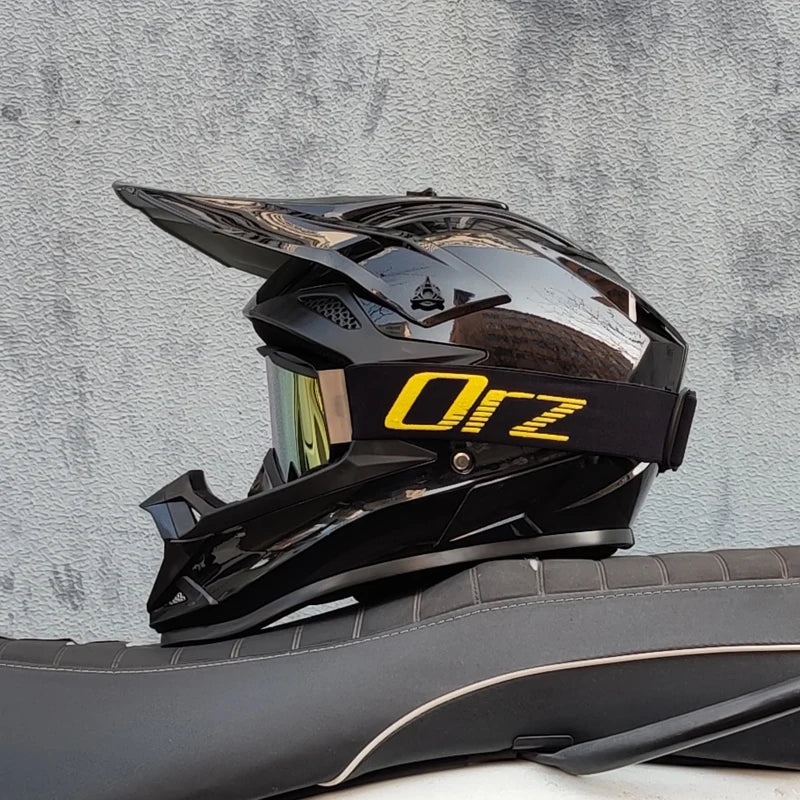
Chin jaw protection helmet structure with ABS shell material. See it in action.
ABS Helmet Shell Benefits vs Polycarbonate vs Fiberglass
The shell is the helmet's first protective barrier, and the material used influences weight, durability, impact performance, and price. No single material is ideal for every rider, but understanding their characteristics makes comparison easier.
| Shell Material | Advantages | Considerations | Typical Use |
|---|---|---|---|
| ABS | Durable, impact-resistant, cost-effective, good shock distribution | Slightly heavier than premium composites | Everyday commuting and recreational riding |
| Polycarbonate | Lightweight, flexible, absorbs impact through controlled deformation | Performance varies by construction quality | Entry-level and mid-range helmets |
| Fiberglass Composite | Excellent strength-to-weight ratio, strong high-speed performance | Typically more expensive than ABS | Touring and performance riding |
| Carbon Fiber | Very lightweight with exceptional rigidity | Premium price and often reserved for high-end helmets | Sport, racing, and long-distance riding |
For many riders, ABS helmet shell benefits include an excellent combination of affordability, durability, and dependable helmet impact protection. Fiberglass and carbon fiber reduce overall weight while offering premium performance, making them attractive for riders who spend extended periods on the road.
Motorcycle Helmet Safety Ratings Explained (DOT vs ECE vs Snell)
A motorcycle helmet safety rating indicates that a helmet has met specific testing requirements. Comparing certifications helps riders choose helmets that align with their riding style and local regulations.
| Certification | Primary Focus | Common Applications |
|---|---|---|
| DOT | Minimum legal safety requirements in the United States | Street riding |
| ECE 22.06 | Comprehensive impact and rotational testing | Road use in many international markets |
| Snell | Higher-energy impact testing | Performance riding and motorsports |
| FIM | Elite racing performance standards | Professional motorcycle competition |
DOT
DOT certification establishes the minimum legal performance requirements for motorcycle helmets in the United States. It evaluates impact attenuation, penetration resistance, and retention system performance, although manufacturers are responsible for certifying compliance.
ECE 22.06
ECE 22.06 is widely regarded as one of the most comprehensive road helmet standards available. It evaluates multiple impact locations, different impact speeds, visor performance, and rotational forces, providing a broader assessment of real-world crash scenarios.
Snell
Snell certification applies more demanding impact tests than many road standards. Helmets meeting Snell requirements are often favored by riders seeking additional protection for track days and high-performance riding, though they should still be selected based on fit and intended use.
FIM
FIM homologation represents one of the highest levels of motorcycle helmet testing and is intended primarily for professional racing. While it demonstrates exceptional performance, most everyday riders do not require an FIM-certified helmet for normal road use.
Which Certification Should You Prioritize?
For everyday street riding, choosing a properly fitted helmet with a recognized motorcycle helmet safety rating is more important than focusing on a single certification alone. ECE 22.06 is widely respected for its comprehensive testing, while DOT satisfies legal requirements in the United States. Riders who regularly participate in competitive or high-performance riding may also consider Snell or FIM-certified models where appropriate.
Safest Motorcycle Helmet Features (What to Look For Before Buying)
When comparing helmets, prioritize proven safety performance over cosmetic styling or brand recognition. A certified helmet that fits correctly will provide better protection than a premium model with an improper fit.
Safety Priority Checklist
- Choose a certified helmet that meets an appropriate safety standard such as ECE 22.06 or the regulations required in your region.
- Select a full-face design for the highest level of head, jaw, and facial coverage.
- Look for a multi-density EPS liner that improves energy management across different impact severities.
- Choose a durable shell made from ABS, fiberglass composite, carbon fiber, or another high-quality material.
- Ensure the helmet includes a reliable retention system, such as a double D-ring or quality micrometric buckle.
- Consider rotational impact management technologies, including systems such as MIPS, if available.
Fit Before Features
A helmet should fit snugly without creating painful pressure points. It should not rotate freely on your head or lift excessively when the chin strap is secured. Proper sizing is essential because even the safest motorcycle helmet features cannot perform as intended if the helmet shifts during a crash.
Quality Control Indicators
Inspect the overall construction before purchasing. Consistent shell finishing, smooth visor operation, secure padding attachment, and clearly marked certification labels are all indicators of careful manufacturing and quality control.
Full Face Helmet Protection Benefits vs Other Types
Among all motorcycle helmet styles, full-face models provide the most complete protection by covering the skull, jaw, chin, and face within a single reinforced structure.
Coverage Comparison by Helmet Type
| Helmet Type | Coverage | Best Use | Protection Trade-Off |
|---|---|---|---|
| Full-face | Head, face, chin, and jaw | Everyday road riding, touring, sport riding | Maximum protection with slightly less airflow |
| Open-face | Top, sides, and back of the head | Urban commuting at lower speeds | Face and jaw remain exposed |
| Half helmet | Upper portion of the head only | Limited applications | Provides the least overall impact protection |
Full face helmet protection benefits include improved impact distribution, enhanced chin guard protection, reduced facial injury risk, and better shielding from wind, debris, and weather. These advantages make full-face helmets the preferred choice for most riders.
Full-Face Motorcycle Helmet designs combine a protective shell, energy-absorbing liner, reinforced chin bar, and secure retention system to help manage both direct and rotational forces encountered in real-world riding.
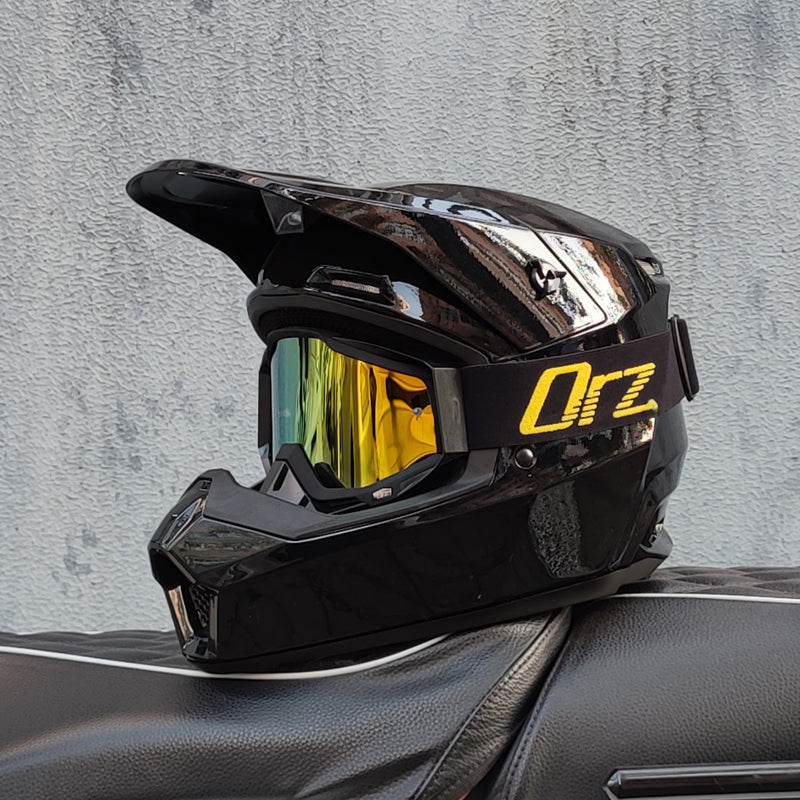
Advanced motorcycle helmet safety features. See it in action.
Frequently Asked Questions
What makes motorcycle helmet safety features effective?
Effective motorcycle helmet safety features work together as a complete system. The shell distributes impact forces, the EPS liner absorbs energy, the chin guard protects the lower face, and the retention system keeps the helmet securely positioned throughout a crash.
Is a full-face helmet safer than an open-face helmet?
Yes. Full-face helmets provide more complete coverage by protecting the chin and jaw in addition to the top and sides of the head, making them the safest option for most road riders.
What is the most important helmet safety feature?
The EPS liner is one of the most critical components because it absorbs impact energy before it reaches the head. However, the shell, chin bar, retention system, and proper fit are all essential for overall protection.
Are expensive helmets actually safer?
Higher-priced helmets often include lighter materials, improved ventilation, and advanced impact-management technologies. However, certification, correct fit, and build quality have a greater influence on safety than price alone.
How do helmet safety ratings affect protection?
A motorcycle helmet safety rating indicates that a helmet has met specific performance requirements during standardized testing. Recognized certifications help riders compare products using objective safety criteria.
How often should a motorcycle helmet be replaced?
Many manufacturers recommend replacing a motorcycle helmet about every five to seven years, depending on usage, storage conditions, and manufacturer guidance. Replace the helmet sooner if it shows signs of damage or deterioration.
Does MIPS make a motorcycle helmet safer?
MIPS and similar slip-plane technologies are designed to help reduce rotational forces generated during certain angled impacts. While no technology can prevent every injury, these systems may provide additional protection in specific crash scenarios.
Can a helmet be reused after a crash?
If a helmet has experienced a significant impact, it should generally be replaced, even if no visible damage is present. Internal protective materials can be permanently compressed and may no longer perform as designed.
Explore more protective lifestyle solutions in our Lifestyle collection.













