

What does a motorcycle helmet safety rating really tell you?
A motorcycle helmet safety rating shows how a helmet performs in standardized crash testing rather than relying on marketing claims. Ratings and certifications reflect impact management, shell performance, retention system strength, and—in some testing programs—protection against rotational forces, helping riders compare helmets using measurable safety data.
Motorcycle Helmet Testing: How Safety Ratings Actually Work
Understanding motorcycle helmet testing helps you look beyond brand names and graphics. Modern testing standards evaluate how helmets absorb impact energy, remain securely fastened, and protect riders during controlled crash simulations. Learning how certifications and ratings are assigned makes it easier to choose a helmet based on proven performance instead of assumptions.
⏱ 6 min read
Explore how safety ratings reveal meaningful performance differences before your next ride.
Which motorcycle helmet rating provides the protection you can trust? Let's start with how testing and certification work.
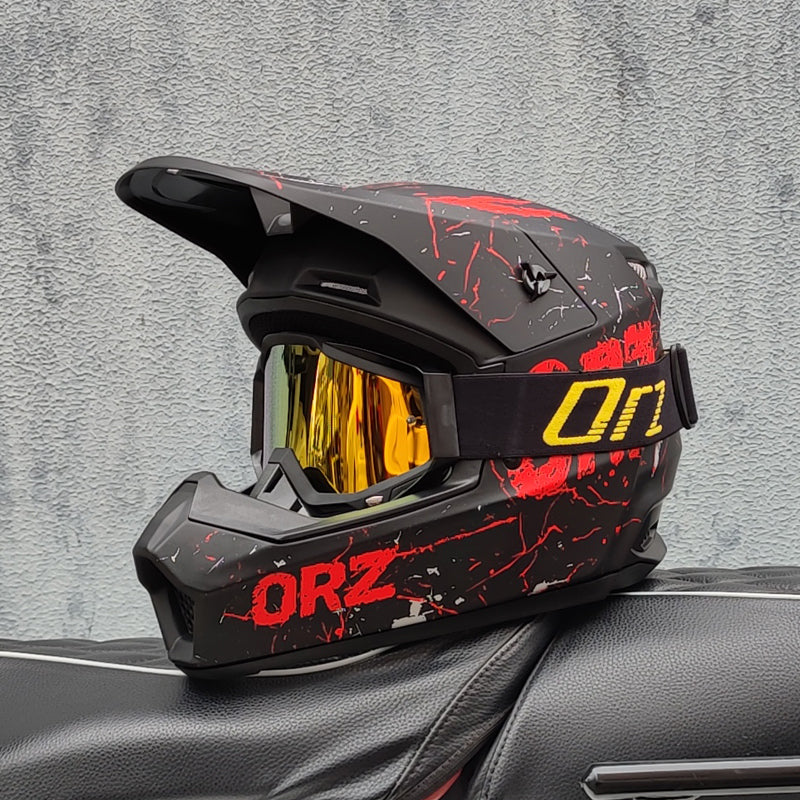
Understanding motorcycle helmet safety ratings helps riders make more informed protection decisions. See it in action.
What Is Motorcycle Helmet Safety Certification and Why It Matters
Motorcycle helmet testing standards establish the minimum performance requirements a helmet must meet before it can be legally sold in many markets. Certification confirms that a helmet has satisfied a defined testing standard, while safety ratings may provide additional information that compares one certified helmet with another. Understanding this distinction helps riders evaluate protection more accurately.
Key Motorcycle Helmet Safety Standards (DOT vs ECE vs Snell vs SHARP)
- DOT (FMVSS 218): The U.S. federal standard that requires manufacturers to certify compliance with requirements covering impact attenuation, penetration resistance, field of vision, and retention system performance.
- ECE 22.05 / 22.06: European certification standards that use independent testing across multiple impact locations, with ECE 22.06 introducing broader testing scenarios, including additional impact and rotational assessments.
- Snell: A voluntary certification developed for riders seeking higher-performance testing, featuring more demanding impact criteria and repeated impact evaluations.
- SHARP: A United Kingdom helmet rating program that builds on ECE-certified helmets by conducting additional laboratory tests and assigning easy-to-understand star ratings for comparison.
Motorcycle Helmet Safety Ratings UK (SHARP Explained)
The SHARP (Safety Helmet Assessment and Rating Programme) does not replace certification standards such as ECE. Instead, it expands on them by performing additional impact evaluations at multiple locations and speeds before assigning a one- to five-star rating. Unlike pass/fail certification systems, SHARP allows riders to compare certified helmet models using published performance data, making it a valuable resource when choosing between similarly certified helmets.
How Motorcycle Helmet Testing Works
Every motorcycle helmet test follows standardized laboratory procedures intended to reproduce common crash forces as consistently as possible. While individual certification programs use different equipment and pass criteria, most motorcycle helmet safety tests evaluate the same core areas: impact management, shell integrity, retention performance, stability, visibility, and, in newer standards, rotational impact protection.
Impact Testing
Impact testing is the cornerstone of motorcycle helmet testing. Helmets are fitted onto instrumented headforms and dropped onto steel anvils with different shapes at specified speeds. Sensors measure the amount of force transmitted through the helmet. To pass, the recorded values must remain below the maximum limits defined by the applicable testing standard, demonstrating that the helmet effectively manages crash energy.
Penetration Testing
Penetration testing evaluates whether the helmet shell can resist sharp-object intrusion during a crash. A pointed striker is dropped onto selected areas of the shell under controlled conditions. The test is successful only if the object fails to contact the headform inside the helmet, confirming that the shell maintains a protective barrier.
Retention System Testing
The retention system—including the chin strap, buckle, and anchor points—is subjected to controlled loads that simulate crash forces. Test equipment measures strap elongation and checks for breakage or release. A properly functioning retention system helps prevent the helmet from shifting or coming off when it is needed most.
Roll-Off and Stability Testing
Roll-off testing determines whether a secured helmet can be pulled or rotated off the headform during impact-like conditions. Stability assessments also verify that the helmet remains correctly positioned when exposed to sudden directional forces. These evaluations help ensure that critical areas of the head remain covered throughout an accident.
Field of Vision and Visor Testing
Certification standards also verify that riders maintain adequate peripheral vision while wearing the helmet. Where applicable, visor testing assesses optical quality, attachment security, and resistance to damage so that visibility is not unnecessarily compromised during everyday riding.
Rotational Impact Evaluation in Modern Standards
Modern motorcycle helmet standards increasingly recognize that many real-world crashes involve rotational as well as direct impacts. Newer testing protocols, including ECE 22.06, incorporate additional assessments that evaluate how helmets manage twisting forces associated with certain brain injuries, providing a more comprehensive picture of overall protection.
How Motorcycle Helmet Safety Tests Measure Real Protection
Laboratory testing is designed to estimate how effectively a helmet reduces the forces associated with serious head injuries. Although no test can recreate every crash scenario, standardized procedures allow meaningful comparisons between certified helmet models.
Energy Absorption and G-Force Explained
The helmet's expanded polystyrene (EPS) liner compresses during an impact to slow the head more gradually, reducing the peak forces transferred to the brain. Test instruments record acceleration values, allowing engineers to determine whether the helmet remains within established injury thresholds. Learn more about how materials like EPS foam enhance energy absorption.
What Testing Data Reveals About Brain Injury Risk
Certification results and independent testing data show how effectively a helmet manages both direct impacts and, in some testing programs, rotational motion. Lower transmitted forces generally indicate better protective performance under laboratory conditions, although real-world outcomes also depend on impact angle, speed, helmet fit, and correct use.
Discover which designs deliver measurable protection advantages.
Motorcycle Helmet Safety Standards Compared (DOT vs ECE vs Snell)
Although DOT, ECE, and Snell all evaluate motorcycle helmet safety, each certification follows a different testing philosophy. Understanding these differences helps riders compare motorcycle helmet ratings more accurately and choose a helmet that matches their riding environment.
Key Differences in Testing Methods
| Standard | Primary Focus | Testing Approach | Best Suited For |
|---|---|---|---|
| DOT (FMVSS 218) | Minimum legal safety requirements in the U.S. | Manufacturer self-certification with government compliance enforcement | Everyday street riding in the United States |
| ECE 22.06 | Comprehensive real-world impact performance | Independent certification with multiple impact locations, speeds, and rotational assessments | Street and touring riders in many international markets |
| Snell | High-energy impact protection | More demanding impact criteria with multiple strikes and voluntary certification | Performance-oriented and competitive riders |
No single certification is universally "best." Instead, each standard reflects different priorities, testing procedures, and regional regulations while maintaining a strong emphasis on rider protection.
Which Standard Is the Most Strict?
Snell has traditionally been regarded as one of the most demanding voluntary certification programs because of its higher impact requirements. ECE 22.06, however, introduces broader testing that better reflects a variety of real-world crash scenarios, including additional impact locations and rotational assessments. DOT remains an important legal baseline for U.S. riders, ensuring helmets satisfy federal minimum safety requirements.
How to Interpret Motorcycle Helmet Safety Ratings
Motorcycle helmet ratings become more meaningful when you understand what each label represents. Certifications confirm that a helmet meets established testing standards, while comparative rating systems provide additional insight into performance differences between certified models.
Understanding Certification Labels
- DOT, ECE, and Snell labels: Verify that the helmet complies with the requirements of the respective certification program.
- SHARP star ratings: Offer comparative performance data for eligible ECE-certified helmets. For a more detailed explanation, see this SHARP ratings guide.
- Published test results: Independent testing and rating programs can provide additional context beyond simple certification labels.
Can a Helmet Meet Multiple Standards?
Yes. Many premium motorcycle helmets are engineered to satisfy more than one certification requirement. For example, a helmet sold internationally may carry both DOT and ECE approval, allowing manufacturers to meet legal requirements across multiple markets while giving riders greater flexibility.
Common Misconceptions About DOT, ECE, and Snell
- A helmet with more certifications is not automatically safer if it does not fit correctly.
- Higher-priced helmets often include comfort and convenience features in addition to safety testing.
- No certification guarantees injury prevention in every crash because real-world accidents vary significantly in speed, angle, and impact conditions.
When evaluating motorcycle helmet ratings, combine certification information with proper sizing, intended riding use, and reputable test data to make the most informed decision.
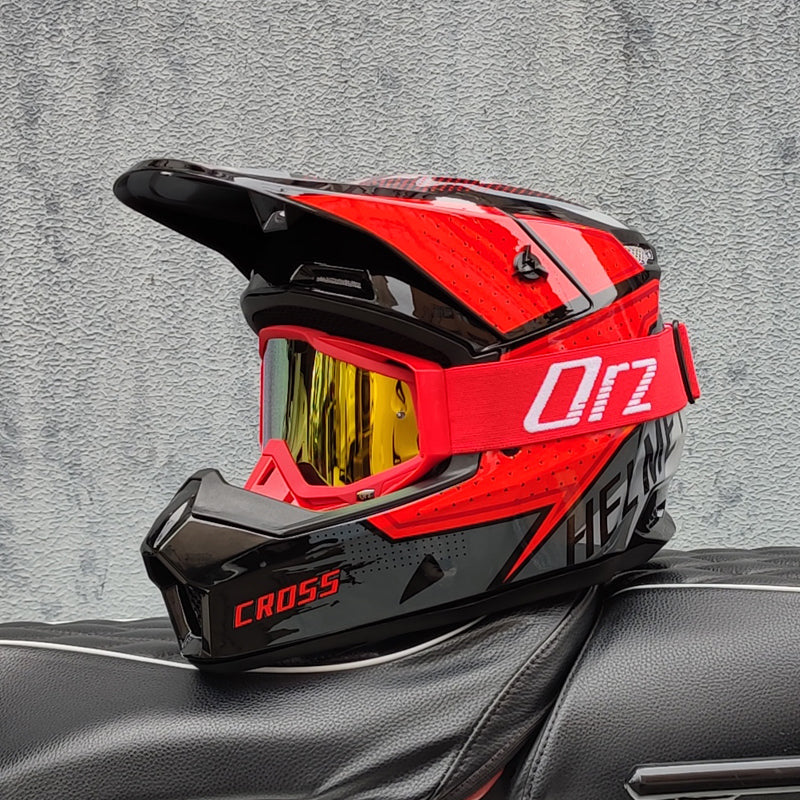
Side-by-side motorcycle helmet safety rating comparisons help riders identify meaningful differences in certified protection. See it in action.
Why Full-Face Helmets Often Lead in Safety Ratings
Full-face helmets consistently rank among the strongest performers in motorcycle helmet safety ratings because they provide the most comprehensive head coverage. In addition to protecting the top and sides of the head, they incorporate a rigid chin bar that shields an area commonly involved in motorcycle crashes. Compare the strengths of different helmet styles in this helmet types guide.
Safety Advantages of Full-Face Designs
- Comprehensive coverage: Protects the forehead, temples, sides, rear of the head, and chin within a single integrated shell.
- Chin and facial protection: The chin bar helps reduce the risk of facial and jaw injuries during frontal or angled impacts.
- Improved structural integrity: A one-piece shell design distributes impact forces more effectively across the helmet.
- Broad certification availability: Many premium full-face helmets are available with DOT, ECE, Snell, or multiple certifications, making them suitable for a wide range of riding conditions.
- Greater stability: An enclosed design can improve aerodynamic performance while reducing wind noise and helmet movement at highway speeds.
Riders looking for an impact-resistant helmet that balances protection, comfort, and everyday usability often choose full-face designs. Explore a full-face motorcycle helmet engineered with rider safety and long-distance comfort in mind.
How to Choose the Right Helmet Based on Safety Ratings
Selecting a motorcycle helmet involves more than comparing certification labels. Match the helmet's testing standard, intended use, and fit to the type of riding you do most often.
Street Riding
For everyday commuting and recreational road riding, choose a helmet that meets the certification requirements in your region. ECE-certified helmets are widely accepted internationally, while DOT certification is required for road use in the United States. If SHARP ratings are available for your chosen model, they can provide additional comparison data.
Adventure and Off-Road Riding
Adventure riders should prioritize helmets that combine certified impact protection with effective ventilation, a secure visor system, and compatibility with goggles where appropriate. Weight and long-distance comfort are also important considerations for extended rides.
Track and Racing Requirements
Track organizations often specify which certifications are accepted for competition. Before purchasing a helmet for racing or track days, verify the event's current requirements. Helmets carrying higher-performance certifications, such as Snell or FIM approval where applicable, may be required by certain organizations.
Regardless of riding style, proper fit remains essential. A helmet should fit snugly without creating painful pressure points or excessive movement. For sizing guidance, see this helmet sizing guide.
Choose a helmet that delivers certified performance, a secure fit, and lasting comfort every time you ride.
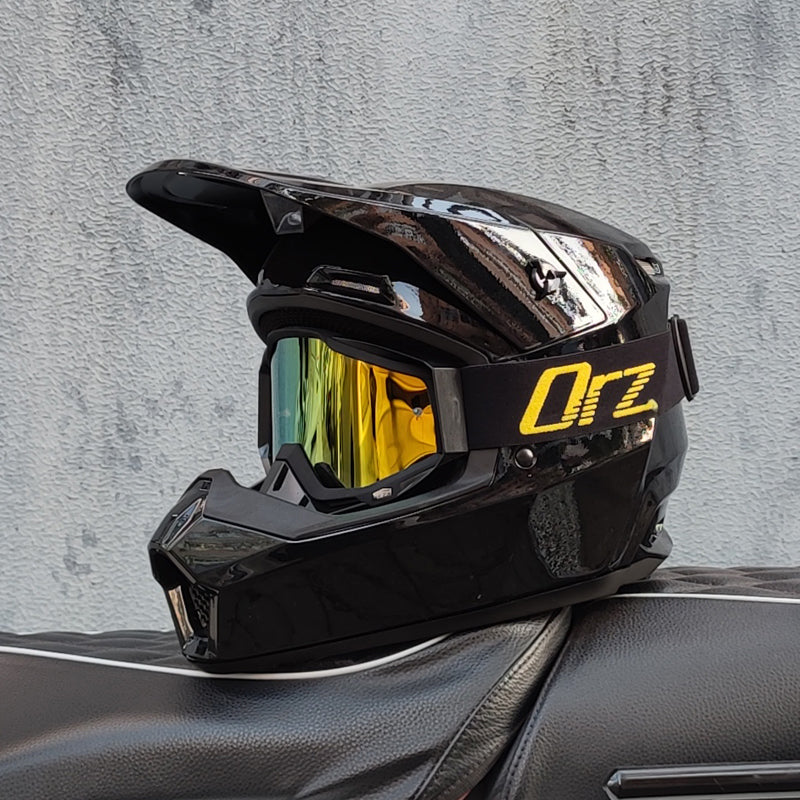
Choosing the right motorcycle helmet safety rating helps build confidence and protection on every ride. See it in action.
Frequently Asked Questions
Is DOT certification enough?
DOT certification confirms that a helmet meets the minimum legal safety requirements for road use in the United States. For many everyday riders, a DOT-certified helmet from a reputable manufacturer provides appropriate protection. However, some riders also look for ECE or Snell certification, or SHARP ratings where available, for additional insight into crash performance.
Is ECE 22.06 better than Snell?
Neither standard is universally better—they are designed with different testing philosophies. ECE 22.06 includes a broader range of modern impact scenarios, while Snell applies more demanding impact criteria aimed at high-performance use. The best choice depends on your riding style, local regulations, and the helmet's overall fit.
What does SHARP measure?
SHARP (Safety Helmet Assessment and Rating Programme) evaluates eligible ECE-certified helmets using additional laboratory tests and assigns a one- to five-star rating. These ratings help riders compare the relative impact performance of certified helmet models beyond basic pass/fail certification.
Can a helmet have multiple certifications?
Yes. Many motorcycle helmets are designed to comply with more than one certification standard. For example, a helmet may carry both DOT and ECE approval, allowing it to meet legal requirements in multiple regions while giving riders greater confidence in its tested performance.
How often should I replace my helmet?
Most manufacturers recommend replacing a motorcycle helmet approximately every five years from the date it is first used, or immediately after any crash or significant impact. Replace the helmet sooner if you notice shell damage, degraded interior padding, worn retention straps, or signs of excessive wear.
Choose a motorcycle helmet with trusted certifications, the right fit, and proven impact protection for every journey.
Related Guide: DOT Approved Motorcycle Helmet: Best Picks Compared













