Gel vs Memory Foam Seat Cushion: Which Is Better for Comfort, Cooling, and Support?
Choosing between a gel vs memory foam seat cushion can make a major difference in comfort during long hours of sitting. Both options are designed to improve sitting posture, reduce pressure on the tailbone, and make office chairs, car seats, and gaming setups more comfortable—but they work in different ways.
Memory foam focuses on body contouring and pressure relief, while gel cushions prioritize airflow, cooling, and flexible support. The best choice depends on your sitting habits, environment, body type, and whether you need maximum support or better temperature control.
This guide compares gel seat cushion vs memory foam designs across comfort, cooling, durability, maintenance, and real-world situations including office work, driving, tailbone pain, and extended sitting.
Quick Verdict: Gel vs Memory Foam Seat Cushion at a Glance
If you're deciding between a gel vs memory foam seat cushion, neither material is universally better. The right choice depends on how long you sit, whether heat buildup bothers you, your body weight, and whether your priority is cooling, pressure relief, or long-term support.
| Feature | Memory Foam | Gel Cushion |
|---|---|---|
| Pressure Relief | Excellent | Very Good |
| Cooling | Fair | Excellent |
| Support | Excellent | Good |
| Durability | Good to Excellent | Excellent |
| Weight Distribution | Excellent | Very Good |
| Travel Friendliness | Good | Very Good |
Best Choice Based on Your Needs
- Choose memory foam for chronic discomfort, long office work, and maximum pressure relief.
- Choose gel if you overheat easily or sit in warm environments.
- Choose hybrid gel memory foam if you want both cooling and ergonomic support.
⏱ Reading time: 7 min
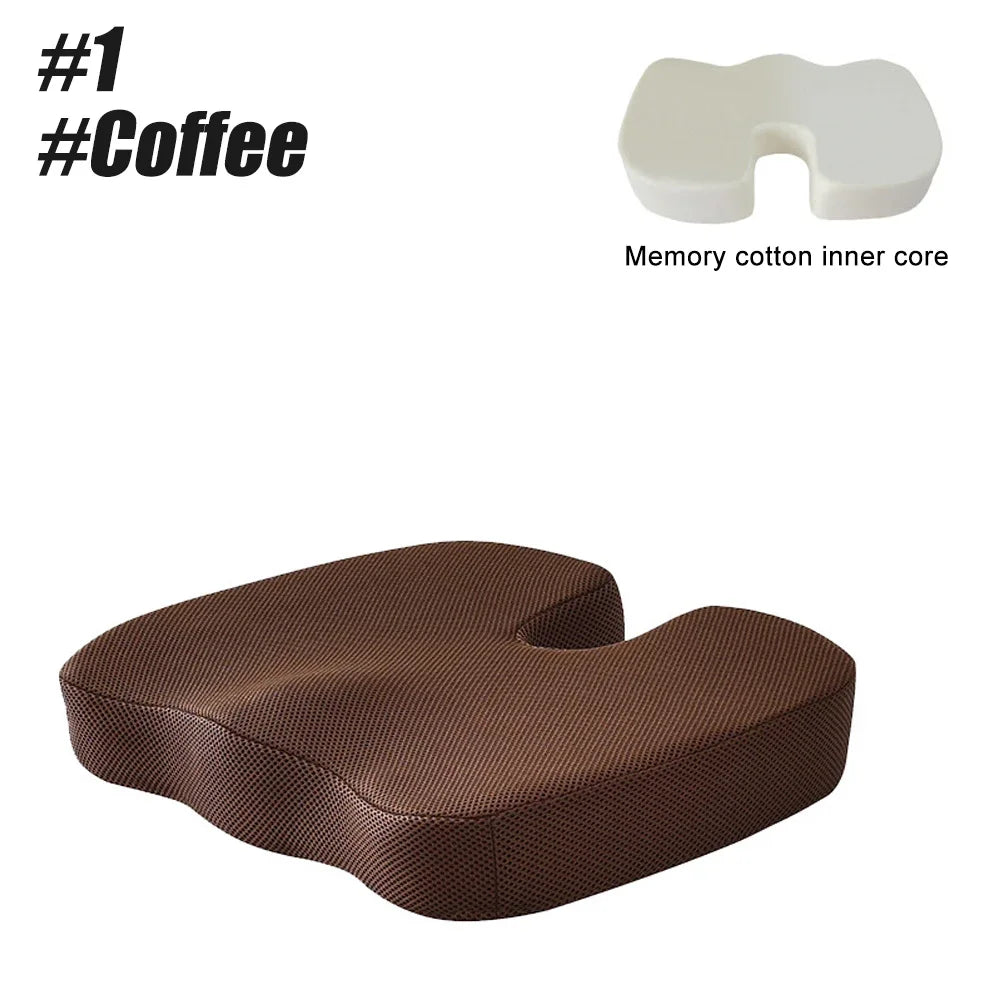
Office chair cushion memory foam — discover lasting ergonomic comfort.
Why Choosing the Right Seat Cushion Matters
The wrong seat cushion can increase discomfort during long sitting sessions. A quality cushion helps distribute body weight, reduce pressure concentration, and improve overall sitting comfort.
The key question is whether you need the contouring support of memory foam or the cooling airflow of a gel cushion. Understanding how each material behaves makes choosing easier.
How Gel and Memory Foam Seat Cushions Actually Work
How Memory Foam Responds to Body Weight
Memory foam is a viscoelastic material that softens under body heat and pressure. As it compresses, it spreads body weight over a larger surface area, reducing concentrated pressure on the tailbone, hips, and thighs.
This contouring ability is why memory foam is commonly used in ergonomic seat cushions designed for long periods of sitting.
How Gel Cushions Distribute Pressure
Gel cushions use flexible gel cells or honeycomb structures that deform instantly when weight is applied. Instead of slowly molding like foam, gel redistributes pressure by allowing the material to move and flex beneath the body.
Why Cooling Performance Is Different
Gel cushions generally stay cooler because their open structures improve airflow and help reduce heat buildup. Traditional memory foam can retain warmth unless it includes ventilation channels or cooling layers.
Material Science Explained
- Memory foam excels at contouring and pressure relief.
- Gel excels at airflow and temperature control.
- Hybrid cushions combine both technologies.
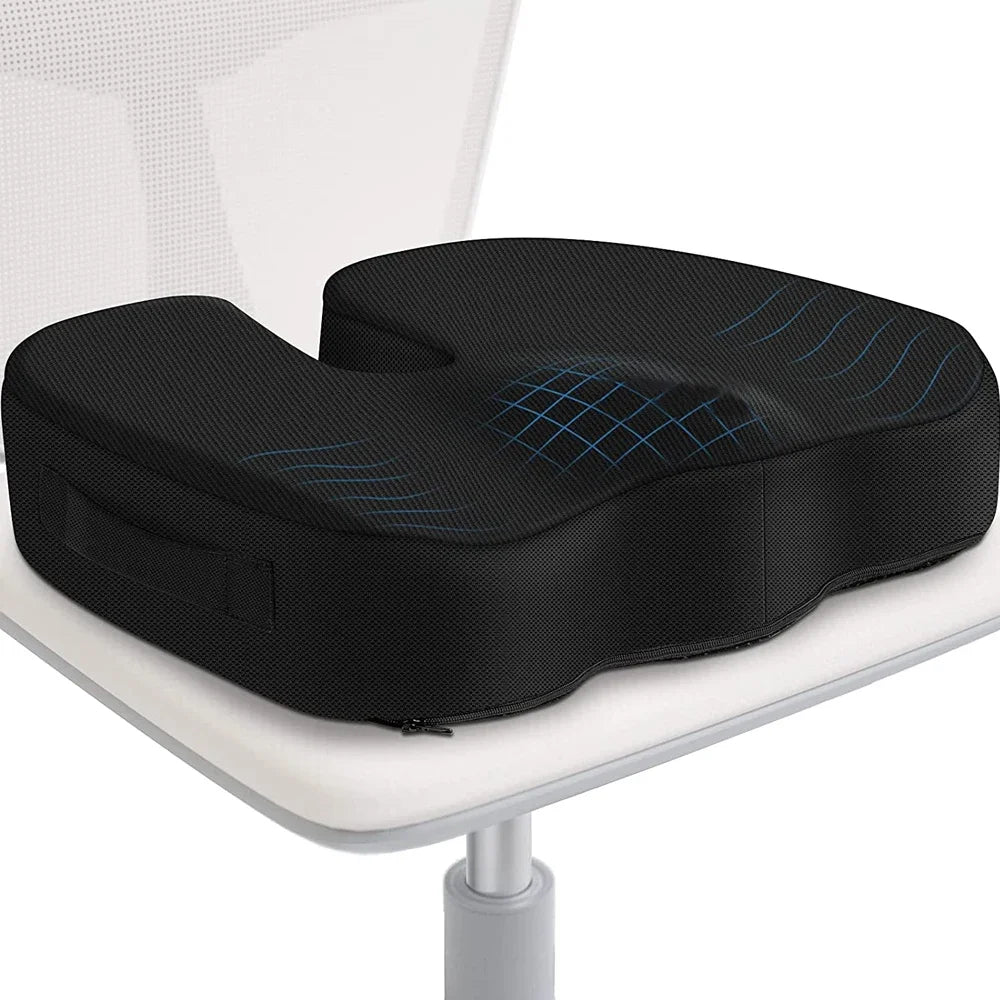
Gel memory foam seat cushion vs memory foam — side-by-side comfort.
Gel vs Memory Foam Seat Cushion Comparison
Comfort
Memory foam provides a softer, body-contouring feel, while gel cushions usually feel firmer and more responsive.
Pressure Relief
Memory foam generally performs better for pressure relief because it adapts around the hips and tailbone during extended sitting.
Heat Retention
Gel cushions outperform traditional foam in hot climates because their structure allows better airflow and heat dissipation.
Weight Distribution
Memory foam spreads pressure by molding around the body. Gel cushions distribute weight through flexible cells that respond quickly.
Responsiveness
Gel rebounds immediately after pressure is removed, while memory foam slowly returns to its original shape.
Durability
High-density memory foam can last several years, but lower-quality foam may soften faster. Gel materials usually resist permanent deformation better.
Shape Retention
Gel cushions typically maintain their structure longer, while memory foam quality depends heavily on foam density.
Maintenance
Most cushions use removable covers. Gel inserts are easier to wipe clean, while foam should be protected from moisture.
Portability
Gel cushions are often lighter and easier to move between office chairs, cars, and travel seats.
Price and Value
Memory foam often provides better value for users seeking pressure relief, while gel can be worth the extra cost for cooling benefits.
Gel Seat Cushion vs Memory Foam for Different Users
Office Workers
Memory foam is usually better for all-day desk work because it provides consistent contouring support.
Long-Distance Drivers
Drivers in warm environments often prefer gel cushions for cooling, while those needing deeper support may prefer memory foam.
Wheelchair Users
Extended sitting requires strong pressure redistribution. High-quality memory foam or hybrid cushions are commonly preferred.
Gamers
Hybrid cushions can balance cooling and support during long gaming sessions.
Pregnancy
Memory foam may help reduce pressure around the pelvis, while gel provides a cooler sitting experience.
Tailbone Pain
Memory foam cushions with ergonomic designs or coccyx cutouts often provide better pressure relief.
Sciatica
Memory foam usually offers better contouring around the hips and lower body.
Heavy Users
Higher-density foam or reinforced hybrid cushions usually maintain support better than low-density options.
Travel
Gel cushions are often preferred for flights, trains, and long trips because they remain cooler.
Long-Term Comfort, Lifespan, and Maintenance
Expected Lifespan
Quality memory foam cushions typically last two to five years. Well-made gel cushions can also maintain performance for several years with proper care.
Compression Resistance
Repeated compression can reduce foam resilience over time. Gel materials are less likely to develop permanent indentations but may lose flexibility in extreme conditions.
Cleaning Requirements
Choose cushions with removable, washable covers. Clean gel inserts with a damp cloth and avoid soaking memory foam.
When to Replace Your Cushion
- Visible flattening
- Reduced pressure relief
- Persistent discomfort
- Damaged cover or cushion core
Hybrid Gel + Memory Foam Cushions
Hybrid cushions combine a memory foam base with a gel layer to provide both contouring support and improved cooling.
Who Should Buy One
- People sitting longer than six hours daily
- Office professionals
- Frequent drivers
- Users wanting balanced comfort
When Hybrid Cushions Are Worth the Extra Cost
Hybrid designs are worth considering when you experience both pressure discomfort and heat buildup during long sitting periods.
Which Seat Cushion Should You Choose?
Instead of asking which material is better, choose the cushion that matches your daily needs.
Choose Memory Foam If You...
- Need maximum pressure relief
- Sit for many hours daily
- Want softer contouring support
- Experience tailbone discomfort
Choose Gel If You...
- Get hot easily
- Drive frequently
- Need more airflow
- Prefer firmer support
Choose Hybrid If You...
- Want cooling and pressure relief together
- Need all-day ergonomic comfort
- Prefer balanced performance

Office chair cushion ergonomic design — perfect for back pain relief.
Frequently Asked Questions
Is gel or memory foam better for sitting all day?
Memory foam is generally better for prolonged sitting because it contours to the body and reduces pressure points, while gel helps prevent overheating.
Which cushion stays coolest?
Gel cushions usually stay cooler because they provide better airflow and heat dissipation.
Which lasts longer?
Gel cushions often maintain their structure longer, while high-density memory foam can provide durable support for years.
Which is better for office chairs?
Memory foam is often preferred for office chairs because it provides long-term ergonomic support.
Which works best in cars?
Gel cushions are popular for cars because they remain cooler during long drives, especially in warm weather.
Are hybrid cushions worth buying?
Yes. Hybrid cushions are a strong choice for users who want both cooling and pressure relief.
Can memory foam become too soft?
Lower-density memory foam may soften over time. Higher-density foam usually keeps its support longer.
Are gel cushions good for heavier people?
Gel cushions can work well, but reinforced designs and high-density memory foam hybrids often provide stronger long-term support.
Pillar Article: Best Memory Foam Seat Cushion for Chair: 2025 Buyer’s Comparison
Other Related Articles:
- Cushion for Desk Chair Comparisons: Stop Guessing, Start Sitting Better
- Tailbone Coccyx Cushion Reviews: Which One Actually Helps Pain Fast?
- Memory Foam Seat Cushion Reviews: Stop Buying Before You Read This
- Car Memory Foam Seat Cushion Showdown: Comfort You Didn’t Expect
Explore More: