

Period Cramps Relief at Home: What Works Fast
Looking for period cramps relief at home? For typical menstrual cramps, heat therapy and appropriately used nonsteroidal anti-inflammatory drugs (NSAIDs) are among the most established options. Gentle movement, massage, relaxation, and TENS may also help. The key is knowing what to try first, how quickly to expect relief, and when pain is strong or unusual enough to deserve medical evaluation.
What Causes Period Cramps?
Period cramps, medically called dysmenorrhea, happen when the uterus contracts during menstruation. These contractions help the uterus shed its lining, but chemical messengers called prostaglandins can increase the intensity of uterine contractions and contribute to cramping pain.
How Prostaglandins Trigger Uterine Contractions
Prostaglandins are involved in the inflammatory and contraction processes surrounding menstruation. Higher prostaglandin activity is associated with stronger menstrual cramping, which helps explain why pain can be particularly noticeable around the beginning of a period. NSAIDs work differently from heat: they reduce prostaglandin production, while heat is primarily used as a non-drug comfort measure.
Primary Dysmenorrhea vs. Pain From an Underlying Condition
Primary dysmenorrhea refers to menstrual pain without another underlying pelvic condition. However, increasingly painful periods can sometimes be associated with conditions such as endometriosis, adenomyosis, fibroids, or pelvic inflammatory disease. Pain that is new, progressively worse, unusually severe, or disruptive to normal activities should not automatically be assumed to be ordinary period cramps.
Period Cramps Relief at Home: What Works Fastest?
There is no single fastest remedy for everyone, but a practical at-home priority list starts with methods that are accessible, evidence-supported, and appropriate for your situation.
- Heat therapy: Apply comfortable warmth to the lower abdomen or lower back using a heating pad, warm bath, or heated belt.
- NSAIDs such as ibuprofen or naproxen: When medically appropriate, these medicines can reduce prostaglandin production and are among the better-supported drug treatments for primary menstrual pain.
- Gentle movement: Walking, light stretching, or gentle yoga may help some people manage discomfort.
- TENS therapy: TENS uses mild electrical stimulation and may provide another non-drug option for some people.
The best approach is often a combination of compatible strategies rather than relying on one remedy. For example, someone might use comfortable heat while resting, then take a short walk once the worst discomfort eases.
1. Heat Therapy
Heat is one of the simplest ways to address lower abdominal discomfort at home. A warm bath, heating pad, or heated abdominal belt can provide localized warmth when cramps are making it difficult to relax.
2. NSAIDs Such as Ibuprofen or Naproxen
NSAIDs can be particularly useful because they target prostaglandin production rather than simply masking discomfort. Research reviewed by Cochrane has found NSAIDs to be effective for primary dysmenorrhea, although side effects and individual safety considerations matter. Follow the specific product label or advice from your healthcare professional rather than assuming a dose is appropriate for you.
3. Gentle Movement and Stretching
When cramps make you want to stay completely still, a few minutes of gentle walking, stretching, or yoga may be worth trying. Exercise evidence for dysmenorrhea is less definitive than the evidence for NSAIDs, so think of movement as a supportive strategy rather than a guaranteed treatment.
4. TENS Therapy
TENS, or transcutaneous electrical nerve stimulation, uses electrodes placed on the skin to deliver mild electrical impulses. Evidence suggests that high-frequency TENS may help some people with primary dysmenorrhea, although the quality and amount of evidence vary. TENS should not be confused with ordinary vibration massage.
The Relief Timeline: What to Do Now, Within 1 Hour, and Over Time
A time-based plan can be more useful than a long list of remedies. Start with simple measures you can use immediately, then reassess rather than trying everything at once.
Right Now: The First 10–15 Minutes
- Apply comfortable warmth to your lower abdomen or lower back.
- Find a position that reduces abdominal tension, such as lying on your side with your knees comfortably bent.
- Try slow breathing to reduce unnecessary muscle tension.
- Drink some water if you have not had much to drink.
- Try gentle movement if sitting or lying still makes you feel more uncomfortable.
Within the First Hour
If medication is appropriate for you, follow the label instructions for an NSAID such as ibuprofen or naproxen. NSAIDs generally work by reducing prostaglandin production, so they address an important biological contributor to menstrual cramping.
Do not assume that taking more medication will provide proportionally more relief. Follow the labeled dose and timing, check active ingredients in combination products, and ask a pharmacist or clinician if you are uncertain about interactions or whether an NSAID is suitable for you.
For the Rest of the Day
Think in terms of maintaining comfort rather than waiting for pain to become overwhelming. You might alternate periods of comfortable heat with short movement breaks, stay hydrated, eat normally, and use medication only according to its directions.
If you are working or studying, portable comfort can also make heat easier to incorporate into your routine. The Body Care and Health Devices collection provides a broader look at personal body-care devices.
For Recurring Periods
If cramps happen every cycle, track when they begin, how severe they become, how long they last, what treatments you use, and whether they interfere with work, school, exercise, sleep, or relationships. A symptom record can help you identify patterns and give a healthcare professional more useful information if evaluation becomes necessary.
How to Use Heat for Menstrual Cramps Safely
Heat therapy is convenient, but hotter does not necessarily mean better. Use a comfortable temperature, follow the device manufacturer's instructions, and pay attention to your skin. Avoid prolonged unattended use, and do not sleep with an active heating device unless it is specifically designed and approved for safe overnight use.
Heating Pad vs. Heated Belt vs. Warm Bath
| Option | Best For | Main Advantage | Key Consideration |
| Heating pad | Home use and resting | Simple localized warmth | Usually needs a power source or cord unless rechargeable |
| Heated belt | Hands-free abdominal warmth | Targeted and wearable | Fit, temperature control, battery, and timer matter |
| Warm bath | Whole-body relaxation | Combines warmth with relaxation | Less portable and harder to use while working |
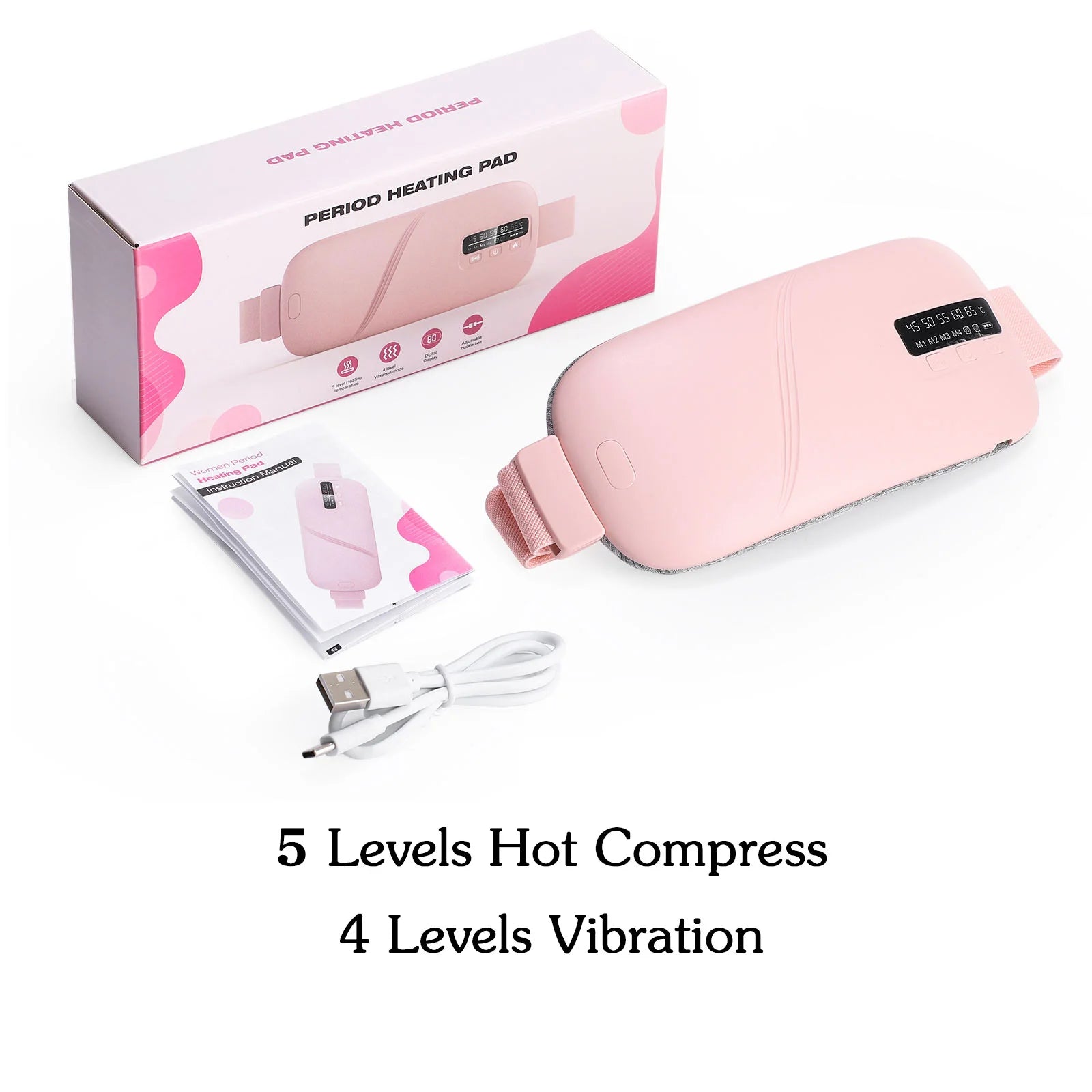
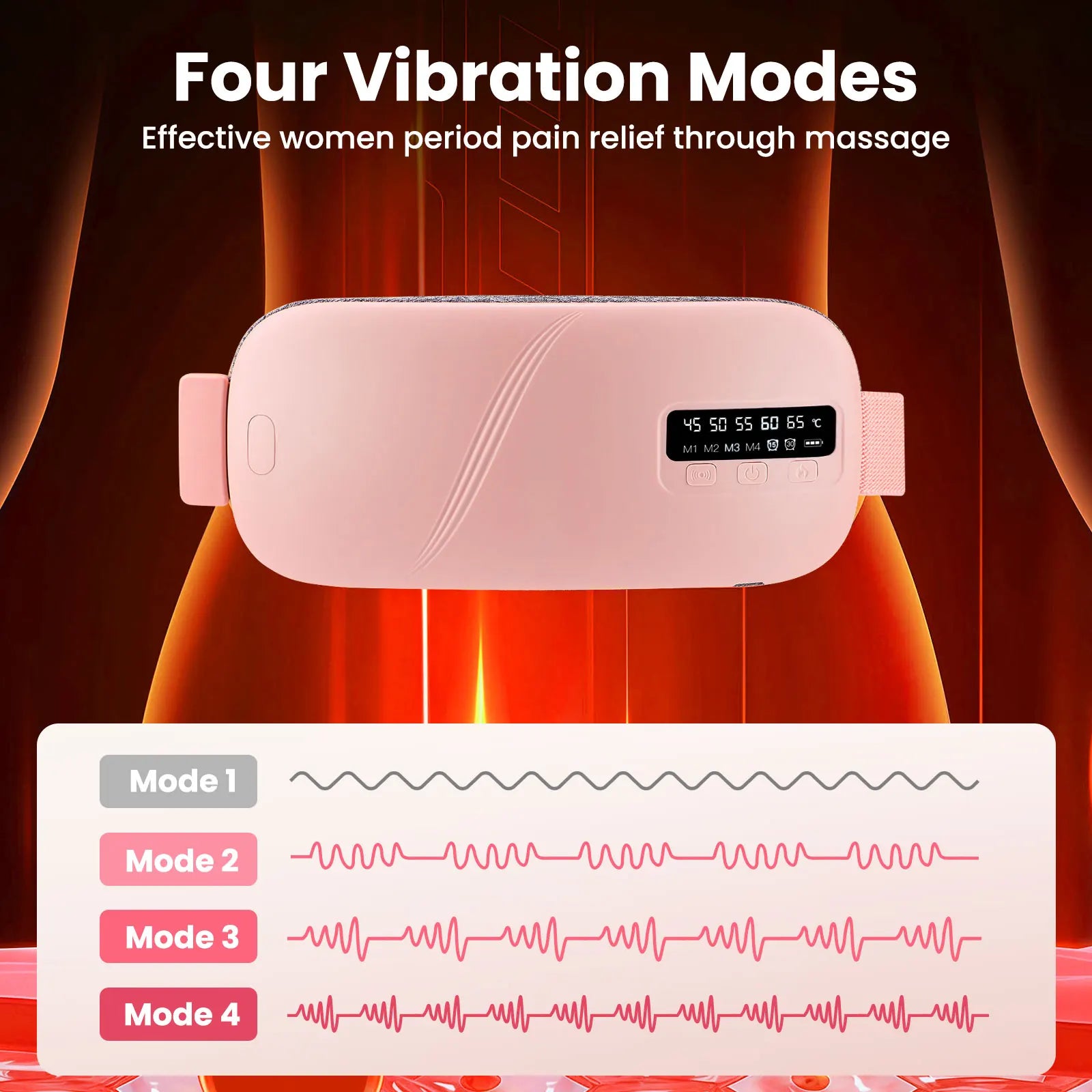
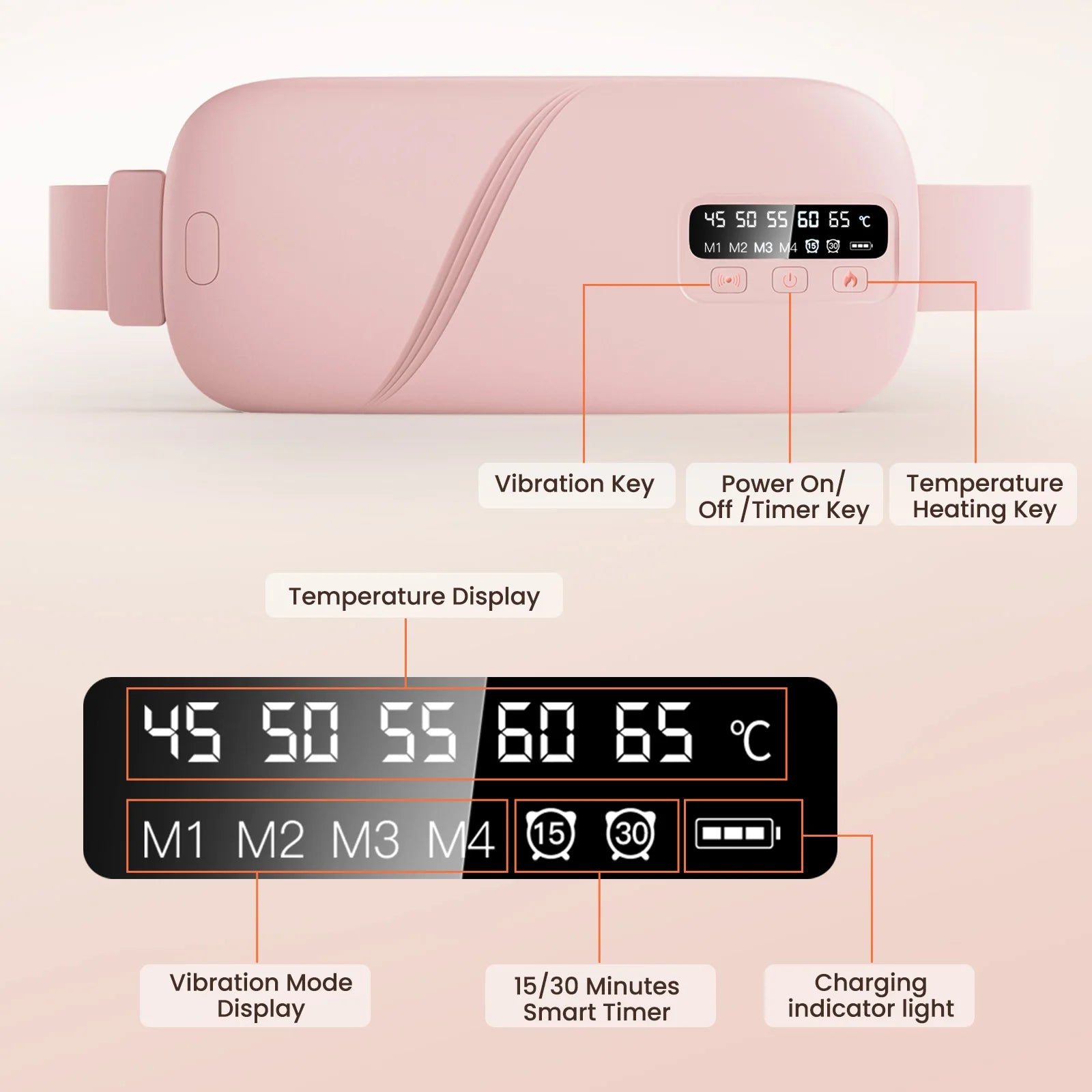
For people who want targeted warmth without remaining beside an outlet, a rechargeable heated belt can be a practical category to consider. The Menstrual Heating Pad for Period Relief & Soothing Heat Belt combines adjustable heat, selectable vibration, a 15- or 30-minute automatic timer, and a rechargeable 1800mAh battery for cordless use around the abdomen and waist.
How Long Should You Use a Heating Pad?
There is not one universal heating-pad duration that applies to every device. Follow the manufacturer's instructions for the specific product. Avoid excessive heat, prolonged direct exposure, and unattended use. If your skin becomes excessively red, painful, numb, or irritated, stop using the device and allow the area to cool.
A device with an automatic timer can add another layer of convenience because the session ends without requiring you to remember to switch it off. For any heating product, however, the timer should not replace following the manufacturer's safety instructions.
When Heat May Not Be Enough
Heat can be useful for comfort, but it does not diagnose or treat every cause of pelvic pain. If cramps remain severe despite reasonable home measures, repeatedly prevent normal activities, or become progressively worse, move beyond self-care and discuss the symptoms with a healthcare professional.
Ibuprofen, Naproxen, and Other NSAIDs for Period Pain
NSAIDs are among the most established medication options for primary menstrual cramps because they reduce prostaglandin production. They are not appropriate for everyone, however, and the correct product and dose depend on individual circumstances.
When Should You Take Ibuprofen for Period Cramps?
For people who can safely take ibuprofen, NSAIDs often work best when started at the first sign of menstrual pain. Some people with predictable cycles may be advised by a clinician to begin around the expected start of symptoms. Always follow the specific medication label or individualized medical advice for dose, frequency, and maximum daily use.
Ibuprofen vs. Naproxen: What Is the Difference?
Both are NSAIDs and both can reduce prostaglandin production. Their dosing schedules and duration of action differ, so one may fit a particular person's routine better than another. Evidence does not establish one NSAID as universally safest or most effective for every person with menstrual cramps.
NSAID Safety: Who Should Be Cautious?
Talk with a healthcare professional or pharmacist before using an NSAID if you have a history of stomach ulcers or gastrointestinal bleeding, kidney disease, certain cardiovascular conditions, an NSAID allergy, or other medication-related concerns. Blood thinners and other medicines can also create interaction risks. Pregnancy considerations are another reason to seek individualized advice rather than self-treating automatically.
Avoid Doubling Up on NSAIDs
Do not routinely combine ibuprofen and naproxen because they are both NSAIDs. Taking multiple medicines from the same class can increase the risk of adverse effects without necessarily improving relief. Check labels carefully and ask a pharmacist if you are unsure whether two products contain overlapping ingredients.
What Else Can Help Period Cramps at Home?
Gentle Exercise and Stretching
Walking, light cycling, gentle yoga, and stretching are reasonable supportive options when they feel comfortable. Research on exercise for dysmenorrhea is encouraging in some areas but remains less conclusive than the evidence for NSAIDs. Do not force exercise through severe pain.
Warm Baths, Massage, and Relaxation
A warm bath can combine heat with relaxation. Gentle abdominal or lower-back massage may also help some people manage muscle tension and the perception of pain. These approaches are best viewed as comfort measures that can complement, rather than necessarily replace, evidence-supported treatments.
Hydration, Sleep, and Everyday Habits
Hydration, adequate sleep, regular physical activity, and a consistent daily routine can support overall well-being during menstruation. They should not be presented as instant cures for significant dysmenorrhea, but they can make a broader period-care routine easier to maintain.
For additional self-care ideas beyond menstrual comfort devices, the Lifestyle collection can be a useful place to explore everyday comfort and personal-care products.
Supplements and Herbal Remedies: What the Evidence Says
Supplements are frequently promoted for menstrual cramps, but the evidence is much less consistent than marketing language often suggests. Reviews have found limited or low-quality evidence for potential benefits from several supplements and herbal products, without strong evidence establishing a universally effective or safe supplement regimen.
Do not assume that “natural” means risk-free. Supplements can interact with medicines, vary in formulation, and may not be appropriate during pregnancy or with certain health conditions. Discuss recurring supplement use with a qualified healthcare professional when there is any uncertainty.
Period Cramp Relief by Pain Level: A Simple Decision Guide
Mild Cramps: Pain Is Noticeable but Manageable
If discomfort is present but you can continue your normal activities, start with simple measures: comfortable heat, gentle movement, rest, hydration, and relaxation. Reassess after giving the strategy some time to work.
Moderate Cramps: Pain Interferes With Normal Activities
When cramps interfere with work, school, errands, or exercise, consider a more deliberate combination of evidence-supported approaches. If you can safely take an NSAID, follow its label directions, while heat and gentle movement can provide non-drug support.
Severe Cramps: Pain Stops You From Functioning
Severe pain that repeatedly prevents normal activities deserves more attention than simply increasing home remedies. Home comfort measures can still be used while appropriate, but recurring disabling pain is a reason to discuss the pattern with a healthcare professional.
Cramps That Suddenly Change or Keep Getting Worse
A change in your usual period-pain pattern matters. New severe pain, increasingly painful periods, unusual bleeding, pain between periods, or pain that continues despite appropriate self-care can point to an underlying issue and should be evaluated.
Real-World Ways to Manage Period Pain at Home
If You Have Cramps During a Workday
Prioritize options that do not require you to stop everything. A rechargeable heated belt can provide cordless warmth while you read, work at a desk, or take a break. A short walking break, water, comfortable clothing, and appropriately used medication can also fit into a workday.
A wearable heat device should still be used according to its instructions. Check the temperature setting, timer, battery status, and fit rather than treating portability as permission for unlimited use.
If Cramps Start at School or While Traveling
Preparation matters. If you know your period is approaching, pack any medication you can safely use, menstrual products, water, and a portable comfort option. A rechargeable device can be more convenient than a plug-in heating pad when access to an outlet is limited.
The Beauty & Self-Care Blog offers additional educational content that can complement a broader personal-care routine.
If Cramps Are Keeping You Awake at Night
Try comfortable heat before bed, gentle stretching, relaxation, and a position that reduces abdominal tension. If using a heating device, follow its instructions and avoid sleeping with an active device unless the manufacturer specifically states that overnight use is safe.
When Period Cramps Should Be Evaluated by a Doctor
Signs That Your Period Pain May Need Medical Evaluation
Consider medical evaluation if your periods become significantly more painful, heavier, or irregular; pain prevents normal daily activities; you experience pain during sex or bowel movements; you have bleeding between periods; or your symptoms persist despite appropriate home treatment.
Conditions including endometriosis, adenomyosis, fibroids, and pelvic inflammatory disease can contribute to painful periods. Identifying an underlying cause can make targeted treatment possible rather than requiring repeated self-treatment every cycle.
When to Seek Urgent Medical Care
Seek prompt medical assessment for sudden or severe pelvic pain, fainting, very heavy bleeding, fever, or severe pain when pregnancy is possible. These symptoms can require evaluation beyond routine menstrual-cramp management.
Why Persistent Menstrual Pain Deserves Attention
Period pain should not automatically be dismissed as something you simply have to tolerate. If pain consistently affects sleep, work, school, relationships, exercise, or everyday activities, tell a healthcare professional. A symptom diary showing timing, severity, bleeding changes, and what treatments help can make that conversation more productive.
The Evidence Hierarchy: Which Period Cramp Remedies Are Worth Trying?
Better-Supported Options
NSAIDs and heat therapy belong near the top of a practical home-care framework for typical primary menstrual cramps. NSAIDs have evidence for reducing dysmenorrhea, while heat is a widely used non-drug comfort approach. Neither should be treated as universally appropriate for every person.
Potentially Helpful Supportive Options
Gentle exercise, massage, relaxation, warm baths, and TENS may help some people. TENS has evidence suggesting potential benefit, while evidence for exercise and behavioral approaches is more variable. These methods can be useful additions when they feel comfortable and fit your circumstances.
Approaches With Limited or Mixed Evidence
Be more cautious with supplement regimens, herbal remedies, restrictive diets, and anecdotal “hacks.” Some individual studies suggest possible benefits, but limited evidence does not establish that a remedy is effective, safe, or appropriate for everyone.
| Approach | Evidence Position | Best Use |
| NSAIDs | Better supported | Reducing prostaglandin-related menstrual pain when medically appropriate |
| Heat therapy | Established comfort strategy | Targeted lower abdominal or back warmth |
| TENS | Potentially helpful | Non-drug pain-management support |
| Gentle exercise | Supportive, evidence varies | Regular movement and symptom management |
| Massage and relaxation | Supportive | Muscle tension and general comfort |
| Supplements and herbs | Limited or mixed | Discuss with a healthcare professional before relying on them |
How to Choose a Portable Heat Option for Period Cramps
If heat is part of your personal period-care routine, the most useful comparison is not simply “which device gets hottest?” Consider temperature control, automatic shutoff, portability, skin comfort, battery capacity, charging method, fit, and intended duration of use.
A rechargeable menstrual heating belt can be particularly practical when you want targeted abdominal warmth away from an electrical outlet. The rechargeable menstrual heating belt described here uses adjustable warmth, selectable vibration intensity, a 15- or 30-minute timer, USB Type-C charging, and an 1800mAh rechargeable battery. Its stated use is around the abdomen and waist, making it a comfort-oriented option for home, work, reading, or travel.
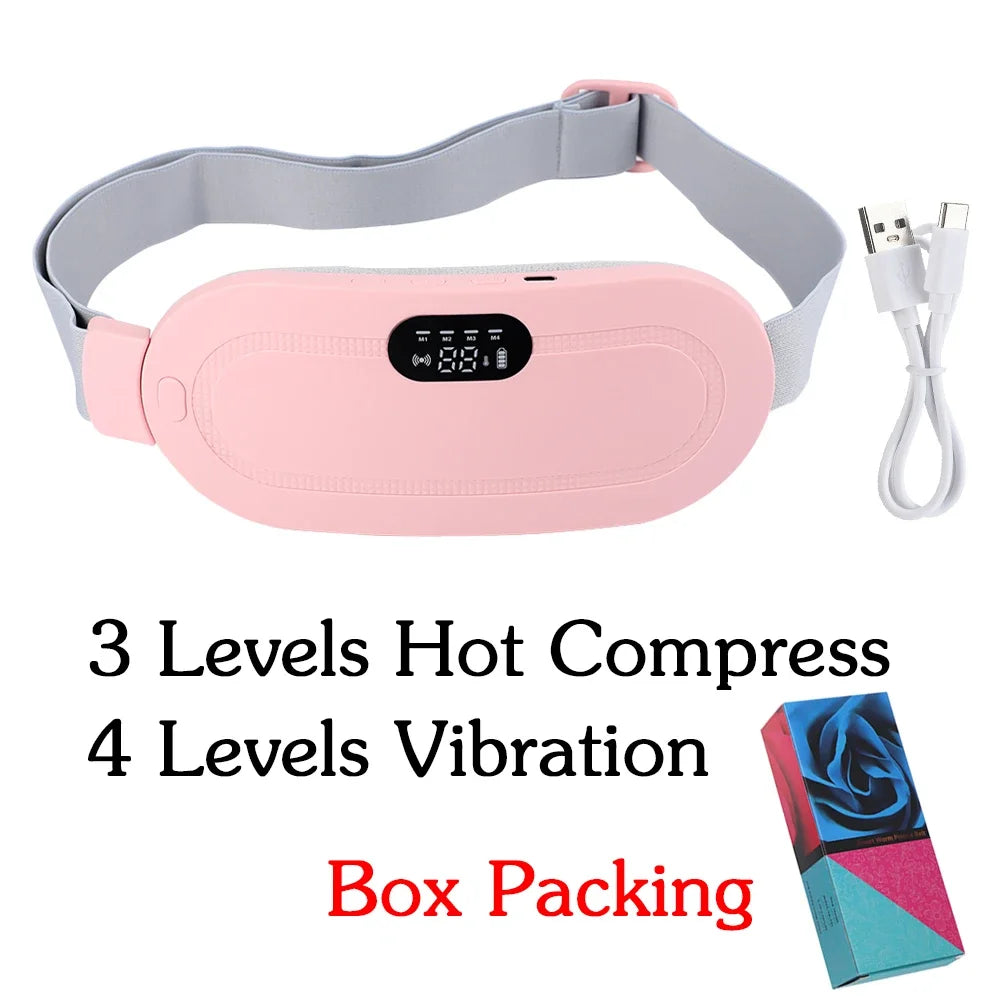
For people comparing a heating pad versus a heated belt, the primary trade-off is usually flexibility versus wearability. A conventional pad can be convenient when resting at home, while a cordless belt can make targeted warmth easier to maintain while sitting, reading, working, or traveling.
The Bottom Line: Build a Repeatable Relief Plan
The most useful approach to period cramps relief at home is not an endless list of remedies. Start with the options that have the strongest practical support: comfortable heat and, when medically appropriate, an NSAID used exactly as directed. Add gentle movement, relaxation, massage, or TENS when useful. Then pay attention to the pattern of your pain rather than repeatedly treating increasingly severe symptoms without evaluation.
If portable warmth fits your routine, a cordless heating belt can be a convenient comfort tool when you want targeted heat without staying beside an outlet. The Menstrual Heating Pad for Period Relief & Soothing Heat Belt is one example of a rechargeable design that combines adjustable heat, vibration, and timed sessions. The goal is not to promise a cure, but to choose a comfort option that matches how and where you actually experience menstrual discomfort.
For more device-focused self-care resources, you can also explore the Body & Face Blog alongside your personal period-care routine. And if cramps become severe, change significantly, or repeatedly interfere with your life, prioritize medical evaluation over adding more home remedies.
Pillar Article: Best Heated Abdominal Belt for Women: Top Picks for Comfort













