

Personal Fan vs Room Fan: Which Is Right for You?
A personal fan is designed to cool you with targeted airflow, while a room fan is designed to move air across a larger indoor space. If you are deciding between the two, the right choice depends less on which fan is “stronger” and more on where you need cooling, how much area you want to cover, whether you need portability, and how you plan to power the fan.
This guide compares personal fan vs room fan performance across airflow coverage, portability, power source, battery runtime, noise, cooling effectiveness, and room size so you can choose the right option for your everyday cooling needs.
Personal Fan vs Room Fan: Quick Comparison
Personal Fan vs Room Fan Comparison Matrix
| Factor | Personal Fan | Room Fan |
| Airflow coverage | Targeted, close-range airflow | Broader airflow and circulation |
| Portability | Excellent; compact and easy to move | Limited; larger and usually stationary |
| Power source | Often battery or USB powered | Usually wall-powered electric |
| Battery runtime | Important when choosing portable models | Usually not applicable to corded models |
| Noise | Perceived more closely because it operates near you | Can be noticeable across a room depending on speed and design |
| Cooling goal | Personal comfort and focused airflow | Room circulation and broader airflow |
| Ideal location | Desk, commute, travel, outdoors, bedside | Bedroom, living room, office, larger indoor spaces |
| Best for | One person who needs cooling anywhere | People who need wider air movement in one space |
The Short Answer
Choose a personal fan when you want targeted cooling, portability, flexible placement, or airflow for one person. Choose a room fan when you need broader airflow coverage, room circulation, or cooling for multiple people in a larger indoor space.
For travel, commuting, outdoor use, and desk cooling, a compact personal fan generally has the more practical design. For bedrooms and living rooms, a room fan is usually better suited to moving air throughout the space.
What Is a Personal Fan?
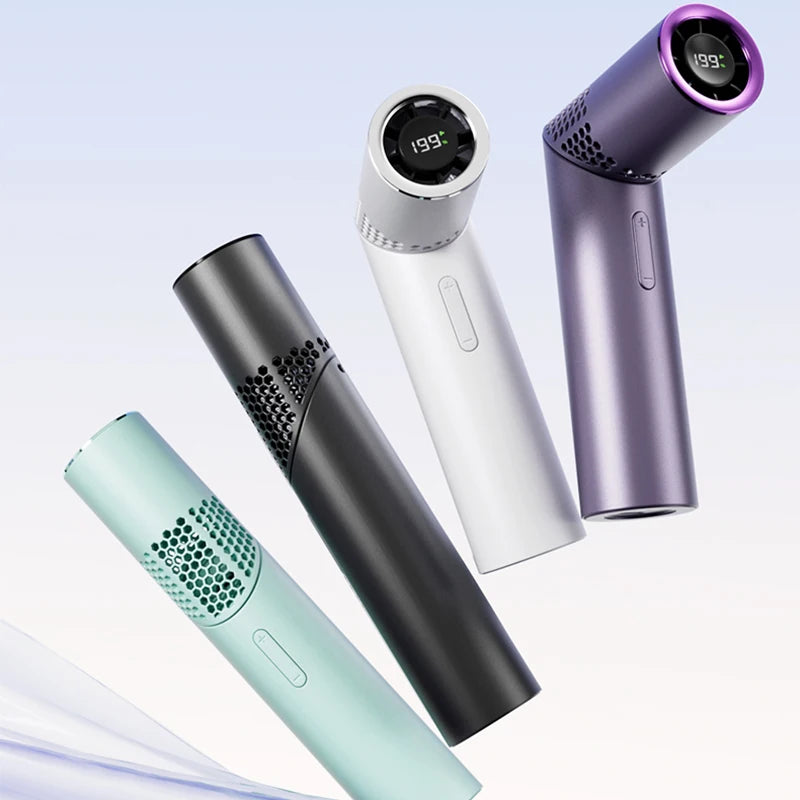
A personal fan is a compact electric fan designed to direct airflow toward an individual rather than circulate air throughout an entire room. Personal fans can include handheld fans, small desktop fans, compact folding fans, and other portable designs.
Handheld Fans
Handheld fans are designed to stay close to the user. You can hold one while commuting, walking outdoors, waiting in line, traveling, or relaxing at home. Their biggest advantage is that the airflow follows you instead of requiring you to remain near a stationary fan.
Because handheld fans focus airflow over a relatively small area, they are best understood as personal cooling devices, not replacements for a whole-room circulation fan.
Desktop and Compact Personal Fans
Some personal fans can also be positioned on a desk, bedside table, counter, or workstation. This makes them useful when you want hands-free airflow while working or studying without occupying the floor space required by a larger room fan.
A compact foldable fan can be particularly useful when you want more than one placement option. A design that can be held, positioned nearby, or adapted for neck-hanging use gives you more flexibility than a conventional stationary fan.
Best Uses for a Personal Fan
- Home office and desk cooling
- Commuting and public transportation
- Travel and summer vacations
- Outdoor events and waiting areas
- Walking and everyday errands
- Close-range cooling while relaxing
- Small personal spaces where only one person needs airflow
What Is a Room Fan?
A room fan is a larger electric fan designed to move air across a broader area. Depending on the design, it may use oscillation, directional airflow, a larger blade assembly, or a wider fan head to circulate air throughout a bedroom, living room, office, or other indoor space.

How Room Fans Move Air
Room fans prioritize coverage rather than portability. Oscillation can distribute airflow across a wider section of the room, while adjustable positioning allows users to direct air toward particular areas.
A room fan does not necessarily lower the actual air temperature. Instead, moving air can improve perceived comfort by increasing airflow over the skin and helping heat dissipate from the body. The same basic principle applies to personal fans, but a room fan is built to serve a larger area.
Best Uses for a Room Fan
- Bedrooms
- Living rooms
- Larger home offices
- Shared indoor spaces
- Situations involving multiple people
- Broader air circulation
Personal Fan vs Room Fan: Key Differences
Airflow Coverage
The biggest difference between a personal fan and a room fan is airflow coverage.
A personal fan delivers focused personal airflow. It is effective when the person using it is relatively close to the fan. This makes it useful when you want to cool yourself without moving a large volume of air throughout the entire room.
A room fan is designed for broader circulation. Its larger physical footprint and airflow pattern make it more appropriate when several people need airflow or when you want air movement across a larger indoor area.
Portability and Size
Portability is where personal fans have a major advantage. A compact handheld or foldable fan can fit into a bag, sit on a desk, or travel with you between locations.
Room fans generally have a larger footprint and are less convenient to transport. Even relatively compact room models are primarily designed to remain in one location.
If your main problem is a fan being too bulky for travel, a personal fan is usually the more practical category.
Power Source
Personal fans may use rechargeable batteries, USB power, replaceable batteries, or another compact electric power arrangement. The exact configuration varies by model, so buyers should check the manufacturer's specifications rather than assuming every portable fan is rechargeable.
Many room fans use a standard wall outlet because they are intended for continuous indoor operation. This can make them convenient for extended use but less practical when you are away from an electrical outlet.
For travel, power-source flexibility can be as important as airflow performance.
Battery Life and Runtime
Battery runtime is primarily a concern with cordless personal fans. Higher fan speeds generally consume more power, so actual operating time can vary depending on how the fan is used.
If you are choosing a rechargeable portable fan for commuting or travel, look for clearly stated battery capacity, charging method, and estimated runtime. Do not assume that two fans with similar sizes will provide identical battery performance.
The portable handheld fan discussed in this guide is described as rechargeable-friendly and designed for convenient personal cooling, but the supplied product specifications do not provide a specific battery capacity or runtime. That means it is better to evaluate it for portability and flexible use rather than claim a precise operating time that has not been specified.
Fan Noise
Noise depends on motor design, fan speed, blade configuration, distance from the listener, and the environment. A personal fan may seem louder simply because it is positioned much closer to your face or ears.
A room fan can also produce noticeable sound, particularly at higher speeds, but its greater distance from the user can change how that noise is perceived.
If you need a fan for sleeping, studying, recording audio, or quiet office work, noise level should be considered separately from airflow strength.
Cooling Effectiveness
Fans generally improve perceived cooling by moving air across the skin. They do not automatically cool the air itself in the same way an air conditioner does.
A personal fan can therefore be highly effective for an individual who needs immediate airflow, even though it is not designed to cool an entire room. A room fan makes more sense when the goal is broader air movement and circulation.

Room Size and Coverage
Room size should influence the decision. If you are sitting at a desk in a large office and only need airflow around yourself, a personal fan can be sufficient even though the room itself is large.
If the objective is to circulate air throughout that office, however, a room fan is more appropriate.
The key question is not simply, “How big is the room?” Ask instead: “How much of the room needs meaningful airflow?”
Is a Personal Fan Powerful Enough to Cool a Room?
Generally, a personal fan should not be treated as a substitute for a room fan when the goal is broad whole-room airflow. Its primary purpose is to direct airflow toward a person at close range.
Personal Cooling vs Whole-Room Cooling
A personal fan concentrates airflow where it provides the most immediate benefit: around the user. A room fan distributes airflow over a wider area.
This distinction explains why a small fan can feel very effective while sitting directly in front of it but have limited impact on people across the room.
When a Personal Fan Can Be Enough
A personal fan can be enough when only one person needs cooling, particularly at a desk, bedside table, travel seat, waiting area, or other small personal space.
It can also be useful when portability matters more than room-wide circulation. If you move between rooms or spend significant time outdoors, carrying a compact fan may be more useful than relying on a stationary room fan.
When You Need a Room Fan
A room fan is the better choice when multiple people need airflow, when you want air movement across a larger indoor space, or when the fan will remain in one location for extended periods.
For a bedroom or living room where the goal is broad circulation, a room fan generally has a more suitable design.
Which Fan Is Best for Different Situations?
Best for a Desk or Home Office
A compact desktop or personal fan is usually the better choice if you work alone and want airflow directed toward your body. It takes up less space and can provide personal cooling without requiring a larger floor-standing appliance.
For additional everyday comfort options, you can also explore the Lifestyle collection for other practical products designed around daily use.
Best for a Bedroom
A room fan is usually preferable when you want broader airflow throughout a bedroom. It can be positioned to move air across the sleeping area rather than focusing airflow on one small point.
A personal fan can still make sense for one sleeper who wants targeted airflow without running a larger fan across the entire room.
Best for Travel
Travel is one of the strongest use cases for a personal fan. A foldable design can reduce the amount of space needed in a suitcase or day bag, while a lightweight construction makes the fan easier to carry during commuting and sightseeing.
A portable handheld fan is especially useful when summer heat follows you between airports, hotels, outdoor attractions, transit stops, and other destinations.
Best for Outdoor Use
For outdoor use, portability becomes more important because there may be no convenient outlet nearby. A personal fan can provide focused airflow while walking, waiting, attending outdoor events, or taking a break from the heat.
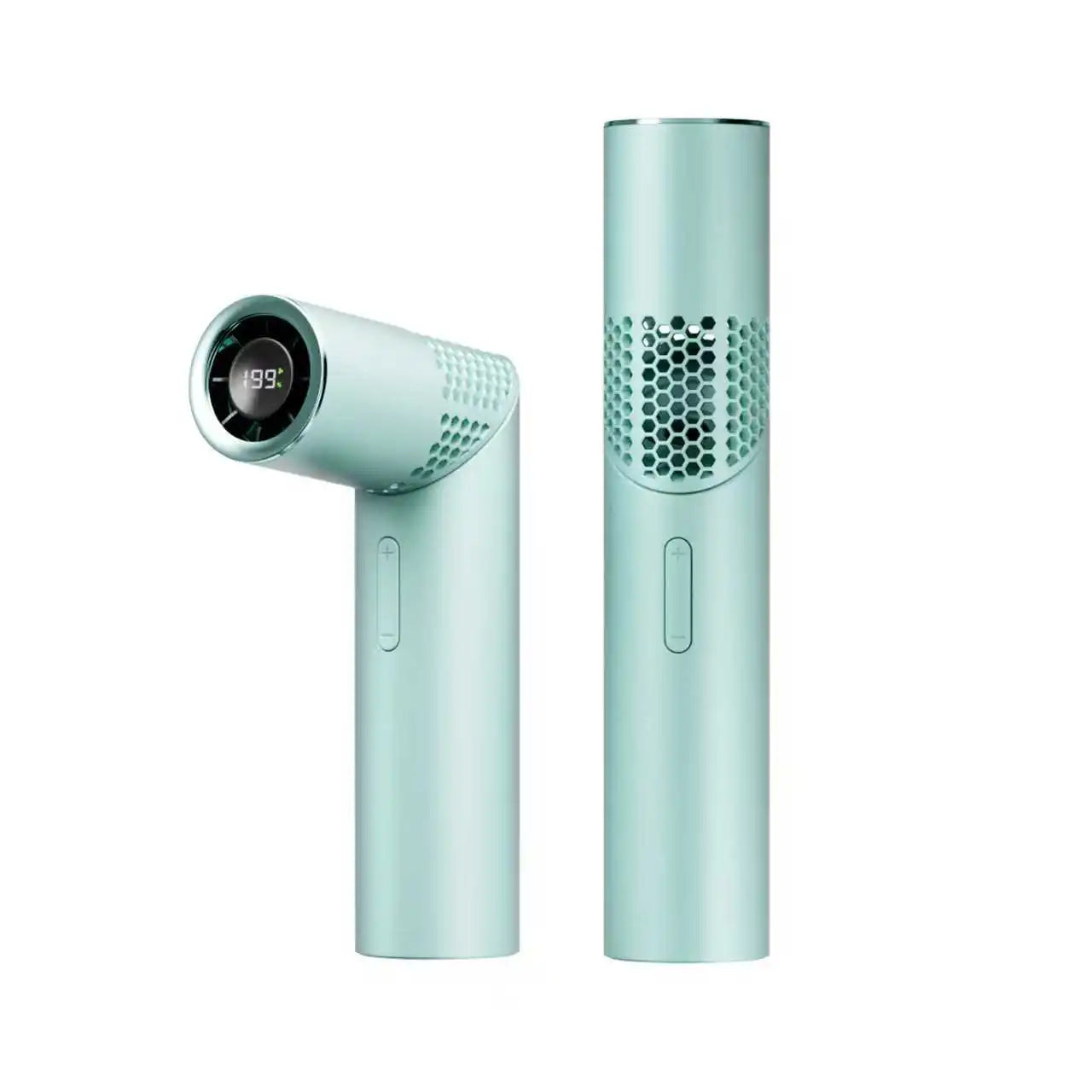
The compact foldable design of the featured portable handheld fan makes it suited to this type of personal cooling. Its ABS construction and flexible format are designed around portability rather than room-scale circulation.
Best for Whole-Room Cooling
If your goal is broad airflow throughout a bedroom, living room, or shared workspace, choose a room fan. A larger fan is better suited to moving air across a wider area and supporting general room circulation.
A personal fan should be selected instead when the cooling target is primarily one person.
For more everyday health and comfort devices, the Body Care and Health Devices collection provides another place to explore practical personal-use products.
Personal Fan Pros and Cons
Pros of a Personal Fan
- Portable: Compact designs are easy to carry between locations.
- Targeted airflow: Air is directed toward the individual rather than the entire room.
- Flexible placement: Some models can be handheld, placed on a desk, or adapted for other positions.
- Travel friendly: Foldable designs can take up less space in bags.
- Useful outdoors: Personal airflow can be available where stationary room fans are impractical.
- Space efficient: A compact fan can cool one user without occupying much room.
Cons of a Personal Fan
- Limited airflow coverage compared with a room fan
- Not generally suitable for whole-room circulation
- Battery runtime can be a limitation on cordless models
- Close-range fan noise may be more noticeable
- Cooling is concentrated around the user rather than distributed across a room
Room Fan Pros and Cons
Pros of a Room Fan
- Broader coverage: Designed to move air across a larger space.
- Room circulation: Useful for bedrooms, living rooms, and shared spaces.
- Longer continuous use: Many corded models can operate without battery limitations.
- Multiple-user suitability: Better when several people need airflow.
- Stationary convenience: A dedicated fan can remain positioned where airflow is needed most.
Cons of a Room Fan
- Less portable than a handheld or foldable fan
- Larger footprint
- Many models depend on a wall outlet
- Less convenient for commuting and travel
- Can provide more airflow than necessary when only one person needs cooling
How to Choose Between a Personal Fan and a Room Fan
Choose a Personal Fan If...
- You want cooling for one person.
- You frequently commute or travel.
- You need a compact summer essential for your bag.
- You want targeted airflow at a desk.
- You spend time outdoors in hot weather.
- You prefer flexible placement rather than a permanent fan location.
- You need a compact alternative to a bulky traditional fan.
Choose a Room Fan If...
- You need airflow across a larger indoor space.
- Several people need cooling at the same time.
- You primarily use the fan in one bedroom, living room, or office.
- Whole-room circulation matters more than portability.
- You expect long periods of stationary operation.
Choose Both If You Need Flexible Cooling
You do not necessarily have to choose one category exclusively. A room fan can handle broader airflow at home while a personal fan can stay in a work bag, car, travel case, or desk drawer.
This combination can be practical when your cooling needs change throughout the day. Use the larger fan for shared indoor spaces and the personal fan when you are moving between locations or only need airflow directed at yourself.

A Practical Personal Fan Option for Travel and Everyday Cooling
If your comparison points toward a personal fan, the Portable Handheld Fan | Foldable Cooling Comfort for Travel! is designed around targeted airflow and portability rather than whole-room circulation.
Its compact ABS body and foldable design make it convenient for bags, desks, travel essentials, and everyday carrying. The fan can be used as a handheld device, positioned nearby for desktop cooling, or used in its versatile neck-hanging format.
The product description identifies it as an electric personal cooling fan and does not specify a remote control, battery capacity, or exact runtime. For that reason, buyers who prioritize a precise rechargeable battery specification should verify the current product details before purchasing.
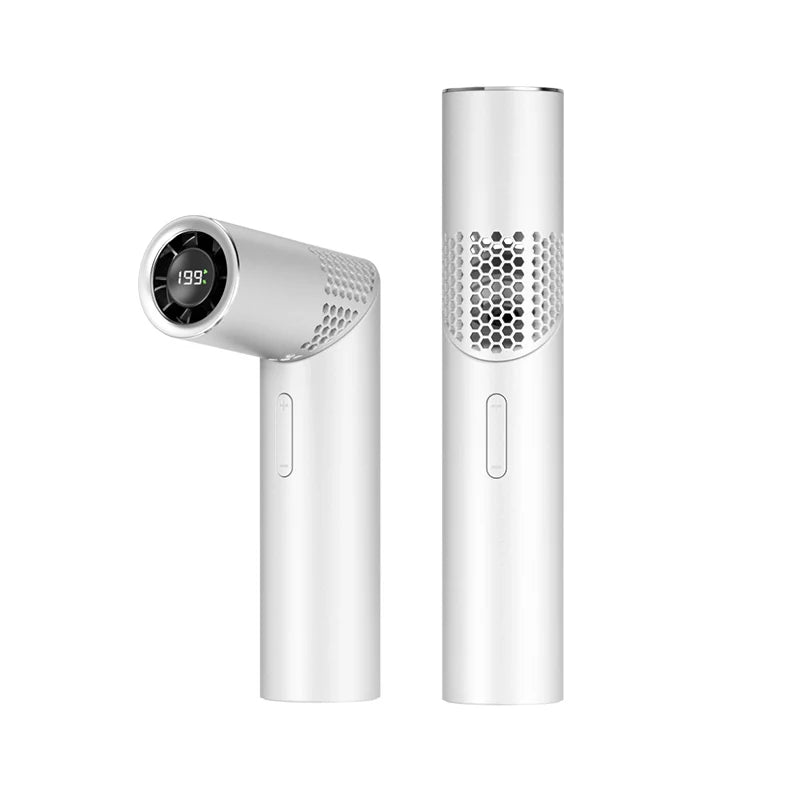
Its strongest fit is someone who values compact size, personal airflow, flexible placement, and portability. It should not be positioned as a replacement for a room fan when broad room circulation is the actual requirement.
If targeted personal cooling fits your needs, you can explore the portable foldable handheld fan and compare its design with the features that matter most for your use case.
Final Recommendation: Personal Fan or Room Fan?
The choice between a personal fan vs room fan comes down to what you want to cool.
If you want to cool yourself while commuting, traveling, working at a desk, relaxing, or spending time outdoors, a personal fan is usually the more convenient option. Its compact footprint, targeted airflow, and portability make it a practical personal cooling companion.
If you want broader airflow across a bedroom, living room, office, or shared indoor space, a room fan is generally the better fit. Its larger airflow coverage is designed for circulation rather than close-range personal cooling.
Before buying, compare airflow coverage, portability, power source, battery runtime, noise, cooling goal, and room size. The best fan is not necessarily the most powerful one—it is the one that matches where, how, and for whom you need airflow.
If your priority is portable, targeted cooling for one person, a foldable handheld fan is a practical place to start. If you need whole-room airflow, choose a room fan instead. For many households, having both provides the most flexible approach to staying comfortable through hot weather.
Pillar Article: Best Portable Handheld Fan for Travel: 2026 Tested Picks













