

Portable Fan for Hot Weather: 2026 Guide to Staying Cool
When hot weather turns a normal walk, work shift, workout, commute, or outdoor event into a sweaty challenge, a portable fan for hot weather can provide targeted airflow without the bulk of a room fan or the need to stay near an air conditioner. The right portable cooling device can help move air across your skin, support sweat evaporation, and make heat feel more manageable while you keep moving.
But not every portable fan is designed for the same situation. A handheld fan gives you precise control but occupies one hand. A wearable fan provides hands-free airflow, while a waist fan can direct ventilation close to the torso without requiring you to hold anything. Compact rechargeable table or clip-on fans are better when you have a stationary surface or fixed position.
This guide explains how portable fans work, which fan format fits different summer activities, what specifications actually matter, how battery capacity affects runtime, and how to compare a waist fan with other personal cooling options.
What Is a Portable Fan for Hot Weather?
A portable fan for hot weather is a compact battery-powered fan designed to deliver localized airflow wherever you need it. Unlike a traditional room fan, it is intended to move with you or operate in small spaces. Depending on the design, it may be handheld, wearable, waist-mounted, or positioned on a desk, table, or other surface.
The most important distinction is that portable fans primarily improve perceived cooling. They do not generally lower the surrounding air temperature the way an air conditioner does. Instead, moving air can increase evaporation from perspiration and improve how comfortable you feel when the environment is hot.
How Portable Fans Help You Feel Cooler
Your body releases heat through several mechanisms, including sweating. When air moves across damp skin, moisture can evaporate more readily under suitable environmental conditions. That evaporation can remove heat from the skin and create a cooling sensation.
This is why a portable fan can feel useful during hot-weather activities even though the fan itself does not produce cold air. The effect is particularly noticeable when airflow reaches exposed skin rather than simply moving air several feet away from you.
Portable Fan vs. Personal Cooling Device
The terms portable fan, wearable fan, and personal cooling device often overlap. The practical difference is how the airflow reaches you.
A handheld fan requires active positioning. A wearable fan attaches to your body or clothing so airflow follows you. A waist fan uses a clip or buckle around the waist and can provide ventilation from a lower position toward the body. For people who need hands-free cooling while working, walking, or exercising, that distinction can be more important than the fan's maximum speed.
Best Types of Portable Fans for Summer Heat
The best portable cooling format depends on where you will use it, how much airflow you need, and whether you need both hands available. Instead of asking which fan is universally best, match the design to the activity.
Handheld Fans
Handheld fans are straightforward and highly flexible. You can point the airflow directly toward your face, neck, arms, or another area whenever you want relief. They are especially practical for short commutes, travel, waiting in lines, festivals, and other situations where holding a small device is not a problem.
The tradeoff is obvious: one hand remains occupied. That can make a handheld fan less convenient for carrying equipment, performing physical work, exercising, or completing tasks that require both hands.
Wearable Fans
Wearable fans are designed to stay attached to your body or clothing. They can provide hands-free airflow while walking, attending outdoor events, commuting, or completing everyday tasks.
Wearability introduces another consideration: stability. A fan that shifts, bounces, or becomes uncomfortable during movement may be less useful than a slightly less powerful model that stays securely positioned.
Waist Fans
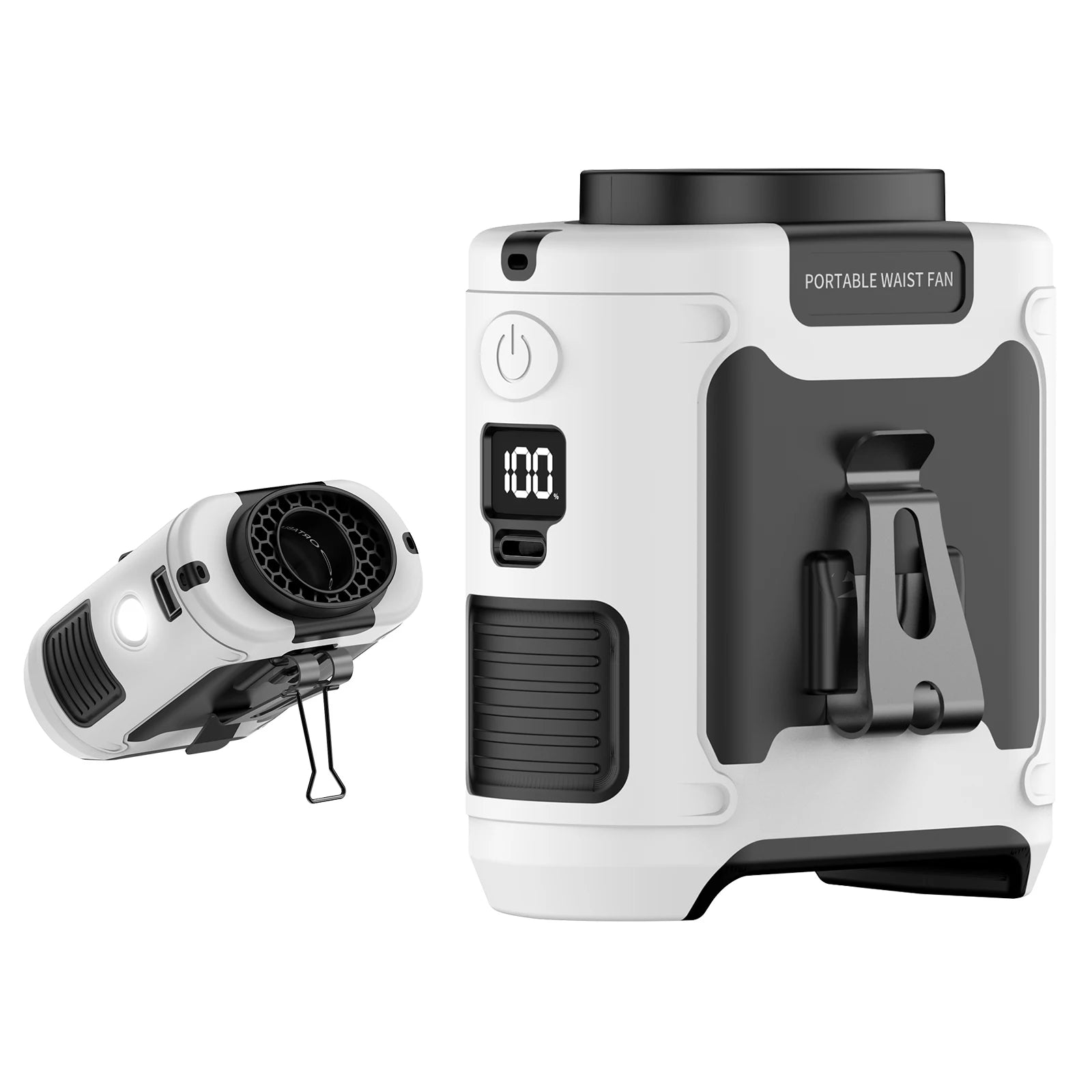
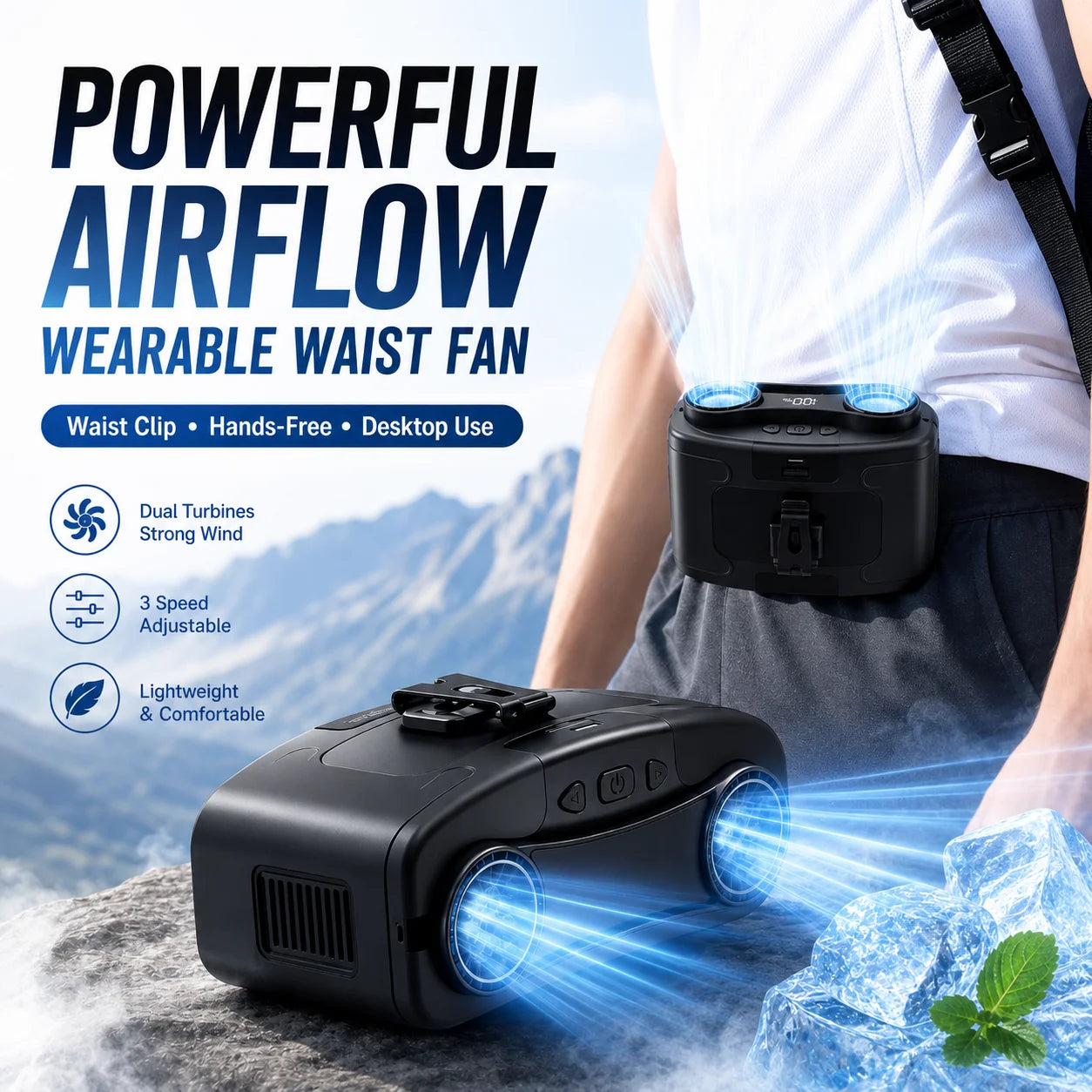
A waist fan is a specialized wearable cooling fan that attaches around the waist or clothing. This format can be particularly useful for outdoor workers, gardeners, construction-related tasks, warehouse work, walking, sports, and summer activities where keeping both hands free matters.
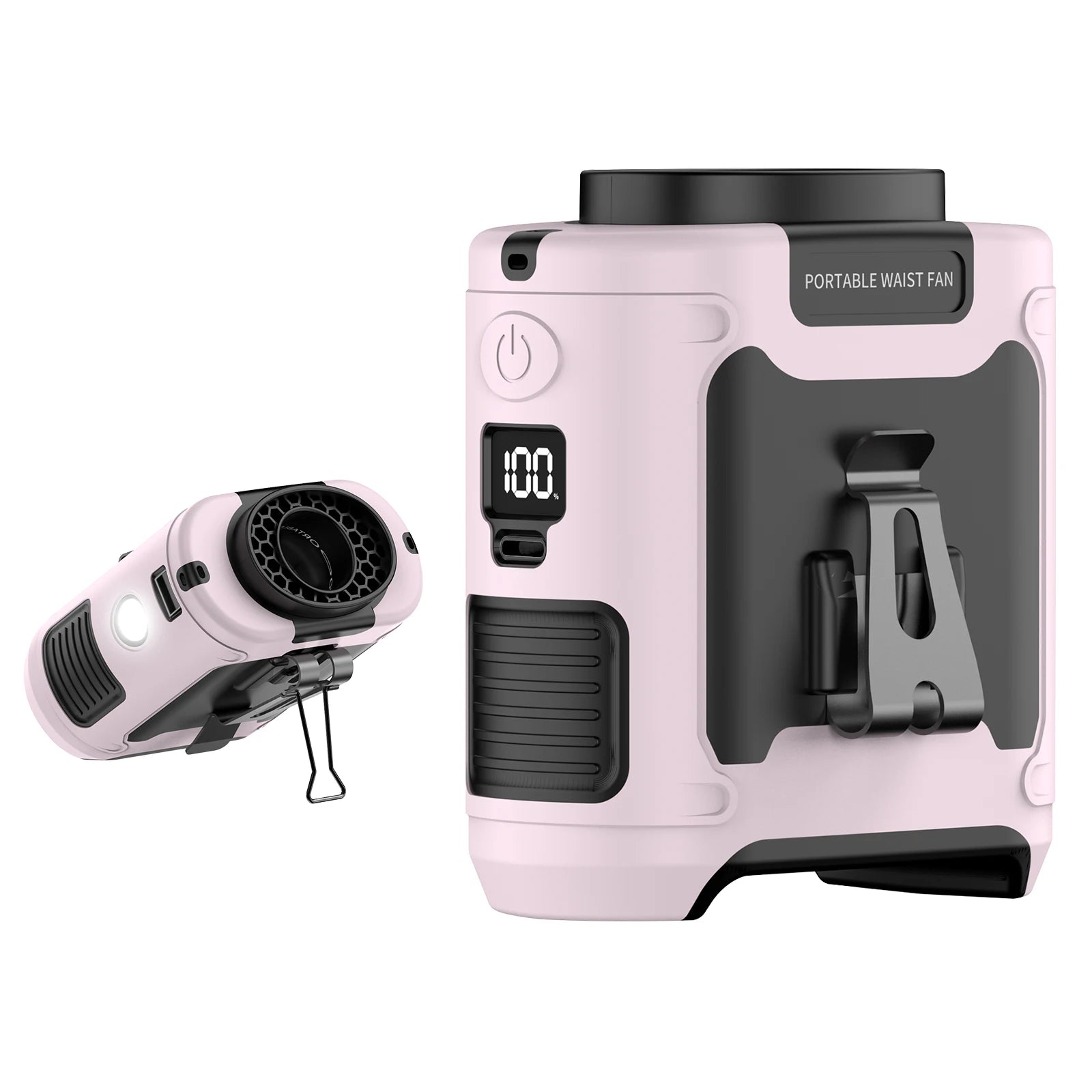
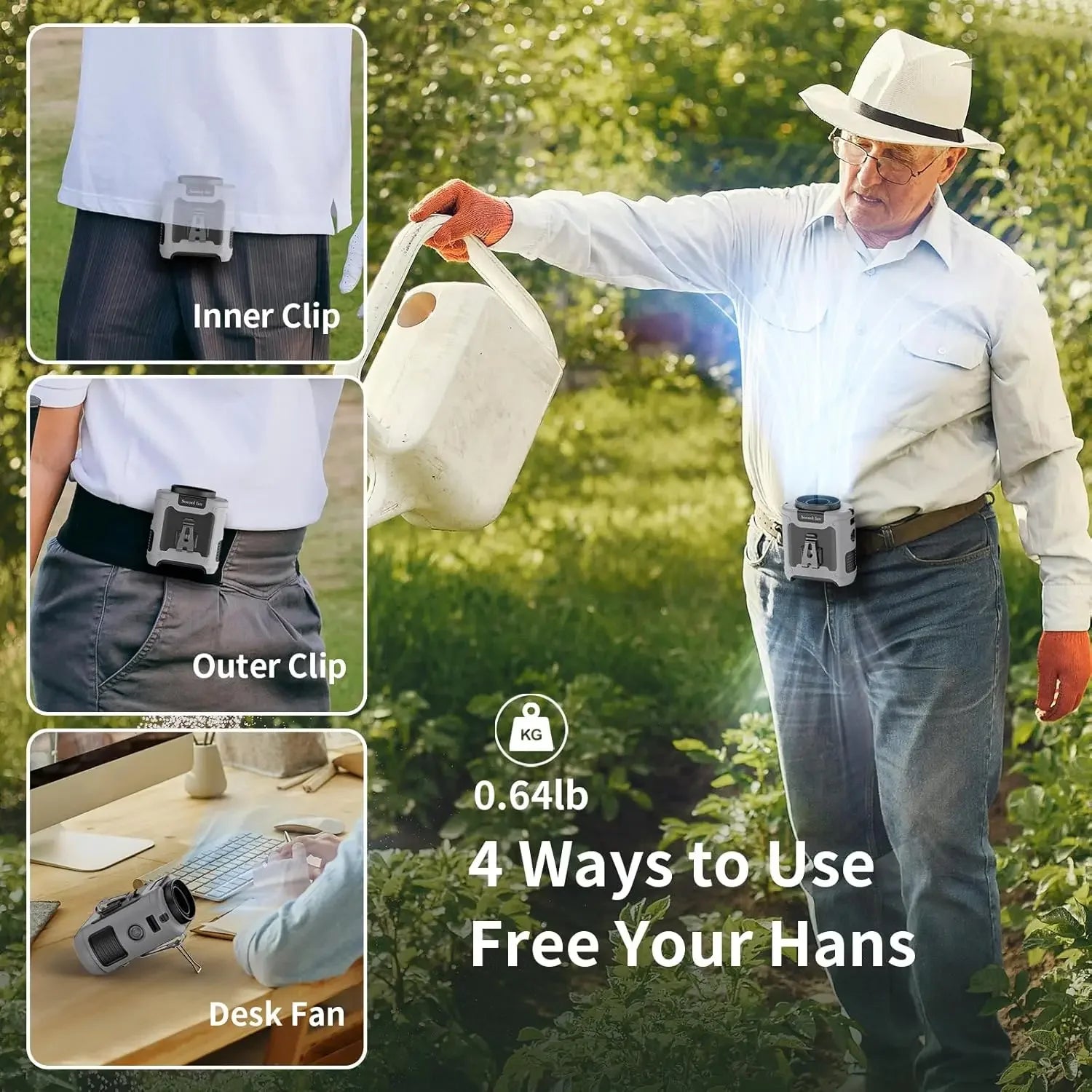
For example, the Waist Fan Portable Cooling Device combines a waist-buckle design with a 16,000 RPM brushless motor, 10 speed levels, USB Type-C charging, and an LED digital display. The clip can be positioned at the front, back, or side, allowing users to adjust where the airflow comes from according to their activity.
For product details, see: https://kentdohealthybeauty.com/products/waist-fan-portable-cooling-device
Small Rechargeable Table or Clip-On Fans
Compact table and clip-on fans are useful when you have a relatively fixed position. They can work well at a desk, bedside, campsite, temporary workspace, or hotel room. Their biggest advantage is that you do not have to wear or hold them.
They become less practical when you are continuously moving because their cooling effect depends on keeping your body within the airflow path.
How to Choose a Portable Fan for Hot Weather
When comparing portable fans, look beyond marketing phrases such as “powerful” or “high speed.” A useful cooling device should match airflow, controls, battery capacity, charging, portability, comfort, noise, and construction to your actual use.
Airflow and Fan Speed Settings
Airflow is one of the most important performance characteristics. A high motor RPM can indicate that a fan is designed for strong airflow, but RPM alone does not tell you exactly how much air reaches your body. Blade design, motor efficiency, housing, airflow path, and fan placement also matter.
Multiple speed settings are valuable because you may not need maximum airflow continuously. Lower settings can be more comfortable in mild conditions and may conserve battery power, while higher settings can provide stronger airflow when outdoor conditions become more uncomfortable.
Battery Life and Rechargeable Battery Capacity
Battery capacity is commonly expressed in mAh, but a larger number does not automatically guarantee a specific runtime. Actual operating time depends on power consumption, fan speed, battery voltage, motor efficiency, and other electronics.
For everyday summer use, think in terms of the length of your activity. A short commute may require only a compact battery, while outdoor workers or people spending several hours outside may benefit from a higher-capacity rechargeable model.
USB-C Charging
USB Type-C charging is convenient because the same general charging ecosystem may already be used for phones, tablets, laptops, and power banks. It can reduce the number of proprietary charging cables you need to carry when traveling.
Before buying, check the manufacturer's stated charging input and use the appropriate compatible charging equipment.
Size, Weight, and Portability
Portable cooling is only useful if you are willing to carry or wear the device. A very large fan may produce impressive airflow but become inconvenient during travel or movement. A smaller device may be easier to pack but may provide less airflow.
For wearable models, weight distribution matters as much as the device's overall weight. The attachment system should remain comfortable during the activity you plan to perform.
Noise Level
Fan noise becomes more noticeable when the device is close to your body. This matters in offices, classrooms, public transportation, conversations, and other quiet environments.
If noise is important, look for manufacturer noise information when available and consider whether you will normally use the fan at maximum speed or at a lower setting.
Comfort and Hands-Free Design
For outdoor work and active use, hands-free operation can be a major advantage. A waist buckle or clip should hold securely while allowing you to move naturally. Controls should also be accessible without requiring you to stop what you are doing.
Build Quality and Cleaning
Fans used outdoors can encounter dust, sweat, lint, and other debris. A practical design should make routine cleaning manageable. Keep air intake and outlet areas clear, follow the manufacturer's cleaning instructions, and avoid exposing electronics to water unless the product is specifically rated for it.
For frequent outdoor use, also review the manufacturer's electrical, battery, and operating safety information. A portable fan is a personal comfort tool, not a substitute for heat-safety practices.
How Long Should a Portable Fan Battery Last?
There is no single ideal battery runtime. The right runtime depends on how long you are outside and how aggressively you operate the fan.
Battery Runtime by Typical Use
- Short commute: A few hours of available runtime may be sufficient for intermittent use.
- Outdoor errands: Several hours can provide more flexibility when conditions change during the day.
- Long outdoor work: A higher-capacity battery can reduce the need for frequent recharging.
- Travel or extended activities: Consider battery capacity alongside access to USB-C charging or a compatible power source.
The supplied product information lists 10,000mAh and 20,000mAh battery options for the waist fan. It also states that the 20,000mAh version is rated for approximately 40–8 hours depending on airflow level. Because that supplied runtime range appears inconsistent as written, buyers should verify the exact runtime for the selected battery version and speed before relying on a specific number.
What Affects Real-World Battery Life?
Higher fan speeds generally require more power than lower speeds. Continuous operation can therefore drain a battery considerably faster than intermittent use. Battery condition, temperature, charging habits, and the particular fan's electrical design can also influence actual runtime.
For this reason, treat advertised runtime as a reference rather than a guarantee. If you expect to spend a full day outside, choose enough battery capacity for your intended usage pattern and consider how you will recharge the device if needed.
Do Portable Fans Actually Help in Hot Weather?
Yes, portable fans can improve comfort in hot weather, but they do not remove heat from the environment. Their main benefit is localized airflow across the skin, which can support sweat evaporation and make moving air feel cooler.
Why Moving Air Feels Cooler
Still air can feel oppressive when you are sweating because moisture remains on the skin instead of evaporating as efficiently. Air movement can change that sensation by increasing airflow across the body's surface.
This is one reason a fan aimed directly at your body can feel more effective than a fan positioned too far away.
When a Fan May Not Be Enough
A portable fan should not be treated as protection against heat illness. During extreme heat, high humidity, strenuous activity, or prolonged outdoor exposure, airflow alone may not adequately control body heat.
Use broader heat-management strategies as well: take appropriate breaks, drink fluids according to your needs, seek shade or air-conditioned areas when available, wear suitable lightweight clothing, and pay attention to signs of heat-related illness. If you feel seriously unwell from heat, stop the activity and seek appropriate medical assistance.
Portable Fan vs. Air Conditioning
An air conditioner changes the temperature and humidity of an enclosed environment. A portable fan generally does not. Instead, it creates localized airflow around you.
That makes a portable fan complementary to air conditioning rather than a direct replacement. It can be particularly useful when you are outdoors, commuting, working in an area without immediate air conditioning, or moving between indoor and outdoor environments.
Best Portable Fan Features for Summer Use
Must-Have Features
- Useful airflow appropriate for your activity.
- Multiple speed settings for changing conditions.
- Rechargeable battery power for convenient daily use.
- Practical charging such as USB Type-C.
- A secure and comfortable design for the intended position.
- Controls that are easy to operate while moving.
- A housing and grille that can be maintained according to manufacturer instructions.
Nice-to-Have Features
- Digital battery or speed display.
- Adjustable airflow direction.
- Multiple attachment positions.
- Low-noise operation.
- High-efficiency brushless motor technology.
A useful example is the KentDO waist fan, which includes a 16,000 RPM brushless motor, 10-speed adjustment, front/back/side waist positioning, USB Type-C charging, and an LED display showing operating information. Those features make the design particularly relevant to users searching for a rechargeable waist fan for work or outdoor activities.
Which Portable Fan Is Best for Different Hot-Weather Activities?
For Walking and Commuting
A lightweight handheld or wearable fan can work well when you need cooling during a walk, transit connection, or commute. If you carry bags or frequently use your phone, a hands-free design can be more convenient.
For Outdoor Work
Outdoor workers typically need more than portability. Strong airflow, long usable battery life, secure attachment, accessible controls, and durable construction become more important when the fan needs to operate through repeated movement.
A waist-mounted fan can be particularly practical because it leaves both hands available for work. The waist fan described in this guide uses a buckle design and offers 10 airflow levels, making it suitable for users who want adjustable personal ventilation while moving.
For Travel and Vacations
Travelers should prioritize compactness, rechargeable power, USB-C charging, and a format that fits easily into luggage or a day bag. A handheld fan is often simple to pack, while a wearable or waist fan may be more convenient when sightseeing for several hours.
For Outdoor Events and Sports
For festivals, outdoor spectatorship, walking, recreational sports, and similar activities, hands-free operation can be valuable. A secure wearable or waist-mounted fan lets you move without repeatedly holding and repositioning the device.
During strenuous exercise or severe heat, however, a fan should remain only one part of your overall cooling strategy. It should never create a false sense of protection from dangerous heat exposure.
For Desk and Home Use
A compact table or clip-on fan can be more practical when you remain in one place. In these settings, low noise, airflow direction, positioning flexibility, and convenient controls may matter more than maximum portability.
Portable Fan vs. Wearable Fan vs. Waist Fan
There is no universal winner because these formats solve different problems. Use the following comparison matrix to narrow the choice based on how you actually plan to use the fan.
| Fan Type | Hands-Free | Best For | Main Advantage | Main Tradeoff |
| Handheld fan | No | Commuting, travel, short cooling sessions | Precise airflow positioning | Occupies one hand |
| Wearable fan | Yes | Walking, events, everyday outdoor use | Convenient hands-free airflow | Fit and stability matter |
| Waist fan | Yes | Outdoor work, sports, active summer use | Secure waist-mounted ventilation | Airflow position is tied to attachment location |
| Table or clip-on fan | Yes while stationary | Desk, bedside, camping, temporary workspace | Easy stationary positioning | Less practical while moving |
Choose a Handheld Fan If...
Choose a handheld fan if maximum freedom to direct airflow matters more than keeping both hands free. It is a strong option for short cooling sessions and situations where you can comfortably hold the device.
Choose a Wearable Fan If...
Choose a wearable fan if you want cooling to move with you. This format is useful for walking, outdoor events, commuting, and everyday summer activities where holding a fan is inconvenient.
Choose a Waist Fan If...
Choose a waist fan if hands-free cooling is a priority and you want the device securely attached around your waist. This is especially relevant to people looking for a best wearable fan for work, waist fan for outdoor workers, or powerful waist fan for outdoor work.
The KentDO Waist Fan Portable Cooling Device is designed around that specific use case, combining a waist-buckle attachment, 16,000 RPM brushless motor, 10 speed levels, rechargeable battery options, Type-C charging, and a digital display.
How to Get Better Cooling From a Portable Fan
Aim Airflow Where It Helps Most
Position the fan so moving air reaches exposed skin rather than simply blowing past your body. With a waist fan, experiment with front, side, or rear placement according to your clothing, movement, and preferred airflow direction.
Use the Right Fan Speed
Maximum speed is not always necessary. Start with a comfortable setting and increase airflow when conditions become hotter or your activity level rises. Lower settings can also reduce noise and conserve battery compared with continuous maximum-speed operation.
Keep the Fan Charged Before Outdoor Use
Check the battery indicator before leaving home. If you rely on a rechargeable fan for work or extended outdoor activities, build charging into your normal routine rather than waiting until the battery is nearly empty.
Combine Portable Airflow With Other Heat-Management Habits
A portable fan works best as one component of a broader hot-weather strategy. Take appropriate breaks, use shade where possible, maintain adequate hydration, choose suitable clothing, and move to a cooler environment when conditions become unsafe.
Portable Fan Buying Checklist for Summer 2026
Quick Checklist
- Choose the fan format that matches your activity.
- Look for useful airflow rather than relying only on advertised RPM.
- Choose enough speed settings for changing outdoor conditions.
- Match battery capacity to the length of your typical activity.
- Consider USB-C charging if you travel or use modern charging accessories.
- Check size and weight before committing to a wearable design.
- Consider noise if the fan will be used around other people.
- Prioritize secure attachment for outdoor work and exercise.
- Review battery, charging, cleaning, and operating instructions.
- Remember that a fan improves airflow and comfort but does not make dangerous heat exposure safe.
If your priority is hands-free cooling for outdoor work, walking, sports, or summer activities, a waist-mounted design is worth comparing with handheld and other wearable formats. The KentDO Waist Fan Portable Cooling Device is one option to evaluate based on its 16,000 RPM brushless motor, 10-speed adjustment, rechargeable battery choices, USB Type-C charging, digital display, and flexible waist positioning.
Product details: https://kentdohealthybeauty.com/products/waist-fan-portable-cooling-device
Frequently Asked Questions
What is the best type of portable fan for hot weather?
The best type depends on the situation. Handheld fans are useful when you want precise airflow control, wearable fans are convenient when you need hands-free cooling, waist fans are well suited to active outdoor work and movement, and compact table or clip-on fans work best when you remain in one place.
Do portable fans actually help you stay cool in hot weather?
Yes. Moving air can improve perceived cooling by increasing airflow across the skin and supporting sweat evaporation. However, portable fans do not generally lower the surrounding air temperature, so they should not be considered a substitute for air conditioning or broader heat-safety measures.
How long should a portable fan battery last for summer use?
Choose battery capacity according to how long you typically spend outdoors. A short commute may need only a few hours of practical runtime, while outdoor workers and people on extended trips may prefer a higher-capacity battery. Fan speed also affects how quickly the battery is consumed.
What features should I look for in a portable fan for summer?
Focus on useful airflow, adjustable speeds, battery capacity, USB-C charging, portability, comfort, noise, secure attachment, and build quality. A battery or speed display can also make it easier to manage the fan during longer outdoor sessions.
Are portable fans good for outdoor activities in hot weather?
They can be useful for walking, outdoor work, travel, events, and recreational activities because they provide localized airflow without requiring a fixed power outlet. Wearable and waist-mounted models are especially convenient when you need both hands free. During extreme heat or strenuous activity, however, use a fan alongside appropriate heat-management practices rather than relying on airflow alone.
Final Takeaway
The best portable fan for hot weather is the one that fits the way you actually spend time outdoors. Handheld models maximize airflow control, wearable fans emphasize convenience, waist fans prioritize hands-free ventilation during movement, and compact stationary fans work well at desks or temporary campsites.
When comparing options, focus on airflow, speed adjustment, battery capacity, charging convenience, portability, comfort, noise, and attachment stability rather than choosing based on a single specification. For people who work or exercise outdoors and want hands-free cooling, a rechargeable waist fan can be a practical middle ground between a handheld fan and larger personal cooling equipment.
For more personal-care and health-device options, explore the Body Care and Health Devices collection at https://kentdohealthybeauty.com/collections/body-care-and-health-devices-1 or browse the Lifestyle collection at https://kentdohealthybeauty.com/collections/lifestyle.
Pillar Article: Best Portable Waist Fan: 2026 Tested Picks for Cooling













