

Indoor Safe Kerosene Heaters: Are They Really Safe for Your Home?
If you're wondering are kerosene heaters safe indoors , you're not alone. While many models are designed for indoor use, they are only considered safe when you choose an indoor-rated heater, use the correct fuel, provide adequate ventilation, and follow the manufacturer's operating instructions. This guide explains how indoor safe kerosene heaters work, the risks involved, and practical safety tips you can trust.
Are Kerosene Heaters Safe for Indoors?
Yes—but only under the right conditions. Modern indoor safe kerosene heaters can provide dependable, electricity-free heat when used exactly as intended. They are commonly used during winter storms and power outages because they continue operating without electricity.
However, are kerosene heaters safe to use indoors? They can be, provided you:
- Choose a heater specifically certified for indoor residential use.
- Burn only clean, recommended kerosene fuel.
- Keep a window slightly open or provide fresh-air ventilation.
- Install working carbon monoxide detectors nearby.
- Maintain proper clearance from furniture, curtains, and other combustibles.
Indoor kerosene heaters are generally not appropriate for people who cannot safely monitor the heater, homes with inadequate ventilation, or anyone planning to leave the heater operating while sleeping.
How Do Kerosene Heaters Work Indoors?
A kerosene heater safe indoors burns liquid kerosene inside a controlled combustion chamber. The burning fuel generates radiant and convective heat while also consuming oxygen from the room. Even clean-burning combustion produces carbon dioxide, water vapor, and trace combustion gases, making ventilation essential.
Radiant vs. Convection Kerosene Heaters
Understanding the two primary heater styles helps you choose the right model for your space.
- Radiant heaters warm nearby people and objects directly, making them ideal for focused heating in living areas.
- Convection heaters circulate warm air throughout the room, providing more even heating in larger spaces.
Why Combustion Creates Indoor Safety Concerns
Because combustion requires oxygen, every operating kerosene heater gradually reduces indoor oxygen levels while producing combustion byproducts. If ventilation is insufficient, carbon monoxide and other pollutants may accumulate to dangerous levels. This is why even the safest kerosene heater for indoor use should never operate in a tightly sealed room without fresh air.
- Combustion: Kerosene reacts with oxygen to produce heat, carbon dioxide, and water vapor.
- Oxygen consumption: Enclosed rooms require continuous fresh-air exchange.
- Heat distribution: Radiant and convection designs warm spaces differently.
- Indoor emissions: Small amounts of carbon monoxide and nitrogen dioxide may be produced if combustion is incomplete.
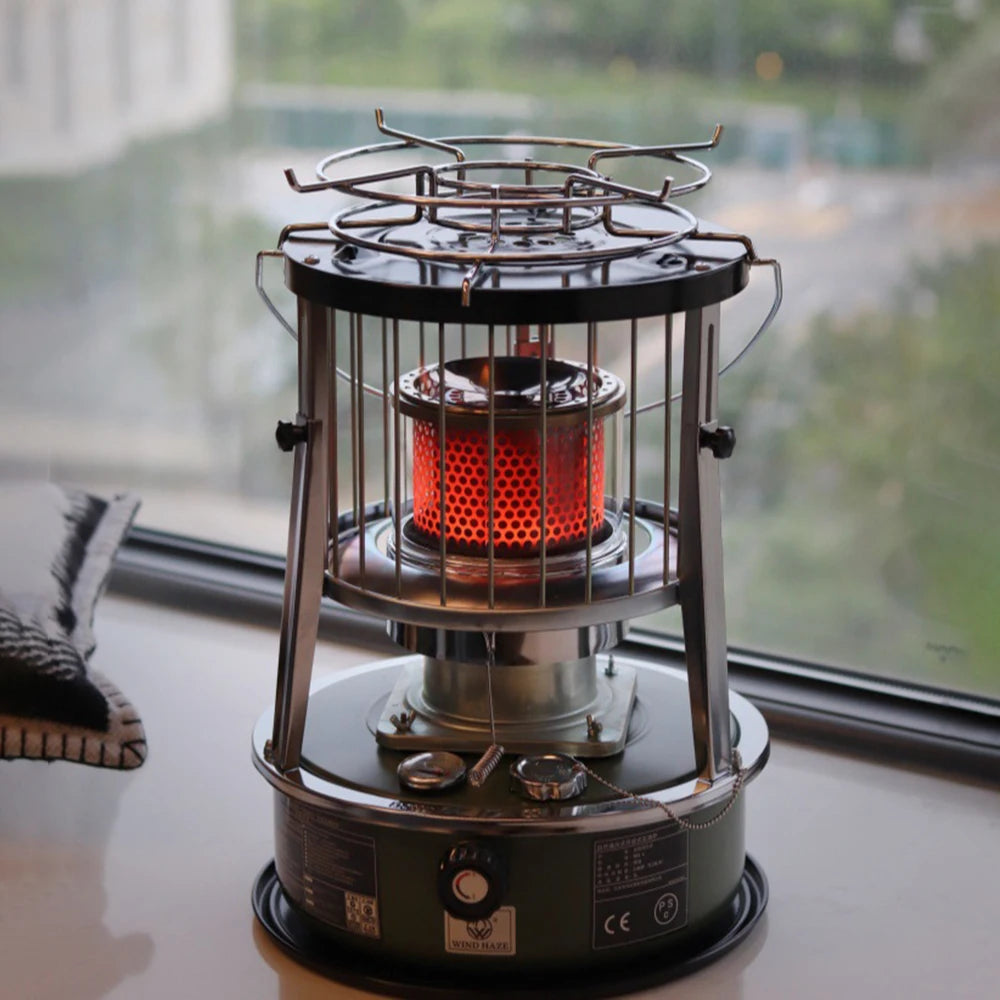
Indoor safe kerosene heater for dependable warmth at home See it in action
Safe heating depends as much on proper operation as it does on choosing the right heater.
What Makes a Kerosene Heater Safe to Use Indoors?
Choose an Indoor-Rated Heater
Not every kerosene heater is intended for enclosed spaces. Select models specifically labeled for indoor use and equipped with modern safety systems.
- Indoor-use certification where applicable.
- Tip-over shutoff protection.
- Stable fuel tank and combustion chamber.
- Automatic flame control.
Use the Correct Fuel Only
Only burn clean, high-quality 1-K kerosene or the exact fuel specified by the manufacturer. Never substitute gasoline, diesel, solvents, or other fuels, as they dramatically increase fire and toxic fume risks.
Install Carbon Monoxide Detectors
Every home using indoor safe kerosene heaters should have working carbon monoxide detectors on each level, especially near sleeping areas. Test alarms regularly and replace batteries according to the manufacturer's schedule.
Many homeowners exploring winter emergency heat also browse solutions in the Lifestyle collection for practical, off-grid living essentials.
Ventilation Requirements for Indoor Kerosene Heaters
How Much Fresh Air Is Needed?
Even when using an indoor-rated heater, fresh air is essential. Most manufacturers recommend slightly opening a window or exterior door while the heater operates to provide continuous air exchange. The exact amount depends on room size, heater output, and manufacturer guidance.
Larger rooms generally provide better air circulation than small enclosed spaces, but ventilation is still necessary regardless of room size.
Rooms Where Kerosene Heaters Should Never Be Used
- Small sealed bedrooms.
- Bathrooms.
- Tiny enclosed offices with no ventilation.
- Rooms without functioning carbon monoxide detectors.
- Areas storing gasoline, paint, or other flammable vapors.
Common Risks of Using Kerosene Heaters Indoors
Carbon Monoxide Exposure
Carbon monoxide is colorless and odorless. Improper ventilation, damaged heaters, or poor combustion can allow dangerous concentrations to develop indoors.
Fire and Burn Hazards
Open flames, hot surfaces, fuel spills, and accidental tip-overs can ignite nearby combustible materials. Maintain at least three feet of clearance around the heater and keep children and pets away from hot surfaces.
Poor Indoor Air Quality
Even properly operating heaters release water vapor and small amounts of combustion gases. Sensitive individuals, including those with asthma or respiratory conditions, may experience irritation if ventilation is inadequate.
- Carbon monoxide exposure from poor combustion.
- Oxygen depletion in tightly sealed rooms.
- Nitrogen dioxide and soot affecting indoor air quality.
- Burn injuries from contact with hot surfaces.
- Increased risks for young children, older adults, and pets if safety precautions are ignored.
Symptoms of Carbon Monoxide Poisoning and Emergency Response
Recognizing early symptoms can save lives.
- Headache.
- Dizziness.
- Nausea.
- Fatigue.
- Confusion.
- Shortness of breath.
If multiple people in the home suddenly develop these symptoms or a carbon monoxide alarm activates:
- Turn off the heater if it is safe to do so.
- Leave the building immediately.
- Move everyone into fresh air.
- Call emergency services if symptoms are severe or persistent.
- Do not re-enter until the home has been declared safe.
Safe Operating Checklist Before, During, and After Use
Following a consistent routine significantly improves safe operation.
Safe Refueling Practices
- Refuel only after the heater has completely cooled.
- Never refuel indoors while the heater is operating.
- Clean up any spilled fuel immediately.
- Store kerosene outdoors in approved labeled containers.
Daily Inspection and Maintenance
- Inspect the wick for wear or carbon buildup.
- Check for fuel leaks before lighting.
- Keep ventilation openings unobstructed.
- Clean soot deposits according to manufacturer recommendations.
- Replace worn wicks as recommended.
When Should You Not Use a Kerosene Heater Indoors?
Even indoor-rated heaters should not be used in certain situations.
- While sleeping.
- In bathrooms or enclosed sleeping areas.
- In poorly ventilated rooms.
- Near gasoline or flammable chemicals.
- Where children or pets cannot be supervised.
- If the heater shows signs of damage or improper combustion.
Kerosene Heaters vs Other Indoor Heating Options
| Heating Option | Power Required | Indoor Safety | Best Use |
|---|---|---|---|
| Kerosene heater | No | Safe when properly ventilated and maintained | Power outages and supplemental heating |
| Electric space heater | Yes | No combustion emissions | Daily indoor heating with electricity available |
| Indoor-rated propane heater | No | Requires ventilation and CO monitoring | Emergency backup heat |
| Heat pump | Yes | Very safe during normal operation | Whole-home efficient heating |
Myths vs Facts About Indoor Kerosene Heater Safety
| Myth | Fact |
|---|---|
| Indoor-rated heaters don't need ventilation. | All combustion heaters require fresh air. |
| Any kerosene fuel is acceptable. | Only manufacturer-approved clean kerosene should be used. |
| A carbon monoxide detector eliminates all risk. | Detectors are an important backup but do not replace proper ventilation and safe operation. |
| Maintenance isn't necessary if the heater still lights. | Regular wick replacement and cleaning help maintain safe combustion. |
Frequently Asked Questions
Do all kerosene heaters require ventilation indoors?
Yes. Every kerosene heater burns fuel and consumes oxygen, so continuous fresh-air ventilation is recommended even for indoor-rated models.
Can you sleep with a kerosene heater running?
No. It is generally not recommended to leave a kerosene heater operating while sleeping because you may not notice developing ventilation problems or carbon monoxide buildup.
Is it safe to use a kerosene heater in a garage or basement?
Only if the location is well ventilated, free from flammable vapors, and approved by the heater manufacturer. Attached garages often present additional fire and air-quality risks.
How far should a kerosene heater be from furniture and curtains?
Maintain at least three feet (about one meter) of clearance on all sides unless the manufacturer specifies a greater distance.
What type of kerosene fuel is recommended for indoor heaters?
Most manufacturers recommend clean 1-K kerosene because it burns with fewer odors and less soot than lower-quality fuels.
How often should the wick be replaced?
Inspect the wick regularly during heating season and replace it whenever recommended by the manufacturer or when it shows excessive wear, poor flame quality, or heavy carbon buildup.
Can a carbon monoxide detector fully protect against kerosene heater risks?
No. Carbon monoxide detectors provide an important warning, but they should always be used together with proper ventilation, correct fuel, and routine heater maintenance.
What should you do if you smell strong kerosene fumes indoors?
Turn off the heater if it is safe to do so, ventilate the room immediately, check for fuel spills or improper combustion, and do not restart the heater until the cause has been identified and corrected.













